










annelifts
Well-known member
Author
- Joined
- Jun 14, 2026
- Messages
- 266
- Points
- 28
Artificial intelligence has shifted from marketing spectacle to operational infrastructure inside professional sports front offices. Franchises now deploy machine learning across scouting, injury forecasting, and salary-cap optimization, treating proprietary models as competitive assets rather than promotional tools. Draft boards increasingly reflect probability-based rankings, while wearable data informs workload decisions and contract structures. Human judgment still validates outputs where character and context matter. The full scope of this change reveals deeper strategic implications ahead.
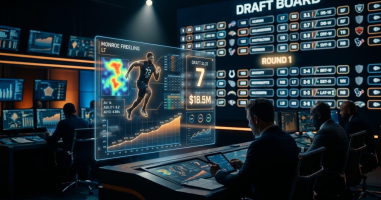
The motivation is straightforward: Data Driven Decisions consistently outperform intuition-only evaluations when applied to scouting volume, salary-cap efficiency, and injury forecasting. Executives view these systems as durable Competitive Advantages, not marketing accessories.
Technology Integration has become a baseline requirement, spanning wearables, computer vision, and predictive modeling pipelines feeding directly into personnel decisions. Front Office Innovations increasingly separate contending organizations from rebuilding ones, rewarding teams that operationalize information faster than rivals can react.
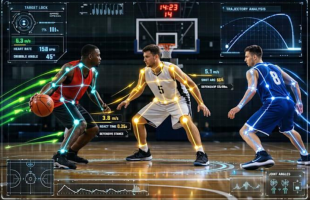
On the financial side, salary optimization tools pair performance metrics with contract structures, projecting aging curves, positional scarcity, and marginal wins per dollar. Machine learning surfaces inefficiencies that traditional cap spreadsheets miss—identifying undervalued role players or overpriced veterans. The result is tighter alignment between roster expenditure, on-court production, and long-term competitive windows.

Where does algorithmic capability plateau? Precisely at the intersection of character, context, and consequence. AI limitations become apparent when models encounter locker-room dynamics, leadership potential, or a prospect's response to adversity—variables that resist quantification. Human intuition, refined through decades of scouting and coaching, still outperforms pattern recognition in evaluating intangibles.
Data reliability compounds the problem. Models trained on incomplete or biased datasets produce confident but flawed outputs, and no algorithm can audit its own blind spots. Ethical implications also emerge around player surveillance, workload dictation, and fairness in draft valuation.
Decision making nuances—weighing a veteran's mentorship against declining metrics, or gambling on a high-upside project—demand judgment that integrates values, relationships, and organizational culture. Algorithms inform; humans decide.
Predictive modeling will expand into personalized development pathways, projecting how specific training loads shape long-term outcomes for individual athletes. Talent identification will reach deeper into international and amateur pipelines, where algorithmic scouting can surface undervalued prospects earlier. The organizations that align infrastructure, personnel, and workflow around these tools will convert incremental technical gains into measurable competitive advantages.
Why Front Offices Are Betting Big on AI
Across the major professional leagues, front offices are shifting artificial intelligence from experimental pilot programs into permanent line items on the operational budget. AI Investment Trends now show franchises allocating dedicated capital toward data infrastructure, machine learning engineers, and proprietary modeling platforms once reserved for hedge funds and tech firms.The motivation is straightforward: Data Driven Decisions consistently outperform intuition-only evaluations when applied to scouting volume, salary-cap efficiency, and injury forecasting. Executives view these systems as durable Competitive Advantages, not marketing accessories.
Technology Integration has become a baseline requirement, spanning wearables, computer vision, and predictive modeling pipelines feeding directly into personnel decisions. Front Office Innovations increasingly separate contending organizations from rebuilding ones, rewarding teams that operationalize information faster than rivals can react.
Where AI Already Shapes Scouting and Player Evaluation
Once budget commitments are in place, the practical output shows up first in scouting and player evaluation, where AI already influences which names reach a general manager's desk. Modern scouting technology ingests video, tracking feeds, and biometric inputs, then converts raw footage into structured player metrics through computer vision and pattern recognition. Draft analytics models weight production against competition quality, physical measurables, and developmental curves, producing probability-based rankings rather than static tiers. Data integration is the differentiator: organizations that unify college, international, and minor-league sources generate cleaner signals for performance forecasting across positions and leagues. The algorithms flag undervalued prospects and quantify risk, but human scouts still validate context, motor, and character before recommendations advance to decision-makers. How AI Is Rewriting Injury Prevention and Salary-Cap Strategy
Beyond talent identification, many front offices now deploy AI across two of the highest-leverage cost centers in professional sports: player availability and cap allocation. Injury prediction models ingest wearable data, biomechanical outputs, and workload histories to flag soft-tissue risk before it surfaces on the training room table. This data integration allows medical and performance staffs to conduct granular risk assessment, adjusting practice loads against projected fatigue curves.On the financial side, salary optimization tools pair performance metrics with contract structures, projecting aging curves, positional scarcity, and marginal wins per dollar. Machine learning surfaces inefficiencies that traditional cap spreadsheets miss—identifying undervalued role players or overpriced veterans. The result is tighter alignment between roster expenditure, on-court production, and long-term competitive windows.
What AI Still Can't Do Better Than Humans
Where does algorithmic capability plateau? Precisely at the intersection of character, context, and consequence. AI limitations become apparent when models encounter locker-room dynamics, leadership potential, or a prospect's response to adversity—variables that resist quantification. Human intuition, refined through decades of scouting and coaching, still outperforms pattern recognition in evaluating intangibles.
Data reliability compounds the problem. Models trained on incomplete or biased datasets produce confident but flawed outputs, and no algorithm can audit its own blind spots. Ethical implications also emerge around player surveillance, workload dictation, and fairness in draft valuation.
Decision making nuances—weighing a veteran's mentorship against declining metrics, or gambling on a high-upside project—demand judgment that integrates values, relationships, and organizational culture. Algorithms inform; humans decide.
Where AI in Pro Sports Is Headed Next
Looking ahead, the next wave of AI adoption in professional sports will center on integration rather than novelty. Front offices will prioritize data integration across scouting, medical, coaching, and analytics departments, unifying fragmented information streams into single decision-support platforms. Expect AI advancements in computer vision and biomechanical tracking to refine performance metrics beyond traditional box-score outputs, capturing movement efficiency, spatial awareness, and fatigue indicators in real time.Predictive modeling will expand into personalized development pathways, projecting how specific training loads shape long-term outcomes for individual athletes. Talent identification will reach deeper into international and amateur pipelines, where algorithmic scouting can surface undervalued prospects earlier. The organizations that align infrastructure, personnel, and workflow around these tools will convert incremental technical gains into measurable competitive advantages.






