• Legal Notice – MuscleMecca Forums

    MuscleMecca.com is an educational discussion platform. We do not sell, promote, or endorse any bodybuilding gear, supplements, research chemicals, or performance-enhancing substances.

    All discussions are for educational and informational purposes only. Nothing posted on this forum should be considered medical or legal advice.

    Do not attempt to sell, source, or promote illegal substances. Any such activity will result in an immediate and permanent ban and may be reported to the proper authorities.

    By using this site, you agree to comply with all forum rules, disclaimers, and applicable laws in your jurisdiction.

    Read Our Full Disclaimer and Forum Rules

History of Soviet cosmonautics.

Frimen1917

Frimen1917

Mecca V.I.P.
VIP
Joined
Jan 9, 2026
Messages
3,394
Points
63
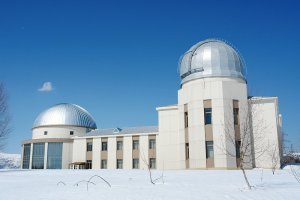
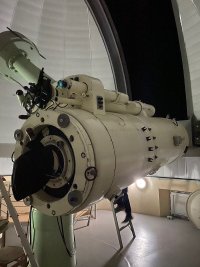
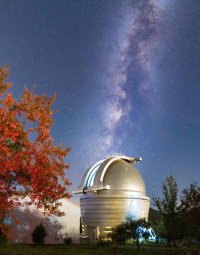
Современные фотографии Шемахинской обсерватории.
Contemporary photographs of the Shamakhi Observatory.
Fotografías contemporáneas del Observatorio Shamakhi.
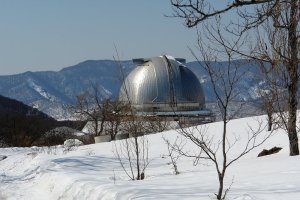
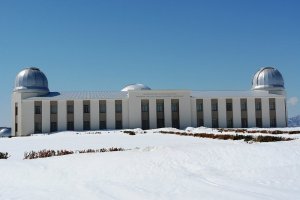
Caption 1 Caption 2 Caption Photo1jpg
 
Frimen1917

Frimen1917

Mecca V.I.P.
VIP
Joined
Jan 9, 2026
Messages
3,394
Points
63

Фантастический фильм "65 лет в космосе: что на самом деле увидел Гагарин?" | AI Sci-Fi трейлер
Юрий Гагарин стал первым человеком, который вырвался в открытый космос — и нашёл голограмму, окружающую всю Землю. За ней скрывалась правда: огромная межпланетная империя и закон, по которому цивилизации без мира и гармонии не имеют права покидать свой аквариум. Гагарин нарушил закон. Теперь за ним охотится Солнечная гвардия.
━━━━━━━━━━━━━━━━━━━━━━━━━━━━━━
СЮЖЕТ / SYNOPSIS: Во время исторического полёта 1961 года Юрий Гагарин прорывается сквозь голографический барьер, скрывающий настоящую структуру Солнечной системы — сеть миров, населённых множеством инопланетных цивилизаций. Захваченный Корпусом солнечных стражей и доставленный к Старшим, чтобы стереть ему память, Гагарин вырывается на свободу и отправляется в путешествие по системе, чтобы понять, как человечеству достичь той самой гармонии, которая позволит покинуть аквариум раз и навсегда.
━━━━━━━━━━━━━━━━━━━━━━━━━━━━━━
Directed by Pavel Zhigarev A Noizlab Studio Production

Sci-Fi Film "65 Years in Space: What Did Gagarin Really See?" | AI Sci-Fi Trailer


Yuri Gagarin became the first human to break out into open space—only to discover a hologram surrounding the entire Earth. Behind it lay the truth: a vast interplanetary empire governed by a law stating that civilizations lacking peace and harmony have no right to leave their "aquarium." Gagarin broke that law. Now, the Solar Guard is hunting him down.

━━━━━━━━━━━━━━━━━━━━━━━━━━━━━━

SYNOPSIS: During his historic 1961 flight, Yuri Gagarin pierces through a holographic barrier that conceals the true structure of the Solar System—a network of worlds inhabited by a multitude of alien civilizations. Captured by the Solar Guard Corps and brought before the Elders to have his memory erased, Gagarin manages to break free. He embarks on a journey across the system, seeking to understand how humanity can attain the harmony required to leave this "aquarium" once and for all.

━━━━━━━━━━━━━━━━━━━━━━━━━━━━━━

Directed by Pavel Zhigarev | A Noizlab Studio Production
Película de ciencia ficción "65 años en el espacio: ¿Qué vio realmente Gagarin?" | Tráiler de ciencia ficción con IA


Yuri Gagarin se convirtió en el primer humano en irrumpir en el espacio exterior y descubrió un holograma que rodeaba la Tierra. Detrás de él se escondía la verdad: un vasto imperio interplanetario y una ley que prohibía a las civilizaciones sin paz ni armonía abandonar su territorio. Gagarin infringió la ley. Ahora, la Guardia Solar lo persigue.

━━━━━━━━━━━━━━━━━━━━━━━━━━━━━

SINOPSIS: Durante un vuelo histórico en 1961, Yuri Gagarin atraviesa una barrera holográfica que oculta la verdadera estructura del Sistema Solar: una red de mundos habitados por numerosas civilizaciones alienígenas. Capturado por el Cuerpo de Guardianes Solares y llevado ante los Ancianos para que le borraran la memoria, Gagarin se libera y emprende un viaje a través del sistema para descubrir cómo la humanidad puede alcanzar la armonía que le permita escapar de la pecera de una vez por todas.

━━━━━━━━━━━━━━━━━━━━━━━━━━━━━━

Dirigido por Pavel Zhigarev. Una producción de Noizlab Studio.
 
Frimen1917

Frimen1917

Mecca V.I.P.
VIP
Joined
Jan 9, 2026
Messages
3,394
Points
63
СССР против Империи
USSR vs. Empire
URSS contra Imperio

 
Frimen1917

Frimen1917

Mecca V.I.P.
VIP
Joined
Jan 9, 2026
Messages
3,394
Points
63
"Мы стояли у самой ракеты и ждали приезда космонавта, видели последние приготовления стартовой команды. И вот ещё один традиционный ритуал: полковник Береговой, командир корабля "Союз - 3", докладывает Государственной комиссии о готовности к старту.
Нет, ничего не изменилось в нём со вчерашнего вечера. Космонавт спокоен, собран, настроен на работу.
Потом подъём на лифте и взмах рукой оттуда, с огромной высоты космического носителя.
Ждут старта ракетчики - уйдет ракета и снимет с них напряжение. Ждут станции слежения - после старта для них начнётся самая горячая пора. Ждёт космонавт. Ему уже не терпится начать работу там, в заоблачной выси.
- Ключ - на старт!
- Пуск!
...Пуск! После этой команды мы услышали его голос из корабля. Космонавт отвечал кратко:
- Понял, пуск.
- Как самочувствие? - спрашивали его.
- Нормально..
С пункта управления поступал счёт секундам полёта. Начались радиотехнические измерения траектории. Полученные данные поступают в координационно-вычислительный центр, вводятся в электронные машины. Они решают задачу и дают ответ на вопрос: каковы параметры орбиты?
Корабль "Союз - 2", который стартовал вчера, идеально выдерживал заданные параметры. Диалог с орбитой подтвердил, что и второй корабль, миновав плотные слои атмосферы Земли, вышел в расчетную точку космоса. Все бортовые системы функционируют нормально.
Телеметрией получены данные первого витка полёта. Береговой чувствует себя хорошо, приступил к выполнению заданной программы...".(М. Ребров. "Я - Аргон").
...............................................................
Цит.по: РЕБРОВ МИХАИЛ ФЕДОРОВИЧ
Я - "АРГОН"
Москва/ Издательство "Молодая гвардия"/ 1968 год


“We stood right by the rocket and waited for the cosmonaut to arrive, watching the final preparations of the launch team. And then another traditional ritual: Colonel Beregovoy, commander of the Soyuz-3 spacecraft, reports to the State Commission that he is ready for launch.

No, nothing has changed in him since last evening. The cosmonaut is calm, collected, tuned for work.

Then the ascent in the elevator and a wave of the hand from up there, from the enormous height of the space carrier.

The rocket men are waiting for the launch — the rocket will leave and take the tension off them. The tracking stations are waiting — after the launch the hottest time will begin for them. The cosmonaut is waiting. He is already impatient to start working up there, in the cloudy heights.

— Key to start!
— Launch!

…Launch! After this command we heard his voice from the spacecraft. The cosmonaut answered briefly:

— Understood, launch.
— How do you feel? — they asked him.
— Normal…

From the control post the countdown of the flight seconds was coming. Radio-technical trajectory measurements began. The data obtained go to the coordination-computing centre, are fed into electronic machines. They solve the problem and give the answer to the question: what are the orbital parameters?

The Soyuz-2 spacecraft, which was launched yesterday, was ideally maintaining the prescribed parameters. The dialogue with the orbit confirmed that the second spacecraft as well, having passed through the dense layers of the Earth’s atmosphere, had entered the calculated point in space. All on-board systems are functioning normally.

Telemetry has received the data of the first orbit of the flight. Beregovoy feels well, has begun to carry out the assigned programme…”

(M. Rebrov. “I Am Argon”)

…………………………………………………
Quoted from: REBROV MIKHAIL FYODOROVICH
I Am “ARGON”
Moscow / Publishing House “Molodaya Gvardiya” / 1968


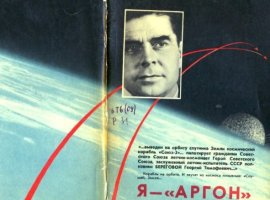
On the photo: cover of the book “I Am Argon” with a photograph of cosmonaut Georgy Beregovoy.


“Estábamos de pie junto al mismo cohete y esperábamos la llegada del cosmonauta, veíamos los últimos preparativos del equipo de lanzamiento. Y he aquí otro ritual tradicional: el coronel Beregovoy, comandante de la nave Soyuz-3, informa a la Comisión Estatal de su disposición para el despegue.


No, nada ha cambiado en él desde la noche anterior. El cosmonauta está sereno, concentrado, preparado para el trabajo.

Después el ascenso en el ascensor y un saludo con la mano desde allí, desde la enorme altura del portador espacial.

Los coheteros esperan el lanzamiento: el cohete se irá y les quitará la tensión. Las estaciones de seguimiento esperan: después del lanzamiento comenzará para ellas la hora más intensa. Espera el cosmonauta. Ya le urge empezar a trabajar allí, en las alturas nubladas.

— ¡Llave al arranque!
— ¡Lanzamiento!

…¡Lanzamiento! Después de esta orden oímos su voz desde la nave. El cosmonauta respondió brevemente:

— Entendido, lanzamiento.
— ¿Cómo se siente? — le preguntaban.
— Normal…

Desde el puesto de control llegaba la cuenta de los segundos de vuelo. Comenzaron las mediciones radiotécnicas de la trayectoria. Los datos obtenidos llegan al centro de coordinación y cálculo, se introducen en las máquinas electrónicas. Ellas resuelven el problema y dan la respuesta a la pregunta: ¿cuáles son los parámetros de la órbita?

La nave Soyuz-2, que despegó ayer, mantenía idealmente los parámetros prescritos. El diálogo con la órbita confirmó que también la segunda nave, tras atravesar las capas densas de la atmósfera terrestre, había entrado en el punto calculado del cosmos. Todos los sistemas de a bordo funcionan normalmente.

Por telemetría se han recibido los datos de la primera órbita del vuelo. Beregovoy se siente bien, ha comenzado a cumplir el programa asignado…”

(M. Rebrov. “Yo soy Argón”)

…………………………………………………
Citado de: REBROV MIJAÍL FIÓDOROVICH
Yo soy “ARGÓN”
Moscú / Editorial “Molodaya Gvardiya” / 1968


En la foto: portada del libro “Yo soy Argón” con una fotografía del cosmonauta Gueorgui Beregovoy.
G27BWr6TZqz4B OMtt SuuqmzWkoNH2hllIuUmi5AMNJt2lnFC7lcAAOXhjGpV5uYL0w6X2N6wLwcjpUzyUr4tAL
 
Frimen1917

Frimen1917

Mecca V.I.P.
VIP
Joined
Jan 9, 2026
Messages
3,394
Points
63
"Четыре года назад трагическим взрывом «Челленджера» в небе над мысом Канаверал был прерван космический урок американской учительницы Шарон Кристы Маколифф. В день памяти погибшего экипажа наши «Витязи» — Александр Викторенко и Александр Серебров — с борта станции «Мир» осуществили этот прекрасный замысел и стали учителями для многих тысяч ребятишек, мечтающих о космосе, познающих тайны Вселенной. Поистине счастливцами можно назвать тех школьников и педагогов с разных концов страны, которые попали в этот час на гостевой балкон Центра управления полетом и могли в сеансе телерадиосвязи задать космонавтам свой вопрос. Инициатором урока стал бортинженер нашего экипажа Александр Серебров, президент Всесоюзного молодежного аэрокосмического объединения «Союз».
Провести встречу помогли активисты общества, комсомольские работники и молодые ученые: специалисты Центра управления полетам, его руководители. Интерес был всеобщий, а исчерпать тему Земли и Вселенной, согласитесь, невозможно, значит, «звездный урок» бесконечен.
Он начался над южным побережьем Латинской Америки. Орбитальный комплекс вышел из ночи в день, и на экранах Центра управления полетом появились учителя: космонавты Викторенко и Серебров.
— Мы расскажем сегодня о наших системах жизнеобеспечения... Этот скафандр для работы в открытом космосе. Сооружение очень мудрое и надежное. Мы испытали его на трех прогулках. Разберемся, как он устроен.
Я смотрел за реакцией класса, расположившегося на гостевом балконе Центра. Здесь были ребята из разных уголков страны — Магадана и Красноярска, Нижнего Тагила и Петрозаводска. Мало чем можно удивить современного подростка, бывалые это люди. Всего минуту назад на лицах читалось лишь вежливое внимание: «Конечно, все это очень интересно, но...»
И вот — взволнованные, жадно внимающие глаза, острое ощущение исключительности происходящего.
Поразил ребят сам тон обращения космонавтов, очень товарищеский, лишенный какой-либо педагогической дистанции.
— Мы видим, что у вас в зале атмосфера праздничности, ребята. Она передалась и нам на борту. А мы уже над Атлантикой. Видите океан в иллюминаторах?
Прелюдия к уроку вывела школьников на орбиту полета.
— Чувствуем себя так, будто вы открыли нам все люки и мы с вами на корабле, — определил настроение класса руководитель полета космонавт Владимир Соловьев.
Скафандр, разумеется, благодатная тема для урока. Настоящая педагогическая находка экипажа. Знакомство с его устройством открыло школьникам целый комплекс остроумных инженерных решений, пробуждающих любознательность, техническую смекалку ребят. Не меньшее любопытство вызвала рабочая перчатка космонавта для забортных монтажных операций.
Можно, наверное, было бы и по учебному плакату с помощью указки «пройти» в классе принципы жизнеобеспечения. Пройти и забыть. Как многое забывается школьной программы.
То, о чем рассказывает космонавт, несколько суток назад бывший в открытом космосе, то, что видишь на борту корабля, летящего во Вселенной, не забудется никогда.
Заинтриговали школьников способы выращивания кристаллов, рецепты приготовления необычных лекарств, биоиспытания виноградной улитки и деревца в горшочке...
У Александра Викторенко и Александра Сереброва природный дар пробуждать у детей умные вопросы. Некоторые тут же и адресовались по прямой связи в космос: «Далеко ли можно уйти в скафандре?», «Каких усилий требует работа за бортом?», «Есть ли на Земле аналоги кристаллов, которые вы выращиваете?», «Как вы относитесь к организации экологического патруля с помощью космонавтики?».
Времени для связи было мало, всего 47 минут. Но космонавты его не жалели, терпеливо отвечая на вопросы школьников, зная, что такой диалог способен добром отозваться в юной душе".(Олег Матятин. "Продолжение урока").
.................................................................
Цит.по: НЕИЗВЕСТНЫЙ КОСМОДРОМ
ДОКУМЕНТАЛЬНАЯ ПОВЕСТЬ - РЕПОРТАЖ
Составитель А. А. Тарасов
Москва/ Издательство "Орбита"/ 1990

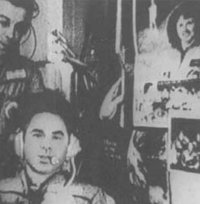
На фото: Два Александра – Викторенко и Серебров: урок с борта космической станции «Мир» памяти Кристы Маколифф. На стене космической станции видна ее фотография.
“Four years ago the tragic explosion of Challenger in the sky over Cape Canaveral interrupted the space lesson of the American teacher Sharon Christa McAuliffe. On the day of remembrance of the perished crew our ‘Vityazi’ — Alexander Viktorenko and Alexander Serebrov — carried out this beautiful plan from the board of the Mir station and became teachers for many thousands of children who dream of space and are learning the secrets of the Universe. Truly fortunate can be called those schoolchildren and teachers from different ends of the country who found themselves at that hour on the guest balcony of the Mission Control Centre and were able, in a tele-radio communication session, to ask the cosmonauts their question. The initiator of the lesson was the flight engineer of our crew Alexander Serebrov, president of the All-Union Youth Aerospace Association ‘Soyuz’.

Activists of the society, Komsomol workers and young scientists — specialists of the Mission Control Centre and its leaders — helped to conduct the meeting. The interest was universal, and, you will agree, it is impossible to exhaust the theme of the Earth and the Universe, which means that the ‘star lesson’ is endless.
It began over the southern coast of Latin America. The orbital complex came out of the night into the day, and on the screens of the Mission Control Centre the teachers appeared: cosmonauts Viktorenko and Serebrov.
— Today we will tell you about our life-support systems… This spacesuit is for work in open space. A very wise and reliable construction. We have tested it on three spacewalks. Let us see how it is arranged.
I watched the reaction of the class that had settled on the guest balcony of the Centre. Here were children from different corners of the country — Magadan and Krasnoyarsk, Nizhny Tagil and Petrozavodsk. It is hard to surprise a modern teenager; they are experienced people. Only a minute ago on their faces one could read only polite attention: ‘Of course, all this is very interesting, but…’
And then — excited, greedily attentive eyes, a sharp feeling of the exceptional nature of what was happening.
What struck the children was the very tone of the cosmonauts’ address — very comradely, devoid of any pedagogical distance.
— We can see that in your hall there is an atmosphere of festivity, children. It has been transmitted to us on board as well. And we are already over the Atlantic. Can you see the ocean in the portholes?
The prelude to the lesson took the schoolchildren into the orbit of the flight.
— We feel as if you have opened all the hatches for us and we are with you on the ship, — defined the mood of the class the flight director, cosmonaut Vladimir Solovyov.
The spacesuit, of course, is a fruitful subject for a lesson. A real pedagogical find of the crew. Acquaintance with its arrangement opened up to the schoolchildren a whole complex of ingenious engineering solutions that awaken curiosity and the technical inventiveness of the children. No less curiosity was aroused by the cosmonaut’s working glove for extravehicular assembly operations.
One could probably, with the help of a pointer, ‘go through’ the principles of life support in class according to an educational poster. Go through and forget. As much of the school programme is forgotten.
What the cosmonaut who was in open space several days ago talks about, what one sees on board a ship flying in the Universe, will never be forgotten.
The schoolchildren were intrigued by the methods of growing crystals, the recipes for preparing unusual medicines, the bio-tests of a vineyard snail and a little tree in a pot…
Alexander Viktorenko and Alexander Serebrov have a natural gift for awakening intelligent questions in children. Some of them were immediately addressed by direct link into space: ‘How far can one go in a spacesuit?’, ‘What effort does work outside the board require?’, ‘Are there analogues on Earth of the crystals you grow?’, ‘How do you feel about the organisation of an ecological patrol with the help of cosmonautics?’.
There was little time for communication, only 47 minutes. But the cosmonauts did not spare it, patiently answering the schoolchildren’s questions, knowing that such a dialogue is capable of responding with good in a young soul.”
(Oleg Matyatin. “Continuation of the Lesson”)
.................................................................
Quoted from: UNKNOWN COSMODROME
DOCUMENTARY STORY-REPORT
Compiled by A. A. Tarasov
Moscow / Publishing House “Orbita” / 1990

On the photo: Two Alexanders — Viktorenko and Serebrov: a lesson from the board of the Mir space station in memory of Christa McAuliffe. On the wall of the space station her photograph is visible.
“Hace cuatro años la trágica explosión del Challenger en el cielo sobre el cabo Cañaveral interrumpió la lección espacial de la maestra estadounidense Sharon Christa McAuliffe. En el día de la memoria de la tripulación fallecida nuestros ‘Vityazi’ — Alexandr Viktorenko y Alexandr Serebrov — realizaron desde a bordo de la estación Mir este hermoso propósito y se convirtieron en maestros para muchos miles de niños que sueñan con el espacio y descubren los secretos del Universo. Verdaderamente afortunados pueden considerarse aquellos escolares y pedagogos de diferentes extremos del país que se encontraban en aquella hora en el balcón de invitados del Centro de Control de Vuelo y pudieron, en una sesión de tele-radiocomunicación, formular a los cosmonautas su pregunta. El iniciador de la lección fue el ingeniero de vuelo de nuestra tripulación Alexandr Serebrov, presidente de la Asociación Aeroespacial Juvenil de toda la Unión ‘Soyuz’.

Ayudaron a realizar el encuentro activistas de la sociedad, trabajadores del Komsomol y jóvenes científicos: especialistas del Centro de Control de Vuelo y sus dirigentes. El interés era general, y, convendrán ustedes, es imposible agotar el tema de la Tierra y el Universo, por lo tanto la ‘lección estelar’ es infinita.
Comenzó sobre la costa sur de América Latina. El complejo orbital salió de la noche al día, y en las pantallas del Centro de Control de Vuelo aparecieron los maestros: los cosmonautas Viktorenko y Serebrov.
— Hoy les contaremos sobre nuestros sistemas de soporte vital… Este traje espacial es para trabajar en el espacio abierto. Una construcción muy sabia y fiable. Lo hemos probado en tres paseos espaciales. Veamos cómo está construido.
Observé la reacción de la clase que se había instalado en el balcón de invitados del Centro. Aquí había chicos de diferentes rincones del país — Magadán y Krasnoyarsk, Nizhni Taguil y Petrozavodsk. Poco se puede sorprender a un adolescente moderno, son personas experimentadas. Solo un minuto antes en sus rostros se leía únicamente una atención educada: ‘Por supuesto, todo esto es muy interesante, pero…’
Y entonces — ojos emocionados, que escuchaban ávidamente, una aguda sensación de la excepcionalidad de lo que estaba ocurriendo.
Lo que sorprendió a los chicos fue el mismo tono del discurso de los cosmonautas, muy camaraderil, desprovisto de cualquier distancia pedagógica.
— Vemos que en su sala hay una atmósfera festiva, chicos. Se nos ha transmitido también a bordo. Y ya estamos sobre el Atlántico. ¿Ven el océano en las ventanas?
El preludio de la lección llevó a los escolares a la órbita del vuelo.
— Nos sentimos como si nos hubieran abierto todas las escotillas y estuviéramos con ustedes en la nave — definió el estado de ánimo de la clase el director de vuelo, el cosmonauta Vladímir Soloviov.
El traje espacial, por supuesto, es un tema fructífero para una lección. Un verdadero hallazgo pedagógico de la tripulación. El conocimiento de su estructura abrió a los escolares todo un complejo de ingeniosas soluciones de ingeniería que despiertan la curiosidad y el ingenio técnico de los chicos. No menos curiosidad despertó el guante de trabajo del cosmonauta para operaciones de montaje fuera de bordo.
Probablemente se podría, con la ayuda de un puntero, ‘recorrer’ en clase según un cartel educativo los principios del soporte vital. Recorrer y olvidar. Como se olvida mucho del programa escolar.
Lo que cuenta el cosmonauta que hace varios días estuvo en el espacio abierto, lo que se ve a bordo de una nave que vuela en el Universo, no se olvidará nunca.
A los escolares les intrigaron los métodos de cultivo de cristales, las recetas de preparación de medicinas inusuales, las bio-pruebas del caracol de viña y del arbolito en una maceta…
Alexandr Viktorenko y Alexandr Serebrov tienen un don natural para despertar en los niños preguntas inteligentes. Algunas se dirigieron inmediatamente por enlace directo al espacio: ‘¿Hasta dónde se puede ir con el traje espacial?’, ‘¿Qué esfuerzos requiere el trabajo fuera de bordo?’, ‘¿Existen en la Tierra análogos de los cristales que ustedes cultivan?’, ‘¿Cómo se relacionan con la organización de una patrulla ecológica con ayuda de la cosmonáutica?’.
Había poco tiempo para la comunicación, solo 47 minutos. Pero los cosmonautas no lo escatimaron, respondiendo pacientemente a las preguntas de los escolares, sabiendo que un diálogo así es capaz de resonar con bien en un alma joven.”
(Oleg Matyatin. “Continuación de la lección”)
.................................................................
Citado de: EL COSMÓDROMO DESCONOCIDO
RELATO DOCUMENTAL-REPORTAJE
Compilado por A. A. Tarasov
Moscú / Editorial “Orbita” / 1990

En la foto: Dos Alexandr — Viktorenko y Serebrov: una lección desde a bordo de la estación espacial Mir en memoria de Christa McAuliffe. En la pared de la estación espacial se ve su fotografía.
W5u11V9sBNNlVbUAhmZmQI1wHc5WqjdSnmVsdKwRuD AtM9C5D5hNvrRgjT8yY2bV2AR cxTYGP wQ4oThMkFnl3
 
Frimen1917

Frimen1917

Mecca V.I.P.
VIP
Joined
Jan 9, 2026
Messages
3,394
Points
63
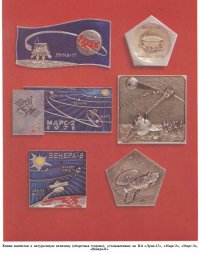
Копии вымпелов в натуральную величину (оборотная сторона), установленных на космических аппаратах "Луна -17"; "Марс-2";Марс-3";"Венера-8".
Full-size replicas of the pennants (reverse side) that were carried on the *Luna 17*, *Mars 2*, *Mars 3*, and *Venera 8* spacecraft.
Réplicas a tamaño real de banderines (reverso) instaladas en las naves espaciales Luna-17; Mars-2; Mars-3; Venera-8.

3gi6HE7iLKwyKOFZ14gicOfTG7q6lLzybsdwtwYu5ahORHHz6OFEF7JALOmvv4T1j cOintNead7P7DCfLwl5NWrw6 pJA
 
Top