• Legal Notice – MuscleMecca Forums

    MuscleMecca.com is an educational discussion platform. We do not sell, promote, or endorse any bodybuilding gear, supplements, research chemicals, or performance-enhancing substances.

    All discussions are for educational and informational purposes only. Nothing posted on this forum should be considered medical or legal advice.

    Do not attempt to sell, source, or promote illegal substances. Any such activity will result in an immediate and permanent ban and may be reported to the proper authorities.

    By using this site, you agree to comply with all forum rules, disclaimers, and applicable laws in your jurisdiction.

    Read Our Full Disclaimer and Forum Rules

  • Follow the 2026 Olympia on September 24 to 27, 2026!

History of Soviet cosmonautics.

Frimen1917

Frimen1917

Mecca V.I.P.
VIP
Joined
Jan 9, 2026
Messages
3,161
Points
63
"Чтобы познакомить читателя с факторами, действующими на человека в полёте, рассказать о тех опасностях, видимых и замаскированных, которые окружают космонавта в космическом пространстве, целесообразно разделить эти факторы на две основные группы: физические факторы полёта и различного рода психические воздействия, сопровождающие полёт и профессиональную деятельность космонавта. Конечно, деление это условно, мы его используем лишь для простоты изложения.
Итак, физические факторы. Их можно сгруппировать с большей степенью детализации. Во-первых, это факторы собственно космического пространства. Во-вторых, физические условия среды обитания в замкнутом пространстве космического корабля. И в-третьих, физические условия,или шумы, связанные с динамикой космического полета.
Основными физическими факторами открытого космического пространства, опасными для организма человека, являются: глубокий вакуум, микрометеориты, ионизирующая радиация, солнечное излучение.
Вакуум - наиболее опасный для человека фактор в открытом космосе, к тому же действующий наиболее быстро. В условиях вакуума человек теряет сознание и через 5 - 7 секунд гибнет от "вскипания" крови и эмболии.
Защита от воздействия вакуума обеспечива-ется с помощью специальных скафандров, в которых создаются необходимые общее давление газа и парциальное давление кислорода. Чтобы избежать декомпрессионных расстройств при переходе космонавта из космического корабля в скафандр, в скафандре поддерживается такая же газовая среда, как и в космическом корабле. При этом предпочтительнее использовать жёсткие скафандры, способные выдержать большое внутреннее давление газа, но не ухудшающие условия двигательной деятельности космонавта".( Л. С. Хачатурьянц; Е. В. Хрунов. "Побеждая невесомость").
........................................................................
Цит.по: ЛЕВОН СУРЕНОВИЧ ХАЧАТУРЬЯНЦ
ЕВГЕНИЙ ВАСИЛЬЕВИЧ ХРУНОВ
ПОБЕЖДАЯ НЕВЕСОМОСТЬ
Серия НАУКА И ПРОГРЕСС
Художник А. Е. Григорьев
Москва/ Издательство "Знание"/ 1985 год
.....................................................................

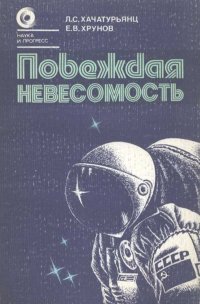
На фото обложка книги "Побеждая невесомость".

“To acquaint the reader with the factors affecting a human being during spaceflight and to describe the visible and hidden dangers surrounding a cosmonaut in outer space, it is useful to divide these factors into two main groups: the physical factors of spaceflight and the various psychological influences accompanying the flight and the professional activities of a cosmonaut. Of course, this division is only conventional and is used here simply for the sake of clarity.


Let us begin with the physical factors. They can be classified in greater detail. First, there are the factors of outer space itself. Second, the physical conditions of the habitat inside the enclosed environment of a spacecraft. Third, the physical conditions—or disturbances—associated with the dynamics of spaceflight.

The principal physical factors of outer space that are dangerous to the human body are: deep vacuum, micrometeoroids, ionizing radiation, and solar radiation.

Vacuum is the most dangerous factor for a human being in open space, and it also acts the fastest. In the vacuum of space, a person loses consciousness and, within five to seven seconds, dies as a result of the “boiling” of body fluids and gas embolism.

Protection against the effects of vacuum is provided by special spacesuits that maintain the necessary total gas pressure and the required partial pressure of oxygen. To prevent decompression disorders when a cosmonaut transfers from the spacecraft into the spacesuit, the suit contains the same gas mixture as the spacecraft. For this purpose, rigid spacesuits are preferable, since they can withstand high internal gas pressure without restricting the cosmonaut’s ability to move.”

(L. S. Khachaturyants; E. V. Khrunov,
“Overcoming Weightlessness”)

........................................................................

Quoted from:

LEVON SURENOVICH KHACHATURYANTS

EVGENY VASILYEVICH KHRUNOV

OVERCOMING WEIGHTLESSNESS

Science and Progress Series

Illustrations by A. E. Grigoryev

Moscow

Znanie Publishing House

1985

.....................................................................

Photo: Cover of the book Overcoming Weightlessness.
“Para familiarizar al lector con los factores que actúan sobre el ser humano durante un vuelo espacial y explicar los peligros visibles y ocultos que rodean al cosmonauta en el espacio exterior, resulta conveniente dividir estos factores en dos grandes grupos: los factores físicos del vuelo espacial y las distintas influencias psicológicas que acompañan tanto al vuelo como a la actividad profesional del cosmonauta. Naturalmente, esta división es convencional y se utiliza únicamente para facilitar la exposición.


Comencemos, pues, con los factores físicos. Estos pueden clasificarse con mayor detalle. En primer lugar, los factores propios del espacio exterior. En segundo lugar, las condiciones físicas del entorno habitable dentro del espacio cerrado de una nave espacial. Y, en tercer lugar, las condiciones físicas, o perturbaciones, relacionadas con la dinámica del vuelo espacial.

Los principales factores físicos del espacio exterior que representan un peligro para el organismo humano son: el vacío profundo, los micrometeoritos, la radiación ionizante y la radiación solar.

El vacío es el factor más peligroso para el ser humano en el espacio abierto y, además, el que actúa con mayor rapidez. En condiciones de vacío, una persona pierde el conocimiento y, en un plazo de cinco a siete segundos, muere como consecuencia de la “ebullición” de los líquidos corporales y de la embolia gaseosa.

La protección contra los efectos del vacío se consigue mediante trajes espaciales especiales, en los que se mantiene la presión total del gas y la presión parcial de oxígeno necesarias para la vida. Para evitar trastornos por descompresión cuando el cosmonauta pasa de la nave espacial al traje espacial, este contiene la misma atmósfera gaseosa que existe dentro de la nave. En este sentido, son preferibles los trajes espaciales rígidos, capaces de soportar una elevada presión interna del gas sin dificultar los movimientos del cosmonauta.”

(L. S. Jachaturiants; E. V. Jrúnov,
“Venciendo la ingravidez”)

........................................................................

Citado de:

LEVON SURENOVICH JACHATURIANTS

EVGUENI VASILIEVICH JRÚNOV

VENCIENDO LA INGRAVIDEZ

Serie Ciencia y Progreso

Ilustraciones de A. E. Grigóriev

Moscú

Editorial Znanie

1985

.....................................................................

Foto: Portada del libro Venciendo la ingravidez.
BpE9QAjiRVKlIvFcKhbt0qZTibhHRDF14qrboDXdFoF7tVjV7q9FoIqB9eVEHtG8dycaFM5FisNoS9yjXbzZ21p0
 
Frimen1917

Frimen1917

Mecca V.I.P.
VIP
Joined
Jan 9, 2026
Messages
3,161
Points
63
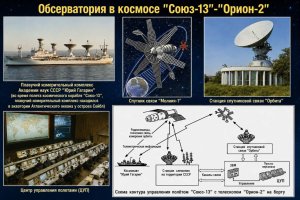
"В первый же день после выхода на орбиту «Союза-13» П. Климук и В. Лебедев включили биолого-техническую систему, именуемую «Оазис-2». Это действительно маленький оазис жизни, который в будущем позволит человеку обжить космическое пространство. На борту «Салюта-1» успешно работал «Оазис-1» с высшими растениями, на котором проверялась возможность создания космических оранжерей и огородов, Теперь эстафету исследований приняли микроорганизмы – водородные бактерии и уробактерии.

Конструктивно «Оазис-2» представляет собой два цилиндрических ферментера, в которых живут и развиваются микроорганизмы, и два шара с питательной средой, Источником энергии для водородных бактерий является водород, а не солнечный свет, как для высших растений. Подключив систему к бортовой электросети, космонавты начали эксперимент. Электроэнергия, разлагая воду на кислород и водород, дала источник жизни водородным бактериям.

Поглощая водород, они размножаются, а в процессе своей жизнедеятельности дышат кислородом. Но используют его не весь. Остаток кислорода идет на дыхание уробактерий во втором ферментере, которые, в свою очередь развиваясь, выделяют углекислый газ. Этот углекислый газ служит пищей для водородных бактерий. Таким образом получается замкнутая система, которая «извне» потребляет практически только электроэнергию. Пока «Оазис-2» совершенно изолирован от атмосферы космического корабля. Но в принципе микроорганизмы с таким же успехом могут потреблять углекислоту и другие отходы жизнедеятельности человека.

Сама биомасса бактерий может служить пищей для человека или каких-то животных «космической фермы». Да и не только космической. Работы, которые ведут ученые, имеют перспективы чисто земных применений. Водородные бактерии очень богаты белком, из которого можно будет со временем приготовлять различные корма и пищу.

«Союз-13» – сегодня маленький оазис жизни в безбрежных просторах космоса. И он несет в себе зародыш будущего. Эксперимент, который проводится сегодня, открывает путь к созданию искусственных планет".("Двое над планетой"; Специальный корреспондент «Известий» Б. КОНОВАЛОВ передает из Центра управления полетом «Союза-13»).
.........................................................................
Цит. по: ЭСТАФЕТА КОСМИЧЕСКИХ СТАРТОВ
Специальный выпуск
Составитель Б. Коновалов
Москва. Издательство «Известия», 1974 год.

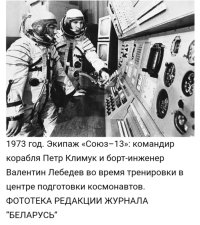
На фото: 1973 год. Экипаж космического корабля "Союз - 13": командир корабля Петр Климук и борт-инженер Валентин Лебедев во время тренировкив центре подготовки космонавтов(фототека редакции журнала "Белорусь").
“On the very first day after reaching orbit aboard Soyuz-13, P. Klimuk and V. Lebedev activated the biological-technical system known as Oasis-2. It was truly a small oasis of life that, in the future, would allow humanity to inhabit outer space. On board Salyut-1, Oasis-1 had successfully operated with higher plants, testing the possibility of creating space greenhouses and vegetable gardens. Now microorganisms—hydrogen bacteria and urobacteria—had taken over the relay of research.


Structurally, Oasis-2 consisted of two cylindrical fermenters in which the microorganisms lived and developed, as well as two spherical containers filled with nutrient medium. The source of energy for the hydrogen bacteria was hydrogen rather than sunlight, as is the case for higher plants. After connecting the system to the spacecraft’s electrical network, the cosmonauts began the experiment. Electrical energy split water into oxygen and hydrogen, thus providing the hydrogen bacteria with their source of life.

As they consumed hydrogen, the bacteria multiplied, and during their life processes they breathed oxygen. However, they did not use all of it. The remaining oxygen was used by the urobacteria in the second fermenter, which, in turn, developed and released carbon dioxide. That carbon dioxide then became food for the hydrogen bacteria. In this way, a closed system was created, requiring from outside almost nothing except electrical energy. At this stage, Oasis-2 was completely isolated from the atmosphere of the spacecraft. In principle, however, the microorganisms could just as well consume carbon dioxide and other waste products generated by humans.

The bacterial biomass itself could serve as food for humans or for animals on a future “space farm.” And not only a space farm. The work being carried out by scientists also has promising applications here on Earth. Hydrogen bacteria are extremely rich in protein, from which various animal feeds and even food for people may eventually be produced.

Today, Soyuz-13 is a small oasis of life in the boundless expanses of space. And within it lies the seed of the future. The experiment being conducted today opens the way toward the creation of artificial planets.”

(“Two Above the Planet”; Special correspondent of Izvestia B. Konovalov reporting from the Mission Control Center of Soyuz-13.)

.........................................................................

Quoted from:

RELAY OF SPACE LAUNCHES

Special Edition

Compiled by B. Konovalov

Moscow

Izvestia Publishing House

1974

Photo:
1973. Crew of the Soyuz-13 spacecraft: Commander Pyotr Klimuk and Flight Engineer Valentin Lebedev during training at the Cosmonaut Training Center.

(Photo archive of Belarus magazine.)
“Ya en el primer día después de alcanzar la órbita, P. Klimuk y V. Lébedev pusieron en funcionamiento el sistema biotecnológico denominado Oasis-2. Era, en efecto, un pequeño oasis de vida que, en el futuro, permitirá al ser humano habitar el espacio cósmico. A bordo de la estación Salyut-1 había funcionado con éxito Oasis-1, utilizando plantas superiores para comprobar la posibilidad de crear invernaderos y huertos espaciales. Ahora el relevo de la investigación lo tomaban los microorganismos: bacterias del hidrógeno y urobacterias.


Desde el punto de vista constructivo, Oasis-2 estaba formado por dos fermentadores cilíndricos donde vivían y se desarrollaban los microorganismos, así como por dos recipientes esféricos con medio nutritivo. La fuente de energía de las bacterias del hidrógeno era el hidrógeno, y no la luz solar, como ocurre con las plantas superiores. Tras conectar el sistema a la red eléctrica de la nave, los cosmonautas iniciaron el experimento. La energía eléctrica descompuso el agua en oxígeno e hidrógeno, proporcionando así la fuente de vida para las bacterias del hidrógeno.

Al consumir hidrógeno, estas bacterias se multiplicaban y, durante su actividad vital, respiraban oxígeno. Sin embargo, no lo utilizaban por completo. El oxígeno restante era empleado por las urobacterias del segundo fermentador, que, al desarrollarse, liberaban dióxido de carbono. Ese dióxido de carbono servía, a su vez, de alimento para las bacterias del hidrógeno. De este modo se obtenía un sistema cerrado que prácticamente solo requería energía eléctrica procedente del exterior. En aquel momento, Oasis-2 permanecía completamente aislado de la atmósfera de la nave espacial. Sin embargo, en principio, estos microorganismos también podrían consumir el dióxido de carbono y otros productos de desecho generados por el ser humano.

La propia biomasa bacteriana podría servir como alimento para las personas o para animales de una futura “granja espacial”. Y no solo espacial. Las investigaciones que realizan los científicos tienen también grandes perspectivas de aplicación en la Tierra. Las bacterias del hidrógeno son extraordinariamente ricas en proteínas, con las que algún día podrán elaborarse diversos alimentos para animales e incluso para las personas.

Hoy, Soyuz-13 es un pequeño oasis de vida en la inmensidad del espacio. Y en él ya está contenido el germen del futuro. El experimento que se lleva a cabo hoy abre el camino hacia la creación de planetas artificiales.”

(“Dos sobre el planeta”; Reportaje del corresponsal especial del periódico Izvestia, B. Konovalov, desde el Centro de Control de Vuelo de Soyuz-13.)

.........................................................................

Citado de:

RELEVO DE LOS LANZAMIENTOS ESPACIALES

Edición especial

Compilador: B. Konovalov

Moscú

Editorial Izvestia

1974

Fotografía:
Año 1973. La tripulación de la nave espacial Soyuz-13: el comandante Piotr Klimuk y el ingeniero de vuelo Valentín Lébedev durante un entrenamiento en el Centro de Preparación de Cosmonautas.

(Archivo fotográfico de la revista Belarus.)
UDRwguF sMR0VcA2ZKKWRXjyIa1bJoS6B2FmMvLPNsHx xfVGEBQzcl1mwu41FSXOqHwnsrBbwwTL5tqdCKxPSgk
 
Frimen1917

Frimen1917

Mecca V.I.P.
VIP
Joined
Jan 9, 2026
Messages
3,161
Points
63
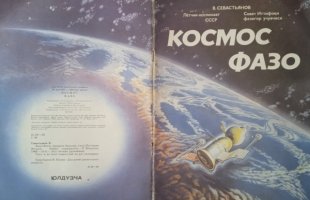
Обложка книги лётчика - космонавта Виталия Севастьянова "Космос" ("Фазо"). На русском и узбекском языках. Для детей дошкольного возраста. Художник Г. Просвиров.
Ташкент/Издательство "Юлдузча"/1988 год.
Cover of the book "Space" ("Phazо") by pilot and cosmonaut Vitaly Sevastyanov. In Russian and Uzbek. For preschoolers. Illustrated by G. Prosvirov.
Tashkent/Yulduzcha Publishing House/1988.

Portada del libro «Espacio» («Fazо»), del piloto y cosmonauta Vitaly Sevastyanov. En ruso y uzbeko. Para niños en edad preescolar. Ilustrado por G. Prosvirov.
Taskent/Editorial Yulduzcha/1988.

N2GfI mi cROT110wHxCwZ4 Q6 8WQPMwgded wSat9jsTy6r3yFlk5RPDRfw5wv0MDGYPq5QLBI2U4ECtePvqRk
 
Frimen1917

Frimen1917

Mecca V.I.P.
VIP
Joined
Jan 9, 2026
Messages
3,161
Points
63
Космические обложки советских журналов.
Журнал "Природа" 1963 год; №06.
Space-themed covers of Soviet magazines.
Priroda magazine, 1963; issue №6.
Portadas de revistas soviéticas con temática espacial.

Revista Priroda, 1963; número 6.
7 5 0 E4oQEGTaOVisdQGSlOkll56kSCl5gbMzfzXI0YsiJNAODHtIeWre3HbnLY gBWzJfJvAxNV8qRGH0E00i4
 
Frimen1917

Frimen1917

Mecca V.I.P.
VIP
Joined
Jan 9, 2026
Messages
3,161
Points
63
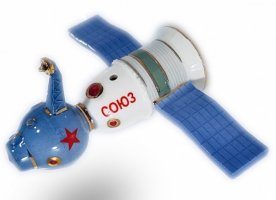
Ёлочная игрушка "Союз". Фарфоровая мастерская Дмитрия Баранова.
По ссылке можно сделать заказ.
"Union" Christmas tree ornament. Dmitry Baranov's porcelain workshop.
You can order it by following the link.
Adorno navideño «Unión». Taller de porcelana de Dmitry Baranov.

Puedes encargarlo siguiendo este enlace.
https://farfor-spb.ru/products/seriya-retro-kosmos/elochnaya-igrushka-soyuz/
BSfPRJ14FUz9b0waq4DqGDXwerXBiVN8R6ukZEFTTE1nf8vb0BdQdK14RPc8w5mmyCmAjKDaRqV672rKD4R25ybg
 
Frimen1917

Frimen1917

Mecca V.I.P.
VIP
Joined
Jan 9, 2026
Messages
3,161
Points
63
"Луна начала притягивать «Комету». Надо было тормозить ее нарастающее падение. Все надели скафандры. Заработал двигатель. Металлическое тело ракеты задрожало, оглушительный водоворот звуков наполнил кабину. Поток газа вырывался из бокового сопла, и огромный космический корабль повернулся хвостом вперед. «Комета» падала на Луну. Сперва медленно, а потом все быстрей и быстрей. Сила притяжения Луны захватила корабль в свои невидимые сети, и он мчался к ночному светилу с нарастающей быстротой,

Поверхность Луны уже занимала полнеба и, так же, как раньше Земля, казалась грандиозным круглым блюдом.

Снова заревел двигатель. «Комета», сдерживаемая газовым столбом, плавно, как на парашюте, опускалась на поверхность Луны.

Напряженное ожидание, торжественность господствовали в кабине. Все знали, что их судьба зависит теперь от механика, от его умения, его выдержки, его точности. Это, конечно, понимал и сам водитель ракеты Михаил Милько. Он припал к пульту управления грудью и, держа пальцы на белых кнопках, не отрывал взгляда от круглого экрана, на котором вырисовывались скалистые горы, черные ущелья, кратеры…

Корабль опускался в районе южного полюса Луны. Нежаркий полярный день — ведь это наилучшие условия для работы экспедиции!

Задание состояло в том, чтобы посадить корабль, если не на самом полюсе, то как можно ближе к нему. Так парашютисты спускаются в намеченный круг.

— Земля, Земля! Я — «Комета»! Идем на спуск, идем на спуск! — непрерывно повторял Загорский в микрофон.

Ольга глядела на отца, на Милько, и тысячи тревожных мыслей мелькали в ее голове. Вот оно — свершилось! Первые люди приближаются к поверхности спутника Земли! Приближаются… Не случится ли авария? Михаил так спокойно, так уверенно сидит за пультом… Все будет хорошо. Этот посадит!"(В. Бережной. "В звёздные миры").
.......................................................................
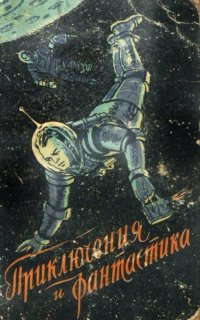
Примечание: Повесть Василия Бережного «В звездные миры» написана в классическом для фантастики 30-50-х годов ключе. Сюжет, основанный на идеях Циолковского, о полете советской ракеты на Луну не отличается новизной. Стиль повести очень похож на стиль А. Беляева, когда по названиям небольших глав можно догадаться, о чем идет речь в произведении.
..........................................................................
Цит.по: Василий Павлович Бережной
В звёздные миры
Жанр: Космическая фантастика, Научная Фантастика
Художник Б. Аржекаев.
Перевод с украинского К. Млинченко и П. Сынгаевского.
Страниц: 149

Симферополь/ Издательство "Крымиздат"/ 1958 год
“The Moon began to draw the Comet toward itself. It was necessary to slow its increasing descent. Everyone put on their spacesuits. The engine roared to life. The metal body of the rocket began to tremble, and a deafening whirl of sounds filled the cabin. A stream of gas burst from the side nozzle, and the enormous spacecraft turned tail-first. The Comet was falling toward the Moon. At first slowly, then faster and faster. The Moon's gravity had caught the ship in its invisible net, and it rushed toward the lunar surface with ever-increasing speed.


The surface of the Moon now occupied half the sky and, just as the Earth had before, resembled a gigantic round dish.

Once again the engine roared. Held back by the column of exhaust gases, the Comet descended gently, almost as if suspended beneath a parachute, toward the lunar surface.

The cabin was filled with tense anticipation and solemnity. Everyone understood that their fate now depended on the mechanic—on his skill, composure, and precision. Mikhail Milko, the pilot of the spacecraft, understood this better than anyone. Leaning over the control panel, his fingers resting on the white buttons, he never took his eyes off the circular screen, where rugged mountains, black gorges, and craters appeared one after another.

The spacecraft was descending near the Moon’s south pole. A cool polar day—surely the best possible conditions for the expedition’s work!

The mission was to land the ship either at the pole itself or as close to it as possible, just as parachutists aim for a designated landing circle.

“Earth, Earth! This is Comet! We are descending! We are descending!” Zagorsky repeated continuously into the microphone.

Olga looked at her father, then at Milko, while thousands of anxious thoughts rushed through her mind. It had finally happened! The first people were approaching the surface of Earth's natural satellite. Approaching… What if something went wrong? Mikhail sat so calmly, so confidently at the controls… Everything would be all right. He would land the ship!”

(V. Berezhnoy, “To the Starry Worlds”)

.......................................................................

Note: Vasyl Berezhnoy’s novella To the Starry Worlds was written in the classic style of science fiction of the 1930s–1950s. Its plot, inspired by Konstantin Tsiolkovsky’s ideas about a Soviet rocket flight to the Moon, is characteristic of that era. The narrative style closely resembles that of Alexander Belyaev, where even the titles of the short chapters often reveal what is about to happen in the story.

........................................................................

Quoted from:

Vasyl Pavlovych Berezhnoy

To the Starry Worlds

Genre: Space Science Fiction, Science Fiction

Illustrated by B. Arzhekaev.

Translated from Ukrainian by K. Mlinchenko and P. Syngaevsky.

149 pages.

Simferopol

Krymizdat Publishing House

1958
“La Luna comenzó a atraer a la Cometa. Era necesario frenar su descenso, que aumentaba cada segundo. Todos se pusieron los trajes espaciales. El motor rugió. El cuerpo metálico del cohete comenzó a vibrar y un estruendoso torbellino de sonidos llenó la cabina. Un chorro de gases salió despedido por la tobera lateral y la enorme nave espacial giró con la cola hacia delante. La Cometa caía hacia la Luna. Al principio lentamente, luego cada vez más deprisa. La fuerza de gravedad lunar había atrapado la nave en su red invisible, y esta se precipitaba hacia la superficie con una velocidad cada vez mayor.


La superficie de la Luna ocupaba ya medio cielo y, al igual que antes la Tierra, parecía una gigantesca fuente redonda.

El motor rugió de nuevo. Sostenida por la columna de gases de escape, la Cometa descendía suavemente, casi como si estuviera suspendida de un paracaídas.

En la cabina reinaban la tensión y la solemnidad. Todos sabían que su destino dependía ahora del mecánico, de su habilidad, de su serenidad y de su precisión. Naturalmente, el propio piloto de la nave, Mijaíl Milko, lo comprendía perfectamente. Inclinado sobre el panel de control, con los dedos apoyados sobre los botones blancos, no apartaba la vista de la pantalla circular, donde aparecían montañas escarpadas, negros desfiladeros y cráteres.

La nave descendía en la región del polo sur de la Luna. ¡Un agradable día polar! Sin duda, las mejores condiciones posibles para el trabajo de la expedición.

La misión consistía en posar la nave, si no exactamente sobre el polo, al menos lo más cerca posible de él, igual que un paracaidista intenta aterrizar dentro del círculo marcado.

—¡Tierra, Tierra! ¡Aquí Cometa! ¡Estamos descendiendo! ¡Estamos descendiendo! —repetía sin cesar Zagorski por el micrófono.

Olga miraba a su padre y luego a Milko, mientras miles de pensamientos inquietantes cruzaban su mente. ¡Por fin había sucedido! Los primeros seres humanos se acercaban a la superficie del satélite natural de la Tierra. Se acercaban… ¿Y si ocurría un accidente? Mijaíl permanecía tan tranquilo, tan seguro de sí mismo ante los controles… Todo saldría bien. ¡Él conseguiría posar la nave!

(V. Berezhnói, Hacia los mundos estrellados)

.......................................................................

Nota: La novela corta Hacia los mundos estrellados, de Vasili Berezhnói, fue escrita siguiendo el estilo clásico de la ciencia ficción de las décadas de 1930 a 1950. Su argumento, inspirado en las ideas de Konstantín Tsiolkovski sobre el vuelo de un cohete soviético a la Luna, refleja plenamente el espíritu de aquella época. El estilo narrativo recuerda mucho al de Aleksandr Beliáyev: incluso los títulos de los breves capítulos suelen anticipar el contenido de la historia.

........................................................................

Citado de:

Vasili Pávlovich Berezhnói

Hacia los mundos estrellados

Género: Ciencia ficción espacial, Ciencia ficción

Ilustraciones de B. Arzhekaev.

Traducción del ucraniano por K. Mlinchenko y P. Syngáevski.

149 páginas.

Simferópol

Editorial Krymizdat
1958


JUGv 2xgiIwXHvVsa6EWfGN0qcoY L1JFE9eTL0WssUJ3J27f97 Ba9ujyoXNKB8eM RmqLDM4bPW2c5EjbdNUO
 
Frimen1917

Frimen1917

Mecca V.I.P.
VIP
Joined
Jan 9, 2026
Messages
3,161
Points
63
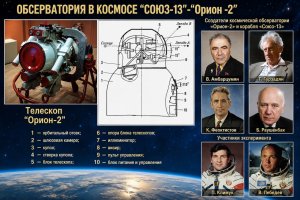
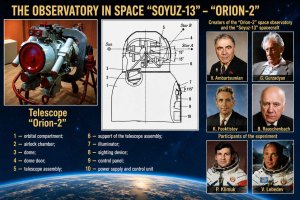
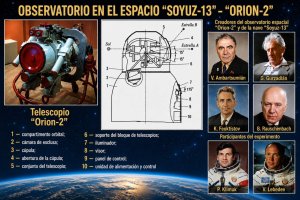
«При размещении на корабле «Союз-13» обсерватории «Орион-2» возникла необходимость в разработке нового отсека, который должен был обеспечить благоприятные условия для работы телескопа. Космическая обсерватория — это сложная, уникальная аппаратура, которую необходимо защищать от воздействия различных внешних факторов.
Как известно, на Земле телескопы защищены от воздействия атмосферных осадков, пыли, солнечного излучения специальными подвижными куполами. В космосе условия иные — там отсутствуют атмосфера, осадки и пыль, но зато сказывается воздействие космического излучения, теплового излучения от Земли, планет и Солнца. Кроме того, на вертикальном участке вывода космического корабля на орбиту, после сброса головного обтекателя ракеты, аэродинамическое воздействие со стороны набегающего воздушного потока на переднюю часть космического корабля, где размещена обсерватория «Орион-2», еще сохраняется в течение некоторого времени. Кроме того, в результате трения в атмосфере происходит разогрев внешней оболочки корабля до довольно высоких температур. Для защиты обсерватории «Орион-2» от этих воздействий был создан специальный отсек, имеющий внешние отводы в виде купола и поэтому получивший название «купол обсерватории».
Купол обсерватории на «Союзе-13» — это негерметичный отсек, устанавливаемый на шпангоут бытового отсека корабля. Он защищает обсерваторию от воздействия набегающего воздушного потока при выведении корабля на орбиту, обеспечивает тепловую защиту конструкции, а в дальнейшем, в период программной работы на орбите, обеспечивает необходимый температурный режим для обсерватории.
Конструктивно купол обсерватории состоит из следующих основных элементов: блистера, крышки бытового отсека и рамы внутри отсека, на которой крепится сама обсерватория (см. рис. 2.5).
Блистер — это сферическая оболочка, подкрепленная снаружи поперечным силовым набором, которая крепится к крышке бытового отсека опорным силовым шпангоутом. Купол обсерватории имеет люк с двумя створками, открывающимися и закрывающимися специальными электроприводами по команде космонавтов на борту. Положение створок контролируется специальными телеметрическими датчиками.
Были предусмотрены также дублирующие механические приводы: в случае отказа одного из электроприводов можно подачей команды с пульта однократно открыть створки люка из лю-
бого начального положения и зафиксировать их раз и навсегда в открытом положении.
Крышка бытового отсека — это стенка между отсеком телескопа и бытовым отсеком. Состоит она из сферической оболочки, шпангоута и двух фланцев для шлюзов, предназначенных
для транспортировки кассет с пленкой из негерметичного отсека телескопа в герметичный бытовой отсек.
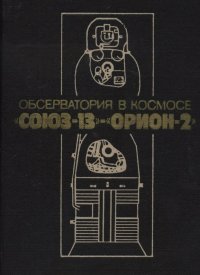
Рама, на которую крепится обсерватория «Орион-2» — это пространственная конструкция, состоящая из трубчатых стержней. С одной стороны рама имеет опорные кронштейны для ее установки на шпангоут крышки бытового отсека, а с другой стороны — специальные опоры для крепления обсерватории». («Обсерватория в космосе «Союз-13» - «Орион-2».; глава 1.4. Купол обсерватории/ под редакцией академика В. А. Амбарцумяна).
Цит. по: «Обсерватория в космосе «Союз-13» - «Орион-2»; под редакцией академика В. А. Амбарцумяна; Москва; Издательство «Машиностроение»; 1984; редакционная коллегия: академик В. А. Амбарцумян (главный редактор), член-корреспондент Академии Наук Армянской ССР Г. А. Гурзадян (заместитель главного редактора), член-корреспондент Академии Наук СССР Б. В. Раушенбах (заместитель главного редактора), летчик-космонавт СССР П. И. Климук, летчик-кос-
монавт СССР В. В. Лебедев, летчик-космонавт СССР К. П. Феоктистов.
Примечание: Книга «Обсерватория в космосе «Союз-13» - «Орион-2» посвящена крупному эксперименту, осуществленному в Советском Союзе в декабре 1973 года по программе проведения внеатмосферных астрофизических наблюдений с помощью обсерватории «Орион-2», установленной на борту космического корабля «Союз-13». Описаны конструкция и принцип работы обсерватории, ее компоновка на корабле «Союз-13» и методика ведения
астрофизических наблюдений звезд с участием космонавтов. Изложены основные научные результаты, которые были получены при этом эксперименте. Написана книга большим авторским коллективом: учеными, конструкторами, инженерами — создателями космической обсерватории «Орион-2» и корабля «Союз-13», а также космонавтами — участниками самого эксперимента. Книга предназначена для специалистов в области астрофизики и космонавтики.

На фото: обложка книги «Обсерватория в космосе «Союз-13» - «Орион-2».
“The installation of the Orion-2 observatory aboard the Soyuz-13 spacecraft required the development of a new compartment capable of providing favorable operating conditions for the telescope. A space observatory is a complex and unique scientific instrument that must be protected from various external influences.


On Earth, telescopes are protected from precipitation, dust, and solar radiation by special movable domes. In space, the conditions are different: there is no atmosphere, rain, or dust, but there is the influence of cosmic radiation and thermal radiation from the Earth, the planets, and the Sun. In addition, during the vertical phase of the launch, after the rocket’s payload fairing has been jettisoned, the aerodynamic effect of the airflow on the forward section of the spacecraft, where the Orion-2 observatory is located, continues for some time. Furthermore, friction in the atmosphere causes the spacecraft’s outer shell to heat up to rather high temperatures. To protect the Orion-2 observatory from these effects, a special compartment with an external dome-shaped fairing was created, which became known as the “observatory dome.”

The observatory dome on Soyuz-13 was an unpressurized compartment mounted on the bulkhead of the spacecraft’s habitation module. It protected the observatory from the aerodynamic forces of the airflow during ascent into orbit, provided thermal protection for the structure, and later, during orbital operations, maintained the temperature conditions required for the observatory.

Structurally, the observatory dome consisted of the following main elements: the blister dome, the habitation module hatch cover, and an internal frame on which the observatory itself was mounted (see Fig. 2.5).

The blister was a spherical shell reinforced externally with transverse structural ribs and attached to the habitation module hatch cover by a load-bearing support ring.

The observatory dome was equipped with a hatch consisting of two doors that could be opened and closed by special electric drives under commands from the cosmonauts on board. The position of the doors was monitored by special telemetry sensors.

Mechanical backup drives were also provided: in the event of failure of one of the electric drives, a command from the control panel could activate a one-time mechanical opening of the hatch from any initial position, after which the doors would remain permanently locked in the open position.

The habitation module hatch cover formed the wall separating the telescope compartment from the pressurized habitation module. It consisted of a spherical shell, a structural frame, and two flanges for transfer locks designed to transport photographic film cassettes from the unpressurized telescope compartment into the pressurized habitation module.

The frame on which the Orion-2 observatory was mounted was a spatial truss structure made of tubular members. On one side, the frame had support brackets for attachment to the bulkhead of the habitation module hatch cover, while on the opposite side it featured special mounting supports for securing the Orion-2 observatory.”

(“The Orion-2 Space Observatory aboard Soyuz-13”; Chapter 1.4. The Observatory Dome. Edited by Academician V. A. Ambartsumian.)

Quoted from:

“The Orion-2 Space Observatory aboard Soyuz-13”

Edited by Academician V. A. Ambartsumian

Moscow

Mashinostroyenie Publishing House

1984

Editorial Board:
Academician V. A. Ambartsumian (Editor-in-Chief),
Corresponding Member of the Academy of Sciences of the Armenian SSR G. A. Gurzadyan (Deputy Editor-in-Chief),
Corresponding Member of the Academy of Sciences of the USSR B. V. Raushenbakh (Deputy Editor-in-Chief),
USSR Cosmonaut P. I. Klimuk,
USSR Cosmonaut V. V. Lebedev,
USSR Cosmonaut K. P. Feoktistov.

Note:

The book “The Orion-2 Space Observatory aboard Soyuz-13” is devoted to a major experiment carried out in the Soviet Union in December 1973 under the program of extraterrestrial astrophysical observations using the Orion-2 observatory installed aboard the Soyuz-13 spacecraft. It describes the design and operating principles of the observatory, its integration with the Soyuz-13 spacecraft, and the methods used for astrophysical observations of stars with the participation of the cosmonauts. The book also presents the principal scientific results obtained during the experiment. It was written by a large team of authors, including scientists, designers, engineers—the creators of the Orion-2 space observatory and the Soyuz-13 spacecraft—as well as the cosmonauts who took part in the mission. The book is intended for specialists in astrophysics and astronautics. In the photo: the cover of the book "Observatory in Space Soyuz-13 - Orion-2".
“La instalación del observatorio Orion-2 a bordo de la nave espacial Soyuz-13 hizo necesaria la creación de un nuevo compartimento capaz de proporcionar condiciones favorables para el funcionamiento del telescopio. Un observatorio espacial es un instrumento científico complejo y único que debe estar protegido frente a diversos factores externos.


En la Tierra, los telescopios están protegidos de la lluvia, el polvo y la radiación solar mediante cúpulas móviles especiales. En el espacio las condiciones son distintas: no existen atmósfera, precipitaciones ni polvo, pero sí influyen la radiación cósmica y la radiación térmica procedente de la Tierra, de los planetas y del Sol. Además, durante la fase vertical del lanzamiento, después de desprenderse la cofia del cohete, la parte delantera de la nave espacial, donde se encontraba el observatorio Orion-2, seguía sometida durante cierto tiempo al efecto aerodinámico del flujo de aire. Asimismo, el rozamiento con la atmósfera calentaba la superficie exterior de la nave hasta temperaturas bastante elevadas. Para proteger el observatorio Orion-2 de estos efectos se diseñó un compartimento especial con una cubierta exterior en forma de cúpula, que recibió el nombre de “cúpula del observatorio”.

La cúpula del observatorio del Soyuz-13 era un compartimento no presurizado montado sobre el mamparo del módulo habitable de la nave. Protegía el observatorio de la acción del flujo de aire durante la inserción orbital, proporcionaba protección térmica a la estructura y, posteriormente, durante el trabajo en órbita, mantenía el régimen térmico necesario para el funcionamiento del observatorio.

Desde el punto de vista estructural, la cúpula del observatorio estaba formada por los siguientes elementos principales: la cubierta esférica (blíster), la tapa del módulo habitable y un bastidor interior sobre el que iba montado el propio observatorio (véase la figura 2.5).

El blíster consistía en una carcasa esférica reforzada exteriormente mediante elementos estructurales transversales y unida a la tapa del módulo habitable mediante un anillo estructural de soporte.

La cúpula disponía de una escotilla formada por dos hojas que podían abrirse y cerrarse mediante accionamientos eléctricos especiales, controlados por los cosmonautas desde el interior de la nave. La posición de las hojas era supervisada mediante sensores telemétricos especiales.

También se habían previsto accionamientos mecánicos de reserva: en caso de avería de uno de los accionamientos eléctricos, bastaba una orden desde el panel de control para abrir una sola vez la escotilla desde cualquier posición inicial, quedando después bloqueada definitivamente en posición abierta.

La tapa del módulo habitable constituía la pared que separaba el compartimento del telescopio del módulo habitable presurizado. Estaba formada por una carcasa esférica, un mamparo estructural y dos bridas con esclusas destinadas al traslado de los casetes de película fotográfica desde el compartimento no presurizado del telescopio hasta el módulo habitable presurizado.

El bastidor sobre el que se montaba el observatorio Orion-2 era una estructura espacial formada por tubos metálicos. En un extremo disponía de soportes para fijarlo al mamparo de la tapa del módulo habitable y, en el otro, de apoyos especiales destinados a sujetar el observatorio Orion-2.”

(“El observatorio espacial Orion-2 a bordo del Soyuz-13”; Capítulo 1.4. La cúpula del observatorio. Bajo la dirección del académico V. A. Ambartsumián.)

Citado de:

“El observatorio espacial Orion-2 a bordo del Soyuz-13”

Bajo la dirección del académico V. A. Ambartsumián

Moscú

Editorial Mashinostroyenie

1984

Consejo editorial:
Académico V. A. Ambartsumián (director),
Miembro correspondiente de la Academia de Ciencias de la RSS de Armenia G. A. Gurzadián (subdirector),
Miembro correspondiente de la Academia de Ciencias de la URSS B. V. Raushenbaj (subdirector),
Cosmonauta de la URSS P. I. Klimuk,
Cosmonauta de la URSS V. V. Lébedev,
Cosmonauta de la URSS K. P. Feoktístov.

Nota:

El libro “El observatorio espacial Orion-2 a bordo del Soyuz-13” está dedicado al importante experimento realizado en la Unión Soviética en diciembre de 1973 dentro del programa de observaciones astrofísicas fuera de la atmósfera mediante el observatorio Orion-2 instalado a bordo de la nave Soyuz-13. En él se describen el diseño y el principio de funcionamiento del observatorio, su integración en la nave Soyuz-13 y la metodología utilizada para realizar observaciones astrofísicas de las estrellas con la participación de los cosmonautas. También se presentan los principales resultados científicos obtenidos durante dicho experimento. La obra fue escrita por un amplio colectivo de científicos, diseñadores e ingenieros —creadores del observatorio espacial Orion-2 y de la nave Soyuz-13—, así como por los cosmonautas participantes en el experimento. El libro está destinado a especialistas en astrofísica y cosmonáutica.En la foto: la portada del libro "Observatorio en el Espacio Soyuz-13 - Orión-2".
 viber 2026 07 23 19 07 20 822
 

MuscleMecca Crew

Mecca Staff
Frimen1917

Frimen1917

Mecca V.I.P.
VIP
Joined
Jan 9, 2026
Messages
3,161
Points
63
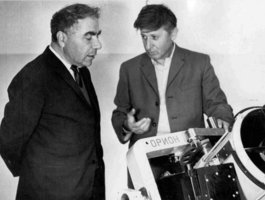
На фото слева направо: В. Амбарцумян, Г. Гурзадян.
In the photo from left to right: V. Ambartsumyan, G. Gurzadyan.
En la foto, de izquierda a derecha: V. Ambartsumyan, G. Gurzadyan.

 viber 2026 07 25 01 51 49 829
 
Frimen1917

Frimen1917

Mecca V.I.P.
VIP
Joined
Jan 9, 2026
Messages
3,161
Points
63
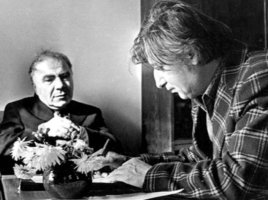
На фото слева направо: В. Амбарцумян, Г. Гурзадян.
In the photo from left to right: V. Ambartsumyan, G. Gurzadyan.
En la foto, de izquierda a derecha: V. Ambartsumyan, G. Gurzadyan.

 viber 2026 07 25 01 51 48 458
 
Frimen1917

Frimen1917

Mecca V.I.P.
VIP
Joined
Jan 9, 2026
Messages
3,161
Points
63
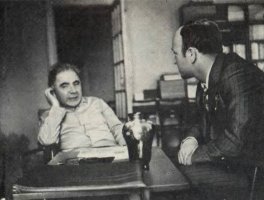
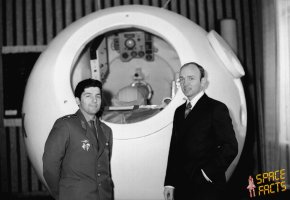
Бюраканская обсерватория. На фото слева направо: астроном Виктор Амбарцумян, космонавт Валентин Лебедев.
Byurakan Observatory. In the photo from left to right: astronomer Viktor Ambartsumyan, cosmonaut Valentin Lebedev.
Observatorio de Byurakan. En la foto, de izquierda a derecha: el astrónomo Viktor Ambartsumyan y el cosmonauta Valentin Lebedev.

 viber 2026 07 25 01 52 12 672
 
Frimen1917

Frimen1917

Mecca V.I.P.
VIP
Joined
Jan 9, 2026
Messages
3,161
Points
63
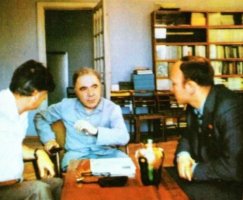
Бюраканская обсерватория. Обсуждение результатов полёта корабля "Союз" с телескопом "Орион - 2". На фото слева направо : академики Г. Гурзадян, В. Амбарцумян, космонавт В. Лебедев.
Byurakan Observatory. Discussion of the results of the Soyuz spacecraft's flight with the Orion-2 telescope. In the photo, left to right: Academicians G. Gurzadyan and V. Ambartsumyan, cosmonaut V. Lebedev.
Observatorio de Byurakan. Discusión sobre los resultados del vuelo de la nave Soyuz con el telescopio Orión-2. En la foto, de izquierda a derecha: los académicos G. Gurzadyan y V. Ambartsumyan, y el cosmonauta V. Lebedev.

ERPcuAiS6X07JQptnjJU0GG5VIBPiPmslKds4viNBaqDAMBO5aEHh7eHf2EyyvacpgSHX5DdYyj51POWIZJa8eoM
 
Frimen1917

Frimen1917

Mecca V.I.P.
VIP
Joined
Jan 9, 2026
Messages
3,161
Points
63
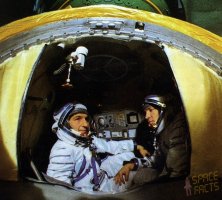
Космонавты В. Лебедев(слева) и П. Климук(справа). во время подготовки к полету на космическом корабле "Союз-13".
Cosmonauts V. Lebedev (left) and P. Klimuk (right) during preparation for flight on the Soyuz-13 spacecraft.
Los cosmonautas V. Lebedev (izquierda) y P. Klimuk (derecha) durante los preparativos para el vuelo a bordo de la nave espacial Soyuz-13.

Soyuz 13 3
 
Frimen1917

Frimen1917

Mecca V.I.P.
VIP
Joined
Jan 9, 2026
Messages
3,161
Points
63
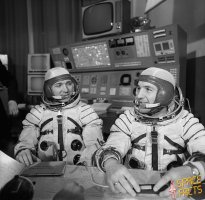
На фото космонавты Петр Климук (слева) и Валентин Лебедев(справа).
Pictured are cosmonauts Pyotr Klimuk (left) and Valentin Lebedev (right).
En la imagen aparecen los cosmonautas Pyotr Klimuk (izquierda) y Valentin Lebedev (derecha).

Soyuz 13 6
 
Frimen1917

Frimen1917

Mecca V.I.P.
VIP
Joined
Jan 9, 2026
Messages
3,161
Points
63
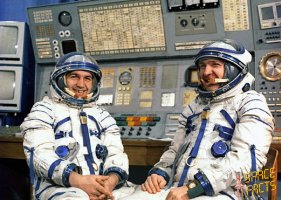
На фото космонавты Петр Климук (слева) и Валентин Лебедев(справа).
Pictured are cosmonauts Pyotr Klimuk (left) and Valentin Lebedev (right).
En la imagen aparecen los cosmonautas Pyotr Klimuk (izquierda) y Valentin Lebedev (derecha).

Soyuz 13
 
Frimen1917

Frimen1917

Mecca V.I.P.
VIP
Joined
Jan 9, 2026
Messages
3,161
Points
63
На фото космонавты Петр Климук (слева) и Валентин Лебедев(справа).
Pictured are cosmonauts Pyotr Klimuk (left) and Valentin Lebedev (right).
En la imagen aparecen los cosmonautas Pyotr Klimuk (izquierda) y Valentin Lebedev (derecha).


Soyuz 13 4
 
Frimen1917

Frimen1917

Mecca V.I.P.
VIP
Joined
Jan 9, 2026
Messages
3,161
Points
63
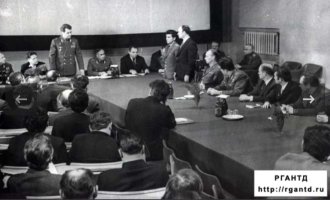
Заседание Государственной комиссии по запуску космического корабля "Союз-13". Космодром Байконур,7декабря 1973 г.Автор съемки не установлен. РГАНДТ. Ф.194. Оп.2. Д.20.Л.3.
Meeting of the State Commission for the launch of the Soyuz-13 spacecraft. Baikonur Cosmodrome, December 7, 1973. Photographer unknown. RGANDT. F.194. Op.2. D.20.L.3.
Reunión de la Comisión Estatal para el lanzamiento de la nave espacial Soyuz-13. Cosmódromo de Baikonur, 7 de diciembre de 1973. Fotógrafo desconocido. RGANDT. F.194. Op.2. D.20.L.3.
 viber 2026 07 25 08 30 20 760
 
Top