• Legal Notice – MuscleMecca Forums

    MuscleMecca.com is an educational discussion platform. We do not sell, promote, or endorse any bodybuilding gear, supplements, research chemicals, or performance-enhancing substances.

    All discussions are for educational and informational purposes only. Nothing posted on this forum should be considered medical or legal advice.

    Do not attempt to sell, source, or promote illegal substances. Any such activity will result in an immediate and permanent ban and may be reported to the proper authorities.

    By using this site, you agree to comply with all forum rules, disclaimers, and applicable laws in your jurisdiction.

    Read Our Full Disclaimer and Forum Rules

  • Follow the 2026 Olympia on September 24 to 27, 2026!

History of Soviet cosmonautics.

Frimen1917

Frimen1917

Mecca V.I.P.
VIP
Joined
Jan 9, 2026
Messages
3,161
Points
63
Создатели космической обсерватории "Орион-2" и корабля "Союз-13". Виктор Амбарцумян.
Астрофизик, доктор физико-математических наук, профессор, академик Академии Наук СССР и Академии Наук Армянской ССР, заслуженный деятель науки Армянской ССР

Родился 18 сентября 1908 года в Тифлисе. В 1924-1928 гг. учился и окончил физико-математический факультет Ленинградского (ныне Санкт-Петербургского) государственного университета. В 1928-1931 гг. учился в аспирантуре Главной (Пулковской) астрономической обсерватории Академии наук СССР. В 1935 году ему была присвоена степень доктора физико-математических наук без защиты диссертации.

В 1931-1944 гг. В. Амбарцумян работал доцентом, затем профессором в Ленинградском университете, в последствии - заведующим основанной им самим первой в СССР кафедрой астрофизики, а с 1940 года — проректором по научной работе.

В 1943 году стараниями И. Орбели и В. Амбарцумяна в Ереване была основана Академия наук АССР. В. Амбарцумян стал одним из ее членов-основателей и первым вице-президентом. В 1947 году он был избран президентом Академии Наук Армянской ССР и руководил ею почти полвека.

В 1946 году В. Амбарцумян основал кафедру астрофизики ЕГУ и Бюраканскую обсерваторию. Исследования, проводимые в обсерватории, предопределили основные направления развития астрофизики во второй половине ХХ века. Велика заслуга учёного в развитии физики и математики в Армении, повышении уровня исследований в области естественных и технических наук, создании новых, современных научных направлений и подготовке высококвалифицированных специалистов. Он внёс большой вклад в развитие радиоэлектронной, химической, машиностроительной и горнодобывающей промышленности Армении.Вклад В. Амбарцумяна в исследования в области теоретической астрофизики, физики звёзд и туманностей, звёздной динамики, внегалактической астрономии, в исследования эволюции звёзд и галактик открыл новую страницу в истории мировой науки. Ряд принципов, в том числе принцип решения обратных задач инвариантности, назван именем В. Амбарцумяна. Он разработал основы статистической механики звёздных систем, открыл явление постепенного распада звёздных скоплений и предложил принцип определения их возраста.

Применив новые методы к двойным звездам, он обосновал короткую шкалу возраста Галактики (сто миллиардов лет). Многие развитые им идеи выходили за рамки астрофизики, приобретая общеметодологическое значение, и стимулировали развитие других областей науки.

В 1948-1950 гг. В. Амбарцумян был избран вице-президентом Международного астрономического союза, 1961-1964 гг. - президентом, 1968-1972 гг. - президентом Международного совета научных союзов (Международный совет по науке).

В. Амбарцумян основал журнал «Астрофизика» и до 1986 г. был её главным редактором, а также первым главным редактором и председателем редакционной коллегии «Армянской советской энциклопедии».С 1993 года и до конца жизни был почётным президентом Национальной Академии Наук Республики Армении.

Исключительные заслуги В. Амбарцумяна в развитии мировой науки были оценены как на родине, так и за рубежом. В 1946 году и в 1950 году награждён Государственными премиями СССР, в 1995 году - Государственной премией РФ. Он был избран почётным членом академий и научных обществ США, Англии, Бельгии, Австрии, Франции, Германии, Канады, Австралии, Италии, Греции, Польши и других стран, почётным доктором многих университетов.

Скончался в 12 августа 1996 года в Бюракане.

Именем В. Амбарцумяна названы Бюраканская обсерватория Национальной академии наук Республики Армения, кафедра общей физики и астрофизики ЕГУ, общество «Знание», Ереванская общеобразовательная школа № 12.
The Creators of the Orion-2 Space Observatory and the Soyuz-13 Spacecraft.
Viktor Ambartsumian.

Astrophysicist, Doctor of Physical and Mathematical Sciences, Professor, Academician of the Academy of Sciences of the USSR and the Academy of Sciences of the Armenian SSR, Honored Scientist of the Armenian SSR.

Viktor Ambartsumian was born on September 18, 1908, in Tiflis (now Tbilisi, Georgia).

From 1924 to 1928, he studied at the Faculty of Physics and Mathematics of Leningrad State University (now Saint Petersburg State University), graduating with distinction.

Between 1928 and 1931, he pursued postgraduate studies at the Main (Pulkovo) Astronomical Observatory of the Academy of Sciences of the USSR.

In 1935, he was awarded the degree of Doctor of Physical and Mathematical Sciences without defending a dissertation, in recognition of his outstanding scientific achievements.

From 1931 to 1944, Ambartsumian worked first as an Associate Professor and later as a Professor at Leningrad State University. He subsequently became the head of the first Department of Astrophysics in the USSR, which he himself founded. Beginning in 1940, he also served as Vice-Rector for Scientific Research.

In 1943, thanks to the efforts of Ivan Orbeli and Viktor Ambartsumian, the Academy of Sciences of the Armenian SSR was established in Yerevan. Ambartsumian became one of its founding members and its first Vice-President.

In 1947, he was elected President of the Academy of Sciences of the Armenian SSR and led it for almost half a century.

In 1946, Ambartsumian founded the Department of Astrophysics at Yerevan State University and established the Byurakan Astrophysical Observatory.

The scientific research carried out at the observatory defined many of the principal directions of astrophysics during the second half of the twentieth century.

He made an enormous contribution to the development of physics and mathematics in Armenia, raising the level of research in the natural and engineering sciences, creating new scientific disciplines, and training highly qualified specialists.

He also played an important role in the development of Armenia's radio electronics, chemical, mechanical engineering, and mining industries.

Ambartsumian's contributions to theoretical astrophysics, the physics of stars and nebulae, stellar dynamics, extragalactic astronomy, and the study of the evolution of stars and galaxies opened an entirely new chapter in the history of world science.

Several scientific principles bear his name, including the principle for solving inverse problems based on invariance.

He developed the foundations of the statistical mechanics of stellar systems, discovered the gradual disintegration of star clusters, and proposed a method for determining their age.

Applying new methods to the study of binary stars, he substantiated a short timescale for the age of the Galaxy (one hundred billion years).

Many of the ideas he developed extended beyond astrophysics, acquiring broad methodological significance and stimulating the development of many other branches of science.

From 1948 to 1950, Ambartsumian served as Vice-President of the International Astronomical Union.

From 1961 to 1964, he served as President of the International Astronomical Union.

From 1968 to 1972, he was President of the International Council of Scientific Unions (now the International Science Council).

Ambartsumian founded the scientific journal Astrophysics and served as its Editor-in-Chief until 1986.

He was also the first Editor-in-Chief and Chairman of the Editorial Board of the Armenian Soviet Encyclopedia.

From 1993 until the end of his life, he served as Honorary President of the National Academy of Sciences of the Republic of Armenia.

Ambartsumian's exceptional contributions to world science were recognized both in his homeland and internationally.

He received the USSR State Prize in 1946 and again in 1950, and in 1995 he was awarded the State Prize of the Russian Federation.

He was elected an honorary member of academies and scientific societies in the United States, the United Kingdom, Belgium, Austria, France, Germany, Canada, Australia, Italy, Greece, Poland, and many other countries.

He was also awarded honorary doctorates by numerous universities around the world.

Viktor Ambartsumian passed away on August 12, 1996, in Byurakan.

His name has been given to the Byurakan Astrophysical Observatory of the National Academy of Sciences of the Republic of Armenia, the Department of General Physics and Astrophysics at Yerevan State University, the "Knowledge" Society, and Secondary School No. 12 in Yerevan.

Los creadores del observatorio espacial «Orión-2» y de la nave espacial «Soyuz-13».
Viktor Ambartsumián.


Astrofísico, Doctor en Ciencias Físico-Matemáticas, profesor, académico de la Academia de Ciencias de la URSS y de la Academia de Ciencias de la RSS de Armenia, Trabajador Honorario de la Ciencia de la RSS de Armenia.

Viktor Ambartsumián nació el 18 de septiembre de 1908 en Tiflis (actual Tiflis, Georgia).

Entre 1924 y 1928 estudió en la Facultad de Física y Matemáticas de la Universidad Estatal de Leningrado (actual Universidad Estatal de San Petersburgo), donde se graduó con éxito.

De 1928 a 1931 realizó estudios de posgrado en el Observatorio Astronómico Principal (Púlkovo) de la Academia de Ciencias de la URSS.

En 1935 obtuvo el grado de Doctor en Ciencias Físico-Matemáticas sin necesidad de defender una tesis doctoral, en reconocimiento a sus destacados logros científicos.

Entre 1931 y 1944 trabajó primero como profesor asociado y posteriormente como profesor de la Universidad Estatal de Leningrado. Más tarde dirigió el primer Departamento de Astrofísica de la Unión Soviética, fundado por él mismo. Desde 1940 ocupó además el cargo de vicerrector de investigación científica.

En 1943, gracias a los esfuerzos de Iván Orbeli y Viktor Ambartsumián, se fundó en Ereván la Academia de Ciencias de la RSS de Armenia. Ambartsumián fue uno de sus miembros fundadores y su primer vicepresidente.

En 1947 fue elegido presidente de la Academia de Ciencias de la RSS de Armenia y dirigió la institución durante casi medio siglo.

En 1946 fundó el Departamento de Astrofísica de la Universidad Estatal de Ereván y el Observatorio Astrofísico de Byurakán.

Las investigaciones realizadas en este observatorio determinaron muchas de las principales direcciones del desarrollo de la astrofísica durante la segunda mitad del siglo XX.

El científico realizó una enorme contribución al desarrollo de la física y las matemáticas en Armenia, elevó el nivel de las investigaciones en las ciencias naturales y técnicas, creó nuevas disciplinas científicas y formó especialistas altamente cualificados.

También desempeñó un importante papel en el desarrollo de las industrias radioelectrónica, química, de ingeniería mecánica y minera de Armenia.

Las contribuciones de Ambartsumián a la astrofísica teórica, la física de las estrellas y las nebulosas, la dinámica estelar, la astronomía extragaláctica y el estudio de la evolución de las estrellas y las galaxias abrieron una nueva etapa en la historia de la ciencia mundial.

Varios principios científicos llevan su nombre, entre ellos el principio para la resolución de problemas inversos basado en la invariancia.

Desarrolló los fundamentos de la mecánica estadística de los sistemas estelares, descubrió el fenómeno de la desintegración gradual de los cúmulos estelares y propuso un método para determinar su edad.

Aplicando nuevos métodos al estudio de las estrellas dobles, fundamentó una escala corta para la edad de la Galaxia (cien mil millones de años).

Muchas de las ideas desarrolladas por Ambartsumián trascendieron el ámbito de la astrofísica, adquirieron un significado metodológico general y estimularon el desarrollo de numerosas ramas de la ciencia.

Entre 1948 y 1950 fue elegido vicepresidente de la Unión Astronómica Internacional.

Entre 1961 y 1964 fue presidente de la Unión Astronómica Internacional.

Entre 1968 y 1972 fue presidente del Consejo Internacional de Uniones Científicas (actual Consejo Internacional de Ciencias).

Ambartsumián fundó la revista científica «Astrofísica» y fue su redactor jefe hasta 1986.

Asimismo, fue el primer redactor jefe y presidente del consejo editorial de la «Enciclopedia Soviética Armenia».

Desde 1993 y hasta el final de su vida fue presidente honorario de la Academia Nacional de Ciencias de la República de Armenia.

Los excepcionales méritos científicos de Viktor Ambartsumián fueron reconocidos tanto en su país como en el extranjero.

Recibió el Premio Estatal de la URSS en 1946 y nuevamente en 1950, y en 1995 fue galardonado con el Premio Estatal de la Federación de Rusia.

Fue elegido miembro honorario de academias y sociedades científicas de los Estados Unidos, el Reino Unido, Bélgica, Austria, Francia, Alemania, Canadá, Australia, Italia, Grecia, Polonia y muchos otros países.

También recibió el título de doctor honoris causa de numerosas universidades del mundo.

Viktor Ambartsumián falleció el 12 de agosto de 1996 en Byurakán.

En su honor llevan su nombre el Observatorio Astrofísico de Byurakán de la Academia Nacional de Ciencias de la República de Armenia, el Departamento de Física General y Astrofísica de la Universidad Estatal de Ereván, la Sociedad «Conocimiento» y la Escuela Secundaria Nº 12 de Ereván.
Hambartsumyan viktor 1546

Viktor Ambartsumian published 1968
 
Frimen1917

Frimen1917

Mecca V.I.P.
VIP
Joined
Jan 9, 2026
Messages
3,161
Points
63
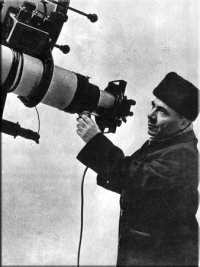
На фото: Виктор Амбарцумян у телескопа.
In the photo: Viktor Ambartsumyan at the telescope.
En la foto: Viktor Ambartsumyan en el telescopio.
Clipboard 08 03 2026 01
 
Frimen1917

Frimen1917

Mecca V.I.P.
VIP
Joined
Jan 9, 2026
Messages
3,161
Points
63
Сайт посвященный Виктору Амбарцумяну.
A website dedicated to Viktor Ambartsumyan.
Un sitio web dedicado a Viktor Ambartsumyan.
Viktor Ambartsumian
Ambartsumian2
 
Frimen1917

Frimen1917

Mecca V.I.P.
VIP
Joined
Jan 9, 2026
Messages
3,161
Points
63
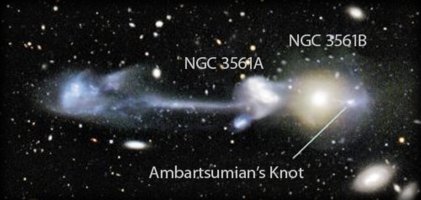
Эллиптическая галактика NGC 3561В имеет струю, исходящую из ее центральной области и содержащую сгущение очень высокой светимости (это сгущение и есть Узел Амбарцумяна — Ambartsumian's Knot, — яркая точка, указанная на рис. стрелкой), сравнимое со светимостью таких, например, галактик, как спутники туманности Андромеды.
Нет сомнения, что мы имеем дело с грандиозным выбросом из ядра. Этот выброс представляет собой по существу карликовую галактику, отделившуюся от ядра гигантской галактики.
The elliptical galaxy NGC 3561B has a jet emerging from its central region that contains an exceptionally luminous condensation. This condensation is known as Ambartsumian's Knot — the bright point indicated by the arrow in the figure. Its luminosity is comparable to that of entire galaxies, such as the satellite galaxies of the Andromeda Galaxy.


There is no doubt that we are observing a tremendous ejection from the galactic nucleus. This ejected object is, in essence, a dwarf galaxy that has separated from the nucleus of the giant galaxy.
La galaxia elíptica NGC 3561B posee un chorro que emerge de su región central y contiene una condensación de luminosidad extraordinariamente alta. Esta condensación se conoce como el Nudo de Ambartsumian (Ambartsumian's Knot), el punto brillante señalado por la flecha en la figura. Su luminosidad es comparable a la de galaxias completas, como las galaxias satélite de la Galaxia de Andrómeda.

No cabe duda de que estamos observando una gigantesca eyección procedente del núcleo galáctico. Este material expulsado constituye, en esencia, una galaxia enana que se ha separado del núcleo de la galaxia gigante.

Ambartsumians Knot site
 
Frimen1917

Frimen1917

Mecca V.I.P.
VIP
Joined
Jan 9, 2026
Messages
3,161
Points
63
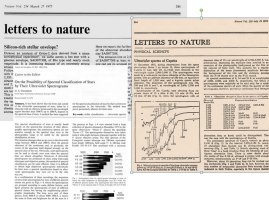
Ультрафиолетовые спектры горячих звёзд

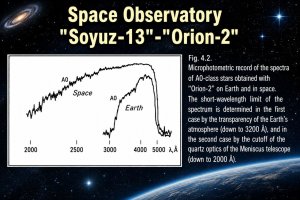
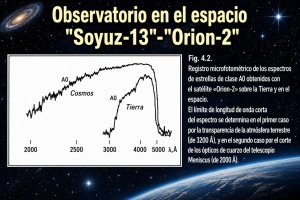
Приступая к обработке и измерениям спектральных снимков, полученных с помощью «Ориона-2», мы первым делом решили проверить, в какой степени истинное излучение звёзд в ультрафиолетовом диапазоне соответствует вычисленному на основе современных теорий строения звёздных атмосфер. При этом мы начали с горячих звёзд, имея в виду, что как раз для высокотемпературных звёзд теория достигла наибольших успехов (рис. 4.2).

Горячие звёзды, для которых получены «орионовские» спектрограммы, относительно слабы и поэтому находятся сравнительно далеко от нас. В таких условиях найденные из непосредственных измерений распределения энергии в непрерывных спектрах звёзд в ультрафиолете подлежат исправлению с учётом влияния межзвёздного селективного поглощения. В нашем случае это осуществляется применением одного из двух методов в зависимости от того, что известно для данной звезды — избыток цвета E(B−V) или расстояние r.

В первом случае — назовём его «методом E(B−V)» — истинная величина интенсивности на данной длине волны λ непрерывного спектра Δm′λ, выраженная в звёздных величинах, определяется из следующего соотношения:

Δm′λ = Δmλ + (Xλ − Xλ₀)E(B−V),
(а) где Δmλ есть наблюдаемая интенсивность, также выраженная в звёздных величинах и на той же длине волны; очевидно, при этом Δmλ будет представлена по отношению к потоку излучения Fλ₀ на некоей условной длине волны λ₀:

Δmλ = −2,5 lg(Fλ / Fλ₀).

В приведённых соотношениях Xλ = E(λ−V)/E(B−V), причём усреднённые числовые значения этой безразмерной величины (Xλ) были найдены многими исследователями по данным разнообразных внеатмосферных экспериментов (Nandy и др.). Что касается λ₀, то её чаще всего мы принимали равной λ₀ = 3200 Å, иногда λ₀ = 3000 Å.

Во втором случае — «метод расстояний» — исправленные интенсивности Δm′λ определяются следующим образом:

Δm′λ = Δmλ − (aλ − aλ₀)r,
(б) где aλ — величина межзвёздного селективного поглощения на 1 килопарсек; усреднённые численные значения этого поглощения, выраженные в звёздных величинах, также известны, чаще всего для направлений отдельных звёзд в Галактике.

Разумеется, в каждом отдельном случае мы отдаём предпочтение «методу E(B−V)», если для рассматриваемой звезды известна наблюдаемая величина E(B−V). И лишь в случае отсутствия этих данных мы прибегаем ко второму способу — «методу r».


(Дж. Б. Оганесян)
Ultraviolet Spectra of Hot Stars


When we began processing and measuring the spectral images obtained with Orion-2, our first task was to determine to what extent the actual ultraviolet radiation of stars corresponds to that predicted by modern theories of stellar atmospheres. We started with hot stars because it is precisely for high-temperature stars that the theory has achieved its greatest success (Fig. 4.2).

The hot stars for which the "Orion" spectrograms were obtained are relatively faint and therefore located at considerable distances from us. Under these conditions, the energy distribution in the ultraviolet continuum spectra derived directly from the observations must be corrected for the effects of interstellar selective absorption. In our work, this correction is carried out using one of two methods, depending on whether the color excess E(B−V) or the distance r is known for the star.

In the first case—referred to here as the "E(B−V) method"—the true intensity of the continuous spectrum at the wavelength λ, expressed in stellar magnitudes as Δm′λ, is determined by the following relation:

Δm′λ = Δmλ + (Xλ − Xλ₀)E(B−V),

(a) where Δmλ is the observed intensity, also expressed in stellar magnitudes and measured at the same wavelength. In this case, Δmλ is given relative to the radiation flux Fλ₀ at a selected reference wavelength λ₀:

Δmλ = −2.5 log(Fλ / Fλ₀).

In the above relations, Xλ = E(λ−V)/E(B−V). The average numerical values of this dimensionless quantity (Xλ) were determined by many researchers using data from various space-based experiments (Nandy et al.). As for λ₀, we most often adopted λ₀ = 3200 Å, and in some cases λ₀ = 3000 Å.

In the second case—the "distance method"—the corrected intensities Δm′λ are determined as follows:

Δm′λ = Δmλ − (aλ − aλ₀)r,
(b) where aλ is the value of interstellar selective absorption per kiloparsec. The average numerical values of this absorption, expressed in stellar magnitudes, are also known, most commonly for the directions of individual stars in our Galaxy.

Naturally, in each individual case we give preference to the "E(B−V) method" whenever the observed value of E(B−V) is available for the star under consideration. Only in the absence of these data do we resort to the second approach—the "distance method."


(J. B. Oganesyan)
Espectros Ultravioleta de Estrellas Calientes


Al comenzar el procesamiento y la medición de las imágenes espectrales obtenidas con Orión-2, lo primero que hicimos fue comprobar en qué medida la radiación ultravioleta real de las estrellas coincide con la calculada a partir de las teorías modernas sobre la estructura de las atmósferas estelares. Empezamos con las estrellas calientes, ya que precisamente para las estrellas de alta temperatura la teoría había alcanzado sus mayores éxitos (Fig. 4.2).

Las estrellas calientes para las que se obtuvieron los espectrogramas de "Orión" son relativamente débiles y, por lo tanto, se encuentran a grandes distancias de nosotros. En estas condiciones, la distribución de energía en los espectros continuos del ultravioleta, obtenida directamente a partir de las observaciones, debe corregirse teniendo en cuenta la absorción selectiva interestelar. En nuestro caso, esta corrección se realiza utilizando uno de dos métodos, dependiendo de si para la estrella se conoce el exceso de color E(B−V) o la distancia r.

En el primer caso, al que llamaremos el "método E(B−V)", la intensidad verdadera del espectro continuo en la longitud de onda λ, expresada en magnitudes estelares como Δm′λ, se determina mediante la siguiente relación:

Δm′λ = Δmλ + (Xλ − Xλ₀)E(B−V),
(a) donde Δmλ es la intensidad observada, también expresada en magnitudes estelares y medida en la misma longitud de onda. En este caso, Δmλ se expresa con respecto al flujo de radiación Fλ₀ en una longitud de onda de referencia λ₀:

Δmλ = −2,5 log(Fλ / Fλ₀).

En las relaciones anteriores, Xλ = E(λ−V)/E(B−V). Los valores medios de esta magnitud adimensional (Xλ) fueron determinados por numerosos investigadores a partir de datos obtenidos en diversos experimentos espaciales (Nandy y otros). En cuanto a λ₀, generalmente adoptábamos λ₀ = 3200 Å y, en algunos casos, λ₀ = 3000 Å.

En el segundo caso, denominado el "método de la distancia", las intensidades corregidas Δm′λ se determinan de la siguiente manera:

Δm′λ = Δmλ − (aλ − aλ₀)r,
(b) donde aλ representa la absorción selectiva interestelar por kilopársec. Los valores medios de esta absorción, expresados en magnitudes estelares, también son conocidos, principalmente para las direcciones de estrellas individuales de nuestra galaxia.

Naturalmente, en cada caso particular damos preferencia al "método E(B−V)" siempre que se conozca el valor observado de E(B−V) para la estrella considerada. Solo cuando estos datos no están disponibles recurrimos al segundo procedimiento: el "método de la distancia".


(J. B. Oganesyan)
Izobrazenie viber 2026 08 04 09 26 01 009
Izobrazenie viber 2026 08 04 09 26 01 102

Izobrazenie viber 2026 08 04 09 26 01 187
 
Frimen1917

Frimen1917

Mecca V.I.P.
VIP
Joined
Jan 9, 2026
Messages
3,161
Points
63

Виктор Амбарцумян

100-летие со дня рождения Виктора Амбарцумяна. Виктор Амазаспович Амбарцумян (арм. Վիկտոր Համբարձումյան, 5(18) сентября 1908, Тифлис — 12 августа 1996, Бюракан) — выдающийся советский учёный, один из основателей теоретической астрофизики. Амбарцумян работал в области физики звёзд и туманностей, звёздной астрономии и динамики звёздных систем, космогонии звёзд и галактик. Дважды лауреат Сталинской премии (1946, 1950) Лауреат Государственной премии Российской Федерации (1995). Дважды герой Социалистического Труда (1968,1978). Национальный Герой Армении. Амбарцумян — основатель Бюраканской астрофизической обсерватории.
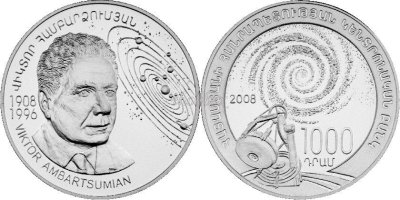
Аверс:
телескоп и символическое изображение космоса. Справа от телескопа указана номинальная стоимость «1000» и слово «драмов» на армянском языке. Наверху слева указан год выпуска «2008». Между линейным кругом и кромкой поля — круговая надпись «Центральный банк Республики Армения» на армянском языке.

Реверс:
изображение портрета Виктора Амбарцумяна, по левую сторону портрета двумя строками указаны даты рождения и смерти «1908» и «1996». По правую сторону портрета изображен символ космоса. Наверху по левой окружности монеты надпись «Виктор Амбарцумян» на армянском языке, а внизу — на английском языке.

Страна: Армения

Номер каталога: AM134CM1

Стоимость: €165

Тираж: 500

Качество: Пруф

Номинал: 1000 драм

Mеталл: Серебро

Проба: 0.925

Вес: 33.6g

Диаметр: 40mm

Год: 2008

Тип: Памятная монета

Форма и стиль: Круглая

Гурт: Рифленый

Монетный двор: Чешский монетный двор

Дизайнер: Вардан Варданян

Источник информации: Центральный банк Республики Армения

Viktor Ambartsumian


The 100th Anniversary of the Birth of Viktor Ambartsumian

Viktor Amazaspovich Ambartsumian (Armenian: Վիկտոր Համբարձումյան; September 18, 1908, Tiflis – August 12, 1996, Byurakan) was an outstanding Soviet scientist and one of the founders of theoretical astrophysics.

Ambartsumian worked in the fields of stellar and nebular physics, stellar astronomy, the dynamics of stellar systems, and the cosmogony of stars and galaxies.

He was a two-time recipient of the Stalin Prize (1946, 1950), a recipient of the State Prize of the Russian Federation (1995), a two-time Hero of Socialist Labour (1968, 1978), and a National Hero of Armenia.

Ambartsumian was the founder of the Byurakan Astrophysical Observatory.

Obverse:
A telescope and a symbolic representation of outer space. To the right of the telescope are the denomination "1000" and the word "drams" in Armenian. The year of issue, "2008", appears in the upper left. Between the beaded circle and the rim is the circular inscription "Central Bank of the Republic of Armenia" in Armenian.

Reverse:
A portrait of Viktor Ambartsumian. To the left of the portrait are the years of his birth and death, "1908" and "1996". To the right of the portrait is a symbolic image of outer space. Along the upper left edge of the coin is the inscription "Viktor Ambartsumian" in Armenian, and along the lower edge, in English.

Country: Armenia

Catalog Number: AM134CM1

Price: €165

Mintage: 500

Quality: Proof

Denomination: 1000 drams

Metal: Silver

Fineness: .925

Weight: 33.6 g

Diameter: 40 mm

Year: 2008

Type: Commemorative Coin

Shape and Style: Round

Edge: Reeded

Mint: Czech Mint

Designer: Vardan Vardanyan
Source of Information: Central Bank of the Republic of Armenia

Víktor Ambartsumián

Centenario del nacimiento de Víktor Ambartsumián

Víktor Amazaspovich Ambartsumián (armenio: Վիկտոր Համբարձումյան; 18 de septiembre de 1908, Tiflis – 12 de agosto de 1996, Byurakán) fue un destacado científico soviético y uno de los fundadores de la astrofísica teórica.

Ambartsumián trabajó en los campos de la física de las estrellas y las nebulosas, la astronomía estelar, la dinámica de los sistemas estelares y la cosmogonía de las estrellas y las galaxias.

Fue dos veces galardonado con el Premio Stalin (1946 y 1950), recibió el Premio Estatal de la Federación de Rusia (1995), fue dos veces Héroe del Trabajo Socialista (1968 y 1978) y Héroe Nacional de Armenia.

Ambartsumián fue el fundador del Observatorio Astrofísico de Byurakán.

Anverso:
Un telescopio y una representación simbólica del espacio exterior. A la derecha del telescopio aparecen el valor nominal «1000» y la palabra «drams» en armenio. En la parte superior izquierda figura el año de emisión «2008». Entre el círculo de perlas y el borde de la moneda se encuentra la inscripción circular «Banco Central de la República de Armenia» en armenio.

Reverso:
Retrato de Víktor Ambartsumián. A la izquierda del retrato aparecen los años de su nacimiento y fallecimiento, «1908» y «1996». A la derecha del retrato se representa un símbolo del espacio exterior. En la parte superior izquierda, siguiendo el borde de la moneda, figura la inscripción «Víktor Ambartsumián» en armenio, y en la parte inferior, en inglés.

País: Armenia

Número de catálogo: AM134CM1

Precio: 165 €

Tirada: 500

Calidad: Proof

Valor nominal: 1000 drams

Metal: Plata

Pureza: 0,925

Peso: 33,6 g

Diámetro: 40 mm

Año: 2008

Tipo: Moneda conmemorativa

Forma y estilo: Circular

Canto: Estriado

Casa de la Moneda: Casa de la Moneda Checa

Diseñador: Vardan Vardanyan

Fuente de información: Banco Central de la República de Armenia
AM134CM1
 
Frimen1917

Frimen1917

Mecca V.I.P.
VIP
Joined
Jan 9, 2026
Messages
3,161
Points
63

Банкнота Армении номиналом 100 драмов содержит портрет выдающегося армянского астрофизика Виктора Амбарцумяна. На этой купюре также изображены Бюраканская астрофизическая обсерватория и элементы звездного неба.Банкнота в 100 драмов относится к первой серии армянских денежных знаков.В настоящее время бумажные 100 драмов практически вышли из ежедневного денежного обращения и заменены монетами соответствующего номинала, но остаются памятным знаком и предметом интереса для коллекционеров.

The Armenian 100-dram banknote features a portrait of the eminent Armenian astrophysicist Viktor Ambartsumyan. This banknote also depicts the Byurakan Astrophysical Observatory and elements of the starry sky. The 100-dram banknote belongs to the first series of Armenian banknotes. Currently, paper 100-dram notes have virtually disappeared from daily circulation and have been replaced by coins of the corresponding denomination, but they remain a commemorative token and an object of interest to collectors.
El billete armenio de 100 dracmas presenta un retrato del eminente astrofísico armenio Viktor Ambartsumyan. Este billete también muestra el Observatorio Astrofísico de Byurakan y elementos del cielo estrellado. El billete de 100 dracmas pertenece a la primera serie de billetes armenios. Actualmente, los billetes de papel de 100 dracmas prácticamente han desaparecido de la circulación diaria y han sido reemplazados por monedas de la misma denominación, pero siguen siendo un símbolo conmemorativo y un objeto de interés para los coleccionistas.
633380x600
 

MuscleMecca Crew

Mecca Staff
Frimen1917

Frimen1917

Mecca V.I.P.
VIP
Joined
Jan 9, 2026
Messages
3,161
Points
63
Увековечивание памяти:
Именем Виктора Амазасповича Амбарцумяна была названа малая планета
(1905 Ambartsumyan), открытая в 1972 году Т.М. Смирновой -
астрономом Крымской астрофизической обсерватории.

День рождения учёного - 18 сентября - объявлен правительством Армении
Днём астрономии.
Имя В.А. Амбарцумяна присвоено Бюраканской астрофизической обсерватории.

Указом Президенте Армении Сержа Саргсяна в 2010 году учреждена Международная научная премия имени В.А. Амбарцумяна.
Премия присуждается за выдающуюся научную работу в астрофизике, а также в примыкающих к ней сферах физики и математики, независимо от гражданской принадлежности учёного и будет присуждаться один раз в два года
и первым годом присуждения премии стал 2010 год.


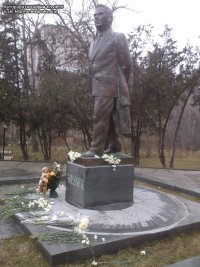
15 декабря 2010 года в столице Республики Армении - Ереване состоялось торжественное открытие Памятника Виктору Амазасповичу Амбарцумяну.
Открыл памятник Президент Национальной Академии Наук Республики Армения
Радик Мартиросян вместе с сыном Виктора Амбарцумяна
Академиком Рубеном Викторовичем Амбарцумяном.
Ректор Ереванского Государственного Университета Арам Симонян подчеркнул,
что отныне сквер на пересечении улиц Терьяна и Абовяна также
будет носить имя великого ученого.

На фото: Республика Армения, город Ереван, сквер на пересечении улиц Терьяна и Абовяна, памятник В.А. Амбарцумяну в сквере ныне носящем его имя. (автор фотографии novik95, сайт Википедия)
Commemoration


A minor planet (1905 Ambartsumian), discovered in 1972 by T. M. Smirnova, an astronomer at the Crimean Astrophysical Observatory, was named in honor of Viktor Amazaspovich Ambartsumian.

The scientist's birthday, September 18, was declared Astronomy Day by the Government of Armenia.

The Byurakan Astrophysical Observatory was named after V. A. Ambartsumian.

By a decree of the President of Armenia, Serzh Sargsyan, the V. A. Ambartsumian International Scientific Prize was established in 2010.

The prize is awarded for outstanding scientific achievements in astrophysics, as well as in related fields of physics and mathematics, regardless of the scientist's nationality. It is awarded once every two years, with 2010 being the first award year.

On December 15, 2010, the official unveiling of the Monument to Viktor Amazaspovich Ambartsumian took place in Yerevan, the capital of the Republic of Armenia.

The monument was unveiled by the President of the National Academy of Sciences of the Republic of Armenia, Radik Martirosyan, together with Viktor Ambartsumian's son, Academician Ruben Viktorovich Ambartsumian.

The Rector of Yerevan State University, Aram Simonyan, emphasized that from that day onward the square at the intersection of Teryan and Abovyan Streets would also bear the name of the great scientist.

Photo:
Republic of Armenia, Yerevan, the square at the intersection of Teryan and Abovyan Streets, the monument to V. A. Ambartsumian located in the square that now bears his name.

(Photo by novik95, Wikipedia.)
Conmemoración


Un planeta menor (1905 Ambartsumian), descubierto en 1972 por T. M. Smirnova, astrónoma del Observatorio Astrofísico de Crimea, recibió su nombre en honor de Víktor Amazaspóvich Ambartsumián.

El cumpleaños del científico, el 18 de septiembre, fue declarado por el Gobierno de Armenia como el Día de la Astronomía.

El Observatorio Astrofísico de Byurakan recibió el nombre de V. A. Ambartsumián.

Por decreto del Presidente de Armenia, Serzh Sargsyan, en 2010 se instituyó el Premio Científico Internacional V. A. Ambartsumián.

El premio se concede por trabajos científicos sobresalientes en astrofísica, así como en disciplinas afines de la física y las matemáticas, independientemente de la nacionalidad del científico. Se otorga una vez cada dos años, siendo 2010 el primer año de su concesión.

El 15 de diciembre de 2010 tuvo lugar en Ereván, capital de la República de Armenia, la inauguración oficial del Monumento a Víktor Amazaspóvich Ambartsumián.

El monumento fue inaugurado por el Presidente de la Academia Nacional de Ciencias de la República de Armenia, Radik Martirosyan, junto con el hijo de Víktor Ambartsumián, el académico Rubén Víktorovich Ambartsumián.

El rector de la Universidad Estatal de Ereván, Aram Simonyan, destacó que, desde ese momento, la plaza situada en la intersección de las calles Teryan y Abovyan también llevaría el nombre del gran científico.

Fotografía:
República de Armenia, ciudad de Ereván, plaza situada en la intersección de las calles Teryan y Abovyan, monumento a V. A. Ambartsumián ubicado en la plaza que actualmente lleva su nombre.

(Fotografía de novik95, Wikipedia.)
Ambartsumian pam
 
Frimen1917

Frimen1917

Mecca V.I.P.
VIP
Joined
Jan 9, 2026
Messages
3,161
Points
63

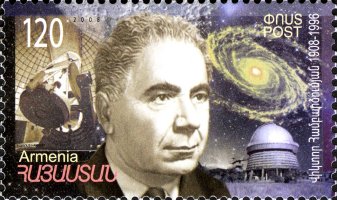
Армения. Виктор Амбарцумян. Почтовая марка 2008г.

Armenia. Victor Ambartsumyan. Postage stamp, 2008.

Armenia. Victor Ambartsumyan. Sello postal, 2008.


Viktor hambardzumyan stamp
 
Frimen1917

Frimen1917

Mecca V.I.P.
VIP
Joined
Jan 9, 2026
Messages
3,161
Points
63
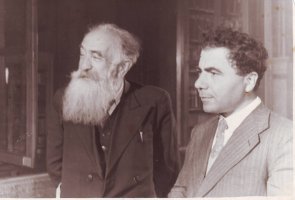
На фото слева направо: Иосиф Орбели и Виктор Амбарцумян.
In the photo from left to right: Joseph Orbeli and Viktor Ambartsumyan.
En la foto, de izquierda a derecha: Joseph Orbeli y Viktor Ambartsumyan.

Vhambartsumyan hovsep orbeli
 
Frimen1917

Frimen1917

Mecca V.I.P.
VIP
Joined
Jan 9, 2026
Messages
3,161
Points
63
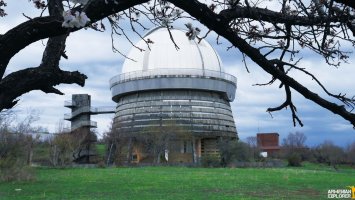
На фото: Весна в Бюраканской астрофизической обсерватории! Телескоп ZTA-2.6 является крупнейшим наблюдательным инструментом Бюраканской астрофизической обсерватории. Здание было спроектировано Саркисом Гурзадяном в 1975 году.
In the photo: Spring at the Byurakan Astrophysical Observatory! The ZTA-2.6 telescope is the largest observing instrument at the Byurakan Astrophysical Observatory. The building was designed by Sarkis Gurzadyan in 1975.
En la foto: ¡Primavera en el Observatorio Astrofísico de Byurakan! El telescopio ZTA-2.6 es el instrumento de observación más grande del Observatorio Astrofísico de Byurakan. El edificio fue diseñado por Sarkis Gurzadyan en 1975.

Clipboard 08 04 2026 03
 
Frimen1917

Frimen1917

Mecca V.I.P.
VIP
Joined
Jan 9, 2026
Messages
3,161
Points
63
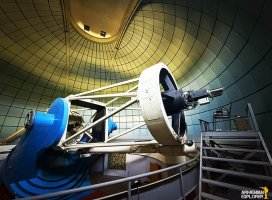
Телескоп ЗТА-2.6 был изготовлен на ЛОМО (Ленинградское оптико-механическое объединение, Санкт-Петербург, Россия) и по сути является близнецом рефлектора имени Г. А. Шайна, установленного в Крымской астрофизической обсерватории.
The ZTA-2.6 telescope was manufactured at LOMO (Leningrad Optical and Mechanical Association, St. Petersburg, Russia) and is essentially a twin of the G. A. Shain reflector installed at the Crimean Astrophysical Observatory.
El telescopio ZTA-2.6 fue fabricado en LOMO (Asociación Óptica y Mecánica de Leningrado, San Petersburgo, Rusia) y es esencialmente un gemelo del reflector G. A. Shain instalado en el Observatorio Astrofísico de Crimea.
Clipboard 08 04 2026 02
 
Frimen1917

Frimen1917

Mecca V.I.P.
VIP
Joined
Jan 9, 2026
Messages
3,161
Points
63
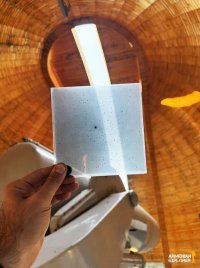
Одна из 12 000 фотопластинок, полученных телескопом Шмидта.
В архиве Бюраканской астрофизической обсерватории (БАО) хранится около 37 500 фотопластинок и пленок со всех ее телескопов, включая 1-метровый и 0,5-метровый телескопы Шмидта и другие, меньшие по размеру, за период 1947-1991 годов.
One of the 12,000 photographic plates taken by the Schmidt telescope

The Byurakan Astrophysical Observatory (BAO) archive holds around 37,500 photographic plates and films from all its telescopes, including the 1 m and 0.5 m Schmidt telescopes and other smaller ones during 1947-1991.
Una de las 12.000 placas fotográficas tomadas por el telescopio Schmidt. El archivo del Observatorio Astrofísico de Byurakan (BAO) conserva alrededor de 37.500 placas fotográficas y películas de todos sus telescopios, incluidos los telescopios Schmidt de 1 m y 0,5 m y otros más pequeños, tomadas entre 1947 y 1991.

Clipboard 08 04 2026 05
 
Frimen1917

Frimen1917

Mecca V.I.P.
VIP
Joined
Jan 9, 2026
Messages
3,161
Points
63
Звездный сеанс работы обсерватории выполнялся только на теневой части орбиты, однако подготовка к нему начиналась задолго до входа в тень. Перед началом работы на борт передавалась радиограмма, содержащая необходимые данные для разворота корабля на исследуемую область, указывались опорные звезды А и В и номера звездных карт в бортовом журнале «Ориона-2», время начала и конца сеанса, обусловленное восходом или заходом опорных звезд, а также определялось время экспозиций для каждой звезды.

До входа в тень экипаж ориентировал и стабилизировал космический корабль в инерциальной системе координат таким образом, чтобы опорные звезды А и В находились в поле зрения соответствующих звездных датчиков с учетом возможных разворотов блока телескопа и визира. После входа в тень и восхода опорной звезды А бортинженер опознавал звезду, открывал створки купола, наводил на нее прицел визира и включал слежение по звезде А (при этом выбор датчика ДЗД-1 или ДЗД-2, так же как и датчика ОЗД-1 или ОЗД-2, производился космонавтом еще до входа корабля в тень). Далее автоматика управления обсерваторией включала режим наведения блока телескопа по положению визира с помощью синхронно-следящей системы. После окончания наведения включался звездный датчик, происходила автоматическая установка чувствительности звездного датчика, что необходимо было для получения нужной крутизны управляющего сигнала, и только после этого полностью включался контур управления и стабилизации по обеим осям. Прохождение процесса космонавт наблюдал по состоянию специальных индикаторов на пульте управления и мог при необходимости вмешаться в процесс, например при отсутствии сигнала захвата звезды вновь дополнительно навести визир и повторно включить систему слежения.

При появлении на пульте управления сигнала о реализации стабилизации по звезде А оператор включает систему слежения по звезде В (но не раньше времени восхода опорной звезды В). Если нет сигнала захвата звезды, космонавт включает систему поиска звезды В. Поиск выполняется разворотом телескопа относительно продольной оси, т. е. относительно направления на звезду А. При попадании звезды в поле зрения датчика В поиск автоматически прерывается, происходит автоматическая калибровка чувствительности звездного датчика и включается контур управления и стабилизации по третьей оси.

Затем бортинженер после появления сигнала о получении стабилизации по звезде В (при нормальной стабилизации по звезде А) приступает непосредственно к спектрографированию. Управление работой научных приборов может производиться как вручную (при этом космонавт управляет положением затвора и перемоткой пленки с пульта управления, а время экспозиции определяет по секундомеру), так и автоматически — от специальных программных устройств, встроенных в пульт управления.

После окончания программы экспозиций, к моменту окончания сеанса (указано в радиограмме) космонавт отключает звездные датчики, приводит блок телескопа в исходное положение, включая команду «Возврат», закрывает створки купола, а командир корабля отключает системы стабилизации корабля.

Шлюзование кассет проводилось по окончании программы научных работ обсерватории. При подготовке к шлюзованию бортинженер производил перемотку пленки в приборах обсерватории, затем переводил с помощью визира блок телескопа в положение, наиболее удобное для попадания кассеты в шлюзовую камеру и после этого производил отстрел пирочек фиксации кассеты. После попадания кассеты в шлюз проводилась операция шлюзования кассеты, при которой вначале проверялась герметичность шлюза, и только после этого кассета переносилась во внутренний объем корабля, где укладывалась в специальный укладочный контейнер.

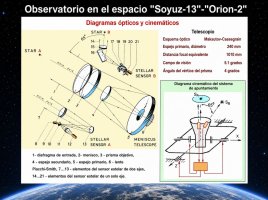
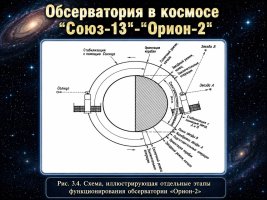
На рис. 3.4 схематически показаны отдельные этапы функционирования обсерватории «Орион-2» при выполнении программы, в частности, и спектральных наблюдений звезд.
The stellar observation session of the observatory was carried out only during the spacecraft's passage through the Earth's shadow. However, preparations for the session began well before entering the shadow. Before the observation began, a radiogram was transmitted to the spacecraft containing all the necessary data for orienting the spacecraft toward the target area. It specified the reference stars A and B and their numbers on the star charts in the second Orion-2 logbook, the start and end times of the observation session determined by the rising or setting of the reference stars, as well as the exposure times for each star.


Before entering the Earth's shadow, the crew oriented and stabilized the spacecraft in the inertial coordinate system so that reference stars A and B were within the field of view of the corresponding star trackers, taking into account the possible rotations of the telescope assembly and the sighting device.

After entering the shadow and after the reference star A had risen, the flight engineer identified the star, opened the observatory hatch, pointed the sighting device at it, and activated tracking of star A. The choice of star tracker (DZD-1 or DZD-2, as well as OZD-1 or OZD-2) was made by the cosmonaut before the spacecraft entered the Earth's shadow.

The observatory control system then automatically switched to telescope pointing mode using the synchronization and tracking system. After the pointing process was completed, the selected star tracker was activated. The system automatically adjusted the sensitivity of the tracker to obtain a control signal of the required magnitude. Only after this was the stabilization and control loop fully engaged along both axes.

The cosmonaut monitored the entire process using special indicators on the control panel and, if necessary, could intervene—for example, if the tracking signal from star A was lost, he could manually re-aim the sighting device and restart the tracking system.

When the control panel indicated successful stabilization using star A, the operator activated the tracking system for star B (but not before star B had risen). If no acquisition signal was received from star B, the cosmonaut activated the search mode. The search was performed by rotating the telescope about its longitudinal axis, that is, relative to the direction toward star A.

As soon as star B entered the field of view of its tracker, the search stopped automatically. The sensitivity of the star tracker was calibrated automatically, after which the stabilization and control loop for the third axis was engaged.

After confirmation that stabilization using star B had been achieved (while maintaining normal stabilization on star A), the flight engineer began spectrographic observations.

The scientific instruments could be operated manually—in this case the cosmonaut controlled the shutter position and film transport from the control panel while the exposure time was measured with a stopwatch—or automatically using the special programmable devices built into the control panel.

After the exposure program had been completed, and by the scheduled end of the observation session indicated in the radiogram, the cosmonaut switched off the star trackers, returned the telescope assembly to its initial position by issuing the "Return" command, closed the observatory hatch, and the spacecraft commander switched off the spacecraft stabilization system.

The airlock operation was performed after the completion of the observatory's scientific program. During preparation for the airlock procedure, the flight engineer rewound the film in the observatory instruments, then used the sighting device to position the telescope assembly so that the film cassette could be conveniently transferred into the airlock chamber. He then fired the pyrotechnic bolts securing the cassette. After the cassette entered the airlock, the airlock sealing was checked, and only then was the cassette transferred into the spacecraft's pressurized compartment, where it was placed in a special storage container.

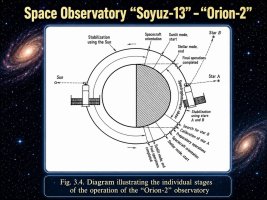
Figure 3.4 schematically illustrates the individual stages of the Orion-2 observatory's operation while carrying out its scientific program, including spectrographic observations of stars.
La sesión de observación estelar del observatorio se realizaba únicamente en la parte de sombra de la órbita; sin embargo, la preparación comenzaba mucho antes de que la nave entrara en esa zona. Antes del inicio del trabajo, se transmitía a bordo un radiograma con los datos necesarios para orientar la nave hacia la región celeste que debía estudiarse. Se indicaban las estrellas de referencia A y B y los números de los mapas estelares en el segundo cuaderno del observatorio «Orión-2», así como la hora de inicio y de finalización de la sesión, determinada por la salida o la puesta de las estrellas de referencia. También se establecía el tiempo de exposición para cada estrella.


Antes de entrar en la sombra, la tripulación orientaba y estabilizaba la nave espacial en un sistema de coordenadas inercial, de modo que las estrellas de referencia A y B quedaran dentro del campo de visión de los correspondientes sensores estelares, teniendo en cuenta los posibles giros del bloque del telescopio y del visor. Después de entrar en la sombra y tras la salida de la estrella de referencia A, el ingeniero de vuelo identificaba la estrella, abría las compuertas de la cúpula, dirigía el visor hacia ella y activaba el seguimiento de la estrella A (la selección del sensor DZD-1 o DZD-2, así como del sensor OZD-1 u OZD-2, se realizaba por el cosmonauta antes de que la nave entrara en la sombra). Después, el sistema automático del observatorio activaba el modo de orientación del bloque del telescopio según la posición del visor mediante el sistema de seguimiento síncrono.

Una vez finalizada la orientación, se activaba el sensor estelar y se ajustaba automáticamente su sensibilidad, necesaria para obtener una señal de control suficientemente intensa. Solo después de ello se activaba por completo el sistema de control y estabilización en ambos ejes. El cosmonauta supervisaba el proceso mediante indicadores especiales situados en el panel de control y, si era necesario, podía intervenir; por ejemplo, si no había señal de captura de la estrella, volvía a orientar el visor y reactivaba el sistema de seguimiento.

Cuando en el panel de control aparecía la señal de estabilización respecto a la estrella A, el operador activaba el sistema de seguimiento de la estrella B (pero no antes del momento de su salida). Si no se recibía la señal de captura, el cosmonauta activaba el sistema de búsqueda de la estrella B. La búsqueda se realizaba girando el telescopio alrededor de su eje longitudinal, es decir, con respecto a la dirección hacia la estrella A. En cuanto la estrella entraba en el campo de visión del sensor B, la búsqueda se interrumpía automáticamente, se efectuaba la calibración automática de la sensibilidad del sensor estelar y se activaba el sistema de control y estabilización según el tercer eje.

Después, el ingeniero de vuelo, tras recibir la señal de estabilización respecto a la estrella B (con una estabilización normal respecto a la estrella A), comenzaba directamente la obtención de espectrogramas. El control de los instrumentos científicos podía realizarse manualmente (en este caso el cosmonauta controlaba la posición del obturador y el avance de la película desde el panel de control, mientras que el tiempo de exposición se determinaba con un cronómetro) o automáticamente, mediante dispositivos programables especiales integrados en el panel de control.

Una vez finalizado el programa de exposiciones, al concluir la sesión (según el horario indicado en el radiograma), el cosmonauta desconectaba los sensores estelares, colocaba el bloque del telescopio en su posición inicial, activaba la orden «Retorno», cerraba las compuertas de la cúpula y el comandante de la nave desactivaba el sistema de estabilización.

La esclusa de la casete se realizaba una vez terminado el programa de trabajos científicos del observatorio. Durante la preparación para la esclusa, el ingeniero de vuelo rebobinaba la película en los instrumentos del observatorio y luego, utilizando el visor, colocaba el bloque del telescopio en la posición más conveniente para introducir la casete en la cámara de esclusa. Después accionaba los pernos pirotécnicos de fijación de la casete. Una vez que la casete entraba en la esclusa, se comprobaba la hermeticidad del compartimento y solo después se trasladaba al interior de la nave, donde se colocaba en un contenedor especial de almacenamiento.

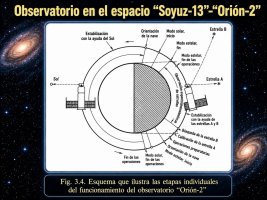
La figura 3.4 muestra esquemáticamente las distintas etapas del funcionamiento del observatorio «Orión-2» durante la ejecución del programa de trabajo, en particular durante las observaciones espectrales de las estrellas.
Izobrazenie viber 2026 08 04 20 18 45 426
Izobrazenie viber 2026 08 04 20 18 49 915

Izobrazenie viber 2026 08 04 20 18 53 256
 
Frimen1917

Frimen1917

Mecca V.I.P.
VIP
Joined
Jan 9, 2026
Messages
3,161
Points
63
Создатели космической обсерватории "Орион-2" и корабля "Союз-13".
Григо́р Ара́мович Гурзадя́н (1922, Багдад, Королевство Ирак — 22 февраля 2014, Ереван, Армения) — советский и армянский астроном и астрофизик. Академик Академии Наук Армении, руководитель армянского центра по космическим исследованиям. Член Международного астрономического союза.
Родился в армянской семье в столице Ирака — Багдаде.

В 1939 году поступает в Ереванский политехнический институт. В 1944 году становится аспирантом под руководством Виктора Амбарцумяна по астрофизике. Состоял в первичном научном штате Бюраканской обсерватории со дня её основания в 1946 году. В 1955 году защитил докторскую диссертацию. С 1957 года — профессор.

Работал в сфере космической астрофизики и космического приборостроения

В конце 1950-х группа учёных из Бюраканской обсерватории во главе с доктором физико-математических наук Григором Гурзадяном приступила к работам по созданию астрофизической аппаратуры для работы в космических условиях. Детектор, созданный ими для изучения рентгеновского излучения солнечной короны, был установлен на баллистической ракете, первый запуск которой произошёл 19 февраля 1961 года на полигоне Капустин Яр. В 1960-е годы группой Гурзадяна были созданы запущенные в космос ракетные обсерватории серии К-К2, К3, К4, развиты многие принципы космического приборостроения, стабилизации платформы телескопа в космических условиях с помощью звёздных датчиков. В это же время была образована лаборатория и конструкторское бюро у села Гарни (позднее — Институт космической астрономии), которое начало создавать телескопы и обсерватории. Первой орбитальной обсерваторией стал «Орион-1», он был установлен на первой космической станции Салют-1. В декабре 1973 года, спроектированная Григором Гурзадяном и его коллективом, внеатмосферная астрофизическая обсерватория «Орион-2» на пилотируемом космическом корабле «Союз-13» была выведена в космос. Именно тогда были впервые получены спектрограммы слабых звезд, планетарной туманности, выявившие целый ряд неизвестных в то время фактов.

В 1965 году избран членом-корреспондентом, в 1986 — действительным членом Академии Наук Армянской ССР.
В 2001 году Григор Гурзадян был почётным гостем, единственным из стран СНГ на праздновании 40-летия полета Гагарина в Звездном городке. В том же 2001 году на территории института в Гарни был создан Музей космоса, в открытии которого приняли участие известные учёные, поэты, руководители аккредитованных в Армении дипломатических миссий, лётчик-космонавт, дважды Герой Советского Союза, известный учёный, член-корреспондент Российской академии наук Валентин Лебедев. На подаренной им книге, рассказывающей о работе в космосе, Лебедев написал: “Великому сыну армянского народа, проложившему путь в космическую науку. С глубоким почтением и благодарностью. Ваш ученик”.
Автор 250 научных трудов.
Книги Г.Гурзадяна:
Звездные вспышки : Физика. Космогония / Г. А. Гурзадян, Москва.Издательство «Наука» 1985
Звездные хромосферы, или Дублет 2800 А MgII в астрофизике / Г. А. Гурзадян, Москва. Издательство «Наука». 1984.
Планетарные туманности : Физика. Динамика / Г. А. Гурзадян ; Российская Академия Наук, Москва. Издательство «Наука» 1993.
Теория межпланетных перелетов / Г. А. Гурзадян, Москва. Издательство «Наука» 1992.
Physics and Dynamics of Planetary Nebulae; Springer, 1997;ISBN 3-540-60965-2
Theory of Interplanetary Flights; Gordon & Breach, 1996;ISBN 2-88449-074-4
Space Dynamics, Francis & Taylor, 2002;ISBN 0-415-28202-0.
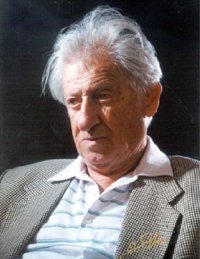
НА фото: Академик Григор Гурзадян.

Creators of the Orion-2 Space Observatory and the Soyuz-13 Spacecraft

Grigor Aramovich Gurzadyan (1922, Baghdad, Kingdom of Iraq – February 22, 2014, Yerevan, Armenia) was a Soviet and Armenian astronomer and astrophysicist. He was a Full Member of the Academy of Sciences of Armenia, head of the Armenian Center for Space Research, and a member of the International Astronomical Union.

He was born into an Armenian family in Baghdad, the capital of Iraq.

In 1939 he entered the Yerevan Polytechnic Institute. In 1944 he became a postgraduate student in astrophysics under the supervision of Viktor Ambartsumian. Since the founding of the Byurakan Astrophysical Observatory in 1946, he was one of its first research staff members. In 1955 he defended his doctoral dissertation, and in 1957 he became a professor.

He worked in the fields of space astrophysics and space instrumentation.

At the end of the 1950s, a group of scientists from the Byurakan Observatory led by Doctor of Physical and Mathematical Sciences Grigor Gurzadyan began developing astrophysical instruments for operation in space. A detector designed by his team to study X-ray radiation from the solar corona was installed aboard a ballistic rocket, whose first launch took place on February 19, 1961, from the Kapustin Yar test range.

During the 1960s, Gurzadyan's team developed the K-K2, K3, and K4 rocket observatories, which were successfully launched into space. They also pioneered many principles of space instrumentation, including stabilization of telescope platforms in space using stellar sensors.

At the same time, a laboratory and design bureau were established near the village of Garni (later transformed into the Institute of Space Astronomy), where telescopes and space observatories began to be developed.

The first orbital observatory was Orion-1, installed aboard the world's first space station, Salyut-1.

In December 1973, the Orion-2 extraterrestrial astrophysical observatory, designed by Grigor Gurzadyan and his team, was launched into space aboard the Soyuz-13 manned spacecraft. During this mission, ultraviolet spectrograms of faint stars and a planetary nebula were obtained for the first time, revealing a number of previously unknown scientific phenomena.

In 1965 he was elected a Corresponding Member of the Academy of Sciences of the Armenian SSR, and in 1986 he became a Full Member (Academician).

In 2001 Grigor Gurzadyan was the honorary guest—and the only representative from the CIS countries—at the celebrations marking the 40th anniversary of Yuri Gagarin's flight in Star City.

That same year, the Space Museum was established on the grounds of the institute in Garni. The opening ceremony was attended by distinguished scientists, poets, heads of diplomatic missions accredited in Armenia, and cosmonaut Valentin Lebedev, twice Hero of the Soviet Union, renowned scientist, and Corresponding Member of the Russian Academy of Sciences.

In the book he presented to Gurzadyan about work in space, Valentin Lebedev wrote:

"To the great son of the Armenian people who paved the way into space science. With deep respect and gratitude. Your student."

Grigor Gurzadyan authored more than 250 scientific publications.

Books by G. Gurzadyan:

• Stellar Flares: Physics. Cosmogony. Moscow: Nauka Publishers, 1985.
• Stellar Chromospheres, or the Mg II 2800 Å Doublet in Astrophysics. Moscow: Nauka Publishers, 1984.
• Planetary Nebulae: Physics. Dynamics. Russian Academy of Sciences. Moscow: Nauka Publishers, 1993.
• Theory of Interplanetary Flights. Moscow: Nauka Publishers, 1992.
• Physics and Dynamics of Planetary Nebulae. Springer, 1997. ISBN 3-540-60965-2.
• Theory of Interplanetary Flights. Gordon & Breach, 1996. ISBN 2-88449-074-4.
• Space Dynamics. Francis & Taylor, 2002. ISBN 0-415-28202-0.


Photo: Academician Grigor Gurzadyan.
Creadores del Observatorio Espacial Orion-2 y de la nave espacial Soyuz-13

Grigor Arámovich Gurzadián (1922, Bagdad, Reino de Irak – 22 de febrero de 2014, Ereván, Armenia) fue un astrónomo y astrofísico soviético y armenio. Fue académico de la Academia Nacional de Ciencias de Armenia, director del Centro Armenio de Investigaciones Espaciales y miembro de la Unión Astronómica Internacional.


Nació en una familia armenia en Bagdad, capital de Irak.

En 1939 ingresó en el Instituto Politécnico de Ereván. En 1944 comenzó sus estudios de posgrado en astrofísica bajo la dirección de Víktor Ambartsumián. Desde la fundación del Observatorio Astrofísico de Byurakán en 1946 formó parte de su primer equipo científico. En 1955 defendió su tesis doctoral y en 1957 obtuvo el título de profesor.

Trabajó en los campos de la astrofísica espacial y de la instrumentación espacial.

A finales de la década de 1950, un grupo de científicos del Observatorio de Byurakán, dirigido por el doctor en Ciencias Físicas y Matemáticas Grigor Gurzadián, inició el desarrollo de equipos astrofísicos para su funcionamiento en el espacio. Un detector diseñado por su equipo para estudiar la radiación de rayos X de la corona solar fue instalado en un cohete balístico, cuyo primer lanzamiento tuvo lugar el 19 de febrero de 1961 desde el polígono de Kapustin Yar.

Durante la década de 1960, el grupo de Gurzadián creó los observatorios espaciales de cohetes de las series K-K2, K3 y K4, lanzados con éxito al espacio. También desarrolló numerosos principios fundamentales de la instrumentación espacial, entre ellos la estabilización de plataformas de telescopios mediante sensores estelares.

Al mismo tiempo, cerca del pueblo de Garni se creó un laboratorio y una oficina de diseño (que posteriormente se convirtió en el Instituto de Astronomía Espacial), donde comenzaron a desarrollarse telescopios y observatorios espaciales.

El primer observatorio orbital fue Orion-1, instalado en la primera estación espacial del mundo, Salyut-1.

En diciembre de 1973, el observatorio astrofísico extraterrestre Orion-2, diseñado por Grigor Gurzadián y su equipo, fue lanzado al espacio a bordo de la nave espacial tripulada Soyuz-13. Durante esta misión se obtuvieron por primera vez espectrogramas ultravioleta de estrellas débiles y de una nebulosa planetaria, revelando una serie de fenómenos científicos desconocidos hasta ese momento.

En 1965 fue elegido miembro correspondiente de la Academia de Ciencias de la RSS de Armenia y en 1986 pasó a ser miembro titular (académico).

En 2001 Grigor Gurzadián fue el invitado de honor y el único representante de los países de la CEI en la celebración del 40.º aniversario del vuelo de Yuri Gagarin en la Ciudad de las Estrellas.

Ese mismo año se inauguró el Museo del Espacio en el territorio del instituto de Garni. En la ceremonia participaron destacados científicos, poetas, jefes de misiones diplomáticas acreditadas en Armenia y el cosmonauta Valentín Lébedev, dos veces Héroe de la Unión Soviética, reconocido científico y miembro correspondiente de la Academia de Ciencias de Rusia.

En el libro que regaló a Gurzadián sobre el trabajo en el espacio, Valentín Lébedev escribió:

«Al gran hijo del pueblo armenio que abrió el camino hacia la ciencia espacial. Con profundo respeto y gratitud. Su discípulo.»

Grigor Gurzadián fue autor de más de 250 trabajos científicos.

Libros de G. Gurzadián:

• Erupciones Estelares: Física. Cosmogonía. Moscú: Editorial Nauka, 1985.
• Cromosferas Estelares, o el Doblete Mg II de 2800 Å en Astrofísica. Moscú: Editorial Nauka, 1984.
• Nebulosas Planetarias: Física. Dinámica. Academia Rusa de Ciencias. Moscú: Editorial Nauka, 1993.
• Teoría de los Vuelos Interplanetarios. Moscú: Editorial Nauka, 1992.
• Physics and Dynamics of Planetary Nebulae. Springer, 1997. ISBN 3-540-60965-2.
• Theory of Interplanetary Flights. Gordon & Breach, 1996. ISBN 2-88449-074-4.
• Space Dynamics. Francis & Taylor, 2002. ISBN 0-415-28202-0.


Fotografía: El académico Grigor Gurzadián.
Unnamed
 
Frimen1917

Frimen1917

Mecca V.I.P.
VIP
Joined
Jan 9, 2026
Messages
3,161
Points
63
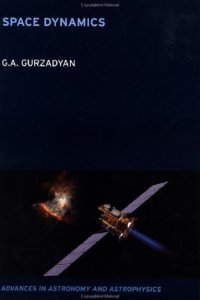
Одна из книг академика Гурзадяна в продаже.
One of the most famous academics in the production.
Uno de los libros del académico Gurzadyan está a la venta.

https://www.amazon.com/dp/0415282020/

31DB0CBCHEL
 
Frimen1917

Frimen1917

Mecca V.I.P.
VIP
Joined
Jan 9, 2026
Messages
3,161
Points
63
Выдающийся ученый-астрофизик и художник, действительный член АН Арм.ССР Григор ГУРЗАДЯН – один из первых сотрудников Бюраканской обсерватории. Он родился в Багдаде в семье выходцев из Западной Армении, бежавших в 1915 году в Ирак. Семья репатриировала на историческую родину, Григор окончил Политехнический институт и стал аспирантом Виктора Амбарцумяна. В Бюракане в 50-х, уже доктор наук, он с коллегами приступил к созданию уникальной астрофизической аппаратуры для работы в космосе. Группа Гурзадяна вскоре создала космическую обсерваторию, были развиты принципы космического приборостроения. Тогда же по инициативе Гурзадяна была основана Гарнийская лаборатория космических исследований и конструкторское бюро, ставшее позднее Институтом космической астрономии. Были созданы орбитальные обсерватории Орион-1 и Орион-2, которые выявили ценнейшие научные факты. В Гарни прошли предполетную подготовку около 40 советских космонавтов.

После развала СССР институт в Гарни прекратил существование.

Григор Гурзадян – не только крупнейший ученый. В своем Гарнийском институте он приобщился к живописи и со временем стал замечательным художником. В основном писал пейзажи – тонкие и глубокие по смыслу. Иначе и быть не могло – это была его сущность как человека и ученого. Деятельность Григора Гурзадяна – одна из вершин армянской науки, его научное наследие имеет непреходящее мировое значение.
В своем очерке Андраник ОВАНЕСЯН пишет:

«На одном из поворотов, чуть не доезжая до Гарни, направо с трассы, к каньону, уходит, петляя, малоприметная, заброшенная и полуразрушенная дорога. В ее конце, практически не видном с основной трассы, находятся остатки того, что когда-то было засекреченным объектом под ничего не значащим названием “Гранит” — а на самом деле раскинувшийся на 60-и гектарах (!) Гарнийский космический центр (позже, после краха СССР — НПО “Галактика”), который много лет возглавлял академик, всемирно известный ученый-астрофизик, пионер космической астрономии, крупный теоретик космических полетов и отличный художник Григор Гурзадян.

Большинство населения Армении и понятия не имело и не имеет о существовании этого центра, и что именно в этом центре, созданном по указанию академика Келдыша еще в 1965-м, были разработаны первые космические астрофизические спутники-обсерватории “Орион-1” и “Орион-2”, и космические телескопы серии Глазар, работающие на модулях станций “Мир”. В центре, на мощном московском финансировании, работало до 500 человек, проходили стажировку советские космонавты, а Космический музей, созданный при нем, был долгое время третьим в мире после Вашингтонского и Московского музеев. Да, да! У нас был космический музей — своими глазами видел там обожженную спускаемую космическую капсулу и макеты космических телескопов. В центре имелись крупные исследовательские и промышленные корпуса, а рядом были построены коттеджи, где и жили многие сотрудники.

В 90-х и позже, по словам Гурзадяна и по тому, что писали в прессе и в блогах, успели полностью разграбить уникальнейший Гарнийский космический центр, распродать по дешевке почти все его имущество, сложнейшее оборудование и все драгоценные материалы, хранившиеся на складах, уволить практически всех сотрудников, отобрать и приватизировать служебные квартиры в коттеджах. Пытались дважды продать научный корпус вместе с музеем и устроить на территории крупный свинарник. Стареющий Гурзадян много лет сопротивлялся как мог, но за него решили все — и мы все».

А вот как Андраник Ованесян описывает свою встречу с академиком Гурзадяном:

«Я посетил Гурзадяна в мае 1996 года…и застал раздирающую сердце картину. В огромном холодном, давно не отапливаемом и совершенно пустом и обкраденном здании исследовательского корпуса сидел в своем кабинете, один-одинешенек, всемирно известный ученый и продолжал фанатично писать и издавать свои сложнейшие теории и чертить свои космические спутники-обсерватории. Стены двух комнат его кабинета были завешены планшетами с чертежами спутников и прекраснейшими картинами кисти их автора. Картины устилали и весь пол, по центру которого к столу ученого вела узкая дорожка. Вне этого малюсенького оазиса было 60 гектаров обворованной, разграбленной науки и украденного престижа страны».

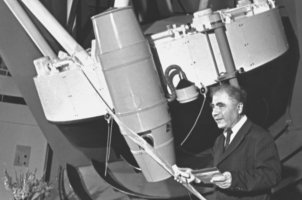
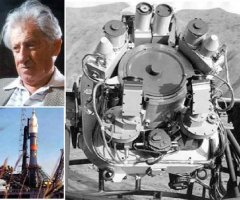
На фото: Академик Гурзадян, космический телескоп "Орион-2", старт космического корабля.
Outstanding astrophysicist and artist, Full Member of the Academy of Sciences of the Armenian SSR, Grigor GURZADYAN, was one of the first researchers at the Byurakan Astrophysical Observatory. He was born in Baghdad into a family of Armenians from Western Armenia who had fled to Iraq in 1915. After the family repatriated to their historical homeland, Grigor graduated from the Polytechnic Institute and became a postgraduate student of Viktor Ambartsumian.


In the 1950s, already holding a doctoral degree, he and his colleagues at Byurakan began developing unique astrophysical instruments for use in space. Gurzadyan's team soon created a space observatory and pioneered many principles of space instrumentation. On Gurzadyan's initiative, the Garni Laboratory of Space Research and a design bureau were established, later becoming the Institute of Space Astronomy.

The orbital observatories Orion-1 and Orion-2 were created there, producing valuable scientific discoveries. About 40 Soviet cosmonauts underwent pre-flight training in Garni.

After the collapse of the USSR, the institute in Garni ceased to exist.

Grigor Gurzadyan was not only an outstanding scientist. At the Garni Institute he also discovered a passion for painting and eventually became a remarkable artist. He mainly painted landscapes—subtle and profound in meaning. It could hardly have been otherwise, as this reflected his very nature both as a scientist and as a human being.

Grigor Gurzadyan's work represents one of the highest achievements of Armenian science, and his scientific legacy remains of enduring importance to world science.

In his essay, Andranik HOVHANESYAN writes:

"At one of the bends, just before reaching Garni, a barely noticeable, abandoned and partly ruined road winds off the highway toward the canyon. At its end, almost invisible from the main road, lie the remains of what was once a classified facility bearing the meaningless name 'Granit'—in reality, the Garni Space Center, covering 60 hectares (later, after the collapse of the USSR, renamed the 'Galaktika' Scientific Production Association), which for many years was headed by Academician Grigor Gurzadyan, the world-renowned astrophysicist, pioneer of space astronomy, prominent theorist of space flight, and gifted artist.

Most people in Armenia had no idea then—and many still do not know today—that it was in this center, established in 1965 under the direction of Academician Mstislav Keldysh, that the first space astrophysical observatories, Orion-1 and Orion-2, as well as the Glazar series of space telescopes used aboard the Mir space station modules, were developed.

The center employed up to 500 people with substantial funding from Moscow. Soviet cosmonauts trained there, and the Space Museum established at the center was for many years considered the third of its kind in the world, after those in Washington and Moscow. Yes, Armenia once had its own Space Museum. I personally saw there a scorched spacecraft re-entry capsule and models of space telescopes. The center included large research and industrial buildings, and nearby cottages were built where many of the employees lived.

During the 1990s and later, according to Gurzadyan himself and as reported in newspapers and blogs, the unique Garni Space Center was completely dismantled and looted. Most of its property, sophisticated equipment, and valuable materials stored in its warehouses were sold off at minimal prices. Nearly all employees lost their jobs, and the service apartments in the cottages were privatized. There were even two attempts to sell the scientific building together with the museum and convert the site into a large pig farm. The aging Gurzadyan resisted for many years as best he could, but in the end everything was decided without him—and we lost it all."

Andranik Hovhanesyan describes his meeting with Academician Gurzadyan as follows:

"I visited Gurzadyan in May 1996... and witnessed a heartbreaking scene. In the huge, cold, long-unheated, completely empty and looted research building, the world-famous scientist sat completely alone in his office, tirelessly continuing to write and publish his highly complex theories and to design his space observatories. The walls of his two-room office were covered with drawings of satellites and beautiful paintings created by his own hand. Paintings even covered the floor, leaving only a narrow path leading to his desk. Beyond this tiny oasis stretched 60 hectares of plundered science and stolen national prestige."
Pictured: Academician Gurzadyan, the Orion-2 space telescope, and the launch of the spacecraft.

El destacado astrofísico y artista, miembro titular de la Academia de Ciencias de la RSS de Armenia, Grigor GURZADIÁN, fue uno de los primeros investigadores del Observatorio Astrofísico de Byurakán. Nació en Bagdad, en una familia de armenios procedentes de Armenia Occidental que huyeron a Irak en 1915. Tras la repatriación de la familia a su patria histórica, Grigor se graduó en el Instituto Politécnico de Ereván y realizó sus estudios de posgrado bajo la dirección de Víktor Ambartsumián.


En la década de 1950, ya como doctor en ciencias, comenzó junto con sus colegas del Observatorio de Byurakán a desarrollar equipos astrofísicos únicos para su funcionamiento en el espacio. El grupo de Gurzadián creó poco después un observatorio espacial y desarrolló numerosos principios fundamentales de la instrumentación espacial. Por iniciativa de Gurzadián se fundaron el Laboratorio de Investigaciones Espaciales de Garni y una oficina de diseño que posteriormente se convirtió en el Instituto de Astronomía Espacial.

Allí se crearon los observatorios orbitales Orion-1 y Orion-2, que permitieron obtener importantes descubrimientos científicos. Alrededor de 40 cosmonautas soviéticos realizaron su preparación previa al vuelo en Garni.

Tras la desaparición de la Unión Soviética, el instituto de Garni dejó de existir.

Grigor Gurzadián no fue solamente un gran científico. En el Instituto de Garni descubrió también su pasión por la pintura y con el tiempo se convirtió en un notable artista. Pintó principalmente paisajes, sutiles y profundos en su significado. No podía ser de otra manera: esa era su esencia tanto como científico como ser humano.

La obra de Grigor Gurzadián constituye una de las cumbres de la ciencia armenia y su legado científico conserva un valor permanente para la ciencia mundial.

En su ensayo, Andranik HOVHANESYAN escribe:

«En una de las curvas, poco antes de llegar a Garni, una carretera apenas visible, abandonada y parcialmente destruida se desvía hacia la derecha en dirección al cañón. Al final de esa carretera, prácticamente invisible desde la vía principal, se encuentran los restos de lo que una vez fue una instalación secreta conocida con el insignificante nombre de "Granit"; en realidad, era el Centro Espacial de Garni, con una extensión de 60 hectáreas (más tarde, tras la desaparición de la URSS, Asociación Científico-Industrial "Galaktika"), dirigido durante muchos años por el académico Grigor Gurzadián, astrofísico de fama mundial, pionero de la astronomía espacial, destacado teórico de los vuelos espaciales y excelente pintor.

La mayoría de la población de Armenia no sabía entonces —y muchos aún hoy lo desconocen— que precisamente en este centro, creado en 1965 por iniciativa del académico Mstislav Keldysh, fueron desarrollados los primeros observatorios astrofísicos espaciales Orion-1 y Orion-2, así como los telescopios espaciales de la serie Glazar, utilizados en los módulos de la estación espacial Mir.

El centro llegó a emplear hasta 500 personas gracias a un importante financiamiento procedente de Moscú. Allí realizaron prácticas cosmonautas soviéticos y el Museo del Espacio creado en el complejo fue durante muchos años el tercero del mundo, después de los de Washington y Moscú. Sí, Armenia tuvo su propio Museo del Espacio. Yo mismo vi allí una cápsula espacial de reentrada chamuscada y maquetas de telescopios espaciales. El centro disponía de grandes edificios de investigación e instalaciones industriales, y junto a ellos se construyeron viviendas donde residían muchos de sus empleados.

Durante la década de 1990 y posteriormente, según contaba el propio Gurzadián y según publicaron diversos periódicos y blogs, el extraordinario Centro Espacial de Garni fue completamente desmantelado y saqueado. Gran parte de sus bienes, complejos equipos científicos y valiosos materiales almacenados fueron vendidos por precios irrisorios. Prácticamente todos los empleados perdieron sus puestos de trabajo y las viviendas de servicio fueron privatizadas. Incluso hubo dos intentos de vender el edificio científico junto con el museo para instalar allí una gran granja porcina. El ya anciano Gurzadián luchó durante muchos años para salvar el centro, pero finalmente todo se decidió sin él, y lo perdimos todo.»

Así describe Andranik Hovhanesyan su encuentro con el académico Gurzadián:

«Visité a Gurzadián en mayo de 1996... y encontré una escena desgarradora. En el enorme edificio de investigación, frío, sin calefacción desde hacía mucho tiempo, completamente vacío y saqueado, el científico de fama mundial permanecía completamente solo en su despacho, escribiendo y publicando incansablemente sus complejas teorías y diseñando nuevos observatorios espaciales. Las paredes de sus dos salas estaban cubiertas de planos de satélites y de magníficos cuadros pintados por él mismo. Incluso el suelo estaba cubierto de pinturas, dejando únicamente un estrecho sendero que conducía a su escritorio. Más allá de aquel pequeño oasis se extendían 60 hectáreas de ciencia saqueada y del prestigio perdido de todo un país.»

En la foto: el académico Gurzadyan, el telescopio espacial Orion-2 y el lanzamiento de la nave espacial.


Kosmos 33
 
Top