






• Legal Notice – MuscleMecca Forums

    MuscleMecca.com is an educational discussion platform. We do not sell, promote, or endorse any bodybuilding gear, supplements, research chemicals, or performance-enhancing substances.

    All discussions are for educational and informational purposes only. Nothing posted on this forum should be considered medical or legal advice.

    Do not attempt to sell, source, or promote illegal substances. Any such activity will result in an immediate and permanent ban and may be reported to the proper authorities.

    By using this site, you agree to comply with all forum rules, disclaimers, and applicable laws in your jurisdiction.

    Read Our Full Disclaimer and Forum Rules

History of Soviet cosmonautics.

Frimen1917

Frimen1917

Mecca V.I.P.
VIP
Joined
Jan 9, 2026
Messages
3,386
Points
63
Журнал «Земля и Вселенная», № 2, 1970 г. Фотографии со слета юных астрономов. На фото Женя Бочаров.
Фото К.Ш.Шахвалиева.
Earth and the Universe magazine, No. 2, 1970. Photographs from a gathering of young astronomers. Pictured is Zhenya Bocharov.
Photo by K. Sh. Shakhvaliev.

Revista «La Tierra y el Universo», número 2, 1970. Fotografías del Encuentro de Jóvenes Astrónomos. En la imagen: Zhenya Bocharov.
Fotografía de K.Sh. Shakhvaliyev.


Clipboard 11 16 2026 24
 
Frimen1917

Frimen1917

Mecca V.I.P.
VIP
Joined
Jan 9, 2026
Messages
3,386
Points
63
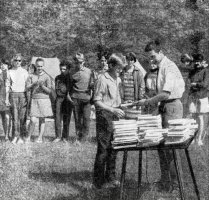
Журнал «Земля и Вселенная», № 2, 1970 г. Фотографии со слета юных астрономов.
На фото награждение победителей астрономической олимпиады. Фото А.П.Порошина.

*Earth and the Universe* magazine, No. 2, 1970. Photographs from a gathering of young astronomers.
The photo shows the awarding of the winners of an astronomy olympiad. Photo by A. P. Poroshin.

Revista Tierra y Universo, n.º 2, 1970. Fotografías del Encuentro de Jóvenes Astrónomos.
La foto muestra la ceremonia de entrega de premios a los ganadores de la Olimpiada de Astronomía. Fotografía de A.P. Poroshin.

Clipboard 11 16 2026 25
 
Frimen1917

Frimen1917

Mecca V.I.P.
VIP
Joined
Jan 9, 2026
Messages
3,386
Points
63
Фотографии со слета юных астрономов. Фото из архива одного из участников.
Photographs from a gathering of young astronomers. Photos from the personal archive of one of the participants.
Fotos del Encuentro de Jóvenes Astrónomos. Foto del archivo de uno de los participantes.

494402618
 
Frimen1917

Frimen1917

Mecca V.I.P.
VIP
Joined
Jan 9, 2026
Messages
3,386
Points
63
Фотографии со слета юных астрономов. Фото из архива одного из участников.
Photographs from a gathering of young astronomers. Photos from the personal archive of one of the participants.
Fotos del Encuentro de Jóvenes Astrónomos. Foto del archivo de uno de los participantes.

453951057
 
Frimen1917

Frimen1917

Mecca V.I.P.
VIP
Joined
Jan 9, 2026
Messages
3,386
Points
63
Фотографии со слета юных астрономов. Фото из архива одного из участников.
Photographs from a gathering of young astronomers. Photos from the personal archive of one of the participants.
Fotos del Encuentro de Jóvenes Astrónomos. Foto del archivo de uno de los participantes.

381569116
 
Frimen1917

Frimen1917

Mecca V.I.P.
VIP
Joined
Jan 9, 2026
Messages
3,386
Points
63
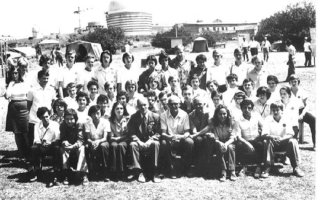
Фотографии со слета юных астрономов. Фото из архива одного из участников. В переднем раду пятый слева - космонавт Н.Рукавишников.
Photographs from a gathering of young astronomers. Photos from the personal archive of one of the participants. In the front row, fifth from the left, is cosmonaut N. Rukavishnikov.
Fotos del Encuentro de Jóvenes Astrónomos. Foto del archivo de uno de los participantes. En la primera fila, el quinto desde la izquierda es el cosmonauta N. Rukavishnikov.

532378844
 
Frimen1917

Frimen1917

Mecca V.I.P.
VIP
Joined
Jan 9, 2026
Messages
3,386
Points
63
Фотографии со слета юных астрономов. Фото из архива одного из участников. В центре фото - космонавт Н.Рукавишников.
Photographs from a gathering of young astronomers. Photos from the personal archive of one of the participants. In the center of the photo is cosmonaut N. Rukavishnikov.
Fotos del Encuentro de Jóvenes Astrónomos. Foto del archivo de uno de los participantes. En el centro de la foto se encuentra el cosmonauta N. Rukavishnikov.

486752690
 
Frimen1917

Frimen1917

Mecca V.I.P.
VIP
Joined
Jan 9, 2026
Messages
3,386
Points
63
Фотографии со слета юных астрономов. Фото из архива одного из участников. В переднем ряду в центре - космонавт Н.Рукавишников.
Photographs from a gathering of young astronomers. Photos from the personal archive of one of the participants. In the center of the front row is cosmonaut N. Rukavishnikov.
Fotos del Encuentro de Jóvenes Astrónomos. Foto del archivo de uno de los participantes. El cosmonauta N. Rukavishnikov está en la primera fila, en el centro.
88155353cc4
 
Frimen1917

Frimen1917

Mecca V.I.P.
VIP
Joined
Jan 9, 2026
Messages
3,386
Points
63
Фотографии со слета юных астрономов. Фото из архива одного из участников. В переднем раду пятый слева - космонавт Н.Рукавишников.
Photographs from a gathering of young astronomers. Photos from the personal archive of one of the participants. In the front row, fifth from the left, is cosmonaut N. Rukavishnikov.
Fotos del Encuentro de Jóvenes Astrónomos. Foto del archivo de uno de los participantes. En la primera fila, el quinto desde la izquierda es el cosmonauta N. Rukavishnikov.

930745751
 
Frimen1917

Frimen1917

Mecca V.I.P.
VIP
Joined
Jan 9, 2026
Messages
3,386
Points
63
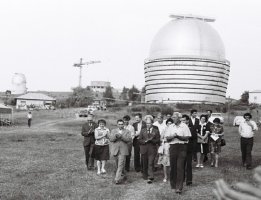
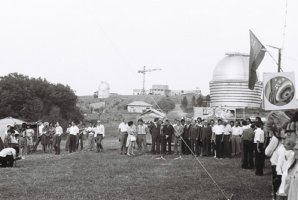
Фотографии со слета юных астрономов. Фото из архива одного из участников. Одно из мероприятий с участием космонатва Н.Рукавишникова.
Photographs from a gathering of young astronomers. Photos from the personal archive of one of the participants. One of the events featured the participation of cosmonaut N. Rukavishnikov.
Fotos del Encuentro de Jóvenes Astrónomos. Foto del archivo de uno de los participantes. Uno de los eventos en los que participó el cosmonauta N. Rukavishnikov.

311096982
 

MuscleMecca Crew

Mecca Staff
Frimen1917

Frimen1917

Mecca V.I.P.
VIP
Joined
Jan 9, 2026
Messages
3,386
Points
63
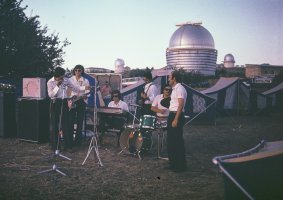
Фотографии со слета юных астрономов. Фото из архива одного из участников. Палаточный городок юных атрономов.
Photographs from a gathering of young astronomers. Photos from the personal archive of one of the participants. A tent camp for young astronomers.
Fotos del encuentro de jóvenes astrónomos. Foto del archivo de uno de los participantes. Campamento de tiendas de campaña para jóvenes astrónomos.
19882451
 
Frimen1917

Frimen1917

Mecca V.I.P.
VIP
Joined
Jan 9, 2026
Messages
3,386
Points
63
Фотографии со слета юных астрономов. Фото из архива одного из участников. Палаточный городок юных атрономов.
Photographs from a gathering of young astronomers. Photos from the personal archive of one of the participants. A tent camp for young astronomers.
Fotos del encuentro de jóvenes astrónomos. Foto del archivo de uno de los participantes. Campamento de tiendas de campaña para jóvenes astrónomos.
843069420
 
Frimen1917

Frimen1917

Mecca V.I.P.
VIP
Joined
Jan 9, 2026
Messages
3,386
Points
63
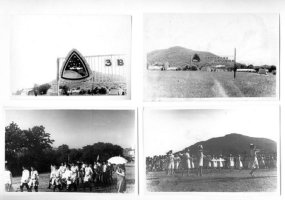
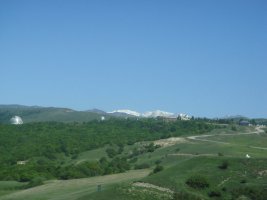
Фотографии со слета юных астрономов. Фото из архива одного из участников. На фотографиях 1. Юные астрономы на лекциях советских ученых. 2. Пейзаж в районе Шемахинской обсерватории.
Photographs from a gathering of young astronomers. Images from the personal archive of one of the participants. The photographs show: 1. Young astronomers attending lectures by Soviet scientists. 2. The landscape in the vicinity of the Shemakha Observatory.
Fotografías del Encuentro de Jóvenes Astrónomos. Foto del archivo de uno de los participantes. Las fotos muestran: 1. Jóvenes astrónomos en conferencias impartidas por científicos soviéticos. 2. Paisaje cerca del Observatorio de Shemakha.

196710964 1
 
Frimen1917

Frimen1917

Mecca V.I.P.
VIP
Joined
Jan 9, 2026
Messages
3,386
Points
63
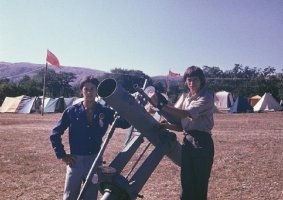
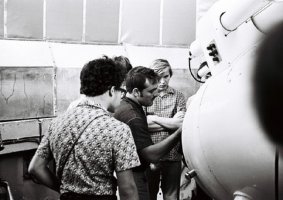
Фотографии со слета юных астрономов. Фото из архива одного из участников.
На фото - юные астрономы возле одного из телескопов Шемахинской обсерватории.

Photographs from a gathering of young astronomers. Photos from the personal archive of one of the participants.
The photo shows young astronomers next to one of the telescopes at the Shamakhi Observatory.

Fotografías de un encuentro de jóvenes astrónomos. Fotos procedentes del archivo personal de uno de los participantes.
La fotografía muestra a jóvenes astrónomos junto a uno de los telescopios del Observatorio de Shamakhi.

4385535
 
Frimen1917

Frimen1917

Mecca V.I.P.
VIP
Joined
Jan 9, 2026
Messages
3,386
Points
63

Шемахинская астрофизическая обсерватория имени Насреддина Туси Национальной Академии Наук Азербайджана (НАНА ШАО) была создана 17 ноября 1959 года по указу №975 Совета Министров Азербайджанской ССР. ШАО действует как научно-исследовательский институт в составе Отделения физико-математических и технических наук НАНА. ​

В 1927 году была создана Астрономическая экспедиция для изучения астроклимата в ряде районов Азербайджана. В Кельбаджаре, Лачине, Шемахе, Хызы и других районах Азербайджана велись работы по выбору подходящего места для будущего основания астрономической обсерватории. В результате исследований в 1953 году планировалось построить наблюдательную базу, а затем и обсерваторию в селе Пиргулу Шамахинского района. Обсерватория действовал как отдел Астрофизики в составе Института физики и математики тогдашней Азербайджанской академии наук, а затем в 1956 году как Сектор астрофизики Академии наук. С 1960 года обсерватория включена в состав Академии наук Азербайджана со статусом самостоятельного научно-исследовательского института.

В 1960-1981 годах директором обсерватории работал академик Х.Ф. Султанов, внёсший большой вклад в создание Шамахинской астрофизической обсерватории. Под его организацией и руководством в 1953-1959 годах наряду с астрономическими наблюдениями были проведены серьёзные работы по проектированию будущей обсерватории, приобретению телескопов и другого оборудования, устройству обсерватории, подготовке кадров в области астрономии. Кроме того, видные учёные М.М. Алиев, Ю.Х. Мамедалиев, Х.М. Абдуллаев, Р.Э. Гусейнов и Г.Дж. Мамедбейли сыграли существенную роль в создании и развитии ШАО. В подготовке научных кадров следует особо отметить работу сотрудников Моско́вского госуда́рственного университе́та и́мени М. В. Ломоно́сова, Ленинградского государственного университета имени А. С. Пушкина, Пулковской обсерватории Российской Академии Наук (РАН), Крымской астрофизической обсерватории РАН, Института земного магнетизма, ионосферы и распространения радиоволн имени Н. В. Пушкова РАН (ИЗМИРАН). В 1957 году первый телескоп - Хромосферно-фотосферный солнечный телескоп был установлен на Астрономической станции Пиркули. В 1959 г. был установлен 200-мм фотоэлектрический телескоп при помощи которого проблема изучения астроклимата местности была решена. В последующие годы были введены в эксплуатацию: Горизонтальный солнечный телескоп (1962 г.), Телескоп АСТ-452 (1964 г.), Телескоп АЗТ-8 (1970 г.), Телескоп Цейсс-600 (1980 г.). Произведённый компанией Carl Zeiss Германской Демократической Республики, этот телескоп является третьим по величине в бывшем СССР после двух идентичных 2,6-метровых телескопов российского производства, установленных в Крымской астрофизической обсерватории РАН и Бюраканской астрофизической обсерватории Нациогальной Аакадемии Наук Армении.

Уникальную роль в приобретении и вводе в эксплуатацию этого знаменитого оптического телескопа, считающегося флагманом экспериментальной науки Азербайджана, сыграли бывший президент Академии наук Азербайджана, академик Юсиф Мамедалиев и бывший вице-президент, народный поэт Самед Вургун.

С 1960 по 1980 г. в ШАО проводились регулярные астрофизические наблюдения. В эти же годы большое внимание уделялось подготовке кадров по астрофизике. С этой целью особым распоряжением первого секретаря Центрального Комитета Коммунистической партии Азербайджанской ССР Гейдара Алинва в 1976 году в Азербайджанском государственном университете была создана кафедра астрофизики. Эта кафедра сыграла важную роль в подготовке квалифицированных кадров в области астрономии.

В 1973 году к ШАО был присоединён Батабатский отдел, расположенный в Нахчыванской Автономной Республике. В 1981 году решением Кабинета Министров, Шамахинской астрофизической обсерватории было присвоено имя великого азербайджанского астронома Насреддина Туси. В 1997 году на баланс ШАО была также передана Агдеринская станция наблюдения, действовавшая на территории Нахчыванской Автономной Республики в советский период и перешедшая в собственность Азербайджанского государства после обретения независимости.

Согласно распоряжению президента Азербайджана Гейдара Алиева от 7 августа 2002 года «Об учреждении Нахчыванского филиала Национальной академии наук Азербайджана» Батабатская астрофизическая обсерватория вместе с Агдеринской наблюдательной станцией была передана в Нахчыванский филиал Национальной академии наук Азербайджана, а сейчас действует как независимая обсерватория. Действует Бакинский городской филиал (БГБ) Шамахинской астрофизической обсерватории. Здесь проводятся обработка и анализ наблюдательных материалов и исследования в области теоретической астрофизики
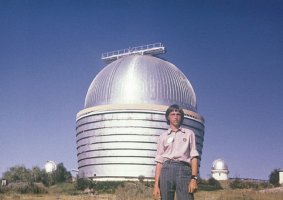
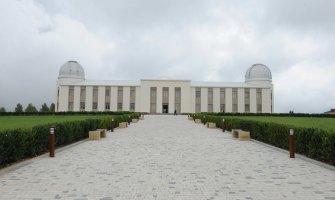
На фото одно из зданий Шемахинской обсерватории.

The Nasreddin Tusi Shamakhi Astrophysical Observatory of the Azerbaijan National Academy of Sciences (ANAS ShAO) was established on 17 November 1959 by Decree No. 975 of the Council of Ministers of the Azerbaijan SSR. ShAO operates as a research institute within the Department of Physical, Mathematical and Technical Sciences of ANAS.

In 1927 an Astronomical Expedition was created to study the astroclimate in a number of regions of Azerbaijan. Work on selecting a suitable site for the future astronomical observatory was carried out in Kelbajar, Lachin, Shamakhi, Khizi and other districts of Azerbaijan. As a result of the research, in 1953 it was planned to build an observational base and later an observatory in the village of Pirgulu in the Shamakhi district. The observatory initially functioned as the Department of Astrophysics within the Institute of Physics and Mathematics of the then Azerbaijan Academy of Sciences, and from 1956 as the Sector of Astrophysics of the Academy of Sciences. Since 1960 the observatory has been part of the Azerbaijan Academy of Sciences with the status of an independent research institute.
From 1960 to 1981 the director of the observatory was Academician H. F. Sultanov, who made a major contribution to the creation of the Shamakhi Astrophysical Observatory. Under his organisation and leadership, in 1953–1959, in addition to astronomical observations, serious work was carried out on designing the future observatory, acquiring telescopes and other equipment, arranging the observatory, and training personnel in the field of astronomy. Prominent scientists M. M. Aliyev, Yu. H. Mammadaliyev, H. M. Abdullayev, R. E. Huseynov and G. J. Mammadbeyli also played a significant role in the establishment and development of ShAO. In the training of scientific personnel, special mention should be made of the work of staff from Lomonosov Moscow State University, Leningrad State University named after A. S. Pushkin, the Pulkovo Observatory of the Russian Academy of Sciences (RAS), the Crimean Astrophysical Observatory of RAS, and the Pushkov Institute of Terrestrial Magnetism, Ionosphere and Radio Wave Propagation of RAS (IZMIRAN). In 1957 the first telescope — a Chromospheric-Photospheric Solar Telescope — was installed at the Pirkuli Astronomical Station. In 1959 a 200-mm photoelectric telescope was installed, with the help of which the problem of studying the local astroclimate was solved. In subsequent years the following instruments were put into operation: the Horizontal Solar Telescope (1962), the AST-452 Telescope (1964), the AZT-8 Telescope (1970), and the Zeiss-600 Telescope (1980). Manufactured by the Carl Zeiss company of the German Democratic Republic, this telescope is the third largest in the former USSR after two identical 2.6-metre telescopes of Russian manufacture installed at the Crimean Astrophysical Observatory of RAS and the Byurakan Astrophysical Observatory of the National Academy of Sciences of Armenia.
A unique role in the acquisition and commissioning of this famous optical telescope, regarded as the flagship of experimental science in Azerbaijan, was played by the former President of the Azerbaijan Academy of Sciences, Academician Yusif Mammadaliyev, and the former Vice-President, People’s Poet Samed Vurgun.
From 1960 to 1980 regular astrophysical observations were carried out at ShAO. In the same years great attention was paid to the training of personnel in astrophysics. For this purpose, by a special order of the First Secretary of the Central Committee of the Communist Party of the Azerbaijan SSR Heydar Aliyev, a Department of Astrophysics was established in 1976 at Azerbaijan State University. This department played an important role in the training of qualified specialists in astronomy.
In 1973 the Batabat Department, located in the Nakhchivan Autonomous Republic, was attached to ShAO. In 1981, by a decision of the Cabinet of Ministers, the Shamakhi Astrophysical Observatory was named after the great Azerbaijani astronomer Nasreddin Tusi. In 1997 the Agdere Observation Station, which had operated on the territory of the Nakhchivan Autonomous Republic in the Soviet period and passed into the ownership of the Azerbaijani state after independence, was also transferred to the balance of ShAO.
According to the decree of the President of Azerbaijan Heydar Aliyev of 7 August 2002 “On the establishment of the Nakhchivan Branch of the National Academy of Sciences of Azerbaijan”, the Batabat Astrophysical Observatory together with the Agdere Observation Station was transferred to the Nakhchivan Branch of the National Academy of Sciences of Azerbaijan and now operates as an independent observatory. The Baku City Branch (BCB) of the Shamakhi Astrophysical Observatory is in operation. Here the processing and analysis of observational materials and research in the field of theoretical astrophysics are carried out.

In the photograph — one of the buildings of the Shamakhi Observatory.
El Observatorio Astrofísico de Shamakhi Nasreddin Tusi de la Academia Nacional de Ciencias de Azerbaiyán (ANAS ShAO) fue creado el 17 de noviembre de 1959 por el Decreto n.º 975 del Consejo de Ministros de la RSS de Azerbaiyán. ShAO funciona como instituto de investigación dentro del Departamento de Ciencias Físicas, Matemáticas y Técnicas de ANAS.

En 1927 se creó una Expedición Astronómica para estudiar el astroclima en varias regiones de Azerbaiyán. Se realizaron trabajos de selección de un lugar adecuado para el futuro observatorio astronómico en Kelbajar, Lachin, Shamakhi, Khizi y otros distritos de Azerbaiyán. Como resultado de las investigaciones, en 1953 se planificó construir una base de observación y posteriormente un observatorio en el pueblo de Pirgulu del distrito de Shamakhi. El observatorio funcionó inicialmente como Departamento de Astrofísica dentro del Instituto de Física y Matemáticas de la entonces Academia de Ciencias de Azerbaiyán, y desde 1956 como Sector de Astrofísica de la Academia de Ciencias. Desde 1960 el observatorio forma parte de la Academia de Ciencias de Azerbaiyán con el estatus de instituto de investigación independiente.
De 1960 a 1981 el director del observatorio fue el académico H. F. Sultanov, quien realizó una gran contribución a la creación del Observatorio Astrofísico de Shamakhi. Bajo su organización y dirección, entre 1953 y 1959, además de las observaciones astronómicas, se llevaron a cabo importantes trabajos de diseño del futuro observatorio, adquisición de telescopios y otros equipos, acondicionamiento del observatorio y formación de personal en el campo de la astronomía. Científicos destacados como M. M. Aliyev, Yu. H. Mammadaliyev, H. M. Abdullayev, R. E. Huseynov y G. J. Mammadbeyli también desempeñaron un papel significativo en la creación y desarrollo de ShAO. En la formación de personal científico cabe destacar especialmente el trabajo de colaboradores de la Universidad Estatal de Moscú Lomonósov, la Universidad Estatal de Leningrado A. S. Pushkin, el Observatorio de Púlkovo de la Academia de Ciencias de Rusia (RAN), el Observatorio Astrofísico de Crimea de la RAN y el Instituto Pushkov de Magnetismo Terrestre, Ionosfera y Propagación de Ondas de Radio de la RAN (IZMIRAN). En 1957 se instaló el primer telescopio —un telescopio solar cromosférico-fotosférico— en la Estación Astronómica de Pirkuli. En 1959 se instaló un telescopio fotoeléctrico de 200 mm, con cuya ayuda se resolvió el problema del estudio del astroclima local. En los años siguientes se pusieron en funcionamiento: el Telescopio Solar Horizontal (1962), el Telescopio AST-452 (1964), el Telescopio AZT-8 (1970) y el Telescopio Zeiss-600 (1980). Fabricado por la empresa Carl Zeiss de la República Democrática Alemana, este telescopio es el tercero en tamaño de la antigua URSS después de dos telescopios idénticos de 2,6 metros de fabricación rusa instalados en el Observatorio Astrofísico de Crimea de la RAN y en el Observatorio Astrofísico de Byurakan de la Academia Nacional de Ciencias de Armenia.
Un papel único en la adquisición y puesta en marcha de este famoso telescopio óptico, considerado el buque insignia de la ciencia experimental de Azerbaiyán, lo desempeñaron el antiguo presidente de la Academia de Ciencias de Azerbaiyán, el académico Yusif Mammadaliyev, y el antiguo vicepresidente, el poeta popular Samed Vurgun.
De 1960 a 1980 se realizaron observaciones astrofísicas regulares en ShAO. En esos mismos años se prestó gran atención a la formación de personal en astrofísica. Con este fin, por orden especial del Primer Secretario del Comité Central del Partido Comunista de la RSS de Azerbaiyán Heydar Aliyev, en 1976 se creó el Departamento de Astrofísica en la Universidad Estatal de Azerbaiyán. Este departamento desempeñó un papel importante en la formación de especialistas cualificados en astronomía.
En 1973 se incorporó a ShAO el Departamento de Batabat, situado en la República Autónoma de Najicheván. En 1981, por decisión del Gabinete de Ministros, al Observatorio Astrofísico de Shamakhi se le otorgó el nombre del gran astrónomo azerbaiyano Nasreddin Tusi. En 1997 también se transfirió al balance de ShAO la Estación de Observación de Agdere, que había funcionado en el territorio de la República Autónoma de Najicheván en el período soviético y pasó a propiedad del Estado azerbaiyano tras la independencia.
Según el decreto del presidente de Azerbaiyán Heydar Aliyev del 7 de agosto de 2002 “Sobre el establecimiento de la Filial de Najicheván de la Academia Nacional de Ciencias de Azerbaiyán”, el Observatorio Astrofísico de Batabat junto con la Estación de Observación de Agdere fue transferido a la Filial de Najicheván de la Academia Nacional de Ciencias de Azerbaiyán y actualmente funciona como observatorio independiente. Funciona la Filial de la Ciudad de Bakú (BCB) del Observatorio Astrofísico de Shamakhi. Aquí se lleva a cabo el procesamiento y análisis de materiales de observación e investigaciones en el campo de la astrofísica teórica.

En la fotografía — uno de los edificios del Observatorio de Shamakhi.
Lham liyev amax Astrofizika Rsdxanasnda aparlan yenidnqurma ilri il tan olarkn 03
 
Frimen1917

Frimen1917

Mecca V.I.P.
VIP
Joined
Jan 9, 2026
Messages
3,386
Points
63
Телескопы обсерватории
Рефлектор «Carl Zeiss JENA» диаметром 2 метра введён в эксплуатацию в 1966 году. Главное зеркало параболическое, Д=2080 мм, Ф=9000 мм.
Телескоп АЗТ-8, главное параболическое зеркало D=700 мм, F=2820 мм. Первая система Кассегрена F=11200 мм, относительное отверстие 1:16 и угол обзора 40' или 13x13 см2.
Телескоп Zeiss-600, главное зеркало параболическое D=600 мм, F=2400 мм; Система Кассегрена Feqv = 7500 мм.
АСТ-452, менисковый телескоп Максутова-Кассегрена, менисковая линза D=350 мм, зеркало D=490 мм, зрительная труба F=1200 мм. Масштаб на фокальной поверхности телескопа 2,86'/мм. Сила света телескопа 1:3,4. Телескоп может работать в двух оптических системах: в главном фокусе и в ньютоновском фокусе. Поле зрения в главном фокусе 4°14', линейный размер поля 90 мм, в фокусе Ньютона 2°52' и 60 мм соответственно.
Азимутальный целостат АСК-5, главное зеркало D=440 мм, зеркало Ньютона D=200 мм, F=17500 мм.
АФР-3 хромосферный-фотосферный телескоп, объектив Д=130 мм, Фэкв = 9000 мм.

Телескоп АЗТ-15 1-метровой системы Шмидта привезён в обсерваторию в 1975 году, но до сих пор не установлен в связи с исчезновением по неизвестным причинам главного зеркала. Остальное оборудование телескопа хранится на складе в ШАО. Администрация обсерватории ведёт переговоры с руководством Российской академии наук о совместной с Россией установке телескопа.
На фото: 2-х метровый телескоп Шемахинской Астрофизической Обсерватории.

Observatory Telescopes


The 2-metre Carl Zeiss JENA reflector was commissioned in 1966. Its primary mirror is parabolic, with a diameter of 2080 mm and a focal length of 9000 mm.

AZT-8 telescope: primary parabolic mirror, D = 700 mm, F = 2820 mm. The first Cassegrain configuration has a focal length of F = 11200 mm, a focal ratio of 1:16, and a field of view of 40′ or 13 × 13 cm².

Zeiss-600 telescope: primary parabolic mirror, D = 600 mm, F = 2400 mm; Cassegrain system, Feqv = 7500 mm .

AST-452, a Maksutov–Cassegrain meniscus telescope: meniscus lens D = 350 mm, mirror D = 490 mm, optical tube F = 1200 mm. The scale at the telescope's focal plane is 2.86′/mm. The telescope's focal ratio is 1:3.4. The telescope can operate in two optical configurations: prime focus and Newtonian focus. The field of view at prime focus is 4°14′, with a linear field size of 90 mm; at the Newtonian focus, these values are 2°52′ and 60 mm, respectively.

ASK-5 azimuthal coelostat: primary mirror D = 440 mm, Newtonian mirror D = 200 mm, F = 17500 mm.

AFR-3 chromospheric-photospheric telescope: objective lens D = 130 mm, equivalent focal length Feq = 9000 mm.

The AZT-15 1-metre Schmidt telescope was brought to the observatory in 1975, but has still not been installed because its primary mirror disappeared for unknown reasons. The remaining telescope equipment is stored in a warehouse at the Shamakhi Astrophysical Observatory (ShAO). The observatory administration is negotiating with the leadership of the Russian Academy of Sciences regarding the joint installation of the telescope with Russia.

Photo: The 2-metre telescope at the Shamakhi Astrophysical Observatory.
Telescopios del observatorio


El reflector Carl Zeiss JENA de 2 metros entró en funcionamiento en 1966. Su espejo primario es parabólico, con un diámetro de 2080 mm y una distancia focal de 9000 mm.

Telescopio AZT-8: espejo primario parabólico, D = 700 mm, F = 2820 mm. La primera configuración Cassegrain tiene una distancia focal de F = 11200 mm, una relación focal de 1:16 y un campo de visión de 40′ o 13 × 13 cm².

Telescopio Zeiss-600: espejo primario parabólico, D = 600 mm, F = 2400 mm; sistema Cassegrain, Feqv = 7500 mm.

AST-452, telescopio de menisco Maksútov-Cassegrain: lente de menisco D = 350 mm, espejo D = 490 mm, tubo óptico F = 1200 mm. La escala en el plano focal del telescopio es de 2,86′/mm. La relación focal del telescopio es de 1:3,4. El telescopio puede funcionar con dos configuraciones ópticas: foco primario y foco newtoniano. El campo de visión en el foco primario es de 4°14′, con un tamaño lineal del campo de 90 mm; en el foco newtoniano, estos valores son de 2°52′ y 60 mm, respectivamente.

Celostato azimutal ASK-5: espejo primario D = 440 mm, espejo newtoniano D = 200 mm, F = 17500 mm.

Telescopio cromosférico-fotosférico AFR-3: objetivo D = 130 mm, distancia focal equivalente Feq = 9000 mm.

El telescopio Schmidt AZT-15 de 1 metro fue trasladado al observatorio en 1975, pero todavía no ha sido instalado debido a la desaparición, por causas desconocidas, de su espejo primario. El resto del equipamiento del telescopio se conserva en un almacén del Observatorio Astrofísico de Shamakhi (ShAO). La administración del observatorio mantiene negociaciones con la dirección de la Academia de Ciencias de Rusia para llevar a cabo la instalación conjunta del telescopio con Rusia.

Fotografía: El telescopio de 2 metros del Observatorio Astrofísico de Shamakhi.
SHAO
 
Frimen1917

Frimen1917

Mecca V.I.P.
VIP
Joined
Jan 9, 2026
Messages
3,386
Points
63
Светоприёмники и другие устройства Шемахинской обсерватории.
2-метровый телескоп имеет следующие светоприёмники:

Спектрограф Canberra с призмой 2x2 — для спектрального наблюдения слабых объектов;
Трёхкамерный и двухдифракционный спектрограф главного фокуса;
спектрограф с фокусом Кассегрена среднего разрешения;
ПЗС-фотометр БВРк для изучения слабых объектов;
Спектрограф Эшелле с фокусом куде;
спектрометр Эшелле с Кассегрен фокусом с разрешением 35000;
SHAFES — волоконно-оптический спектрограф высокого разрешения для фокуса Кассегрена (R = 56000, 28000, λ 3700-9000Å);
UAGS + Canon + CCD Andor — для спектрального наблюдения слабых объектов;
ПЗС-фотометр, работающий на системе BVRcİc, используемый в телескопе Zeiss-600; Телескоп оснащён редуктором фокусировки Celestron F/6.3, оптическая сила увеличена в 1,6 раза.
спектрограф АСП-20 с F = 7000 мм в целостате АСГ; D = 1,12 Å/мм, λ 3600-7000 Å;
Две призмы объектива с углами преломления 15˚ и 35˚40', используемые в телескопе АСТ-452;
Алюминирующая вакуумная установка
В 2012 году смонтирована и введена в эксплуатацию криогенная установка по производству жидкого азота ЛНП-20 для охлаждения ПЗС-светоприёмников.

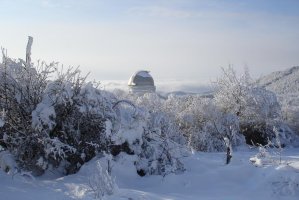
В 2007 году введена в эксплуатацию вакуумная установка немецкого производства В-240 для алюминирования поверхности астрономических зеркал. На фото Вид на Шемахинскую Обсерваторию.
Light detectors and other instruments at the Shemakha Observatory.
The 2-meter telescope is equipped with the following light receivers:

- Canberra spectrograph with a 2×2 prism — for spectral observation of faint objects;
- Three-camera and two-diffraction spectrograph of the primary focus;
- Medium-resolution spectrograph at the Cassegrain focus;
- BVR CCD photometer for the study of faint objects;
- Echelle spectrograph at the coudé focus;
- Echelle spectrometer at the Cassegrain focus with a resolution of 35,000;
- SHAFES — high-resolution fiber-optic spectrograph for the Cassegrain focus (R = 56,000 / 28,000, wavelength range 3700–9000 Å);
- UAGS + Canon + Andor CCD — for spectral observation of faint objects;
- CCD photometer operating in the BVRcIc system, used on the Zeiss-600 telescope. The telescope is equipped with a Celestron F/6.3 focal reducer, which increases the optical power by a factor of 1.6;
- ASP-20 spectrograph with F = 7000 mm in the ASG coelostat; dispersion D = 1.12 Å/mm, wavelength range 3600–7000 Å;
- Two objective prisms with refraction angles of 15° and 35°40′, used on the AST-452 telescope;
- Vacuum aluminizing unit.

In 2012, a cryogenic unit for the production of liquid nitrogen (LNP-20) was installed and put into operation for cooling the CCD light receivers.

In 2007, a German-made B-240 vacuum unit for aluminizing the surfaces of astronomical mirrors was put into operation.


Photo: View of the Shamakhi Observatory.

Receptores de luz y otros dispositivos del Observatorio Shemakha.

El telescopio de 2 metros cuenta con los siguientes receptores de luz:

- Espectrógrafo Canberra con prisma 2×2 — para la observación espectral de objetos débiles;
- Espectrógrafo de tres cámaras y dos difacciones del foco principal;
- Espectrógrafo de resolución media en el foco Cassegrain;
- Fotómetro CCD BVR para el estudio de objetos débiles;
- Espectrógrafo Echelle en el foco coudé;
- Espectrómetro Echelle en el foco Cassegrain con resolución de 35.000;
- SHAFES — espectrógrafo de fibra óptica de alta resolución para el foco Cassegrain (R = 56.000 / 28.000, rango de longitudes de onda 3700–9000 Å);
- UAGS + Canon + CCD Andor — para la observación espectral de objetos débiles;
- Fotómetro CCD que opera en el sistema BVRcIc, utilizado en el telescopio Zeiss-600. El telescopio está equipado con un reductor focal Celestron F/6.3, que aumenta la potencia óptica 1,6 veces;
- Espectrógrafo ASP-20 con F = 7000 mm en el celostato ASG; dispersión D = 1,12 Å/mm, rango de longitudes de onda 3600–7000 Å;
- Dos prismas de objetivo con ángulos de refracción de 15° y 35°40′, utilizados en el telescopio AST-452;
- Instalación de aluminizado al vacío.

En 2012 se montó y se puso en funcionamiento una instalación criogénica para la producción de nitrógeno líquido (LNP-20) destinada a refrigerar los receptores de luz CCD.

En 2007 se puso en funcionamiento una instalación de vacío de fabricación alemana B-240 para el aluminizado de la superficie de los espejos astronómicos.

Foto: Vista del Observatorio de Shamakhi.

Shemakhy Astrophysical Observatory
 
Frimen1917

Frimen1917

Mecca V.I.P.
VIP
Joined
Jan 9, 2026
Messages
3,386
Points
63

Научные достижения Шамахинской обсерватории​

В теоретических работах по звёздной физике были сделаны новые выводы о физической природе конечного продукта звёздной эволюции. Показано, что при коллапсе при образовании нейтронной звезды образуется поток нейтрино и антинейтрино с энергией 50 эВ. Образовавшаяся при коллапсе нейтронная звезда увеличивает энергию образовавшегося в центре нейтрино и создаёт мягкий рентгеновский спектр. Рассчитаны параметры нейтронной звезды, образовавшейся с использованием релятивистской теории. Эти результаты были использованы в Баксанской нейтринной обсерватории.

Показано, что даже очень массивные звёзды проходят в своей эволюции предколлапсную стадию. Доказано, что сверхгигантские вспышки I и II типов различаются по энергии и массе.

Впервые составлен каталог около 700 источников сильного рентгеновского излучения.

Впервые в Галактике определена электронная концентрация 331 пульсара.

Показано, что пульсары расположены в кольце толщиной 8 км/с от центра галактики. На основании этого были найдены расстояние до пульсаров и некоторые его параметры.

Впервые определена новая шкала расстояний до планетарных туманностей. Большинство полученных результатов подтверждено наблюдениями.

Наблюдения за Солнцем ведутся с 1957 г., а результаты публикуются в международных каталогах.

Дана модель солнечных вспышек с использованием теории ударных волн.

Разработана МГД-теория глобальных вихревых колебаний Солнца типа Россби. Показано, что глобальные вихри, изменяя скорость процесса термоядерного синтеза в центре и оптические свойства поверхности Солнца, квазипериодически изменяют интегральный поток излучения Солнца. Полученные результаты впервые выдвинуты в качестве критического механизма глобального изменения климата на земле.

Предложен физический механизм решения проблемы дефицита солнечных нейтрино. Разработаны основы формирования МГД-резонатора в центральной области и шумовой осцилляции (изменения типа) проходящего через него электронного нейтрино. Этот механизм может быть использован для диагностики физического состояния центра Солнца и объяснения асимметрии потока солнечных нейтрино, наблюдаемой на полюсах и экваторе.

Исследованы механизмы формирования крупномасштабной низкочастотной турбулентности в плазме солнечного ветра, её природа и влияние на наземные экосистемы и биосистемы.

Показано, что яркость деталей на поверхности Марса постоянно меняется, а пылевые частицы в его атмосфере образуются и исчезают. В качестве одной из основных причин показан дефицит молекул оксида азота в атмосфере Марса. Составлена топографическая карта Марса и изучена прозрачность его атмосферы.

В спектре тёмной поверхности Венеры были обнаружены эмиссионные линии, доказывающие, что молния поражает атмосферу планеты.

На основе статистических исследований астероидов была опровергнута теория Ольберса, согласно которой астероиды образовались в результате коллапса большого тела.

Была предложена новая теория фрагментации кометы. Дана концепция образования гиперболических комет и метеоров.

Исследованы изменения в атмосфере многих нестационарных звёзд (T Taurus, Ae Be Herbig, Wolf-Ray, симбиотических, гигантских, магнитных звёзд).

Проведена классификация фотометрических кривых блеска молодых звёзд солнечного типа. Показано, что существует всего пять типов кривых блеска в зависимости от механизмов активности. Для некоторых звёзд кратковременные изменения объяснялись вращением звезды вокруг своей оси, а долговременные - двойной или солнечной активностью.

Было показано, что внутреннее строение звёзд выше и ниже главной последовательности различно. Было доказано, что белые карлики имеют внутреннее ядро.

Наблюдалось спектральное распределение энергии в 5 абсолютных звёздных величинах потока 3200-7500Å от 425 ярких звёзд и составлен его каталог.


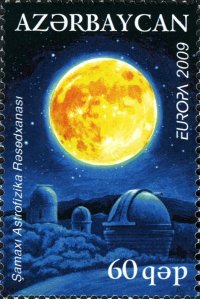
На фото: Марка Азербайджана. Шамахинская Астрофизическая Обсерватория.

Scientific Achievements of the Shamakhi Observatory​

In theoretical works on stellar physics, new conclusions were drawn about the physical nature of the final product of stellar evolution. It was shown that during the collapse leading to the formation of a neutron star, a flux of neutrinos and antineutrinos with an energy of 50 eV is produced. The neutron star formed during the collapse increases the energy of the neutrinos generated in the center and creates a soft X-ray spectrum. The parameters of the neutron star formed using relativistic theory were calculated. These results were used at the Baksan Neutrino Observatory.

It was shown that even very massive stars pass through a pre-collapse stage in their evolution. It was proved that type I and type II supergiant flares differ in energy and mass.

For the first time, a catalog of about 700 sources of strong X-ray emission was compiled.

For the first time in the Galaxy, the electron density of 331 pulsars was determined.

It was shown that pulsars are located in a ring with a thickness of 8 km/s from the center of the Galaxy. On this basis, the distances to the pulsars and some of their parameters were found.

For the first time, a new distance scale to planetary nebulae was determined. Most of the obtained results have been confirmed by observations.

Observations of the Sun have been carried out since 1957, and the results are published in international catalogs.

A model of solar flares using shock wave theory was given.

An MHD theory of global vortex oscillations of the Sun of the Rossby type was developed. It was shown that global vortices, by changing the rate of the thermonuclear synthesis process in the center and the optical properties of the solar surface, quasi-periodically change the integral radiation flux of the Sun. The results obtained were for the first time put forward as a critical mechanism of global climate change on Earth.

A physical mechanism for solving the solar neutrino deficit problem was proposed. The foundations for the formation of an MHD resonator in the central region and noise oscillation (type change) of the electron neutrino passing through it were developed. This mechanism can be used to diagnose the physical state of the solar center and to explain the asymmetry of the solar neutrino flux observed at the poles and the equator.

The mechanisms of formation of large-scale low-frequency turbulence in the solar wind plasma, its nature and influence on terrestrial ecosystems and biosystems were studied.

It was shown that the brightness of details on the surface of Mars is constantly changing, and dust particles in its atmosphere form and disappear. One of the main reasons indicated is the deficit of nitrogen oxide molecules in the atmosphere of Mars. A topographic map of Mars was compiled and the transparency of its atmosphere was studied.

Emission lines were discovered in the spectrum of the dark surface of Venus, proving that lightning strikes the planet’s atmosphere.

Based on statistical studies of asteroids, Olbers’ theory, according to which asteroids were formed as a result of the collapse of a large body, was refuted.

A new theory of comet fragmentation was proposed. A concept of the formation of hyperbolic comets and meteors was given.

Changes in the atmospheres of many non-stationary stars (T Tauri, Herbig Ae/Be, Wolf-Rayet, symbiotic, giant, and magnetic stars) were studied.

A classification of the photometric light curves of young solar-type stars was carried out. It was shown that there are only five types of light curves depending on the activity mechanisms. For some stars, short-term changes were explained by the star’s rotation around its axis, while long-term ones were explained by binary or solar-type activity.

It was shown that the internal structure of stars above and below the main sequence is different. It was proved that white dwarfs have an internal core.

The spectral energy distribution in the 3200–7500 Å range was observed for 425 bright stars down to 5 absolute magnitudes, and a catalog of it was compiled.


Photo: Postage stamp of Azerbaijan. Shamakhi Astrophysical Observatory.

Logros científicos del Observatorio de Shamakhi​

En los trabajos teóricos sobre física estelar se extrajeron nuevas conclusiones acerca de la naturaleza física del producto final de la evolución estelar. Se demostró que durante el colapso que da lugar a la formación de una estrella de neutrones se genera un flujo de neutrinos y antineutrinos con una energía de 50 eV. La estrella de neutrones formada durante el colapso aumenta la energía de los neutrinos generados en el centro y crea un espectro de rayos X blandos. Se calcularon los parámetros de la estrella de neutrones formada utilizando la teoría relativista. Estos resultados fueron utilizados en el Observatorio de Neutrinos de Baksan.

Se demostró que incluso las estrellas muy masivas pasan por una etapa precólapso en su evolución. Se probó que las fulguraciones de supergigantes de tipo I y de tipo II se diferencian en energía y masa.

Por primera vez se compiló un catálogo de alrededor de 700 fuentes de fuerte emisión de rayos X.

Por primera vez en la Galaxia se determinó la densidad electrónica de 331 púlsares.

Se demostró que los púlsares se encuentran en un anillo de 8 km/s de espesor desde el centro de la Galaxia. Sobre esta base se hallaron las distancias a los púlsares y algunos de sus parámetros.

Por primera vez se determinó una nueva escala de distancias a las nebulosas planetarias. La mayoría de los resultados obtenidos han sido confirmados por observaciones.

Las observaciones del Sol se realizan desde 1957 y los resultados se publican en catálogos internacionales.

Se presentó un modelo de fulguraciones solares utilizando la teoría de ondas de choque.

Se desarrolló una teoría MHD de las oscilaciones vorticiales globales del Sol de tipo Rossby. Se demostró que los vórtices globales, al modificar la velocidad del proceso de síntesis termonuclear en el centro y las propiedades ópticas de la superficie solar, cambian de forma cuasiperiódica el flujo integral de radiación del Sol. Los resultados obtenidos se propusieron por primera vez como un mecanismo crítico del cambio climático global en la Tierra.

Se propuso un mecanismo físico para resolver el problema del déficit de neutrinos solares. Se desarrollaron las bases de la formación de un resonador MHD en la región central y de la oscilación de ruido (cambio de tipo) del neutrino electrónico que lo atraviesa. Este mecanismo puede utilizarse para diagnosticar el estado físico del centro del Sol y para explicar la asimetría del flujo de neutrinos solares observada en los polos y en el ecuador.

Se investigaron los mecanismos de formación de la turbulencia de baja frecuencia a gran escala en el plasma del viento solar, su naturaleza y su influencia en los ecosistemas y biosistemas terrestres.

Se demostró que el brillo de los detalles de la superficie de Marte cambia constantemente y que las partículas de polvo en su atmósfera se forman y desaparecen. Como una de las causas principales se señaló el déficit de moléculas de óxido de nitrógeno en la atmósfera de Marte. Se elaboró un mapa topográfico de Marte y se estudió la transparencia de su atmósfera.

Se descubrieron líneas de emisión en el espectro de la superficie oscura de Venus, lo que demuestra que los rayos impactan la atmósfera del planeta.

Sobre la base de estudios estadísticos de asteroides se refutó la teoría de Olbers, según la cual los asteroides se formaron como resultado del colapso de un cuerpo grande.

Se propuso una nueva teoría de la fragmentación de cometas. Se dio una concepción de la formación de cometas hiperbólicos y meteoros.

Se investigaron los cambios en las atmósferas de muchas estrellas no estacionarias (T Tauri, Herbig Ae/Be, Wolf-Rayet, simbióticas, gigantes y estrellas magnéticas).

Se realizó una clasificación de las curvas de luz fotométricas de estrellas jóvenes de tipo solar. Se demostró que existen solo cinco tipos de curvas de luz según los mecanismos de actividad. Para algunas estrellas, los cambios a corto plazo se explicaron por la rotación de la estrella alrededor de su eje, mientras que los de largo plazo se explicaron por actividad binaria o de tipo solar.

Se demostró que la estructura interna de las estrellas por encima y por debajo de la secuencia principal es diferente. Se probó que las enanas blancas tienen un núcleo interno.

Se observó la distribución espectral de energía en el rango 3200–7500 Å de 425 estrellas brillantes hasta la 5ª magnitud absoluta y se compiló su catálogo.


Foto: Sello postal de Azerbaiyán. Observatorio Astrofísico de Shamakhi.
Stamps of Azerbaijan 2009 862
 
Last edited:
Frimen1917

Frimen1917

Mecca V.I.P.
VIP
Joined
Jan 9, 2026
Messages
3,386
Points
63
Мероприятия проведенные Шамахинской Обсерваторией.
Конгресс Международной астронавтической федерации (1972 г.)

Международные конференции по изучению магнитных звёзд (1973, 1976)
Пленум Астрономического совета АН СССР (1984 г.)
Ассамблеи «Туси-800» (8 конференций за 1998-2002 гг.)
«Периодичность и космологические проблемы» (2003 г.)
Международная конференция, посвящённая 60-летию ШАО (2019 г.)

Современные направления исследований физики и динамики тел Солнечной системы. (2021 г.)
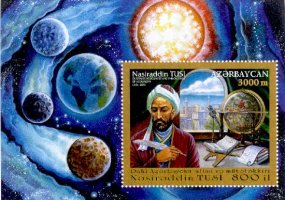
На фото марка Азербайджана, посвящённая 800 летию со дня рождения философа, математика и астронома Насреддина Туси.

Events hosted by the Shamakhi Astrophysical Observatory (ShAO):

Congress of the International Astronautical Federation (1972)
International Conferences on the Study of Magnetic Stars (1973, 1976)
Plenum of the Astronomical Council of the USSR Academy of Sciences (1984)
"Tusi-800" Assemblies (8 conferences held between 1998 and 2002)
"Periodicity and Cosmological Problems" (2003)
International Conference dedicated to the 60th anniversary of ShAO (2019)
Modern Trends in Research on the Physics and Dynamics of Solar System Bodies (2021)

The photograph shows an Azerbaijani postage stamp issued to commemorate the 800th anniversary of the birth of the philosopher, mathematician, and astronomer Nasreddin Tusi.
Eventos organizados por el Observatorio Shamakhi.

Congreso de la Federación Astronáutica Internacional (1972)
Conferencias Internacionales sobre el Estudio de las Estrellas Magnéticas (1973, 1976)
Sesión Plenaria del Consejo Astronómico de la Academia de Ciencias de la URSS (1984)
Asambleas Tusi-800 (8 conferencias, 1998-2002)
«Periodicidad y Problemas Cosmológicos» (2003)
Conferencia Internacional dedicada al 60.º aniversario del Observatorio Shamakhi (2019)
Tendencias Modernas de Investigación en la Física y la Dinámica de los Cuerpos del Sistema Solar (2021)

En la imagen: un sello azerbaiyano dedicado al 800.º aniversario del nacimiento del filósofo, matemático y astrónomo Nasreddin Tusi.
Stamps of Azerbaijan 2001 593s
 
Top