









Anabolix
MuscleMecca Sponsors
Staff member
Sponsor
- Joined
- Dec 25, 2024
- Messages
- 681
- Points
- 28
Bacteriostatic Water 0.9%: What Is It, How Does It Work, and Why Do Quality Standards Matter?
Bacteriostatic water is a specialized solution discussed in pharmaceutical preparation and laboratory research. Although it may look like a simple liquid in a vial, its composition, intended use, sterility, and labeling are important considerations. Understanding these factors helps distinguish a properly characterized product from one whose quality or suitability has not been established.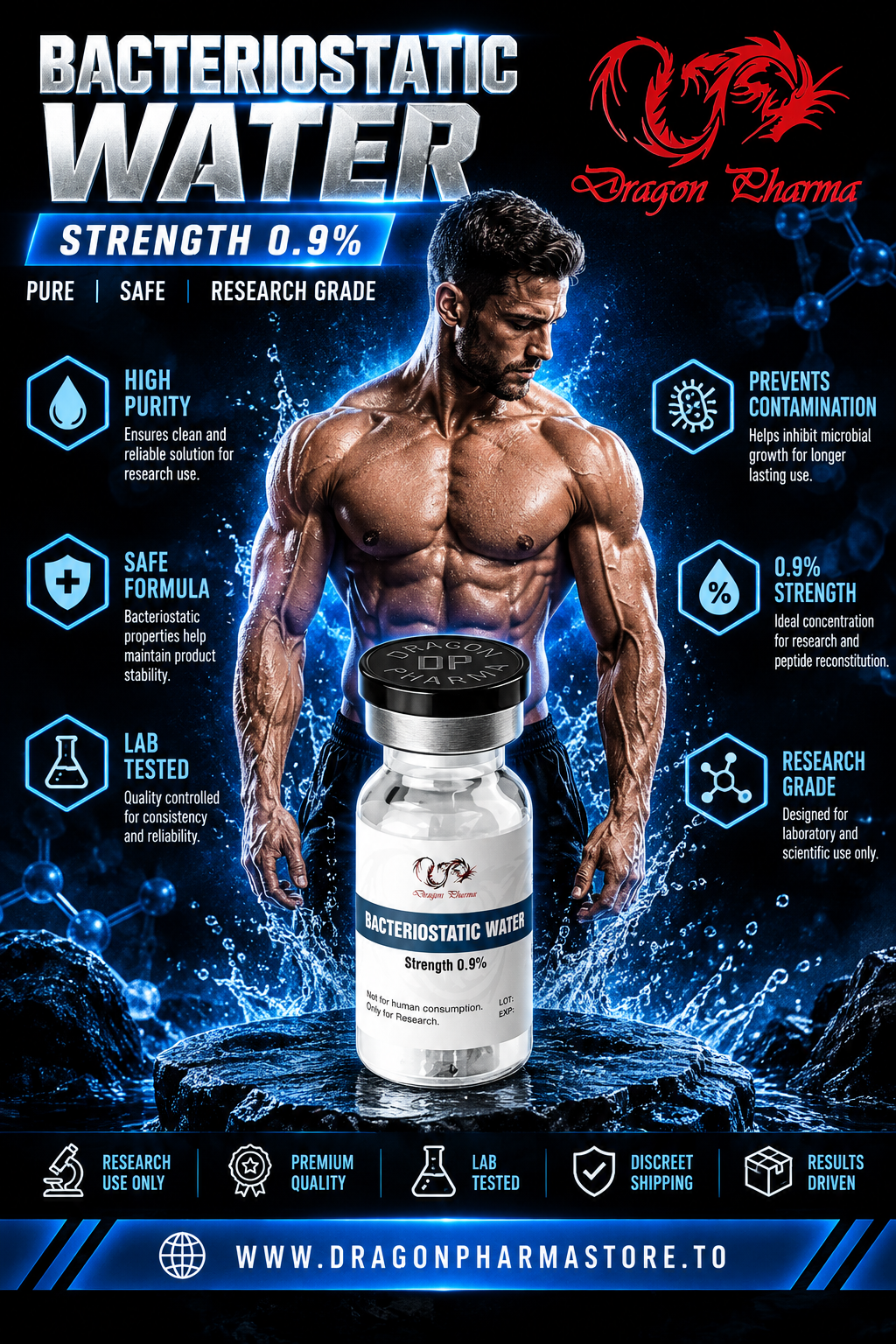
What Is Bacteriostatic Water?
Bacteriostatic Water for Injection is a sterile preparation designed to dilute or dissolve certain medications when the medication's approved instructions specify its use. Conventional pharmaceutical formulations contain water for injection and a bacteriostatic preservative, commonly benzyl alcohol. The preservative helps inhibit bacterial growth under appropriate conditions, but it does not make a solution immune to contamination.Official product labeling describes its use as a diluent for compatible injectable medications, rather than as a standalone treatment. Source: DailyMed
What Does 0.9% Mean on the Label?
One important detail is the meaning of the stated concentration. In conventional bacteriostatic water formulations, 0.9% may refer to benzyl alcohol, the preservative. In contrast, 0.9% sodium chloride refers to the salt concentration in saline solutions.These are not interchangeable descriptions. A label that states only “Strength 0.9%” does not clearly identify which ingredient is present at that concentration. Checking the complete ingredient list, product specification, and manufacturer documentation is therefore essential before drawing conclusions about a product's composition.
How Does the Bacteriostatic Preservative Work?
Benzyl alcohol is used in certain formulations to inhibit microbial growth. This property supports the intended use of appropriately manufactured multidose containers, but it does not replace sterile manufacturing, appropriate handling, or adherence to the product's instructions.Bacteriostatic action also does not mean that every microorganism is eliminated or that a contaminated vial can be made safe simply because it contains a preservative.
What Is the Difference Between Bacteriostatic Water and Sterile Water?
The key difference is that conventional bacteriostatic water contains a preservative, whereas preservative-free sterile water does not. Their intended applications and restrictions can differ.The appropriate diluent depends on the medication, its formulation, and its official instructions. They should not be substituted for one another without confirmation from a qualified healthcare professional or pharmacist. Conventional bacteriostatic water containing benzyl alcohol must not be used in neonates because of the risk of toxicity.
Why Are Sterility and Product Quality Important?
Products intended for pharmaceutical preparation must meet appropriate quality standards. Relevant considerations include:- Identity and composition: Are the ingredients and concentrations clearly documented?
- Sterility: Was the product manufactured and packaged using validated controls?
- Contamination control: Are there appropriate measures to reduce microbial and particulate contamination?
- Packaging integrity: Is the container intact, properly sealed, and appropriately labeled?
- Traceability: Are the manufacturer, lot number, expiry date, and supporting quality documents available?
Can Bacteriostatic Water Be Used With Every Injectable Product?
No. Compatibility depends on the specific medication and its manufacturer-approved instructions. Some products require a particular diluent or preservative-free preparation. Using an unsuitable solution may affect stability, compatibility, or safety.A product described as research-use-only should not automatically be treated as a pharmaceutical preparation approved for human administration.
What Are the Potential Safety Concerns?
Potential concerns include contamination, incorrect composition, incompatibility with a medication, and adverse reactions to ingredients such as benzyl alcohol. Product quality problems can be particularly serious when a solution is intended for injection.The US Food and Drug Administration warns that contaminated or inadequately controlled compounded products can cause serious injury. Appropriate documentation and quality controls are important, but marketing claims alone cannot establish that a product meets pharmaceutical standards. Source: FDA
Why Do Clear Labels and Laboratory Documentation Matter?
Clear labeling allows users and qualified professionals to identify a product's intended purpose and composition. Documentation should accurately identify the ingredients, concentration, manufacturer, lot information, storage requirements, and intended use.Independent analytical testing may help verify certain product characteristics, but a purity result alone does not prove sterility or establish that a product is suitable for human use.
What Is the Bottom Line on Bacteriostatic Water 0.9%?
Bacteriostatic water has a specific role in pharmaceutical preparation, but its safety and suitability depend on its actual formulation, manufacturing quality, intended application, and compatibility with the medication involved.The most important takeaway is to verify what “0.9%” refers to, distinguish bacteriostatic water from saline and preservative-free sterile water, and avoid assuming that a research-labeled product is approved for human use.
Order Now
 www.dragonpharmastore.to
DragonPharmaStore Crypto Special Offers
 Visit: www.dragonpharmastore.to
Stock up while inventory lasts. Some offers are available for a limited time and may end without notice.
-----------------------------------------------------------
Sweet Surprise
 FREE CIALIS 20MG WITH EVERY ORDER!
 At DragonPharmaStore.to, every order gets a little extra.
No matter the size of your order, you'll receive 4 FREE Cialis 20mg tablets in blister packs at absolutely no additional cost.

