









I used to wonder why some athletes look so much more explosive than others despite having similar PRs. The secret lies in how the stretch-shortening cycle dramatically amplifies your Olympic lifting power by converting elastic energy into explosive force. When you rapidly shift from eccentric to concentric movement, your muscles store and release energy like a loaded spring. This natural power amplifier improves your triple extension, increases the rate of force development, and enhances neuromuscular coordination. Elite lifters aren't just stronger; they've mastered this physiological mechanism that transforms raw strength into championship-winning power.


Power, the ability to generate maximum force in minimal time, is a great differentiator in Olympic weightlifting. You can build tremendous strength in squats and pulls, yet still struggle to snatch or clean heavy weights efficiently. Why? Because Olympic lifting power isn't just about strength, it's about elastic energy utilization.
Many lifters plateau despite strength gains because they haven't optimized their stretch-shortening cycle (SSC), the natural elastic mechanism that amplifies force production when muscles rapidly stretch before contracting. This physiological power amplifier is what transforms good lifters into elite ones.
In this article, you'll discover how the SSC functions as your body's built-in power booster, why it's indispensable for explosive Olympic lifts, and how to train specifically to enhance this mechanism for breakthrough performances in the snatch and clean & jerk.
What Is the Stretch Shortening Cycle (SSC)?

The Stretch Shortening Cycle (SSC) represents your body's natural elastic power generation system, a physiological mechanism that explains why a jumper crouches before leaping or why a thrower steps back before accelerating forward. At its core, the SSC involves a rapid eccentric muscle action (lengthening) immediately followed by a powerful concentric contraction (shortening).

This sequence harnesses muscle-tendon elasticity to amplify force output beyond what's possible from a static position. When your muscles stretch under load, they store elastic energy like a spring while simultaneously triggering stretch reflex activation in your neuromuscular system. This neurological response recruits more muscle fibers and increases contraction force. In Olympic lifting, this translates directly to explosive power during critical moments of the snatch and clean & jerk.
The Three Phases of the Stretch Shortening Cycle


Breaking down the Stretch Shortening Cycle reveals three distinct phases that work in concert to amplify your lifting power. First, the eccentric phase involves a controlled pre-stretch where your muscles lengthen while under tension, storing elastic energy like a spring being compressed.
Next comes the critical amortization phase, the brief interval between stretching and contracting. This is where many lifters lose efficiency; the shorter this phase, the more power you'll generate.
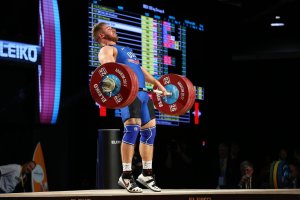
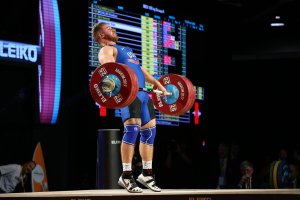
Finally, the concentric contraction releases the stored elastic energy, converting it into explosive force. This is where you'll see dramatically increased bar speed compared to a pure concentric movement. Understanding these three phases helps you identify where your technique might be leaking power during Olympic lifts.
How SSC Directly Improves Olympic Lifting Power


When mastering the three phases of the Stretch Shortening Cycle, you'll access substantial performance benefits that directly translate to Olympic lifting success. The elastic energy stored during the eccentric phase dramatically increases power output when released explosively, enabling you to generate more force against the barbell with less metabolic cost.
Your reactive strength, the ability to quickly switch from yielding to overcoming force, improves through SSC optimization, accelerating your rate of force development. This means you'll transfer ground reaction forces more efficiently through your kinetic chain during the critical triple extension.
Effective SSC training enhances neuromuscular coordination, allowing motor units to fire synchronously at precisely the right moment. This coordinated recruitment pattern creates the seamless power transfer that separates elite lifters from the merely strong.
Common Technical Errors That Reduce SSC Benefits

Four critical technical errors can severely diminish your ability to harness the Stretch Shortening Cycle's power in Olympic lifting. First, excessive pause time between phases disrupts elastic energy transfer and reduces your rate of force development. Second, failing to maintain proper tension during the eccentric phase prevents ideal motor unit recruitment when shifting to the concentric movement. Third, mistiming the changeover between pulls creates disconnection in your kinetic chain, wasting elastic energy that should propel the barbell upward. Finally, inefficient bar paths force compensatory movements that leak power and diminish SSC effectiveness.
Correcting these errors requires conscious practice of proper timing and positioning. Remember that the SSC functions ideally when changes are quick and controlled, with minimal energy leakage between movement phases.
Training Methods to Improve SSC in Olympic Lifters
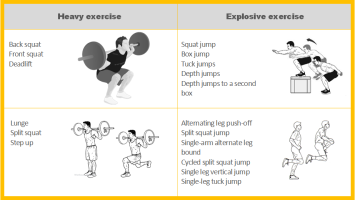
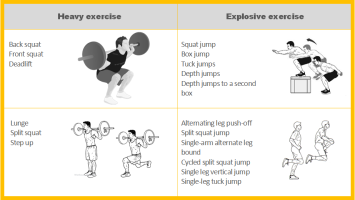
Developing your Stretch Shortening Cycle requires specific training methods that enhance the elastic properties of muscle-tendon units while improving neuromuscular coordination. Integrating plyometric training for lifters is essential - depth jumps, drop jumps, and box jumps develop the reactive strength needed for explosive triple extension.
Include complex training by pairing heavy strength movements with explosive exercises (like heavy front squats followed by vertical jumps). This enhances your nervous system's ability to recruit more motor units rapidly.

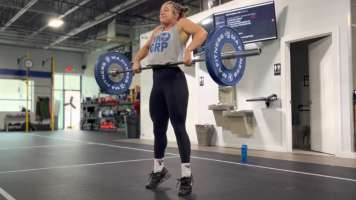
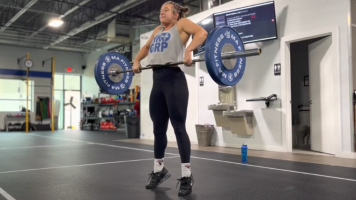
For direct carryover, incorporate tempo work in your Olympic lifts: controlled eccentric phases (3-4 second lowering) followed by explosive concentric actions improve your muscle's stretch reflex. Technical exercises like tall snatches and tall cleans train precise timing and neuromuscular coordination while maximizing SSC utilization.
Programming Considerations

Because the Stretch Shortening Cycle relies on neuromuscular freshness, proper programming becomes critical for Olympic lifters seeking to maximize power output. You'll need to carefully manage fatigue, as SSC effectiveness diminishes rapidly when your central nervous system is compromised.
Structure your training week with at least 48 hours between high-intensity SSC sessions to guarantee complete recovery. Consider the force-velocity relationship when planning workouts—combine heavy strength days (high-force) with separate explosive days (high-velocity) rather than attempting both simultaneously.
Programming considerations should include deload weeks every 4-6 weeks to prevent accumulated fatigue. Prioritize quality over quantity in SSC-focused training—5-6 sets of 2-3 reps at 70-85% intensity often produces better power adaptations than higher volume approaches with compromised execution.
Who Benefits Most From SSC Optimization?

While all Olympic lifters can enhance their performance through the Stretch Shortening Cycle
While all Olympic lifters can enhance their performance through Stretch Shortening Cycle training, certain athlete profiles stand to gain substantially more than others. Beginners often see dramatic improvements as they learn to efficiently convert elastic energy storage into explosive power, especially when shifting from strength-dominant to technique-refined lifting.
Advanced lifters with already-optimized technique benefit when hitting plateaus, as SSC refinement can uncover additional power without requiring more absolute strength. Lighter weight class athletes typically respond better to SSC training due to their favorable strength-to-weight ratios, allowing for greater utilization of ground reaction force. Additionally, athletes with naturally elastic connective tissue or previous plyometric training backgrounds tend to adapt more quickly to SSC-focused programming, showing faster improvements in pull changes and receiving positions.


Power, the ability to generate maximum force in minimal time, is a great differentiator in Olympic weightlifting. You can build tremendous strength in squats and pulls, yet still struggle to snatch or clean heavy weights efficiently. Why? Because Olympic lifting power isn't just about strength, it's about elastic energy utilization.
Many lifters plateau despite strength gains because they haven't optimized their stretch-shortening cycle (SSC), the natural elastic mechanism that amplifies force production when muscles rapidly stretch before contracting. This physiological power amplifier is what transforms good lifters into elite ones.
In this article, you'll discover how the SSC functions as your body's built-in power booster, why it's indispensable for explosive Olympic lifts, and how to train specifically to enhance this mechanism for breakthrough performances in the snatch and clean & jerk.
What Is the Stretch Shortening Cycle (SSC)?

The Stretch Shortening Cycle (SSC) represents your body's natural elastic power generation system, a physiological mechanism that explains why a jumper crouches before leaping or why a thrower steps back before accelerating forward. At its core, the SSC involves a rapid eccentric muscle action (lengthening) immediately followed by a powerful concentric contraction (shortening).

This sequence harnesses muscle-tendon elasticity to amplify force output beyond what's possible from a static position. When your muscles stretch under load, they store elastic energy like a spring while simultaneously triggering stretch reflex activation in your neuromuscular system. This neurological response recruits more muscle fibers and increases contraction force. In Olympic lifting, this translates directly to explosive power during critical moments of the snatch and clean & jerk.
The Three Phases of the Stretch Shortening Cycle


Breaking down the Stretch Shortening Cycle reveals three distinct phases that work in concert to amplify your lifting power. First, the eccentric phase involves a controlled pre-stretch where your muscles lengthen while under tension, storing elastic energy like a spring being compressed.
Next comes the critical amortization phase, the brief interval between stretching and contracting. This is where many lifters lose efficiency; the shorter this phase, the more power you'll generate.
Finally, the concentric contraction releases the stored elastic energy, converting it into explosive force. This is where you'll see dramatically increased bar speed compared to a pure concentric movement. Understanding these three phases helps you identify where your technique might be leaking power during Olympic lifts.
How SSC Directly Improves Olympic Lifting Power


When mastering the three phases of the Stretch Shortening Cycle, you'll access substantial performance benefits that directly translate to Olympic lifting success. The elastic energy stored during the eccentric phase dramatically increases power output when released explosively, enabling you to generate more force against the barbell with less metabolic cost.
Your reactive strength, the ability to quickly switch from yielding to overcoming force, improves through SSC optimization, accelerating your rate of force development. This means you'll transfer ground reaction forces more efficiently through your kinetic chain during the critical triple extension.
Effective SSC training enhances neuromuscular coordination, allowing motor units to fire synchronously at precisely the right moment. This coordinated recruitment pattern creates the seamless power transfer that separates elite lifters from the merely strong.
Common Technical Errors That Reduce SSC Benefits

Four critical technical errors can severely diminish your ability to harness the Stretch Shortening Cycle's power in Olympic lifting. First, excessive pause time between phases disrupts elastic energy transfer and reduces your rate of force development. Second, failing to maintain proper tension during the eccentric phase prevents ideal motor unit recruitment when shifting to the concentric movement. Third, mistiming the changeover between pulls creates disconnection in your kinetic chain, wasting elastic energy that should propel the barbell upward. Finally, inefficient bar paths force compensatory movements that leak power and diminish SSC effectiveness.
Correcting these errors requires conscious practice of proper timing and positioning. Remember that the SSC functions ideally when changes are quick and controlled, with minimal energy leakage between movement phases.
Training Methods to Improve SSC in Olympic Lifters
Developing your Stretch Shortening Cycle requires specific training methods that enhance the elastic properties of muscle-tendon units while improving neuromuscular coordination. Integrating plyometric training for lifters is essential - depth jumps, drop jumps, and box jumps develop the reactive strength needed for explosive triple extension.
Include complex training by pairing heavy strength movements with explosive exercises (like heavy front squats followed by vertical jumps). This enhances your nervous system's ability to recruit more motor units rapidly.

For direct carryover, incorporate tempo work in your Olympic lifts: controlled eccentric phases (3-4 second lowering) followed by explosive concentric actions improve your muscle's stretch reflex. Technical exercises like tall snatches and tall cleans train precise timing and neuromuscular coordination while maximizing SSC utilization.
Programming Considerations

Because the Stretch Shortening Cycle relies on neuromuscular freshness, proper programming becomes critical for Olympic lifters seeking to maximize power output. You'll need to carefully manage fatigue, as SSC effectiveness diminishes rapidly when your central nervous system is compromised.
Structure your training week with at least 48 hours between high-intensity SSC sessions to guarantee complete recovery. Consider the force-velocity relationship when planning workouts—combine heavy strength days (high-force) with separate explosive days (high-velocity) rather than attempting both simultaneously.
Programming considerations should include deload weeks every 4-6 weeks to prevent accumulated fatigue. Prioritize quality over quantity in SSC-focused training—5-6 sets of 2-3 reps at 70-85% intensity often produces better power adaptations than higher volume approaches with compromised execution.
Who Benefits Most From SSC Optimization?

While all Olympic lifters can enhance their performance through the Stretch Shortening Cycle
While all Olympic lifters can enhance their performance through Stretch Shortening Cycle training, certain athlete profiles stand to gain substantially more than others. Beginners often see dramatic improvements as they learn to efficiently convert elastic energy storage into explosive power, especially when shifting from strength-dominant to technique-refined lifting.
Advanced lifters with already-optimized technique benefit when hitting plateaus, as SSC refinement can uncover additional power without requiring more absolute strength. Lighter weight class athletes typically respond better to SSC training due to their favorable strength-to-weight ratios, allowing for greater utilization of ground reaction force. Additionally, athletes with naturally elastic connective tissue or previous plyometric training backgrounds tend to adapt more quickly to SSC-focused programming, showing faster improvements in pull changes and receiving positions.
Attachments
-
 1766551339042.jpeg93.1 KB · Views: 5
 -
 1766551339107.jpeg172.1 KB · Views: 3
 -
 1766551339165.jpeg152.9 KB · Views: 3
 -
 1766551339127.png123 KB · Views: 6
 -
 1766551339086.png540.9 KB · Views: 6
 -
 1766551820929.png123 KB · Views: 6
 -
 1766551821072.png540.9 KB · Views: 3
 -
 1766551820972.png1.4 MB · Views: 4
 -
 1766551821032.png601.5 KB · Views: 6
 -
 1766551821108.png1.2 MB · Views: 5
 -
 1766551985526.png601.5 KB · Views: 7
 -
 1766551985553.png540.9 KB · Views: 8
 -
 1766551984899.png1.4 MB · Views: 3
 -
 1766551985589.png1.2 MB · Views: 5
 -
 1766552123532.png540.9 KB · Views: 5
 -
 1766552123604.png1.2 MB · Views: 4
 -
 1766552132720.jpeg152.9 KB · Views: 6
 -
 1766552132933.png1.2 MB · Views: 5
 -
 1766552132898.png540.9 KB · Views: 4
 -
 unnamed (5).jpg101.7 KB · Views: 2
 -
 unnamed (2).png362 KB · Views: 6
 -
 unnamed (2).png362 KB · Views: 7


