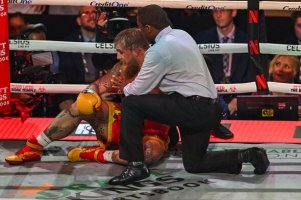
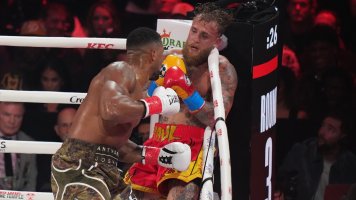
Jake Paul faces a mandatory suspension as boxing authorities investigate circumstances linked to Anthony Joshua's massive $66 million prize money loss. This isn't a voluntary break but a commission-imposed suspension that triggers formal regulatory review across jurisdictions. You'll see reciprocal enforcement limiting Paul's ability to compete anywhere during this period. The outcome could reshape fighter eligibility protocols and establish precedent for how boxing handles high-profile regulatory violations.

While Jake Paul has successfully transformed himself from a YouTube personality into a boxing attraction, his recent suspension has sent shockwaves through the combat sports world. The controversy has created an unprecedented situation where Anthony Joshua's $66 million prize money loss directly connects to a boxing commission ruling that could reshape how influencer boxing is regulated.
You're witnessing a pivotal moment in combat sports governance as athletic commissions face mounting pressure to address the legitimacy concerns surrounding celebrity boxers. This isn't merely about one fighter's eligibility; it represents a potential paradigm shift in how boxing authorities evaluate and sanction high-profile bouts involving crossover athletes.
The ripple effects of this suspension extend beyond Paul's career, potentially establishing new regulatory precedents that will influence boxing's commercial and competitive landscape for years to come.
Unlike voluntary fight withdrawals that fighters occasionally announce, Jake Paul now faces a mandatory suspension imposed directly by the athletic commission, a fundamentally different and more grave situation. This mandatory boxing suspension triggers an automatic regulatory review that could profoundly impact his professional boxing license status.
When a fighter faces commission scrutiny, boxing regulations enforcement procedures activate a formal investigation process that extends beyond the fighter's control. You'll notice Paul can't simply decide when to return the commission holds complete authority over his eligibility timeline.
This differs dramatically from promotional delays or strategic career pauses. Commission-imposed suspensions carry official weight across jurisdictions, potentially obstructing Paul from competing anywhere that honors reciprocal enforcement agreements between athletic governing bodies.

The devastating financial blow to Anthony Joshua's career has sent shockwaves through boxing circles as details emerge about his unprecedented $66 million prize money loss. This staggering financial penalty stemmed from contractual fight obligations that couldn't be fulfilled after regulatory issues emerged with his potential opponent's eligibility status.
The loss occurred when sanctioning bodies withdrew their approval for the bout, triggering immediate contractual clauses that protected broadcasters and venues but devastated Joshua's guaranteed payday. The prize money loss wasn't simply delayed compensation but represents completely forfeited earnings under the complex web of boxing's financial architecture.
This situation highlights the precarious nature of high-stakes boxing arrangements where regulatory compliance directly impacts fighter compensation, creating a domino effect throughout the industry's financial ecosystem.

How exactly do athletic commissions wield such decisive power in the boxing world? These regulatory bodies function as the sport's ultimate arbiters, with authority to license, suspend, or ban fighters based on violations.
When concerns arise, as in Paul's case, an athletic commission investigation launches, examining everything from medical records to fight conduct. You'll find these investigations methodical yet swift, particularly when high-profile bouts and substantial revenue hang in the balance.
The commission hearing outcome determines whether a fighter faces temporary suspension, permanent license revocation, or financial penalties. Commissions typically reference precedent cases but maintain discretion in their rulings. Most importantly, these decisions carry reciprocal weight; a suspension in one jurisdiction often extends to others, potentially sidelining fighters from competing anywhere legitimately.
You'll find that license revocation risk increases substantially when commissions determine deliberate rule violations rather than technical oversights. Most boxing authorities maintain reciprocity agreements, meaning a suspension in one jurisdiction typically affects eligibility nationwide. This creates a cascading effect where Paul could find himself unable to compete in sanctioned bouts across multiple states.
The precedent suggests fighters with commercial leverage sometimes receive different treatment, but commissions increasingly prioritize regulatory consistency over star power.

Sanctioning bodies view Paul case as a pivotal test for boxing's governance structure.
You'll notice these organizations wield significant power in determining fight legitimacy, especially when crossover events blur traditional boxing boundaries. They're increasingly concerned about influencer-driven matches potentially undermining the sport's integrity.
The relationship between sanctioning bodies, promoters, and athletic commissions creates a complex regulatory web that Paul's case now challenges. When high-profile bouts generate massive revenue, these governing bodies must balance commercial opportunities against their responsibility to maintain competitive standards.
This case could prompt sanctioning bodies to implement stricter protocols for approving non-traditional boxing matchups, especially those involving celebrities moving into or participating in professional fighting.
You'll notice that Paul's situation highlights the delicate balance between contractual fight obligations and promoter accountability. Most boxing contracts contain clauses addressing regulatory issues, but the unprecedented nature of influencer boxing has created gray areas that haven't been fully tested.
For broadcasters who've invested millions in upcoming Paul fights, the suspension creates urgent questions about refunds and rescheduling. Meanwhile, venues booked months in advance now face potential revenue gaps, illustrating how one regulatory action ripples through the entire combat sports ecosystem.
For reinstatement, you'd need to demonstrate compliance with all regulatory requirements, potentially including additional medical screenings or mandatory educational programs. The regulatory investigation in boxing often concludes with a formal hearing where commissioners vote on appropriate disciplinary measures.
Should they determine serious violations occurred, you could face both monetary penalties and license restrictions. The most severe outcome would involve a lengthy suspension affecting multiple jurisdictions, effectively sidelining Paul from sanctioned competition.
Several immediate consequences now face Jake Paul as this suspension threatens to derail his carefully constructed boxing trajectory. You'll notice his fight eligibility status has fundamentally changed overnight, transforming him from a combat sports disruptor to a regulatory liability.
The Jake Paul suspension creates three critical hurdles: canceled upcoming bouts, potential exodus of legitimate boxing opponents unwilling to risk association, and broadcaster hesitation to invest in his events. Rather than maintaining momentum toward legitimacy, he'll likely face a prolonged period of reputation rehabilitation.
Most tellingly, Paul's carefully crafted persona as a serious boxer faces its most significant test. The commission's decision will determine whether his boxing career remains viable or if this regulatory intervention effectively ends his controversial rise through the professional boxing ranks.
The ripple effects will transform how sanctioning bodies' decisions are made, especially for influencer-crossover bouts. Expect stricter verification of fighter eligibility before contracts are finalized and considerably more rigorous pre-fight compliance reviews.
Combat sports governance is likely entering a new era of enforcement. You'll see commissions implementing more thorough screening protocols and potential reforms requiring financial guarantees before sanction approval. The days of assuming regulatory approval are over.
The Paul-Joshua situation serves as a watershed moment, demonstrating that even the most lucrative matchups aren't immune to regulatory consequences, regardless of the economic impact on promoters, broadcasters, and fighters.

While Jake Paul has successfully transformed himself from a YouTube personality into a boxing attraction, his recent suspension has sent shockwaves through the combat sports world. The controversy has created an unprecedented situation where Anthony Joshua's $66 million prize money loss directly connects to a boxing commission ruling that could reshape how influencer boxing is regulated.
You're witnessing a pivotal moment in combat sports governance as athletic commissions face mounting pressure to address the legitimacy concerns surrounding celebrity boxers. This isn't merely about one fighter's eligibility; it represents a potential paradigm shift in how boxing authorities evaluate and sanction high-profile bouts involving crossover athletes.
The ripple effects of this suspension extend beyond Paul's career, potentially establishing new regulatory precedents that will influence boxing's commercial and competitive landscape for years to come.
Understanding the Mandatory Suspension Facing Jake Paul
Unlike voluntary fight withdrawals that fighters occasionally announce, Jake Paul now faces a mandatory suspension imposed directly by the athletic commission, a fundamentally different and more grave situation. This mandatory boxing suspension triggers an automatic regulatory review that could profoundly impact his professional boxing license status.
When a fighter faces commission scrutiny, boxing regulations enforcement procedures activate a formal investigation process that extends beyond the fighter's control. You'll notice Paul can't simply decide when to return the commission holds complete authority over his eligibility timeline.
This differs dramatically from promotional delays or strategic career pauses. Commission-imposed suspensions carry official weight across jurisdictions, potentially obstructing Paul from competing anywhere that honors reciprocal enforcement agreements between athletic governing bodies.
The Anthony Joshua $66m Prize Money Loss Explained

The devastating financial blow to Anthony Joshua's career has sent shockwaves through boxing circles as details emerge about his unprecedented $66 million prize money loss. This staggering financial penalty stemmed from contractual fight obligations that couldn't be fulfilled after regulatory issues emerged with his potential opponent's eligibility status.
The loss occurred when sanctioning bodies withdrew their approval for the bout, triggering immediate contractual clauses that protected broadcasters and venues but devastated Joshua's guaranteed payday. The prize money loss wasn't simply delayed compensation but represents completely forfeited earnings under the complex web of boxing's financial architecture.
This situation highlights the precarious nature of high-stakes boxing arrangements where regulatory compliance directly impacts fighter compensation, creating a domino effect throughout the industry's financial ecosystem.
Athletic Commission Authority and Enforcement Power

How exactly do athletic commissions wield such decisive power in the boxing world? These regulatory bodies function as the sport's ultimate arbiters, with authority to license, suspend, or ban fighters based on violations.
When concerns arise, as in Paul's case, an athletic commission investigation launches, examining everything from medical records to fight conduct. You'll find these investigations methodical yet swift, particularly when high-profile bouts and substantial revenue hang in the balance.
The commission hearing outcome determines whether a fighter faces temporary suspension, permanent license revocation, or financial penalties. Commissions typically reference precedent cases but maintain discretion in their rulings. Most importantly, these decisions carry reciprocal weight; a suspension in one jurisdiction often extends to others, potentially sidelining fighters from competing anywhere legitimately.
License Revocation Risk and Fighter Eligibility Status
For Jake Paul, the difference between a temporary suspension and complete license revocation hinges on several critical factors that should concern any fighter in his position. His fighter eligibility status now depends on the commission's assessment of violation severity, prior disciplinary history, and willingness to comply with regulatory requirements.You'll find that license revocation risk increases substantially when commissions determine deliberate rule violations rather than technical oversights. Most boxing authorities maintain reciprocity agreements, meaning a suspension in one jurisdiction typically affects eligibility nationwide. This creates a cascading effect where Paul could find himself unable to compete in sanctioned bouts across multiple states.
The precedent suggests fighters with commercial leverage sometimes receive different treatment, but commissions increasingly prioritize regulatory consistency over star power.
Sanctioning Bodies and Combat Sports Governance
While Jake Paul's suspension unfolds, major sanctioning bodies, including the WBA, WBC, IBF, and WBO, are closely monitoring this case as it represents a critical test of their collective governance framework.
Sanctioning bodies view Paul case as a pivotal test for boxing's governance structure.
You'll notice these organizations wield significant power in determining fight legitimacy, especially when crossover events blur traditional boxing boundaries. They're increasingly concerned about influencer-driven matches potentially undermining the sport's integrity.
The relationship between sanctioning bodies, promoters, and athletic commissions creates a complex regulatory web that Paul's case now challenges. When high-profile bouts generate massive revenue, these governing bodies must balance commercial opportunities against their responsibility to maintain competitive standards.
This case could prompt sanctioning bodies to implement stricter protocols for approving non-traditional boxing matchups, especially those involving celebrities moving into or participating in professional fighting.
Contractual Fight Obligations and Promoter Accountability
Every suspended fighter triggers a cascade of contractual complications, and Jake Paul's case is no exception. When regulatory bodies issue suspensions, promoters face immediate pressure to either secure replacement fighters or postpone events entirely, both carrying significant financial penalties.You'll notice that Paul's situation highlights the delicate balance between contractual fight obligations and promoter accountability. Most boxing contracts contain clauses addressing regulatory issues, but the unprecedented nature of influencer boxing has created gray areas that haven't been fully tested.
For broadcasters who've invested millions in upcoming Paul fights, the suspension creates urgent questions about refunds and rescheduling. Meanwhile, venues booked months in advance now face potential revenue gaps, illustrating how one regulatory action ripples through the entire combat sports ecosystem.
Regulatory Investigation Outcomes and Possible Penalties
The regulatory investigation into Jake Paul's case has already entered its critical phase, with commissioners reviewing evidence that could lead to outcomes ranging from minor fines to extended suspensions. You'll find that precedent cases suggest financial penalties in boxing typically scale with the severity of violations and the fighter's purse amount.For reinstatement, you'd need to demonstrate compliance with all regulatory requirements, potentially including additional medical screenings or mandatory educational programs. The regulatory investigation in boxing often concludes with a formal hearing where commissioners vote on appropriate disciplinary measures.
Should they determine serious violations occurred, you could face both monetary penalties and license restrictions. The most severe outcome would involve a lengthy suspension affecting multiple jurisdictions, effectively sidelining Paul from sanctioned competition.
What This Means for Jake Paul’s Future in Boxing
Several immediate consequences now face Jake Paul as this suspension threatens to derail his carefully constructed boxing trajectory. You'll notice his fight eligibility status has fundamentally changed overnight, transforming him from a combat sports disruptor to a regulatory liability.
The Jake Paul suspension creates three critical hurdles: canceled upcoming bouts, potential exodus of legitimate boxing opponents unwilling to risk association, and broadcaster hesitation to invest in his events. Rather than maintaining momentum toward legitimacy, he'll likely face a prolonged period of reputation rehabilitation.
Most tellingly, Paul's carefully crafted persona as a serious boxer faces its most significant test. The commission's decision will determine whether his boxing career remains viable or if this regulatory intervention effectively ends his controversial rise through the professional boxing ranks.
Broader Implications for Boxing and High-Value Prize Fights
As Anthony Joshua's staggering $66 million prize money loss reverberates through professional boxing, you're witnessing a seismic shift in how high-value fights will be sanctioned and regulated.The ripple effects will transform how sanctioning bodies' decisions are made, especially for influencer-crossover bouts. Expect stricter verification of fighter eligibility before contracts are finalized and considerably more rigorous pre-fight compliance reviews.
Combat sports governance is likely entering a new era of enforcement. You'll see commissions implementing more thorough screening protocols and potential reforms requiring financial guarantees before sanction approval. The days of assuming regulatory approval are over.
The Paul-Joshua situation serves as a watershed moment, demonstrating that even the most lucrative matchups aren't immune to regulatory consequences, regardless of the economic impact on promoters, broadcasters, and fighters.