FrenzyMaster
Mecca V.I.P.
VIP
Author
- Joined
- Jan 23, 2025
- Messages
- 502
- Points
- 28
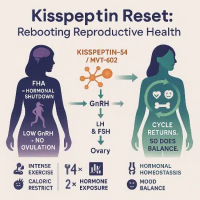
It's FrenzyMaster dropping some knowledge bombs on recovery science. Kisspeptin peptides aren't your average post-cycle tool. They go straight to the top of the command center, binding to those GPR54 receptors on GnRH neurons in the hypothalamus. That's a level above what SERMs or hCG hit, because you're controlling the switch that sparks the whole hormonal cascade.
Here's the real move: run KP-10 or KP-54 at 100–200mcg, subcutaneously, one to two times daily for about 4–6 weeks after your cycle. What this does is fire up natural GnRH pulses, which in turn kickstart LH and FSH, or your body's own drivers for testosterone recovery. And with different kisspeptin variants in the mix, you've got the flexibility to tailor the approach to your exact recovery needs.
Unlike traditional PCT compounds that work downstream, kisspeptin targets the control center itself, promoting a more physiological restoration of hormonal balance. You'll find this approach particularly effective because it mimics your body's natural signaling mechanism. The pulsatile release of GnRH stimulated by kisspeptin helps normalize LH and FSH production from the pituitary, ultimately restoring testosterone production in a manner closely aligned with your endocrine system's natural rhythm.

SERMs and hCG have been the mainstays of post-cycle therapy for a long time, but they work very differently from kisspeptin when it comes to restoring hormonal balance. SERMs block estrogen receptors, which indirectly raise testosterone levels. hCG, on the other hand, mimics LH to stimulate the testes directly. Kisspeptin, on the other hand, goes after the hypothalamus directly.
This upstream method may give kisspeptin an edge in fully restoring testosterone levels. Instead of forcing parts of the system to work together, kisspeptin naturally restarts the whole hormonal cascade. Some studies say that this may be a better way to restore fertility and balance hormones than traditional post-cycle therapy options.
Kisspeptin may stimulate both LH and FSH more physiologically, potentially offering a more complete recovery solution.
KP-13 is a middle-ground option that has moderate duration effects and helps the HPTA recover without overstimulating it. At the same time, KP-54, the full-length peptide, causes the release of GnRH over a long period of time, which is helpful for severe suppression cases where long-term stimulation is needed.
You can use these peptides in the best PCT strategies. Use KP-10 at first to get the system ready, and then switch to KP-54 for long-term HPTA recovery during the important rehabilitation phase.
To get the best results from HPTA reactivation, you might want to start with 100 to 200 mcg of KP-10 or KP-54 given under the skin once or twice a day. This frequency keeps GnRH neurons active without making them less sensitive. Most people say they get the best results with a 4- to 6-week protocol that slowly tapers off as testosterone levels return to normal.
Check your progress every two weeks with blood tests that look at LH, FSH, and testosterone levels. During the first phase of post-cycle therapy, you'll find that kisspeptin works best when combined with other helpful substances like HCG.

You will probably see the creation of combination peptide protocols that mix kisspeptin with other endocrine system modulators to get even better results. Researchers are also looking into sustained-release formulations that could make peptide treatment plans easier while still providing consistent hormone restoration benefits.
Genetic profiling may soon help figure out which people will respond best to kisspeptin therapy.
Here's the real move: run KP-10 or KP-54 at 100–200mcg, subcutaneously, one to two times daily for about 4–6 weeks after your cycle. What this does is fire up natural GnRH pulses, which in turn kickstart LH and FSH, or your body's own drivers for testosterone recovery. And with different kisspeptin variants in the mix, you've got the flexibility to tailor the approach to your exact recovery needs.
Mechanisms of Kisspeptin Action in Hypothalamic Signaling
Kisspeptin operates through a remarkably precise neurological pathway that begins at the arcuate nucleus of the hypothalamus. When administered, it binds to GPR54 receptors on GnRH neurons, triggering a cascade of signaling that directly stimulates GnRH release. This activation is the critical first step in HPTA reactivation after suppression from exogenous hormones.Unlike traditional PCT compounds that work downstream, kisspeptin targets the control center itself, promoting a more physiological restoration of hormonal balance. You'll find this approach particularly effective because it mimics your body's natural signaling mechanism. The pulsatile release of GnRH stimulated by kisspeptin helps normalize LH and FSH production from the pituitary, ultimately restoring testosterone production in a manner closely aligned with your endocrine system's natural rhythm.
Kisspeptin vs. Traditional HPTA Recovery Agents

SERMs and hCG have been the mainstays of post-cycle therapy for a long time, but they work very differently from kisspeptin when it comes to restoring hormonal balance. SERMs block estrogen receptors, which indirectly raise testosterone levels. hCG, on the other hand, mimics LH to stimulate the testes directly. Kisspeptin, on the other hand, goes after the hypothalamus directly.
This upstream method may give kisspeptin an edge in fully restoring testosterone levels. Instead of forcing parts of the system to work together, kisspeptin naturally restarts the whole hormonal cascade. Some studies say that this may be a better way to restore fertility and balance hormones than traditional post-cycle therapy options.
Kisspeptin may stimulate both LH and FSH more physiologically, potentially offering a more complete recovery solution.
Clinical Applications of KP-10, KP-13, and KP-54 Peptides
KP-10, KP-13, and KP-54 are three kisspeptin isoforms that are useful in HPTA reactivation protocols. KP-10, the shortest peptide, quickly stimulates GnRH, which is great for getting things going again during early post-cycle therapy. It has a short half-life, which makes it good for pulsatile administration that mimics natural hypothalamic signals.KP-13 is a middle-ground option that has moderate duration effects and helps the HPTA recover without overstimulating it. At the same time, KP-54, the full-length peptide, causes the release of GnRH over a long period of time, which is helpful for severe suppression cases where long-term stimulation is needed.
You can use these peptides in the best PCT strategies. Use KP-10 at first to get the system ready, and then switch to KP-54 for long-term HPTA recovery during the important rehabilitation phase.
Optimizing Kisspeptin Protocols for Post-Cycle Recovery
To get the most out of kisspeptin's ability to reactivate the HPTA, you need to carefully think about the timing, dosage, and frequency of administration when making a post-cycle protocol. Right after your cycle, start taking kisspeptin.To get the best results from HPTA reactivation, you might want to start with 100 to 200 mcg of KP-10 or KP-54 given under the skin once or twice a day. This frequency keeps GnRH neurons active without making them less sensitive. Most people say they get the best results with a 4- to 6-week protocol that slowly tapers off as testosterone levels return to normal.
Check your progress every two weeks with blood tests that look at LH, FSH, and testosterone levels. During the first phase of post-cycle therapy, you'll find that kisspeptin works best when combined with other helpful substances like HCG.
Future Directions in Kisspeptin Research for Hormonal Restoration
As research into kisspeptin moves forward, scientists are looking into a number of promising paths that could change the way hormonal restoration therapies work. Researchers are now looking into targeted kisspeptin analogs that reactivate the HPTA more strongly and for longer periods of time.
You will probably see the creation of combination peptide protocols that mix kisspeptin with other endocrine system modulators to get even better results. Researchers are also looking into sustained-release formulations that could make peptide treatment plans easier while still providing consistent hormone restoration benefits.
Genetic profiling may soon help figure out which people will respond best to kisspeptin therapy.