• Legal Notice – MuscleMecca Forums

    MuscleMecca.com is an educational discussion platform. We do not sell, promote, or endorse any bodybuilding gear, supplements, research chemicals, or performance-enhancing substances.

    All discussions are for educational and informational purposes only. Nothing posted on this forum should be considered medical or legal advice.

    Do not attempt to sell, source, or promote illegal substances. Any such activity will result in an immediate and permanent ban and may be reported to the proper authorities.

    By using this site, you agree to comply with all forum rules, disclaimers, and applicable laws in your jurisdiction.

    Read Our Full Disclaimer and Forum Rules

History of Soviet cosmonautics.

Frimen1917

Frimen1917

Mecca V.I.P.
VIP
Joined
Jan 9, 2026
Messages
3,154
Points
63
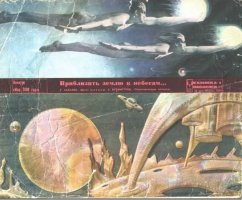
4-я страница обложки журнала "Техника - молодежи" №2; 1974 год.
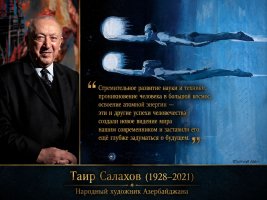
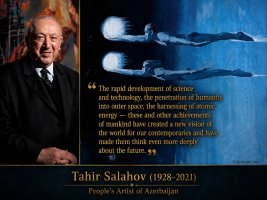
В верхней части обложки картина Тахира Салахова «Тебе, человечество!» (1961).
В нижней части обложки картина А. Бурмистрова "Первопроходцы космоса".

Page 4 of the cover of the magazine "Technology for Youth" No. 2, 1974.

At the top of the cover is Tahir Salakhov's painting "To You, Humanity!" (1961).
At the bottom of the cover is A. Burmistrov's painting "Space Pioneers."
Página 4 de la portada de la revista «Tecnología para la Juventud», n.º 2, 1974.

En la parte superior de la portada se encuentra la pintura de Tahir Salakhov, «¡A ti, humanidad!» (1961).
En la parte inferior de la portada se encuentra la pintura de A. Burmistrov, «Pioneros del espacio».

Clipboard 06 20 2026 01
 
Frimen1917

Frimen1917

Mecca V.I.P.
VIP
Joined
Jan 9, 2026
Messages
3,154
Points
63
На XXIV Международном астронавтическом конгрессе в городе Баку журнал «Техника — молодежи» по просьбе Академии наук СССР развернул выставку научно-фантастических картин и рисунков о космических исследованиях в будущем. Это часть работ, присланных на международный конкурс журнала «Мир 2000 года».
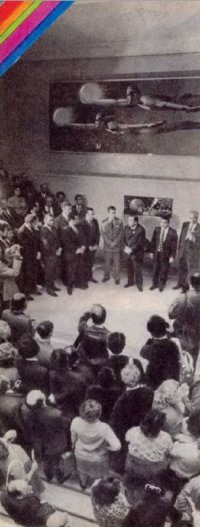
На открытии выставки «Космос завтрашнего дня» перед советскими и зарубежными корреспондентами выступили заместитель председателя Совета Министров Азербайджанской ССР И. Ибрагимов, министр культуры Азербайджанской ССР З. Багиров, Р. Аскеров, летчик-космонавт Герой Советского Союза В. Севастьянов, первый секретарь Союза художников СССР Т. Салахов, председатель организационного комитета конгресса академик Л. Седов, художник-фантаст А. Соколов.
Выставка «Космос завтрашнего дня» пользовалась большим успехом среди участников и гостей конгресса, получила широкий общественный резонанс. Более полутора тысяч посетителей оставили свои записи в книге отзывов.
На снимке:

Открытие международной выставки научно-фантастических рисунков «Космос завтрашнего дня».
At the 24th International Astronautical Congress in Baku, the magazine "Technology for Youth," at the request of the USSR Academy of Sciences, mounted an exhibition of science fiction paintings and drawings about future space exploration. This was part of the work submitted to the international competition of the magazine "World 2000."

At the opening of the "Space of Tomorrow" exhibition, Soviet and foreign correspondents were addressed by Deputy Chairman of the Council of Ministers of the Azerbaijan SSR I. Ibragimov, Minister of Culture of the Azerbaijan SSR Z. Bagirov, R. Askerov, pilot-cosmonaut and Hero of the Soviet Union V. Sevastyanov, First Secretary of the Union of Artists of the USSR T. Salakhov, Chairman of the Congress Organizing Committee Academician L. Sedov, and science fiction artist A. Sokolov.
The "Space of Tomorrow" exhibition was a great success among congress participants and guests, and received a wide public response. More than 1,500 visitors left their comments in the guest book.
Pictured:
Opening of the international exhibition of science fiction drawings "Space of Tomorrow".
En el XXIV Congreso Internacional de Astronáutica celebrado en Bakú, la revista «Tecnología para la Juventud», a petición de la Academia de Ciencias de la URSS, organizó una exposición de pinturas y dibujos de ciencia ficción sobre la exploración espacial del futuro. Esta exposición formaba parte de los trabajos presentados al concurso internacional de la revista «Mundo 2000».


En la inauguración de la exposición «El Espacio del Mañana», se dirigieron a los corresponsales soviéticos y extranjeros el Vicepresidente del Consejo de Ministros de la RSS de Azerbaiyán, I. Ibragimov; el Ministro de Cultura de la RSS de Azerbaiyán, Z. Bagirov; R. Askerov; el piloto cosmonauta y Héroe de la Unión Soviética, V. Sevastyanov; el Primer Secretario de la Unión de Artistas de la URSS, T. Salakhov; el Presidente del Comité Organizador del Congreso, el académico L. Sedov; y el artista de ciencia ficción A. Sokolov.

La exposición «El Espacio del Mañana» fue un gran éxito entre los participantes e invitados del congreso y recibió una amplia acogida por parte del público. Más de 1500 visitantes dejaron sus comentarios en el libro de visitas.

En la imagen:

Inauguración de la exposición internacional de dibujos de ciencia ficción "El espacio del mañana"

Clipboard 06 20 2026 02
 
Frimen1917

Frimen1917

Mecca V.I.P.
VIP
Joined
Jan 9, 2026
Messages
3,154
Points
63
Своими впечатлениями о выставке «Космос завтрашнего дня» делится известный американский художник, главный редактор журнала «Леонардо» Фрэнк МАЛИНА.
"
Здесь, на выставке в Баку, оценивая творения моих собратьев — художников-фантастов, беседуя с восторженными, скептически настроенными, потрясенными посетителями, я не раз задавался вопросом: каковы пути и возможности изобразительных искусств в эпоху освоения околоземных просторов? Древняя мечта человека обрести крылья, летать в воздухе осуществилась, как известно, в начале нынешнего века. Естественно, развитие авиации повлияло и на зрительное восприятие художников. Некоторые из них пытались создать на холстах впечатление быстрого движения тел, пользуясь обычными приемами живописи. Другие разрабатывали так называемое «кинетическое» искусство, создающее у зрителя ощущение реального движения во времени. Третьи как бы вводили в свои произведения «авиационные» сюжеты: так рождались пейзажи, напоминающие просторы матушки Земли, наблюдаемые с борта летящего самолета. Но в общем-то я бы не сказал, что искусство эпохи воздухоплавания можно было сравнить — с точки зрения эстетики — с достижениями классической живописи.

Что же нового привнесла (или привнесет) в искусство астронавтика, чем обогатят его новые представления о Земле и вселенной?

Для большинства из нас первый полет в самолете — переживание более острое, нежели первая поездка верхом на лошади или в автомобиле. А первый космический полет вызывает еще более сильные ощущения.
28 1

Искусство «космического века» вплоть до недавнего времени носило характер иллюстрирования пейзажей других планет на основании либо скупых астрономических сведений, либо научно-фантастических домыслов; встречались и сюжеты, взятые из космической технологии. Советский космонавт Алексей Леонов сделал несколько замечательных зарисовок Земли, видимой из космоса, — и сразу стало ясно, что действительность может быть намного прекрасней и неожиданней воображаемого. Именно творчество Алексея Леонова и его соавтора Андрея Соколова навело меня на мысль разнообразить свои творческие приемы. Так, к примеру, я начал вводить в кинетические картины и композиции изображения космических траекторий и орбит, хотя и реальных, но невидимых как для человека, так и для его приборов.

Выход представителя земной цивилизации в космическое пространство можно сравнивать по своему значению с переходом наших предков с дерева на землю. Психологические и философские последствия этого выхода для будущего развития человечества могут быть огромными. Впервые в истории человек получил возможность наблюдать самого себя в чуждой ему среде, которая простирается бесконечно во все стороны мира. Обживая эту среду, он должен заботиться не только о запасах воздуха и пищи, но и о том, чтобы не угас в нем прометеев огонь творчества. Какие полотна будут висеть на стенах космических кораблей, бороздящих эфирные волны? Что увидят наши дети (а может быть, и мы?) в картинной галерее на Луне или на Марсе? Вопросы далеко не праздные. Ибо там, в небе, законы восприятия разительно отличаются от земных.

Представим себя, например, на Луне. Там нет атмосферы и, стало быть, нет рассеяния света. Небо кажется черным, а звезды и планеты видны всегда. Тени тоже совершенно черные. Оценивать расстояние на Луне труднее, чем на Земле, смотреть на Солнце или на отражающие его лучи полированные поверхности опасно. Очевидно, живописцу здесь легче всего будет создавать гравюры.

Зато возможностям скульптора на Луне позавидуешь! Тут можно без заметных усилий сооружать памятники под стать египетским пирамидам, . притом практически вечные! Кинетические объекты, движимые ветром, на Луне невозможны, но энергия солнечного света в вакууме заставит двигаться кинетические скульптуры. Какой они будут формы? В какие цвета окрашены? Засияют ли фосфоресцирующим светом или будут подсвечены изнутри? На эти и другие бесчисленные вопросы ответит недалекое будущее. Но уже сейчас убежден: результаты, полученные на нынешней стадии выхода человека в космос, заслуживают бóльшего внимания со стороны мастеров, работающих в области изобразительного искусства. Выставка «Мир 2000 года» — залог того, что искусство не стоит на месте , что оно вечно в движении, что спектр земных красок раздвигается в космические пределы. Удачи вам и вдохновения, собратья-живописцы!"

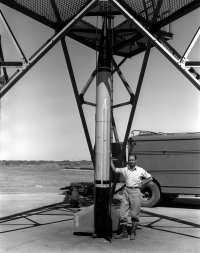
На фото:Френк Малина с ракетой Wac Corporal.
The renowned American artist and editor-in-chief of the journal Leonardo, Frank Malina, shares his impressions of the exhibition “The Cosmos of Tomorrow”.
“Here in Baku, while visiting this exhibition, contemplating the works of my fellow visionary artists, and speaking with enthusiastic, skeptical, and deeply impressed visitors, I repeatedly asked myself: what are the paths and possibilities of the visual arts in the age of humanity's expansion into near-Earth space?
Humanity’s ancient dream of gaining wings and flying through the air was realized, as we know, at the beginning of this century. Naturally, the development of aviation influenced the visual perception of artists. Some attempted to convey the impression of rapid motion on canvas using traditional painting techniques. Others developed the so-called ‘kinetic art,’ creating in the viewer a sensation of real movement through time. Still others introduced aviation themes into their works, giving rise to landscapes reminiscent of the vast expanses of Mother Earth as seen from an aircraft in flight.
Yet, generally speaking, I would not say that the art of the aviation era could, from an aesthetic standpoint, be compared with the achievements of classical painting.
What, then, has astronautics brought—or will bring—to art? How will new perceptions of Earth and the universe enrich it?
For most of us, our first airplane flight is a more profound experience than our first ride on horseback or in an automobile. A first journey into space evokes even stronger emotions.
Until recently, the art of the Space Age largely consisted of illustrating landscapes of other planets based either on limited astronomical data or on the imagination of science fiction. Subjects drawn from space technology also appeared. Soviet cosmonaut Alexei Leonov created several remarkable sketches of Earth as seen from space, and it immediately became clear that reality can be far more beautiful and unexpected than imagination.
It was precisely the work of Alexei Leonov and his collaborator Andrei Sokolov that inspired me to diversify my own artistic methods. For example, I began introducing images of space trajectories and orbital paths into my kinetic paintings and compositions—real trajectories, though invisible both to human beings and to their instruments.
The entry of a representative of Earth’s civilization into outer space can be compared in significance to the moment when our ancestors descended from the trees and set foot upon the ground. The psychological and philosophical consequences of this step for the future development of humanity may be enormous.
For the first time in history, human beings have gained the opportunity to observe themselves within an environment alien to them—an environment stretching infinitely in every direction. As humanity settles into this environment, it must care not only for supplies of air and food, but also ensure that the Promethean fire of creativity does not fade.
What paintings will hang on the walls of spacecraft sailing through the cosmic ocean? What will our children—and perhaps even we ourselves—see in art galleries on the Moon or on Mars? These are far from idle questions, for the laws of perception there differ dramatically from those on Earth.
Imagine ourselves on the Moon. There is no atmosphere and therefore no scattering of light. The sky appears black, while stars and planets remain visible at all times. Shadows are completely black as well. Estimating distances is more difficult than on Earth, and looking directly at the Sun or at polished surfaces reflecting its rays can be dangerous. It seems likely that engraving would become one of the most suitable forms of artistic expression there.
Sculptors, however, would have much to envy on the Moon. Monuments rivaling the Egyptian pyramids could be erected with relatively little effort and would be virtually eternal. Wind-driven kinetic objects would be impossible there, but sunlight in a vacuum could set kinetic sculptures into motion.
What shapes would they take? What colors would they display? Would they glow with phosphorescent light, or be illuminated from within? The near future will answer these and countless other questions.
Yet even now I am convinced that the results achieved during the present stage of humanity’s expansion into space deserve far greater attention from artists working in the visual arts.
The exhibition ‘The World of the Year 2000’ is proof that art does not stand still, that it is eternally in motion, and that the spectrum of earthly colors is expanding into cosmic dimensions.
I wish you success and inspiration, fellow artists!”

Photo: Frank Malina with a WAC Corporal rocket.
El reconocido artista estadounidense y redactor jefe de la revista Leonardo, Frank Malina, comparte sus impresiones sobre la exposición “El Cosmos del Mañana”.
«Aquí, en esta exposición de Bakú, contemplando las obras de mis colegas artistas visionarios y conversando con visitantes entusiastas, escépticos y profundamente impresionados, me he preguntado en numerosas ocasiones: ¿cuáles son los caminos y las posibilidades de las artes visuales en la era de la exploración del espacio cercano a la Tierra?
El antiguo sueño de la humanidad de tener alas y volar por el aire se hizo realidad, como sabemos, a comienzos de este siglo. Naturalmente, el desarrollo de la aviación influyó también en la percepción visual de los artistas. Algunos intentaron transmitir en sus lienzos la sensación del movimiento rápido utilizando los recursos tradicionales de la pintura. Otros desarrollaron el llamado “arte cinético”, capaz de crear en el espectador la sensación de un movimiento real en el tiempo. Otros incorporaron temas aeronáuticos a sus obras, dando origen a paisajes que evocaban las vastas extensiones de la Madre Tierra vistas desde un avión en vuelo.
Sin embargo, en términos generales, no diría que el arte de la era de la aviación pudiera compararse, desde el punto de vista estético, con los logros de la pintura clásica.
¿Qué ha aportado —o aportará— la astronáutica al arte? ¿Cómo lo enriquecerán las nuevas concepciones de la Tierra y del universo?
Para la mayoría de nosotros, el primer vuelo en avión constituye una experiencia más intensa que el primer paseo a caballo o el primer viaje en automóvil. Un primer vuelo espacial provoca emociones aún más profundas.
Hasta hace poco, el arte de la Era Espacial consistía principalmente en ilustrar paisajes de otros planetas basándose en escasos datos astronómicos o en especulaciones de la ciencia ficción. También aparecían temas inspirados en la tecnología espacial. El cosmonauta soviético Alexéi Leónov realizó varios extraordinarios bocetos de la Tierra vista desde el espacio, y de inmediato quedó claro que la realidad puede ser mucho más hermosa e inesperada que la imaginación.
Precisamente la obra de Alexéi Leónov y de su colaborador Andréi Sokolov me inspiró a diversificar mis propios recursos artísticos. Así, por ejemplo, comencé a introducir en mis pinturas y composiciones cinéticas imágenes de trayectorias espaciales y órbitas; trayectorias reales, aunque invisibles tanto para el ser humano como para sus instrumentos.
La salida de un representante de la civilización terrestre al espacio puede compararse, por su importancia, con el momento en que nuestros antepasados descendieron de los árboles y comenzaron a caminar sobre la tierra. Las consecuencias psicológicas y filosóficas de este paso para el futuro de la humanidad pueden ser enormes.
Por primera vez en la historia, el ser humano ha obtenido la posibilidad de observarse a sí mismo en un entorno extraño para él, un entorno que se extiende infinitamente en todas las direcciones. Al habitar este medio, deberá preocuparse no solo por las reservas de aire y alimentos, sino también por mantener viva la llama prometeica de la creatividad.
¿Qué cuadros colgarán de las paredes de las naves espaciales que surquen el océano cósmico? ¿Qué verán nuestros hijos —y quizá nosotros mismos— en las galerías de arte de la Luna o de Marte? Estas preguntas están lejos de ser triviales, pues allí las leyes de la percepción difieren profundamente de las terrestres.
Imaginémonos, por ejemplo, en la Luna. Allí no existe atmósfera y, por lo tanto, tampoco dispersión de la luz. El cielo parece negro, mientras que las estrellas y los planetas permanecen visibles en todo momento. Las sombras son completamente negras. Calcular las distancias resulta más difícil que en la Tierra, y mirar directamente al Sol o a superficies pulidas que reflejen sus rayos puede ser peligroso. Es probable que el grabado se convierta allí en una de las formas artísticas más adecuadas.
En cambio, las posibilidades para los escultores serían extraordinarias. En la Luna podrían levantarse monumentos comparables a las pirámides egipcias con relativamente poco esfuerzo y serían prácticamente eternos. Los objetos cinéticos movidos por el viento serían imposibles, pero la energía de la luz solar en el vacío podría poner en movimiento esculturas cinéticas.
¿Qué formas tendrían? ¿De qué colores serían? ¿Brillarían con luz fosforescente o estarían iluminadas desde su interior? El futuro próximo responderá a estas y a innumerables preguntas más.
Pero ya hoy estoy convencido de que los resultados obtenidos en esta etapa de la expansión humana hacia el espacio merecen una atención mucho mayor por parte de los artistas que trabajan en las artes visuales.
La exposición “El Mundo del Año 2000” demuestra que el arte no permanece inmóvil, que está eternamente en movimiento y que el espectro de los colores terrestres se expande hacia las dimensiones del cosmos.
¡Les deseo éxito e inspiración, colegas artistas!»

En la fotografía: Frank Malina junto al cohete WAC Corporal.
Frank Malina with WAC Corporal rocket at White Sands
 
Frimen1917

Frimen1917

Mecca V.I.P.
VIP
Joined
Jan 9, 2026
Messages
3,154
Points
63
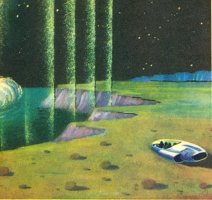
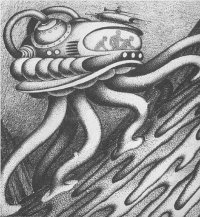
Картина с выставки «Космос завтрашнего дня». Художник В. БОСЕНКО (Москва). «Загадка Титана».
A painting from the exhibition "Space of Tomorrow." Artist V. BOSENKO (Moscow). "The Riddle of Titan."
Un cuadro de la exposición "El espacio del mañana". Artista: V. BOSENKO (Moscú). "El enigma de Titán".

36 1
 
Frimen1917

Frimen1917

Mecca V.I.P.
VIP
Joined
Jan 9, 2026
Messages
3,154
Points
63
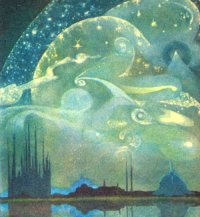
Картина с выставки «Космос завтрашнего дня». Художник П. ФАТЕЕВ (Москва). «Звездный город».
A painting from the exhibition "Space of Tomorrow." Artist P. FATEEV (Moscow). "Star City."
Un cuadro de la exposición "Espacio del Mañana". Artista: P. FATEEV (Moscú). "Ciudad de las Estrellas".

36 1 1
 
Frimen1917

Frimen1917

Mecca V.I.P.
VIP
Joined
Jan 9, 2026
Messages
3,154
Points
63
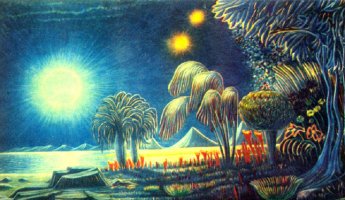
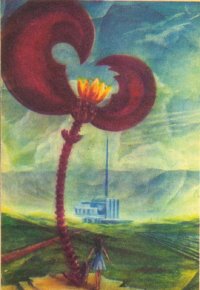
Картина с выставки «Космос завтрашнего дня». Художник Г. КУРНИН (г. Сочи). «Внеземная флора».
A painting from the exhibition "Space of Tomorrow." Artist G. KURNIN (Sochi). "Extraterrestrial Flora.".
Un cuadro de la exposición "Espacio del Mañana". Artista: G. KURNIN (Sochi). "Flora extraterrestre".

38 2
 
Frimen1917

Frimen1917

Mecca V.I.P.
VIP
Joined
Jan 9, 2026
Messages
3,154
Points
63
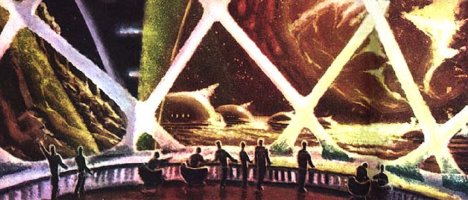
Картина с выставки «Космос завтрашнего дня». Художник Г. ТИЩЕНКО (Баку). «Обсерватория в космосе».
A painting from the exhibition "Space of Tomorrow." Artist G. TISHCHENKO (Baku). "Observatory in Space."
Una pintura de la exposición "Espacio del Mañana". Artista: G. TISHCHENKO (Bakú). "Observatorio en el espacio".

W2000 5 1
 

MuscleMecca Crew

Mecca Staff
Frimen1917

Frimen1917

Mecca V.I.P.
VIP
Joined
Jan 9, 2026
Messages
3,154
Points
63
Картина с выставки «Космос завтрашнего дня». Художник С. ГАВРИШ. «Марсианские сады».
A painting from the exhibition "Space of Tomorrow." Artist S. GAVRISH. "Martian Gardens."
Un cuadro de la exposición "Espacio del Mañana". Artista: S. GAVRISH. "Jardines marcianos".

42 2
 
Frimen1917

Frimen1917

Mecca V.I.P.
VIP
Joined
Jan 9, 2026
Messages
3,154
Points
63
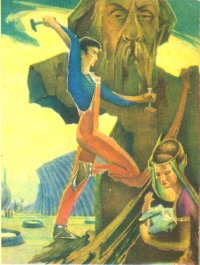
Картина с выставки «Космос завтрашнего дня». Художник Г. ГОЛОБОКОВ (г.Балаково Саратовской области). «Памятник». На картине изображено создание памятника одному из теоретиков космонавтики Константину Эдуардовичу Циолковскому.
A painting from the "Space of Tomorrow" exhibition. Artist G. GOLOBOKOV (Balakovo, Saratov Region). "Monument." The painting depicts the creation of a monument to one of the cosmonaut theorists, Konstantin Eduardovich Tsiolkovsky.
Un cuadro de la exposición "El espacio del mañana". Artista: G. GOLOBOKOV (Balakovo, región de Saratov). "Monumento". La pintura representa la creación de un monumento a Konstantin Eduardovich Tsiolkovsky, uno de los teóricos del cosmonauta.

43 1
 
Frimen1917

Frimen1917

Mecca V.I.P.
VIP
Joined
Jan 9, 2026
Messages
3,154
Points
63

Картина с выставки «Космос завтрашнего дня». Художник Н. НЕДБАЙЛО (Москва). «Путешествие по вулкану».
A painting from the exhibition "Space of Tomorrow." Artist N. NEDBAYLO (Moscow). "Journey through the Volcano."
Un cuadro de la exposición "Espacio del Mañana". Artista: N. NEDBAYLO (Moscú). "Viaje a través del volcán".
43 2
 
Frimen1917

Frimen1917

Mecca V.I.P.
VIP
Joined
Jan 9, 2026
Messages
3,154
Points
63
Конкурс «Мир 2000 года» наглядно продемонстрировал тот знаменательный факт, что новый жанр искусства — научно-фантастическая живопись — получил широкое общественное признание и прежде всего среди молодежи. Свыше 4 тыс. работ было прислано на конкурс из стран социалистического содружества — Болгарии, ГДР, Польши, СССР, Чехословакии, Югославии.

На заключительной выставке экспонировалось около 300 лучших картин. 250 работ были показаны во время Всемирного конгресса миролюбивых сил в залах московского Дома ученых АН СССР. Отрадно отметить и то, что среди участников конкурса — молодые рабочие, студенты, воины — все, кто созидает светлое завтра.

Публикуя итоги конкурса «Мир 2000 года», редакция надеется, что все его участники будут продолжать активную деятельность в любимом жанре. Страницы журнала «Техника — молодежи» всегда открыты для новых полотен о будущем.
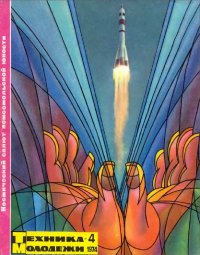
На фото: Картина художника Н. Горбача на обложке журнала "Техника - молодежи" №;4; 1974.

The "Peace 2000" competition vividly demonstrated the remarkable fact that a new art genre—science fiction painting—has gained widespread public recognition, especially among young people. Over 4,000 works were submitted from countries of the socialist bloc—Bulgaria, East Germany, Poland, the USSR, Czechoslovakia, and Yugoslavia.

The final exhibition featured approximately 300 of the best paintings. 250 works were shown during the World Congress of Peace Forces in the Moscow House of Scientists of the USSR Academy of Sciences. It is also gratifying to note that the competition participants included young workers, students, and soldiers—all those who are creating a brighter tomorrow.

By publishing the results of the "Peace 2000" competition, the editors hope that all participants will continue their active work in their beloved genre. The pages of "Technology for Youth" magazine are always open to new paintings about the future.

In the photo: Painting by artist N. Gorbach on the cover of the magazine "Technology for Youth" No. 4, 1974.
El concurso "Paz 2000" demostró de forma contundente el notable éxito de un nuevo género artístico —la pintura de ciencia ficción—, que ha alcanzado un amplio reconocimiento público, especialmente entre los jóvenes. Se presentaron más de 4000 obras procedentes de países del bloque socialista: Bulgaria, Alemania Oriental, Polonia, la URSS, Checoslovaquia y Yugoslavia.


La exposición final incluyó aproximadamente 300 de las mejores pinturas. 250 obras se exhibieron durante el Congreso Mundial de Fuerzas de la Paz en la Casa de Científicos de la Academia de Ciencias de la URSS en Moscú. Es gratificante destacar que entre los participantes del concurso se encontraban jóvenes trabajadores, estudiantes y militares: todos aquellos que están construyendo un futuro mejor.

Al publicar los resultados del concurso "Paz 2000", los editores esperan que todos los participantes continúen su trabajo activo en este género tan apreciado. Las páginas de la revista "Tecnología para la Juventud" están siempre abiertas a nuevas pinturas sobre el futuro.

En la foto: Pintura del artista N. Gorbach en la portada de la revista "Tecnología para la Juventud" n.º 4, 1974.

Clipboard 06 21 2026 01
 
Frimen1917

Frimen1917

Mecca V.I.P.
VIP
Joined
Jan 9, 2026
Messages
3,154
Points
63
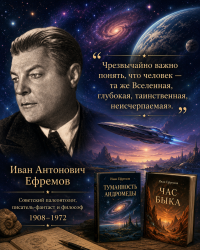
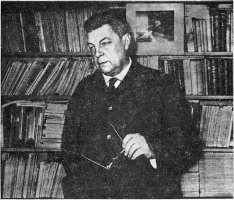
Иван Антонович Ефремов — легендарная фигура русской фантастики второй половины ХХ века. Иван Антонович родился в поселке Вырица под Петербургом. Отец его — солдат лейб-гвардеец из заволжских крестьян, ставший крупным лесоторговцем, имел прекрасную библиотеку. Рано научившийся читать, Ваня с 6 лет увлекся романами Жюля Верна, книгами о путешествиях.
С литературой, которой Ефремов увлекался с детства, его прочно связала болезнь. В 1942 году он оказывается надолго прикованным к постели. Человек неукротимой энергии, он находит ей выход в создании цикла своих первых приключенческих и научно-фантастических новелл, которые объединяет названием «Рассказы о необыкновенном». Это были «Эллинский Секрет», «Олгой-Хорхой», «Озеро Горных Духов» и другие.

С 1944 г. эти и другие рассказы начинают публиковаться в журналах «Новый мир», «Техника- молодежи», в военных журналах «Краснофлотец» и «Красноармеец». Вскоре выходят отдельные сборники, названные по одноименным рассказам: «Встреча над Тускаророй» (1944), «Белый Рог» (1945), «Алмазная Труба» (1946), в сборник «Семь румбов» должен был войти рассказ «Сумашедший танк», но сам автор его забраковал, а «Эллинский секрет» не пропустил редактор, поэтому озаглавлен по числу вошедших в них произведений: «Пять румбов» (1944). Одним из первых высоко оценил литературный дебют Ефремова тяжело больной советский писатель А. Н. Толстой — за правдоподобие необычайного и изящный стиль.

Вскоре к 13 рассказам, опубликованным в 1944-1945 годах, прибавляется историческая дилогия «Великая Дуга» (повести «На краю Ойкумены», 1949, и «Путешествие Баурджеда», 1953), первые «космические повести» («Звездные Корабли», 1947, и «Сердце Змеи», 1959), а также увлекательный путевой дневник «Дорога Ветров» (1956).
Иван Ефремов был убежден, что наука ведет в пустоту, если за ней не стоит философия. Славу самого конструктивного мыслителя в мире и родоначальника советской научно-социальной фантастики он приобрел после выхода в свет «Туманности Андромеды» (1957) и «Часа Быка» (1968). Оба романа, подчеркнуто обращенные к молодежной читательской аудитории, представляют собой образное воплощение антропоморфической гипотезы автора, считавшего что любые формы жизни на определенном этапе развития должны стать человекообразными. Достигнувшие космического уровня цивилизации объединяются в Великое Кольцо Миров. Судьба цивилизации зависит от того, как решается ею частная судьба человека — ведь «человек — та же вселенная, глубокая, неисчерпаемая».
Самый известный научно-фантастический роман Ефремова, «Туманность Андромеды», вышел в 1957 году. В нём показано общество, развитое таким образом, что нет материального неравенства между людьми, и каждый человек может беспрепятственно заниматься саморазвитием. Межгалактическая система связи объединяет человечество в сообщество разумных цивилизаций Вселенной, Великое Кольцо Цивилизаций. Книга стала моральным ориентиром для многих людей в Советском Союзе. Помимо глубокого дидактического аспекта, книга также содержала интересный сюжет о космических путешествиях, поэтому люди ценили её за образовательную и развлекательную ценность. Алгис Будрис сравнил стиль прозы Ефремова со стилем Хуго Гернсбака. Со временем социально-политическая обстановка в мире становилась все более тревожной, и эти изменения нашли отражение в романе «Час быка». В нем Ефремов пытается предупредить о грядущих катастрофах в экологической, этической и социальной сферах. Многие считали роман завуалированной критикой СССР, хотя более поздние исследователи обнаружили, что роман в основном демонстрирует тупиковые перспективы маоизма и гангстерского капитализма. Правительство обвинило роман в антисоветизме и запретило его публикацию до конца 1980-х годов.

Последним романом Ефремова стал «Таис Афинская» , опубликованный в 1972 году. Действие романа разворачивается во времена Александра Великого . В нем затрагиваются многочисленные темы, включая малоизвестные женские культы, вопросы внутренней жизни женщин и их роли в мировой истории; поднимаются вопросы религии, культурного происхождения и поиска красоты и истины.
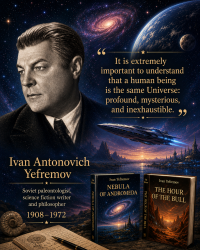
Ivan Antonovich Yefremov was a legendary figure of Russian science fiction in the second half of the twentieth century. He was born in the settlement of Vyritsa near St. Petersburg. His father, a former Life Guards soldier from a peasant family of the Volga region who later became a successful timber merchant, possessed an excellent library. Having learned to read at an early age, young Ivan became fascinated with the novels of Jules Verne and books about travel when he was only six years old.

Literature, which had captivated Yefremov since childhood, became inseparably linked with his life during a serious illness. In 1942 he was confined to bed for a long period. A man of indomitable energy, he found an outlet in writing his first adventure and science-fiction stories, later united under the title “Stories of the Extraordinary.” These included The Hellenic Secret, Olgoi-Khorkhoi, The Lake of the Mountain Spirits, and others.
Beginning in 1944, these and other stories were published in the magazines Novy Mir, Tekhnika Molodezhi, and the military journals Krasnoflotets and Krasnoarmeyets. Soon separate collections appeared: Meeting over Tuscarora (1944), The White Horn (1945), and The Diamond Pipe (1946). Another collection, originally intended to include the story The Mad Tank, was eventually published as Five Bearings (1944). One of the first to highly praise Yefremov's literary debut was the seriously ill Soviet writer Alexei Nikolayevich Tolstoy, who admired the believable treatment of extraordinary events and the elegance of the author's style.
The thirteen stories published in 1944–1945 were soon followed by the historical dilogy “The Great Arc” (At the Edge of the Oecumene, 1949, and Baurjed's Journey, 1953), his first space novellas (Star Ships, 1947, and The Heart of the Serpent, 1959), and the fascinating travel diary The Road of Winds (1956).
Yefremov was convinced that science leads to emptiness if it is not supported by philosophy. He gained fame as one of the most constructive thinkers of his age and as the founder of Soviet social science fiction after the publication of Andromeda Nebula (1957) and The Hour of the Bull (1968).
Both novels, consciously aimed at young readers, embodied the author's anthropomorphic hypothesis that any form of intelligent life, at a certain stage of development, would eventually become human-like. Civilizations that reach a cosmic level of development unite into the Great Circle of Worlds. The fate of a civilization depends on how it resolves the fate of each individual, for “man is also a universe—deep and inexhaustible.”
Yefremov's most famous science-fiction novel, The Andromeda Nebula, was published in 1957. It depicts a society that has overcome material inequality, where every person can freely pursue self-development. An interstellar communication system unites humanity with other intelligent civilizations in the Universe within the Great Circle of Civilizations. The book became a moral guide for many people in the Soviet Union. In addition to its profound philosophical and educational themes, it offered an exciting story of space exploration, making it valuable both as literature and as entertainment.
Science-fiction writer Algis Budrys compared Yefremov's prose style to that of Hugo Gernsback.
As the international situation grew increasingly tense, these concerns were reflected in The Hour of the Bull. In this novel Yefremov sought to warn humanity about impending ecological, ethical, and social crises. Many readers regarded it as a veiled criticism of the Soviet Union, although later researchers concluded that the novel primarily depicted the dead-end prospects of Maoism and gangster capitalism. The authorities accused the book of anti-Soviet tendencies and prohibited its publication until the late 1980s.

Yefremov's final novel was Thais of Athens, published in 1972. Set during the age of Alexander the Great, the novel explores numerous themes, including little-known women's cults, the inner world of women and their role in world history, as well as questions of religion, cultural origins, and the search for beauty and truth.
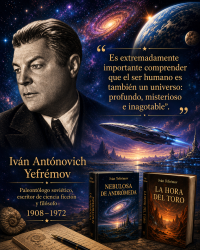
Iván Antónovich Yefrémov fue una figura legendaria de la ciencia ficción rusa de la segunda mitad del siglo XX. Nació en la localidad de Vyritsa, cerca de San Petersburgo. Su padre, antiguo soldado de la Guardia Imperial procedente de una familia campesina de la región del Volga y posteriormente importante comerciante de madera, poseía una magnífica biblioteca. Iván aprendió a leer muy pronto y, desde los seis años, quedó fascinado por las novelas de Julio Verne y los libros de viajes.

La literatura, que le apasionaba desde la infancia, quedó unida a su destino a raíz de una grave enfermedad. En 1942 permaneció durante mucho tiempo postrado en cama. Hombre de energía inagotable, encontró una salida creativa escribiendo sus primeras narraciones de aventuras y ciencia ficción, reunidas más tarde bajo el título «Relatos de lo extraordinario». Entre ellas figuraban El secreto helénico, Olgoi-Jorjoi, El lago de los espíritus de la montaña y otras.
A partir de 1944, estos y otros relatos comenzaron a publicarse en las revistas Novy Mir, Tekhnika Molodezhi y en las publicaciones militares Krasnoflotets y Krasnoarmeyets. Poco después aparecieron colecciones independientes: Encuentro sobre Tuscarora (1944), El cuerno blanco (1945) y La tubería de diamantes (1946). Uno de los primeros en valorar altamente el debut literario de Yefrémov fue el escritor soviético Alexéi Nikoláyevich Tolstói, quien destacó la verosimilitud de lo extraordinario y la elegancia de su estilo.
A los trece relatos publicados entre 1944 y 1945 se añadieron pronto la dilogía histórica «El Gran Arco» (En el borde de la Oikumene, 1949, y El viaje de Bauryed, 1953), sus primeras novelas cortas espaciales (Naves estelares, 1947, y El corazón de la serpiente, 1959), así como el fascinante libro de viajes La ruta de los vientos (1956).
Yefrémov estaba convencido de que la ciencia conduce al vacío si no está respaldada por la filosofía. Alcanzó fama como uno de los pensadores más constructivos de su época y como fundador de la ciencia ficción social soviética tras la publicación de La nebulosa de Andrómeda (1957) y La hora del Toro (1968).
Ambas novelas, dirigidas especialmente a los jóvenes lectores, representan la hipótesis antropomórfica del autor, según la cual cualquier forma de vida inteligente, al alcanzar cierto nivel de desarrollo, terminará adquiriendo rasgos humanoides. Las civilizaciones que alcanzan el nivel cósmico se integran en el Gran Anillo de los Mundos. El destino de una civilización depende de cómo resuelva el destino de cada individuo, pues «el ser humano es también un universo, profundo e inagotable».
La obra más famosa de Yefrémov, La nebulosa de Andrómeda, apareció en 1957. En ella se describe una sociedad que ha superado la desigualdad material y donde cada persona puede dedicarse libremente a su propio desarrollo. Un sistema interestelar de comunicación une a la humanidad con otras civilizaciones inteligentes del Universo dentro del Gran Anillo de las Civilizaciones. El libro se convirtió en una referencia moral para muchas personas en la Unión Soviética. Además de su profundo contenido filosófico y educativo, ofrecía una apasionante historia de exploración espacial.

El escritor de ciencia ficción Algis Budrys comparó el estilo literario de Yefrémov con el de Hugo Gernsback.
Con el paso del tiempo, la situación política y social del mundo se volvió cada vez más inquietante, y estos cambios quedaron reflejados en La hora del Toro. En esta novela, Yefrémov intentó advertir sobre futuras catástrofes ecológicas, éticas y sociales. Muchos consideraron la obra una crítica velada a la Unión Soviética, aunque investigaciones posteriores concluyeron que el libro mostraba principalmente las perspectivas sin salida del maoísmo y del capitalismo gangsteril. Las autoridades acusaron a la novela de antisovietismo y prohibieron su publicación hasta finales de la década de 1980.

La última novela de Yefrémov fue Taís de Atenas, publicada en 1972. Ambientada en la época de Alejandro Magno, la obra aborda numerosos temas, entre ellos cultos femeninos poco conocidos, la vida interior de las mujeres y su papel en la historia mundial, así como cuestiones relacionadas con la religión, los orígenes culturales y la búsqueda de la belleza y la verdad.
10452952pva
 
Frimen1917

Frimen1917

Mecca V.I.P.
VIP
Joined
Jan 9, 2026
Messages
3,154
Points
63
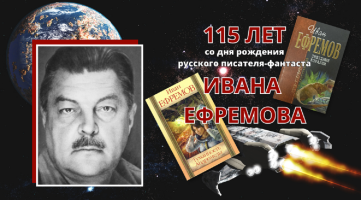
Коллаж "115 лет со дня рождения русского писателя-фантаста Ивана Ефремова".
Collage "115 years since the birth of Russian science fiction writer Ivan Efremov".
Collage "115 años del nacimiento del escritor ruso de ciencia ficción Ivan Efremov".

115
 
Frimen1917

Frimen1917

Mecca V.I.P.
VIP
Joined
Jan 9, 2026
Messages
3,154
Points
63
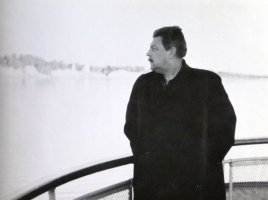
Иван Ефремов в круизе на корабле по реке Волге.
Ivan Efremov on a cruise on a ship along the Volga River.
Ivan Efremov en un crucero por el río Volga.


3902cb207499
 
Top