- Thread starter
- #1,041

Frimen1917
Mecca V.I.P.
VIP
- Joined
- Jan 9, 2026
- Messages
- 3,279
- Points
- 63
Начало публикации романа Артура Кларка «2010: Одиссея-2»
Журнал «Техника — молодёжи», № 2, 1984 год
Предисловие автора
Поездка в Советский Союз летом 1982 года навсегда останется в моей памяти.
Когда я был в Звёздном городке, в гостях у моего любимого космонавта Алексея Леонова (командира экспедиции «Союз» — «Аполлон» и первого в мире человека, вышедшего в открытый космос), я рассказал ему о своём новом романе. И раскрыл небольшой секрет: признался, что действие «Одиссеи-2» протекает на борту космического корабля, на котором летят семь русских и три американца и который называется «Космонавт Алексей Леонов». Это, разумеется, Алексею очень понравилось, и теперь весь Советский Союз благодаря телевидению и журналу «Техника — молодёжи» знает его блестящий экспромт: «О, я буду прекрасным кораблём!»
А через неделю, вернувшись в Коломбо, я увидел на своём столе гранки «Одиссеи-2» с требованием редактора телефонировать все исправления в Нью-Йорк в ближайшие 48 часов.
«Одиссея-2» — это продолжение романа «2001: Космическая одиссея», начатого в 1964 году. «Космическая одиссея» была опубликована в июле 1968 года, вскоре после выхода одноимённого фильма, поставленного режиссёром С. Кубриком. Работа над фильмом и книгой велась одновременно, с взаимной обратной связью. Я часто испытывал странное ощущение, когда правил рукопись после просмотра соответствующих эпизодов. Как выяснилось, это весьма эффективный (хотя и не самый дешёвый) способ писать романы.
Тем не менее благодаря этому сходство между книгой и фильмом получилось гораздо больше, чем это обычно бывает. Но есть и важные отличия. В романе космический корабль «Дискавери» направляется к Япету, наиболее загадочному из многочисленных спутников Сатурна. Корабль использует гравитационное поле Юпитера для изменения траектории и набора дополнительной скорости. Точно такой же манёвр выполнили в 1979 году космические зонды «Вояджер», осуществившие первую детальную разведку внешних планет.
В фильме, однако, режиссёр Кубрик с присущей ему мудростью избежал неразберихи, организовав третью встречу Человека и «монолита» среди лун Юпитера. И повествование, которое вы начинаете читать, несколько сложнее, чем просто продолжение предыдущего романа — или фильма. Там, где они отличаются, я следовал киноверсии; однако мне хотелось сделать «Одиссею-2» книгой самостоятельной и возможно более точной в свете современного знания…
…Которое, конечно же, к 2001 году опять устареет, как бывало неоднократно. В середине 60-х годов никто не мог и вообразить, что исследование системы Юпитера начнётся через каких-нибудь 15 лет. Когда писался роман, Ио, Европа, Ганимед и Каллисто даже сквозь мощные телескопы выглядели просто светлыми точками; теперь это миры, каждый из которых уникален. А Ио считается сейчас рекордсменом Солнечной системы по вулканической деятельности…
Несмотря на всё это, и фильм, и книга даже в свете последних открытий выглядят не так уж плохо. Однако новые тексты необходимо согласовывать с результатами исследований 1979 года; луны Юпитера навсегда перестали быть «белыми пятнами».
Есть ещё одно обстоятельство, которое нужно учитывать. «Космическая одиссея» написана хотя и после полёта Юрия Гагарина, но до того, как Нил Армстронг ступил на Луну. Теперь история и фантазия необратимо переплелись.
Экипажи лунных кораблей были уже знакомы и с романом, и с фильмом. Астронавты «Аполлона-8», которые в декабре 1968 года первыми из людей увидели воочию обратную сторону Луны, рассказывали, что им очень хотелось радировать на Землю об открытии громадного чёрного «монолита»: увы, благоразумие восторжествовало.
Потом последовал ряд почти невозможных совпадений. Драматический полёт «Аполлона-13» в 1970 году был ими особенно богат.
Командный модуль корабля назывался «Одиссей». (По-английски слова «Одиссей» и «одиссея» пишутся одинаково. — Ред.) Непосредственно перед взрывом, с которого начались все беды, астронавты слушали «Заратустру» Рихарда Штрауса: эта мелодия, по-моему, неотделима от нашего фильма. Сразу же после взрыва Джек Свайгерт радировал в Центр управления полётами: «Хьюстон, у нас возникла проблема». Слова, которые употребил в аналогичной ситуации ЭАЛ, звучали так: «Извините за беспокойство, но у нас возникла проблема».
До сих пор, когда я размышляю над этими событиями, у меня возникает странное чувство — будто я действительно виноват в чём-то…
В одной из глав «Космической одиссеи» описан открытый Боуменом «глаз Япета» — «сверкающий белый овал, около четырёхсот миль в длину и двухсот в ширину… совершенно симметричный… и с такими чёткими краями, что он выглядел… нарисованным на лике маленького спутника». Когда Боумен приблизился к Япету, ему показалось, что «яркий эллипс на тёмном фоне поверхности спутника был гигантским пустым глазом, следящим за ним по мере приближения…». Позже он заметил «маленькую чёрную точку точно в центре», которая, как вскоре выяснилось, была «монолитом» (или одним из его воплощений).
А когда «Вояджер-1» передал на Землю первые фотографии Япета, они показали… большой, резко очерченный белый овал с маленькой чёрной точкой в центре! «Вояджер-2» прошёл вдалеке от спутника, и вопрос о природе этого загадочного образования остаётся пока открытым. Даже не знаю, радоваться мне по этому поводу или, наоборот, огорчаться…
Алексея Леонова, думаю, представлять читателям «ТМ» необязательно. Кстати, его картина «Около Луны» — это ещё одно звено, связывающее «Космическую одиссею» с действительностью. В 1968 году, после просмотра нашего фильма на Конференции ООН по мирному использованию космоса, Алексей подошёл ко мне с альбомом «Ждите нас, звёзды» (Москва, 1967) и показал репродукцию этой работы. Композиционно она решена точно так же, как и первые кадры фильма: Земля поднимается из-за Луны, а за ними восходит Солнце. Подписанный Леоновым эскиз картины висит сейчас на стене моего кабинета. Оригинал же, как явствует из главы 7 «Одиссеи-2», будет через четверть века украшать кают-компанию советского космического корабля «Космонавт Алексей Леонов»…
Работая над романом, я ставил перед собой задачу — способствовать достижению дружбы между народами. Если мы хотим мира, мы должны готовиться к миру. Хотя противоположная точка зрения имела право на существование в век копий и мечей, в эпоху ядерного оружия она безрассудна. Ушли в прошлое времена и культуры, когда было немыслимо (и часто неумно), чтобы человек появлялся в обществе без оружия. В наше цивилизованное время такая необходимость исчезла, хотя ещё встречаются патологические индивидуумы, у которых соответствующие желания ещё есть. Вот я и изобразил русских и американских астронавтов и учёных, сотрудничающих в космосе. Надеюсь, это одно из тех предсказаний, которые сами содействуют своему осуществлению…
Полагаю, что, несмотря на временные трудности, оно когда-нибудь сбудется. А пока мне приятно сообщить, что космический корабль «Алексей Леонов» уже начали строить в Лос-Анджелесе, где роман собираются экранизировать.
Хотелось бы надеяться, что советским читателям роман понравится и что когда-нибудь они увидят и фильм.
Коломбо, 29 октября 1983 г.
От редакции
Артур Кларк, знаменитый английский писатель-фантаст, уже четверть века живущий в Шри-Ланке, — давний друг нашего журнала. Читатели «ТМ» знакомы с его романом «Фонтаны рая». Иван Антонович Ефремов так отзывался о его творчестве: «Фантастика Кларка гуманистична. Её картины будущего никогда не «приправлялись» убийственными катастрофами, разгулом ненависти и угнетения, о чём любят писать многие зарубежные фантасты. Артур Кларк всегда проявлял интерес и дружественные чувства к борьбе за новое общество в СССР и других социалистических странах».Писатель был гостем нашего журнала, неоднократно излагал на его страницах свои представления о будущем — неизменно оптимистические, насыщенные верой в научно-технический и социальный прогресс, уважением к советскому народу.
Симптоматично, что в нынешнее тревожное время, когда силы реакции ставят мир под угрозу ядерной катастрофы, писатель вновь обратился к перу, поставив целью изобразить сотрудничество советских и американских учёных в деле исследования вселенной. Артур Кларк верит, что, встав на путь мирного сосуществования, человечество навсегда откажется от ядерного оружия и что все международные проблемы будут решаться исключительно мирными средствами.
Новый роман — продолжение вышедшей в издательстве «Мир» в 1970 году «Космической одиссеи 2001 года». Напомним вкратце содержание первого романа.
Американские учёные находят в лунном кратере Тихо загадочный «монолит» — абсолютно чёрный параллелепипед с отношением сторон 1:4:9, не поддающийся никаким воздействиям. Внезапно он посылает мощный направленный радиосигнал к другому такому же «монолиту», находящемуся на периферии Солнечной системы. Оба «артефакта» оставлены в Солнечной системе три миллиона лет назад некой сверхцивилизацией, поставившей своей задачей опеку над искрами разума, появляющимися в Галактике. К Юпитеру вылетает американская экспедиция на космическом корабле «Дискавери». В результате функционального расстройства кибермозга участники экспедиции, кроме её командира Дэвида Боумена, трагически погибают. Боумен на небольшом индивидуальном ракетном зонде отправляется к «монолиту», тот на мгновение «открывается» и втягивает аппарат Боумена внутрь полого параллелепипеда. После подпространственного перехода Боумен оказывается далеко от Земли, возможно даже вне пространства и времени; сверхцивилизация изучает его, даёт ему новый облик, наделяет новыми качествами. Теперь он — её представитель, но люди на Земле этого не знают. Для них Боумен пропал без вести, и только пустой «Дискавери» кружит теперь по орбите между Ио и Юпитером…
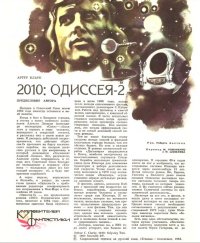
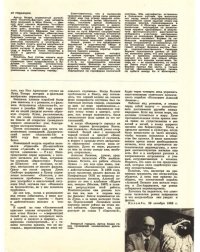
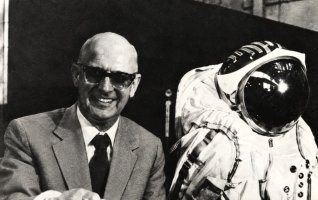
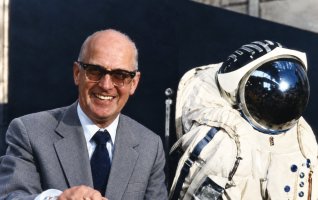
На фото первые страницы романа "2010: Одиссея-2" в советском журнале "Техника-молодежи" с предисловием Артура Кларка и с текстом от редакции. Рисунок художника Роберта Авотина. Перевод М.Романенко и М.Шевелева. Внизу одной из страниц фотография Артура Кларка возле скафандра который он потом одел.
The beginning of the publication of Arthur Clarke’s novel 2010: Odyssey Two in the Soviet magazine Tekhnika — Molodezhi, No. 2, 1984.
Author’s Preface
My trip to the Soviet Union in the summer of 1982 will forever remain in my memory.When I was in Star City, visiting my favourite cosmonaut Alexei Leonov (commander of the Soyuz–Apollo mission and the first man in the world to walk in open space), I told him about my new novel. And I revealed a small secret: I confessed that the action of Odyssey Two takes place on board a spaceship carrying seven Russians and three Americans, and that the ship is named Cosmonaut Alexei Leonov. Naturally, Alexei was very pleased, and now the whole Soviet Union, thanks to television and the magazine Tekhnika — Molodezhi, knows his brilliant impromptu remark: “Oh, I shall be a fine ship!”
A week later, back in Colombo, I found the galleys of Odyssey Two on my desk with the editor’s demand that all corrections be telephoned to New York within the next 48 hours.
Odyssey Two is a sequel to the novel 2001: A Space Odyssey, begun in 1964. A Space Odyssey was published in July 1968, shortly after the release of the film of the same name directed by Stanley Kubrick. Work on the film and the book proceeded simultaneously, with mutual feedback. I often experienced a strange sensation when correcting the manuscript after viewing the corresponding scenes. As it turned out, this is a highly effective (though not the cheapest) way of writing novels.
Nevertheless, thanks to this the similarity between the book and the film turned out to be much greater than is usually the case. But there are also important differences. In the novel the spaceship Discovery is headed for Iapetus, the most enigmatic of Saturn’s numerous moons. The ship uses Jupiter’s gravitational field to change its trajectory and gain additional speed. Exactly the same manoeuvre was performed in 1979 by the Voyager space probes, which carried out the first detailed reconnaissance of the outer planets.
In the film, however, director Kubrick, with his characteristic wisdom, avoided the confusion by arranging the third encounter between Man and the “monolith” among the moons of Jupiter. And the narrative you are about to begin reading is somewhat more complex than a simple continuation of the previous novel — or film. Where they differ, I followed the film version; yet I wanted to make Odyssey Two an independent book and as accurate as possible in the light of modern knowledge…
…Which, of course, will once again be outdated by the year 2001, as has happened repeatedly. In the mid-1960s no one could even imagine that exploration of the Jovian system would begin in a mere fifteen years. When the novel was being written, Io, Europa, Ganymede and Callisto looked like mere points of light even through powerful telescopes; now they are worlds, each of them unique. And Io is currently considered the record-holder of the Solar System for volcanic activity…
Despite all this, both the film and the book still look not too bad even in the light of the latest discoveries. Nevertheless, new texts must be brought into line with the results of the 1979 investigations; the moons of Jupiter have forever ceased to be “blank spots.”
There is one more circumstance that must be taken into account. A Space Odyssey was written after Yuri Gagarin’s flight, but before Neil Armstrong set foot on the Moon. Now history and fiction have become irreversibly intertwined.
The crews of the lunar ships were already familiar with both the novel and the film. The astronauts of Apollo 8, who in December 1968 were the first people to see the far side of the Moon with their own eyes, later related that they had very much wanted to radio back to Earth about the discovery of a huge black “monolith”; alas, prudence prevailed.
Then followed a series of almost impossible coincidences. The dramatic flight of Apollo 13 in 1970 was especially rich in them.
The command module of the ship was named Odyssey. (In English the words “Odyssey” and “odyssey” are spelled the same. — Ed.) Immediately before the explosion that started all the trouble, the astronauts were listening to Richard Strauss’s Also sprach Zarathustra: that melody, in my opinion, is inseparable from our film. Right after the explosion Jack Swigert radioed Mission Control: “Houston, we’ve had a problem.” The words used by HAL in a similar situation were: “Sorry to interrupt the festivities, but we have a problem.”
To this day, when I reflect on these events, I have a strange feeling — as if I were somehow really to blame…
In one of the chapters of A Space Odyssey Bowman discovers the “Eye of Iapetus” — “a glittering white oval, about four hundred miles long and two hundred wide… perfectly symmetrical… and with such sharp edges that it looked… as if it had been painted on the face of the little moon.” When Bowman approached Iapetus it seemed to him that “the bright ellipse on the dark background of the satellite’s surface was a gigantic empty eye watching him as he drew nearer…” Later he noticed “a small black spot exactly in the centre,” which, as soon as became clear, was the “monolith” (or one of its manifestations).
And when Voyager 1 transmitted the first photographs of Iapetus to Earth, they showed… a large, sharply outlined white oval with a small black spot in the centre! Voyager 2 passed far from the satellite, and the question of the nature of this enigmatic formation remains open for the time being. I still don’t know whether to rejoice about this or, on the contrary, to be upset…
I don’t think Alexei Leonov needs any introduction to the readers of TM. Incidentally, his painting Near the Moon is yet another link connecting A Space Odyssey with reality. In 1968, after watching our film at the United Nations Conference on the Peaceful Uses of Outer Space, Alexei came up to me with the album Wait for Us, Stars (Moscow, 1967) and showed me a reproduction of this work. Compositionally it is solved in exactly the same way as the opening shots of the film: Earth rising from behind the Moon, and the Sun rising behind them. The sketch of the painting signed by Leonov is now hanging on the wall of my study. The original, as is clear from Chapter 7 of Odyssey Two, will in a quarter of a century adorn the wardroom of the Soviet spaceship Cosmonaut Alexei Leonov…
Working on the novel, I set myself the task of promoting friendship between nations. If we want peace, we must prepare for peace. Although the opposite point of view had a right to exist in the age of spears and swords, in the age of nuclear weapons it is reckless. Gone are the times and cultures when it was unthinkable (and often unwise) for a man to appear in society without a weapon. In our civilised age such a necessity has disappeared, although there are still pathological individuals who retain the corresponding desires. So I depicted Russian and American astronauts and scientists cooperating in space. I hope this is one of those predictions that help bring about their own fulfilment…
I believe that, despite temporary difficulties, it will one day come true. And for the time being I am pleased to report that the spaceship Alexei Leonov has already begun to be built in Los Angeles, where the novel is going to be filmed.
I should like to hope that Soviet readers will enjoy the novel and that one day they will also see the film.
Colombo, 29 October 1983
From the Editors
Arthur Clarke, the famous English science-fiction writer who has been living in Sri Lanka for a quarter of a century, is a long-standing friend of our magazine. Readers of TM are familiar with his novel The Fountains of Paradise and with many of his SF short stories. Ivan Antonovich Yefremov once said of his work: “Clarke’s science fiction is humanistic. Its pictures of the future have never been ‘spiced’ with deadly catastrophes, the rampage of hatred and oppression that so many foreign science-fiction writers like to write about. Arthur Clarke has always shown interest and friendly feelings towards the struggle for a new society in the USSR and other socialist countries.”The writer has been a guest of our magazine and has repeatedly set forth on its pages his ideas about the future — invariably optimistic, filled with faith in scientific, technical and social progress, and with respect for the Soviet people.
It is symptomatic that in the present anxious time, when the forces of reaction are placing the world under the threat of nuclear catastrophe, the writer has once again taken up his pen with the aim of depicting cooperation between Soviet and American scientists in the exploration of the universe. Arthur Clarke believes that, having embarked on the path of peaceful coexistence, mankind will forever renounce nuclear weapons and that all international problems will be solved exclusively by peaceful means.
The new novel is a sequel to 2001: A Space Odyssey, published by the Mir Publishing House in 1970. Let us briefly recall the plot of the first novel.
American scientists discover in the lunar crater Tycho a mysterious “monolith” — an absolutely black parallelepiped with the side ratio 1:4:9, impervious to any influence. Suddenly it sends a powerful directed radio signal to another similar “monolith” located on the periphery of the Solar System. Both “artefacts” were left in the Solar System three million years ago by some super-civilisation whose task is to watch over the sparks of intelligence that appear in the Galaxy. An American expedition sets off for Jupiter aboard the spaceship Discovery. As a result of a functional disorder of the cyber-brain, the members of the expedition, except for its commander David Bowman, perish tragically. Bowman, in a small individual rocket probe, sets out for the “monolith”; it opens for a moment and draws Bowman’s craft inside. After a hyperspace transition Bowman finds himself far from Earth, possibly even outside space and time; the super-civilisation studies him, gives him a new appearance and endows him with new qualities. Now he is its representative, but the people on Earth do not know this. To them Bowman has disappeared without trace, and only the empty Discovery continues to orbit between Io and Jupiter…
The photo shows the opening pages of the novel "2010: Odyssey Two" as it appeared in the Soviet magazine "Tekhnika-Molodezhi" ("Technology for Youth"), featuring a foreword by Arthur C. Clarke and an editorial note. The illustration is by artist Robert Avotin. Translated by M. Romanenko and M. Shevelev.At the bottom of one of the pages is a photograph of Arthur C. Clarke next to a spacesuit that he later put on.
Inicio de la publicación de la novela de Arthur Clarke 2010: Odisea dos en la revista soviética Tekhnika — Molodezhi, n.º 2, 1984.
Prólogo del autor
Mi viaje a la Unión Soviética en el verano de 1982 permanecerá para siempre en mi memoria.Cuando estaba en la Ciudad de las Estrellas, de visita en casa de mi cosmonauta favorito Alexéi Leónov (comandante de la misión Soyuz-Apolo y el primer hombre del mundo que salió al espacio abierto), le hablé de mi nueva novela. Y le revelé un pequeño secreto: confesé que la acción de Odisea dos transcurre a bordo de una nave espacial en la que viajan siete rusos y tres estadounidenses, y que la nave se llama Cosmonauta Alexéi Leónov. Naturalmente, a Alexéi le gustó mucho, y ahora toda la Unión Soviética, gracias a la televisión y a la revista Tekhnika — Molodezhi, conoce su brillante improvisación: «¡Oh, seré un magnífico barco!»
Una semana después, de regreso en Colombo, encontré sobre mi mesa las pruebas de imprenta de Odisea dos con la exigencia del editor de que todas las correcciones se telefonicaran a Nueva York en las siguientes 48 horas.
Odisea dos es una continuación de la novela 2001: Una odisea del espacio, iniciada en 1964. Una odisea del espacio se publicó en julio de 1968, poco después del estreno de la película del mismo nombre dirigida por Stanley Kubrick. El trabajo sobre la película y el libro se llevó a cabo simultáneamente, con una retroalimentación mutua. A menudo experimentaba una extraña sensación cuando corregía el manuscrito después de ver las escenas correspondientes. Como resultó, este es un método muy eficaz (aunque no el más barato) de escribir novelas.
Sin embargo, gracias a esto la similitud entre el libro y la película resultó mucho mayor de lo que suele ocurrir. Pero también hay diferencias importantes. En la novela, la nave espacial Discovery se dirige hacia Jápeto, la más enigmática de las numerosas lunas de Saturno. La nave utiliza el campo gravitatorio de Júpiter para cambiar su trayectoria y ganar velocidad adicional. Exactamente la misma maniobra la realizaron en 1979 las sondas espaciales Voyager, que llevaron a cabo el primer reconocimiento detallado de los planetas exteriores.
En la película, sin embargo, el director Kubrick, con su característica sabiduría, evitó la confusión organizando el tercer encuentro entre el Hombre y el «monolito» entre las lunas de Júpiter. Y la narración que ustedes empiezan a leer es algo más compleja que una simple continuación de la novela anterior —o de la película—. Donde difieren, seguí la versión cinematográfica; sin embargo, quise hacer de Odisea dos un libro independiente y lo más preciso posible a la luz de los conocimientos modernos…
…Los cuales, por supuesto, volverán a quedar obsoletos hacia el año 2001, como ha ocurrido repetidamente. A mediados de los años 60 nadie podía ni imaginar que la exploración del sistema de Júpiter comenzaría en apenas quince años. Cuando se escribía la novela, Ío, Europa, Ganímedes y Calisto parecían meros puntos de luz incluso a través de potentes telescopios; ahora son mundos, cada uno de ellos único. Y Ío se considera actualmente el poseedor del récord del Sistema Solar en actividad volcánica…
A pesar de todo esto, tanto la película como el libro todavía no se ven tan mal a la luz de los últimos descubrimientos. Sin embargo, los nuevos textos deben ponerse de acuerdo con los resultados de las investigaciones de 1979; las lunas de Júpiter han dejado de ser para siempre «puntos blancos».
Hay otra circunstancia que debe tenerse en cuenta. Una odisea del espacio se escribió después del vuelo de Yuri Gagarin, pero antes de que Neil Armstrong pusiera el pie en la Luna. Ahora la historia y la ficción se han entrelazado de forma irreversible.
Las tripulaciones de las naves lunares ya estaban familiarizadas tanto con la novela como con la película. Los astronautas del Apolo 8, que en diciembre de 1968 fueron los primeros seres humanos en ver con sus propios ojos la cara oculta de la Luna, contaron después que habían deseado mucho radiar a la Tierra el descubrimiento de un enorme «monolito» negro; por desgracia, prevaleció la prudencia.
Luego siguió una serie de coincidencias casi imposibles. El dramático vuelo del Apolo 13 en 1970 fue especialmente rico en ellas.
El módulo de mando de la nave se llamaba Odyssey. (En inglés las palabras «Odyssey» y «odyssey» se escriben igual. — Red.) Inmediatamente antes de la explosión que inició todos los problemas, los astronautas escuchaban el Also sprach Zarathustra de Richard Strauss: esa melodía, en mi opinión, es inseparable de nuestra película. Justo después de la explosión, Jack Swigert radió al Centro de Control de la Misión: «Houston, hemos tenido un problema». Las palabras que utilizó HAL en una situación similar fueron: «Perdonen que interrumpa las festividades, pero tenemos un problema».
Hasta el día de hoy, cuando reflexiono sobre estos acontecimientos, siento una extraña sensación: como si de verdad tuviera alguna culpa…
En uno de los capítulos de Una odisea del espacio, Bowman descubre el «Ojo de Jápeto»: «un óvalo blanco reluciente, de unos cuatrocientos kilómetros de largo y doscientos de ancho… perfectamente simétrico… y con unos bordes tan nítidos que parecía… pintado en la cara de la pequeña luna». Cuando Bowman se acercó a Jápeto le pareció que «la elipse brillante sobre el fondo oscuro de la superficie del satélite era un ojo vacío gigantesco que lo observaba mientras se aproximaba…». Más tarde notó «un pequeño punto negro exactamente en el centro», que, como se aclaró de inmediato, era el «monolito» (o una de sus manifestaciones).
Y cuando el Voyager 1 transmitió a la Tierra las primeras fotografías de Jápeto, mostraron… ¡un gran óvalo blanco de contornos nítidos con un pequeño punto negro en el centro! El Voyager 2 pasó lejos del satélite, y la cuestión de la naturaleza de esta enigmática formación sigue abierta por el momento. Todavía no sé si alegrarme por ello o, por el contrario, disgustarme…
Creo que no es necesario presentar a Alexéi Leónov a los lectores de TM. Por cierto, su cuadro Cerca de la Luna es otro eslabón más que une Una odisea del espacio con la realidad. En 1968, después de ver nuestra película en la Conferencia de las Naciones Unidas sobre la Utilización del Espacio Ultraterrestre con Fines Pacíficos, Alexéi se me acercó con el álbum Esperadnos, estrellas (Moscú, 1967) y me mostró una reproducción de esta obra. Composicionalmente está resuelta exactamente igual que los primeros fotogramas de la película: la Tierra surge de detrás de la Luna, y detrás de ellas se eleva el Sol. El boceto del cuadro firmado por Leónov cuelga ahora en la pared de mi despacho. El original, como se desprende del capítulo 7 de Odisea dos, adornará dentro de un cuarto de siglo el comedor de la nave espacial soviética Cosmonauta Alexéi Leónov…
Al trabajar en la novela me propuse la tarea de contribuir al logro de la amistad entre los pueblos. Si queremos la paz, debemos prepararnos para la paz. Aunque el punto de vista opuesto tenía derecho a existir en la época de las lanzas y las espadas, en la era de las armas nucleares es temerario. Han pasado los tiempos y las culturas en que era impensable (y a menudo imprudente) que un hombre se presentara en sociedad sin un arma. En nuestra época civilizada esa necesidad ha desaparecido, aunque todavía se encuentran individuos patológicos que conservan los deseos correspondientes. Por eso representé a astronautas y científicos rusos y estadounidenses colaborando en el espacio. Espero que esta sea una de esas predicciones que contribuyen a su propio cumplimiento…
Creo que, a pesar de las dificultades temporales, algún día se hará realidad. Y por ahora me complace informar de que la nave espacial Alexéi Leónov ya ha empezado a construirse en Los Ángeles, donde se van a llevar a la pantalla la novela.
Me gustaría esperar que a los lectores soviéticos les guste la novela y que algún día vean también la película.
Colombo, 29 de octubre de 1983
De la redacción
Arthur Clarke, el famoso escritor inglés de ciencia ficción que lleva ya un cuarto de siglo viviendo en Sri Lanka, es un amigo de larga data de nuestra revista. Los lectores de TM conocen su novela Las fuentes del paraíso y muchos de sus relatos de ciencia ficción. Iván Antónovich Yefrémov dijo una vez de su obra: «La ciencia ficción de Clarke es humanista. Sus cuadros del futuro nunca se han “sazonado” con catástrofes mortíferas, el desenfreno del odio y la opresión de los que tanto les gusta escribir a muchos escritores extranjeros de ciencia ficción. Arthur Clarke siempre ha mostrado interés y sentimientos amistosos hacia la lucha por una nueva sociedad en la URSS y en otros países socialistas».El escritor ha sido invitado de nuestra revista y ha expuesto repetidamente en sus páginas sus ideas sobre el futuro —invariablemente optimistas, impregnadas de fe en el progreso científico, técnico y social, y de respeto hacia el pueblo soviético—.
Es sintomático que en el actual momento de inquietud, cuando las fuerzas de la reacción ponen al mundo bajo la amenaza de una catástrofe nuclear, el escritor haya vuelto a tomar la pluma con el objetivo de representar la colaboración entre científicos soviéticos y estadounidenses en la exploración del universo. Arthur Clarke cree que, una vez emprendido el camino de la coexistencia pacífica, la humanidad renunciará para siempre a las armas nucleares y que todos los problemas internacionales se resolverán exclusivamente por medios pacíficos.
La nueva novela es una continuación de 2001: Una odisea del espacio, publicada por la editorial Mir en 1970. Recordemos brevemente el argumento de la primera novela.
Unos científicos estadounidenses descubren en el cráter lunar Tycho un misterioso «monolito»: un paralelepípedo absolutamente negro con la proporción de lados 1:4:9, impermeable a cualquier influencia. De pronto envía una potente señal de radio dirigida hacia otro «monolito» similar situado en la periferia del Sistema Solar. Ambos «artefactos» fueron dejados en el Sistema Solar hace tres millones de años por alguna supercivilización cuya tarea es vigilar las chispas de inteligencia que aparecen en la Galaxia. Una expedición estadounidense parte hacia Júpiter a bordo de la nave espacial Discovery. Como resultado de un trastorno funcional del cerebro cibernético, los miembros de la expedición, excepto su comandante David Bowman, perecen trágicamente. Bowman, en una pequeña sonda cohete individual, se dirige hacia el «monolito»; este se abre por un momento y atrae la nave de Bowman al interior. Después de una transición hiperespacial, Bowman se encuentra lejos de la Tierra, posiblemente incluso fuera del espacio y del tiempo; la supercivilización lo estudia, le da una nueva apariencia y le confiere nuevas cualidades. Ahora es su representante, pero la gente de la Tierra no lo sabe. Para ellos Bowman ha desaparecido sin dejar rastro, y solo el Discovery vacío sigue orbitando entre Ío y Júpiter…
En la imagen se muestran las primeras páginas de la novela «2010: Odisea 2», publicada en la revista soviética «Tekhnika-molodezhi» (Tecnología para la Juventud), con prólogo de Arthur C. Clarke y texto editorial. Ilustración de Robert Avotin. Traducción de M. Romanenko y M. Shevelev.En la parte inferior de una de las páginas hay una fotografía de Arthur Clarke junto al traje espacial que se puso posteriormente.