- Thread starter
- #1,061

Frimen1917
Mecca V.I.P.
VIP
- Joined
- Jan 9, 2026
- Messages
- 3,310
- Points
- 63
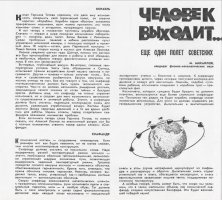
Советский журнал "Техника-молодежи".№4; 1965; cтраницы 28-29;
Текст страницы журнала:
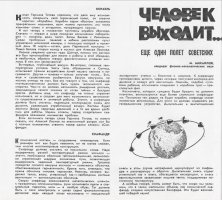
ЧЕЛОВЕК ВЫХОДИТ В ПУСТОТУ
ЕЩЁ ОДИН ПОЛЁТ СОВЕТСКИХ КОСМОНАВТОВ
Автор: М. МИХАЙЛОВ (кандидат физико-математических наук)
КОРАБЛЬ
Когда Германа Титова спросили, что дало ему возможность совершить свой героический полёт, он ответил коротко: «Корабль». Корабли серии «Восток» оказались прекрасными машинами, если можно применять это чисто «земное» слово к аппаратам, покоряющим космос.
И вот теперь в «плавание» пустились корабли «Восход». Сначала — первая в мире походная космическая лаборатория — инженер, врач, пилот. Затем Беляев с Леоновым. Среди приборных панелей в кабине расположен пульт управления шлюзовой камеры, с помощью которой в памятный день 18 марта — кстати, день Парижской коммуны — Павел Беляев открыл выход в космос для Алексея Леонова.
Леонов уверенно шагнул туда. Шагнул, потому что костюм его был приспособлен для жизни и работы в этой «бездне», в необычных, образно говоря, фантастических условиях космоса. В чём они заключаются?
Во-первых, глубочайший вакуум. Во-вторых, сложные температурные условия. Часть тела, обращенная к Солнцу, испытывает прямое воздействие лучей нашего светила и нагревается. Другая — теневая — только излучает тепло… Есть ещё и существенные особенности. Вакуум вакуумом, но космос отнюдь не пуст. Все это говорит о том, что скафандр «путешественников» должен быть чудом технического мастерства. Чем-то он должен напоминать рыцарские доспехи, защищающие своего хозяина от сотен тайных и быстрых врагов. Добавим ещё, что скафандр не только охраняет космонавта, но и создаёт для него возможность автономного существования и активной работы. Значит, в скафандре должны быть системы, подающие кислородную смесь для дыхания, удаляющие отработанный воздух. Костюм будет жёстким (ввиду перепада давлений) и в то же время удобным для работы. Одним словом, перед создателями скафандров возникало множество проблем.
Если вспомнить теперь слова Германа Титова, то можно сказать, что Алексей Леонов на аналогичный вопрос мог бы с полным основанием ответить также одним словом: «Скафандр».
СКАФАНДР
Космический костюм — сооружение инженерное. Хотя размеры его как будто невелики, он не менее сложен, чем многие многометровые конструкции.
Скафандр должен состоять из нескольких слоёв. Надо выдерживать резкий температурный режим космоса — значит, необходима оболочка теплоизоляционная, великолепно отражающая щедрые солнечные лучи, позволяющая выдерживать заданный температурный режим. Грозное соседство полного вакуума космоса — появляется оболочка, обеспечивающая герметичность. Кроме того, очевидно, что нужна оболочка силовая, каркасная. Наконец человек выделяет тепло, влагу, углекислый газ — необходима система вентиляции — вентиляционная оболочка.
Сверху скафандр заканчивается металлическим шлемом с прозрачным иллюминатором, руки космонавта одеты в специальные перчатки, ноги — в особую обувь. Тут должна быть и своя электросеть и целая серия физиологических датчиков: ведь каждый полёт космонавта — неоценимый эксперимент учёных — биологов и медиков. К скафандру присоединены шланги, через которые поступают кислород для дыхания и воздух для вентиляции. Наконец, подобно пуповине ребёнка, космонавта соединяет с кораблём трос — пресловутый фал.
Космонавты, которым суждено будет бродить по далёким планетам, воспользуются ещё более сложными скафандрами. Поскольку там рядом не будет корабля, скафандр станет полностью автономным. Для этого он должен содержать регенерационное устройство. Дыхательная и вентиляционная смеси в этом случае непрерывно циркулируют из скафандра к регенератору и обратно. Дыхательная смесь отдаёт углекислый газ и влагу, обогащается кислородом, а смесь вентиляционная захватывает лишнее тепло, поддерживая постоянную температуру.
А вообще говоря, очень может быть, что скоро мы услышим, что в таком маленьком объёме, как космический скафандр, создана искусственная биосфера. Это будет величайшей победой науки!
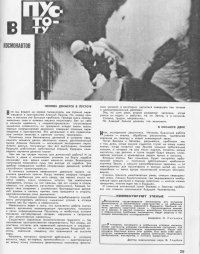
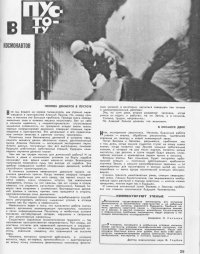
ЧЕЛОВЕК ДВИЖЕТСЯ В ПУСТОТЕ
Все мы видели на экране телевизоров, как странно перемещался в пространстве Алексей Леонов. Но, между прочим, в космосе это большая проблема. Прежде всего скажем несколько слов в похвалу нашему космонавту. Вёл он себя в космосе идеально, у «первооткрывателя» отсутствовала мышечная скованность, он прекрасно владел своим телом, хорошо координировал движения, совершал сложные перемещения в пространстве. Это доказывает и его превосходные личные качества и удачную систему тренировки.
Поскольку сама биомеханика движений в условиях невесомости является делом абсолютно новым, десятиминутный выход Алексея Леонова — волнующий эксперимент науки. Анализ данных, полученных при его выполнении, поможет будущим работникам орбитальных станций, будущим «пионерам» изучения далёких планет.
Чем же так труден космос для длительной работы? И на Земле и даже в космических условиях на борту корабля космонавт всё время имеет какую-то опору. Безопорное положение появляется лишь при выходе из корабля. Это требует совершенно особой координации движений, особой способности ориентироваться.
В сложных условиях невесомости довольно трудно научиться двигаться просто. Когда человек впервые попадает в столь необычную для него среду, где теряют смысл понятия «верх», «низ», «подъём», «спуск», где невозможно определить, стоишь ты или лежишь, где нет нужды в опоре, кажется, что управлять мускулами невозможно. Каждый поворот тела сопряжён с множеством беспорядочных движений руками и ногами, причём тело вращается в сторону, противоположную этим движениям.
Только длительными тренировками вырабатывается способность регулировать величину мышечных усилий, а отсюда умение как бы парить в невесомости.
Невесомость ведёт к тому, что изменяется работа систем живого организма, анализирующих пространство, меняются и связи информационные. Поскольку в необычных условиях поставлен вестибулярный аппарат, нарушены и связанные с ним регуляторные механизмы.
Существуют серьёзные психологические трудности — так называемая пространственная напряжённость. Нет опоры, нет «системы отсчёта» для правильной ориентации в окружающем пространстве — появляется ощущение бездонной пустоты, знакомое каждому, кто поднимался на высокие горы.
Человеку, которому предстоит действовать в условиях космоса, надо, во-первых, приспособиться — адаптироваться ко всему этому сложному физическому комплексу физических условий, а во-вторых, научиться совершать там точные и целеустремлённые действия.
Это, по сути дела, второе рождение человека, когда учится он ходить и работать не на Земле, а в космосе. Сложно, трудно, непривычно...
Но Алексей Леонов доказал, что возможно.
В КОСМОСЕ ДВОЕ
Итак, эксперимент закончился. Началась будничная работа учёных — анализ, обработка результатов, тщательное освоение их, выводы и новый инженерный заказ.
Полёт Беляева и Леонова, разумеется, приблизил нас к тем дням, когда земное существо ступит на почву чужих планет, когда появятся над Землёй мощные орбитальные станции, о которых не раз писал журнал, появятся целые институты, где десятки и сотни людей будут решать сложнейшие научные и инженерные задачи прямо в космосе.
Ближайшим этапом, без сомнения, будет постройка орбитальной станции — постоянно действующего «рабочего» спутника Земли, с самыми разнообразными задачами — от навигационных для космических и земных целей до чисто подсобных — нечто вроде космической «станции обслуживания».
Станции транзита межпланетных ракет, станции сверхдальней связи, станции биологические, где выращиваются необычайные сорта растений и породы животных, — многое можно придумать, многое ждёт нас в будущем.
И поистине эпохальный полёт Беляева и Леонова приблизил это славное космическое будущее Человечества.
КОММЕНТИРУЮТ УЧЁНЫЕ
«Автономное существование космонавта, его активная деятельность в космическом пространстве и на небесных телах — вот аспекты недалёкого будущего. Пробный камень зрелости советской науки — проникновение человека в космос. С другой стороны, важнейшие биологические и медицинские проблемы, несомненно, будут решены с помощью космических исследований».
Академик Н. Сисакян
«...У человека, попавшего в необычные условия космоса, может наступить сложное психофизическое состояние, так называемая пространственная напряжённость. Наши космонавты блестяще взяли этот рубеж. Они вели себя великолепно, продемонстрировав редкое сочетание творческого воображения, мастерства и личного мужества!..»
Доктор медицинских наук Ф. Горбов
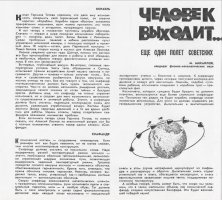
Текст страницы журнала:
ЧЕЛОВЕК ВЫХОДИТ В ПУСТОТУ
ЕЩЁ ОДИН ПОЛЁТ СОВЕТСКИХ КОСМОНАВТОВ
Автор: М. МИХАЙЛОВ (кандидат физико-математических наук)
КОРАБЛЬ
Когда Германа Титова спросили, что дало ему возможность совершить свой героический полёт, он ответил коротко: «Корабль». Корабли серии «Восток» оказались прекрасными машинами, если можно применять это чисто «земное» слово к аппаратам, покоряющим космос.
И вот теперь в «плавание» пустились корабли «Восход». Сначала — первая в мире походная космическая лаборатория — инженер, врач, пилот. Затем Беляев с Леоновым. Среди приборных панелей в кабине расположен пульт управления шлюзовой камеры, с помощью которой в памятный день 18 марта — кстати, день Парижской коммуны — Павел Беляев открыл выход в космос для Алексея Леонова.
Леонов уверенно шагнул туда. Шагнул, потому что костюм его был приспособлен для жизни и работы в этой «бездне», в необычных, образно говоря, фантастических условиях космоса. В чём они заключаются?
Во-первых, глубочайший вакуум. Во-вторых, сложные температурные условия. Часть тела, обращенная к Солнцу, испытывает прямое воздействие лучей нашего светила и нагревается. Другая — теневая — только излучает тепло… Есть ещё и существенные особенности. Вакуум вакуумом, но космос отнюдь не пуст. Все это говорит о том, что скафандр «путешественников» должен быть чудом технического мастерства. Чем-то он должен напоминать рыцарские доспехи, защищающие своего хозяина от сотен тайных и быстрых врагов. Добавим ещё, что скафандр не только охраняет космонавта, но и создаёт для него возможность автономного существования и активной работы. Значит, в скафандре должны быть системы, подающие кислородную смесь для дыхания, удаляющие отработанный воздух. Костюм будет жёстким (ввиду перепада давлений) и в то же время удобным для работы. Одним словом, перед создателями скафандров возникало множество проблем.
Если вспомнить теперь слова Германа Титова, то можно сказать, что Алексей Леонов на аналогичный вопрос мог бы с полным основанием ответить также одним словом: «Скафандр».
СКАФАНДР
Космический костюм — сооружение инженерное. Хотя размеры его как будто невелики, он не менее сложен, чем многие многометровые конструкции.
Скафандр должен состоять из нескольких слоёв. Надо выдерживать резкий температурный режим космоса — значит, необходима оболочка теплоизоляционная, великолепно отражающая щедрые солнечные лучи, позволяющая выдерживать заданный температурный режим. Грозное соседство полного вакуума космоса — появляется оболочка, обеспечивающая герметичность. Кроме того, очевидно, что нужна оболочка силовая, каркасная. Наконец человек выделяет тепло, влагу, углекислый газ — необходима система вентиляции — вентиляционная оболочка.
Сверху скафандр заканчивается металлическим шлемом с прозрачным иллюминатором, руки космонавта одеты в специальные перчатки, ноги — в особую обувь. Тут должна быть и своя электросеть и целая серия физиологических датчиков: ведь каждый полёт космонавта — неоценимый эксперимент учёных — биологов и медиков. К скафандру присоединены шланги, через которые поступают кислород для дыхания и воздух для вентиляции. Наконец, подобно пуповине ребёнка, космонавта соединяет с кораблём трос — пресловутый фал.
Космонавты, которым суждено будет бродить по далёким планетам, воспользуются ещё более сложными скафандрами. Поскольку там рядом не будет корабля, скафандр станет полностью автономным. Для этого он должен содержать регенерационное устройство. Дыхательная и вентиляционная смеси в этом случае непрерывно циркулируют из скафандра к регенератору и обратно. Дыхательная смесь отдаёт углекислый газ и влагу, обогащается кислородом, а смесь вентиляционная захватывает лишнее тепло, поддерживая постоянную температуру.
А вообще говоря, очень может быть, что скоро мы услышим, что в таком маленьком объёме, как космический скафандр, создана искусственная биосфера. Это будет величайшей победой науки!
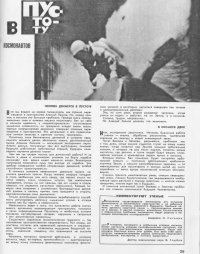
ЧЕЛОВЕК ДВИЖЕТСЯ В ПУСТОТЕ
Все мы видели на экране телевизоров, как странно перемещался в пространстве Алексей Леонов. Но, между прочим, в космосе это большая проблема. Прежде всего скажем несколько слов в похвалу нашему космонавту. Вёл он себя в космосе идеально, у «первооткрывателя» отсутствовала мышечная скованность, он прекрасно владел своим телом, хорошо координировал движения, совершал сложные перемещения в пространстве. Это доказывает и его превосходные личные качества и удачную систему тренировки.
Поскольку сама биомеханика движений в условиях невесомости является делом абсолютно новым, десятиминутный выход Алексея Леонова — волнующий эксперимент науки. Анализ данных, полученных при его выполнении, поможет будущим работникам орбитальных станций, будущим «пионерам» изучения далёких планет.
Чем же так труден космос для длительной работы? И на Земле и даже в космических условиях на борту корабля космонавт всё время имеет какую-то опору. Безопорное положение появляется лишь при выходе из корабля. Это требует совершенно особой координации движений, особой способности ориентироваться.
В сложных условиях невесомости довольно трудно научиться двигаться просто. Когда человек впервые попадает в столь необычную для него среду, где теряют смысл понятия «верх», «низ», «подъём», «спуск», где невозможно определить, стоишь ты или лежишь, где нет нужды в опоре, кажется, что управлять мускулами невозможно. Каждый поворот тела сопряжён с множеством беспорядочных движений руками и ногами, причём тело вращается в сторону, противоположную этим движениям.
Только длительными тренировками вырабатывается способность регулировать величину мышечных усилий, а отсюда умение как бы парить в невесомости.
Невесомость ведёт к тому, что изменяется работа систем живого организма, анализирующих пространство, меняются и связи информационные. Поскольку в необычных условиях поставлен вестибулярный аппарат, нарушены и связанные с ним регуляторные механизмы.
Существуют серьёзные психологические трудности — так называемая пространственная напряжённость. Нет опоры, нет «системы отсчёта» для правильной ориентации в окружающем пространстве — появляется ощущение бездонной пустоты, знакомое каждому, кто поднимался на высокие горы.
Человеку, которому предстоит действовать в условиях космоса, надо, во-первых, приспособиться — адаптироваться ко всему этому сложному физическому комплексу физических условий, а во-вторых, научиться совершать там точные и целеустремлённые действия.
Это, по сути дела, второе рождение человека, когда учится он ходить и работать не на Земле, а в космосе. Сложно, трудно, непривычно...
Но Алексей Леонов доказал, что возможно.
В КОСМОСЕ ДВОЕ
Итак, эксперимент закончился. Началась будничная работа учёных — анализ, обработка результатов, тщательное освоение их, выводы и новый инженерный заказ.
Полёт Беляева и Леонова, разумеется, приблизил нас к тем дням, когда земное существо ступит на почву чужих планет, когда появятся над Землёй мощные орбитальные станции, о которых не раз писал журнал, появятся целые институты, где десятки и сотни людей будут решать сложнейшие научные и инженерные задачи прямо в космосе.
Ближайшим этапом, без сомнения, будет постройка орбитальной станции — постоянно действующего «рабочего» спутника Земли, с самыми разнообразными задачами — от навигационных для космических и земных целей до чисто подсобных — нечто вроде космической «станции обслуживания».
Станции транзита межпланетных ракет, станции сверхдальней связи, станции биологические, где выращиваются необычайные сорта растений и породы животных, — многое можно придумать, многое ждёт нас в будущем.
И поистине эпохальный полёт Беляева и Леонова приблизил это славное космическое будущее Человечества.
КОММЕНТИРУЮТ УЧЁНЫЕ
«Автономное существование космонавта, его активная деятельность в космическом пространстве и на небесных телах — вот аспекты недалёкого будущего. Пробный камень зрелости советской науки — проникновение человека в космос. С другой стороны, важнейшие биологические и медицинские проблемы, несомненно, будут решены с помощью космических исследований».
Академик Н. Сисакян
«...У человека, попавшего в необычные условия космоса, может наступить сложное психофизическое состояние, так называемая пространственная напряжённость. Наши космонавты блестяще взяли этот рубеж. Они вели себя великолепно, продемонстрировав редкое сочетание творческого воображения, мастерства и личного мужества!..»
Доктор медицинских наук Ф. Горбов