• Legal Notice – MuscleMecca Forums

    MuscleMecca.com is an educational discussion platform. We do not sell, promote, or endorse any bodybuilding gear, supplements, research chemicals, or performance-enhancing substances.

    All discussions are for educational and informational purposes only. Nothing posted on this forum should be considered medical or legal advice.

    Do not attempt to sell, source, or promote illegal substances. Any such activity will result in an immediate and permanent ban and may be reported to the proper authorities.

    By using this site, you agree to comply with all forum rules, disclaimers, and applicable laws in your jurisdiction.

    Read Our Full Disclaimer and Forum Rules

History of Soviet cosmonautics.

Frimen1917

Frimen1917

Mecca V.I.P.
VIP
Joined
Jan 9, 2026
Messages
3,154
Points
63
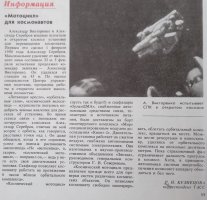
По страницам журнала "Земля и Вселенная" .№3. 1990 год. Страница 55
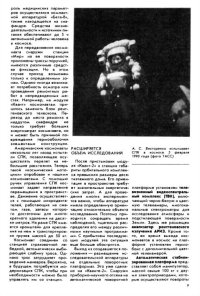
Космонавт А. Викторенко испытывает космический "мотоцикл".
Информация

«Мотоцикл» для космонавтов
Александр Викторенко и Александр Серебров впервые испытали в открытом космосе установку для перемещения космонавта. Первым это сделал 1 февраля 1990 года Александр Серебров. Максимальное удаление от выходного люка составило 33 м. 5 февраля испытания продолжил командир экипажа — Александр Викторенко. Он удалялся от станции на 45 м. По оценке специалистов Центра управления полетами, программа работы в открытом космосе выполнена полностью.
«Летающее кресло», «орбитальные сани», «космический велосипед» — журналисты пытались подобрать земные аналогии для рассказа об установке. Во время сеанса связи с экипажем пилотируемого комплекса Александр Серебров, отвечая на мой вопрос с орбиты, как говорится, расставил точки над i. Он даже обиделся, когда я его спросила, успел ли экипаж распаковать «велосипед». «Не “велосипед”, а скорее “космический мотоцикл”», — поправил он, — ведь у него есть своя двигательная установка. Скафандр позволяет космонавту работать на протяжении 6 часов вблизи орбитального комплекса.
«Космический мотоцикл» (пусть так и будет!) и скафандры «Орлан-ДМА», снабженные автономными средствами связи, телеметрии и источником питания, были доставлены на борт пилотируемого комплекса «Мир» специализированным модулем дооснащения «Квант-2». Двигательная установка работает на сжатом воздухе, снабжена автономными системами электропитания. Она изготовлена в научно-производственном объединении «Звезда», руководимом генеральным конструктором Г. И. Северным.
«Космический мотоцикл» предназначен прежде всего для проверки систем различных космических объектов. Он позволяет космонавту свободно маневрировать, облетать орбитальный комплекс, вращаться на месте. Можно вести репортажи и киносъемку, удаляясь от орбитального комплекса на несколько десятков метров. Пока страховочный фал ограничивает дальность прогулок в космосе. Хотя, в принципе, автономная система энергообеспечения позволяет аппарату обходиться и без него.
А. Викторенко испытывает СПК в открытом космосе.
Р. Н. Кузнецова

корреспондент ТАСС

From the pages of the magazine "Earth and the Universe," issue 3, 1990, page 55

Cosmonaut A. Viktorenko tests a space "motorcycle."
Information

A “Motorcycle” for Cosmonauts
Alexander Viktorenko and Alexander Serebrov were the first to test in outer space a device designed for a cosmonaut’s movement. The first to do so was Alexander Serebrov on February 1, 1990. The maximum distance from the airlock reached 33 meters. On February 5 the tests were continued by the crew commander, Alexander Viktorenko. He moved as far as 45 meters away from the station. According to specialists of the Mission Control Center, the program of extravehicular activity was fully completed.
“Flying chair,” “orbital sled,” “space bicycle” — journalists tried to find earthly analogies to describe the device. During a communication session with the crew of the manned complex, Alexander Serebrov, answering my question from orbit, as they say, set the record straight. He was even slightly offended when I asked whether the crew had already unpacked the “bicycle.” “Not a bicycle, but rather a ‘space motorcycle,’” he corrected me, “because it has its own propulsion unit.” The spacesuit allows a cosmonaut to work for up to six hours near the orbital complex.
The “space motorcycle” (let us call it that!) and the Orlan-DMA spacesuits, equipped with autonomous communication systems, telemetry and a power supply, were delivered to the Mir orbital complex by the specialized equipment module Kvant-2. The propulsion unit operates on compressed air and is equipped with autonomous electrical power systems. It was manufactured at the Zvezda Research and Production Association, headed by General Designer G. I. Severin.
The “space motorcycle” is intended primarily for checking the systems of various space objects. It allows the cosmonaut to maneuver freely, fly around the orbital complex, and rotate in place. It is possible to conduct reports and film recordings while moving several dozen meters away from the orbital complex. For now, the safety tether limits the distance of space excursions. However, in principle, the autonomous power system allows the device to operate even without it.
A. Viktorenko tests the SPK in outer space.
R. N. Kuznetsova

TASS correspondent


De las páginas de la revista "La Tierra y el Universo", número 3, 1990, página 55
El cosmonauta A. Viktorenko prueba una "motocicleta" espacial.
Información

Una “motocicleta” para cosmonautas
Alexander Viktorenko y Alexander Serebrov fueron los primeros en probar en el espacio abierto un dispositivo destinado al desplazamiento de un cosmonauta. El primero en hacerlo fue Alexander Serebrov el 1 de febrero de 1990. La distancia máxima desde la escotilla de salida fue de 33 metros. El 5 de febrero continuó las pruebas el comandante de la tripulación, Alexander Viktorenko. Él se alejó de la estación hasta 45 metros. Según la evaluación de los especialistas del Centro de Control de Vuelos, el programa de trabajo en el espacio abierto se cumplió completamente.
“Silla voladora”, “trineo orbital”, “bicicleta espacial”: los periodistas intentaban encontrar analogías terrestres para describir el dispositivo. Durante una sesión de comunicación con la tripulación del complejo tripulado, Alexander Serebrov, respondiendo a mi pregunta desde la órbita, como se dice, puso los puntos sobre las íes. Incluso se ofendió cuando le pregunté si la tripulación ya había desempaquetado la “bicicleta”. “No es una bicicleta, sino más bien una ‘motocicleta espacial’”, me corrigió, “porque tiene su propio sistema de propulsión”. El traje espacial permite al cosmonauta trabajar durante 6 horas cerca del complejo orbital.
La “motocicleta espacial” (¡llamémosla así!) y los trajes espaciales Orlan-DMA, equipados con sistemas autónomos de comunicación, telemetría y una fuente de energía, fueron llevados a bordo del complejo orbital Mir por el módulo especializado de equipamiento Kvant-2. El sistema de propulsión funciona con aire comprimido y está equipado con sistemas autónomos de alimentación eléctrica. Fue fabricado en la asociación científica y productiva Zvezda, dirigida por el diseñador general G. I. Severin.
La “motocicleta espacial” está destinada principalmente a verificar los sistemas de diversos objetos espaciales. Permite al cosmonauta maniobrar libremente, rodear el complejo orbital y girar en su lugar. También se pueden realizar reportajes y filmaciones alejándose del complejo orbital varias decenas de metros. Por ahora, el cable de seguridad limita la distancia de las caminatas espaciales. Sin embargo, en principio, el sistema autónomo de suministro de energía permite que el aparato funcione incluso sin él.
A. Viktorenko prueba el SPK en el espacio abierto.
R. N. Kuznetsova

corresponsal de TASS
Q4nwxgE1st7za 7cS4O114L45HmV7yyrTmDh1oEJ5L s4wuc3NvENxi8GXhqd9wu2TBPa 1m1A6EKsHxRPUF3PzI
 
Frimen1917

Frimen1917

Mecca V.I.P.
VIP
Joined
Jan 9, 2026
Messages
3,154
Points
63
ДЛЯ РАБОТЫ В ОТКРЫТОМ КОСМОСЕ
Все чаще космонавтам приходится работать в открытом космосе. В шлюзовом отсеке «Кванта-2» находятся предназначенные для этого два скафандра автономного типа и средство перемещения космонавта в безопорном пространстве (СПК) («Земля и Вселенная», 1982, № 3, с. 31.— Ред.).
Шлюзовой отсек оснащен средствами регулирования давления, пультом управления, специальными элементами фиксации и другим оборудованием. Геометрическая форма и объем отсека шлюзования аналогичны переходному отсеку станции «Салют-7». Чтобы максимально использовать его, впервые применен люк, открывающийся вне отсека. Причем диаметр входного люка 1 м (станции — 0,8 м).
Для того чтобы люк, на который действует усилие около тонны, создаваемое давлением в отсеке, был герметичным, потребовалось разработать замки, открывающиеся легким вращением штурвала.
При выходе из шлюзового отсека модуля «Квант-2» космонавты А. Викторенко и А. Серебров использовали скафандры автономного типа, которые не связаны электрическим фалом с бортом станции. Передача на Землю телеметрической информации и радиопереговоры шли через установленный на скафандре блок. Контроль медицинских параметров осуществлялся компактной аппаратурой «Бета-8», также находящейся на скафандре. Средства жизнедеятельности и источник питания обеспечивают до 5 ч автономной работы человека в космосе.
Для передвижения космонавта снаружи станции «Мир» на ее поверхности проложены трассы поручней, имеются различные средства фиксации. Но в этом случае проход возможен только к определенным зонам. Однако иногда возникает потребность осмотра или проведения ремонтных работ в непредвиденных местах. Например, на модуле «Квант» космонавтам пришлось заменить блок рентгеновского телескопа. Переход до места ремонта в надутом скафандре не только требует больших энергозатрат космонавта, но и может быть причиной повреждения гермооболочки элементами конструкции.
Американские космонавты несколько лет назад испытали СПК, позволяющее осуществлять перелеты на небольшие расстояния. Теперь такой «космический мотоцикл» опробован и нашими космонавтами. С помощью ручек управления СПК космонавт задает направление перемещения в пространстве. Движение осуществляется с помощью микроракет, работающих на сжатом газе, запас которого достаточен для многократного удаления на десятки метров. На раме СПК имеется кронштейн для крепления на нем и транспортировки грузов массой до 50 кг.

Космонавт соединен со станцией страховочной лебедкой, автоматически выбирающей слабину троса. Однако трос затрудняет проведение маневров. Вероятно, в будущем потребуется модернизация СПК, чтобы при необходимости можно было управлять им со станции. (Журнал "Земля и Вселенная". №3/1990; стр. 8-9)
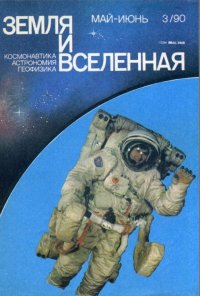
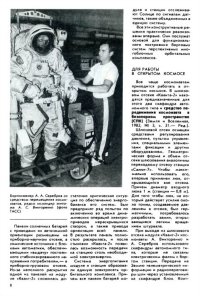
Фото на первой странице обложки: СПК (Средство Передвижения Космонавтов); фото на странице 8: Бортинженер А. А. Серебров со средством перемещения космонавтов, рядом командир экипажа А. С. Викторенко (фото ТАСС); фото на странице 9: А.С.Викторенко испытывает средство передвижения космонавтов в космосе 5 февраля 1990 года.

FOR WORK IN OUTER SPACE

Cosmonauts increasingly have to work in outer space. The airlock compartment of the Kvant-2 module contains two autonomous spacesuits designed for this purpose and a device for a cosmonaut’s movement in weightlessness (SPK) (“Earth and the Universe”, 1982, No. 3, p. 31 — Ed.).
The airlock compartment is equipped with pressure regulation systems, a control panel, special fastening elements, and other equipment. The geometric shape and volume of the airlock compartment are similar to those of the transfer compartment of the Salyut-7 station. In order to make maximum use of it, a hatch opening outward from the compartment was used for the first time. The diameter of the entrance hatch is 1 meter (on the station it was 0.8 m).
To ensure that the hatch — which is subjected to a force of about one ton created by the pressure inside the compartment — remains airtight, special locks were developed that can be opened with a light rotation of a handwheel.
When leaving the airlock of the Kvant-2 module, cosmonauts A. Viktorenko and A. Serebrov used autonomous-type spacesuits that are not connected to the station by an electrical tether. Transmission of telemetry data to Earth and radio communications were carried out through a unit installed on the spacesuit. Monitoring of medical parameters was performed by the compact “Beta-8” device, also located on the spacesuit. Life-support equipment and the power supply provide up to five hours of autonomous work for a person in space.
To move outside the Mir station, handrail routes are installed along its surface and various fixation devices are provided. However, this allows movement only to certain areas. Sometimes, though, there is a need to inspect or perform repair work in unexpected locations. For example, on the Kvant module the cosmonauts had to replace a unit of the X-ray telescope. Moving to the repair site in an inflated spacesuit not only requires great energy expenditure from the cosmonaut but can also lead to damage to the pressure shell by structural elements.
Several years ago American astronauts tested a maneuvering unit that allows short flights. Now such a “space motorcycle” has also been tested by our cosmonauts. Using the control handles of the unit, the cosmonaut sets the direction of movement in space. Motion is carried out by micro-rockets operating on compressed gas, the supply of which is sufficient for repeated departures at distances of tens of meters. The frame of the unit has a bracket for mounting and transporting loads weighing up to 50 kilograms.

The cosmonaut is connected to the station by a safety winch that automatically takes up the slack of the cable. However, the cable complicates maneuvering. It is likely that in the future the maneuvering unit will need modernization so that, if necessary, it can be controlled from the station.
Photo on the front cover: SPK (Cosmonaut Mobility Vehicle); photo on page 8: Flight engineer A. A. Serebrov with the cosmonaut mobility vehicle, next to him is crew commander A. S. Viktorenko (photo TASS); photo on page 9: A. S. Viktorenko tests the cosmonaut mobility vehicle in space on February 5, 1990.

PARA TRABAJAR EN EL ESPACIO ABIERTO

Cada vez con mayor frecuencia los cosmonautas tienen que trabajar en el espacio abierto. En el compartimento de esclusa del módulo Kvant-2 se encuentran dos trajes espaciales autónomos destinados a este fin y un medio de desplazamiento del cosmonauta en el espacio sin apoyo (SPK) (“Tierra y Universo”, 1982, Nº 3, p. 31 — Red.).
El compartimento de esclusa está equipado con sistemas de regulación de presión, un panel de control, elementos especiales de fijación y otros equipos. La forma geométrica y el volumen del compartimento de esclusa son similares al compartimento de transición de la estación Salyut-7. Para aprovecharlo al máximo, por primera vez se utilizó una escotilla que se abre hacia el exterior del compartimento. El diámetro de la escotilla de entrada es de 1 metro (en la estación era de 0,8 m).
Para que la escotilla, sobre la cual actúa una fuerza de aproximadamente una tonelada creada por la presión en el compartimento, permanezca hermética, fue necesario desarrollar cierres que se abren con una ligera rotación de una rueda de mando.
Al salir del compartimento de esclusa del módulo Kvant-2, los cosmonautas A. Viktorenko y A. Serebrov utilizaron trajes espaciales de tipo autónomo que no están conectados por un cable eléctrico al sistema de a bordo de la estación. La transmisión a la Tierra de la información telemétrica y las comunicaciones por radio se realizaban a través de un bloque instalado en el traje espacial. El control de los parámetros médicos se efectuaba mediante el equipo compacto “Beta-8”, también situado en el traje. Los sistemas de soporte vital y la fuente de energía permiten hasta cinco horas de trabajo autónomo de una persona en el espacio.
Para desplazarse por el exterior de la estación Mir, en su superficie se han instalado rutas de pasamanos y diversos medios de fijación. Sin embargo, en este caso el paso solo es posible hacia determinadas zonas. A veces surge la necesidad de inspeccionar o realizar trabajos de reparación en lugares imprevistos. Por ejemplo, en el módulo Kvant los cosmonautas tuvieron que sustituir un bloque del telescopio de rayos X. El desplazamiento hasta el lugar de reparación con el traje espacial inflado no solo requiere un gran gasto de energía del cosmonauta, sino que también puede provocar daños en la envoltura hermética por elementos de la estructura.
Hace algunos años los astronautas estadounidenses probaron una unidad de maniobra que permite realizar desplazamientos a pequeñas distancias. Ahora un “motociclo espacial” de este tipo también ha sido probado por nuestros cosmonautas. Con la ayuda de las palancas de control del SPK el cosmonauta fija la dirección del movimiento en el espacio. El desplazamiento se realiza mediante micromotores que funcionan con gas comprimido, cuyo suministro es suficiente para alejarse repetidamente a decenas de metros. En el armazón del dispositivo hay un soporte para fijar y transportar cargas de hasta 50 kg.

El cosmonauta está conectado a la estación mediante un cable de seguridad con un cabrestante que recoge automáticamente la holgura del cable. Sin embargo, el cable dificulta las maniobras. Es probable que en el futuro sea necesaria una modernización del SPK para que, en caso necesario, pueda controlarse desde la estación.
Foto en la portada:

SPK (medio de desplazamiento de cosmonautas).
Foto en la página 8:
El ingeniero de a bordo A. A. Serebrov con el medio de desplazamiento de cosmonautas; a su lado el comandante de la tripulación A. S. Viktorenko (foto de TASS).
Foto en la página 9:

A. S. Viktorenko prueba el medio de desplazamiento de cosmonautas en el espacio el 5 de febrero de 1990. 🚀
Clipboard 04 14 2026 05 Clipboard 04 14 2026 04 Clipboard 04 14 2026 06
 
Frimen1917

Frimen1917

Mecca V.I.P.
VIP
Joined
Jan 9, 2026
Messages
3,154
Points
63
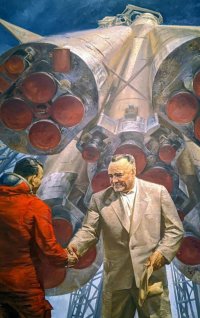
Космическая живопись в СССР. Корнеев Евгений Алексеевич "В путь. Королёв С.П." 1988 г. Холст, масло. 180х115
..............................................................
Примечание: Евгений Алексеевич Корнеев (род. 1951) — советский и российский живописец, художник студии военных художников имени М. Б. Грекова с 1981 года.
Space painting in the USSR. Korneev Evgeniy Alekseevich "On the road. Korolev S.P." 1988 Oil on canvas. 180x115


........................................................................

Note: Evgeny Alekseevich Korneev (born 1951) is a Soviet and Russian painter, an artist at the studio of military artists named after M. B. Grekov since 1981.
Pintura espacial en la URSS. Evgeniy Alekseevich Korneev. «En el camino. Korolev S.P.». 1988. Óleo sobre lienzo. 180 x 115 cm.

........................................................................

Nota: Evgeniy Alekseevich Korneev (nacido en 1951) es un pintor soviético y ruso, artista del estudio de artistas militares M. B. Grekov desde 1981.

UypdKD W7ZBMTcoMR9U5mjxroEHip8S6pb7p2jdVFsU04oD ySs9n298Ibul6AH2Fc9FEQtTLCud8scuG66JLgfk
 
Frimen1917

Frimen1917

Mecca V.I.P.
VIP
Joined
Jan 9, 2026
Messages
3,154
Points
63
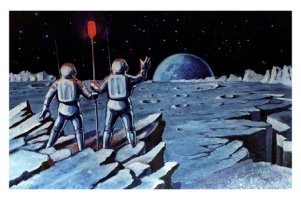
Космическая живопись в СССР.
"На Луне"
Художник: лётчик - космонавт Алексей Леонов.

Space painting in the USSR.

"On the Moon"
Artist: pilot and cosmonaut Alexei Leonov.

Pintura espacial en la URSS.

"En la Luna"
Artista: piloto y cosmonauta Alexei Leonov.

NO7Jt2yEbipTFFOGYY4Dh Fd8R5szUOItUR514mLSLwB3iaCYM1VtOzE6QdwlgB UQvZqEBpfXXC0CdKmoGWufY
 
Frimen1917

Frimen1917

Mecca V.I.P.
VIP
Joined
Jan 9, 2026
Messages
3,154
Points
63
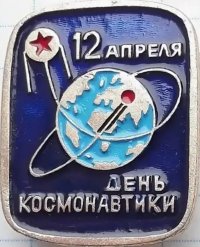
Значок "12 Апреля День Космонавтики"
Год:1970-1989 гг.
Диаметр (мм):1
Материал: Алюминий
Вес предмета (г): 2,3

Страна: СССР
"April 12, Cosmonautics Day" Badge

Year: 1970-1989
Diameter (mm): 1
Material: Aluminum
Item Weight (g): 2.3

Country: USSR
Insignia del "12 de abril, Día de la Cosmonáutica"

Año: 1970-1989
Diámetro (mm): 1
Material: Aluminio
Peso (g): 2,3

País: URSS

22pqHCluOtl4MobKkdQQW 8rFNp6DCB7CasfHqRO4tIKAYKPHl7yGymTOSnTfMrELdPBi5FqRi vCW iaxNBL7y5
 
Frimen1917

Frimen1917

Mecca V.I.P.
VIP
Joined
Jan 9, 2026
Messages
3,154
Points
63
Космические открытки в СССР.
........................................................
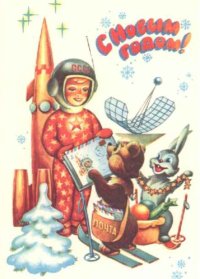
Открытка "С Новым годом!"

Художник А.Жребин. Министерство связи СССР. 1979.

Space postcards in the USSR.

........................................................
Postcard "Happy New Year!"

Artist: A. Zhrebin. USSR Ministry of Communications. 1979.

Postales espaciales en la URSS.
........................................................
Postal "¡Feliz Año Nuevo!"

Artista: A. Zhrebin. Ministerio de Comunicaciones de la URSS. 1979.
15laxvxfju3Q7sVdCNDgupnpdlTcqIcKhalLkulw5Ql JLcEefFR ZtjFQI35E6s3YPZrJb7Q99zdRmAXdyruX5
 
Frimen1917

Frimen1917

Mecca V.I.P.
VIP
Joined
Jan 9, 2026
Messages
3,154
Points
63
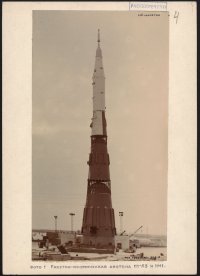
Лунная программа СССР. На фото 1: Ракетно-космическая система Н1-Л3 N 1M1
The USSR's lunar program. Photo 1: The N1-L3 N 1M1 rocket and space system
El programa lunar de la URSS. Foto 1: El cohete y sistema espacial N1-L3 N 1M1.

 viber 2026 04 15 20 44 07 541
 
Frimen1917

Frimen1917

Mecca V.I.P.
VIP
Joined
Jan 9, 2026
Messages
3,154
Points
63
Лунная программа СССР.
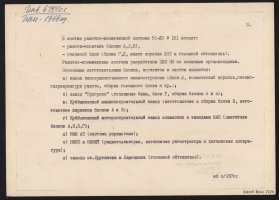
Инв. 6780сс
Июнь — 1969 г.
В состав ракетно-космической системы Н1–Л3 № 1М1 входят:
— ракета-носитель (блоки А, Б, В),
— головной блок (блоки Г, Д, макет корабля ЛЗС и головной обтекатель).
Ракетно-космическая система разработана ЦКБ ЭМ со смежными организациями.
Основными изготовителями блоков, агрегатов и систем являются:
а) завод экспериментального машиностроения (блок Д, космический корабль, пневмогидроарматура ракеты, сборка головного блока и др.);
б) завод «Прогресс» (топливные баки, блок Г, сборка блоков А и Б);
в) Куйбышевский машиностроительный завод (изготовление и сборка блока В, изготовление каркасов блоков А и Б);
г) Куйбышевский моторостроительный завод совместно с заводами МАП (двигатели блоков А, Б, В, Г);
д) НИИ АП (система управления);
е) НИИП и НИИИТ (радиотелеметрия, автономные регистраторы и датчиковая аппаратура);
ж) заводы им. Хруничева и Лавочкина (головной обтекатель).

Мб с/357сс

The USSR's lunar program.
Inv. 6780ss

June 1969
The N1–L3 rocket-space system No. 1M1 includes:
— the launch vehicle (blocks A, B, V);
— the payload section (blocks G, D, a mock-up of the LZS spacecraft, and the payload fairing).
The rocket-space system was developed by TsKBEM (Central Design Bureau of Experimental Mechanical Engineering) together with associated organizations.
The main manufacturers of the blocks, assemblies, and systems are:
a) Experimental Machine-Building Plant (Block D, spacecraft, rocket pneumatic-hydraulic fittings, assembly of the payload section, etc.);
b) Progress Plant (propellant tanks, Block G, assembly of Blocks A and B);
c) Kuibyshev Machine-Building Plant (manufacture and assembly of Block V, manufacture of the frames of Blocks A and B);
d) Kuibyshev Engine-Building Plant together with plants of the Ministry of Aviation Industry (engines for Blocks A, B, V, G);
e) Research Institute of Automation and Instrumentation (control system);
f) NIIP and NIIIT (radio telemetry, autonomous recorders, and sensor equipment);
g) Khrunichev and Lavochkin plants (payload fairing).

Mb s/357ss

El programa lunar de la URSS.
Inv. 6780ss

Junio de 1969
El sistema cohete-espacial N1–L3 Nº 1M1 incluye:
— el vehículo lanzador (bloques A, B, V);
— el bloque superior (bloques G, D, maqueta de la nave espacial LZS y el carenado de cabeza).
El sistema cohete-espacial fue desarrollado por TsKBEM( Oficina Central de Diseño de Ingeniería Mecánica) junto con organizaciones asociadas.
Los principales fabricantes de los bloques, agregados y sistemas son:
a) Planta de construcción de maquinaria experimental (bloque D, nave espacial, armadura neumohidráulica del cohete, ensamblaje del bloque superior, etc.);
b) Planta «Progress» (tanques de combustible, bloque G, ensamblaje de los bloques A y B);
c) Planta de construcción de maquinaria de Kuibyshev (fabricación y ensamblaje del bloque V, fabricación de los armazones de los bloques A y B);
d) Planta de motores de Kuibyshev junto con fábricas del Ministerio de la Industria Aeronáutica (motores de los bloques A, B, V, G);
e) Instituto de Investigación de Automatización y Dispositivos (sistema de control);
f) NIIP y NIIIT (radiotelemetría, registradores autónomos y equipos de sensores);
g) plantas Khrunichev y Lavochkin (carenado de cabeza).

Mb s/357ss
 viber 2026 04 15 20 55 02 224
 
Frimen1917

Frimen1917

Mecca V.I.P.
VIP
Joined
Jan 9, 2026
Messages
3,154
Points
63
Лунная программа СССР.
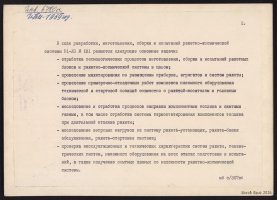
Инв. 6780сс

Т. Кпи-1965 год.
В ходе разработки, изготовления, сборки и испытаний ракетно-космической системы Н1-Л3 № 1М1 решаются следующие основные задачи:
— отработка технологических процессов изготовления, сборки и испытаний ракетных блоков и ракетно-космической системы в целом;
— проведение макетирования по размещению приборов, агрегатов и систем ракеты;
— проведение примерочно-отладочных работ комплекса наземного оборудования технической и стартовой позиций совместно с ракетой-носителем и головным блоком;
— исследование и отработка процессов заправки компонентами топлива и сжатыми газами, в том числе отработка системы термостатирования компонентов топлива при длительной стоянке ракеты;
— исследование ветровых нагрузок на систему ракета-установщик, ракета-башня обслуживания, ракета-стартовая система;
— проверка эксплуатационных и технических характеристик систем ракеты, телеметрических систем, наземного оборудования на всех этапах подготовки и испытаний, а также получение опытных данных по надежности ракетно-космической системы.

мб с/357сс

The USSR's lunar program.
During the development, manufacturing, assembly, and testing of the rocket-space system N1-L3 No. 1M1, the following main tasks are being addressed:

— development and refinement of technological processes for manufacturing, assembly, and testing of rocket stages and of the rocket-space system as a whole;
— conducting mock-up work for the placement of instruments, units, and systems of the rocket;
— carrying out fitting and adjustment work of the ground equipment complex at the technical and launch sites together with the launch vehicle and the payload section;
— research and development of fueling processes with propellant components and compressed gases, including the development of a system for thermostatic control of propellant components during prolonged standby of the rocket;
— investigation of wind loads on the systems: rocket–erector, rocket–service tower, rocket–launch system;

— verification of operational and technical characteristics of rocket systems, telemetry systems, and ground equipment at all stages of preparation and testing, as well as obtaining experimental data on the reliability of the rocket-space system.

El programa lunar de la URSS.
Durante el desarrollo, la fabricación, el ensamblaje y las pruebas del sistema cohete-espacial N1-L3 Nº 1M1, se resuelven las siguientes tareas principales:

— perfeccionamiento de los procesos tecnológicos de fabricación, ensamblaje y prueba de los bloques del cohete y del sistema cohete-espacial en su conjunto;
— realización de trabajos de maquetación para la colocación de instrumentos, агрегados y sistemas del cohete;
— realización de trabajos de ajuste y puesta a punto del complejo de equipos terrestres de las posiciones técnica y de lanzamiento junto con el vehículo lanzador y el bloque de cabeza;
— investigación y desarrollo de los procesos de abastecimiento con componentes de combustible y gases comprimidos, incluida la elaboración de un sistema de termostatización de los componentes del combustible durante una permanencia prolongada del cohete;
— investigación de las cargas de viento sobre los sistemas: cohete-erector, cohete-torre de servicio, cohete-sistema de lanzamiento;

— verificación de las características operativas y técnicas de los sistemas del cohete, de los sistemas de telemetría y del equipo terrestre en todas las etapas de preparación y pruebas, así como la obtención de datos experimentales sobre la fiabilidad del sistema cohete-espacial.
 viber 2026 04 15 20 55 02 309
 
Frimen1917

Frimen1917

Mecca V.I.P.
VIP
Joined
Jan 9, 2026
Messages
3,154
Points
63
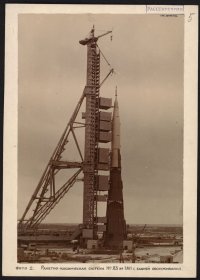
Лунная программа СССР. На фото 2:Ракетно-космическая система Н1-Л3 N 1M1 с башней обслуживания.
The Soviet lunar program. Photo 2: The N1-L3 N 1M1 rocket and space system with its service tower.
El programa lunar soviético. Foto 2: El cohete y sistema espacial N1-L3 N 1M1 con su torre de servicio.

 viber 2026 04 15 20 44 07 608
 

MuscleMecca Crew

Mecca Staff
Frimen1917

Frimen1917

Mecca V.I.P.
VIP
Joined
Jan 9, 2026
Messages
3,154
Points
63
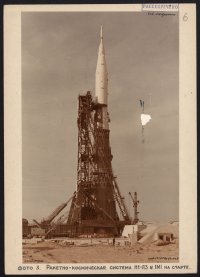
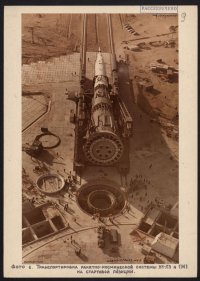
Лунная программа СССР. На фото 3:Ракетно-космическая система Н1-Л3 N 1M1 на старте.
The USSR's lunar program. Photo 3: The N1-L3 N 1M1 rocket and space system at launch.
El programa lunar de la URSS. Foto 3: El cohete N1-L3 N 1M1 y el sistema espacial en el momento del lanzamiento.

 viber 2026 04 15 20 44 13 385
 
Frimen1917

Frimen1917

Mecca V.I.P.
VIP
Joined
Jan 9, 2026
Messages
3,154
Points
63
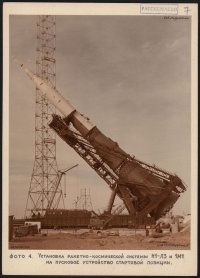
Лунная программа СССР. На фото 4: Установка ракетно-космической системы Н1-Л3 N 1M1 на пусковое устройство стартовой позиции.
The USSR's lunar program. Photo 4: Installation of the N1-L3 N 1M1 rocket and space system onto the launch pad.

Programa lunar de la URSS.
Foto 4: Instalación del sistema cohete-espacial N1-L3 Nº 1M1 en la plataforma de lanzamiento.

 viber 2026 04 15 18 43 42 577
 
Frimen1917

Frimen1917

Mecca V.I.P.
VIP
Joined
Jan 9, 2026
Messages
3,154
Points
63
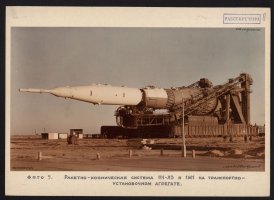
Лунная программа СССР. На фото 5:Ракетно-космическая система Н1-Л3 N 1M1 на транспортно-установочном агрегате.

The Soviet Lunar Program. Photo 5: The N1-L3 N 1M1 rocket and space system on the transport and installation unit.


El programa lunar soviético. Foto 5: El cohete N1-L3 N 1M1 y el sistema espacial en la unidad de transporte e instalación.


 viber 2026 04 15 20 44 14 362
 
Frimen1917

Frimen1917

Mecca V.I.P.
VIP
Joined
Jan 9, 2026
Messages
3,154
Points
63
Лунная программа СССР. На фото 6: Транспортировка ракетно-космической системы Н1-Л3 N 1M1 на стартовой позиции.

The USSR's lunar program. Photo 6: Transporting the N1-L3 N 1M1 rocket and space system to the launch pad.

El programa lunar de la URSS. Foto 6: Transporte del cohete y sistema espacial N1-L3 N 1M1 a la plataforma de lanzamiento.

 viber 2026 04 15 20 44 07 293
 
Frimen1917

Frimen1917

Mecca V.I.P.
VIP
Joined
Jan 9, 2026
Messages
3,154
Points
63
Лунная программа СССР. На фото 7: Укладка в Монтажно-Испытательном Комплексе ракетно-космической системы Н1-Л3 N 1M1 на транспортно-установочный агрегат.
The USSR's lunar program. Photo 7: The N1-L3 N 1M1 rocket and space system being installed on the transport and installation unit in the Assembly and Test Complex.
El programa lunar de la URSS. Foto 7: El cohete y sistema espacial N1-L3 N 1M1 siendo instalado en la unidad de transporte e instalación en el Complejo de Ensamblaje y Pruebas.

 viber 2026 04 15 20 44 07 471
 
Frimen1917

Frimen1917

Mecca V.I.P.
VIP
Joined
Jan 9, 2026
Messages
3,154
Points
63
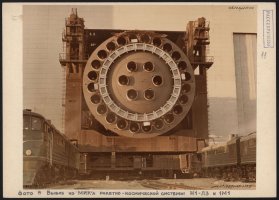
Лунная программа СССР. На фото 8: Вывоз из Монтажно-Испытательноко Комплекса ракетно-космической системы Н1-Л3 N 1M1.
The USSR's lunar program. Photo 8: Removal of the N1-L3 N 1M1 rocket and space system from the Assembly and Test Complex.
El programa lunar de la URSS. Foto 8: Retirada del cohete y sistema espacial N1-L3 N 1M1 del Complejo de Ensamblaje y Pruebas.


 viber 2026 04 15 20 44 17 037
 
Frimen1917

Frimen1917

Mecca V.I.P.
VIP
Joined
Jan 9, 2026
Messages
3,154
Points
63
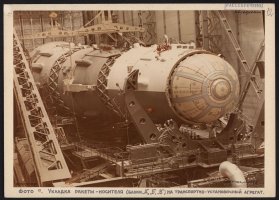
Лунная программа СССР. На фото 9: Укладка ракеты - носителя (блоки "А", "Б", "В") на транспортно-установочный агрегат.

The USSR's lunar program. Photo 9: The launch vehicle (blocks "A," "B," and "C") being loaded onto the transport and installation unit.
El programa lunar de la URSS. Foto 9: El vehículo de lanzamiento (bloques "A", "B" y "C") siendo cargado en la unidad de transporte e instalación.

 viber 2026 04 15 20 44 17 603
 
Frimen1917

Frimen1917

Mecca V.I.P.
VIP
Joined
Jan 9, 2026
Messages
3,154
Points
63
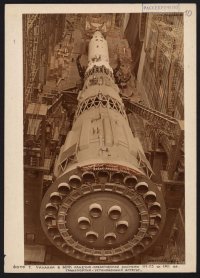
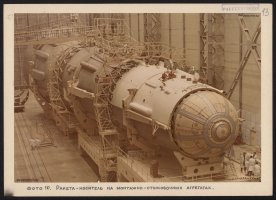
Лунная программа СССР. На фото 10: Ракета-носитель на монтажно-стыковочных агрегатах.
The Soviet lunar program. Photo 10: The launch vehicle on its assembly and docking units.
El programa lunar soviético. Foto 10: El vehículo de lanzamiento en sus unidades de ensamblaje y acoplamiento.

 viber 2026 04 15 20 44 27 845
 
Frimen1917

Frimen1917

Mecca V.I.P.
VIP
Joined
Jan 9, 2026
Messages
3,154
Points
63
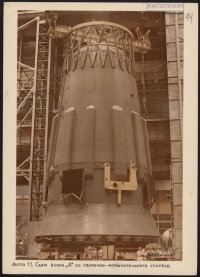
Лунная программа СССР. На фото 11: Съем блока "А" со сборочно-испытательного стапеля.
The Soviet lunar program. Photo 11: Block A being removed from the assembly and test stand.
El programa lunar soviético. Foto 11: El bloque A siendo retirado del banco de montaje y pruebas.


 viber 2026 04 15 20 44 27 987
 
Frimen1917

Frimen1917

Mecca V.I.P.
VIP
Joined
Jan 9, 2026
Messages
3,154
Points
63
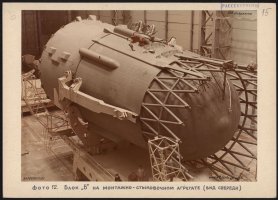
Лунная программа СССР. На фото 12: Блок "Б" на монтажно-стыковочном агрегате (вид спереди).
The USSR's lunar program. Photo 12: Block "B" on the assembly and docking unit (front view).
El programa lunar de la URSS. Foto 12: Bloque "B" de la unidad de ensamblaje y acoplamiento (vista frontal).


 viber 2026 04 15 20 44 28 226
 
Top