• Legal Notice – MuscleMecca Forums

    MuscleMecca.com is an educational discussion platform. We do not sell, promote, or endorse any bodybuilding gear, supplements, research chemicals, or performance-enhancing substances.

    All discussions are for educational and informational purposes only. Nothing posted on this forum should be considered medical or legal advice.

    Do not attempt to sell, source, or promote illegal substances. Any such activity will result in an immediate and permanent ban and may be reported to the proper authorities.

    By using this site, you agree to comply with all forum rules, disclaimers, and applicable laws in your jurisdiction.

    Read Our Full Disclaimer and Forum Rules

History of Soviet cosmonautics.

Frimen1917

Frimen1917

Mecca V.I.P.
VIP
Joined
Jan 9, 2026
Messages
3,168
Points
63
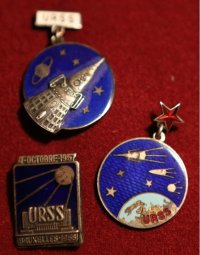
В 1958 году в Брюсселе проходила Всемирная выставка.
На ней Советский Союз представил свои первые космические спутники.
В советском павильоне раздавались значки, посвященные этим экспонатам.
In 1958, the World's Fair was held in Brussels.

There, the Soviet Union unveiled its first space satellites.
Pinions dedicated to these exhibits were distributed at the Soviet pavilion.
En 1958, se celebró la Exposición Universal en Bruselas.

Allí, la Unión Soviética presentó sus primeros satélites espaciales.
En el pabellón soviético se distribuyeron pines conmemorativos de estas exhibiciones.
7CYGE eiLu8 lfRezZSXs6Us5M PCBp75 M5gpb5jvhgjz55YnL77KCQekAt9wPuNHgsqcIMzUNi3IxM5qJwUvVO
 
Frimen1917

Frimen1917

Mecca V.I.P.
VIP
Joined
Jan 9, 2026
Messages
3,168
Points
63
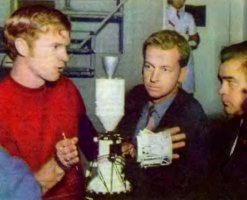
История советской космонавтики в фотографиях. Поездка советских космонавтов в США. Хьюстон. На фото слева направо: американский астронавт Рассел Швайкарт, космонавт Виталий Севастьянов, космонавт Андриян Николаев. Автор фото: А. Моклецов.
.......................................................................
Примечание: Ра́ссел Луис «Ра́сти» Шва́йкарт (англ. Russell Louis «Rusty» Schweickart; род. 25 октября 1935, Нептьюн, Нью-Джерси) — астронавт НАСА, специалист в области физики верхних слоёв атмосферы. Совершил один космический полёт — на космическом корабле «Аполлон-9», совершил один выход в открытый космос. Входил в дублирующий экипаж первого полёта — Скайлэб-2 к орбитальной станции Скайлэб.
The history of Soviet cosmonautics in photographs. Soviet cosmonauts' trip to the United States. Houston. Pictured, left to right: American astronaut Russell Schweickart, cosmonaut Vitaly Sevastyanov, cosmonaut Andriyan Nikolaev. Photo by A. Mokletsov.

.......................................................................
Note: Russell Louis "Rusty" Schweickart (born October 25, 1935, in Neptune, New Jersey) is a NASA astronaut and upper atmospheric physicist. He completed one spaceflight, aboard the Apollo 9 spacecraft, and one spacewalk. He was a member of the backup crew for the first Skylab 2 mission to the Skylab orbital station.
Historia de la cosmonáutica soviética en fotografías. Viaje de cosmonautas soviéticos a Estados Unidos. Houston. En la imagen, de izquierda a derecha: el astronauta estadounidense Russell Schweickart, el cosmonauta Vitaly Sevastyanov y el cosmonauta Andriyan Nikolaev. Fotografía de A. Mokletsov.


............................................................................
Nota: Russell Louis "Rusty" Schweickart (nacido el 25 de octubre de 1935 en Neptune, Nueva Jersey) es un astronauta de la NASA y físico de la atmósfera superior. Completó un vuelo espacial a bordo de la nave espacial Apolo 9 y una caminata espacial. Fue miembro de la tripulación de reserva para la primera misión Skylab 2 a la estación orbital Skylab.

LdEj4VgP1djYu5M4xlP9NSuYo O20IEKnTewxSF7T4Ft02cmJPcW5n3vYOv5gEik4hpVrc4m Sgg3sAo0Gj1 m
 
Frimen1917

Frimen1917

Mecca V.I.P.
VIP
Joined
Jan 9, 2026
Messages
3,168
Points
63
"В 1984 году Джанибековым создан рисунок «Салют-7». Полночь».В нем передана та напряженная рабочая атмосфера, которая всегда сопровождает труд на орбите. Панели, над которыми склонился космонавт, залиты желтым светом. В зеленоватой полутьме мы замечаем другого человека. В рисунке чувствуется движение мысли, гармония поиска и тот, присущий только Джанибекову, лиризм, который озаряет все, созданное им, внутренним светом духовности и доброты. Думал ли Владимир Александрович, рисуя эту работу, что через год ему придется возвращать к жизни «Салют-7», чтобы на нем вновь так же спокойно и мирно могли работать люди? Наверное, не предполагал. Но случилось именно так. А вот короткие строки документальной хроники: «Пять долгих суток ушло на то, чтобы вернуть «Салют» к жизни. Одна за другой стали нормально функционировать бортовые системы. Включилась энергетика, восстановилась радиосвязь, «оттаяла» сама станция... Автоматический грузовой корабль «Прогресс-24» доставил на базу все то, что запросил экипаж для дальнейших ремонтно-восстановительных работ. А вскоре «Памиры» доложили «Заре», что могут приступить к выполнению научной программы полета". (Наталия Архангельская. "Орбиты творчества").
..........................................................................
Цит. по: НА ДОРОГАХ ВСЕЛЕННОЙ /Сборник /

ГЕОРГИЙ БЕРЕГОВОЙ. "Три высоты"(отрывки из повести), литературная запись Георгия Сомова, /ПАВЕЛ ПОПОВИЧ. "Бесконечные дороги Вселенной"(книга написана совместно с Александром Немовым), /ГЕОРГИЙ ШОНИН. "Самые первые", /ВИТАЛИЙ СЕВАСТЬЯНОВ. "Дневник над облаками", "Юрий Гагарин". /Составитель Архангельская Наталия Владимировна /Иллюстрации дважды Героя Советского Союза, генерал - майора авиации Владимира Александровича Джанибекова/Киев. Издательство художественной литературы "Дніпро". 1988 год. На фото картина космонавта Владимира Джанибекова "Салют-7". Полночь".
In 1984, Vladimir Dzhanibekov created the drawing “Salyut-7. Midnight.” In it, he conveyed the intense working atmosphere that always accompanies labor in orbit. The control panels over which the cosmonaut is bent are flooded with yellow light. In the greenish half-darkness, we notice another person.


The drawing conveys the movement of thought, the harmony of exploration, and that lyricism unique to Dzhanibekov, which illuminates everything he created with the inner light of spirituality and kindness.

Did Vladimir Alexandrovich, while creating this work, imagine that a year later he would have to bring Salyut-7 back to life so that people could once again work aboard it calmly and peacefully? Probably not. Yet that is exactly what happened.

And here are a few brief lines from the documentary chronicle:

“It took five long days to bring Salyut back to life. One after another, the onboard systems began functioning normally. The power systems came online, radio communications were restored, and the station itself thawed out...

The automated cargo spacecraft Progress-24 delivered to the station everything the crew had requested for further repair and recovery work.

Soon afterward, the ‘Pamirs’ reported to ‘Zarya’ that they were ready to begin carrying out the scientific program of the mission.”

(Natalia Arkhangelskaya, “Orbits of Creativity”).

..................................................................

Quoted from: ON THE ROADS OF THE UNIVERSE / Anthology /

Georgy Beregovoy, “Three Heights” (excerpts from a novella), literary adaptation by Georgy Somov; Pavel Popovich, “The Endless Roads of the Universe” (written together with Alexander Nemov); Georgy Shonin, “The Very First”; Vitaly Sevastyanov, “Diary Above the Clouds”, “Yuri Gagarin”.

Compiled by Natalia Vladimirovna Arkhangelskaya.

Illustrations by twice Hero of the Soviet Union, Major General of Aviation Vladimir Alexandrovich Dzhanibekov.

Kyiv. Dnipro Publishing House. 1988.

In the photograph: the painting by cosmonaut Vladimir Dzhanibekov, “Salyut-7. Midnight.”
En 1984, Vladímir Dzhanibekov creó el dibujo «Salyut-7. Medianoche». En él transmitió la intensa atmósfera de trabajo que siempre acompaña la labor en órbita. Los paneles sobre los que se inclina el cosmonauta están inundados de luz amarilla. En la penumbra verdosa distinguimos a otra persona.


En el dibujo se percibe el movimiento del pensamiento, la armonía de la búsqueda y ese lirismo característico de Dzhanibekov, que ilumina todo lo que creó con la luz interior de la espiritualidad y la bondad.

¿Pensó Vladímir Aleksándrovich, mientras realizaba esta obra, que un año después tendría que devolver la vida a la estación Salyut-7 para que las personas pudieran volver a trabajar en ella de manera tranquila y pacífica? Probablemente no. Sin embargo, así fue exactamente como ocurrió.

Y he aquí unas breves líneas de la crónica documental:

«Fueron necesarios cinco largos días para devolver la vida a la Salyut. Uno tras otro, los sistemas de a bordo comenzaron a funcionar con normalidad. Se puso en marcha el sistema energético, se restablecieron las comunicaciones por radio y la propia estación se descongeló...

La nave automática de carga Progress-24 llevó a la estación todo lo que la tripulación había solicitado para los posteriores trabajos de reparación y recuperación.

Poco después, los “Pamir” informaron a “Zaryá” que podían comenzar a ejecutar el programa científico del vuelo.»

(Natalia Arjánguelskaya, «Órbitas de la creatividad»).

..................................................................

Citado según: EN LOS CAMINOS DEL UNIVERSO / Antología /

Georgi Beregovói, «Tres alturas» (fragmentos de una novela corta), adaptación literaria de Georgi Somov; Pável Popóvich, «Los infinitos caminos del Universo» (escrito junto con Aleksandr Nemov); Georgi Shonin, «Los primeros de todos»; Vitali Sevastiánov, «Diario sobre las nubes», «Yuri Gagarin».

Compiladora: Natalia Vladímirovna Arjánguelskaya.

Ilustraciones del dos veces Héroe de la Unión Soviética, mayor general de aviación Vladímir Aleksándrovich Dzhanibekov.

Kiev. Editorial Dnípro. 1988.

En la fotografía: la pintura del cosmonauta Vladímir Dzhanibekov, «Salyut-7. Medianoche».
 bdOtP3vRW3I2Lgy SY6OV9n7AZbDXMkCA1 jRdCWGeig ZeieYYyFMQGFNbReg234lzi1PwJj802HRrLs5zMrtm
 
Frimen1917

Frimen1917

Mecca V.I.P.
VIP
Joined
Jan 9, 2026
Messages
3,168
Points
63
История советской космонавтики в фотографиях.
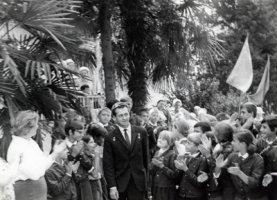
Космонавт Виталий Севастьянов в родной школе № 9 г. Сочи, 1970 год.

The history of Soviet cosmonautics in photographs.
Cosmonaut Vitaly Sevastyanov at his alma mater, School No. 9, Sochi, 1970.

La historia de la cosmonáutica soviética en fotografías.
El cosmonauta Vitaly Sevastyanov en su alma mater, la Escuela Nº 9 de Sochi, 1970.

AwxU1zLoUnFwcRtR OGldaTk6aTpkXqcTJSrZ Tbt0g sUjl6mOF8BQmLoulEAi7mfV YMtizL y1fn1UtMIWLz
 
Frimen1917

Frimen1917

Mecca V.I.P.
VIP
Joined
Jan 9, 2026
Messages
3,168
Points
63
"Задумываемся ли мы над тем, как прекрасна и непознана Вселенная, сколь трудны и увлекательны её дороги? Да, задумываемся. Размышления о космосе давно вошли в нашу жизнь. Астрономия, математика, поэзия, физика, философия - эти и другие области человеческого знания помогают нам познавать межзвездное пространство. Счастье познания, созидания, свершения по силе эмоций можно сравнить разве что с любовью. Любя нашу Землю и ту её часть, что зовётся Родиной, мы тем не менее стремимся увидеть звезды вблизи, проникнуть в их тайны. И, спеша дорогами Вселенной, мы ещё сильнее учимся любить нашу маленькую голубую планету, наш дом, созданный для мира и созидания".(Наталия Архангельская. "На дорогах Вселенной").
..........................................................................
Цит. по: НА ДОРОГАХ ВСЕЛЕННОЙ /Сборник /

ГЕОРГИЙ БЕРЕГОВОЙ. "Три высоты"(отрывки из повести), литературная запись Георгия Сомова, /ПАВЕЛ ПОПОВИЧ. "Бесконечные дороги Вселенной"(книга написана совместно с Александром Немовым), /ГЕОРГИЙ ШОНИН. "Самые первые", /ВИТАЛИЙ СЕВАСТЬЯНОВ. "Дневник над облаками", "Юрий Гагарин". /Составитель Архангельская Наталия Владимировна /Иллюстрации дважды Героя Советского Союза, генерал - майора авиации Владимира Александровича Джанибекова/Киев. Издательство художественной литературы "Дніпро". 1988 год.
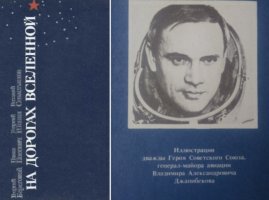
На фото слева обложка книги "На дорогах Вселенной", справа - фото космонавта Владимира Джанибекова.

“Do we ever stop to think about how beautiful and yet how little understood the Universe is, and how difficult and fascinating its roads are? Yes, we do. Reflections on space have long become part of our lives. Astronomy, mathematics, poetry, physics, philosophy — these and many other fields of human knowledge help us explore interstellar space.


The joy of discovery, creation, and achievement can perhaps be compared only with love in the intensity of its emotions. Loving our Earth and that part of it which we call our Homeland, we nevertheless strive to see the stars up close and penetrate their mysteries.

And as we hasten along the roads of the Universe, we learn even more deeply to love our small blue planet, our home, created for peace and creative endeavor.”

(Natalia Arkhangelskaya, “On the Roads of the Universe”).

..........................................................................

Quoted from: ON THE ROADS OF THE UNIVERSE / Anthology /

Georgy Beregovoy, “Three Heights” (excerpts from a novella), literary adaptation by Georgy Somov; Pavel Popovich, “The Endless Roads of the Universe” (written together with Alexander Nemov); Georgy Shonin, “The Very First”; Vitaly Sevastyanov, “Diary Above the Clouds”, “Yuri Gagarin”.

Compiled by Natalia Vladimirovna Arkhangelskaya.

Illustrations by twice Hero of the Soviet Union, Major General of Aviation Vladimir Alexandrovich Dzhanibekov.

Kyiv. Dnipro Publishing House. 1988.

In the photograph on the left: the cover of the book “On the Roads of the Universe”.

In the photograph on the right: cosmonaut Vladimir Dzhanibekov.
«¿Nos detenemos alguna vez a pensar en lo hermoso y desconocido que es el Universo, y en lo difíciles y fascinantes que son sus caminos? Sí, lo hacemos. Las reflexiones sobre el espacio han pasado a formar parte de nuestra vida desde hace mucho tiempo. La astronomía, las matemáticas, la poesía, la física y la filosofía, entre otras ramas del conocimiento humano, nos ayudan a explorar el espacio interestelar.


La felicidad del descubrimiento, de la creación y de la realización solo puede compararse, por la fuerza de las emociones que despierta, con el amor. Amando nuestra Tierra y aquella parte de ella que llamamos Patria, seguimos aspirando a contemplar las estrellas de cerca y a penetrar en sus misterios.

Y, apresurándonos por los caminos del Universo, aprendemos a amar aún más profundamente nuestro pequeño planeta azul, nuestro hogar, creado para la paz y la creación.»

(Natalia Arjánguelskaya, «En los caminos del Universo»).

..........................................................................

Citado según: EN LOS CAMINOS DEL UNIVERSO / Antología /

Georgi Beregovói, «Tres alturas» (fragmentos de una novela corta), adaptación literaria de Georgi Somov; Pável Popóvich, «Los infinitos caminos del Universo» (escrito junto con Aleksandr Nemov); Georgi Shonin, «Los primeros»; Vitali Sevastiánov, «Diario sobre las nubes», «Yuri Gagarin».

Compiladora: Natalia Vladímirovna Arjánguelskaya.

Ilustraciones del dos veces Héroe de la Unión Soviética, mayor general de aviación Vladímir Aleksándrovich Dzhanibekov.

Kiev. Editorial Dnípro. 1988.

En la fotografía de la izquierda: la portada del libro «En los caminos del Universo».

En la fotografía de la derecha: el cosmonauta Vladímir Dzhanibekov.
3EYmz32uL8Gpbi3yW7YKp4CKZYFURV1F030jdkc3fTW7IquKnqLPq2bl3LJlSk5co36ZOSogKeKog2soUEOfUjSm
 
Frimen1917

Frimen1917

Mecca V.I.P.
VIP
Joined
Jan 9, 2026
Messages
3,168
Points
63
Этот текст найден на одном из форумов любителей научной фантастики. Разрешите представить этот текст и на этом форуме. Автор неизвестен. Здесь текст в сокращенном виде.

“Почему в современном развитом мире так популярны пессимизм, упадок гуманности, антиутопии, неверие в человека, разочарование в идеалах, слоган «человек человеку — волк», — одним словом, уныние? А я вам скажу, что лично я думаю по данному вопросу. Уныние теперь стало слишком выгодным во всех сферах культуры, в том числе в литературе. И фантастическая литература (как жанр прогрессивный и набирающий популярность) здесь не исключение, а скорее наоборот: яркий представитель данной тенденции (в силу названных причин).


Посмотрите на книжные полки в магазинах, ознакомьтесь с лучшими подборками современной (да и классической) фантастики: антиутопии, постапокалипсис, смерть всего и вся, всё плохо, Контакт с врагами по разуму обязательно закончится охотой в тёмном лесу или сосанием крови (и прочих жидкостей), человек человеку — волк, а разумный разумному — враг! Волчизм — в массы, гуманизм — на мясо! Контакта не будет и быть не может, даёшь войну миров и грызню всех со всеми!..


Подобного чтива (или злобного, или жизнеунижающего, или мрачного и саркастичного) было, есть и ещё будет навалом. Оно печатается и пишется тоннами, оно бывает даже умным и подкованным, но в массе своей подобные книжки всë же однотипные и шаблонные. Это то самое «бульварное чтиво» , которое заслуживает помойки (а то и вообще должно шуметь в лесу и нянчить гнёзда), однако оно почему-то лежит в магазинах, в красивых обложках.


Тот же Станислав Лем называл западную научную фантастику продажной девкой и дерьмом, жанром, полным китча и банальщины (читайте лемовское эссе «Science fiction: безнадёжный случай — с исключениями»). Однако он почему-то не учитывал, что сам отличается только качеством и исполнением, но не общим направлением мысли; Станислав Лем тоже пессимист, и книгами своими он тоже поспособствовал разочарованию читателей в светлом будущем человечества, в том числе сильно повлияв и на меня.


Правда, этого польского фантаста можно хоть как-то оправдать, понять: у него жизнь была тяжёлая, войну пережил, Родину утратил, оккупацию испытал, Холодную войну наблюдал в её острых фазах... Профессионально-жизненная деформация, пусть так, но всё равно. Сюда же идут и братья Стругацкие, и Дик, и Воннегут, и многие другие классики жанра Научной Фантастики. Можно понять их, век у них был страшный и насыщенный; и им на средних и поздних этапах литературной карьеры было трудно верить в счастливое будущее.


А вот как оправдать современных писателей по типу Лю Цысиня или Питера Уоттса (и это сейчас одни из лучших, а есть же совсем жвачка и литературный фастфуд), у которых что ни книжка, — то смерть человечества, что ни рассказ, — то очередные злобные роботы/инопланетяне/киберпанки/натуралы уничтожили планету, что ни сценарий, — то ядерная война или рабство под пятой технологий и корпораций, что ни освоение космоса, — то обязательно все со всеми грызутся за ресурсы?


Зачем они так пишут, когда самые мрачные слова о человеке сказаны фантастами прошлого века и пора бы уже начать работать с обозначенными ранее проблемами? Я, конечно, всё и сразу не читал, и могу ошибаться, но сейчас большая часть современной Научной Фантастики мне видится именно так, и глупо отрицать существование сей тенденции.


Никак их не оправдать. Они пишут свои книжонки ради денег (конвертируя признание и хайп в те же деньги), потому что фантастическое уныние, повторюсь, продаётся теперь фантастически хорошо. А оптимизм давно не в моде, он чуть ли не под каким-то негласным запретом. Добавлю, что такие писатели вроде Уоттса и Лю — плоды нынешней паскудной эпохи.


Они, вероятно, и сами не осознают комплекса причин, но всё же творят строго в пессимистическом ключе: потому что так принято, потому что мир такой и просвета они не видят и не верят в лучшее будущее. Тут, впрочем, что ради денег, что ради идеи: всё едино, всё работает на усиление пессимизма в читательской среде.


Как говорится, в царстве горбатых прямая спина будет считаться уродством. Так и с современной фантастикой: напиши кто-нибудь о добром, вечном, человечном, найдись сейчас новый Иван Ефремов (Снегов, Громова, Войскунский и Лукодьянов, Беляев), скажи кто-то, что всем всегда надо дружить и только в единстве разумов вся сила, — так будьте уверены, назовут этого писателя глупым идеалистом, наивным романтиком, идиотом, инфантилом, простачком и дурачком.


Никто просто не поверит в утопию и обязательно будет искать в ней подводные камни, а не найдя их — разочаруется (мы же привыкли всё сводить к плохому и везде ждать подвоха). И кричать такое будет большинство: от тех, кто на волчизме зарабатывает деньги, до разочаровавшихся идеалистов, ставших циниками и мизантропами. Я подобную критику и про вышеуказанных авторов слышал, но они-то устоявшиеся глыбы классической научной фантастики (и их всë-таки сложно низвергнуть), а вот новое имя наши современники обязательно заклеймят в стиле «так не бывает и быть не может». Мне так видится, хотя, опять же, я могу (и здесь даже бы и рад) ошибаться.


Как же я устал от засилья пессимизма в нашей культуре, жизни, мире. Такое ощущение, что уныние очень хорошо продаётся, потому что и сам мир ещё более жестокий и злобный, чем раньше. Вернее будет сказать так: прежний мир надломился и ожесточился в двадцатом веке, он оформился после двух мировых войн и множества локальных конфликтов, конца и края которым не видно до сих пор, а ведь прошла уже почти четверть и двадцать первого века... Но все по прежнему, и мы всё глубже погружаемся во тьму, грязь и неверие в светлое будущее.


Мировые войны и концлагеря расчеловечили человека, швырнули его в дерьмо и грязь, разрушили романтический образ светлого, доброго и хорошего мира. Многие писатели сдались, и нельзя их за это судить. Хотя, опять же, Ивану Ефремову или Киру Булычёву (и раннему Лему, и ранним Стругацким) войны не помешали написать свои лучшие, жизнеутверждающие вещи. От которых кто-то (как Станислав Лем от своих «Астронавтов» и «Магелланова Облака») позднее открещивался всеми силами.


Нужно сказать, что расчеловечить человека пытались и все предыдущие войны, только они не были такими масштабными и кровавыми, и у людей до двадцатого века не было настолько смертельных орудий уничтожения самих себя.


Ещë одно замечание. Либо пессимистичные авторы научной фантастики действительно верят только в плохое и/или пишут ради денег, зарабатывая на плохом, либо это так намеренно преподносится и стимулируется сильными мира сего (мол, мир жесток и ты не изменишь ничего), лишь бы сохранить среди большинства людей статус-кво унылости и волчизма.


Подобное мироустройство выгодно власть имущим людям эпохи капитализма (по Ивану Ефремову это называется Эра Разобщённого Мира; полагаю, мы живём именно в Эру разобщенного мира). Либо и тот вариант, и другой одновременно. Они друг друга дополняют: одни сверху делают мир подлым, другие снизу пишут, какой же мир подлый, давайте все сложим лапки и умрём, — но сегодня ты, а завтра я.


Вообще, каждый раз, когда я внимательно читаю «Туманность Андромеды» или «Сердце Змеи» Ивана Ефремова мне потом так тоскливо становится, что хоть в петлю лезь. Просто тоска такая, чёрная-чёрная, нападает и держит несколько дней. Потому что читаешь великого классика, проникаешься его светлым миром и светлыми людьми далёкого будущего, а потом смотришь в окно, выходишь в мир, а там всё совсем наоборот, антиефремовское: падающего подтолкни, глупого обмани, сильного сломай. И понимаешь, что ты и сам такой же: «занятой и стандартный хмурый типаж… Таким не был я раньше!», как читал рэпер Влади из группы «Каста».


Есть на современной Земле, конечно, хорошие люди, идеалисты и романтики, но как же их мало, так мало, что они лишь ложка мёда в бочке дёгтя. А у Ефремова показаны красивые, умные, разумные и честные люди, и они у него в большинстве, и они строят прекрасное будущее, и летают в космос, и поддерживают дружбу миров, а на наше время смотрят с бесконечной жалостью и сочувствием. У нас же сейчас всё наоборот, потому что и мы такие, и жизнь такая, и пропаганда в культуре всеми силами закрепляет упомянутый статус-кво, внушает слабым, что борьба за лучшую долю бесполезна, опасна и трудна, а сильных заставляет опустить руки и повесить нос.


Кто напишет сейчас, и кому ещё нужна гуманистическая фантастика Ивана Ефремова, Александра Беляева, Жюля Верна и других? Единицам нужна, единицы напишут, а значит, считай, никому и никто. Нынешний удел мало-мальски думающего, читающего, идущего и смотрящего человека прост: молчи и оставайся в несчастном меньшинстве, потому что волчизм — это выгодно и хорошо, а гуманизм следует засунуть поглубже в известное место.


К итогам. Как говорил доктор Пушкарь в фильме «Пыль»: «Ведь это вы сделали мир подлым»

Это мы сделали мир подлым.


***


Послесловие вертелось на языке, но я не мог его сформулировать, пока немногочисленные читатели не дали мне «пинка», после которого картинка сложилась окончательно. Итак, мой текст действительно получился «пеной уэллсовской волны», потому что я и сам скорее пессимист и чаще не верю в светлое будущее. Но мы же сформированы этой эпохой (а она явно дерьмовая), и я тоже её продукт, значит, и сам нахожусь в русле пессимистического видения нашего будущего.


Однако современное состояние мира намекает мне, что когда-нибудь люди должны будут напиться крови друг друга, пережить ефремовское Инферно и начать, наконец, строить что-то доброе в рамках всей планеты, а не только в её редких закоулках.


Задача каждого из нас в том, чтобы приближать и ускорять наступление подобного мира. Я так считаю. Пусть человечество теперь зажравшееся, заплывшее жиром и эгоизмом, атомизированное и злобное, скучающее от собственной тупости и лени, пессимистичное и унылое, — но когда-то это же должно закончиться. Это обязано закончиться, иначе всё было зря. И в наших силах закончить это хоть на капельку быстрей. Спасибо за ваше внимание.
WHY ARE PESSIMISM AND DESPAIR SO POPULAR IN THE MODERN DEVELOPED WORLD?


This text was found on one of the forums for science fiction enthusiasts. Allow me to present it here as well. The author is unknown. The text is presented here in an abridged form.

“Why are pessimism, the decline of humanism, dystopias, disbelief in humanity, disappointment in ideals, and the slogan ‘man is a wolf to man’ so popular in the modern developed world? In a word, why is despair so widespread?

I will tell you what I personally think about this question.

Despair has become extremely profitable in all spheres of culture, including literature. Science fiction literature, as a progressive genre that continues to gain popularity, is no exception. On the contrary, it is one of the clearest representatives of this trend.

Look at the bookshelves in stores and browse the best selections of modern—and even classic—science fiction: dystopias, post-apocalyptic worlds, the death of everything and everyone, the idea that everything is terrible, and the certainty that contact with extraterrestrial intelligence will inevitably end in a hunt through a dark forest or in bloodsucking (and the extraction of other bodily fluids). Man is a wolf to man, and one intelligent being is the enemy of another intelligent being.

Wolfishness for the masses, humanism to the slaughterhouse! There will be no Contact and there cannot be any Contact! Give us a war of worlds and endless conflict among everyone!

There has been, there is, and there will continue to be an abundance of such reading material—whether malicious, degrading, gloomy, or sarcastic. It is written and published by the ton. Sometimes it is even intelligent and well-crafted, but in most cases such books remain repetitive and formulaic.

This is precisely the kind of “pulp fiction” that deserves to be thrown onto a garbage heap (or perhaps left in a forest to rustle among the trees and shelter birds’ nests), yet for some reason it fills bookstore shelves in beautiful covers.

The same Stanisław Lem once called Western science fiction a prostitute and a pile of garbage, a genre full of kitsch and banality (see his essay “Science Fiction: A Hopeless Case—with Exceptions”).

However, he somehow failed to take into account that he himself differed mainly in quality and craftsmanship, not in the overall direction of thought. Stanisław Lem was also a pessimist, and through his books he too contributed to readers becoming disillusioned with humanity’s bright future. He certainly had a strong influence on me.

To be fair, this Polish science fiction writer can at least be understood and partially justified. He lived a difficult life, survived the war, lost his homeland, experienced occupation, and witnessed the Cold War during its most dangerous phases. Perhaps this was a kind of professional and personal deformation, but still.

The same can be said of the Strugatsky brothers, Philip K. Dick, Kurt Vonnegut, and many other classics of science fiction. Their century was terrible and turbulent. During the middle and later stages of their literary careers, it was difficult for them to believe in a happy future for humanity.
But how can we justify contemporary writers such as Liu Cixin or Peter Watts (and these are considered among the best today, while there is also plenty of literary chewing gum and fast-food fiction), whose every novel seems to end with the destruction of humanity, whose every story features yet another group of hostile robots, aliens, cyberpunk tyrants, or ruthless forces wiping out the planet, whose every screenplay revolves around nuclear war or technological and corporate slavery, and whose every vision of space exploration inevitably turns into a struggle of all against all for resources?


Why do they write this way when the darkest things that could be said about humanity have already been said by science fiction writers of the previous century, and when it would seem more appropriate to begin addressing the problems that have already been identified?

Of course, I have not read everything, and I may be mistaken, but this is how the majority of contemporary science fiction appears to me today. It would be foolish to deny that such a tendency exists.

There is no way to justify them. They write their books for money, converting recognition and publicity into financial gain, because speculative despair, I repeat, sells fantastically well nowadays.

Optimism, on the other hand, has long gone out of fashion. It is almost under an unspoken ban. Writers such as Watts and Liu are products of the unpleasant age in which we live.

They probably do not even fully understand the complex reasons behind their approach, yet they continue to create works that are consistently pessimistic: because that is what is expected, because the world appears that way to them, because they see no light ahead and do not believe in a better future.

Whether they do it for money or out of genuine conviction ultimately makes little difference. Both motivations contribute to strengthening pessimism among readers.

As the saying goes, in a kingdom of hunchbacks, a straight back is considered a deformity.

The same is true of modern science fiction. If someone today were to write about kindness, enduring values, and humanity; if a new Ivan Yefremov, Sergey Snegov, Ariadna Gromova, Voyskunsky and Lukodyanov, or Alexander Belyaev were to appear; if someone were to declare that intelligent beings should cooperate and that true strength lies in the unity of minds—then rest assured that such a writer would immediately be labeled a foolish idealist, a naïve romantic, an idiot, an infantile dreamer, a simpleton, and a fool.

No one would believe in a utopia. People would immediately begin searching for hidden flaws, and if they failed to find any, they would become disappointed anyway. We have become accustomed to reducing everything to the worst possible interpretation and expecting deception everywhere.

And it would not be a minority saying such things. The chorus would include everyone from those who profit from promoting cynicism and hostility to disappointed idealists who have turned into cynics and misanthropes.

I have heard similar criticism directed even at the authors mentioned above. The difference is that they have already become established giants of classic science fiction and are difficult to overthrow. A new writer, however, would almost certainly be condemned by contemporary audiences with the verdict: “That could never happen. Such a thing is impossible.”

That is how I see it, although I may be mistaken—and in this case I would actually be glad to be wrong.
I am so tired of the dominance of pessimism in our culture, in our lives, and in the world itself.


It often feels as though despair sells extremely well because the world itself has become even harsher and more malicious than before.

Perhaps it would be more accurate to say this: the old world was broken and hardened during the twentieth century. It was shaped by two world wars and countless local conflicts whose end is still nowhere in sight, even though nearly a quarter of the twenty-first century has already passed.

Yet everything remains the same. We continue to sink deeper into darkness, filth, and disbelief in a brighter future.

The world wars and concentration camps dehumanized humanity. They threw people into mud and misery and shattered the romantic image of a bright, kind, and noble world.

Many writers surrendered to this reality, and it is difficult to judge them for doing so.

Yet wars did not prevent Ivan Yefremov or Kir Bulychev—or the early Stanisław Lem and the early Strugatsky brothers—from creating their finest and most life-affirming works.

Some later tried to distance themselves from those optimistic books. Stanisław Lem, for example, eventually disowned works such as “The Astronauts” and “The Magellanic Cloud.”

It should also be said that every previous war attempted to dehumanize humanity. The difference was that earlier wars were neither so vast nor so bloody, and before the twentieth century people simply did not possess such deadly means of destroying themselves.

There is another possibility.

Either pessimistic science fiction writers genuinely believe only in the worst and profit from writing about it, or such a worldview is intentionally promoted and encouraged by those who hold power.

The message is simple: the world is cruel, and there is nothing you can do to change it.

Such ideas help preserve a status quo of despair and hostility among the majority of people.

This social order benefits those who hold power in the capitalist era. Ivan Yefremov called this the Era of the Divided World, and I believe that we are indeed living in such an era.

Perhaps both explanations are true at the same time.

They complement one another: some people at the top help make the world cruel, while others below write endlessly about how cruel the world is, encouraging everyone to give up and die quietly.

Today it is you; tomorrow it is me.

Whenever I carefully reread Ivan Yefremov's “Andromeda: A Space-Age Tale” or “The Heart of the Serpent,” I am overcome with such sadness that it becomes almost unbearable.

A deep, black melancholy settles over me and stays for several days.

You read a great classic writer, immerse yourself in his bright world and his noble people of the distant future, and then you look out the window and return to reality.

And reality is the exact opposite of Yefremov's vision.

Push down those who are falling. Deceive the foolish. Break the strong.

And then you realize that you yourself are not entirely different.

As the rapper Vladi from the group Kasta once said: “A busy and ordinary gloomy type... I wasn't like this before.”
There are, of course, good people on modern Earth—idealists and romantics—but there are so few of them that they are merely a spoonful of honey in a barrel of tar.


In Yefremov's books, however, beautiful, intelligent, rational, and honest people are shown as the majority. They build a wonderful future, travel through space, maintain friendship among worlds, and look upon our era with infinite pity and compassion.

Today everything is the opposite.

We are like this, life is like this, and cultural propaganda does everything possible to preserve this status quo. It convinces the weak that the struggle for a better future is useless, dangerous, and difficult, while encouraging the strong to lower their heads and give up.

Who would write humanistic science fiction today? And who still needs the humanistic science fiction of Ivan Yefremov, Alexander Belyaev, Jules Verne, and others?

Only a handful of people need it. Only a handful of people would write it. Which is to say, almost nobody.

The fate of a thinking, reading, observant person in today's world is simple: remain silent and stay part of an unhappy minority.

Wolfishness is considered profitable and desirable, while humanism is expected to be hidden away and forgotten.

To summarize.

As Doctor Pushkar said in the film “Dust”:

"It was you who made the world vile."

It was we who made the world vile.

* * *

An afterword had been on the tip of my tongue, but I could not formulate it until a few readers gave me the push I needed, after which the whole picture finally came together.

Indeed, my text turned out to be little more than foam on Wells's wave, because I myself am probably more of a pessimist and often do not believe in a bright future.

But we have all been shaped by this era—and it is clearly a rotten one. I am also a product of it, which means that I too remain within the framework of a pessimistic vision of the future.

Yet the present state of the world suggests something to me.

One day people may finally grow tired of shedding one another's blood, endure Yefremov's Inferno, and begin at last to build something good on a planetary scale rather than only in a few isolated corners of the Earth.

The task of each of us is to help bring such a world closer and accelerate its arrival.

That is what I believe.

Humanity today may be overfed, bloated with selfishness, fragmented into isolated individuals, angry, bored by its own stupidity and laziness, pessimistic and despondent.

But someday this must come to an end.

It has to end.

Otherwise everything was in vain.

And it is within our power to make that ending arrive at least a little sooner.

Thank you for your attention.
¿POR QUÉ SON TAN POPULARES EL PESIMISMO Y EL DESALIENTO EN EL MUNDO MODERNO DESARROLLADO?


Este texto fue encontrado en uno de los foros de aficionados a la ciencia ficción. Permítanme presentarlo también aquí. Se desconoce el autor. El texto se ofrece en una versión abreviada.

«¿Por qué son tan populares en el mundo moderno desarrollado el pesimismo, la decadencia del humanismo, las distopías, la falta de fe en la humanidad, la decepción con los ideales y el lema “el hombre es un lobo para el hombre”? En una palabra, ¿por qué el desaliento está tan extendido?

Les diré lo que yo personalmente pienso sobre esta cuestión.

El desaliento se ha convertido en un negocio extremadamente rentable en todas las esferas de la cultura, incluida la literatura. La ciencia ficción, como género progresista que continúa ganando popularidad, no es una excepción. Por el contrario, es una de las manifestaciones más evidentes de esta tendencia.

Basta con mirar los estantes de las librerías y las listas de las mejores obras de ciencia ficción contemporánea —e incluso clásica—: distopías, mundos posapocalípticos, la muerte de todo y de todos, la idea de que todo es terrible y la certeza de que cualquier contacto con inteligencias extraterrestres terminará inevitablemente en una cacería dentro de un bosque oscuro o en la extracción de sangre (y de otros fluidos corporales). El hombre es un lobo para el hombre y una inteligencia racional es enemiga de otra inteligencia racional.

¡Llevemos el espíritu depredador a las masas y enviemos el humanismo al matadero! ¡No habrá Contacto y no puede haberlo! ¡Dennos guerras entre mundos y una lucha interminable de todos contra todos!

Ha existido, existe y seguirá existiendo una enorme cantidad de este tipo de literatura, ya sea maliciosa, degradante, sombría o sarcástica. Se produce por toneladas. A veces incluso está bien escrita y es inteligente, pero en la mayoría de los casos resulta repetitiva y estereotipada.

Es precisamente esa «literatura de consumo» la que merecería acabar en un vertedero (o quizá en un bosque, donde podría crujir entre los árboles y servir de refugio para los nidos de los pájaros), y sin embargo llena los estantes de las librerías con hermosas cubiertas.

El propio Stanisław Lem llamó en una ocasión a la ciencia ficción occidental una prostituta y una montaña de basura, un género repleto de tópicos y banalidades (véase su ensayo «La ciencia ficción: un caso desesperado, con excepciones»).

Sin embargo, de algún modo no tuvo en cuenta que él mismo se diferenciaba principalmente por la calidad y la maestría de ejecución, pero no por la orientación general de sus ideas. Stanisław Lem también era pesimista y, a través de sus libros, contribuyó a que los lectores perdieran la fe en un futuro luminoso para la humanidad. En mi caso, sin duda ejerció una gran influencia.

Para ser justos, a este escritor polaco de ciencia ficción al menos se le puede comprender y justificar parcialmente. Vivió una vida difícil, sobrevivió a la guerra, perdió su patria, sufrió la ocupación y fue testigo de las etapas más peligrosas de la Guerra Fría. Tal vez se tratara de una especie de deformación profesional y personal, pero aun así.

Lo mismo puede decirse de los hermanos Strugatski, de Philip K. Dick, de Kurt Vonnegut y de muchos otros clásicos de la ciencia ficción. Su siglo fue terrible y turbulento. Durante la etapa media y final de sus carreras literarias les resultaba difícil creer en un futuro feliz para la humanidad.
Pero ¿cómo podemos justificar a escritores contemporáneos como Liu Cixin o Peter Watts (y ellos son considerados de los mejores autores actuales, mientras que además existe una enorme cantidad de literatura de consumo y entretenimiento rápido), cuyos relatos parecen terminar siempre con la destrucción de la humanidad, donde aparecen una y otra vez robots hostiles, alienígenas agresivos, tiranías ciberpunk o fuerzas despiadadas que arrasan el planeta, y donde cada visión de la exploración espacial acaba convirtiéndose en una lucha de todos contra todos por los recursos?


¿Por qué escriben de esta manera cuando todo lo más sombrío que podía decirse sobre la humanidad ya fue dicho por los escritores de ciencia ficción del siglo pasado, y cuando parecería más lógico empezar a resolver los problemas que ya han sido identificados?

Por supuesto, no he leído todo lo que se ha publicado y puedo estar equivocado, pero así es como percibo la mayor parte de la ciencia ficción contemporánea. Sería absurdo negar que esta tendencia existe.

No hay forma de justificarlos. Escriben sus libros por dinero, convirtiendo el reconocimiento y la fama en beneficios económicos, porque el pesimismo especulativo, lo repito, se vende extraordinariamente bien en nuestros días.

El optimismo, por el contrario, ha dejado de estar de moda desde hace mucho tiempo. Casi parece sometido a una prohibición tácita. Autores como Watts y Liu son productos de la desagradable época en la que vivimos.

Probablemente ni siquiera comprendan del todo las complejas razones que los llevan a adoptar este enfoque, pero continúan creando obras profundamente pesimistas porque eso es lo que se espera de ellos, porque el mundo les parece así y porque no ven ninguna luz en el horizonte ni creen en un futuro mejor.

Que lo hagan por dinero o por convicción sincera no cambia demasiado las cosas. Ambas motivaciones contribuyen a reforzar el pesimismo entre los lectores.

Como dice el refrán, en un reino de jorobados una espalda recta se considera una deformidad.

Lo mismo ocurre con la ciencia ficción moderna. Si alguien escribiera hoy sobre la bondad, los valores permanentes y la humanidad; si apareciera un nuevo Iván Yefrémov, Serguéi Snegov, Ariadna Grómova, Voyskunski y Lukodiánov, o Aleksandr Beliáyev; si alguien afirmara que los seres inteligentes deben cooperar y que la verdadera fuerza reside en la unión de las mentes, tengan por seguro que inmediatamente sería considerado un idealista ingenuo, un romántico ridículo, un soñador infantil, un simplón y un tonto.

Nadie creería en una utopía. La gente comenzaría enseguida a buscar defectos ocultos y, si no lograra encontrarlos, se sentiría decepcionada de todos modos. Nos hemos acostumbrado a interpretar todo de la peor manera posible y a esperar engaños por todas partes.

Y no sería una minoría la que reaccionaría así. A ese coro se unirían tanto quienes obtienen beneficios promoviendo el cinismo y la hostilidad como los idealistas decepcionados que se han transformado en cínicos y misántropos.

He escuchado críticas semejantes incluso contra los autores mencionados anteriormente. La diferencia es que ellos ya se han convertido en gigantes consagrados de la ciencia ficción clásica y resulta difícil derribarlos. En cambio, un escritor nuevo sería condenado casi con toda seguridad por el público contemporáneo con el veredicto: «Eso jamás podría ocurrir. Algo así es imposible».

Así es como yo lo veo, aunque puedo estar equivocado. Y en este caso, sinceramente, me alegraría de estarlo.
Estoy tan cansado del dominio del pesimismo en nuestra cultura, en nuestras vidas y en el propio mundo.


A menudo parece que el desaliento se vende tan bien porque el mundo mismo se ha vuelto todavía más duro y más cruel que antes.

Quizá sería más correcto decirlo de otro modo: el viejo mundo fue quebrado y endurecido durante el siglo XX. Fue moldeado por dos guerras mundiales y por innumerables conflictos locales cuyo final todavía no se vislumbra, aunque ya haya transcurrido casi una cuarta parte del siglo XXI.

Y, sin embargo, todo sigue igual. Continuamos hundiéndonos cada vez más en la oscuridad, la suciedad y la falta de fe en un futuro mejor.

Las guerras mundiales y los campos de concentración deshumanizaron a la humanidad. Arrojaron a las personas al barro y al sufrimiento y destruyeron la imagen romántica de un mundo luminoso, bondadoso y noble.

Muchos escritores se rindieron ante esta realidad, y resulta difícil juzgarlos por ello.

Sin embargo, las guerras no impidieron que Iván Yefrémov o Kir Bulýchev —ni tampoco el primer Stanisław Lem o los primeros hermanos Strugatski— crearan algunas de sus obras más inspiradoras y llenas de esperanza.

Más tarde, algunos incluso intentaron distanciarse de esos libros optimistas. Stanisław Lem, por ejemplo, acabó renegando de novelas como «Los astronautas» y «La nube de Magallanes».

También hay que decir que todas las guerras anteriores intentaron deshumanizar a la humanidad. La diferencia es que las guerras del pasado no fueron tan inmensas ni tan sangrientas, y antes del siglo XX las personas simplemente no disponían de medios tan eficaces para destruirse unas a otras.

Existe además otra posibilidad.

O bien los escritores pesimistas de ciencia ficción creen sinceramente solo en lo peor y obtienen beneficios escribiendo sobre ello, o bien esa visión del mundo es promovida y alentada deliberadamente por quienes poseen el poder.

El mensaje es sencillo: el mundo es cruel y no hay nada que puedas hacer para cambiarlo.

Ideas como estas ayudan a conservar un statu quo basado en la desesperanza y la hostilidad entre la mayoría de las personas.

Este orden social beneficia a quienes ejercen el poder en la era del capitalismo. Iván Yefrémov llamó a esto la Era del Mundo Escindido, y creo que efectivamente vivimos en una época semejante.

Quizá ambas explicaciones sean ciertas al mismo tiempo.

Se complementan mutuamente: algunos, desde arriba, contribuyen a que el mundo sea cruel, mientras que otros, desde abajo, escriben sin cesar sobre esa crueldad y animan a todos a rendirse y morir en silencio.

Hoy te toca a ti; mañana me tocará a mí.

Cada vez que releo con atención «La nebulosa de Andrómeda» o «El corazón de la serpiente» de Iván Yefrémov, me invade una tristeza tan profunda que casi resulta insoportable.

Una melancolía negra y pesada se instala en mí durante varios días.

Lees a un gran escritor clásico, te sumerges en su mundo luminoso y en sus nobles habitantes del futuro lejano, y luego miras por la ventana y regresas a la realidad.

Y la realidad es exactamente lo contrario de la visión de Yefrémov.

Empuja a quien está cayendo. Engaña al ingenuo. Rompe al fuerte.

Y entonces comprendes que tú mismo tampoco eres completamente diferente.

Como dijo una vez Vladi, el rapero del grupo Kasta:

«Un tipo sombrío, ocupado y completamente corriente... Antes yo no era así».

Por supuesto, todavía existen personas buenas en la Tierra actual: idealistas y románticos. Pero son tan pocas que no representan más que una cucharada de miel en un barril de alquitrán.


En los libros de Yefrémov, en cambio, las personas bellas, inteligentes, razonables y honestas constituyen la mayoría. Construyen un futuro maravilloso, viajan por el espacio, mantienen la amistad entre los mundos y contemplan nuestra época con infinita compasión y tristeza.

Hoy sucede exactamente lo contrario.

Nosotros somos así, la vida es así, y la propaganda cultural hace todo lo posible por conservar este statu quo. Convence a los débiles de que la lucha por un futuro mejor es inútil, peligrosa y demasiado difícil, mientras anima a los fuertes a bajar la cabeza y rendirse.

¿Quién escribiría hoy ciencia ficción humanista? ¿Y quién necesita todavía la ciencia ficción humanista de Iván Yefrémov, Aleksandr Beliáyev, Julio Verne y otros autores semejantes?

Solo un pequeño grupo de personas la necesita. Solo un pequeño grupo de personas la escribiría. Es decir, casi nadie.

El destino de una persona observadora, reflexiva y amante de la lectura en el mundo actual es sencillo: guardar silencio y permanecer dentro de una minoría infeliz.

La ferocidad se considera rentable y deseable, mientras que el humanismo debe esconderse y ser olvidado.

Para resumir.

Como dijo el doctor Pushkar en la película «Polvo»:

«Fuisteis vosotros quienes hicisteis vil al mundo».

Fuimos nosotros quienes hicimos vil al mundo.

* * *

Tenía en la punta de la lengua unas palabras finales, pero no conseguía formularlas hasta que varios lectores me dieron el impulso necesario y entonces todo el panorama terminó de encajar.

En efecto, mi texto no es más que espuma sobre la ola de Wells, porque probablemente yo mismo soy más pesimista de lo que me gustaría y con frecuencia tampoco creo en un futuro luminoso.

Pero todos nosotros hemos sido moldeados por esta época, y es evidente que se trata de una época enferma y corrompida. Yo también soy producto de ella, y eso significa que sigo encerrado dentro de los límites de una visión pesimista del futuro.

Sin embargo, el estado actual del mundo me sugiere algo.

Tal vez algún día las personas se cansen por fin de derramar la sangre de los demás, atraviesen el Infierno descrito por Yefrémov y comiencen finalmente a construir algo bueno a escala planetaria, en lugar de limitarse a hacerlo en unos pocos rincones aislados de la Tierra.

La tarea de cada uno de nosotros consiste en acercar ese mundo y acelerar su llegada.

Eso es lo que yo creo.

La humanidad actual puede estar saturada, hinchada de egoísmo, fragmentada en individuos aislados, irritada, aburrida de su propia estupidez y pereza, pesimista y desalentada.

Pero algún día esto tendrá que terminar.

Tiene que terminar.

De lo contrario, todo habrá sido en vano.

Y está en nuestras manos lograr que ese momento llegue al menos un poco antes.

Gracias por su atención.
 viber 2026 06 27 22 12 31 344
 

MuscleMecca Crew

Mecca Staff
Frimen1917

Frimen1917

Mecca V.I.P.
VIP
Joined
Jan 9, 2026
Messages
3,168
Points
63
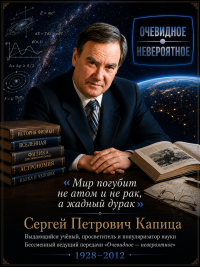
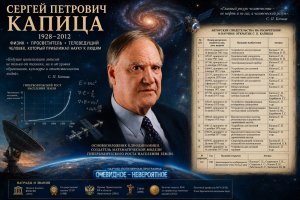
СЕРГЕЙ ПЕТРОВИЧ КАПИЦА
(1928–2012)

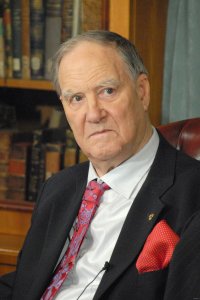
Сергей Петрович Капица — советский и российский физик, исследователь, педагог, популяризатор науки и телеведущий, посвятивший свою жизнь распространению научных знаний и развитию научного мировоззрения.

Он родился 14 февраля 1928 года в Кембридже (Великобритания) в семье выдающихся представителей российской науки. Его отец, Пётр Леонидович Капица, был одним из крупнейших физиков XX века и лауреатом Нобелевской премии по физике 1978 года за фундаментальные исследования в области низких температур и открытие явления сверхтекучести жидкого гелия. Его дед по материнской линии, Алексей Николаевич Крылов, был всемирно известным математиком, механиком и кораблестроителем, оказавшим большое влияние на развитие отечественной науки и техники.

В 1949 году Сергей Капица окончил Московский авиационный институт и начал научную деятельность. Его исследования охватывали широкий круг направлений современной физики: сверхзвуковую аэродинамику, земной магнетизм, прикладную электродинамику и физику элементарных частиц.

В 1961 году он стал доктором физико-математических наук, а в 1965 году получил звание профессора. Многие десятилетия Капица преподавал в Московском физико-техническом институте, где воспитал несколько поколений студентов и учёных. Он возглавлял кафедру общей физики и пользовался огромным уважением как талантливый педагог и блестящий лектор.

Сергей Капица является автором научных монографий, десятков научных статей, многочисленных изобретений и открытий. Одним из наиболее значимых результатов его научной деятельности стало участие в открытии квадрупольного фотоделения тяжёлых атомных ядер. Его исследования внесли заметный вклад в развитие ядерной физики и понимание процессов, происходящих в атомном ядре.

Помимо физики, Сергей Капица проявлял большой интерес к вопросам развития человеческой цивилизации. Он разработал феноменологическую математическую модель гиперболического роста населения Земли и одним из первых исследовал глобальные демографические процессы с использованием методов физики и математики. Многие специалисты считают его одним из основоположников клиодинамики — междисциплинарного направления, изучающего исторические процессы с помощью математических моделей.

Широкую известность Сергей Капица получил как выдающийся популяризатор науки. В 1973 году вышла его книга «Жизнь науки», а в том же году он стал ведущим научно-популярной телевизионной программы «Очевидное — невероятное». Эта передача на протяжении десятилетий знакомила миллионы зрителей с новейшими достижениями науки, техники и космонавтики. Благодаря таланту рассказчика, глубоким знаниям и уважительному отношению к аудитории Капица стал одним из самых узнаваемых просветителей в истории отечественного телевидения.

Он также являлся основателем и главным редактором российского издания журнала «В мире науки», способствовавшего распространению современных научных знаний среди широкого круга читателей.

За свою деятельность Сергей Капица был удостоен многочисленных наград, среди которых Премия Калинги ЮНЕСКО за выдающиеся достижения в популяризации науки, Государственная премия СССР, премия Правительства Российской Федерации в области образования, телевизионная премия ТЭФИ и Золотая медаль Российской академии наук за выдающиеся достижения в области пропаганды научных знаний.

Сергей Петрович Капица принадлежал к числу тех учёных, которые рассматривали науку не только как инструмент познания природы, но и как важнейшую часть человеческой культуры. Он неоднократно подчёркивал, что будущее цивилизации зависит не только от технического прогресса, но и от уровня образования, культуры и ответственности людей.

Скончался Сергей Петрович Капица 14 августа 2012 года в Москве на 85-м году жизни. Его научные труды, книги, лекции и телевизионные программы продолжают вдохновлять новые поколения исследователей, преподавателей и любителей науки во многих странах мира.
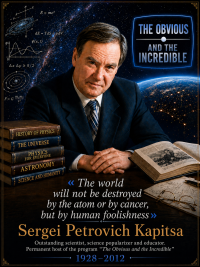
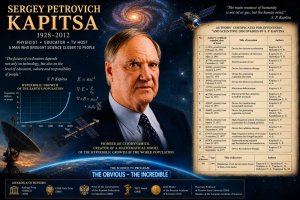
SERGEY PETROVICH KAPITSA

(1928–2012)

Sergey Petrovich Kapitsa was a Soviet and Russian physicist, researcher, educator, science communicator, and television presenter who devoted his life to the dissemination of scientific knowledge and the promotion of scientific thinking.

He was born on February 14, 1928, in Cambridge, England, into a family of distinguished scientists. His father, Pyotr Leonidovich Kapitsa, was one of the most prominent physicists of the twentieth century and was awarded the Nobel Prize in Physics in 1978 for his fundamental research in low-temperature physics and the discovery of the phenomenon of superfluidity in liquid helium. His maternal grandfather, Alexey Nikolaevich Krylov, was a world-renowned mathematician, mechanician, and naval engineer whose work made a significant contribution to the development of science and technology.

In 1949, Sergey Kapitsa graduated from the Moscow Aviation Institute and began his scientific career. His research covered a wide range of fields in modern physics, including supersonic aerodynamics, terrestrial magnetism, applied electrodynamics, and elementary particle physics.

In 1961, he earned the degree of Doctor of Physical and Mathematical Sciences, and in 1965 he became a professor. For many decades, Kapitsa taught at the Moscow Institute of Physics and Technology, where he educated several generations of students and scientists. He headed the Department of General Physics and was widely respected as a gifted teacher and an outstanding lecturer.

Sergey Kapitsa was the author of scientific monographs, dozens of research papers, numerous inventions, and scientific discoveries. One of the most significant achievements of his scientific career was his participation in the discovery of quadrupole photofission in heavy atomic nuclei. His research contributed significantly to the advancement of nuclear physics and to the understanding of processes occurring within the atomic nucleus.

In addition to physics, Sergey Kapitsa showed a deep interest in the development of human civilization. He developed a phenomenological mathematical model describing the hyperbolic growth of the Earth's population and was among the first researchers to study global demographic processes using the methods of physics and mathematics. Many scholars regard him as one of the pioneers of cliodynamics, an interdisciplinary field that applies mathematical models to the study of historical processes.

Sergey Kapitsa became widely known as an outstanding science communicator. In 1973, he published his book “The Life of Science,” and in the same year he became the host of the popular science television program “The Obvious and the Incredible.” For decades, the program introduced millions of viewers to the latest achievements in science, technology, and space exploration. Thanks to his talent as a storyteller, his profound knowledge, and his respectful attitude toward his audience, Kapitsa became one of the most recognizable science educators in the history of Russian television.

He was also the founder and editor-in-chief of the Russian edition of the magazine “Scientific World” (“V Mire Nauki”), which played an important role in bringing modern scientific knowledge to a broad readership.

For his achievements, Sergey Kapitsa received numerous honors and awards, including the UNESCO Kalinga Prize for the Popularization of Science, the USSR State Prize, the Prize of the Government of the Russian Federation in Education, the TEFI Television Award, and the Gold Medal of the Russian Academy of Sciences for outstanding achievements in the promotion of scientific knowledge.

Sergey Kapitsa belonged to that rare group of scientists who regarded science not only as a tool for understanding nature but also as an essential part of human culture. He repeatedly emphasized that the future of civilization depends not only on technological progress but also on education, culture, and human responsibility.

Sergey Petrovich Kapitsa passed away in Moscow on August 14, 2012, at the age of eighty-four. His scientific works, books, lectures, and television programs continue to inspire new generations of researchers, educators, and science enthusiasts around the world.
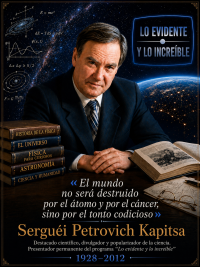
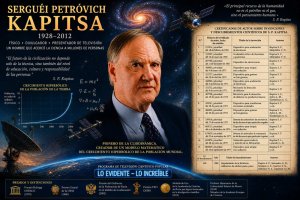
SERGUÉI PETRÓVICH KAPITSA

(1928–2012)

Serguéi Petróvich Kapitsa fue un físico, investigador, educador, divulgador científico y presentador de televisión soviético y ruso que dedicó su vida a la difusión del conocimiento científico y al desarrollo del pensamiento científico.

Nació el 14 de febrero de 1928 en Cambridge, Inglaterra, en el seno de una destacada familia de científicos. Su padre, Piotr Leonídovich Kapitsa, fue uno de los físicos más importantes del siglo XX y recibió el Premio Nobel de Física en 1978 por sus investigaciones fundamentales en física de bajas temperaturas y por el descubrimiento del fenómeno de la superfluidez del helio líquido. Su abuelo materno, Alexéi Nikoláievich Krylov, fue un matemático, mecánico e ingeniero naval de fama mundial que realizó importantes contribuciones al desarrollo de la ciencia y la tecnología.

En 1949, Serguéi Kapitsa se graduó en el Instituto de Aviación de Moscú e inició su carrera científica. Sus investigaciones abarcaron diversos campos de la física moderna, entre ellos la aerodinámica supersónica, el magnetismo terrestre, la electrodinámica aplicada y la física de partículas elementales.

En 1961 obtuvo el grado de Doctor en Ciencias Físicas y Matemáticas y, en 1965, recibió el título de profesor. Durante muchas décadas impartió clases en el Instituto de Física y Tecnología de Moscú, donde formó a varias generaciones de estudiantes e investigadores. Dirigió el Departamento de Física General y fue ampliamente respetado como un profesor talentoso y un brillante conferenciante.

Serguéi Kapitsa fue autor de monografías científicas, decenas de artículos de investigación, numerosas invenciones y descubrimientos científicos. Uno de los logros más importantes de su carrera fue su participación en el descubrimiento de la fotofisión cuadrupolar de núcleos atómicos pesados. Sus investigaciones contribuyeron significativamente al desarrollo de la física nuclear y a la comprensión de los procesos que tienen lugar en el núcleo atómico.

Además de la física, Serguéi Kapitsa mostró un profundo interés por el desarrollo de la civilización humana. Elaboró un modelo matemático fenomenológico del crecimiento hiperbólico de la población mundial y fue uno de los primeros investigadores en estudiar los procesos demográficos globales utilizando métodos de la física y las matemáticas. Muchos especialistas lo consideran uno de los pioneros de la cliodinámica, una disciplina interdisciplinaria que aplica modelos matemáticos al estudio de los procesos históricos.

Serguéi Kapitsa alcanzó gran notoriedad como destacado divulgador científico. En 1973 publicó su libro «La vida de la ciencia» y ese mismo año comenzó a presentar el programa televisivo de divulgación científica «Lo evidente y lo increíble». Durante décadas, este programa acercó a millones de espectadores los avances más recientes en ciencia, tecnología y exploración espacial. Gracias a su talento como narrador, sus profundos conocimientos y su actitud respetuosa hacia la audiencia, Kapitsa se convirtió en uno de los divulgadores científicos más reconocidos de la historia de la televisión rusa.

También fue fundador y redactor jefe de la edición rusa de la revista «En el mundo de la ciencia» («V Mire Nauki»), que desempeñó un importante papel en la difusión del conocimiento científico moderno entre el público general.

Por sus logros recibió numerosos premios y distinciones, entre ellos el Premio Kalinga de la UNESCO para la Divulgación Científica, el Premio Estatal de la URSS, el Premio del Gobierno de la Federación de Rusia en el ámbito de la educación, el premio televisivo TEFI y la Medalla de Oro de la Academia de Ciencias de Rusia por sus destacados méritos en la promoción del conocimiento científico.

Serguéi Kapitsa perteneció a ese reducido grupo de científicos que consideraban la ciencia no solo como una herramienta para comprender la naturaleza, sino también como una parte esencial de la cultura humana. Reiteró en numerosas ocasiones que el futuro de la civilización depende no solo del progreso tecnológico, sino también de la educación, la cultura y la responsabilidad de las personas.

Serguéi Petróvich Kapitsa falleció en Moscú el 14 de agosto de 2012, a los ochenta y cuatro años de edad. Sus trabajos científicos, libros, conferencias y programas de televisión continúan inspirando a nuevas generaciones de investigadores, educadores y amantes de la ciencia en todo el mundo.
1360852039 104813367
 
Frimen1917

Frimen1917

Mecca V.I.P.
VIP
Joined
Jan 9, 2026
Messages
3,168
Points
63
Сергей Петрович Капица являлся также ведущим цикла телевизионных
научно-популярных фильмов, посвящённых астрономии:

"Объять необъятное"(1978 год).
Фильм рассказывает о развитии науки космологии с древнейших времён до наших дней, об открытиях советских учёных на телескопах в Специальной астрономической обсерватории на Северном Кавказе.
В фильме на уровне высших достижений мировой науки обсуждается проблема
устройства и развития мира в целом.
Теоретические проблемы космологии излагаются академиком Я.Б. Зельдовичем,
а о результатах наблюдений на Большом азимутальном телескопе (БТА) рассказывает
молодой астроном И.Д. Караченцев.
В фильме также участвует создатель телескопа Б.К. Иоаннисиани.

"Живая вселенная" (1979 год).
В фильме речь идёт о строении окружающего нас мира звезд и галактик,
о познании тайн Вселенной.
В фильме участвуют советские учёные:
И.С. Шкловский, И.Д. Новиков, Ю.Н. Парийский, В.А. Амбарцумян.
В беседах с профессором С.П. Капицей они размышляют о путях происхождения
и эволюции Вселенной.

"Семья Солнца" (1981 год).
Фильм знакомит с гипотезами советских и зарубежных учёных о происхождении Солнца и планет Солнечной системы, рассказывает об исследованиях небесных тел с помощью космических аппаратов.
В фильме высказаны новые гипотезы о происхождении Солнечной системы,
сделаны прогнозы будущего развития Земли.
В фильме участвуют: профессор Джерри Вассербург (США),
член-корреспондент АН СССР В.Л. Барсуков, доктор физико-математических наук,
профессор В.И. Мороз, доктор физико-математических наук Л.М. Мухин.
В фильм включены хроникальные кадры, запечатлевшие полёты первых воздушных шаров, дирижаблей, парашютов, съёмки поисков и находок обломков Сихотэ-Алиньского метеорита, кадры, снятые с бортов космических кораблей.

Редактором этих программ являлся также Лев Николаевич Николаев.
Sergey Petrovich Kapitsa was also the host of a series of popular science television films devoted to astronomy.


"To Embrace the Infinite" (1978)

This film tells the story of the development of cosmology from ancient times to the present day and highlights discoveries made by Soviet scientists using telescopes at the Special Astrophysical Observatory in the North Caucasus.

The film discusses, at the highest level of contemporary world science, the problem of the structure and evolution of the Universe as a whole.

Theoretical problems of cosmology are presented by Academician Yakov B. Zel'dovich, while observations made with the Large Altazimuth Telescope (BTA) are described by the young astronomer Igor D. Karachentsev.

The film also features Boris K. Ioannisiani, the designer of the telescope.

"The Living Universe" (1979)

This film explores the structure of the world of stars and galaxies surrounding us and humanity's efforts to uncover the mysteries of the Universe.

Featured in the film are prominent Soviet scientists: Iosif S. Shklovsky, Igor D. Novikov, Yuri N. Pariysky, and Viktor A. Ambartsumian.

In conversations with Professor Sergey P. Kapitsa, they reflect on the origin and evolution of the Universe.

"The Solar Family" (1981)

This film introduces the hypotheses of Soviet and foreign scientists concerning the origin of the Sun and the planets of the Solar System and describes the exploration of celestial bodies by means of spacecraft.

The film presents new theories about the formation of the Solar System and discusses possible scenarios for the future evolution of the Earth.

Participants in the film include Professor Gerald (Jerry) Wasserburg (USA), Corresponding Member of the USSR Academy of Sciences V.L. Barsukov, Professor V.I. Moroz, Doctor of Physical and Mathematical Sciences, and L.M. Mukhin, Doctor of Physical and Mathematical Sciences.

The film incorporates archival footage of the first balloon flights, airships, and parachutes, as well as documentary footage of the search for and recovery of fragments of the Sikhote-Alin meteorite and images taken aboard spacecraft.

The editor of these programs was Lev Nikolaevich Nikolaev.
Serguéi Petróvich Kapitsa fue también el presentador de una serie de documentales científicos de televisión dedicados a la astronomía.


«Abrazar lo Inabarcable» (1978)

Esta película relata el desarrollo de la cosmología desde la Antigüedad hasta nuestros días y presenta los descubrimientos realizados por científicos soviéticos utilizando los telescopios del Observatorio Astrofísico Especial situado en el Cáucaso Norte.

La película aborda, al más alto nivel de la ciencia mundial de su tiempo, el problema de la estructura y la evolución del Universo en su conjunto.

Los aspectos teóricos de la cosmología son expuestos por el académico Yakov B. Zeldóvich, mientras que los resultados de las observaciones realizadas con el Gran Telescopio Altazimutal (BTA) son presentados por el joven astrónomo Ígor D. Karachéntsev.

También participa en la película Boris K. Ioannisiani, diseñador del telescopio.

«El Universo Viviente» (1979)

Esta película trata sobre la estructura del mundo de las estrellas y las galaxias que nos rodean y sobre los esfuerzos de la humanidad por descubrir los secretos del Universo.

Participan destacados científicos soviéticos: Iósif S. Shklovski, Ígor D. Nóvikov, Yuri N. Pariiski y Víktor A. Ambartsumián.

En conversaciones con el profesor Serguéi P. Kapitsa, reflexionan sobre el origen y la evolución del Universo.

«La Familia del Sol» (1981)

Esta película presenta las hipótesis de científicos soviéticos y extranjeros acerca del origen del Sol y de los planetas del Sistema Solar, así como las investigaciones de los cuerpos celestes realizadas mediante naves espaciales.

En la película se exponen nuevas hipótesis sobre la formación del Sistema Solar y se realizan pronósticos sobre la futura evolución de la Tierra.

Participan en la película el profesor Gerald (Jerry) Wasserburg (Estados Unidos), el miembro correspondiente de la Academia de Ciencias de la URSS V.L. Barsukov, el profesor V.I. Moroz, doctor en Ciencias Físicas y Matemáticas, y L.M. Mujin, doctor en Ciencias Físicas y Matemáticas.

La película incluye imágenes históricas de los primeros vuelos en globos aerostáticos, dirigibles y paracaídas, así como filmaciones de la búsqueda y recuperación de fragmentos del meteorito de Sijoté-Alín y secuencias grabadas a bordo de naves espaciales.

El editor de estos programas fue Lev Nikoláievich Nikoláev.
Scale 1200
 
Frimen1917

Frimen1917

Mecca V.I.P.
VIP
Joined
Jan 9, 2026
Messages
3,168
Points
63
"Объять необъятное"(1978 год).
Фильм рассказывает о развитии науки космологии с древнейших времён до наших дней, об открытиях советских учёных на телескопах в Специальной астрономической обсерватории на Северном Кавказе.
В фильме на уровне высших достижений мировой науки обсуждается проблема
устройства и развития мира в целом.
Теоретические проблемы космологии излагаются академиком Я.Б. Зельдовичем,
а о результатах наблюдений на Большом азимутальном телескопе (БТА) рассказывает
молодой астроном И.Д. Караченцев.
В фильме также участвует создатель телескопа Б.К. Иоаннисиани. Желающим смотреть этот фильм с английскими и испанскими субтитрами нужно зайти в данном видео в раздел СУБТИТРЫ и затем в раздел ПЕРЕВЕСТИ. Далее найти язык на котором вы хотите смотреть фильм.

"To Embrace the Infinite" (1978)

This film tells the story of the development of cosmology from ancient times to the present day and highlights discoveries made by Soviet scientists using telescopes at the Special Astrophysical Observatory in the North Caucasus.

The film discusses, at the highest level of contemporary world science, the problem of the structure and evolution of the Universe as a whole.

Theoretical problems of cosmology are presented by Academician Yakov B. Zel'dovich, while observations made with the Large Altazimuth Telescope (BTA) are described by the young astronomer Igor D. Karachentsev.

The film also features Boris K. Ioannisiani, the designer of the telescope. If you want to watch this film with English and Spanish subtitles, go to the SUBTITLES section in this video and then the TRANSLATE section. Then, find the language you want to watch the film in.

«Abrazar lo Inabarcable» (1978)

Esta película relata el desarrollo de la cosmología desde la Antigüedad hasta nuestros días y presenta los descubrimientos realizados por científicos soviéticos utilizando los telescopios del Observatorio Astrofísico Especial situado en el Cáucaso Norte.

La película aborda, al más alto nivel de la ciencia mundial de su tiempo, el problema de la estructura y la evolución del Universo en su conjunto.

Los aspectos teóricos de la cosmología son expuestos por el académico Yakov B. Zeldóvich, mientras que los resultados de las observaciones realizadas con el Gran Telescopio Altazimutal (BTA) son presentados por el joven astrónomo Ígor D. Karachéntsev.

También participa en la película Boris K. Ioannisiani, diseñador del telescopio. Si quieres ver esta película con subtítulos en inglés y español, ve a la sección SUBTÍTULOS de este vídeo y luego a la sección TRADUCIR. Allí, busca el idioma en el que quieras ver la película.

 
Frimen1917

Frimen1917

Mecca V.I.P.
VIP
Joined
Jan 9, 2026
Messages
3,168
Points
63
"Живая вселенная" (1979 год).
В фильме речь идёт о строении окружающего нас мира звезд и галактик,
о познании тайн Вселенной.
В фильме участвуют советские учёные:
И.С. Шкловский, И.Д. Новиков, Ю.Н. Парийский, В.А. Амбарцумян.
В беседах с профессором С.П. Капицей они размышляют о путях происхождения
и эволюции Вселенной.Желающим смотреть этот фильм с английскими и испанскими субтитрами нужно зайти в данном видео в раздел СУБТИТРЫ и затем в раздел ПЕРЕВЕСТИ. Далее найти язык на котором вы хотите смотреть фильм.

"The Living Universe" (1979)

This film explores the structure of the world of stars and galaxies surrounding us and humanity's efforts to uncover the mysteries of the Universe.

Featured in the film are prominent Soviet scientists: Iosif S. Shklovsky, Igor D. Novikov, Yuri N. Pariysky, and Viktor A. Ambartsumian.

In conversations with Professor Sergey P. Kapitsa, they reflect on the origin and evolution of the Universe. If you want to watch this film with English and Spanish subtitles, go to the SUBTITLES section in this video and then the TRANSLATE section. Then, find the language you want to watch the film in.

«El Universo Viviente» (1979)

Esta película trata sobre la estructura del mundo de las estrellas y las galaxias que nos rodean y sobre los esfuerzos de la humanidad por descubrir los secretos del Universo.

Participan destacados científicos soviéticos: Iósif S. Shklovski, Ígor D. Nóvikov, Yuri N. Pariiski y Víktor A. Ambartsumián.

En conversaciones con el profesor Serguéi P. Kapitsa, reflexionan sobre el origen y la evolución del Universo. Si quieres ver esta película con subtítulos en inglés y español, ve a la sección SUBTÍTULOS de este vídeo y luego a la sección TRADUCIR. Allí, busca el idioma en el que quieras ver la película.


Top