• Legal Notice – MuscleMecca Forums

    MuscleMecca.com is an educational discussion platform. We do not sell, promote, or endorse any bodybuilding gear, supplements, research chemicals, or performance-enhancing substances.

    All discussions are for educational and informational purposes only. Nothing posted on this forum should be considered medical or legal advice.

    Do not attempt to sell, source, or promote illegal substances. Any such activity will result in an immediate and permanent ban and may be reported to the proper authorities.

    By using this site, you agree to comply with all forum rules, disclaimers, and applicable laws in your jurisdiction.

    Read Our Full Disclaimer and Forum Rules

  • Follow the 2026 Olympia on September 24 to 27, 2026!

History of Soviet cosmonautics.

Frimen1917

Frimen1917

Mecca V.I.P.
VIP
Joined
Jan 9, 2026
Messages
3,161
Points
63
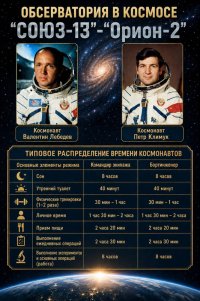
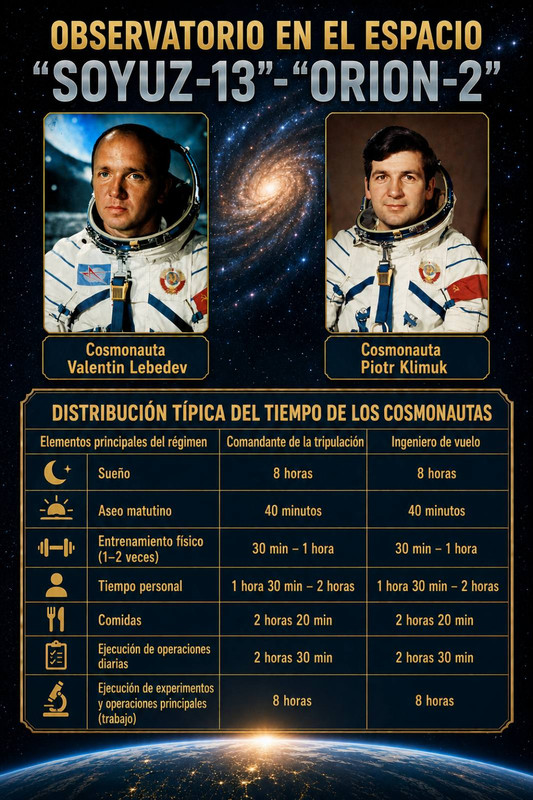
Участники эксперимента ОБСЕРВАТОРИЯ В КОСМОСЕ "СОЮЗ-13"-"ОРИОН-2". КОСМОНАВТ ПЕТР КЛИМУК.
Пётр Ильи́ч Климу́к (бел. Пётр Ільіч Клімук; род. 10 июля 1942 года, в деревне Комаровка, Брестской области) — советский космонавт, дважды Герой Советского Союза (1973, 1975), генерал-полковник (1998).
Доктор технических наук (2000), профессор. Почётный член Национальной академии наук Беларуси (2017).
Лауреат Государственной премии СССР (1978) и Российской Федерации (2002).
Родился в деревне Комаровка, Брестской области[4] Белорусской ССР (ныне — Беларусь).
Первые годы жизни прошли в оккупации (вторая мировая война;восточный фронт). Детские и школьные годы провёл в родной деревне.
В 1959 году окончил среднюю школу и поступил в Кременчугскую школу первоначального обучения лётчиков, а затем стал курсантом Черниговского высшего военного училища лётчиков. В 1964 году окончил его с отличием. Затем служил в авиационных частях Советской Армии.
Зачислен в отряд космонавтов в 1965 году (3-й набор Военно-Воздушных Сил). Прошёл полный курс общекосмической подготовки и подготовки к космическим полётам на кораблях типа «Союз» и орбитальных станциях типа «Салют». Совершил три космических полёта в качестве командира экипажа. Первый космический полёт совершил с 18 по 26 декабря 1973 года вместе с бортинженером В. В. Лебедевым на космическом корабле «Союз-13». Продолжительность полёта составила 7 дней 20 часов 55 минут 35 секунд. До полёта космонавта Ю. Романенко, Петр Климук был самым молодым (по дате рождения) из слетавших в космос.

В январе 1975 года входил в состав резервного экипажа космического корабля «Союз-17». В апреле 1975 года был дублёром командира корабля при неудачном старте корабля «Союз-18-1». Свой второй полёт в космос совершил с 24 мая по 26 июля 1975 года совместно с бортинженером В. И. Севастьяновым на космическом корабле «Союз-18-2» к орбитальной станции «Салют-4». Продолжительность пребывания в космосе составила 62 дня 23 часа 20 минут 8 секунд. В дальнейшем проходил подготовку к полётам по программе «Интеркосмос».

Свой третий полёт в космос совершил с 27 июня по 5 июля 1978 года в качестве командира международного экипажа совместно с космонавтом-исследователем, гражданином Польской Народной Республики М. Гермашевским на космическом корабле «Союз-30» к орбитальной станции «Салют-6» для совместной работы с её экипажем — В. В. Ковалёнком и А. С. Иванченковым. Продолжительность пребывания в космосе составила 7 дней 22 часа 2 минуты 59 секунд.
Всего за 3 полёта в космос налетал 78 дней 18 часов 18 минут 42 секунды.
В 1977 году заочно окончил Военно-воздушную академию имени Ю. А. Гагарина.
С 12 сентября 1991 по сентябрь 2003 — начальник Центра подготовки космонавтов имени Ю. А. Гагарина.
Кандидат технических наук (1995). Действительный член Российской академии космонавтики имени К. Э. Циолковского, академик Международной академии информатики, член-корреспондент Международной академии астронавтики.

PARTICIPANTS IN THE “SPACE OBSERVATORY ‘SOYUZ-13’ – ‘ORION-2’” EXPERIMENT. COSMONAUT PYOTR KLIMUK.

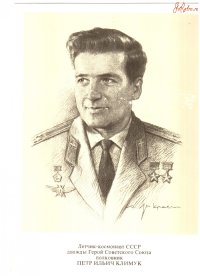
Pyotr Ilyich Klimuk (Belarusian: Пётр Ільіч Клімук; born July 10, 1942, in the village of Komarovka, Brest Region) is a Soviet cosmonaut, twice Hero of the Soviet Union (1973, 1975), and Colonel General (1998).

Doctor of Technical Sciences (2000), professor. Honorary Member of the National Academy of Sciences of Belarus (2017).

Laureate of the USSR State Prize (1978) and the State Prize of the Russian Federation (2002).

He was born in the village of Komarovka, Brest Region, Belarusian SSR (now Belarus).

The first years of his life were spent under occupation during the Second World War, on the Eastern Front. He spent his childhood and school years in his native village.

In 1959, he graduated from secondary school and entered the Kremenchug Initial Pilot Training School. He subsequently became a cadet at the Chernihiv Higher Military Aviation School for Pilots. In 1964, he graduated with honors. He then served in aviation units of the Soviet Army.

He was selected for the cosmonaut corps in 1965 as part of the third Air Force selection group. He completed the full course of general space training and training for space flights aboard Soyuz spacecraft and at Salyut-type orbital stations.

He made three space flights as a crew commander.

His first space flight took place from December 18 to December 26, 1973, together with flight engineer V. V. Lebedev aboard the Soyuz-13 spacecraft. The flight lasted 7 days, 20 hours, 55 minutes, and 35 seconds. Until the spaceflight of cosmonaut Yuri Romanenko, Pyotr Klimuk was the youngest person by date of birth to have flown into space.

In January 1975, he was a member of the backup crew for the Soyuz-17 spacecraft. In April 1975, he served as backup commander for the unsuccessful launch of Soyuz-18-1.

He made his second space flight from May 24 to July 26, 1975, together with flight engineer V. I. Sevastyanov aboard the Soyuz-18-2 spacecraft to the Salyut-4 orbital station. His stay in space lasted 62 days, 23 hours, 20 minutes, and 8 seconds.

He subsequently underwent training for space flights under the Interkosmos program.

His third space flight took place from June 27 to July 5, 1978, as commander of an international crew, together with research cosmonaut Mirosław Hermaszewski, a citizen of the Polish People's Republic. They flew aboard the Soyuz-30 spacecraft to the Salyut-6 orbital station, where they worked jointly with its resident crew, consisting of V. V. Kovalyonok and A. S. Ivanchenkov.

Their stay in space lasted 7 days, 22 hours, 2 minutes, and 59 seconds.

In total, over his three space flights, Pyotr Klimuk spent 78 days, 18 hours, 18 minutes, and 42 seconds in space.

In 1977, he graduated by correspondence from the Yuri A. Gagarin Military Air Academy.

From September 12, 1991, to September 2003, he served as Head of the Yuri A. Gagarin Cosmonaut Training Center.
Candidate of Technical Sciences (1995). Full Member of the K. E. Tsiolkovsky Russian Academy of Cosmonautics, Academician of the International Academy of Informatization, and Corresponding Member of the International Academy of Astronautics.

PARTICIPANTES EN EL EXPERIMENTO “OBSERVATORIO ESPACIAL ‘SOYUZ-13’ – ‘ORION-2’”. COSMONAUTA PIOTR KLIMUK.

Piotr Ilich Klimuk (en bielorruso: Пётр Ільіч Клімук; nacido el 10 de julio de 1942 en la aldea de Komarovka, región de Brest) es un cosmonauta soviético, dos veces Héroe de la Unión Soviética (1973, 1975) y coronel general (1998).

Doctor en Ciencias Técnicas (2000) y profesor. Miembro honorario de la Academia Nacional de Ciencias de Bielorrusia (2017).

Galardonado con el Premio Estatal de la URSS (1978) y con el Premio Estatal de la Federación de Rusia (2002).

Nació en la aldea de Komarovka, región de Brest, República Socialista Soviética de Bielorrusia (actualmente Bielorrusia).

Los primeros años de su vida transcurrieron bajo la ocupación durante la Segunda Guerra Mundial, en el Frente Oriental. Pasó su infancia y sus años escolares en su aldea natal.

En 1959 terminó la escuela secundaria e ingresó en la Escuela de Formación Inicial de Pilotos de Kremenchug. Posteriormente se convirtió en cadete de la Escuela Superior Militar de Aviación para Pilotos de Chernígov. En 1964 se graduó con honores. Después prestó servicio en unidades de aviación del Ejército Soviético.

Fue seleccionado para el cuerpo de cosmonautas en 1965, como integrante del tercer grupo de selección de la Fuerza Aérea. Completó el curso completo de preparación general para el espacio y de entrenamiento para vuelos espaciales a bordo de naves Soyuz y para trabajar en estaciones orbitales del tipo Salyut.

Realizó tres vuelos espaciales como comandante de tripulación.

Su primer vuelo espacial tuvo lugar del 18 al 26 de diciembre de 1973, junto con el ingeniero de vuelo V. V. Lébedev, a bordo de la nave espacial Soyuz-13. El vuelo tuvo una duración de 7 días, 20 horas, 55 minutos y 35 segundos. Hasta el vuelo espacial del cosmonauta Yuri Romanenko, Piotr Klimuk fue la persona de menor edad, por fecha de nacimiento, que había viajado al espacio.

En enero de 1975 formó parte de la tripulación de reserva de la nave espacial Soyuz-17. En abril de 1975 fue suplente del comandante de la nave durante el fallido lanzamiento de la Soyuz-18-1.

Realizó su segundo vuelo espacial del 24 de mayo al 26 de julio de 1975, junto con el ingeniero de vuelo V. I. Sevastyanov, a bordo de la nave Soyuz-18-2, con destino a la estación orbital Salyut-4. Su permanencia en el espacio fue de 62 días, 23 horas, 20 minutos y 8 segundos.

Posteriormente realizó entrenamiento para vuelos espaciales dentro del programa Interkosmos.

Su tercer vuelo espacial tuvo lugar del 27 de junio al 5 de julio de 1978, como comandante de una tripulación internacional, junto con el cosmonauta investigador Mirosław Hermaszewski, ciudadano de la República Popular de Polonia. Volaron a bordo de la nave Soyuz-30 hasta la estación orbital Salyut-6, donde trabajaron conjuntamente con la tripulación residente, formada por V. V. Kovaliénok y A. S. Ivanchenkov.

La permanencia en el espacio fue de 7 días, 22 horas, 2 minutos y 59 segundos.

En total, durante sus tres vuelos espaciales, Piotr Klimuk permaneció en el espacio 78 días, 18 horas, 18 minutos y 42 segundos.

En 1977 se graduó por correspondencia en la Academia Militar del Aire Yuri A. Gagarin.

Desde el 12 de septiembre de 1991 hasta septiembre de 2003, fue director del Centro de Preparación de Cosmonautas Yuri A. Gagarin.

Candidato en Ciencias Técnicas (1995). Miembro de pleno derecho de la Academia Rusa de Cosmonáutica K. E. Tsiolkovski, académico de la Academia Internacional de Informatización y miembro correspondiente de la Academia Internacional de Astronáutica.


6835181
 
Frimen1917

Frimen1917

Mecca V.I.P.
VIP
Joined
Jan 9, 2026
Messages
3,161
Points
63
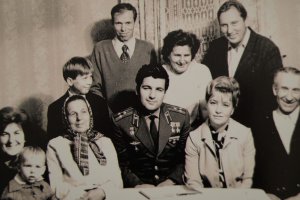
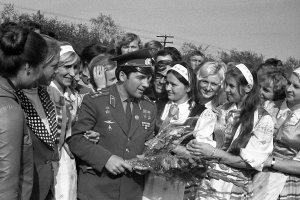
На фото: Петр Климук среди родных.
In the photo: Petr Klimuk among his relatives.
En la foto: Petr Klimuk entre sus familiares.
C43c5c385d170cf43ce56db6fbc8a290
 
Frimen1917

Frimen1917

Mecca V.I.P.
VIP
Joined
Jan 9, 2026
Messages
3,161
Points
63
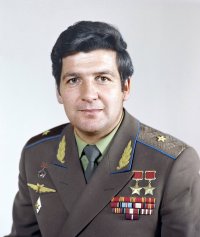
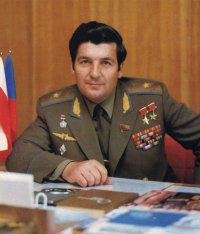
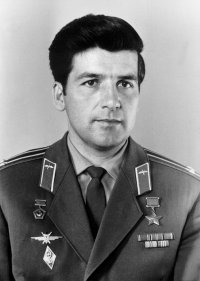
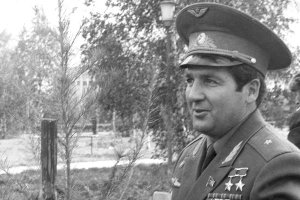
Генерал-майор авиации космонавт Петр Ильич Климук. 1982 год. Автор фото Алексадр Моклецов.
Aviation Major General and Cosmonaut Pyotr Ilyich Klimuk. 1982. Photo by Alexander Mokletsov.
El general de división de aviación y cosmonauta Pyotr Ilyich Klimuk. 1982. Fotografía de Alexander Mokletsov.

C9573f02dac4d2fcd4a5e45d00739f2e
 
Frimen1917

Frimen1917

Mecca V.I.P.
VIP
Joined
Jan 9, 2026
Messages
3,161
Points
63
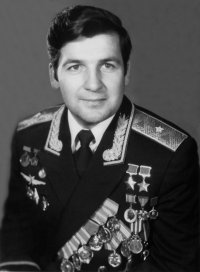
Генерал-майор авиации космонавт Петр Ильич Климук. 1979 год.
Major General of Aviation and Cosmonaut Pyotr Ilyich Klimuk. 1979.
Mayor General de Aviación y Cosmonauta Pyotr Ilyich Klimuk. 1979.

C53a792db638e103498102c608df22fa
 
Frimen1917

Frimen1917

Mecca V.I.P.
VIP
Joined
Jan 9, 2026
Messages
3,161
Points
63
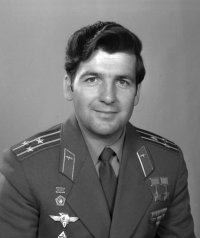
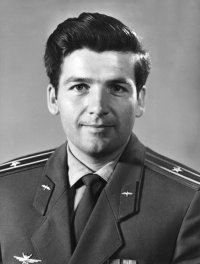
Полковник Петр Ильич Климук.1978 год. Автор фото Валентин Черединцев.
Colonel Pyotr Ilyich Klimuk, 1978. Photo by Valentin Cheredintsev.
Coronel Piotr Ilich Klimuk, 1978. Foto de Valentin Cheredintsev.

39a6125070ad916015a2791f4eedf7db
 
Frimen1917

Frimen1917

Mecca V.I.P.
VIP
Joined
Jan 9, 2026
Messages
3,161
Points
63
Подполковник Петр Ильич Климук. 1975 год. Автор фото Василий Малышев.
Lieutenant Colonel Pyotr Ilyich Klimuk. 1975 Photo by Vasily Malyshev.
El teniente coronel Piotr Ilich Klimuk. 1975 Foto de Vasily Malyshev.

A24e4269d24e34a47cba3a208699c181
 
Frimen1917

Frimen1917

Mecca V.I.P.
VIP
Joined
Jan 9, 2026
Messages
3,161
Points
63
Подполковник Петр Ильич Климук. 1974год. Автор фото Альберт Пушкарев.
Lieutenant Colonel Pyotr Ilyich Klimuk. 1974. Photo by Albert Pushkarev.
El teniente coronel Piotr Ilich Klimuk. 1974.Fotografía de Albert Pushkarev.

7c7a3680107a4f9b5d3c6f1061f9ba85
 

MuscleMecca Crew

Mecca Staff
Frimen1917

Frimen1917

Mecca V.I.P.
VIP
Joined
Jan 9, 2026
Messages
3,161
Points
63
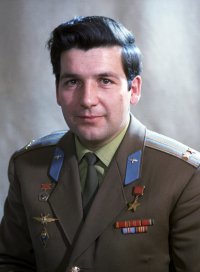
Майор Петр Ильич Климук. Осень 1973 года. Автор фото Альберт Пушкарев.
Major Pyotr Ilyich Klimuk. Autumn 1973. Photo by Albert Pushkarev.
Mayor Pyotr Ilyich Klimuk. Otoño de 1973. Fotografía de Albert Pushkarev.

2089c39f470efa60555c91a8209099cd
 
Frimen1917

Frimen1917

Mecca V.I.P.
VIP
Joined
Jan 9, 2026
Messages
3,161
Points
63
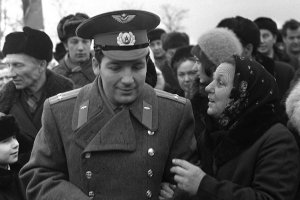
Петр Климук со своей матерью Марфой Павловной. Январь 1974 года.
Petr Klimuk with his mother, Marfa Pavlovna. January 1974.
Petr Klimuk con su madre, Marfa Pavlovna. Enero de 1974.

9315cbcd39b06f4baa59e6b672ba9e60
 
Frimen1917

Frimen1917

Mecca V.I.P.
VIP
Joined
Jan 9, 2026
Messages
3,161
Points
63
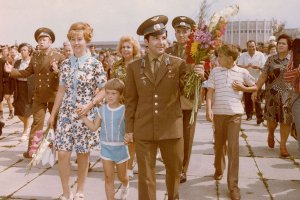
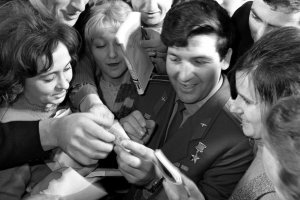
На фото в центре: Космонавт Петр Климук с женой Лилей и сыном Михаилом. Слева от жены- космонавт Алексей Леонов.
Pictured in the center: Cosmonaut Pyotr Klimuk with his wife Lilia and son Mikhail. To his wife's left is cosmonaut Alexei Leonov.
En el centro de la imagen: el cosmonauta Pyotr Klimuk con su esposa Lilia y su hijo Mikhail. A la izquierda de su esposa se encuentra el cosmonauta Alexei Leonov.

Fe153269f17ee7f40962347c07dc7af1
 
Frimen1917

Frimen1917

Mecca V.I.P.
VIP
Joined
Jan 9, 2026
Messages
3,161
Points
63
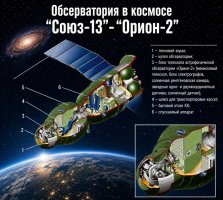
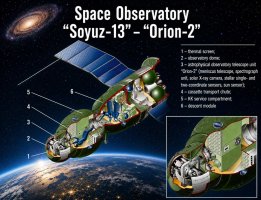
"… 1971 году экипаж орбитальной станции «Салют» с помощью астрофизической обсерватории «Орион» впервые в стране получил спектрограммы звезд. Наш «Союз-13» был оборудован специальной аппаратурой для спектрографирования звезд — он имел на борту систему телескопов «Орион-2». Собственно, полет наш был подготовлен по программе Бюраканской обсерватории. К нему мы старательно готовились. Десятки дней провели с Валентином в обсерватории, всматриваясь в ночное небо, слушали лекции специалистов, запоминали их многочисленные просьбы и пожелания. Не один раз побывал я в то время в Армении, в Ереване и на Севане, познакомился и даже подружился с членом-корреспондентом АН Армянской ССР Г. А. Гурзадяном. Он возлагал на нас большие надежды. Однажды даже пошутил:

— Сколько звезд заспектрографируете, столько звездочек будет на бутылке коньяка, с которой я вас встречу после полета…

И вот наконец команда с Земли:

— «Кавказ», я — «Заря». Примите радиограмму. На следующем витке выполнить эксперимент с «Орионом-2». Основная звезда — Сириус…

Мы с Валентином заняли свои рабочие места: я — за пультом управления кораблем, Валентин — за пультом управления телескопом. На Земле мы находили Сириус за несколько секунд. А здесь? Смотрю в стекла визира. Замечаю созвездие. Какое? Напрягаю память. На Земле проще, там видишь созвездие целиком, а здесь визир осматривает только его какую-то часть — несколько звездочек. Но глаз, как говорят, набит; узнаю Орион. Легким поворотом ручки управления нахожу «голову» созвездия. Сейчас все просто: Сириус — он в созвездии Большого Пса — находится внизу, по направлению пояса Ориона. Осторожно разворачиваю корабль и неожиданно чуть не улыбаюсь от радости: в «глазу» визира — Сириус. Стабилизирую корабль и предупреждаю бортинженера:

— Сириус в перекрестии! Не двигаться!

Валентин отвечает:

— Понял! Навожу визир телескопа!

А еще через несколько секунд подтвердил:

— Сириус в перекрестии!

Включаем датчики фотоприборов, ориентирующих телескоп в нужном направлении, стабилизируем его. Наконец включаем экспозицию. Спектрограмма участка звездного неба сделана!

Неделю мы загоняли звезды в визиры корабля и телескопа. За это время при помощи системы «Орион-2» сделали несколько тысяч спектральных снимков более трех тысяч звезд.

Специалисты были довольны. Григорий Арамович Гурзадян лично приехал в Звездный, чтобы поблагодарить нас за сделанную работу. Особенно рад был чистоте спектров. Вуаль от свечения ночного неба, мешающая наблюдать звезды с Земли, почти отсутствовала. Рад был ученый и шутил:

— Превзошли вы мои ожидания! Три тысячи звезд! Где же я вам такой многозвездный коньяк найду? Такого нет даже в Армении! А я просил, чтобы вам продлили полет еще на сутки...

Занимались мы и другими научными экспериментами. Но более всего запомнились встречи со звездами. Там они не такие, какими видятся нам с Земли, сквозь толщу атмосферы, где одни из них переливаются теплой желтизной, другие — жаркой красностью, третьи светятся холодноватой голубизной, и все вместе беспрестанно мерцают, будто подмигивают, будто посылают нам какие-то таинственные, неразгадываемые сигналы. Здесь же звезды удивительно спокойны, без мерцания. И цвет их, пожалуй, одинаков — белесо-желтый. Близко висят, над головой. Впечатление такое, будто какой-то художник-богатырь поразбрасывал по черному полотну золотые капли краски.

Спасибо тебе, космос, и за то, что ты подарил мне это незабываемое впечатление: когда звезды — рядом, когда к ним хочется притронуться рукой!"
(П. И. Климук. «Рядом со звёздами»).

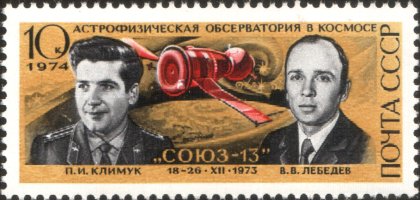
На фото: марка "Астрофизическая обсерватория в космосе "Союз-13"; П.И.Климук, В.В.Лебедев (18-26 декабря 1973 года); Почта СССР - 1974.
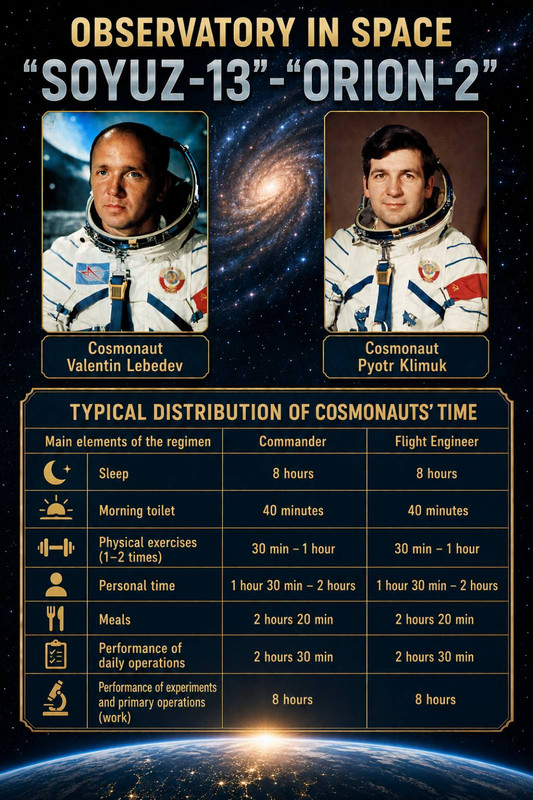
“… In 1971, the crew of the Salyut orbital station, with the help of the Orion astrophysical observatory, obtained stellar spectrograms for the first time in the country. Our Soyuz-13 was equipped with special equipment for stellar spectroscopy — it carried the Orion-2 telescope system on board. In fact, our flight had been prepared according to the program of the Byurakan Observatory. We prepared for it very carefully. For dozens of days, Valentin and I stayed at the observatory, gazing into the night sky, listening to lectures by specialists, and remembering their numerous requests and wishes. At that time I visited Armenia, Yerevan and Lake Sevan more than once, and I became acquainted with, and even made friends with, G. A. Gurzadyan, a corresponding member of the Academy of Sciences of the Armenian SSR. He had high hopes for us. Once he even joked:


— The more stars you take spectra of, the more little stars there will be on the bottle of cognac with which I’ll greet you after the flight…

And finally, the command came from Earth:

— “Kavkaz,” this is “Zarya.” Receive the radio message. On the next orbit, carry out the experiment with Orion-2. The primary star is Sirius…

Valentin and I took our workstations: I was at the spacecraft control console, while Valentin was at the telescope control console. On Earth, we could find Sirius within a few seconds. But here? I looked through the sighting device. I noticed a constellation. Which one? I strained my memory. On Earth it is easier: you see the entire constellation, whereas here the sighting device scans only a part of it — just a few stars. But my eye was well trained, as they say; I recognized Orion. With a slight turn of the control knob, I found the “head” of the constellation. Now everything was simple: Sirius — in the constellation Canis Major — was below, in the direction of Orion’s Belt. I carefully turned the spacecraft and suddenly could hardly keep myself from smiling with joy: Sirius was in the “eye” of the sighting device. I stabilized the spacecraft and warned the flight engineer:

— Sirius is in the crosshairs! Don’t move!

Valentin replied:

— Understood! I’m aiming the telescope!

A few seconds later he confirmed:

— Sirius is in the crosshairs!

We switched on the sensors of the photographic instruments that oriented the telescope in the required direction and stabilized it. Finally, we switched on the exposure. The spectrogram of the section of the starry sky was made!

For a week, we brought stars into the sights of the spacecraft and the telescope. During that time, using the Orion-2 system, we made several thousand spectral images of more than three thousand stars.

The specialists were pleased. Grigory Aramovich Gurzadyan personally came to Star City to thank us for the work we had done. He was especially pleased with the purity of the spectra. The veil caused by the glow of the night sky, which interferes with observing stars from Earth, was almost completely absent. The scientist was delighted and joked:

— You have exceeded my expectations! Three thousand stars! Where am I going to find such a many-star cognac for you? They don’t even have anything like that in Armenia! And I asked them to extend your flight for another day…

We also carried out other scientific experiments. But what I remembered most of all were our encounters with the stars. There they are not the same as they appear to us from Earth, through the thickness of the atmosphere, where some shimmer with a warm yellow glow, others with a fiery red color, and still others shine with a cool bluish light, while all of them constantly twinkle, as if winking at us, as if sending us some mysterious, unfathomable signals. Here, however, the stars were amazingly calm, without any twinkling. And their color was perhaps the same — a whitish yellow. They seemed close, hanging right above our heads. The impression was as if some heroic artist had scattered golden drops of paint across a black canvas.

Thank you, space, for giving me this unforgettable impression: when the stars are close, when you feel like reaching out and touching them with your hand!”

(P. I. Klimuk. “Close to the Stars”).

Photo: USSR postage stamp “Astrophysical Observatory in Space ‘Soyuz-13’”; P. I. Klimuk and V. V. Lebedev (December 18–26, 1973); USSR Post — 1974.
“… En 1971, la tripulación de la estación orbital Salyut, con la ayuda del observatorio astrofísico Orión, obtuvo por primera vez en el país espectrogramas de estrellas. Nuestra Soyuz-13 estaba equipada con un instrumental especial para realizar espectrografía estelar: llevaba a bordo el sistema de telescopios Orión-2. En realidad, nuestro vuelo había sido preparado de acuerdo con el programa del Observatorio de Byurakan. Nos preparamos para él con mucho cuidado. Durante decenas de días, Valentín y yo permanecimos en el observatorio, contemplando el cielo nocturno, escuchando las conferencias de los especialistas y memorizando sus numerosas peticiones y deseos. En aquella época estuve más de una vez en Armenia, en Ereván y en el lago Seván, y conocí e incluso entablé amistad con G. A. Gurzadyan, miembro correspondiente de la Academia de Ciencias de la RSS de Armenia. Tenía grandes esperanzas puestas en nosotros. Una vez incluso bromeó:


— Cuantas más estrellas espectrografiéis, tantas más estrellitas habrá en la botella de coñac con la que os recibiré después del vuelo…

Y finalmente llegó la orden desde la Tierra:

— «Cáucaso», aquí «Zaria». Recibid el radiograma. En la siguiente órbita realizad el experimento con Orión-2. La estrella principal es Sirio…

Valentín y yo ocupamos nuestros puestos de trabajo: yo, frente al panel de control de la nave; Valentín, frente al panel de control del telescopio. En la Tierra encontrábamos Sirio en cuestión de segundos. ¿Pero aquí? Miré a través del visor. Vi una constelación. ¿Cuál? Hice memoria. En la Tierra es más fácil: allí ves la constelación completa, mientras que aquí el visor examina solamente una parte de ella: unas pocas estrellas. Pero, como suele decirse, tenía el ojo entrenado; reconocí a Orión. Con un ligero giro de la palanca de control encontré la «cabeza» de la constelación. Ahora todo era sencillo: Sirio, que se encuentra en la constelación del Can Mayor, estaba abajo, en la dirección del cinturón de Orión. Giré cuidadosamente la nave y, de repente, apenas pude contener una sonrisa de alegría: Sirio estaba en el «ojo» del visor. Estabilicé la nave y advertí al ingeniero de a bordo:

— ¡Sirio en el centro de la retícula! ¡No te muevas!

Valentín respondió:

— ¡Entendido! ¡Estoy apuntando el telescopio!

Unos segundos después confirmó:

— ¡Sirio en el centro de la retícula!

Encendimos los sensores de los instrumentos fotográficos que orientaban el telescopio en la dirección necesaria y lo estabilizamos. Finalmente, activamos la exposición. ¡El espectrograma de la región del cielo estrellado estaba hecho!

Durante una semana estuvimos llevando las estrellas al campo de visión de los visores de la nave y del telescopio. Durante ese tiempo, con ayuda del sistema Orión-2, obtuvimos varios miles de imágenes espectrales de más de tres mil estrellas.

Los especialistas estaban satisfechos. Grigori Aramóvich Gurzadyan viajó personalmente a Ciudad de las Estrellas para agradecernos el trabajo realizado. Estaba especialmente satisfecho con la pureza de los espectros. El velo producido por el resplandor del cielo nocturno, que dificulta la observación de las estrellas desde la Tierra, estaba prácticamente ausente. El científico estaba encantado y bromeó:

— ¡Han superado mis expectativas! ¡Tres mil estrellas! ¿Dónde voy a encontrar para vosotros un coñac con tantas estrellas? ¡Ni siquiera hay algo así en Armenia! Y yo había pedido que os prolongaran el vuelo un día más…

También realizamos otros experimentos científicos. Pero lo que más recuerdo son nuestros encuentros con las estrellas. Allí no son iguales a como las vemos desde la Tierra, a través del espesor de la atmósfera, donde unas brillan con un cálido tono amarillento, otras con un rojo ardiente y otras con una luz azulada y fría, mientras todas parpadean constantemente, como si nos guiñaran un ojo, como si nos enviaran señales misteriosas e incomprensibles. Aquí, en cambio, las estrellas eran asombrosamente tranquilas, sin parpadear. Y su color era, quizá, el mismo: blanco amarillento. Parecían estar muy cerca, suspendidas sobre nuestras cabezas. La impresión era como si algún artista gigantesco hubiera esparcido gotas de pintura dorada sobre un lienzo negro.

Gracias a ti, espacio, por haberme regalado esta impresión inolvidable: cuando las estrellas están cerca, cuando uno siente deseos de extender la mano y tocarlas con la mano!» !”

(P. I. Klimuk. «Junto a las estrellas»).

Foto: sello postal de la URSS «Observatorio astrofísico en el espacio “Soyuz-13”»; P. I. Klimuk y V. V. Lebedev (18–26 de diciembre de 1973); Correos de la URSS — 1974.

 
Top