• Legal Notice – MuscleMecca Forums

    MuscleMecca.com is an educational discussion platform. We do not sell, promote, or endorse any bodybuilding gear, supplements, research chemicals, or performance-enhancing substances.

    All discussions are for educational and informational purposes only. Nothing posted on this forum should be considered medical or legal advice.

    Do not attempt to sell, source, or promote illegal substances. Any such activity will result in an immediate and permanent ban and may be reported to the proper authorities.

    By using this site, you agree to comply with all forum rules, disclaimers, and applicable laws in your jurisdiction.

    Read Our Full Disclaimer and Forum Rules

  • Follow the 2026 Olympia on September 24 to 27, 2026!

History of Soviet cosmonautics.

Frimen1917

Frimen1917

Mecca V.I.P.
VIP
Joined
Jan 9, 2026
Messages
3,161
Points
63
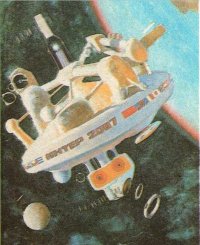
Картина "Орбитальная станция". Автор - художник В.Бурмистров.
Космическая станция - детище начала будущего века. Судя по начертаниям на ее борту - станция носит интернациональный характер. Хочется верить, что так и будет. Только в содружестве можно освоить сооружения такого мастштаба.

Painting "Orbital Station." Author: artist V. Burmistrov.
The space station is a creation of the early next century. Judging by the inscriptions on its side, the station has an international character. I'd like to believe that this will be the case. Only through collaboration can we master structures of such scale.

Pintura "Estación Orbital". Autor: V. Burmistrov.
La estación espacial es una creación de principios del próximo siglo. A juzgar por las inscripciones en su lateral, tiene un carácter internacional. Me gustaría creer que así será. Solo mediante la colaboración podremos dominar estructuras de tal magnitud.


Clipboard 09 06 2026 01
 
Frimen1917

Frimen1917

Mecca V.I.P.
VIP
Joined
Jan 9, 2026
Messages
3,161
Points
63
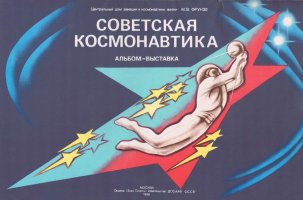
Обложка альбома - выставки СОВЕТСКАЯ КОСМОНАВТИКА. 1986 ГОД.
Cover of the album - exhibition SOVIET COSMONAUTICS. 1986.
Portada del álbum - exposición SOVIET COSMONAUTICS. 1986.

Clipboard 09 07 2026 02
 
Frimen1917

Frimen1917

Mecca V.I.P.
VIP
Joined
Jan 9, 2026
Messages
3,161
Points
63
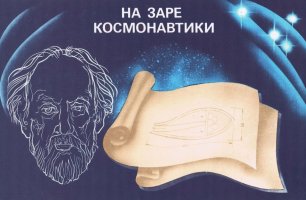
Одна из иллюстраций альбома - выставки СОВЕТСКАЯ КОСМОНАВТИКА.
"На заре космонавтики". На рисунке изображен один из пионеров и теоретиков космонавтики Константин Эдуардович Циолковский.

One of the illustrations from the album of the exhibition "SOVIET COSMONAUTICS."
"At the Dawn of Cosmonautics." The drawing depicts Konstantin Eduardovich Tsiolkovsky, one of the pioneers and theoreticians of cosmonautics.

Una de las ilustraciones del álbum de la exposición "COSMONÁUTICA SOVIÉTICA".
"En los albores de la cosmonáutica". El dibujo representa a Konstantin Eduardovich Tsiolkovsky, uno de los pioneros y teóricos de la cosmonáutica.

Clipboard 09 07 2026 03
 
Frimen1917

Frimen1917

Mecca V.I.P.
VIP
Joined
Jan 9, 2026
Messages
3,161
Points
63
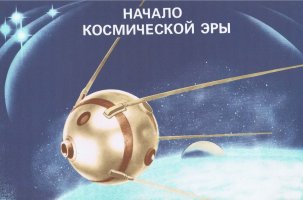
Одна из иллюстраций альбома - выставки СОВЕТСКАЯ КОСМОНАВТИКА. "Начало космической эры".
One of the illustrations from the album—the exhibition "SOVIET COSMONAUTICS. "The Beginning of the Space Age.
"Una de las ilustraciones del álbum: la exposición "COSMONÁUTICA SOVIÉTICA. "El comienzo de la era espacial".

Clipboard 09 07 2026 05
 
Frimen1917

Frimen1917

Mecca V.I.P.
VIP
Joined
Jan 9, 2026
Messages
3,161
Points
63
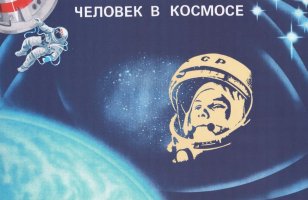
Одна из иллюстраций альбома - выставки СОВЕТСКАЯ КОСМОНАВТИКА. "Человек в космосе".
One of the illustrations from the album – the exhibition "SOVIET COSMONAUTICS. "Man in Space.
"Una de las ilustraciones del álbum: la exposición "COSMONÁUTICA SOVIÉTICA. "El hombre en el espacio".

Clipboard 09 07 2026 06
 
Frimen1917

Frimen1917

Mecca V.I.P.
VIP
Joined
Jan 9, 2026
Messages
3,161
Points
63
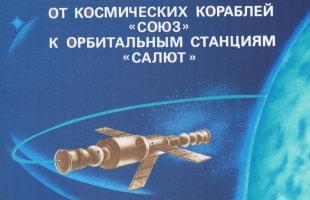
Одна из иллюстраций альбома - выставки СОВЕТСКАЯ КОСМОНАВТИКА. "От космических кораблей "Союз" к орбитальным станциям "Салют".
One of the illustrations from the album—the exhibition "SOVIET COSMONAUTICS. From Soyuz Spacecraft to Salyut Orbital Stations."
Una de las ilustraciones del álbum: la exposición "COSMONAÚCTICA SOVIÉTICA. De las naves espaciales Soyuz a las estaciones orbitales Salyut".

Clipboard 09 07 2026 07
 
Frimen1917

Frimen1917

Mecca V.I.P.
VIP
Joined
Jan 9, 2026
Messages
3,161
Points
63
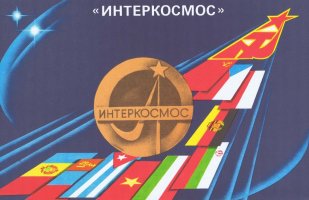
Одна из иллюстраций альбома - выставки СОВЕТСКАЯ КОСМОНАВТИКА. "Интеркосмос".
One of the illustrations from the album - the exhibition "SOVIET COSMONAUTICS." "Intercosmos.
"Una de las ilustraciones del álbum - la exposición "COSMONÁUTICA SOVIÉTICA". "Intercosmos".

Clipboard 09 07 2026 08
 
Frimen1917

Frimen1917

Mecca V.I.P.
VIP
Joined
Jan 9, 2026
Messages
3,161
Points
63
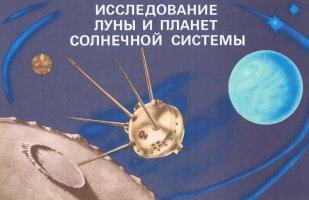
Одна из иллюстраций альбома - выставки СОВЕТСКАЯ КОСМОНАВТИКА. "Иследование Луны и Планет и Солнечной системы".
One of the illustrations from the album—the exhibition "SOVIET COSMONAUTICS. "Exploration of the Moon, Planets, and the Solar System.
"Una de las ilustraciones del álbum: la exposición "COSMONÁUTICA SOVIÉTICA. Exploración de la Luna, los planetas y el sistema solar".

Clipboard 09 07 2026 09
 
Frimen1917

Frimen1917

Mecca V.I.P.
VIP
Joined
Jan 9, 2026
Messages
3,161
Points
63
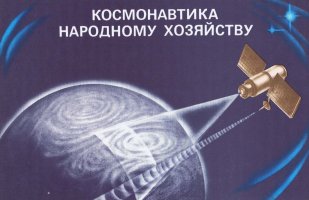
Одна из иллюстраций альбома - выставки СОВЕТСКАЯ КОСМОНАВТИКА. "Космонавтика народному хозяйству".
One of the illustrations from the album – the exhibition SOVIET COSMONAUTICS. "Cosmonautics for the National Economy.
"Una de las ilustraciones del álbum: la exposición COSMONAÚTICA SOVIÉTICA. "Cosmonaútica para la economía nacional".

Clipboard 09 07 2026 11
 

MuscleMecca Crew

Mecca Staff
Frimen1917

Frimen1917

Mecca V.I.P.
VIP
Joined
Jan 9, 2026
Messages
3,161
Points
63
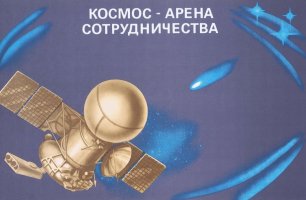
Одна из иллюстраций альбома - выставки СОВЕТСКАЯ КОСМОНАВТИКА. Космос - арена сотрудничества.
One of the illustrations from the album—the exhibition "SOVIET COSMONAUTICS." Space—an arena for collaboration.
Una de las ilustraciones del álbum: la exposición "COSMONÁUTICA SOVIÉTICA". El espacio: un escenario para la colaboración.

Clipboard 09 07 2026 12
 
Frimen1917

Frimen1917

Mecca V.I.P.
VIP
Joined
Jan 9, 2026
Messages
3,161
Points
63
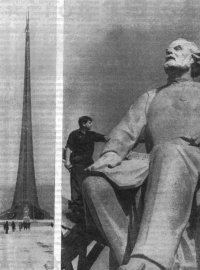
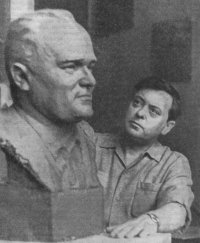
Скульптор Файдыш-Крандиевский прожил недолго. Но его памятники К.Э.Циолковскому и академику С.П.Королеву останутся навсегда.
Sculptor Faidysh-Krandievsky didn't live long. But his monuments to Konstantin Tsiolkovsky and Academician Sergei Korolev will live forever.
El escultor Faidysh-Krandievsky no vivió mucho tiempo. Pero sus monumentos a Konstantin Tsiolkovsky y al académico Sergei Korolev perdurarán para siempre.

Clipboard 09 07 2026 14 Clipboard 09 07 2026 13
 
Frimen1917

Frimen1917

Mecca V.I.P.
VIP
Joined
Jan 9, 2026
Messages
3,161
Points
63
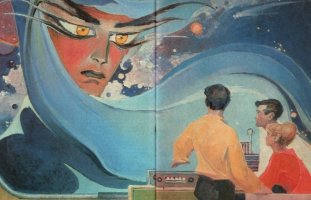
"Великое кольцо Вселенной. Контакт". Художник Г. Голобоков (Саратовская область). Картина навеяна романом Ивана Ефремова "Туманность Андромеды". Она запечатлевает момент космической связи по "Великому кольцу", объединяеющему разные цивилизации нашей Галактики.
"The Great Ring of the Universe. Contact." Artist G. Golobokov (Saratov Oblast). The painting is inspired by Ivan Efremov's novel "The Andromeda Nebula." It captures a moment of cosmic communication along the "Great Ring," which unites the various civilizations of our galaxy.
«El Gran Anillo del Universo. Contacto». Artista G. Golobokov (Óblast de Saratov). La pintura está inspirada en la novela «La Nebulosa de Andrómeda» de Iván Efremov. Captura un momento de comunicación cósmica a lo largo del «Gran Anillo», que une las diversas civilizaciones de nuestra galaxia.

Clipboard 09 07 2026 15
 
Frimen1917

Frimen1917

Mecca V.I.P.
VIP
Joined
Jan 9, 2026
Messages
3,161
Points
63
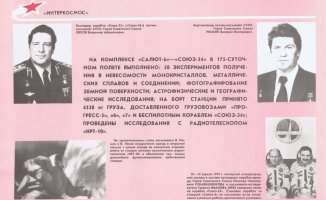
Одна из страниц альбома - выставки СОВЕТСКАЯ КОСМОНАВТИКА. ИНТЕРКОСМОС.
НА КОМПЛЕКСЕ «САЛЮТ-6»—«СОЮЗ-34» В 175-СУТОЧНОМ ПОЛЕТЕ ВЫПОЛНЕНО: 58 ЭКСПЕРИМЕНТОВ ПОЛУЧЕНИЯ В НЕВЕСОМОСТИ МОНОКРИСТАЛЛОВ, МЕТАЛЛИЧЕСКИХ СПЛАВОВ И СОЕДИНЕНИЙ; ФОТОГРАФИРОВАНИЕ ЗЕМНОЙ ПОВЕРХНОСТИ; АСТРОФИЗИЧЕСКИЕ И ГЕОГРАФИЧЕСКИЕ ИССЛЕДОВАНИЯ; НА БОРТ СТАНЦИИ ПРИНЯТО 4538 кг ГРУЗА, ДОСТАВЛЕННОГО ГРУЗОВОЗАМИ «ПРОГРЕСС-5», «6», «7» И БЕСПИЛОТНЫМ КОРАБЛЕМ «СОЮЗ-34»; ПРОВЕДЕНЫ ИССЛЕДОВАНИЯ С РАДИОТЕЛЕСКОПОМ «КРТ-10».
На верхнем фото слева: Командир корабля «Союз-32» («Союз-34») летчик-космонавт СССР, Герой Советского Союза ЛЯХОВ Владимир Афанасьевич.
На верхнем фото справа:Бортинженер летчик-космонавт СССР, Герой Советского Союза РЮМИН Валерий Викторович.
На нижнем фото слева: На заключительном этапе космонавты В. Рюмин и В. Ляхов осуществили выход в открытый космос с целью отвода не полностью отделившейся от станции антенны космического радиотелескопа «КРТ-10» и обеспечили тем самым дальнейшее функционирование орбитальной станции.
На нижнем фото справа: Бортинженер летчик-космонавт СССР, Герой Советского Союза РЮМИН Валерий Викторович.

10—12 апреля 1979 г. четвертый международный экипаж в составе командира корабля дважды Героя Советского Союза Николая Николаевича РУКАВИШНИКОВА и космонавта-исследователя Георгия ИВАНОВА (НРБ - Народная Республика Болгария) совершил полет на корабле «Союз-33». Стыковка корабля со станцией «Салют-6» не состоялась из-за отклонений в режиме работы двигательной установки.
One of the pages of the album-exhibition SOVIET COSMONAUTICS. INTERCOSMOS.


ON THE SALYUT-6–SOYUZ-34 COMPLEX, DURING THE 175-DAY FLIGHT, THE FOLLOWING WAS ACCOMPLISHED: 58 EXPERIMENTS TO PRODUCE SINGLE CRYSTALS, METAL ALLOYS AND COMPOUNDS UNDER WEIGHTLESSNESS CONDITIONS; PHOTOGRAPHING OF THE EARTH’S SURFACE; ASTROPHYSICAL AND GEOGRAPHICAL RESEARCH; 4,538 kg OF CARGO DELIVERED BY THE PROGRESS-5, -6 AND -7 CARGO SPACECRAFT AND THE UNCREWED SOYUZ-34 SPACECRAFT WAS RECEIVED ABOARD THE STATION; RESEARCH WAS CONDUCTED USING THE KRT-10 RADIO TELESCOPE.

Top photo, left: Soyuz-32 (Soyuz-34) spacecraft commander, USSR pilot-cosmonaut, Hero of the Soviet Union VLADIMIR AFANASYEVICH LYAKHOV.

Top photo, right: Flight engineer, USSR pilot-cosmonaut, Hero of the Soviet Union VALERY VIKTOROVICH RYUMIN.

Bottom photo, left: During the final stage, cosmonauts V. Ryumin and V. Lyakhov performed a spacewalk in order to move away the antenna of the KRT-10 space radio telescope, which had not completely separated from the station, thereby ensuring the continued operation of the orbital station.

Bottom photo, right: Flight engineer, USSR pilot-cosmonaut, Hero of the Soviet Union VALERY VIKTOROVICH RYUMIN.

From 10 to 12 April 1979, the fourth international crew, consisting of spacecraft commander and twice Hero of the Soviet Union NIKOLAI NIKOLAYEVICH RUKAVISHNIKOV and research cosmonaut GEORGI IVANOV (People’s Republic of Bulgaria), flew aboard the Soyuz-33 spacecraft. The spacecraft failed to dock with the Salyut-6 station due to deviations in the operation of the propulsion system.
Una de las páginas del álbum-exposición COSMONÁUTICA SOVIÉTICA. INTERCOSMOS.


EN EL COMPLEJO «SALYUT-6»–«SOYUZ-34», DURANTE EL VUELO DE 175 DÍAS, SE REALIZARON: 58 EXPERIMENTOS PARA OBTENER, EN CONDICIONES DE INGAVIDEZ, MONOCRISTALES, ALEACIONES METÁLICAS Y COMPUESTOS; FOTOGRAFÍA DE LA SUPERFICIE TERRESTRE; INVESTIGACIONES ASTROFÍSICAS Y GEOGRÁFICAS; A BORDO DE LA ESTACIÓN SE RECIBIERON 4538 kg DE CARGA, TRANSPORTADA POR LAS NAVES DE CARGA «PROGRESS-5», «PROGRESS-6» Y «PROGRESS-7», ASÍ COMO POR LA NAVE NO TRIPULADA «SOYUZ-34»; SE REALIZARON INVESTIGACIONES CON EL RADIOTELESCOPIO «KRT-10».

En la foto superior, a la izquierda: Comandante de la nave «Soyuz-32» («Soyuz-34»), piloto-cosmonauta de la URSS, Héroe de la Unión Soviética VLADIMIR AFANASIEVICH LYAKHOV.

En la foto superior, a la derecha: Ingeniero de a bordo, piloto-cosmonauta de la URSS, Héroe de la Unión Soviética VALERI VIKTOROVICH RYUMIN.

En la foto inferior, a la izquierda: En la etapa final, los cosmonautas V. Ryumin y V. Lyakhov realizaron una salida al espacio exterior con el fin de retirar la antena del radiotelescopio espacial «KRT-10», que no se había separado completamente de la estación, garantizando así el funcionamiento posterior de la estación orbital.

En la foto inferior, a la derecha: Ingeniero de a bordo, piloto-cosmonauta de la URSS, Héroe de la Unión Soviética VALERI VIKTOROVICH RYUMIN.

Del 10 al 12 de abril de 1979, la cuarta tripulación internacional, integrada por el comandante de la nave, dos veces Héroe de la Unión Soviética NIKOLAI NIKOLÁYEVICH RUKAVISHNIKOV, y el cosmonauta-investigador GEORGI IVANOV (República Popular de Bulgaria), realizó un vuelo a bordo de la nave «Soyuz-33». El acoplamiento de la nave con la estación «Salyut-6» no tuvo lugar debido a anomalías en el funcionamiento del sistema de propulsión.
Clipboard 09 08 2026 16
 
Frimen1917

Frimen1917

Mecca V.I.P.
VIP
Joined
Jan 9, 2026
Messages
3,161
Points
63
«Союз-32» — советский пилотируемый космический корабль. Корабль «Союз-32» вернулся на Землю без экипажа.
Третья основная экспедиция орбитальной научной станции «Салют-6». Во время пребывания на станции космонавты приняли три грузовых корабля «Прогресс-5, -6 и -7». Во время наблюдения в июне 1979 года поверхности Индийского океана в 250—300 км восточнее берега Африки Ляхов и Рюмин обнаружили пучность в форме вала длиной около 100 км и шириной 1,5—2 км. 15 августа космонавты Ляхов и Рюмин совершили выход в открытый космос продолжительностью 1 час 23 минут.
Во время пребывания экипажа на станции планировалась экспедиция посещения на корабле «Союз-33». Однако стыковка корабля «Союз-33» из-за проблем с основным двигателем не состоялась. Предполагалось, что экспедиция посещения вернётся на Землю на корабле «Союз-32», оставив корабль «Союз-33» для основной экспедиции. КК(Космический Корабль)«Союз-32» имел ресурс в 90 суток, который истекал 26 мая. На замену корабля «Союз-32» 6 июня был послан корабль «Союз-34» без экипажа, который состыковался со станцией. На этом корабле космонавты благополучно вернулись на Землю.
13 июня КК «Союз-32» в беспилотном варианте возвратился на Землю. На нём были доставлены результаты исследований экипажа Ляхов — Рюмин.

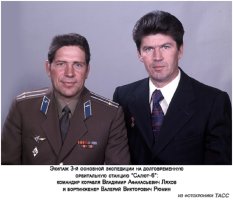
Экипаж установил новый рекорд продолжительности пребывания в космосе — 4200 часов 36 минут (175 дней 0 часов 36 минут). Валерий Рюмин установил новый рекорд суммарной продолжительности пребывания космонавта в космосе за два полёта — 4249 часов 22 минуты (177 дней 1 час 22 минуты). На фото слева направо: Валерий Рюмин и Владимир Ляхов.
Soyuz-32 was a Soviet crewed spacecraft. The Soyuz-32 spacecraft returned to Earth without its crew.

The third main expedition to the Salyut-6 orbital scientific station. During their stay aboard the station, the cosmonauts received three Progress cargo spacecraft: Progress-5, -6 and -7. During observations in June 1979 of the surface of the Indian Ocean, 250–300 km east of the coast of Africa, Lyakhov and Ryumin discovered a ridge-shaped swell approximately 100 km long and 1.5–2 km wide. On 15 August, cosmonauts Lyakhov and Ryumin performed a spacewalk lasting 1 hour 23 minutes.
During the crew’s stay aboard the station, a visiting expedition aboard Soyuz-33 was planned. However, the docking of Soyuz-33 did not take place due to problems with the main engine. It was planned that the visiting expedition would return to Earth aboard Soyuz-32, leaving Soyuz-33 for the main expedition. The Soyuz-32 spacecraft had an operational lifetime of 90 days, which was due to expire on 26 May. To replace Soyuz-32, the uncrewed Soyuz-34 spacecraft was launched on 6 June and successfully docked with the station. The cosmonauts subsequently returned safely to Earth aboard this spacecraft.
On 13 June, Soyuz-32 returned to Earth in an uncrewed configuration. It carried the results of the research conducted by the Lyakhov–Ryumin crew.
The crew set a new record for the duration of a spaceflight — 4,200 hours 36 minutes (175 days 0 hours 36 minutes). Valery Ryumin set a new record for the total time a cosmonaut had spent in space over two flights — 4,249 hours 22 minutes (177 days 1 hour 22 minutes).

In the photo, from left to right: Valery Ryumin and Vladimir Lyakhov.
«Soyuz-32» fue una nave espacial soviética tripulada. La nave «Soyuz-32» regresó a la Tierra sin su tripulación.

Tercera expedición principal a bordo de la estación científica orbital «Salyut-6». Durante su estancia en la estación, los cosmonautas recibieron tres naves de carga «Progress»: «Progress-5», «Progress-6» y «Progress-7». Durante las observaciones realizadas en junio de 1979 de la superficie del océano Índico, a 250–300 km al este de la costa de África, Liájov y Riumin descubrieron una elevación en forma de cresta, de aproximadamente 100 km de longitud y 1,5–2 km de anchura. El 15 de agosto, los cosmonautas Liájov y Riumin realizaron una salida al espacio exterior con una duración de 1 hora y 23 minutos.
Durante la estancia de la tripulación en la estación estaba prevista una expedición de visita a bordo de la nave «Soyuz-33». Sin embargo, el acoplamiento de la nave «Soyuz-33» no tuvo lugar debido a problemas con el motor principal. Estaba previsto que la expedición de visita regresara a la Tierra a bordo de la «Soyuz-32», dejando la «Soyuz-33» para la expedición principal. La nave espacial «Soyuz-32» tenía una vida útil de 90 días, que expiraba el 26 de mayo. Para sustituir a la «Soyuz-32», el 6 de junio fue lanzada la nave «Soyuz-34» sin tripulación, que se acopló con éxito a la estación. A bordo de esta nave, los cosmonautas regresaron a la Tierra sin contratiempos.
El 13 de junio, la nave «Soyuz-32» regresó a la Tierra en configuración no tripulada. A bordo llevaba los resultados de las investigaciones realizadas por la tripulación Liájov–Riumin.
La tripulación estableció un nuevo récord de duración de permanencia en el espacio: 4200 horas y 36 minutos (175 días, 0 horas y 36 minutos). Valeri Riumin estableció un nuevo récord de duración total de permanencia de un cosmonauta en el espacio en dos vuelos: 4249 horas y 22 minutos (177 días, 1 hora y 22 minutos).

En la foto, de izquierda a derecha: Valeri Riumin y Vladímir Liájov.
38 1 1
 
Frimen1917

Frimen1917

Mecca V.I.P.
VIP
Joined
Jan 9, 2026
Messages
3,161
Points
63
175 ДНЕЙ В КОСМОСЕ. ГЕРОИЧЕСКИЙ ПОДВИГ – НАУЧНЫЙ И ЧЕЛОВЕЧЕСКИЙ. 25 февраля 1979 г. в 14 ч. 54 мин. московского времени с космодрома Байконур был осуществлён запуск космического корабля «Союз-32» с экипажем в составе командира корабля подполковника Ляхова Владимира Афанасьевича и бортинженера, лётчика-космонавта СССР Рюмина Валерия Викторовича. Программа экспедиции предусматривала: полёт длительностью 170 суток (установление нового мирового рекорда), прибытие на орбитальную станцию «Салют-6» двух международных экспедиций посещения с космонавтами Болгарии и Венгрии, приём трёх грузовых кораблей, развёртывание на внешней поверхности станции 10-метрового радиотелескопа КРТ-10 и работу с ним. Кроме того, был запланирован большой объём ремонтных работ, так как ресурс многих систем станции закончился. 26 февраля 1979 г. «Союз-32» успешно состыковался со станцией «Салют-6». Весь процесс стыковки был проведён автоматически, экипаж контролировал работу систем и в случае необходимости готов был перейти на ручное управление стыковкой. После образования комплекса «Салют-6» – «Союз-32» и перехода экипажа на станцию «Салют-6» были проведены операции по расконсервации станции и осуществлён телевизионный репортаж из орбитального блока, который с этого момента стал функционировать как орбитальная научная лаборатория. В ходе длительного космического полёта космонавты осуществили комплекс научно-технических экспериментов и исследований. С целью продления ресурса станции и отдельных её систем был выполнен большой объём ремонтно-профилактических работ на орбитальной станции «Салют-6». Значительная часть программы полёта Ляхова и Рюмина была посвящена изучению природных ресурсов окружающей среды. Они провели геофизические и астрономические исследования, в том числе с использованием бортового радиотелескопа КРТ-10, комплексное фотографирование территории Советского Союза в средних и южных широтах, получили новые данные о характере протекания различных физических процессов в околоземном космическом пространстве, активных областях Солнца и земной атмосфере. Также ими были проведены систематические исследования океанских течений и движений ледников, вулканической деятельности, метеорологической обстановки, лесных массивов СССР с целью выявления пожаров, рыбных массивов в морях и океанах.

Важной частью программы полёта было выполнение медико-биологических исследований и экспериментов по изучению реакции организма человека на действие факторов длительного орбитального полёта. Для обеспечения нормального функционирования станции на «Салют-6» трижды прибывали грузовые корабли «Прогресс» с доставкой дополнительного топлива для двигательных установок, а также оборудования и средств обеспечения жизнедеятельности экипажа, элементов конструкции космического радиотелескопа КРТ-10. В августе космонавтами был выполнен незапланированный выход в открытый космос, так как антенна радиотелескопа КРТ-10 зацепилась за внешние элементы конструкции «Салюта-6». Члены экипажа подогнали под себя скафандры, которые уже два года находились на станции, и 15 августа, на 171-е сутки полёта, вышли в открытый космос из переходного отсека, перешли вдоль всей поверхности станции на рабочий отсек – и Валерий Рюмин специальными кусачками перекусил зацепившиеся тросы. Владимир Ляхов его страховал. На обратном пути космонавты сняли с поверхности образцы материалов, экспонировавшихся два года в открытом космосе. Выход в открытый космос продолжался 1 ч. 23 мин. 19 августа 1979 г. в 15 ч. 30 мин. московского времени после выполнения сложной и напряженной программы научно-технических исследований и экспериментов на борту орбитального комплекса «Салют-6» – «Союз-32» космонавты Ляхов В.А. и Рюмин В.В. возвратились на Землю.
На фото слева направо: Владимир Ляхов и Валерий Рюмин.


175 DAYS IN SPACE. A HEROIC ACHIEVEMENT — SCIENTIFIC AND HUMAN

On 25 February 1979, at 14:54 Moscow time, the Soyuz-32 spacecraft was launched from the Baikonur Cosmodrome with a crew consisting of spacecraft commander Lieutenant Colonel Vladimir Afanasyevich Lyakhov and flight engineer, USSR pilot-cosmonaut Valery Viktorovich Ryumin.
The expedition program called for: a 170-day flight (setting a new world record); the arrival at the Salyut-6 orbital station of two international visiting expeditions carrying cosmonauts from Bulgaria and Hungary; the reception of three cargo spacecraft; the deployment of the 10-meter KRT-10 radio telescope on the station’s external surface and work with it. In addition, a large amount of repair work was planned, as the service life of many of the station’s systems had expired.
On 26 February 1979, Soyuz-32 successfully docked with the Salyut-6 station. The entire docking process was carried out automatically. The crew monitored the operation of the systems and, if necessary, was prepared to switch to manual docking control.
After the Salyut-6–Soyuz-32 complex was formed and the crew transferred to the Salyut-6 station, operations were carried out to reactivate the station. A television broadcast was made from the orbital module, which from that moment began functioning as an orbital scientific laboratory.
During the long-duration spaceflight, the cosmonauts carried out a comprehensive program of scientific and technical experiments and research. In order to extend the service life of the station and its individual systems, a large amount of repair and preventive maintenance was performed aboard the Salyut-6 orbital station.
A significant part of Lyakhov and Ryumin’s flight program was devoted to studying the natural resources of the surrounding environment. They conducted geophysical and astronomical research, including observations using the onboard KRT-10 radio telescope, comprehensive photography of the territory of the Soviet Union at middle and southern latitudes, and obtained new data on the nature of various physical processes occurring in near-Earth outer space, active regions of the Sun, and the Earth’s atmosphere.
They also carried out systematic studies of ocean currents and glacier movements, volcanic activity, meteorological conditions, and the forests of the USSR in order to detect fires, as well as surveys of fish populations in seas and oceans.
An important part of the flight program consisted of conducting biomedical research and experiments to study the human body’s response to the effects of long-duration orbital flight.
To ensure the normal functioning of the station, Progress cargo spacecraft arrived at Salyut-6 three times, delivering additional fuel for the propulsion systems, as well as equipment and life-support supplies for the crew and components of the KRT-10 space radio telescope.
In August, the cosmonauts performed an unscheduled spacewalk because the antenna of the KRT-10 radio telescope had become caught on external structural elements of Salyut-6. The crew members adjusted the spacesuits to fit them, as the suits had already been aboard the station for two years. On 15 August, on the 171st day of the flight, they exited into outer space from the transfer compartment, moved along the entire exterior surface of the station to the working compartment, and Valery Ryumin used special cutters to cut through the cables that had become caught. Vladimir Lyakhov provided support and safety.
On their way back, the cosmonauts removed samples of materials from the station’s exterior that had been exposed to the open space environment for two years. The spacewalk lasted 1 hour 23 minutes.
On 19 August 1979, at 15:30 Moscow time, after completing a complex and demanding program of scientific and technical research and experiments aboard the Salyut-6–Soyuz-32 orbital complex, cosmonauts V. A. Lyakhov and V. V. Ryumin returned to Earth.

In the photo from left to right: Vladimir Lyakhov and Valery Ryumin.
175 DÍAS EN EL ESPACIO. UNA HAZAÑA HEROICA — CIENTÍFICA Y HUMANA

El 25 de febrero de 1979, a las 14:54, hora de Moscú, desde el cosmódromo de Baikonur se efectuó el lanzamiento de la nave espacial «Soyuz-32», con una tripulación formada por el comandante de la nave, el teniente coronel Vladímir Afanásievich Liájov, y el ingeniero de a bordo, piloto-cosmonauta de la URSS, Valeri Víktorovich Riumin.
El programa de la expedición contemplaba: un vuelo de 170 días (establecimiento de un nuevo récord mundial); la llegada a la estación orbital «Salyut-6» de dos expediciones internacionales de visita, con cosmonautas de Bulgaria y Hungría; la recepción de tres naves de carga; el despliegue en la superficie exterior de la estación de un radiotelescopio de 10 metros, el KRT-10, y el trabajo con él. Además, estaba previsto realizar un gran volumen de trabajos de reparación, ya que la vida útil de muchos sistemas de la estación había llegado a su fin.
El 26 de febrero de 1979, la nave «Soyuz-32» se acopló con éxito a la estación «Salyut-6». Todo el proceso de acoplamiento se realizó automáticamente. La tripulación controló el funcionamiento de los sistemas y, en caso necesario, estaba preparada para pasar al control manual del acoplamiento.
Una vez formado el complejo «Salyut-6»–«Soyuz-32» y después de que la tripulación pasara a la estación «Salyut-6», se llevaron a cabo las operaciones de reactivación de la estación y se realizó una transmisión televisiva desde el módulo orbital, que a partir de ese momento comenzó a funcionar como laboratorio científico orbital.
Durante el largo vuelo espacial, los cosmonautas llevaron a cabo un amplio conjunto de experimentos e investigaciones científico-técnicas. Con el objetivo de prolongar la vida útil de la estación y de algunos de sus sistemas, se realizó un gran volumen de trabajos de reparación y mantenimiento preventivo a bordo de la estación orbital «Salyut-6».
Una parte importante del programa de vuelo de Liájov y Riumin estuvo dedicada al estudio de los recursos naturales del medio ambiente. Realizaron investigaciones geofísicas y astronómicas, entre ellas observaciones mediante el radiotelescopio de a bordo KRT-10, llevaron a cabo una fotografía sistemática de los territorios de la Unión Soviética situados en las latitudes medias y meridionales, y obtuvieron nuevos datos sobre la naturaleza de diversos procesos físicos que tienen lugar en el espacio cercano a la Tierra, en las regiones activas del Sol y en la atmósfera terrestre.
También realizaron estudios sistemáticos de las corrientes oceánicas y del movimiento de los glaciares, de la actividad volcánica, de las condiciones meteorológicas y de las masas forestales de la URSS con el fin de detectar incendios, así como de las poblaciones de peces en mares y océanos.
Una parte importante del programa de vuelo consistió en la realización de investigaciones y experimentos médico-biológicos destinados a estudiar la reacción del organismo humano ante los efectos de un vuelo orbital de larga duración.
Para garantizar el funcionamiento normal de la estación, las naves de carga «Progress» llegaron tres veces a la «Salyut-6», transportando combustible adicional para los sistemas de propulsión, así como equipos y medios necesarios para garantizar la actividad vital de la tripulación y elementos estructurales del radiotelescopio espacial KRT-10.
En agosto, los cosmonautas realizaron una salida no programada al espacio exterior, ya que la antena del radiotelescopio KRT-10 había quedado enganchada en elementos externos de la estructura de la «Salyut-6». Los miembros de la tripulación ajustaron a su medida los trajes espaciales, que ya llevaban dos años a bordo de la estación, y el 15 de agosto, en el 171.º día de vuelo, salieron al espacio exterior desde el compartimento de transferencia, recorrieron toda la superficie exterior de la estación hasta el compartimento de trabajo y Valeri Riumin cortó con unas tenazas especiales los cables que se habían enganchado. Vladímir Liájov se encargó de asegurarle.
De regreso, los cosmonautas retiraron de la superficie de la estación muestras de materiales que habían permanecido expuestas durante dos años al espacio exterior. La salida al espacio exterior tuvo una duración de 1 hora y 23 minutos.
El 19 de agosto de 1979, a las 15:30, hora de Moscú, después de completar un complejo y exigente programa de investigaciones y experimentos científico-técnicos a bordo del complejo orbital «Salyut-6»–«Soyuz-32», los cosmonautas V. A. Liájov y V. V. Riumin regresaron a la Tierra.

En la foto, de izquierda a derecha: Vladimir Lyakhov y Valery Ryumin.
3oe
 
Frimen1917

Frimen1917

Mecca V.I.P.
VIP
Joined
Jan 9, 2026
Messages
3,161
Points
63
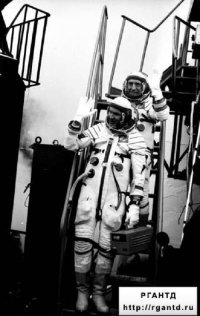
Экипаж космического корабля «Союз-32» – космонавты Ляхов В.А., Рюмин В.В. прощаются с провожающими перед стартом. Байконур, 25 февраля 1979 г. Автор съёмки не установлен. РГАНТД(Российский Государственный Архив Научно-Технической Документации) . Архив №0-14661.
The crew of the Soyuz-32 spacecraft – cosmonauts V.A. Lyakhov and V.V. Ryumin – say goodbye to those seeing them off before launch. Baikonur, February 25, 1979. Photographer unknown. RGANTD (Russian State Archive of Scientific and Technical Documentation). Archive No. 0-14661.
La tripulación de la nave espacial Soyuz-32 —los cosmonautas V.A. Lyakhov y V.V. Ryumin— se despiden de quienes los acompañaban antes del lanzamiento. Baikonur, 25 de febrero de 1979. Fotógrafo desconocido. RGANTD (Archivo Estatal Ruso de Documentación Científica y Técnica). Número de archivo 0-14661.

Clipboard 09 08 2026 17
 
Frimen1917

Frimen1917

Mecca V.I.P.
VIP
Joined
Jan 9, 2026
Messages
3,161
Points
63
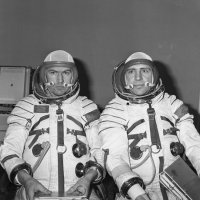
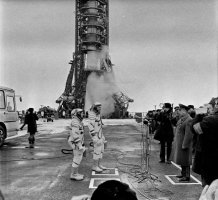
Экипаж космического корабля «Союз-32» – космонавты Ляхов В.А., Рюмин В.В. перед стартом. Байконур, 25 февраля 1979 г.
The crew of the Soyuz-32 spacecraft – cosmonauts V.A. Lyakhov and V.V. Ryumin before launch. Baikonur, February 25, 1979.
La tripulación de la nave espacial Soyuz-32 —los cosmonautas V.A. Lyakhov y V.V. Ryumin antes del lanzamiento.

38 8 21 1
 
Frimen1917

Frimen1917

Mecca V.I.P.
VIP
Joined
Jan 9, 2026
Messages
3,161
Points
63
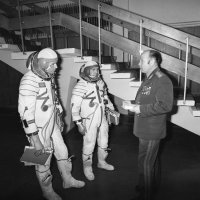
1979 год. На фото слева направо космонавты: В.Рюмин, В.Ляхов, А. Леонов.
1979. In the photo from left to right: cosmonauts: V. Ryumin, V. Lyakhov, A. Leonov.
1979. En la foto de izquierda a derecha: cosmonautas: V. Ryumin, V. Lyakhov, A. Leonov.
38 7 19
 
Frimen1917

Frimen1917

Mecca V.I.P.
VIP
Joined
Jan 9, 2026
Messages
3,161
Points
63
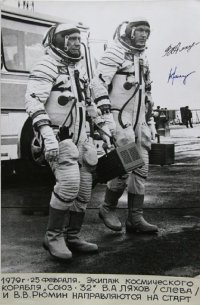
1979 г. 25 февраля. Экипаж космического корабля "Союз-32" В.А.Ляхов(слева) и В.В.Рюмин направляются на старт. На фотографии автографы космонавтов.
February 25, 1979. The crew of the Soyuz-32 spacecraft, V.A. Lyakhov (left) and V.V. Ryumin, are heading to the launch pad. The photo includes the cosmonauts' autographs.
25 de febrero de 1979. La tripulación de la nave espacial Soyuz-32, V.A. Lyakhov (izquierda) y V.V. Ryumin, se dirigen a la plataforma de lanzamiento. La fotografía incluye los autógrafos de los cosmonautas.

Clipboard 09 08 2026 18
 
Top