- Thread starter
- #1,001

Frimen1917
Mecca V.I.P.
VIP
- Joined
- Jan 9, 2026
- Messages
- 3,240
- Points
- 63
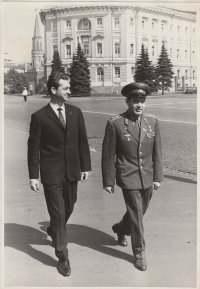
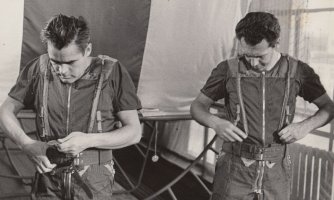
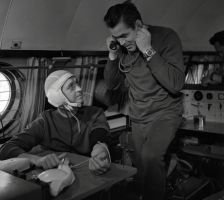
1 июня 1970 года, с космодрома Байконур стартовал космический корабль «Союз-9» с лётчиком-космонавтом на борту Андрияном Николаевым и бортинженером Виталием Севастьяновым. Это был 16 запуск советского космического корабля с космонавтами на борту.
А. Николаев и В. Севастьянов осуществили рекордный на то время по продолжительности полёт вокруг Земли — 17 суток 16 минут 59 сек. Рекорд продолжительности автономного полёта (без стыковки с орбитальной станцией) не побит и по сей день.
Полёт положил начало отработке в космосе средств, необходимых для продолжительных полётов без создания на борту космического корабля искусственной гравитации, кроме этого, доказал, что пребывание человека в космосе (если применять средства для укрепления мышц) может быть достаточно длительным. Однако, в то время комплекс средств для борьбы с невесомостью оказался недостаточным.
Поэтому, после возвращения на Землю оба космонавта испытали значительные трудности с привыканием к земной гравитации и нуждались в медицинской помощи, им было трудно стоять, ходить, атрофировались многие мышцы.
Космонавт Андриян Николаев перенёс перенес тяжелее всего: за полёт потерял 30% мышечной массы, за период полёта сердце уменьшилось в объеме на 12%, костная структура стала рыхлой из-за смывания калия, кальция и изменился состав крови.
С тех пор в медицине появился термин «эффект Николаева», который описывал явления физического и психического разрушения здоровья человека от обездвиженности в условиях невесомости. Около шести суток после возвращения оба члена экипажа находились в госпитале под наблюдением врачей. Для них потребовался насыщенный курс реабилитации — восстановление длилось почти 2 года.
Здоровье космонавтов восстановилось, однако негативные с точки зрения медицины результаты первого долгосрочного полёта заставили учёных пересмотреть многие взгляды на продолжительность безопасного для здоровья пребывания человека в космосе. Были разработаны методики, обеспечивающие физиологическую нагрузку на организм в ходе полёта для сохранения здоровья экипажа, которые и обеспечили возможность современных долговременных экспедиций на орбитальные станции. В частности, в 1971 году был разработан нагрузочный костюм «Пингвин», адаптированные версии которого в настоящее время применяются в восстановительной медицине, при реабилитации пациентов с нарушениями функций опорно-двигательного аппарата, для профилактики, используются велоэргометр, бегущая дорожка и другие средства.
Все это позволило увеличить длительность полета до 185 и более суток (на сегодня рекорд непрерывного полёта 437 суток), и чувствуют себя после долгого полета лучше, чем Севастьянов и Николаев после 18 суток в невесомости. Во время полёта было проведено множество программ, и все они были успешно выполнены.
On June 1, 1970, the Soyuz-9 spacecraft was launched from the Baikonur Cosmodrome with cosmonaut Andriyan Nikolayev and flight engineer Vitaly Sevastyanov on board. This was the 16th launch of a Soviet crewed spacecraft.
A. Nikolayev and V. Sevastyanov completed an Earth-orbiting mission that set a new duration record at the time: 17 days, 16 hours, 59 minutes. The record for the longest autonomous spaceflight (without docking with an orbital station) remains unbroken to this day.
The mission marked the beginning of in-orbit testing of measures needed to support long-duration spaceflight without creating artificial gravity aboard the spacecraft. It also demonstrated that humans could remain in space for extended periods, provided that measures to strengthen their muscles were used. However, the countermeasures available at the time to combat the effects of weightlessness proved insufficient.
As a result, after returning to Earth, both cosmonauts experienced considerable difficulty readjusting to Earth's gravity and required medical assistance. They had difficulty standing and walking, and many of their muscles had atrophied.
Cosmonaut Andriyan Nikolayev was affected most severely. During the flight, he lost 30% of his muscle mass. His heart decreased in volume by 12%, his bones became less dense due to the loss of potassium and calcium, and changes occurred in his blood composition.
The term “Nikolayev effect” subsequently appeared in medical discussions to describe the physical and psychological deterioration associated with prolonged immobility in weightlessness. For approximately six days after their return, both crew members remained in hospital under medical supervision. They required an intensive rehabilitation programme, and their recovery took almost two years.
The cosmonauts eventually recovered, but the medically concerning results of this first long-duration mission prompted scientists to reconsider many of their assumptions about how long humans could safely remain in space. Methods were developed to provide the body with physical exercise during flight and help preserve the crew's health. These measures subsequently made modern long-duration expeditions to orbital stations possible.
In particular, in 1971, the Penguin exercise suit was developed. Adapted versions of this suit are now used in rehabilitation medicine, including the recovery of patients with musculoskeletal disorders. Exercise bikes, treadmills, and other equipment are also used to help maintain physical fitness and prevent the harmful effects of inactivity.
All these measures have made it possible to extend space missions to 185 days or more. The current record for a single continuous spaceflight is 437 days. Today's cosmonauts return from long-duration missions in better physical condition than Sevastyanov and Nikolayev did after spending 18 days in weightlessness.
Numerous experiments and research programmes were conducted during the Soyuz-9 mission, and all of them were successfully completed.
El 1 de junio de 1970, la nave espacial Soyuz-9 despegó del cosmódromo de Baikonur con el cosmonauta Andrián Nikoláyev y el ingeniero de vuelo Vitali Sevastyanov a bordo. Fue el decimosexto lanzamiento de una nave espacial soviética tripulada.
A. Nikoláyev y V. Sevastyanov realizaron un vuelo alrededor de la Tierra que, en aquel momento, estableció un récord de duración: 17 días, 16 horas, 59 minutos y 59 segundos. El récord de duración de un vuelo autónomo (sin acoplamiento a una estación orbital) sigue sin ser superado hasta el día de hoy.
El vuelo marcó el comienzo de los trabajos para desarrollar y probar en el espacio los medios necesarios para realizar vuelos prolongados sin crear gravedad artificial a bordo de la nave. Además, demostró que la permanencia del ser humano en el espacio podía ser bastante prolongada si se utilizaban métodos para fortalecer los músculos. Sin embargo, en aquella época, las medidas para combatir los efectos de la ingravidez resultaron insuficientes.
Por eso, tras regresar a la Tierra, ambos cosmonautas experimentaron grandes dificultades para adaptarse a la gravedad terrestre y necesitaron asistencia médica. Les costaba mantenerse de pie y caminar, y muchos de sus músculos se habían atrofiado.
El cosmonauta Andrián Nikoláyev fue quien sufrió las consecuencias más graves: durante el vuelo perdió el 30 % de su masa muscular; el volumen de su corazón disminuyó un 12 % y la estructura ósea se volvió más porosa debido a la pérdida de potasio y calcio. También se produjeron cambios en la composición de la sangre.
Desde entonces, en medicina se utiliza el término «efecto Nikoláyev» para describir los fenómenos de deterioro físico y psicológico de la salud humana causados por la inmovilidad en condiciones de ingravidez.
Durante aproximadamente seis días después de su regreso, ambos miembros de la tripulación permanecieron hospitalizados bajo observación médica. Necesitaron un intenso programa de rehabilitación, y su recuperación duró casi dos años.
La salud de los cosmonautas se recuperó. Sin embargo, los resultados negativos para la salud del primer vuelo espacial de larga duración llevaron a los científicos a revisar muchas de sus ideas sobre cuánto tiempo podía permanecer una persona en el espacio sin poner en peligro su salud.
Se desarrollaron métodos para proporcionar al organismo una carga fisiológica adecuada durante el vuelo y preservar así la salud de la tripulación. Estos métodos hicieron posibles las actuales expediciones de larga duración a las estaciones orbitales.
En particular, en 1971 se desarrolló el traje de ejercicio «Pingüino». Sus versiones adaptadas se utilizan actualmente en medicina rehabilitadora, en la recuperación de pacientes con trastornos del aparato locomotor y en la prevención de estos problemas. Entre los medios empleados se encuentran las bicicletas ergométricas, las cintas de correr y otros equipos.
Todo esto permitió aumentar la duración de los vuelos espaciales hasta 185 días o más. El récord actual de permanencia ininterrumpida en el espacio es de 437 días. Los cosmonautas de hoy regresan de los vuelos prolongados en mejores condiciones que Sevastyanov y Nikoláyev después de pasar 18 días en ingravidez.
Durante el vuelo se llevaron a cabo numerosos programas científicos y experimentos, y todos se completaron con éxito.
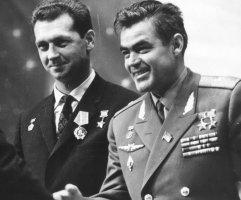
А. Николаев и В. Севастьянов осуществили рекордный на то время по продолжительности полёт вокруг Земли — 17 суток 16 минут 59 сек. Рекорд продолжительности автономного полёта (без стыковки с орбитальной станцией) не побит и по сей день.
Полёт положил начало отработке в космосе средств, необходимых для продолжительных полётов без создания на борту космического корабля искусственной гравитации, кроме этого, доказал, что пребывание человека в космосе (если применять средства для укрепления мышц) может быть достаточно длительным. Однако, в то время комплекс средств для борьбы с невесомостью оказался недостаточным.
Поэтому, после возвращения на Землю оба космонавта испытали значительные трудности с привыканием к земной гравитации и нуждались в медицинской помощи, им было трудно стоять, ходить, атрофировались многие мышцы.
Космонавт Андриян Николаев перенёс перенес тяжелее всего: за полёт потерял 30% мышечной массы, за период полёта сердце уменьшилось в объеме на 12%, костная структура стала рыхлой из-за смывания калия, кальция и изменился состав крови.
С тех пор в медицине появился термин «эффект Николаева», который описывал явления физического и психического разрушения здоровья человека от обездвиженности в условиях невесомости. Около шести суток после возвращения оба члена экипажа находились в госпитале под наблюдением врачей. Для них потребовался насыщенный курс реабилитации — восстановление длилось почти 2 года.
Здоровье космонавтов восстановилось, однако негативные с точки зрения медицины результаты первого долгосрочного полёта заставили учёных пересмотреть многие взгляды на продолжительность безопасного для здоровья пребывания человека в космосе. Были разработаны методики, обеспечивающие физиологическую нагрузку на организм в ходе полёта для сохранения здоровья экипажа, которые и обеспечили возможность современных долговременных экспедиций на орбитальные станции. В частности, в 1971 году был разработан нагрузочный костюм «Пингвин», адаптированные версии которого в настоящее время применяются в восстановительной медицине, при реабилитации пациентов с нарушениями функций опорно-двигательного аппарата, для профилактики, используются велоэргометр, бегущая дорожка и другие средства.
Все это позволило увеличить длительность полета до 185 и более суток (на сегодня рекорд непрерывного полёта 437 суток), и чувствуют себя после долгого полета лучше, чем Севастьянов и Николаев после 18 суток в невесомости. Во время полёта было проведено множество программ, и все они были успешно выполнены.
On June 1, 1970, the Soyuz-9 spacecraft was launched from the Baikonur Cosmodrome with cosmonaut Andriyan Nikolayev and flight engineer Vitaly Sevastyanov on board. This was the 16th launch of a Soviet crewed spacecraft.
A. Nikolayev and V. Sevastyanov completed an Earth-orbiting mission that set a new duration record at the time: 17 days, 16 hours, 59 minutes. The record for the longest autonomous spaceflight (without docking with an orbital station) remains unbroken to this day.
The mission marked the beginning of in-orbit testing of measures needed to support long-duration spaceflight without creating artificial gravity aboard the spacecraft. It also demonstrated that humans could remain in space for extended periods, provided that measures to strengthen their muscles were used. However, the countermeasures available at the time to combat the effects of weightlessness proved insufficient.
As a result, after returning to Earth, both cosmonauts experienced considerable difficulty readjusting to Earth's gravity and required medical assistance. They had difficulty standing and walking, and many of their muscles had atrophied.
Cosmonaut Andriyan Nikolayev was affected most severely. During the flight, he lost 30% of his muscle mass. His heart decreased in volume by 12%, his bones became less dense due to the loss of potassium and calcium, and changes occurred in his blood composition.
The term “Nikolayev effect” subsequently appeared in medical discussions to describe the physical and psychological deterioration associated with prolonged immobility in weightlessness. For approximately six days after their return, both crew members remained in hospital under medical supervision. They required an intensive rehabilitation programme, and their recovery took almost two years.
The cosmonauts eventually recovered, but the medically concerning results of this first long-duration mission prompted scientists to reconsider many of their assumptions about how long humans could safely remain in space. Methods were developed to provide the body with physical exercise during flight and help preserve the crew's health. These measures subsequently made modern long-duration expeditions to orbital stations possible.
In particular, in 1971, the Penguin exercise suit was developed. Adapted versions of this suit are now used in rehabilitation medicine, including the recovery of patients with musculoskeletal disorders. Exercise bikes, treadmills, and other equipment are also used to help maintain physical fitness and prevent the harmful effects of inactivity.
All these measures have made it possible to extend space missions to 185 days or more. The current record for a single continuous spaceflight is 437 days. Today's cosmonauts return from long-duration missions in better physical condition than Sevastyanov and Nikolayev did after spending 18 days in weightlessness.
Numerous experiments and research programmes were conducted during the Soyuz-9 mission, and all of them were successfully completed.
El 1 de junio de 1970, la nave espacial Soyuz-9 despegó del cosmódromo de Baikonur con el cosmonauta Andrián Nikoláyev y el ingeniero de vuelo Vitali Sevastyanov a bordo. Fue el decimosexto lanzamiento de una nave espacial soviética tripulada.
A. Nikoláyev y V. Sevastyanov realizaron un vuelo alrededor de la Tierra que, en aquel momento, estableció un récord de duración: 17 días, 16 horas, 59 minutos y 59 segundos. El récord de duración de un vuelo autónomo (sin acoplamiento a una estación orbital) sigue sin ser superado hasta el día de hoy.
El vuelo marcó el comienzo de los trabajos para desarrollar y probar en el espacio los medios necesarios para realizar vuelos prolongados sin crear gravedad artificial a bordo de la nave. Además, demostró que la permanencia del ser humano en el espacio podía ser bastante prolongada si se utilizaban métodos para fortalecer los músculos. Sin embargo, en aquella época, las medidas para combatir los efectos de la ingravidez resultaron insuficientes.
Por eso, tras regresar a la Tierra, ambos cosmonautas experimentaron grandes dificultades para adaptarse a la gravedad terrestre y necesitaron asistencia médica. Les costaba mantenerse de pie y caminar, y muchos de sus músculos se habían atrofiado.
El cosmonauta Andrián Nikoláyev fue quien sufrió las consecuencias más graves: durante el vuelo perdió el 30 % de su masa muscular; el volumen de su corazón disminuyó un 12 % y la estructura ósea se volvió más porosa debido a la pérdida de potasio y calcio. También se produjeron cambios en la composición de la sangre.
Desde entonces, en medicina se utiliza el término «efecto Nikoláyev» para describir los fenómenos de deterioro físico y psicológico de la salud humana causados por la inmovilidad en condiciones de ingravidez.
Durante aproximadamente seis días después de su regreso, ambos miembros de la tripulación permanecieron hospitalizados bajo observación médica. Necesitaron un intenso programa de rehabilitación, y su recuperación duró casi dos años.
La salud de los cosmonautas se recuperó. Sin embargo, los resultados negativos para la salud del primer vuelo espacial de larga duración llevaron a los científicos a revisar muchas de sus ideas sobre cuánto tiempo podía permanecer una persona en el espacio sin poner en peligro su salud.
Se desarrollaron métodos para proporcionar al organismo una carga fisiológica adecuada durante el vuelo y preservar así la salud de la tripulación. Estos métodos hicieron posibles las actuales expediciones de larga duración a las estaciones orbitales.
En particular, en 1971 se desarrolló el traje de ejercicio «Pingüino». Sus versiones adaptadas se utilizan actualmente en medicina rehabilitadora, en la recuperación de pacientes con trastornos del aparato locomotor y en la prevención de estos problemas. Entre los medios empleados se encuentran las bicicletas ergométricas, las cintas de correr y otros equipos.
Todo esto permitió aumentar la duración de los vuelos espaciales hasta 185 días o más. El récord actual de permanencia ininterrumpida en el espacio es de 437 días. Los cosmonautas de hoy regresan de los vuelos prolongados en mejores condiciones que Sevastyanov y Nikoláyev después de pasar 18 días en ingravidez.
Durante el vuelo se llevaron a cabo numerosos programas científicos y experimentos, y todos se completaron con éxito.