• Legal Notice – MuscleMecca Forums

    MuscleMecca.com is an educational discussion platform. We do not sell, promote, or endorse any bodybuilding gear, supplements, research chemicals, or performance-enhancing substances.

    All discussions are for educational and informational purposes only. Nothing posted on this forum should be considered medical or legal advice.

    Do not attempt to sell, source, or promote illegal substances. Any such activity will result in an immediate and permanent ban and may be reported to the proper authorities.

    By using this site, you agree to comply with all forum rules, disclaimers, and applicable laws in your jurisdiction.

    Read Our Full Disclaimer and Forum Rules

History of Soviet cosmonautics.

Frimen1917

Frimen1917

Mecca V.I.P.
VIP
Joined
Jan 9, 2026
Messages
3,276
Points
63
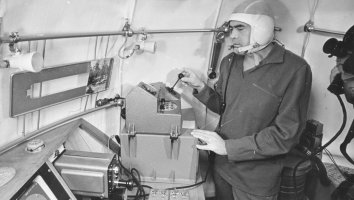
Космонавт Андриян Николаев во время предполетной подготовки.
Cosmonaut Andrian Nikolayev during pre-flight training.
El cosmonauta Andriyan Nikolaev durante los preparativos previos al vuelo.

024 result
 
Frimen1917

Frimen1917

Mecca V.I.P.
VIP
Joined
Jan 9, 2026
Messages
3,276
Points
63
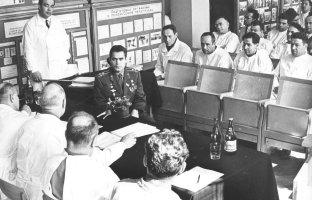
Космонавт Андриян Николаев на врачебной комиссии перед полетом.
Cosmonaut Andrian Nikolayev at the medical board before the flight.
El cosmonauta Andriyan Nikolaev en la comisión médica antes del vuelo.

025 result
 
Frimen1917

Frimen1917

Mecca V.I.P.
VIP
Joined
Jan 9, 2026
Messages
3,276
Points
63
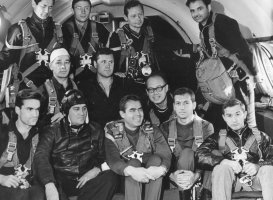
На фото: Андриян Николаев внизу третий слева,Виталий Севастьянов второй справа.
Pictured: Andrian Nikolayev (third from the left, bottom row) and Vitaly Sevastyanov (second from the right).
En la foto: Andriyan Nikolaev abajo, tercero desde la izquierda, Vitaly Sevastyanov segundo desde la derecha.
037 result
 
Frimen1917

Frimen1917

Mecca V.I.P.
VIP
Joined
Jan 9, 2026
Messages
3,276
Points
63
«Человек. Земля. Вселенная» — научно-популярная программа, выходившая в эфир в 1970—1990-х годах на Центральном телевидении СССР.
Программа была создана в 1973 году отделом естественных наук Главной редакции учебных и научно-популярных программ Центрального Телевидения СССР. Тематика — космос и выдающие личности, изучающие его. Ведущим стал лётчик-космонавт Виталий Севастьянов, Герой Советского Союза. Он рассказывал о значимых событиях, открытиях в области изучения космического пространства, проводил выездные и студийные интервью с учёными и специалистами. Программа выходила в эфир еженедельно, по выходным.
Название не является оригинальным: в 1965 году вышла книга Владимира Губарева «Человек. Земля. Вселенная» с рассказами советских учёных об освоении космоса.
Программа была популярна у советских зрителей. Среди школьников провели опрос, какие передачи, по их мнению, нужно показывать чаще — программа «Человек. Земля. Вселенная» вошла в список из 13 наиболее популярных передач.
До начала 1980-х годов в программе звучала песня «Реквием», написанная композитором Анатолием Бальчевым на стихи Андрея Вознесенского.

Над программой работали: В. Воронов, Н. Носкова, Л. Поляк, В. Смеян, Г. Земцов, Ю. Сидельников, Е. Горина, З. Кравцова.
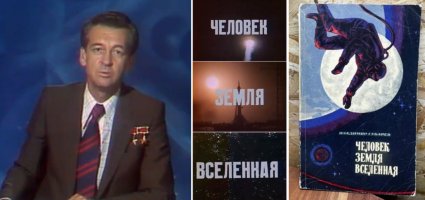
На фото слева направо: космонавт Виталий Севастьянов ведет телепрограмму "Человек, Земля, Вселенная; кадры из заставки программы (1981); обложка книги В.Губарева "Человек, Земля, Вселенная".

“Man. Earth. Universe” was a popular science television programme broadcast on Soviet Central Television from the 1970s to the 1990s.

The programme was created in 1973 by the Natural Sciences Department of the Main Editorial Board of Educational and Popular Science Programmes of Soviet Central Television. Its subject matter focused on space and the prominent individuals who studied it. The host was cosmonaut Vitaly Sevastyanov, a Hero of the Soviet Union. He reported on significant events and discoveries in space exploration and conducted interviews with scientists and specialists, both on location and in the studio. The programme was broadcast weekly, at weekends.
The title was not original. In 1965, Vladimir Gubarev published a book entitled “Man. Earth. Universe”, featuring accounts by Soviet scientists about space exploration.
The programme was popular among Soviet viewers. In a survey of schoolchildren about which television programmes they thought should be broadcast more often, “Man. Earth. Universe” was included among the 13 most popular programmes.
Until the early 1980s, the programme featured the song “Requiem”, composed by Anatoly Balchev to lyrics by Andrei Voznesensky.
The programme's production team included V. Voronov, N. Noskova, L. Polyak, V. Smeyan, G. Zemtsov, Yu. Sidelnikov, E. Gorina and Z. Kravtsova.

In the photos, from left to right: cosmonaut Vitaly Sevastyanov hosting the television programme “Man. Earth. Universe”; frames from the programme's opening sequence (1981); the cover of Vladimir Gubarev's book “Man. Earth. Universe”.
«El hombre. La Tierra. El Universo» fue un programa de divulgación científica emitido por la Televisión Central de la Unión Soviética desde la década de 1970 hasta la de 1990.

El programa fue creado en 1973 por el Departamento de Ciencias Naturales de la Dirección Editorial Principal de Programas Educativos y de Divulgación Científica de la Televisión Central soviética. Su temática se centraba en el espacio y en las personalidades destacadas que lo estudiaban. El presentador era el cosmonauta Vitali Sevastianov, Héroe de la Unión Soviética. Informaba sobre acontecimientos importantes y descubrimientos relacionados con la exploración del espacio y realizaba entrevistas con científicos y especialistas, tanto en exteriores como en el estudio. El programa se emitía semanalmente, los fines de semana.
El título no era original. En 1965, Vladímir Gubariov publicó un libro titulado «El hombre. La Tierra. El Universo», que recogía relatos de científicos soviéticos sobre la exploración del espacio.
El programa gozaba de popularidad entre los telespectadores soviéticos. En una encuesta realizada entre escolares sobre qué programas de televisión consideraban que debían emitirse con mayor frecuencia, «El hombre. La Tierra. El Universo» figuró entre los 13 programas más populares.
Hasta principios de la década de 1980, el programa incluía la canción «Réquiem», compuesta por Anatoli Bálchev con letra del poeta Andréi Voznesenski.
En el equipo del programa trabajaron: V. Voronov, N. Noskova, L. Polyak, V. Smeyan, G. Zemtsov, Yu. Sidelnikov, E. Gorina y Z. Kravtsova.

En las fotografías, de izquierda a derecha: el cosmonauta Vitali Sevastianov presentando el programa de televisión «El hombre. La Tierra. El Universo»; imágenes de la secuencia de apertura del programa (1981); la portada del libro de Vladímir Gubariov «El hombre. La Tierra. El Universo».
 viber 2026 10 15 12 12 18 844
 
Frimen1917

Frimen1917

Mecca V.I.P.
VIP
Joined
Jan 9, 2026
Messages
3,276
Points
63
Телепрограмма "Человек. Земля. Вселенная". Эфир 29 августа 1981
Сюжеты передачи: о запуске болгарского спутника "Интеркосмос-Болгария-1300"; о 20-летии космического полета Германа Титова; о проблемах создания космической пищи; о советско-французской научной экспедиции по изучению свойств солнечной короны, работавшей во время полного солнечного затмения на территории СССР 31 июля 1981 года; об использовании животных в экспериментах в области медико-биологического обеспечения космических полетов. Ведущий - дважды Герой Советского Союза, летчик-космонавт СССР Виталий Севастьянов.Главная редакция научно-популярных и образовательных программ, 1981 г.Режиссер - Василий ВороновОператор - Сергей Урусов.

Television program "Man. Earth. Universe." Aired August 29, 1981.
Program segments: the launch of the Bulgarian satellite "Intercosmos-Bulgaria-1300"; the 20th anniversary of Gherman Titov’s space flight; challenges in developing space food; a joint Soviet-French scientific expedition to study the properties of the solar corona, conducted during the total solar eclipse that occurred over the USSR on July 31, 1981; and the use of animals in experiments related to the biomedical support of space flights. Host: Vitaly Sevastyanov, Pilot-Cosmonaut of the USSR and two-time Hero of the Soviet Union. Produced by the Main Editorial Office for Popular Science and Educational Programs, 1981. Director: Vasily Voronov. Cinematographer: Sergey Urusov.

Programa de televisión «El hombre. La Tierra. El universo». Emitido el 29 de agosto de 1981.
Temas del programa: el lanzamiento del satélite búlgaro «Intercosmos-Bulgaria-1300»; el 20.º aniversario del vuelo espacial de Gherman Titov; los retos de la producción de alimentos espaciales; la expedición científica soviético-francesa para estudiar las propiedades de la corona solar, que tuvo lugar durante el eclipse solar total en la URSS el 31 de julio de 1981; y el uso de animales en experimentos de apoyo médico y biológico para vuelos espaciales. Presentador: Vitaly Sevastyanov, dos veces Héroe de la Unión Soviética y piloto-cosmonauta soviético. Editor jefe de programas de divulgación científica y educativa en 1981. Director: Vasily Voronov. Operador de cámara: Sergey Urusov.

 
Frimen1917

Frimen1917

Mecca V.I.P.
VIP
Joined
Jan 9, 2026
Messages
3,276
Points
63

Передача "Человек, Земля, Вселенная". 109 выпуск. Январь 1981 года. Ведущий Виталий Севастьянов.​

The program "Man, Earth, Universe." Episode 109. January 1981. Hosted by Vitaly Sevastyanov.​

El programa "El hombre, la Tierra, el universo". Episodio 109. Enero de 1981. Presentador: Vitaly Sevastyanov.​

 
Frimen1917

Frimen1917

Mecca V.I.P.
VIP
Joined
Jan 9, 2026
Messages
3,276
Points
63

Передача "Человек, Земля, Вселенная". Выпуск 112. 1981 год. Ведёт передачу - Виталий Севастьянов.​

The program "Man, Earth, Universe." Episode 112. 1981. Hosted by Vitaly Sevastyanov.
El programa "El hombre, la Tierra, el universo". Episodio 112. 1981. Presentador: Vitaly Sevastyanov.
 

MuscleMecca Crew

Mecca Staff
Frimen1917

Frimen1917

Mecca V.I.P.
VIP
Joined
Jan 9, 2026
Messages
3,276
Points
63

Передача "Человек, Земля, Вселенная". 114 выпуск. Ведёт передачу - Виталий Севастьянов.​

"Man, Earth, Universe" program. Episode 114. Hosted by Vitaly Sevastyanov.
Programa "El hombre, la Tierra, el universo". Episodio 114. Presentado por Vitaly Sevastyanov.

 
Frimen1917

Frimen1917

Mecca V.I.P.
VIP
Joined
Jan 9, 2026
Messages
3,276
Points
63

Передача "Человек, Земля Вселенная". 115 выпуск. 1981 год. Ведёт передачу - Виталий Севастьянов.​

The program "Man, Earth, Universe." Episode 115. 1981. Hosted by Vitaly Sevastyanov.
El programa "El hombre, la Tierra, el universo". Episodio 115. 1981. Presentador: Vitaly Sevastyanov.

 
Frimen1917

Frimen1917

Mecca V.I.P.
VIP
Joined
Jan 9, 2026
Messages
3,276
Points
63

Передача "Человек, Земля, Вселенная". 118 выпуск. 1981 год. Ведущий - Виталий Севастьянов.​

The program "Man, Earth, Universe." Episode 118. 1981. Host: Vitaly Sevastyanov.
El programa "El hombre, la Tierra, el universo". Episodio 118. 1981. Presentador: Vitaly Sevastyanov.

 
Frimen1917

Frimen1917

Mecca V.I.P.
VIP
Joined
Jan 9, 2026
Messages
3,276
Points
63
Артур Кларк​

ТРУДНО ПОВЕРИТЬ, ЧТО ЭТО НЕ БЫЛО СНОМ...​

ИНТЕРВЬЮ ФЭНДОМА​

С 14 по 20 июня гостем редакции «ТМ»("Техника-молодежи") был всемирно известный писатель-фантаст Артур Кларк. Читатели отлично знакомы со многими его произведениями, в том числе опубликованным в 1980 году романом «Фонтаны рая», а также с многочисленными высказываниями по проблемам научной фантастики, размышлениями о прошлом и будущем человечества.

Кларк находился в СССР проездом: возвращался в Шри Ланку после получения в Нидерландах премии Маркони, которой был удостоен за теоретическую работу 1946 года о возможности глобальной радиосвязи с помощью спутников.

Неделя, заполненная насыщенной программой, пролетела быстро. Кто расскажет о ней лучше всех! Видимо, сам писатель.

Предлагаем вашему вниманию отчет Артура Кларка о поездке в Советский Союз, написанный им сразу же по возвращении в Коломбо и присланный к нам в редакцию.

"Как теперь я понимаю, поездка в Гаагу и получение премии Маркони были всего-навсего прелюдией к моему путешествию в Советский Союз. Попрощавшись со своими гостеприимными хозяевами в Гааге, я появился в Москве вечером 14 июня. В аэропорту меня встретили временный поверенный Шри Ланки в Советском Союзе Каси Четти и мой давний друг Василий, редактор журнала «Техника — молодежи». Присутствовали также Олег Битов, переводчик двух моих последних романов, и Света, гид.

Было уже поздно, но еще вполне светло (я так и не смог привыкнуть к этому после двух десятилетий, прожитых рядом с экватором); это позволило нам съездить на Красную площадь и сфотографироваться у Мавзолея В. И. Ленина. Затем меня отвезли в гостиницу «Украина», где я прекрасно выспался, а наутро услышал хорошие новости по радио.

15 июня — один из самых памятных дней в моей жизни. Сначала Василий показал мне впечатляющую коллекцию космических кораблей на ВДНХ, где, в частности, высится под открытым небом гигантская ракета-носитель «Восток». Потом мы двинулись в Звездный городок, расположенный в 50 километрах от Москвы. Я слегка опасался, что из-за моего фотоаппарата могут возникнуть какие-нибудь недоразумения; но нет — никто не мешал мне снимать все, что я хотел…

Огорчительно было узнать, что мой любимый космонавт, генерал Алексей Леонов (командир миссии «Союз» — «Аполлон» и первый в мире человек, вышедший в открытый космос), будет в это время в Байконуре готовить совместный советско-французский полет. И я был очень обрадован, когда увидел его в окружении телевизионной бригады, встречающей меня у входа в административное здание. Мы приветствовали друг друга медвежьими объятиями, и он передал меня двум другим космонавтам — Виталию Севастьянову и Валерию Ляхову (которого, кстати, я совсем недавно катал на своем аппарате, что на воздушной подушке).

Алексей повел меня к своему командиру, генералу Береговому (летавшему на «Союзе-3»), который угостил меня интересной, но слегка неожиданной лекцией о прискорбных вещах, которые делает человек с окружающей средой. (Переводить это для Светланы было настоящей мукой: она заявила, что не знает никаких терминов. К концу поездки, однако, она признала, что ученые, с которыми нам довелось встретиться, оказались вполне доброжелательными людьми.)

Затем мы с Алексеем обменялись сувенирами (он вручил мне свой последний альбом «Жизнь среди звезд») и направились в кинотеатр Центра. Я посмотрел фильм «Наш Юра», который, как мне объяснили, не показывают больше нигде. Здесь запечатлены все этапы подготовки Гагарина и эпизоды из его семейной жизни; время от времени на экране появлялся молодой Алексей Леонов, и я мог только догадываться, какие воспоминания пробуждают эти кадры у сидящего рядом со мной 48-летнего генерала.

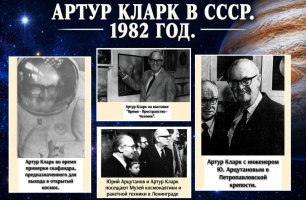
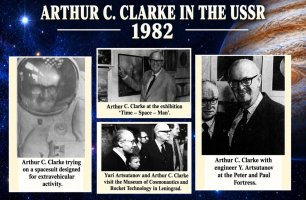
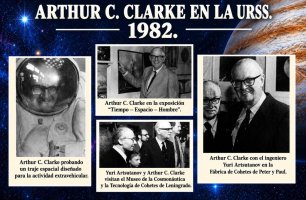
Затем в сопровождении телекамер мы посетили тренажеры «Союза» и «Салюта», на которых только что тренировался советско-французский экипаж. Так как корабль разработан для невесомости, было нелегко на Земле преодолеть некоторые узкие проходы. Затем меня, ко всеобщему веселью, запихнули в космический скафандр, и я сфотографировался в нем, бессмысленно улыбаясь сквозь иллюминатор.

Оставив здание, мы прошли к памятнику Гагарину. Космонавт Севастьянов показал себя умелым телевизионным журналистом. Мы почти закончили съемку, Алексей задавал вопросы по «Одиссее-2» (а мы впервые встретились в 1968 году в Вене на премьере «Одиссеи-1»), когда небеса разверзлись и нам пришлось спасаться бегством от хлынувшего дождя.

Затем — кабинет Гагарина. Здесь все осталось так, как в момент его гибели. На часах навсегда остановленное время трагедии. «Я слышал этот взрыв», — хмуро сказал Алексей. И добавил, что причина аварии так окончательно и не установлена. Он подарил мне вещь, своей ценностью сравнимую лишь с экземпляром автобиографии Юрия Гагарина, которую первый космонавт Земли подписал мне в 1961 году, — маленький кусочек реактивного самолета, на котором он погиб. Алексей выдал мне и другую редкость — красивую медаль, выпущенную к 20-летию полета Гагарина.

Наконец мы оказались в квартире Алексея, где его жена (еще одна Светлана!) приготовила угощение. Я познакомился и с очаровательным маленьким попугаем Лолитой, которая обычно сидит на плече хозяина, но иногда кружит по комнате, издавая дикие вопли. И здесь между тостами я признался, что большая часть «Одиссеи-2» протекает на борту космического корабля, на котором летят семь русских и три американца и который называется «Космонавт Алексей Леонов». Это, разумеется, Алексею очень понравилось, и теперь весь Советский Союз слышал благодаря телевидению его блестящий экспромт: «О, я буду прекрасным кораблем!» (Так оно и есть.)

На этом мы расстались. Потом был ужин в посольстве Шри Ланки и ночной экспресс в Ленинград, где мы с Василием, еще полусонные, были атакованы телевизионными камерами около 7 часов утра, чуть ступили на перрон. Меня поджидал новый сюрприз — среди встречающих был Юрий Арцутанов, изобретатель космического лифта (эта идея лежит в основе «Фонтанов рая» — моей последней, как я считал совсем недавно, книги). Он показался мне застенчивым, скромным человеком. Надеюсь, что поднятая шумиха не слишком нарушила течение его жизни.

Два дня в Ленинграде (теперь я понимаю, почему город называют «Северной Венецией») прошли невероятно быстро. Основные события: телевизионное интервью в музее газодинамической лаборатории, где расположена экспозиция, показывающая историю развития советских ракет; демонстрация моих шри-ланкийских слайдов в местном Союзе писателей; случайная встреча в ресторане гостиницы с физиком-ядерщиком из Оак Ридж; посещение загородной резиденции царей размером приблизительно с Версаль с ее знаменитыми статуями и фонтанами (мои коллеги неизменно называли их фонтанами рая); полноценный день в 10 часов вечера; и разумеется, Эрмитаж…

Мы провели там всего час; вероятно, это чересчур мало для знакомства с двумя с лишним миллионами экспонатов. Когда я оказался снаружи, пошатываясь от «культурного шока», то изобрел новый пассивный глагол, передающий это состояние: «быть эрмитажированным».

На второй день удалось выкроить время для часовой записи на Ленинградском телевидении. Сразу после этого мы вернулись на ночном экспрессе в Москву.

В пятницу 18 июня состоялись две важные встречи — первая с генеральным директором «Интерспутника» Юрием Крупиным, вторая — с заместителем министра связи Юрием Зубаревым. Им обоим я представил проект шри-ланкийского центра спутниковой связи и попросил о поддержке. А вечером мы встретились с двадцатью писателями-фантастами и издателями в Союзе писателей. За ужином я ухитрился обойтись всего одним бокалом вина (это мой оперативный предел).

В субботнее утро 19 июня, к моему удовольствию и удивлению, директор Института космических исследований академик Р. Сагдеев собрал своих ведущих ученых на двухчасовую встречу. Особенно интересно было познакомиться с Н. Кардашевым, выдвинувшим наиболее впечатляющие идеи о сверхцивилизациях. Когда я пожалел об отсутствии другого известного специалиста в этой области, И. Шкловского, мне очень серьезно объяснили, что Николай и Иосиф не могут одновременно находиться в одном помещении: последует аннигиляция, которая разрушит весь город.

Воскресенье 20 июня было последним днем в СССР. Василий и Светлана отвезли меня к Сергею Капице, известному сыну ученика Резерфорда, легендарного Петра Капицы. Здесь мы сделали часовую телевизионную запись для передачи «Очевидное — невероятное», которую профессор Капица ведет многие годы. Кстати, из встреченных мною русских лишь у него не было никакого акцента: его где угодно приняли бы за англичанина с университетским образованием. Он объяснил, что родился в Кэмбридже, — так что многие англичане наверняка посчитали бы, что у него есть акцент…

Когда, вернувшись в гостиницу, я свалился в постель, раздался настойчивый стук в дверь. Решив, что это либо журналист, либо кто-нибудь, решивший преподнести собственную книгу с автографом (а их и без того собралась двухметровая стопка, так что пришлось переправлять их в Шри Ланку через посольство), я не среагировал. Несколько минут спустя раздался телефонный звонок. Оказывается, кто-то пытался сообщить мне, что одна из отснятых с моим участием телевизионных программ уже в эфире; но, даже зная это, я вряд ли смог бы подняться.

Последний вечер в Москве ушел на подготовку моего послесловия к книге о научно-фантастической живописи, которую издает Василий; затем, пока Светлана упаковывала чемодан, я смотрел телепередачу с конкурса Чайковского. Она подарила мне переведенное ею стихотворение Тютчева, и я теперь начинаю понимать заключенные в нем чувства.

Умом Россию не понять,​

Аршином общим не измерить:​

У ней особенная стать —​

В Россию можно только верить.​

Потом, усмехнувшись одними глазами, она сказала последний комплимент: «Вы ни капельки не похожи на англичанина».

Около полуночи, когда мы уже готовились ехать в аэропорт, чтобы успеть на трехчасовой (ох!) самолет Аэрофлота в Шри Ланку, позвонил Алексей Леонов: перед вылетом на космодром выкроил минутку, чтобы пожелать счастливого пути. Я попросил передать наилучшие пожелания участникам советско-французской экспедиции.

Светлана, Василий и Каси Четти быстро покончили с формальностями в великолепном (и почти пустом в этот поздний час) аэропорту Шереметьево-2. Как и раньше, Аэрофлот оказался точен. Я был поражен доброжелательством, с которым стюардесса встречала ручной багаж (куклы, рюкзаки…), иногда равный по объему владельцам. Мне повезло — рядом оказались три пустых сиденья, и, хотя здесь было не столь удобно, как в спальном вагоне Москва — Ленинград, я вышел в Коломбо достаточно бодрым. Здесь меня поджидали примерно 200 почтовых посланий, включая гранки «Одиссеи-2», с требованием редактора телефонировать все исправления в Нью-Йорк в ближайшие 48 часов.

Жизнь снова вернулась в нормальное русло, и было трудно поверить, что все это не было сном…

Коломбо, 27 июня​

А. Кларк, 1982

Журнал «Техника-молодежи».— 1982.— № 10.— С. 16–18.

Перевод в электронный вид Ю. Зубакин


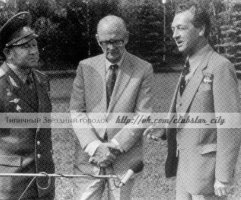
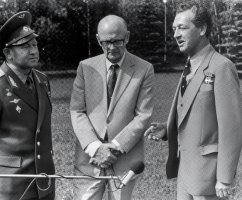
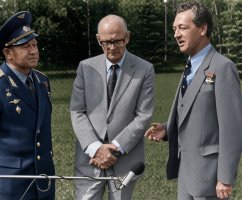
На фото слева направо: космонавт Алексей Леонов, писатель-фантаст Артур Кларк, космонавт Виталий Севастьянов (фрагмент беседы). Представляем здесь оригинальное фото плохого качества, найденное в интернете, мягкую реставрацию черно-белого фото, мягкую колоризацию этой фотографии. В данный момент ищем видео беседы, которая запечатлена на фото.
Arthur Clarke​

IT’S HARD TO BELIEVE THIS WASN’T A DREAM…​

A FANDOM INTERVIEW​

From 14 to 20 June the editorial office of TM(Tekhnika-molodyozhi) was visited by the world-famous science-fiction writer Arthur Clarke. Readers are thoroughly familiar with many of his works, including the novel The Fountains of Paradise published in 1980, as well as with his numerous statements on the problems of science fiction and his reflections on the past and future of mankind.

Clarke was in the USSR in transit: he was returning to Sri Lanka after receiving the Marconi Prize in the Netherlands, which had been awarded to him for his theoretical work of 1945/1946 on the possibility of global radio communication by means of satellites.

The week, packed with a busy programme, flew by quickly. Who can tell about it better than anyone? Apparently, the writer himself.

We offer our readers Arthur Clarke’s report on his trip to the Soviet Union, written by him immediately upon his return to Colombo and sent to our editorial office.

As I now understand, the trip to The Hague and the receipt of the Marconi Prize were merely a prelude to my journey to the Soviet Union. Having said goodbye to my hospitable hosts in The Hague, I appeared in Moscow on the evening of 14 June. At the airport I was met by the Chargé d’Affaires of Sri Lanka in the Soviet Union, Kasi Chetty, and my old friend Vasiliy, the editor of the magazine Tekhnika – Molodyozhi. Also present were Oleg Bitov, the translator of my two latest novels, and Sveta, the guide.

It was already late, but still quite light (I have never been able to get used to this after two decades of living near the equator); this allowed us to go to Red Square and have our photographs taken at the Mausoleum of V. I. Lenin. Then I was taken to the Hotel Ukraina, where I slept excellently, and in the morning I heard good news on the radio.

15 June is one of the most memorable days of my life. First Vasiliy showed me the impressive collection of spacecraft at the Exhibition of Economic Achievements (VDNKh), where, in particular, the giant Vostok launch vehicle stands under the open sky. Then we set off for Star City, situated 50 kilometres from Moscow. I was a little apprehensive that my camera might cause some misunderstandings; but no — no one prevented me from photographing everything I wanted…

It was disappointing to learn that my favourite cosmonaut, General Alexei Leonov (commander of the Soyuz–Apollo mission and the first man in the world to walk in open space), would be at Baikonur at that time preparing the joint Soviet–French flight. And I was very glad when I saw him surrounded by a television crew meeting me at the entrance to the administrative building. We greeted each other with bear hugs, and he handed me over to two other cosmonauts — Vitaly Sevastyanov and Valery Lyakhov (whom, by the way, I had only recently taken for a ride in my hovercraft).

Alexei took me to his commander, General Beregovoy (who had flown on Soyuz-3), who treated me to an interesting but slightly unexpected lecture on the regrettable things that man is doing to the environment. (Translating this for Svetlana was a real torment: she declared that she knew none of the terms. By the end of the trip, however, she admitted that the scientists we had met had turned out to be quite friendly people.)

Then Alexei and I exchanged souvenirs (he presented me with his latest album Life Among the Stars) and we went to the Centre’s cinema. I watched the film Our Yura, which, I was told, is not shown anywhere else. It records all the stages of Gagarin’s training and episodes from his family life; from time to time the young Alexei Leonov appeared on the screen, and I could only guess what memories these frames awakened in the 48-year-old general sitting next to me.

Then, accompanied by television cameras, we visited the Soyuz and Salyut simulators on which the Soviet–French crew had just been training. Since the spacecraft is designed for weightlessness, it was not easy on Earth to negotiate some of the narrow passages. Then, to everyone’s amusement, I was stuffed into a spacesuit and photographed in it, smiling meaninglessly through the visor.

Leaving the building, we walked to the Gagarin monument. Cosmonaut Sevastyanov proved himself a skilful television journalist. We had almost finished the filming; Alexei was asking questions about Odyssey Two (we had first met in 1968 in Vienna at the premiere of Odyssey One), when the heavens opened and we had to flee from the pouring rain.

Then — Gagarin’s office. Everything here remains as it was at the moment of his death. The clocks are permanently stopped at the time of the tragedy. “I heard that explosion,” Alexei said grimly. And he added that the cause of the accident has still not been finally established. He presented me with an object whose value is comparable only to the copy of Yuri Gagarin’s autobiography which the first cosmonaut of the Earth signed for me in 1961 — a small fragment of the jet aircraft in which he perished. Alexei also gave me another rarity — a beautiful medal issued for the 20th anniversary of Gagarin’s flight.

Finally we found ourselves in Alexei’s flat, where his wife (another Svetlana!) had prepared a meal. I also made the acquaintance of the charming little parrot Lolita, who usually sits on her master’s shoulder but sometimes circles round the room uttering wild screams. And here, between toasts, I confessed that a large part of Odyssey Two takes place on board a spaceship on which seven Russians and three Americans are flying and which is called Cosmonaut Alexei Leonov. This, of course, pleased Alexei very much, and now the whole of the Soviet Union has heard, thanks to television, his brilliant impromptu: “Oh, I shall be a fine ship!” (And so it is.)

At this point we parted. Then there was a dinner at the Sri Lanka Embassy and the night express to Leningrad, where Vasiliy and I, still half-asleep, were attacked by television cameras at about 7 a.m., the moment we stepped onto the platform. A new surprise awaited me — among those meeting us was Yuri Artsutanov, the inventor of the space elevator (this idea lies at the basis of The Fountains of Paradise — my last book, as I had considered it until quite recently). He struck me as a shy, modest man. I hope the fuss that has been raised has not too greatly disturbed the course of his life.

Two days in Leningrad (now I understand why the city is called the “Venice of the North”) passed incredibly quickly. The main events: a television interview in the museum of the Gas-Dynamics Laboratory, where there is an exhibition showing the history of the development of Soviet rockets; a showing of my Sri Lankan slides at the local Writers’ Union; a chance meeting in the hotel restaurant with a nuclear physicist from Oak Ridge; a visit to the suburban residence of the tsars, approximately the size of Versailles, with its famous statues and fountains (my colleagues invariably called them the fountains of paradise); a full day lasting until 10 p.m.; and, of course, the Hermitage…

We spent only an hour there; probably that is far too little for an acquaintance with more than two million exhibits. When I found myself outside, staggering from “culture shock”, I invented a new passive verb to convey this state: “to be hermitaged”.

On the second day it proved possible to find time for an hour’s recording on Leningrad Television. Immediately afterwards we returned by night express to Moscow.

On Friday 18 June two important meetings took place — the first with the Director-General of Intersputnik, Yuri Krupin, the second with the Deputy Minister of Communications, Yuri Zubarev. To both of them I presented the project for a Sri Lankan satellite-communications centre and asked for support. And in the evening we met twenty science-fiction writers and publishers at the Writers’ Union. At dinner I managed to limit myself to a single glass of wine (that is my operational limit).

On the morning of Saturday 19 June, to my pleasure and surprise, the Director of the Institute of Space Research, Academician R. Sagdeev, assembled his leading scientists for a two-hour meeting. It was especially interesting to make the acquaintance of N. Kardashev, who has put forward the most impressive ideas about supercivilisations. When I expressed regret at the absence of another well-known specialist in this field, I. Shklovsky, I was very seriously informed that Nikolai and Iosif cannot be in the same room at the same time: annihilation would follow which would destroy the entire city.

Sunday 20 June was the last day in the USSR. Vasiliy and Svetlana took me to Sergei Kapitsa, the well-known son of Rutherford’s pupil, the legendary Pyotr Kapitsa. Here we made an hour’s television recording for the programme The Obvious and the Incredible, which Professor Kapitsa has been presenting for many years. Incidentally, of all the Russians I met, only he had no accent at all: he would have been taken anywhere for an Englishman with a university education. He explained that he had been born in Cambridge — so many Englishmen would certainly have considered that he did have an accent…

When, having returned to the hotel, I collapsed into bed, there came an insistent knocking at the door. Deciding that it was either a journalist or someone who had decided to present his own book with an autograph (and a two-metre stack of them had already accumulated, so that they had to be sent to Sri Lanka via the Embassy), I did not react. A few minutes later the telephone rang. It turned out that someone had been trying to tell me that one of the television programmes filmed with my participation was already on the air; but even knowing this, I should hardly have been able to get up.

The last evening in Moscow was spent preparing my afterword to a book on science-fiction painting which Vasiliy is publishing; then, while Svetlana packed the suitcase, I watched a television broadcast of the Tchaikovsky Competition. She presented me with a translation she had made of a poem by Tyutchev, and I am now beginning to understand the feelings contained in it.

You cannot understand Russia with the mind,​

You cannot measure her with a common yardstick:​

She has a special stature —​

In Russia one can only believe.​

Then, smiling only with her eyes, she paid the final compliment: “You don’t look in the least like an Englishman.”

Around midnight, when we were already preparing to leave for the airport in order to catch the three-hour (oh!) Aeroflot flight to Sri Lanka, Alexei Leonov telephoned: before flying off to the cosmodrome he had found a minute to wish me a happy journey. I asked him to convey my best wishes to the participants in the Soviet–French expedition.

Svetlana, Vasiliy and Kasi Chetty quickly dealt with the formalities in the magnificent (and almost empty at that late hour) Sheremetyevo-2 airport. As before, Aeroflot was punctual. I was impressed by the goodwill with which the stewardess welcomed hand luggage (dolls, rucksacks…), sometimes equal in volume to their owners. I was lucky — there were three empty seats next to me, and although it was not as comfortable as the sleeping-car from Moscow to Leningrad, I arrived in Colombo sufficiently cheerful. Waiting for me there were about 200 items of post, including the proofs of Odyssey Two, with the editor’s demand that all corrections be telephoned to New York within the next 48 hours.

Life returned to its normal course, and it was hard to believe that all this had not been a dream…

Colombo, 27 June​

A. Clarke, 1982

Tekhnika-molodyozhi. – 1982. – No. 10. – pp. 16–18.

Electronic transcription by Yu. Zubakin


In the photograph, left to right: cosmonaut Alexei Leonov, science-fiction writer Arthur Clarke, cosmonaut Vitaly Sevastyanov (a fragment of the conversation). We present here the original poor-quality photograph found on the Internet, a soft restoration of the black-and-white photo, and a soft colourisation of this photograph. At the present moment we are searching for the video of the conversation captured in the photograph.

Arthur Clarke​

ES DIFÍCIL CREER QUE ESTO NO HAYA SIDO UN SUEÑO…​

UNA ENTREVISTA DEL FANDOOM​

Del 14 al 20 de junio la redacción de TM(Tekhnika-molodyozhi) recibió la visita del escritor de ciencia ficción de renombre mundial Arthur Clarke. Los lectores conocen perfectamente muchas de sus obras, entre ellas la novela Las fuentes del paraíso publicada en 1980, así como sus numerosas declaraciones sobre los problemas de la ciencia ficción y sus reflexiones sobre el pasado y el futuro de la humanidad.

Clarke se encontraba en la URSS de paso: regresaba a Sri Lanka después de recibir en los Países Bajos el Premio Marconi, que le había sido concedido por su trabajo teórico de 1945/1946 sobre la posibilidad de la radiocomunicación global mediante satélites.

La semana, repleta de un denso programa, pasó volando. ¿Quién puede contarla mejor que nadie? Aparentemente, el propio escritor.

Ofrecemos a nuestros lectores el informe de Arthur Clarke sobre su viaje a la Unión Soviética, escrito por él inmediatamente después de su regreso a Colombo y enviado a nuestra redacción.

Como ahora comprendo, el viaje a La Haya y la recepción del Premio Marconi no fueron más que el preludio de mi viaje a la Unión Soviética. Tras despedirme de mis hospitalarios anfitriones en La Haya, aparecí en Moscú la tarde del 14 de junio. En el aeropuerto me recibieron el Encargado de Negocios de Sri Lanka en la Unión Soviética, Kasi Chetty, y mi viejo amigo Vasiliy, redactor de la revista Tekhnika – Molodyozhi. También estaban presentes Oleg Bitov, traductor de mis dos últimas novelas, y Sveta, la guía.

Ya era tarde, pero todavía había bastante luz (nunca he podido acostumbrarme a esto después de dos décadas viviendo cerca del ecuador); eso nos permitió ir a la Plaza Roja y fotografiarnos junto al Mausoleo de V. I. Lenin. Luego me llevaron al Hotel Ukraina, donde dormí excelentemente, y por la mañana oí buenas noticias por la radio.

El 15 de junio es uno de los días más memorables de mi vida. Primero Vasiliy me mostró la impresionante colección de naves espaciales en la Exposición de Logros de la Economía Nacional (VDNKh), donde, en particular, se alza al aire libre el gigantesco cohete portador Vostok. Después nos dirigimos a la Ciudad de las Estrellas, situada a 50 kilómetros de Moscú. Temía un poco que mi cámara fotográfica pudiera provocar algún malentendido; pero no: nadie me impidió fotografiar todo lo que quise…

Fue decepcionante saber que mi cosmonauta favorito, el general Alexéi Leonov (comandante de la misión Soyuz–Apolo y el primer hombre del mundo en salir al espacio abierto), estaría en ese momento en Baikonur preparando el vuelo conjunto soviético-francés. Y me alegré mucho cuando lo vi rodeado de un equipo de televisión que me recibía a la entrada del edificio administrativo. Nos saludamos con abrazos de oso, y él me entregó a otros dos cosmonautas: Vitali Sevastianov y Valeri Liájov (a quien, por cierto, yo había llevado recientemente a dar una vuelta en mi aerodeslizador).

Alexéi me llevó ante su comandante, el general Beregovói (que había volado en el Soyuz-3), quien me obsequió con una interesante pero un tanto inesperada conferencia sobre las lamentables cosas que el hombre está haciendo al medio ambiente. (Traducir esto para Svetlana fue un auténtico tormento: declaró que no conocía ninguno de los términos. Al final del viaje, sin embargo, admitió que los científicos con los que nos habíamos encontrado resultaron ser personas bastante amables.)

Luego Alexéi y yo intercambiamos recuerdos (él me regaló su último álbum La vida entre las estrellas) y nos dirigimos al cine del Centro. Vi la película Nuestro Yura, que, según me dijeron, no se proyecta en ninguna otra parte. En ella se recogen todas las etapas del entrenamiento de Gagarin y episodios de su vida familiar; de vez en cuando aparecía en la pantalla el joven Alexéi Leonov, y yo solo podía imaginar qué recuerdos despertaban esos fotogramas en el general de 48 años sentado a mi lado.

Después, acompañados por las cámaras de televisión, visitamos los simuladores del Soyuz y del Saliut en los que acababa de entrenarse la tripulación soviético-francesa. Como la nave está diseñada para la ingravidez, no fue fácil en la Tierra superar algunos de los pasillos estrechos. Luego, para diversión general, me metieron en un traje espacial y me fotografiaron en él, sonriendo sin sentido a través de la visera.

Al salir del edificio, caminamos hacia el monumento a Gagarin. El cosmonauta Sevastianov se mostró como un hábil periodista de televisión. Casi habíamos terminado la filmación; Alexéi hacía preguntas sobre Odisea Dos (nos habíamos conocido por primera vez en 1968 en Viena en el estreno de Odisea Uno), cuando se abrieron los cielos y tuvimos que huir de la lluvia torrencial.

Luego — el despacho de Gagarin. Aquí todo permanece como estaba en el momento de su muerte. Los relojes están detenidos para siempre en la hora de la tragedia. «Oí aquella explosión», dijo Alexéi sombríamente. Y añadió que la causa del accidente aún no se ha establecido definitivamente. Me regaló un objeto cuyo valor solo es comparable al ejemplar de la autobiografía de Yuri Gagarin que el primer cosmonauta de la Tierra me firmó en 1961: un pequeño fragmento del avión de reacción en el que pereció. Alexéi me dio también otra rareza: una hermosa medalla emitida con motivo del 20.º aniversario del vuelo de Gagarin.

Por fin nos encontramos en el piso de Alexéi, donde su esposa (¡otra Svetlana!) había preparado una comida. También conocí al encantador pequeño loro Lolita, que suele posarse en el hombro de su dueño, pero a veces da vueltas por la habitación emitiendo gritos salvajes. Y aquí, entre brindis, confesé que gran parte de Odisea Dos transcurre a bordo de una nave espacial en la que vuelan siete rusos y tres estadounidenses y que se llama Cosmonauta Alexéi Leonov. Esto, por supuesto, le gustó mucho a Alexéi, y ahora toda la Unión Soviética ha oído, gracias a la televisión, su brillante improvisación: «¡Oh, seré una nave estupenda!» (Y así es.)

En ese momento nos separamos. Luego hubo una cena en la embajada de Sri Lanka y el expreso nocturno a Leningrado, donde Vasiliy y yo, todavía medio dormidos, fuimos asaltados por las cámaras de televisión hacia las 7 de la mañana, en el momento en que pisamos el andén. Me esperaba una nueva sorpresa: entre los que nos recibían estaba Yuri Artsutánov, el inventor del ascensor espacial (esta idea está en la base de Las fuentes del paraíso, mi último libro, según creía hasta hace muy poco). Me pareció un hombre tímido y modesto. Espero que el alboroto suscitado no haya alterado demasiado el curso de su vida.

Dos días en Leningrado (ahora comprendo por qué la ciudad se llama la «Venecia del Norte») pasaron increíblemente rápido. Los principales acontecimientos: una entrevista televisiva en el museo del Laboratorio de Gasodinámica, donde hay una exposición que muestra la historia del desarrollo de los cohetes soviéticos; una proyección de mis diapositivas de Sri Lanka en la Unión local de Escritores; un encuentro casual en el restaurante del hotel con un físico nuclear de Oak Ridge; una visita a la residencia suburbana de los zares, aproximadamente del tamaño de Versalles, con sus famosas estatuas y fuentes (mis colegas las llamaban invariablemente las fuentes del paraíso); un día completo que se prolongó hasta las 10 de la noche; y, por supuesto, el Hermitage…

Pasamos allí solo una hora; probablemente es demasiado poco para conocer más de dos millones de piezas. Cuando me encontré fuera, tambaleándome por el «choque cultural», inventé un nuevo verbo pasivo para transmitir ese estado: «ser hermitageado».

El segundo día fue posible encontrar tiempo para una grabación de una hora en la Televisión de Leningrado. Inmediatamente después regresamos en el expreso nocturno a Moscú.

El viernes 18 de junio tuvieron lugar dos importantes encuentros: el primero con el Director General de Intersputnik, Yuri Krupin, y el segundo con el Viceministro de Comunicaciones, Yuri Zubarev. A ambos les presenté el proyecto de un centro de comunicaciones por satélite de Sri Lanka y les pedí apoyo. Y por la noche nos reunimos con veinte escritores de ciencia ficción y editores en la Unión de Escritores. En la cena logré limitarme a una sola copa de vino (ese es mi límite operativo).

La mañana del sábado 19 de junio, para mi placer y sorpresa, el Director del Instituto de Investigaciones Espaciales, el académico R. Sagdéyev, reunió a sus principales científicos para una reunión de dos horas. Fue especialmente interesante conocer a N. Kardashov, que ha formulado las ideas más impresionantes sobre las supercivilizaciones. Cuando expresé mi pesar por la ausencia de otro conocido especialista en este campo, I. Shklovski, me explicaron muy seriamente que Nikolai e Iósif no pueden estar en la misma habitación al mismo tiempo: se produciría una aniquilación que destruiría toda la ciudad.

El domingo 20 de junio fue el último día en la URSS. Vasiliy y Svetlana me llevaron a casa de Sergéi Kapitsa, el conocido hijo del discípulo de Rutherford, el legendario Piotr Kapitsa. Allí hicimos una grabación televisiva de una hora para el programa Lo evidente y lo increíble, que el profesor Kapitsa presenta desde hace muchos años. Por cierto, de todos los rusos que conocí, solo él no tenía ningún acento: en cualquier lugar lo habrían tomado por un inglés con formación universitaria. Explicó que había nacido en Cambridge, de modo que muchos ingleses seguramente habrían considerado que sí tenía acento…

Cuando, de regreso al hotel, me desplomé en la cama, se oyeron unos golpes insistentes en la puerta. Decidiendo que se trataba de un periodista o de alguien que había decidido regalarme su propio libro con autógrafo (y ya se había acumulado una pila de dos metros, de modo que hubo que enviarlos a Sri Lanka a través de la embajada), no reaccioné. Unos minutos después sonó el teléfono. Resultó que alguien intentaba comunicarme que uno de los programas de televisión filmados con mi participación ya estaba en antena; pero incluso sabiéndolo, difícilmente habría podido levantarme.

La última noche en Moscú se dedicó a preparar mi epílogo para un libro sobre pintura de ciencia ficción que publica Vasiliy; luego, mientras Svetlana hacía la maleta, vi una retransmisión televisiva del Concurso Chaikovski. Ella me regaló una traducción que había hecho de un poema de Tiútchev, y ahora empiezo a comprender los sentimientos que contiene.

No se puede comprender Rusia con la mente,​

No se la puede medir con un metro común:​

Tiene una estatura especial —​

En Rusia solo se puede creer.​

Luego, sonriendo solo con los ojos, me hizo el último cumplido: «No te pareces en absoluto a un inglés».

Hacia la medianoche, cuando ya nos preparábamos para ir al aeropuerto a fin de coger el vuelo de tres horas (¡oh!) de Aeroflot a Sri Lanka, telefoneó Alexéi Leonov: antes de partir hacia el cosmódromo había encontrado un minuto para desearme buen viaje. Le pedí que transmitiera mis mejores deseos a los participantes en la expedición soviético-francesa.

Svetlana, Vasiliy y Kasi Chetty resolvieron rápidamente los trámites en el magnífico (y casi vacío a esa hora tan tardía) aeropuerto de Sheremétievo-2. Como siempre, Aeroflot fue puntual. Me impresionó la amabilidad con que la azafata acogía el equipaje de mano (muñecas, mochilas…), a veces de un volumen igual al de sus dueños. Tuve suerte: había tres asientos vacíos a mi lado, y aunque no era tan cómodo como el coche-cama de Moscú a Leningrado, llegué a Colombo suficientemente descansado. Me esperaban allí unos 200 envíos postales, incluidas las pruebas de Odisea Dos, con la exigencia del editor de que todas las correcciones se telefonearan a Nueva York en las próximas 48 horas.

La vida volvió a su cauce normal, y costaba creer que todo aquello no hubiera sido un sueño…

Colombo, 27 de junio​

A. Clarke, 1982

Tekhnika-molodyozhi. – 1982. – No. 10. – pp. 16–18.

Transcripción electrónica de Yu. Zubakin


En la fotografía, de izquierda a derecha: el cosmonauta Alexéi Leonov, el escritor de ciencia ficción Arthur Clarke, el cosmonauta Vitali Sevastianov (un fragmento de la conversación). Presentamos aquí la fotografía original de mala calidad encontrada en Internet, una suave restauración de la foto en blanco y negro, y una suave colorización de esta fotografía. En este momento estamos buscando el vídeo de la conversación capturada en la fotografía.
 viber 2026 10 16 08 39 41 625

 viber 2026 10 16 08 39 46 641
 viber 2026 10 16 08 39 51 249
 
Frimen1917

Frimen1917

Mecca V.I.P.
VIP
Joined
Jan 9, 2026
Messages
3,276
Points
63
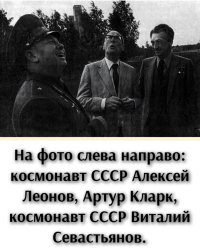
На фото слева направо: космонавт Алексей Леонов, писатель-фантаст Артур Кларк, космонавт Виталий Севастьянов. Послен беседы начался дождь. Артур Кларк написал об этой фотографии: "Небеса разверзлись, и мы были вынуждены спасаться бегством...".
In the photo, from left to right: cosmonaut Alexei Leonov, science fiction writer Arthur C. Clarke, and cosmonaut Vitaly Sevastyanov. After their conversation, it began to rain. Arthur C. Clarke wrote about this photograph: "The heavens opened up, and we were forced to flee...".
En la fotografía, de izquierda a derecha: el cosmonauta Alexei Leonov, el escritor de ciencia ficción Arthur C. Clarke y el cosmonauta Vitaly Sevastyanov. Tras la conversación, comenzó a llover. Arthur C. Clarke escribió sobre esta fotografía: «Se abrió el cielo y nos vimos obligados a huir…»

 viber 2026 10 18 07 16 26 411
 
Frimen1917

Frimen1917

Mecca V.I.P.
VIP
Joined
Jan 9, 2026
Messages
3,276
Points
63

Артур Кларк в воспоминаниях космонавта Алексея Леонова.​

"В 68-м году в Вене была премьера фильма Стэнли Кубрика «Космическая Одиссея 2001 года». И там присутствовал сам Артур Кларк, британский писатель, рассказ которого «Часовой» лег в основу фильма (он был опубликован в 1951 году). Они с Кубриком вместе разработали сценарий фильма, и я считаю, что до сегодняшнего дня на эту тему умнее фильма еще никто не сделал. Нет ему равных и по размаху съемок, по применению самых последних оптических эффектов, по применению звуковых эффектов. Ну тогда же не было современной техники, а все равно необыкновенно все было снято. Глубочайшая философия Кларка! А фильм, что интересно, идет все на фоне вальса Штрауса. «На прекрасном голубом Дунае». Этот вальс сопровождает в фильме демонстрацию космических достижений, под него перед зрителями проплывают летательные аппараты… Там первобытный человек начинает долбить костью, потом бросает кость, она летит, начинается вальс, и потом эта кость превращается в орбитальную станцию…

Ну, а заканчивается все тем, что показывают ребенка, который находится в чреве матери… Силуэтно так… Он еще в чреве, и он смотрит на мир…

Так вот он мне говорит: «Ты на меня в суд не подашь? Мы использовали в фильме записи твоего тяжелого дыхания в открытом космосе…» Нет конечно! И у нас установились теплые отношения. Он еще взял у меня идею космического лифта для другого романа. А за столом он меня посвятил в свою тайну, что пишет еще одну работу. Этот роман вышел в 1982 году.

В том же году он приезжал к нам в страну. Его возили на ВДНХ, ознакомили с экспонатами космических кораблей. После ВДНХ писателя привезли в Звездный городок. Там ему устроили встречу с генералом Береговым – руководителем Центра подготовки космонавтов. Затем в кинотеатре Звездного городка ему показали документальный фильм «Наш Юра». Побывал почетный гость в кабинете Гагарина, а я подарил ему маленький кусочек самолета, на котором погиб первый космонавт мира, а также вручил медаль, выпущенную к 20-летию полета Гагарина.

Затем я повез своего друга к себе в гости, и за обеденным столом знаменитый писатель признался:
– Я написал роман «2010: Одиссея два». Можешь сделать для него предисловие?


Я говорю, могу, но я должен знать, о чем там вообще. Он объяснил, что там действие происходит на космическом корабле… Но нет… Пока это секрет… Потом еще поговорили, мне идея стала понятна, и это должно было печататься в нашем журнале «Техника – молодежи».

Хорошо, написал предисловие, а он и говорит:

– А знаешь, как называется большой корабль, на котором происходят эти все действия?

– Представления не имею.

– Это секрет, но я тебе скажу. Он называется «Алексей Леонов». Что ты об этом думаешь?

– Я постараюсь быть хорошим кораблем…

В этом романе космический корабль «Алексей Леонов» с советско-американским экипажем на борту отправляется на Юпитер, чтобы разгадать тайну оставленного на орбите Юпитера «Дискавери». Артур Кларк там командиром экипажа сделал некую Орлову, а для членов экипажа взял фамилии наших диссидентов: Сахаров, Марченко и т. д. Первый русский перевод начал печататься в журнале «Техника – молодежи» в 1984 году. И вдруг все прекращается… Вызывают меня в ЦК партии и начинают: как ты посмел? спятил что ли? Вот вы напечатали такое, что экипаж – диссиденты. А я отвечаю: знать ничего не знаю. Орлова? Я полностью был уверен, что Орлова – это наша известная русская актриса Любовь Орлова. Они говорят: ты записался в компанию к Сахарову? Я говорю: я знаю, что есть такой великий ученый, которому мы обязаны тем, что у нас вовремя появилось самое страшное оружие – ядерная бомба. Это что – плохая компания? Они говорят: вот читайте, читайте, здесь написано, что роман посвящается двум великим русским людям: Алексею Леонову – космонавту и художнику и академику Сахарову. А я – им: да вы вообще представление имеете, кто такой Артур Кларк? Это сегодня самый выдающийся писатель-фантаст. Это человек большой науки, признанный во всем мире. А вы такое говорите…

Короче говоря, после выхода двух номеров с главами из романа главный редактор журнала Василий Захарченко был снят, его заместителю был объявлен строгий выговор, а публикация продолжения была прекращена. И лишь после прихода Горбачева все эти политработники ушли в небытие, и роман продолжили печатать.

Что же касается фильма, то это получился настоящий фильм – умный, без страха, очень объективный. Блестящая игра американских актеров, необыкновенно совершенно, как они невесомость имитировали – все на высочайшем уровне.

Артур Кларк потом в Шри-Ланку уехал. Там он и умер в 2008 году. Ему было 90 лет. Я на юбилей полетел специально к нему в Шри-Ланку, где вместе с президентом Шри-Ланки поздравлял. Я ему вручил медаль Федерации космонавтики России со словами:

– Поздравляю моего старого и все же очень молодого друга.

Он в Шри-Ланке был очень уважаемым человеком. Они его Мистер Кларк называли. А этот Мистер Кларк разозлился на Англию в свое время, уехал оттуда, уединился, занимался подъемом затонувших кораблей, поиском морских кладов. Он передал очень много ценностей народу своей новой родины".
(А.А. Леонов, О.А. Леонова. "Время первых. Судьба моя – я сам…", 2017).
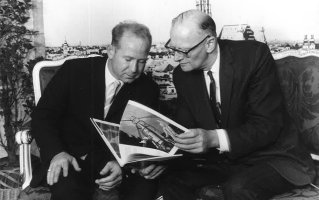
На фото Артур Кларк и Алексей Леонов. 1968 год.

Arthur C. Clarke in the Memoirs of Cosmonaut Alexei Leonov


“In 1968, the premiere of Stanley Kubrick’s film 2001: A Space Odyssey took place in Vienna. Arthur C. Clarke himself was there. He was a British writer whose short story ‘The Sentinel’, published in 1951, formed the basis for the film. Clarke and Kubrick developed the screenplay together, and I believe that, to this day, no one has made a film on this subject that is more intelligent. It is also unrivalled in the scale of its production, its use of the latest optical effects, and its sound effects. Modern technology did not exist back then, yet the film was still shot in an extraordinary way. Clarke’s philosophy is profound! And, interestingly, the film unfolds to the music of Strauss’s waltz ‘The Blue Danube’. This waltz accompanies the presentation of humanity’s achievements in space: spacecraft glide before the audience to its music. There is a scene in which primitive man begins pounding something with a bone. Then he throws the bone into the air; it flies, the waltz begins, and the bone transforms into an orbital space station.

“And it all ends with the image of a child inside its mother’s womb. The image is shown in silhouette. The child is still in the womb, looking out at the world.

“Then Clarke said to me, ‘You’re not going to sue me, are you? We used recordings of your heavy breathing during your spacewalk in the film.’

“Of course not! We became good friends. He also borrowed my idea of a space elevator for another novel. Later, over dinner, he let me in on a secret: he was writing another book. That novel was published in 1982.

“That same year, he visited our country. He was taken to the Exhibition of Achievements of the National Economy (VDNKh), where he was shown exhibits featuring spacecraft. After visiting VDNKh, the writer was taken to Star City. There, he met General Beregovoy, head of the Cosmonaut Training Centre. Then, in Star City’s cinema, they showed him the documentary Our Yura. The honoured guest visited Gagarin’s office, and I gave him a small fragment of the aircraft in which the world’s first cosmonaut had died. I also presented him with a medal issued to mark the twentieth anniversary of Gagarin’s flight.

“After that, I took my friend to my home. Over lunch, the famous writer confessed:

“‘I’ve written a novel called 2010: Odyssey Two. Would you write a foreword for it?’

“I said I could, but I needed to know what it was about. He explained that the story took place aboard a spacecraft. But no—that was still a secret. We talked some more, and I began to understand the idea. The novel was to be published in our magazine Tekhnika — Molodyozhi (Technology for Youth).

“I wrote the foreword, and then he asked:

“‘Do you know what the large spacecraft on which all these events take place is called?’

“‘I haven’t the slightest idea.’

“‘It’s a secret, but I’ll tell you. It’s called Alexei Leonov. What do you think of that?’

“‘I’ll do my best to be a good spacecraft.’

“In this novel, the spacecraft Alexei Leonov, carrying a joint Soviet-American crew, sets off for Jupiter to uncover the mystery of Discovery, which has been left in orbit around the planet. Arthur Clarke made a certain Orlova the spacecraft’s commander and gave some of the crew members the surnames of our dissidents, including Sakharov, Marchenko, and others.

“The first Russian translation began appearing in Tekhnika — Molodyozhi in 1984. Then, suddenly, everything came to a halt. I was summoned to the Central Committee of the Communist Party, where they started questioning me: ‘How could you allow this? Have you gone mad? You published a story in which the crew members are dissidents!’

“I replied that I knew nothing about it. Orlova? I was completely convinced that Orlova referred to Lyubov Orlova, our famous Russian actress.

“They asked me, ‘Have you joined Sakharov’s circle?’

“I said, ‘I know that there is a great scientist by that name, to whom we owe the fact that we developed our most terrible weapon—the nuclear bomb—in time. Is that bad company to keep?’

“They said, ‘Read this! Read what it says here: the novel is dedicated to two great Russians: Alexei Leonov, cosmonaut and artist, and Academician Sakharov.’

“I replied, ‘Do you even have any idea who Arthur Clarke is? He is the most outstanding science-fiction writer of our time. He is a man of great scientific learning, recognised throughout the world. And this is what you’re saying about him…’

“To cut a long story short, after two issues containing chapters from the novel had been published, the magazine’s editor-in-chief, Vasily Zakharchenko, was dismissed. His deputy received a severe reprimand, and publication of the remaining chapters was halted. Only after Gorbachev came to power did all those political officials disappear into oblivion, and publication of the novel resumed.

“As for the film, it turned out to be a truly remarkable work: intelligent, fearless, and highly objective. The American actors gave brilliant performances, and the way they simulated weightlessness was extraordinary. Everything was done to the highest standard.

“Arthur Clarke later moved to Sri Lanka, where he died in 2008 at the age of ninety. I made a special trip to Sri Lanka for his ninetieth birthday celebration, where I joined the President of Sri Lanka in congratulating him. I presented him with a medal from the Russian Federation of Cosmonautics, saying:

“‘Congratulations to my old, yet still very young, friend.’

“He was greatly respected in Sri Lanka. People there called him Mr Clarke. At one point, Mr Clarke had become disillusioned with England and left the country, settling into a quieter life. He became involved in raising sunken ships and searching for underwater treasure. He donated many valuable objects to the people of his new homeland.”

(A. A. Leonov and O. A. Leonova, Time of the Firsts: My Destiny Is My Own…, 2017.)

Photograph: Arthur C. Clarke and Alexei Leonov, 1968.
Arthur C. Clarke en las memorias del cosmonauta Alexéi Leónov


«En 1968 se celebró en Viena el estreno de la película de Stanley Kubrick 2001: Una odisea del espacio. Allí estaba presente el propio Arthur C. Clarke, escritor británico cuyo relato “El centinela”, publicado en 1951, sirvió de base para la película. Clarke y Kubrick desarrollaron juntos el guion, y considero que, hasta el día de hoy, nadie ha realizado una película sobre este tema más inteligente que esta. Tampoco tiene rival por la magnitud de su producción, por el uso de los efectos ópticos más avanzados de la época ni por sus efectos sonoros. En aquel entonces no existía la tecnología moderna, pero, aun así, la película se rodó de una manera extraordinaria. ¡La filosofía de Clarke es profundísima! Y, curiosamente, toda la película transcurre con la música del vals de Johann Strauss “El Danubio azul”. Este vals acompaña la presentación de los logros de la humanidad en el espacio: las naves espaciales desfilan ante los espectadores al ritmo de su música. En una escena, un hombre primitivo comienza a golpear algo con un hueso. Después lanza el hueso al aire; este vuela, comienza el vals y, de repente, el hueso se transforma en una estación espacial orbital.

»La película termina mostrando a un niño en el vientre de su madre. La imagen aparece en silueta. El niño todavía está dentro del vientre materno y contempla el mundo.

»Entonces Clarke me dijo:

»—No me vas a demandar, ¿verdad? Utilizamos en la película grabaciones de tu respiración agitada durante tu paseo espacial.

»¡Por supuesto que no! Entre nosotros surgió una cálida amistad. También tomó prestada mi idea del ascensor espacial para otra novela. Más tarde, durante una comida, me confió un secreto: estaba escribiendo otra obra. Aquella novela se publicó en 1982.

»Ese mismo año vino a nuestro país. Lo llevaron a la Exposición de los Logros de la Economía Nacional (VDNJ), donde pudo conocer los modelos y las exposiciones dedicados a las naves espaciales. Después de visitar la VDNJ, llevaron al escritor a la Ciudad de las Estrellas. Allí se reunió con el general Beregovói, director del Centro de Preparación de Cosmonautas. A continuación, en el cine de la Ciudad de las Estrellas, le proyectaron el documental Nuestro Yura. El distinguido invitado visitó el despacho de Gagarin, y yo le regalé un pequeño fragmento del avión en el que había muerto el primer cosmonauta del mundo. También le entregué una medalla conmemorativa del vigésimo aniversario del vuelo de Gagarin.

»Después llevé a mi amigo a mi casa. Durante la comida, el famoso escritor me confesó:

»—He escrito una novela titulada 2010: Odisea dos. ¿Podrías escribir un prólogo para ella?

»Le respondí que podía hacerlo, pero que primero necesitaba saber de qué trataba. Me explicó que la acción transcurría a bordo de una nave espacial… Pero no, aquello todavía era un secreto. Seguimos hablando y poco a poco comprendí la idea. La novela iba a publicarse en nuestra revista Tekhnika — Molodiózhi (Tecnología para la Juventud).

»Escribí el prólogo y entonces me preguntó:

»—¿Sabes cómo se llama la gran nave espacial en la que tienen lugar todos esos acontecimientos?

»—No tengo ni la menor idea.

»—Es un secreto, pero te lo diré. Se llama Alexéi Leónov. ¿Qué te parece?

»—Intentaré ser una buena nave espacial.

»En esta novela, la nave espacial Alexéi Leónov, con una tripulación conjunta soviético-estadounidense a bordo, parte hacia Júpiter para desentrañar el misterio del Discovery, que ha quedado en órbita alrededor del planeta. Arthur Clarke eligió a una tal Orlova como comandante de la nave y dio a algunos miembros de la tripulación los apellidos de nuestros disidentes, como Sájarov, Márchenko y otros.

»La primera traducción al ruso comenzó a publicarse por entregas en la revista Tekhnika — Molodiózhi en 1984. Pero, de repente, todo se interrumpió. Me convocaron al Comité Central del Partido Comunista y empezaron a interrogarme:

»—¿Cómo te has atrevido? ¿Te has vuelto loco? ¡Habéis publicado una novela en la que los miembros de la tripulación son disidentes!

»Respondí que no sabía nada de aquello. ¿Orlova? Estaba completamente convencido de que se refería a Liubov Orlova, nuestra famosa actriz rusa.

»Me preguntaron:

»—¿Te has unido al grupo de Sájarov?

»Yo respondí:

»—Sé que existe un gran científico con ese apellido, al que debemos que dispusiéramos a tiempo de nuestra arma más terrible: la bomba nuclear. ¿Acaso es mala compañía?

»Ellos insistieron:

»—¡Lee esto! ¡Lee lo que pone aquí! La novela está dedicada a dos grandes rusos: Alexéi Leónov, cosmonauta y artista, y el académico Sájarov.

»Y yo les contesté:

»—¿Es que ni siquiera sabéis quién es Arthur Clarke? Es el escritor de ciencia ficción más destacado de nuestro tiempo. Es un hombre de gran conocimiento científico, reconocido en todo el mundo. ¿Y vosotros habláis así de él?

»En resumen, después de la publicación de dos números con capítulos de la novela, el redactor jefe de la revista, Vasili Zajárchenko, fue destituido. Su adjunto recibió una severa reprimenda y se suspendió la publicación de los capítulos siguientes. Solo después de la llegada de Gorbachov al poder, todos aquellos funcionarios políticos desaparecieron en el olvido y la publicación de la novela pudo reanudarse.

»En cuanto a la película, resultó ser una obra cinematográfica extraordinaria: inteligente, valiente y muy objetiva. Las interpretaciones de los actores estadounidenses fueron brillantes, y la manera en que simularon la ingravidez fue sencillamente excepcional. Todo estaba realizado al más alto nivel.

»Más tarde, Arthur Clarke se trasladó a Sri Lanka. Allí murió en 2008, a los noventa años. Viajé expresamente a Sri Lanka para asistir a la celebración de su noventa cumpleaños. Allí lo felicité junto con el presidente de Sri Lanka. Le entregué una medalla de la Federación de Cosmonáutica de Rusia y le dije:

»—Felicidades a mi viejo amigo, que, sin embargo, sigue siendo muy joven.

»En Sri Lanka era una persona muy respetada. Allí lo llamaban señor Clarke. En su día, el señor Clarke se había enfadado con Inglaterra, se marchó del país y se instaló en un lugar apartado. Se dedicó a reflotar barcos hundidos y a buscar tesoros submarinos. Donó muchos objetos valiosos al pueblo de su nueva patria».

(A. A. Leónov y O. A. Leónova, «El tiempo de los primeros. Mi destino soy yo mismo…», 2017).

En la fotografía: Arthur C. Clarke y Alexéi Leónov. Año 1968.
2
 
Frimen1917

Frimen1917

Mecca V.I.P.
VIP
Joined
Jan 9, 2026
Messages
3,276
Points
63
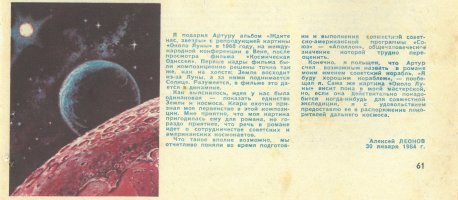
На фото фрагмент страницы журнала "Техника-молодежи" (№3; 1984) с предисловием Алексея Леонова к роману «2010: Одиссея два», которое Артур Кларк попросил его написать.

"Я подарил Артуру альбом «Ждите нас, звезды» с репродукцией картины «Около Луны» в 1968 году, на международной конференции в Вене, после просмотра фильма «Космическая Одиссея». Первые кадры фильма были композиционно решены точно так же, как на холсте: Земля восходит из-за Луны, а за ними поднимается Солнце. Разумеется, в фильме это дается в динамике.

Как выяснилось, идея у нас была одинаковая — показать единство Земли и космоса. Кларк охотно признал мое первенство в этой композиции. Мне приятно, что моя картина пригодилась ему для романа, но гораздо приятнее, что речь в романе идет о сотрудничестве советских и американских космонавтов.

Что такое вполне возможно, мы отчетливо поняли во время подготовки и выполнения совместной советско-американской программы «Союз» — «Аполлон», общечеловеческое значение которой трудно переоценить.

Конечно, я польщен, что Артур счел возможным назвать в романе моим именем советский корабль. «Я буду хорошим кораблем», — пообещал я. Сама же картина «Около Луны» висит пока в моей мастерской, но, если она действительно понадобится когда-нибудь для совместной экспедиции, я с удовольствием предоставлю ее в распоряжение покорителей дальнего космоса".

Алексей ЛЕОНОВ
30 января 1984 г.


The photo shows a fragment of a page from the magazine “Tekhnika-Molodezhi” (No. 3; 1984) with a preface by Alexei Leonov to the novel 2010: Odyssey Two, which Arthur Clarke asked him to write.

"I presented Arthur with the album Wait for Us, Stars containing a reproduction of the painting “Near the Moon” in 1968, at an international conference in Vienna, after watching the film 2001: A Space Odyssey. The opening shots of the film were composed exactly as on the canvas: Earth rising from behind the Moon, with the Sun rising behind them. Of course, in the film this is shown dynamically.

As it turned out, we had the same idea — to show the unity of Earth and space. Clarke readily acknowledged my priority in this composition. I am pleased that my painting was useful to him for the novel, but it is far more pleasant that the novel deals with cooperation between Soviet and American cosmonauts.

That such a thing is entirely possible we clearly understood during the preparation and execution of the joint Soviet-American program “Soyuz”–“Apollo,” whose significance for all mankind is hard to overestimate.

Of course, I am flattered that Arthur found it possible to name the Soviet ship in the novel after me. “I will be a good ship,” I promised. As for the painting “Near the Moon” itself, it still hangs in my studio for now, but if it is truly needed someday for a joint expedition, I will gladly place it at the disposal of the conquerors of deep space"

Alexei LEONOV

30 January 1984

La foto muestra un fragmento de una página de la revista “Tekhnika-Molodezhi” (n.º 3; 1984) con un prólogo de Alexéi Leónov a la novela 2010: Odisea dos, que Arthur Clarke le pidió que escribiera.


"Regalé a Arthur el álbum Esperadnos, estrellas con una reproducción del cuadro “Cerca de la Luna” en 1968, en una conferencia internacional en Viena, después de ver la película 2001: Una odisea del espacio. Los primeros fotogramas de la película estaban compuestos exactamente igual que en el lienzo: la Tierra saliendo de detrás de la Luna, y detrás de ellas elevándose el Sol. Por supuesto, en la película esto se muestra de forma dinámica.

Como resultó, teníamos la misma idea: mostrar la unidad de la Tierra y el cosmos. Clarke reconoció de buen grado mi prioridad en esta composición. Me alegra que mi cuadro le haya sido útil para la novela, pero es mucho más agradable que en la novela se trate de la cooperación entre cosmonautas soviéticos y estadounidenses.

Que algo así es perfectamente posible lo comprendimos claramente durante la preparación y la realización del programa conjunto soviético-estadounidense «Soyuz»-«Apolo», cuyo significado para toda la humanidad es difícil de sobreestimar.

Por supuesto, me siento halagado de que Arthur haya considerado posible poner mi nombre al barco soviético en la novela. «Seré un buen barco», prometí. En cuanto al cuadro «Cerca de la Luna» en sí, por ahora sigue colgado en mi taller, pero si realmente se necesita algún día para una expedición conjunta, con mucho gusto lo pondré a disposición de los conquistadores del espacio profundo".

Alexéi LEÓNOV

30 de enero de 1984
4
 

Similar threads

Top