• Legal Notice – MuscleMecca Forums

    MuscleMecca.com is an educational discussion platform. We do not sell, promote, or endorse any bodybuilding gear, supplements, research chemicals, or performance-enhancing substances.

    All discussions are for educational and informational purposes only. Nothing posted on this forum should be considered medical or legal advice.

    Do not attempt to sell, source, or promote illegal substances. Any such activity will result in an immediate and permanent ban and may be reported to the proper authorities.

    By using this site, you agree to comply with all forum rules, disclaimers, and applicable laws in your jurisdiction.

    Read Our Full Disclaimer and Forum Rules

  • Follow the 2026 Olympia on September 24 to 27, 2026!

History of Soviet cosmonautics.

Frimen1917

Frimen1917

Mecca V.I.P.
VIP
Joined
Jan 9, 2026
Messages
3,161
Points
63
"Всю деятельность Сергея Павловича отличает четкая последовательность и постоянная нацеленность на непрерывное движение вперед.
Сентябрь 1962 года. В мире насчитывается всего шесть человек, облетевших Землю в космическом корабле, а Королев для себя уже намечает план работы и круг вопросов, которые надо решать для создания тяжелого межпланетного корабля (ТМК) и тяжелой орбитальной станции (ТОС), других аппаратов. Свои мысли он записывает в отдельную тетрадь. Вот некоторые из этих записей:
«...Надо, очевидно, положительно решить вопрос о возможности выхода из аппарата человека в космическое пространство.
Основное здесь — скафандр и его системы автономного питания для жизнеобеспечения...
Вопросы, связанные с невесомостью,— основные!
Видимо, здесь опыты на «Союзе> и на ТОС дадут возможность получить большие и очень большие длительности (до 1 года) пребывания в условиях невесомости (что при 1 годе решает проблему полета к ближним планетам, так как сроки 3—5 лет будут уже примерно того же порядка).
В условиях длительного космического полета можно будет основательно проверить:
влияние невесомости на разных людях и на достаточно большом числе людей,
разные медико-биологические средства,
разные механические средства временного и постоянного искусственного тяготения.
Можно будет впервые развернуть в космическом пространстве настоящие медико-биологические исследования и наблюдения в действительных условиях и т. д.
Тут же будет проверяться и вся вообще техника для более длительных полетов.
Видимо, создание ТОС есть необходимый этап для длительных полетов в космическом пространстве, так как здесь будут отрабатываться у Земли (т. е. легко доступны с Земли) люди и вся техника.
Это важный методический шаг!, без которого не пройти.
Ему предшествовать должна тщательная и длительная подготовка на Земле, в земных условиях людей и техники, хотя это будет во многих случаях и не совсем то, что нужно...
Для ТОС... дублирование не нужно, так как ТОС должна иметь всегда возможность с помощью кораблей «Союз> получать все необходимое и спускать, что надо, на Землю. Но все продумать для ТОС тоже надо!
Приборное бортовое оборудование следует делать:
а) со световыми разноцветными шкалами, стрелками, полем отсчета, цифрами и т. д. Цвет систематизировать по группам приборов;
б) со звуковым оформлением (негромко), и тона разбить по группам приборов (особо важные — аварийные, контрольные, посадочные, тепло, жизненные условия и т. д.), должен быть ручной регулятор громкости (среднего уровня) — он же выключатель;
в) надо, чтобы при резком изменении параметров на приборе менялся звук и яркость света. На особо важных приборах должен появляться аварийный свет и звук;
г) надо продумать особую систему для регистрации нужных параметров на пленку (учитывая очень большую длительность полета и записи), но главное, это создать бортовое автоматическое малогабаритное устройство для расшифровки этих пленок и для удобного просмотра и анализа как полученных в итоге обработки материалов, так и просмотра любого места на пленке для микроанализа и т. д.
Конечно, важна типизация кабин, ракетных блоков, спускаемых аппаратов, танкеров, основных систем на борту и аппаратуры, вообще разного бортового оборудования и т. д.
Надо разработать рациональную и стандартизовать схему и конструкцию стыковки, причаливания, креплений, шлюзования и т. д...»
Не все планы были воплощены при жизни Королева, многие из них еще не реализованы, но сама постановка вопросов, их содержание не потеряли своей актуальности и сейчас, хотя со времени записей-раздумий прошло почти четверть века.

Постоянная нацеленность на будущее, стремление быть впереди своего века, пожалуй, самая яркая отличительная черта Королева".("Звездный путь".Составители М. И. Герасимова, А. Г. Иванов.— Москва.Издательство: Политиздат, 1986).
"The entire activity of Sergey Pavlovich was distinguished by a clear sense of purpose and a constant focus on continuous progress.


September 1962. There were only six people in the world who had orbited the Earth in a spacecraft, yet Korolev was already outlining for himself a work plan and a range of issues that needed to be solved in order to create a Heavy Interplanetary Spacecraft (TMK), a Heavy Orbital Station (TOS), and other vehicles. He recorded these thoughts in a separate notebook. Here are some excerpts from those notes:

'...It is apparently necessary to make a positive decision regarding the possibility of a human leaving the spacecraft and entering outer space.

The main issue here is the spacesuit and its autonomous life-support systems...

Questions related to weightlessness are fundamental!

It seems that experiments on the Soyuz spacecraft and on the TOS will make it possible to obtain long and very long durations of stay in conditions of weightlessness (up to one year), which, in the case of a one-year period, would solve the problem of flights to nearby planets, since periods of three to five years would already be of approximately the same order.

Under conditions of long-duration spaceflight, it will be possible to thoroughly test:

the effects of weightlessness on different people and on a sufficiently large number of people,

various biomedical methods,

various mechanical means of temporary and permanent artificial gravity.

For the first time, it will be possible to conduct genuine biomedical research and observations in outer space under real conditions, etc.

At the same time, all technology intended for longer-duration flights will also be tested.

Apparently, the creation of a TOS is a necessary stage for long-duration space missions, since both people and technology can be developed near Earth (that is, easily accessible from Earth).

This is an important methodological step that cannot be bypassed.

It must be preceded by thorough and lengthy preparation of both people and technology on Earth under terrestrial conditions, although in many cases these conditions will not be exactly what is needed...

For the TOS... duplication is unnecessary, since the station must always be able to receive everything necessary from Earth via Soyuz spacecraft and return whatever is required to Earth. Nevertheless, everything for the TOS must be carefully thought through!

The onboard instrumentation should be designed:

a) with multicolored illuminated scales, pointers, display fields, numbers, etc. The colors should be standardized according to groups of instruments;

b) with sound signaling (not loud), with tones divided into groups of instruments (especially important—emergency, monitoring, landing, thermal, life-support conditions, etc.); there should be a manual volume control (for the average level), which should also function as an on/off switch;

c) in such a way that abrupt parameter changes cause corresponding changes in sound and light intensity. Particularly important instruments should trigger emergency lights and sounds;

d) it is necessary to devise a special system for recording required parameters onto film (taking into account the very long duration of flights and recordings), but most importantly, to create a compact onboard automatic device for decoding these films and enabling convenient viewing and analysis of both the processed materials and any section of the film for detailed microanalysis, etc.

Of course, standardization of cabins, rocket stages, reentry vehicles, tankers, major onboard systems, instruments, and various onboard equipment is important.

A rational and standardized system and design for docking, berthing, attachment mechanisms, airlocks, etc., must be developed...'

Not all of these plans were realized during Korolev’s lifetime, and many have still not been implemented. However, the questions he posed and their content have not lost their relevance, even though nearly a quarter of a century has passed since these notes and reflections were written.

A constant focus on the future and a determination to stay ahead of his era were perhaps Korolev’s most striking characteristics".("Star Trek". Compiled by M. I. Gerasimova, A. G. Ivanov. - Moscow. Publisher: Politizdat, 1986).
"Toda la actividad de Serguéi Pávlovich se distinguió por una clara coherencia y una orientación constante hacia el avance continuo.


Septiembre de 1962. En el mundo había solamente seis personas que habían orbitado la Tierra en una nave espacial, y Koroliov ya estaba elaborando para sí mismo un plan de trabajo y una lista de cuestiones que debían resolverse para crear una Nave Interplanetaria Pesada (TMK), una Estación Orbital Pesada (TOS) y otros vehículos. Anotó estas ideas en un cuaderno aparte. He aquí algunos fragmentos de esas notas:

'...Es necesario, al parecer, resolver positivamente la cuestión de la posibilidad de que una persona salga de la nave y acceda al espacio exterior.

Lo principal aquí es el traje espacial y sus sistemas autónomos de soporte vital...

¡Las cuestiones relacionadas con la ingravidez son fundamentales!

Parece que los experimentos realizados en la nave Soyuz y en la TOS permitirán obtener períodos largos y muy largos de permanencia en condiciones de ingravidez (hasta un año), lo que, en el caso de un año, resolvería el problema de los vuelos a los planetas cercanos, ya que los plazos de tres a cinco años serían ya aproximadamente del mismo orden.

En condiciones de vuelos espaciales de larga duración será posible comprobar a fondo:

la influencia de la ingravidez en diferentes personas y en un número suficientemente grande de ellas,

diversos métodos biomédicos,

diversos medios mecánicos para crear gravedad artificial temporal o permanente.

Por primera vez será posible realizar auténticas investigaciones y observaciones biomédicas en el espacio exterior, en condiciones reales, etc.

Al mismo tiempo se probará toda la tecnología destinada a vuelos de larga duración.

Parece que la creación de una TOS constituye una etapa necesaria para los vuelos espaciales prolongados, ya que en ella se desarrollarán, cerca de la Tierra (es decir, fácilmente accesibles desde ella), tanto las personas como la tecnología.

Se trata de un paso metodológico importante que no puede omitirse.

Debe ir precedido de una preparación minuciosa y prolongada de las personas y de la tecnología en la Tierra, en condiciones terrestres, aunque en muchos casos estas condiciones no serán exactamente las necesarias...

Para la TOS... no será necesario un sistema de duplicación, ya que la estación deberá tener siempre la posibilidad de recibir todo lo necesario desde la Tierra mediante naves Soyuz y devolver a la Tierra lo que sea preciso. Pero aun así, todo para la TOS debe estar cuidadosamente pensado.

El equipamiento instrumental de a bordo deberá diseñarse:

a) con escalas luminosas multicolores, indicadores, campos de lectura, cifras, etc. Los colores deberán estar sistematizados por grupos de instrumentos;

b) con señales acústicas (de volumen moderado), cuyos tonos estén divididos por grupos de instrumentos (especialmente importantes: emergencia, control, aterrizaje, temperatura, soporte vital, etc.); deberá existir un regulador manual de volumen (nivel medio), que también actuará como interruptor;

c) de forma que, cuando un parámetro cambie bruscamente, cambien también el sonido y la intensidad luminosa. Los instrumentos especialmente importantes deberán activar señales luminosas y acústicas de emergencia;

d) es necesario diseñar un sistema especial para registrar los parámetros requeridos en película (teniendo en cuenta la enorme duración de los vuelos y de las grabaciones), pero lo más importante es crear un dispositivo automático compacto a bordo para descifrar esas películas y permitir una visualización y análisis cómodos tanto de los materiales procesados como de cualquier segmento de la película para un microanálisis detallado, etc.

Por supuesto, es importante la estandarización de las cabinas, etapas de cohetes, vehículos de descenso, naves cisterna, sistemas principales de a bordo, instrumentos y demás equipamiento.

Es necesario desarrollar y estandarizar un sistema racional para el acoplamiento, atraque, fijaciones, esclusas, etc...'

No todos estos planes llegaron a hacerse realidad durante la vida de Koroliov, y muchos de ellos aún no se han materializado. Sin embargo, los problemas planteados y su contenido no han perdido vigencia, aunque ha transcurrido casi un cuarto de siglo desde que se escribieron estas reflexiones.

La constante orientación hacia el futuro y el deseo de adelantarse a su tiempo fueron, quizás, las características más destacadas de Koroliov."

Fuente: "Zvezdny Put" ("El Camino Estelar"). Compiladores: M. I. Gerasimova y A. G. Ivanov. Moscú: Editorial Politizdat, 1986.
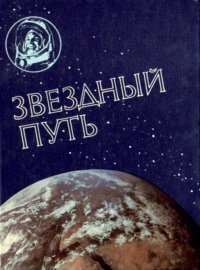


Zvezdn put 86
 
Frimen1917

Frimen1917

Mecca V.I.P.
VIP
Joined
Jan 9, 2026
Messages
3,161
Points
63
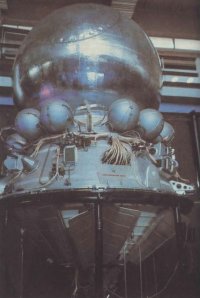
Космический корабль "Восток". Фото из книги "Энциклопедический словарь юного астронома".
The Vostok spacecraft. Photo from the book "The Young Astronomer's Encyclopedic Dictionary."
La nave espacial Vostok. Fotografía del libro "El diccionario enciclopédico del joven astrónomo".

Clipboard 07 18 2026 02
 
Frimen1917

Frimen1917

Mecca V.I.P.
VIP
Joined
Jan 9, 2026
Messages
3,161
Points
63
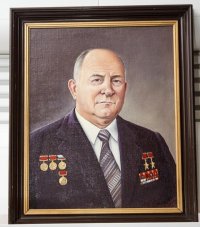
Советские конструкторы в живописи.
Дми́трий Ильи́ч Козло́в (1 октября 1919, станция Тихорецкая — 7 марта 2009, Самара) — советский и российский конструктор ракетно-космической техники.
Дважды Герой Социалистического Труда, генеральный конструктор Центрального специализированного конструкторского бюро («ЦСКБ-Прогресс»), член-корреспондент Российской академии наук (1991; член-корреспондент АН СССР с 1984 года).
В пятидесятых годах — сначала ведущий конструктор ракеты Р-5, позже ведущий конструктор ракеты Р-7 — знаменитой «семёрки». Именно эта ракета позволила обеспечить приоритет СССР в разработке межконтинентальных баллистических ракет и положить начало созданию практической космонавтики. С 1958 года Дмитрий Ильич возглавил развёртывание серийного производства ракет Р-7 на самолётостроительном заводе № 1 в городе Куйбышев (ныне как завод входит в ЦСКБ-Прогресс, город Самара) и организацию на этом заводе конструкторского бюро, ставшего впоследствии одним из ведущих в стране по созданию ракетно-космической техники.


В 1961 году за выдающиеся заслуги в создании образцов ракетной техники и обеспечение первого в мире полёта человека в космическое пространство Д. И. Козлову было присвоено звание Героя Социалистического Труда.
Soviet designers in painting.

Dmitry Ilyich Kozlov (October 1, 1919, Tikhoretskaya Station – March 7, 2009, Samara) was a Soviet and Russian rocket and space technology designer.
Twice Hero of Socialist Labor, General Designer of the Central Specialized Design Bureau (TsSKB-Progress), Corresponding Member of the Russian Academy of Sciences (1991; Corresponding Member of the USSR Academy of Sciences since 1984).
In the 1950s, he was first the lead designer of the R-5 rocket, and later the lead designer of the R-7 rocket – the famous "Seven." It was this rocket that ensured the USSR's priority in the development of intercontinental ballistic missiles and laid the foundation for practical astronautics. Since 1958, Dmitry Ilyich led the development of serial production of the R-7 missile at Aircraft Plant No. 1 in Kuibyshev (now part of TsSKB-Progress in Samara) and the establishment of a design bureau at the plant, which subsequently became one of the country's leading developers of rocket and space technology.


In 1961, for his outstanding achievements in the creation of rocket technology and the world's first human space flight, D. I. Kozlov was awarded the title Hero of Socialist Labor.
Diseñadores soviéticos en la pintura.


Dmitry Ilyich Kozlov (1 de octubre de 1919, Estación Tikhoretskaya – 7 de marzo de 2009, Samara) fue un diseñador soviético y ruso de tecnología espacial y de cohetes.

Dos veces Héroe del Trabajo Socialista, Diseñador General de la Oficina Central de Diseño Especializado (TsSKB-Progreso), Miembro Correspondiente de la Academia Rusa de Ciencias (1991; Miembro Correspondiente de la Academia de Ciencias de la URSS desde 1984).

En la década de 1950, fue primero el diseñador principal del cohete R-5 y, posteriormente, del cohete R-7, el famoso "Siete". Este cohete aseguró la prioridad de la URSS en el desarrollo de misiles balísticos intercontinentales y sentó las bases de la astronáutica práctica. Desde 1958, Dmitry Ilyich lideró el desarrollo de la producción en serie del misil R-7 en la Planta Aeronáutica n.º 1 de Kuibyshev (actualmente parte de TsSKB-Progress en Samara) y la creación de una oficina de diseño en la planta, que posteriormente se convirtió en una de las principales desarrolladoras de tecnología espacial y de cohetes del país.

En 1961, por sus logros sobresalientes en la creación de tecnología de c
ohetes y el primer vuelo espacial tripulado del mundo, D. I. Kozlov fue condecorado con el título de Héroe del Trabajo Socialista.
ExVdWFI9N5OTeULSN8kWgUU3QaycB8AJJdJ7yBi9wGv7Tt hCRdfKsCXws Jannx62M llfz5Op8tSQmviHFvcE8
 
Frimen1917

Frimen1917

Mecca V.I.P.
VIP
Joined
Jan 9, 2026
Messages
3,161
Points
63
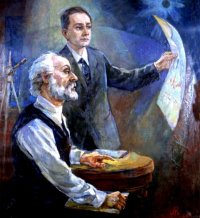
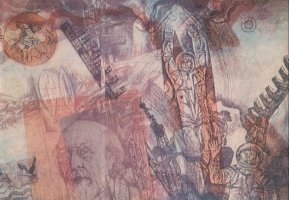
Константин Циолковский в живописи.
Картина "Солнечное эхо". ( на картине изображены К.Э. Циолковский и А.Л. Чижевский). Художник Лев Козакевич.
Konstantin Tsiolkovsky in painting.
Painting "Solar Echo." (The painting depicts K.E. Tsiolkovsky and A.L. Chizhevsky). Artist: Lev Kozakevich.

Konstantin Tsiolkovsky en la pintura.
Pintura "Eco solar". (La pintura representa a K.E. Tsiolkovsky y A.L. Chizhevsky). Artista: Lev Kozakevich.

Jd5B PdM96cUq5FtcUR3RXb3MyPSeyYC 7yZZOEhtpm54fdfmWrCiENiDpFpIjz674uWvxcZK t8mKzZaDpCgMa2
 
Frimen1917

Frimen1917

Mecca V.I.P.
VIP
Joined
Jan 9, 2026
Messages
3,161
Points
63
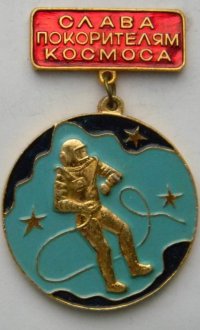
Значок "Слава покорителям космоса".
Год: 1981
Диаметр (мм):54
Материал:Алюминий
Вес предмета (г):3

Страна: СССР
"Glory to the Conquerors of Space" badge.

Year: 1981
Diameter (mm): 54
Material: Aluminum
Item weight (g): 3

Country: USSR
Insignia «Gloria a los conquistadores del espacio».

Año: 1981
Diámetro (mm): 54
Material: Aluminio
Peso (g): 3

País: URSS
Impax O6CLHzHWk4M8FTc2tbtiXV3UBGyVuzFwokDAqdvxCiE0AfrzWkG0mh5KDU uTZQauvIt6I1EI8nC0U1oqb
 
Frimen1917

Frimen1917

Mecca V.I.P.
VIP
Joined
Jan 9, 2026
Messages
3,161
Points
63
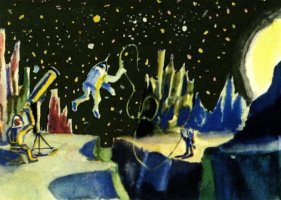
"Рисунки советских детей, присланные на конкурс в газету "Пионерская правда" в 1961 году. Редактор Н. Игнатьев.
"Первые работы на Луне". Коля Запрягаев, 13 лет. Ленинград.

Drawings by Soviet children submitted to a competition in the newspaper "Pionerskaya Pravda" in 1961. Editor N. Ignatyev.
"First Works on the Moon." Kolya Zapryagaev, 13, Leningrad.

Dibujos de niños soviéticos presentados a un concurso del periódico «Pionerskaya Pravda» en 1961. Editor: N. Ignatyev.
«Primeros trabajos en la Luna». Kolya Zapryagaev, 13 años, Leningrado.


HDi0L0DIyLkfgzjCOFrVx6ft43IYO90qrJU4HxkomlyJDWtRj88pzpQzr4W0Oq8IA0REddsEyLisitnv8eP2VQJ9
 
Frimen1917

Frimen1917

Mecca V.I.P.
VIP
Joined
Jan 9, 2026
Messages
3,161
Points
63
Космическая живопись в СССР.
"Взлет ракеты", 1976 год.
Художник А. П. ПЛАХОВ (род. 1939)
.

Space painting in the USSR.
"Rocket Takeoff," 1976.
Artist: A. P. PLAKHOV (b. 1939).
Pintura espacial en la URSS.

«Despegue de cohete», 1976.
Artista: A. P. Plakhov (n. 1939).
8DhbclpSXDCO MAiaCfVuEDLkzH094lh2S88TiGznsv0ain Pl NtVWsPpoHM1LZnqKyHmwm9KFk9l zB5RgRI
 
Frimen1917

Frimen1917

Mecca V.I.P.
VIP
Joined
Jan 9, 2026
Messages
3,161
Points
63
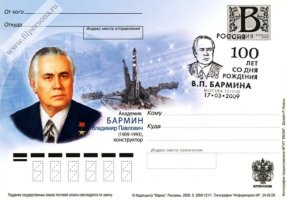
Почтовый конверт. Бармин Владимир Павлович.
Советский ученый, конструктор реактивных пусковых установок, ракетно-космических и боевых стартовых комплексов.
Академик Академии наук СССР и Российской Академии наук.
Участник Совета главных конструкторов, созданного С.П. Королевым.
Герой Социалистического Труда.

1909 - 1993.
Postal envelope. Vladimir Pavlovich Barmin.

Soviet scientist, designer of rocket launchers, space rocket systems, and combat launch systems.
Academician of the USSR Academy of Sciences and the Russian Academy of Sciences.
Member of the Council of Chief Designers established by S.P. Korolev.
Hero of Socialist Labor.

1909 - 1993.
Sobre postal. Vladimir Pavlovich Barmin.

Científico soviético, diseñador de lanzacohetes, sistemas de cohetes espaciales y sistemas de lanzamiento de combate.
Académico de la Academia de Ciencias de la URSS y de la Academia de Ciencias de Rusia.
Miembro del Consejo de Diseñadores Jefes establecido por S.P. Korolev.
Héroe del Trabajo Socialista.

1909 - 1993.
F4ZbMgfZu2opdCdttwbPlOu0unh37BYJqwNPTTmRLd7T0q8zQEYkjB9joIycA7AgwjKsh6l299lnQ84s6TrknVAs
 
Frimen1917

Frimen1917

Mecca V.I.P.
VIP
Joined
Jan 9, 2026
Messages
3,161
Points
63
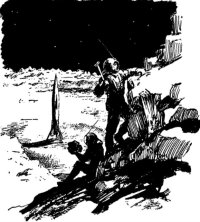
«Карцев раскопал слой пыли и стал бить по обнажённой породе геологическим молотком».(Остроумов Г. Лунный рейс // Журнал "Пионер" (Москва). — 1954 год. — № 5. — С. 58.). Рисунок художника Н. Кольчицкого.
"Kartsev dug up a layer of dust and began to hit the exposed rock with a geological hammer." (Ostroumov, G. Lunar Flight // Pioneer Magazine (Moscow). - 1954. - No. 5. - P. 58.). Drawing by artist N. Kolchitsky.
«Kartsev desenterró una capa de polvo y comenzó a golpear la roca expuesta con un martillo geológico». (Ostroumov, G. Vuelo Lunar // Revista Pioneer (Moscú). - 1954. - N.° 5. - Pág. 58.). Dibujo del artista N. Kolchitsky.

P9GuBdgxQokAZiwKmuB 5jOaw0MGQEQJ7Q04r i2Z EpzN82G3RY7jyU4a 7jyyKTsDDj7 IeBYqcTmlgERlNdkK
 
Frimen1917

Frimen1917

Mecca V.I.P.
VIP
Joined
Jan 9, 2026
Messages
3,161
Points
63
"Фридрих Артурович Цандер умер, не приходя в сознание, в изоляторе кисловодской инфекционной больницы в шесть часов утра 28 марта 1933 года.

Когда сообщение о смерти Цандера пришло в гирдовский подвал, все растерялись. Королев плакал. Никто и никогда потом не видел плачущего Королева. Спустя многие, очень трудные для него годы Королев приехал в Кисловодск, нашел могилу Цандера и позаботился о том, чтобы на ней поставили памятник.

Циолковский однажды сказал о нем: «Цандер. Вот золото и мозг». Через десятилетия Юрий Гагарин добавил: «Деятельность и личность Цандера не могут не вызвать невольного восхищения...»

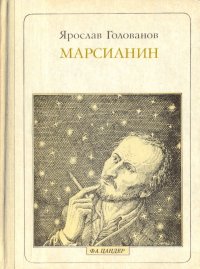
Его именем назван кратер на Луне. А надо бы — на Марсе...".(Ярослав Голованов. "Марсианин").
.............................................................................
Цит.по: Голованов Ярослав Кириллович
МАРСИАНИН: ЦАНДЕР. Опыт биографии.
Книга адресована школьникам среднего и старшего возраста.

МОСКВА/ ИЗДАТЕЛЬСТВО«МОЛОДАЯ ГВАРДИЯ»/1985 год

На фото обложка книги Ярослава Голованова "Марсианин" на которой изображен Фридрих Цандер.
"Friedrich Arturovich Tsander died without regaining consciousness in the isolation ward of the Kislovodsk Infectious Diseases Hospital at six o’clock in the morning on March 28, 1933.


When the news of Tsander’s death reached the GIRD basement, everyone was stunned. Korolev wept. No one ever saw Korolev crying again. Many years later, after enduring extremely difficult times in his own life, Korolev came to Kislovodsk, found Tsander’s grave, and made sure that a monument was erected there.

Tsiolkovsky once said of him: “Tsander. Here is gold and a brain.” Decades later, Yuri Gagarin added: “Tsander’s work and personality cannot fail to inspire admiration...”

A crater on the Moon bears his name. But it ought to be on Mars..." (Yaroslav Golovanov, "The Martian").

.............................................................................

Quoted from:

Yaroslav Kirillovich Golovanov

THE MARTIAN: TSANDER. An Attempt at a Biography.

The book is intended for middle and high school students.

MOSCOW / YOUNG GUARD PUBLISHERS / 1985

The photograph shows the cover of Yaroslav Golovanov’s book "The Martian", featuring a portrait of Friedrich Tsander.

"Friedrich Arturovich Tsander murió sin recobrar el conocimiento en la sala de aislamiento del hospital de enfermedades infecciosas de Kislovodsk a las seis de la mañana del 28 de marzo de 1933.


Cuando la noticia de la muerte de Tsander llegó al sótano del GIRD, todos quedaron desconcertados. Koroliov lloró. Nadie volvió a ver llorar a Koroliov. Muchos años después, tras atravesar tiempos muy difíciles en su propia vida, Koroliov viajó a Kislovodsk, encontró la tumba de Tsander y se aseguró de que se erigiera allí un monumento.

Tsiolkovski dijo una vez sobre él: «Tsander. He aquí oro y cerebro». Décadas más tarde, Yuri Gagarin añadió: «La obra y la personalidad de Tsander no pueden sino despertar admiración...»

Un cráter en la Luna lleva su nombre. Pero debería estar en Marte..." (Yaroslav Golovanov, "El Marciano").

.............................................................................

Citado de:

Yaroslav Kiríllovich Golovanov

EL MARCIANO: TSANDER. Un intento de biografía.

El libro está dirigido a estudiantes de enseñanza media y superior.

MOSCÚ / EDITORIAL JOVEN GUARDIA / 1985

En la fotografía aparece la portada del libro de Yaroslav Golovanov "El Marciano", en la que está representado Friedrich Tsander.
KnsC ssWPpJSh AmoUyfL3qRxr892qWau tMmaMRxtxubTBmwrcJzAIq JEDb7d PRhIaAKR9xgRgLD7Ac0wMCCN
 

MuscleMecca Crew

Mecca Staff
Frimen1917

Frimen1917

Mecca V.I.P.
VIP
Joined
Jan 9, 2026
Messages
3,161
Points
63
"Циолковский точно предвосхитил ощущения Алексея Леонова, вышедшего в открытый космос: «Страшно в этой бездне, ничем не ограниченной и без родных предметов кругом: нет под ногами Земли, нет и земного неба».

Стоп! Воображение Циолковского еще бессильно. Каким же образом можно передвигаться в свободном пространстве, летать в нем? Космос остается загадкой. И Циолковский признает это: «Я заканчиваю пока описание явлений свободного пространства».

Когда беспомощна наука, властвует фантастика. Она впереди науки, как мечта, которая всегда опережает действительность. Способность фантазировать, воплощать в реальное свои мысли, пока не могущие подтвердиться строгими расчетами, – необходимость и особенность (кстати, счастливая) человека, занимающегося серьезной наукой.
Итак, мечта ведет...".(В.Губарев."Серебристые облака").
.....................................................................
Цит.по: Владимир Степанович Губарев
СЕРЕБРИСТЫЕ ОБЛАКА
Художник И. А. Смирнов

Москва/ Издательство"Советская Россия/1982 год
"Tsiolkovsky accurately anticipated the sensations of Alexei Leonov, who became the first person to walk in open space: 'It is frightening in this abyss, unlimited by anything and with no familiar objects around: there is no Earth beneath your feet, nor is there the earthly sky.'


Stop! Here Tsiolkovsky's imagination was still powerless. How, then, could one move through free space, fly within it? Outer space remained a mystery. And Tsiolkovsky admitted this himself: 'For the time being, I conclude the description of the phenomena of free space.'

When science is helpless, fantasy reigns. It is ahead of science, like a dream that always outpaces reality. The ability to imagine, to transform thoughts into reality even before they can be confirmed by strict calculations, is a necessity and a characteristic (and, incidentally, a fortunate one) of a person engaged in serious science.

Thus, the dream leads the way..."
(V. Gubarev, "Silvery Clouds").

..................................................................

Quoted from:

Vladimir Stepanovich Gubarev

SILVERY CLOUDS

Illustrator: I. A. Smirnov

Moscow / Sovetskaya Rossiya Publishing House
"Tsiolkovski anticipó con exactitud las sensaciones de Alexéi Leónov, quien realizó la primera caminata espacial: «Da miedo estar en este abismo, ilimitado por cualquier cosa y sin objetos familiares alrededor: no hay Tierra bajo los pies ni tampoco cielo terrestre».


¡Alto! Aquí la imaginación de Tsiolkovski todavía era insuficiente. ¿Cómo podría uno desplazarse en el espacio libre, volar en él? El cosmos seguía siendo un misterio. Y el propio Tsiolkovski lo reconocía: «Por ahora concluyo la descripción de los fenómenos del espacio libre».

Cuando la ciencia se muestra impotente, reina la fantasía. Ella va por delante de la ciencia, como un sueño que siempre se adelanta a la realidad. La capacidad de imaginar, de convertir en realidad pensamientos que aún no pueden ser confirmados por cálculos rigurosos, es una necesidad y una característica (y, por cierto, una afortunada característica) de una persona dedicada a la ciencia seria.

Así pues, el sueño guía el camino..."
(V. Gubarev, "Nubes Plateadas").

..................................................................

Citado de:

Vladímir Stepánovich Gubarev

NUBES PLATEADAS

Ilustrador: I. A. Smirnov

Moscú / Editorial Sovetskaya Rossiya
UkTDjfnnqulEGICefUldWmNLSvn0jZRNKK9OZ Vow9RS XkurRtt0Q78o1sdlTsTSxFX2Eu8uhvlelYuRPzY3z G
 
Frimen1917

Frimen1917

Mecca V.I.P.
VIP
Joined
Jan 9, 2026
Messages
3,161
Points
63
"Люди, знавшие Цандера, работавшие с ним, отмечают, что любые дела и разговоры, не связанные с межпланетными путешествиями, его никак не интересовали. Он просто не принимал в них участия, чаще всего уходил. Но его интересовало все, что можно было связать с полетом в космос. Он считал Циолковского гением, он мог сутками сидеть за столом со своей полуметровой логарифмической линейкой и утверждать при этом, что не устает от работы. Учился задерживать дыхание: в межпланетном корабле ограничен запас воздуха. Пил соду: в межпланетном корабле сода будет поддерживать тонус. Выращивал на древесном угле растения: в межпланетный корабль лучше брать легкий уголь, чем тяжелую землю.

Когда он заболел, его пришли навестить друзья. У Цандера был жар, а в комнате страшный холод. Он лежал накрытый несколькими одеялами, пальто, каким-то ковром. Стали поправлять постель, а под ковром, под пальто, между одеялами - градусники: он ставил опыты по теплопередаче, ведь освещенная солнцем поверхность межпланетного корабля будет сильно нагреваться, а та, что в тени, охлаждаться.

Казалось, весь мозг его - межпланетный корабль, а он любил природу, зверей и очень сильно любил детей. Своих и не своих. Он женился быстро, неожиданно для самого себя. Потом родились девочка и мальчик. Он дал им звездные имена: Астра и Меркурий. Соседи пожимали плечами: таких имен никто не знал. Соседи показывали вослед ему пальцем: «Вот идет этот, который собирается на Марс...»

О, если бы они могли понять, что он действительно собирается на Марс! В угаре неистовой работы он вдруг стискивал на затылке пальцы и, не замечая никого вокруг, повторял громко и горячо:

- На Марс! На Марс! Вперед, на Марс!

Как легко было ошибиться в нем, приняв за фанатика, не более, одержимого изобретателя мифического аппарата, воспаленный мозг которого не знал покоя. Как действительно был он похож на них, этих несчастных чудаков, которые у одних вызывают брезгливое презрение, а других заставляют мучиться сомнениями: не гения ли отвергают они?

Но он не был таким чудаком. Его фантазии не витали в облаках. Они были крепко приколочены к технике железной логикой математика. Много лет спустя член-корреспондент АН СССР И. Ф. Образцов так скажет о Фридрихе Артуровиче:

«Особенностью творческого метода Цандера была глубокая математическая разработка каждой поставленной перед собой проблемы. Он не просто теоретически глубоко разрабатывал рассматриваемые вопросы, а с
присущей ему ясностью изложения старался дать свое толкование волновавшей его проблемы, найти пути к ее практической реализации».

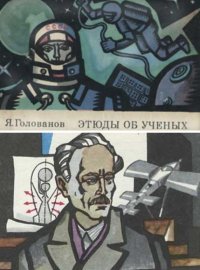
Цандер был блестящим эрудированным инженером, а по уровню своих математических знаний, по умению провести теоретический анализ интересующего его процесса был, очевидно, в те годы лучшим специалистом из всех занимающихся ракетной техникой. Наряду с этим в отличие от Циолковского Цандер не только не избегал практической работы в этой области, а стал, по существу, первым в нашей стране человеком, предпринявшим практические шаги для превращения космонавтики в науку прикладную. Воплощение идей К. Э. Циолковского, собственно, и начинается с двигателя ОР-1 и с первых жидкостных ракетных двигателей Газодинамической лаборатории в Ленинграде".(Ярослав Голованов. "Этюды об учёных"; глава: Фридрих Цандер: "Мы живём более жизнью космоса, чем жизнью земли").
..........................................................................
Цит.по: ЯРОСЛАВ КИРИЛЛОВИЧ ГОЛОВАНОВ
ЭТЮДЫ ОБ УЧЁНЫХ
Художник
Анатолий Белюкин

Москва / Издательство "Молодая гвардия" 1970 год. На фото обложка книги Ярослава Голованова "Этюды об ученых".
"People who knew Zander and worked with him noted that any activities or conversations not connected with interplanetary travel simply did not interest him. He would not participate in them and would most often leave. But everything that could be linked to spaceflight fascinated him. He considered Tsiolkovsky a genius. He could sit for days at a table with his half-meter slide rule and still insist that he never grew tired of working.


He practiced holding his breath: an interplanetary spacecraft would have only a limited air supply. He drank baking soda: soda, he believed, would help maintain vitality aboard an interplanetary ship. He grew plants in charcoal: it would be better to take lightweight charcoal into an interplanetary craft than heavy soil.

When he fell ill, friends came to visit him. Zander had a fever, yet the room was bitterly cold. He lay covered with several blankets, a coat, and some kind of rug. When they began adjusting his bedding, they discovered thermometers everywhere—under the rug, beneath the coat, between the blankets. He was conducting experiments on heat transfer, since the side of an interplanetary spacecraft exposed to the Sun would become extremely hot, while the side in shadow would cool down.

It seemed as though his entire mind was occupied by the interplanetary spacecraft. Yet he loved nature, animals, and especially children—his own and others'. He married quickly, unexpectedly even for himself. Later a daughter and a son were born. He gave them celestial names: Astra and Mercury. The neighbors shrugged their shoulders; no one had ever heard such names before. They pointed at him and said:

'There goes the man who is planning to go to Mars...'

Oh, if only they could have understood that he truly was preparing to go to Mars! In moments of intense work, he would suddenly clasp the back of his head with his hands and, oblivious to everyone around him, repeat loudly and passionately:

'To Mars! To Mars! Forward to Mars!'

How easy it was to mistake him for a fanatic, merely another obsessed inventor of a mythical machine whose feverish mind knew no rest. Indeed, he resembled those unfortunate eccentrics who inspire either contempt or uneasy doubts: perhaps the person being dismissed is in fact a genius.

But he was not such an eccentric. His fantasies did not drift in the clouds. They were firmly anchored to technology by the iron logic of a mathematician. Many years later, Corresponding Member of the USSR Academy of Sciences I. F. Obraztsov would say of Friedrich Arturovich:

'The distinctive feature of Zander’s creative method was the profound mathematical development of every problem he set before himself. He not only analyzed these questions deeply from a theoretical standpoint, but, with his characteristic clarity of expression, sought to explain the problem that concerned him and to find practical ways to implement it.'

Zander was a brilliant and highly educated engineer. In terms of mathematical knowledge and his ability to carry out theoretical analyses of the processes that interested him, he was probably the strongest specialist among all those engaged in rocketry at that time.

At the same time, unlike Tsiolkovsky, Zander did not avoid practical work in this field. On the contrary, he became, in essence, the first person in our country to take practical steps toward transforming cosmonautics into an applied science. The realization of Tsiolkovsky’s ideas truly began with the OR-1 engine and with the first liquid-fuel rocket engines of the Gas Dynamics Laboratory in Leningrad."

(Yaroslav Golovanov, "Sketches About Scientists," chapter: Friedrich Zander: "We Live More by the Life of the Cosmos than by the Life of the Earth").

Source: Yaroslav Kirillovich Golovanov, Sketches About Scientists. Illustrated by Anatoly Belyukin. Moscow: Molodaya Gvardiya Publishing House, 1970.
The photograph shows the cover of Yaroslav Golovanov’s book Sketches About Scientists.

"Las personas que conocieron a Zander y trabajaron con él señalaban que cualquier asunto o conversación que no estuviera relacionado con los viajes interplanetarios simplemente no le interesaba. No participaba en ellos y, por lo general, se marchaba. En cambio, todo lo que pudiera relacionarse con los vuelos espaciales despertaba su entusiasmo. Consideraba a Tsiolkovski un genio. Podía pasar días enteros sentado a la mesa con su regla de cálculo de medio metro y aun así afirmar que nunca se cansaba de trabajar.

Se entrenaba para contener la respiración: una nave interplanetaria tendría reservas limitadas de aire. Bebía bicarbonato de sodio: pensaba que ayudaría a mantener el tono físico durante los vuelos espaciales. Cultivaba plantas en carbón vegetal: consideraba que sería mejor llevar carbón ligero a una nave interplanetaria que tierra pesada.

Cuando enfermó, sus amigos fueron a visitarlo. Zander tenía fiebre y, sin embargo, en la habitación hacía un frío terrible. Estaba cubierto con varias mantas, un abrigo y una especie de alfombra. Cuando comenzaron a arreglarle la cama, descubrieron termómetros por todas partes: debajo de la alfombra, bajo el abrigo y entre las mantas. Estaba realizando experimentos sobre la transferencia de calor, ya que la superficie de una nave interplanetaria iluminada por el Sol se calentaría intensamente, mientras que la parte situada en la sombra se enfriaría.

Parecía que todo su cerebro estaba ocupado por la nave interplanetaria. Sin embargo, amaba la naturaleza, los animales y, sobre todo, a los niños, tanto los suyos como los ajenos. Se casó rápidamente, de manera inesperada incluso para él mismo. Más tarde nacieron una hija y un hijo. Les dio nombres celestiales: Astra y Mercurio. Los vecinos se encogían de hombros; nadie había oído jamás nombres semejantes. Señalándolo con el dedo decían:

'Ahí va el hombre que pretende ir a Marte...'

¡Si tan solo hubieran comprendido que realmente se estaba preparando para ir a Marte! En medio de un trabajo frenético, de repente se sujetaba la cabeza con ambas manos y, sin prestar atención a nadie, repetía con voz fuerte y apasionada:

'¡A Marte! ¡A Marte! ¡Adelante, a Marte!'

Era muy fácil confundirlo con un fanático, con otro inventor obsesionado de una máquina mítica cuyo cerebro inflamado no conocía el descanso. En efecto, se parecía a esos excéntricos desafortunados que inspiran desprecio o despiertan una duda inquietante: ¿y si en realidad se está rechazando a un genio?

Pero él no era un excéntrico de esa clase. Sus fantasías no flotaban en las nubes. Estaban sólidamente unidas a la tecnología por la lógica de hierro de un matemático. Muchos años después, el miembro correspondiente de la Academia de Ciencias de la URSS I. F. Obraztsov diría sobre Friedrich Arturovich:

'La característica distintiva del método creativo de Zander era el profundo desarrollo matemático de cada problema que se planteaba. No solo analizaba teóricamente las cuestiones que le interesaban, sino que, con la claridad que le era propia, intentaba explicar el problema que lo preocupaba y encontrar caminos para su realización práctica.'

Zander fue un ingeniero brillante y extraordinariamente culto. Por el nivel de sus conocimientos matemáticos y por su capacidad para realizar análisis teóricos de los procesos que le interesaban, probablemente era el mejor especialista entre todos los que trabajaban entonces en la técnica de cohetes.

Al mismo tiempo, a diferencia de Tsiolkovski, Zander no evitó el trabajo práctico en este campo. Al contrario, fue, en esencia, la primera persona de nuestro país que dio pasos concretos para convertir la cosmonáutica en una ciencia aplicada. La realización de las ideas de Tsiolkovski comenzó precisamente con el motor OR-1 y con los primeros motores cohete de combustible líquido del Laboratorio de Dinámica de Gases de Leningrado."

(Yaroslav Golovanov, Apuntes sobre científicos, capítulo: Friedrich Zander: «Vivimos más de la vida del cosmos que de la vida de la Tierra»).

Fuente: Yaroslav Kiríllovich Golovanov, Apuntes sobre científicos. Ilustraciones de Anatoli Beliukin. Moscú: Editorial Molodaya Gvardiya, 1970.

La fotografía muestra la portada del libro Apuntes sobre científicos de Yaroslav Golovanov.
5MdoG8cW4TvSwOvZV3w7x1cuAKu9T94IVo0FaVi0vCuKLApawpQuepJyUbOAwsaW4h3EjR3haKtyiocdhuoemI7k
 
Frimen1917

Frimen1917

Mecca V.I.P.
VIP
Joined
Jan 9, 2026
Messages
3,161
Points
63
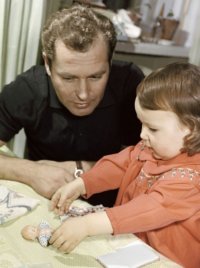
История советской космонавтики в фотографиях. Космонавт Герман Титов с дочерью.
The history of Soviet cosmonautics in photographs. Cosmonaut German Titov with his daughter.
La historia de la cosmonáutica soviética en fotografías. El cosmonauta German Titov con su hija.

 4ZpqIYWsWf5b8qbClkfxXorjheIpJBovdekZ0wDiUWJaOQwNp S8zIKxEdYqNKN884flpJjjZ1pMAQEJgTV1RN
 
Frimen1917

Frimen1917

Mecca V.I.P.
VIP
Joined
Jan 9, 2026
Messages
3,161
Points
63
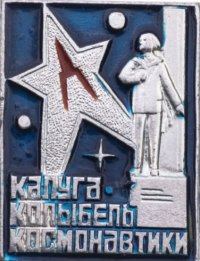
Значок "Калуга - колыбель космонавтики". На значке изображен памятник одному из пионеров космонавтики Константину Эдуардовичу Циолковскому.
The "Kaluga – Cradle of Cosmonautics" badge features a monument to one of the pioneers of cosmonautics, Konstantin Eduardovich Tsiolkovsky.
La insignia "Kaluga – Cuna de la Cosmonáutica" presenta un monumento a uno de los pioneros de la cosmonáutica, Konstantin Eduardovich Tsiolkovsky.

QlBA MKv9PeNf6q FG77kATSyjrNvlhaSsQVzb1WEDuucr erXV0Jtba5hpvPBAE76fZuKta9KamgfuXnC39W0C
 
Frimen1917

Frimen1917

Mecca V.I.P.
VIP
Joined
Jan 9, 2026
Messages
3,161
Points
63
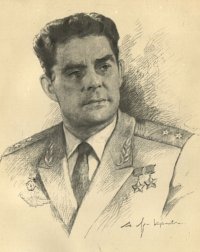
Портреты советских космонавтов.
Летчик-космонавт СССР дважды Герой Советского Союза генерал-лейтенант авиации Георгий Тимофеевич Береговой.
Portraits of Soviet cosmonauts.
Soviet pilot-cosmonaut, twice Hero of the Soviet Union, Lieutenant General of Aviation Georgy Timofeevich Beregovoy.
Retratos de cosmonautas soviéticos.

El piloto cosmonauta soviético Georgy Timofeevich Beregovoy, dos veces Héroe de la Unión Soviética y Teniente General de Aviación.
NH4 kr6Va0TYn6cS1eEmovXEoykjAesK6E7OKN9AJsE4Jq7BAR6XKKotMPXj5om5n1DoiBvT8yynPpneO hrP06
 
Frimen1917

Frimen1917

Mecca V.I.P.
VIP
Joined
Jan 9, 2026
Messages
3,161
Points
63
Яросла́в Кири́ллович Голова́нов (1932 - 2003) — советский и российский журналист, писатель и популяризатор науки. Главная тема творчества — космонавтика. Автор 20 книг, более 1200 газетных и 160 журнальных статей.
Главная тема творчества — космонавтика. С темой космоса связаны книги «Кузнецы грома», «Правда о программе Apollo», «Этюды об учёных», «Этюды о великом», «Архитектура невесомости», «Наш Гагарин», «Марсианин», «Космонавт № 1». Книга «Дорога на космодром» — история космонавтики от мифического Икара до Юрия Гагарина. Около 30 лет проработал над фундаментальной биографией главного конструктора Сергея Павловича Королева «Королёв. Факты и мифы», выпущенной издательством «Наука» в 1994 году. Автор сценария вышедшего в 1982 году фильма-биографии о Королёве «Разбег».
В 1966—1970-е годы входил в коллектив авторов-фантастов, печатавшихся под псевдонимом Павел Багряк (Па́вел Багря́к — коллективный псевдоним, под которым издавалась фантастическая проза содружества шести авторов: писателей Валерия Аграновского, Дмитрия Биленкина, Ярослава Голованова, Владимира Губарева, Виктора Комарова и художника Павла Бунина. В 1998—1999 годах опубликовал записные книжки «Заметки вашего современника».В июле-августе 1965 года проходил медицинское обследование в Институте Медико-биологических проблем Министерства здравоохранения СССР в рамках подготовки полёта в космос журналиста (в группе совместно с Юрием Летуновым из «Всесоюзного радио» и полковником Михаилом Ребровым из газеты «Красная Звезда»), однако после смерти Королёва программа была свёрнута.

В течение 10 лет он — специальный корреспондент газеты «Комсомольская Правда» на космодроме Байконур. За пропаганду достижений в освоении космоса награжден медалями К. Циолковского, С. Королева, М. Келдыша, Н. Пилюгина, В. Макеева, почетным дипломом Ю. Гагарина.9 марта 2001 года в честь Я. К. Голованова назван астероид 7729 Golovanov, открытый в 1977 году советским астрономом Н. С. Черных.

Yaroslav Kirillovich Golovanov (1932–2003) was a Soviet and Russian journalist, writer, and popularizer of science. The main theme of his work was cosmonautics. He was the author of 20 books, more than 1,200 newspaper articles, and 160 magazine articles.


The central theme of his creative work was space exploration. Among his books devoted to space are The Forgers of Thunder, The Truth About the Apollo Program, Studies of Scientists, Studies of the Great, Architecture of Weightlessness, Our Gagarin, The Martian, and Cosmonaut No. 1. His book Road to the Cosmodrome presents the history of astronautics from the legendary Icarus to Yuri Gagarin. He spent nearly thirty years working on the fundamental biography of Chief Designer Sergey Pavlovich Korolev, Korolev: Facts and Myths, published by Nauka Publishing House in 1994. He was also the screenwriter of the 1982 biographical film about Korolev, Run-Up.

From 1966 through the 1970s, he was a member of a collective of science-fiction authors who published under the pseudonym Pavel Bagryak(Pavel Bagryak was a collective pen name used by a group of six creators: writers Valery Agranovsky, Dmitry Bilenkin, Yaroslav Golovanov, Vladimir Gubarev, Viktor Komarov, and artist Pavel Bunin). In 1998–1999, Golovanov published his notebooks under the title Notes of Your Contemporary.

In July–August 1965, he underwent medical examinations at the Institute of Biomedical Problems of the USSR Ministry of Health as part of a program preparing a journalist for spaceflight. He was examined together with Yuri Letunov from All-Union Radio and Colonel Mikhail Rebrov from the newspaper Krasnaya Zvezda. However, after Korolev's death, the program was canceled.

For ten years, he served as a special correspondent for the newspaper Komsomolskaya Pravda at the Baikonur Cosmodrome. For his contributions to the popularization of achievements in space exploration, he was awarded medals named after Konstantin Tsiolkovsky, Sergey Korolev, Mstislav Keldysh, Nikolai Pilyugin, and Viktor Makeyev, as well as the Yuri Gagarin Honorary Diploma.

On March 9, 2001, asteroid 7729 Golovanov, discovered in 1977 by Soviet astronomer Nikolai Chernykh, was named in honor of Yaroslav K. Golovanov.
Yaroslav Kiríllovich Golovánov (1932–2003) fue un periodista, escritor y divulgador científico soviético y ruso. El tema principal de su obra fue la cosmonáutica. Fue autor de 20 libros, más de 1.200 artículos periodísticos y 160 artículos publicados en revistas.


El tema central de su actividad creativa fue la exploración espacial. Entre sus libros dedicados al espacio se encuentran Los forjadores del trueno, La verdad sobre el programa Apollo, Estudios sobre científicos, Estudios sobre los grandes, Arquitectura de la ingravidez, Nuestro Gagarin, El marciano y Cosmonauta n.º 1. Su libro Camino hacia el cosmódromo presenta la historia de la astronáutica desde el legendario Ícaro hasta Yuri Gagarin. Dedicó casi treinta años a la elaboración de una biografía fundamental del Diseñador Jefe Serguéi Pávlovich Koroliov, Koroliov: hechos y mitos, publicada por la editorial Nauka en 1994. También fue el guionista de la película biográfica sobre Koroliov Despegue, estrenada en 1982.

Entre 1966 y la década de 1970 formó parte de un colectivo de autores de ciencia ficción que publicaban bajo el seudónimo Pavel Bagryak(Pavel Bagryak fue un seudónimo colectivo utilizado por seis creadores: los escritores Valeri Agranovski, Dmitri Bilenkin, Yaroslav Golovánov, Vladímir Gubarev, Víktor Komárov y el artista Pavel Bunin). En 1998–1999 publicó sus cuadernos de notas bajo el título Notas de vuestro contemporáneo.

En julio y agosto de 1965 se sometió a exámenes médicos en el Instituto de Problemas Biomédicos del Ministerio de Salud de la URSS como parte de un programa para preparar a un periodista para un vuelo espacial. Formaba parte del grupo junto con Yuri Letunov, de la Radio de Toda la Unión, y el coronel Mijaíl Rebrov, del periódico Krasnaya Zvezda. Sin embargo, tras la muerte de Koroliov, el programa fue cancelado.

Durante diez años trabajó como corresponsal especial del periódico Komsomólskaya Pravda en el cosmódromo de Baikonur. Por su contribución a la divulgación de los logros de la exploración espacial fue condecorado con las medallas Konstantín Tsiolkovski, Serguéi Koroliov, Mstislav Kéldysh, Nikolái Pilyuguin y Víktor Makéyev, así como con el Diploma Honorífico Yuri Gagarin.

El 9 de marzo de 2001, el asteroide 7729 Golovanov, descubierto en 1977 por el astrónomo soviético Nikolái Chernyj, recibió su nombre en honor de Yaroslav K. Golovánov.

Yaroslav Golovanov
 
Frimen1917

Frimen1917

Mecca V.I.P.
VIP
Joined
Jan 9, 2026
Messages
3,161
Points
63
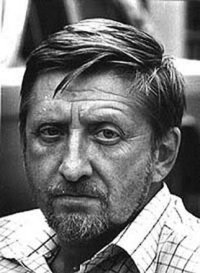
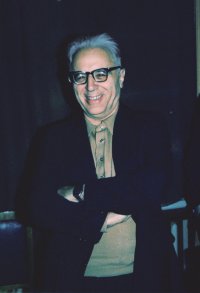
"Разговор со Шкловским. Он интересно подметил: вот уже исполнилось 20 лет космической эры, но её главный результат: ничего нового в космосе не обнаружено, представления предыдущих веков лишь уточнились, но не опровергнуты.
Иосиф Самуилович считает Юпитер наполовину звездой, наполовину планетой. Частицы высоких энергий в магнитном поле Юпитера открыты и на Земле, радиационные пояса Юпитера обнаружили в Пулково. Ракеты позволяют лишь детально изучать планеты. Планетология скоро отпочкуется от астрономии, так же, как отпочковались от нее науки о Земле. Мы присутствуем при начале освоения ближнего космоса. Иосиф Самуилович считает, что сегодня надо заниматься не изучением (принципиально новых открытий не будет), а освоением ближнего космоса: строить там солнечные электростанции, промышленные предприятия, обитаемые острова на манер «бубликов» и цилиндров О'Нейла". (Ярослав Голованов. "Заметки вашего современника"; том 2. 1970-1983).
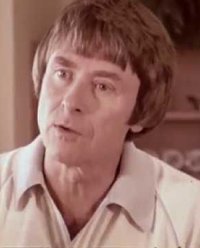
Примечание:Ио́сиф Самуи́лович Шкло́вский (1916 — 1985) — советский учёный, астроном и астрофизик.Джерард О’Нилл ( Gerard Kitchen "Gerry" O'Neill) (1927 — 1992) — американский физик, сторонник активных мер по изучению Вселенной.
На верхнем фото И. С. Шкловский (в очках). На нижнем фото
Джерард О’Нилл.
A Conversation with Shklovsky


He made an interesting observation: twenty years of the Space Age have already passed, yet its main result is that nothing fundamentally new has been discovered in space. The ideas of previous centuries have only been refined, not overturned.

Iosif Samuilovich considers Jupiter to be half star and half planet. High-energy particles in Jupiter's magnetic field were first discovered on Earth, and Jupiter's radiation belts were detected at the Pulkovo Observatory. Rockets make it possible only to study the planets in greater detail. Planetology will soon branch off from astronomy, just as the sciences of the Earth once branched off from it.

We are witnessing the beginning of the practical development of near space. Iosif Samuilovich believes that today we should focus not on exploration (since no fundamentally new discoveries are expected), but on the utilization of near-Earth space: building solar power stations there, industrial facilities, and habitable islands in the form of O'Neill-style "doughnuts" and cylinders.

(Yaroslav Golovanov, Notes of Your Contemporary, Volume 2, 1970–1983)

Note: Iosif Samuilovich Shklovsky (1916–1985) was a Soviet scientist, astronomer, and astrophysicist. Gerard Kitchen "Gerry" O'Neill (1927–1992) was an American physicist and advocate of active human expansion into space.

In the upper photograph: I. S. Shklovsky (wearing glasses). In the lower photograph: Gerard O'Neill.

Una conversación con Shklovski

Hizo una observación interesante: ya han pasado veinte años desde el comienzo de la Era Espacial, y su principal resultado es que no se ha descubierto nada fundamentalmente nuevo en el cosmos. Las ideas de los siglos anteriores solo se han precisado, pero no se han refutado.


Iosif Samuilovich considera que Júpiter es mitad estrella y mitad planeta. Las partículas de alta energía presentes en el campo magnético de Júpiter fueron descubiertas primero en la Tierra, y los cinturones de radiación de Júpiter fueron detectados en el Observatorio de Púlkovo. Los cohetes permiten únicamente estudiar los planetas con mayor detalle. La planetología pronto se separará de la astronomía, del mismo modo que las ciencias de la Tierra se separaron de ella en el pasado.

Estamos presenciando el comienzo de la explotación práctica del espacio cercano. Iosif Samuilovich cree que hoy debemos dedicarnos no tanto a la exploración (ya que no se esperan descubrimientos fundamentalmente nuevos), sino al aprovechamiento del espacio próximo a la Tierra: construir allí centrales solares, instalaciones industriales y hábitats espaciales en forma de "rosquillas" y cilindros al estilo de O'Neill.

(Yaroslav Golovanov, Notas de un contemporáneo, tomo 2, 1970–1983)

Nota: Iósif Samuilovich Shklovski (1916–1985) fue un científico, astrónomo y astrofísico soviético. Gerard Kitchen "Gerry" O'Neill (1927–1992) fue un físico estadounidense y defensor de la expansión activa de la humanidad en el espacio.


En la fotografía superior: I. S. Shklovski (con gafas). En la fotografía inferior: Gerard O'Neill.
Iosif Shklovsky

Show photo
 
Frimen1917

Frimen1917

Mecca V.I.P.
VIP
Joined
Jan 9, 2026
Messages
3,161
Points
63
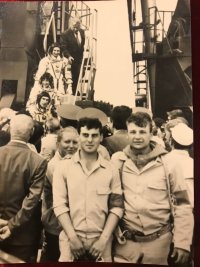
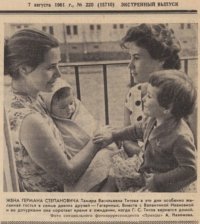
История советской космонавтики в фотографиях. Жёны космонавтов Юрия Гагарина и Германа Титова. Фото специального фотокорреспондента газеты "Правда" А.Пахомова от 7 августа 1961 года. Номер газеты был посвящён посадке космического корабля "Восток-2".
The history of Soviet cosmonautics in photographs. The wives of cosmonauts Yuri Gagarin and Gherman Titov. Photo by special photojournalist A. Pakhomov of the Pravda newspaper, August 7, 1961. The newspaper issue was dedicated to the landing of the Vostok 2 spacecraft.
La historia de la cosmonáutica soviética en fotografías. Las esposas de los cosmonautas Yuri Gagarin y Gherman Titov. Fotografía del fotoperiodista especial A. Pakhomov del periódico Pravda, 7 de agosto de 1961. La edición del periódico estaba dedicada al aterrizaje de la nave espacial Vostok 2.

GsQZ0QVUnt07oCh0QsfUjU9NojKHNnG g65ub JJOMMkEf3 l9dxd9ZJYwhrEZ5jf2eyvxWqkXl93epqpsyzayTK
 
Frimen1917

Frimen1917

Mecca V.I.P.
VIP
Joined
Jan 9, 2026
Messages
3,161
Points
63
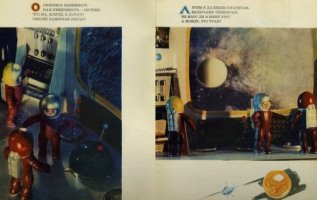
По страницам книги "Как мы на ракете летали". Авторы Сергей Баруздин и Вадим Гортинский.
Сказка - путешествие.
Издательство "Детский мир".1963 год.
From the pages of the book "How We Flew on a Rocket." Authors: Sergey Baruzdin and Vadim Gortinsky.

A fairy tale journey.
Published by "Detsky Mir." 1963.
Fragmento del libro «Cómo volamos en cohete». Autores: Sergey Baruzdin y Vadim Gortinsky.

Un viaje de cuento de hadas.
Publicado por «Detsky Mir». 1963.
WxT0kH54qD4Lcp B4DCq8S iI0PuPoKHQLqEDnmSTu0Is vrkU2LPxWs0IiRIuDpTenOUWmbH9ybfU79ZfNbDI1s
 
Top