- Thread starter
- #601

Frimen1917
Mecca V.I.P.
VIP
- Joined
- Jan 9, 2026
- Messages
- 3,161
- Points
- 63
"Всю деятельность Сергея Павловича отличает четкая последовательность и постоянная нацеленность на непрерывное движение вперед.
Сентябрь 1962 года. В мире насчитывается всего шесть человек, облетевших Землю в космическом корабле, а Королев для себя уже намечает план работы и круг вопросов, которые надо решать для создания тяжелого межпланетного корабля (ТМК) и тяжелой орбитальной станции (ТОС), других аппаратов. Свои мысли он записывает в отдельную тетрадь. Вот некоторые из этих записей:
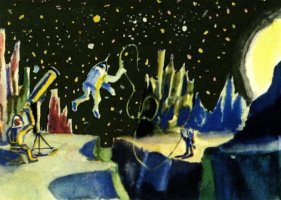
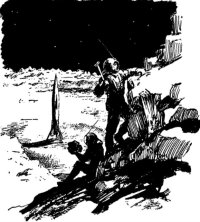
«...Надо, очевидно, положительно решить вопрос о возможности выхода из аппарата человека в космическое пространство.
Основное здесь — скафандр и его системы автономного питания для жизнеобеспечения...
Вопросы, связанные с невесомостью,— основные!
Видимо, здесь опыты на «Союзе> и на ТОС дадут возможность получить большие и очень большие длительности (до 1 года) пребывания в условиях невесомости (что при 1 годе решает проблему полета к ближним планетам, так как сроки 3—5 лет будут уже примерно того же порядка).
В условиях длительного космического полета можно будет основательно проверить:
влияние невесомости на разных людях и на достаточно большом числе людей,
разные медико-биологические средства,
разные механические средства временного и постоянного искусственного тяготения.
Можно будет впервые развернуть в космическом пространстве настоящие медико-биологические исследования и наблюдения в действительных условиях и т. д.
Тут же будет проверяться и вся вообще техника для более длительных полетов.
Видимо, создание ТОС есть необходимый этап для длительных полетов в космическом пространстве, так как здесь будут отрабатываться у Земли (т. е. легко доступны с Земли) люди и вся техника.
Это важный методический шаг!, без которого не пройти.
Ему предшествовать должна тщательная и длительная подготовка на Земле, в земных условиях людей и техники, хотя это будет во многих случаях и не совсем то, что нужно...
Для ТОС... дублирование не нужно, так как ТОС должна иметь всегда возможность с помощью кораблей «Союз> получать все необходимое и спускать, что надо, на Землю. Но все продумать для ТОС тоже надо!
Приборное бортовое оборудование следует делать:
а) со световыми разноцветными шкалами, стрелками, полем отсчета, цифрами и т. д. Цвет систематизировать по группам приборов;
б) со звуковым оформлением (негромко), и тона разбить по группам приборов (особо важные — аварийные, контрольные, посадочные, тепло, жизненные условия и т. д.), должен быть ручной регулятор громкости (среднего уровня) — он же выключатель;
в) надо, чтобы при резком изменении параметров на приборе менялся звук и яркость света. На особо важных приборах должен появляться аварийный свет и звук;
г) надо продумать особую систему для регистрации нужных параметров на пленку (учитывая очень большую длительность полета и записи), но главное, это создать бортовое автоматическое малогабаритное устройство для расшифровки этих пленок и для удобного просмотра и анализа как полученных в итоге обработки материалов, так и просмотра любого места на пленке для микроанализа и т. д.
Конечно, важна типизация кабин, ракетных блоков, спускаемых аппаратов, танкеров, основных систем на борту и аппаратуры, вообще разного бортового оборудования и т. д.
Надо разработать рациональную и стандартизовать схему и конструкцию стыковки, причаливания, креплений, шлюзования и т. д...»
Не все планы были воплощены при жизни Королева, многие из них еще не реализованы, но сама постановка вопросов, их содержание не потеряли своей актуальности и сейчас, хотя со времени записей-раздумий прошло почти четверть века.
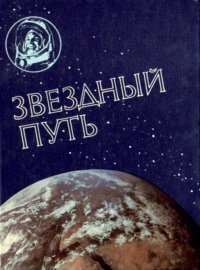
Постоянная нацеленность на будущее, стремление быть впереди своего века, пожалуй, самая яркая отличительная черта Королева".("Звездный путь".Составители М. И. Герасимова, А. Г. Иванов.— Москва.Издательство: Политиздат, 1986).
"The entire activity of Sergey Pavlovich was distinguished by a clear sense of purpose and a constant focus on continuous progress.
September 1962. There were only six people in the world who had orbited the Earth in a spacecraft, yet Korolev was already outlining for himself a work plan and a range of issues that needed to be solved in order to create a Heavy Interplanetary Spacecraft (TMK), a Heavy Orbital Station (TOS), and other vehicles. He recorded these thoughts in a separate notebook. Here are some excerpts from those notes:
'...It is apparently necessary to make a positive decision regarding the possibility of a human leaving the spacecraft and entering outer space.
The main issue here is the spacesuit and its autonomous life-support systems...
Questions related to weightlessness are fundamental!
It seems that experiments on the Soyuz spacecraft and on the TOS will make it possible to obtain long and very long durations of stay in conditions of weightlessness (up to one year), which, in the case of a one-year period, would solve the problem of flights to nearby planets, since periods of three to five years would already be of approximately the same order.
Under conditions of long-duration spaceflight, it will be possible to thoroughly test:
the effects of weightlessness on different people and on a sufficiently large number of people,
various biomedical methods,
various mechanical means of temporary and permanent artificial gravity.
For the first time, it will be possible to conduct genuine biomedical research and observations in outer space under real conditions, etc.
At the same time, all technology intended for longer-duration flights will also be tested.
Apparently, the creation of a TOS is a necessary stage for long-duration space missions, since both people and technology can be developed near Earth (that is, easily accessible from Earth).
This is an important methodological step that cannot be bypassed.
It must be preceded by thorough and lengthy preparation of both people and technology on Earth under terrestrial conditions, although in many cases these conditions will not be exactly what is needed...
For the TOS... duplication is unnecessary, since the station must always be able to receive everything necessary from Earth via Soyuz spacecraft and return whatever is required to Earth. Nevertheless, everything for the TOS must be carefully thought through!
The onboard instrumentation should be designed:
a) with multicolored illuminated scales, pointers, display fields, numbers, etc. The colors should be standardized according to groups of instruments;
b) with sound signaling (not loud), with tones divided into groups of instruments (especially important—emergency, monitoring, landing, thermal, life-support conditions, etc.); there should be a manual volume control (for the average level), which should also function as an on/off switch;
c) in such a way that abrupt parameter changes cause corresponding changes in sound and light intensity. Particularly important instruments should trigger emergency lights and sounds;
d) it is necessary to devise a special system for recording required parameters onto film (taking into account the very long duration of flights and recordings), but most importantly, to create a compact onboard automatic device for decoding these films and enabling convenient viewing and analysis of both the processed materials and any section of the film for detailed microanalysis, etc.
Of course, standardization of cabins, rocket stages, reentry vehicles, tankers, major onboard systems, instruments, and various onboard equipment is important.
A rational and standardized system and design for docking, berthing, attachment mechanisms, airlocks, etc., must be developed...'
Not all of these plans were realized during Korolev’s lifetime, and many have still not been implemented. However, the questions he posed and their content have not lost their relevance, even though nearly a quarter of a century has passed since these notes and reflections were written.
A constant focus on the future and a determination to stay ahead of his era were perhaps Korolev’s most striking characteristics".("Star Trek". Compiled by M. I. Gerasimova, A. G. Ivanov. - Moscow. Publisher: Politizdat, 1986).
"Toda la actividad de Serguéi Pávlovich se distinguió por una clara coherencia y una orientación constante hacia el avance continuo.
Septiembre de 1962. En el mundo había solamente seis personas que habían orbitado la Tierra en una nave espacial, y Koroliov ya estaba elaborando para sí mismo un plan de trabajo y una lista de cuestiones que debían resolverse para crear una Nave Interplanetaria Pesada (TMK), una Estación Orbital Pesada (TOS) y otros vehículos. Anotó estas ideas en un cuaderno aparte. He aquí algunos fragmentos de esas notas:
'...Es necesario, al parecer, resolver positivamente la cuestión de la posibilidad de que una persona salga de la nave y acceda al espacio exterior.
Lo principal aquí es el traje espacial y sus sistemas autónomos de soporte vital...
¡Las cuestiones relacionadas con la ingravidez son fundamentales!
Parece que los experimentos realizados en la nave Soyuz y en la TOS permitirán obtener períodos largos y muy largos de permanencia en condiciones de ingravidez (hasta un año), lo que, en el caso de un año, resolvería el problema de los vuelos a los planetas cercanos, ya que los plazos de tres a cinco años serían ya aproximadamente del mismo orden.
En condiciones de vuelos espaciales de larga duración será posible comprobar a fondo:
la influencia de la ingravidez en diferentes personas y en un número suficientemente grande de ellas,
diversos métodos biomédicos,
diversos medios mecánicos para crear gravedad artificial temporal o permanente.
Por primera vez será posible realizar auténticas investigaciones y observaciones biomédicas en el espacio exterior, en condiciones reales, etc.
Al mismo tiempo se probará toda la tecnología destinada a vuelos de larga duración.
Parece que la creación de una TOS constituye una etapa necesaria para los vuelos espaciales prolongados, ya que en ella se desarrollarán, cerca de la Tierra (es decir, fácilmente accesibles desde ella), tanto las personas como la tecnología.
Se trata de un paso metodológico importante que no puede omitirse.
Debe ir precedido de una preparación minuciosa y prolongada de las personas y de la tecnología en la Tierra, en condiciones terrestres, aunque en muchos casos estas condiciones no serán exactamente las necesarias...
Para la TOS... no será necesario un sistema de duplicación, ya que la estación deberá tener siempre la posibilidad de recibir todo lo necesario desde la Tierra mediante naves Soyuz y devolver a la Tierra lo que sea preciso. Pero aun así, todo para la TOS debe estar cuidadosamente pensado.
El equipamiento instrumental de a bordo deberá diseñarse:
a) con escalas luminosas multicolores, indicadores, campos de lectura, cifras, etc. Los colores deberán estar sistematizados por grupos de instrumentos;
b) con señales acústicas (de volumen moderado), cuyos tonos estén divididos por grupos de instrumentos (especialmente importantes: emergencia, control, aterrizaje, temperatura, soporte vital, etc.); deberá existir un regulador manual de volumen (nivel medio), que también actuará como interruptor;
c) de forma que, cuando un parámetro cambie bruscamente, cambien también el sonido y la intensidad luminosa. Los instrumentos especialmente importantes deberán activar señales luminosas y acústicas de emergencia;
d) es necesario diseñar un sistema especial para registrar los parámetros requeridos en película (teniendo en cuenta la enorme duración de los vuelos y de las grabaciones), pero lo más importante es crear un dispositivo automático compacto a bordo para descifrar esas películas y permitir una visualización y análisis cómodos tanto de los materiales procesados como de cualquier segmento de la película para un microanálisis detallado, etc.
Por supuesto, es importante la estandarización de las cabinas, etapas de cohetes, vehículos de descenso, naves cisterna, sistemas principales de a bordo, instrumentos y demás equipamiento.
Es necesario desarrollar y estandarizar un sistema racional para el acoplamiento, atraque, fijaciones, esclusas, etc...'
No todos estos planes llegaron a hacerse realidad durante la vida de Koroliov, y muchos de ellos aún no se han materializado. Sin embargo, los problemas planteados y su contenido no han perdido vigencia, aunque ha transcurrido casi un cuarto de siglo desde que se escribieron estas reflexiones.
La constante orientación hacia el futuro y el deseo de adelantarse a su tiempo fueron, quizás, las características más destacadas de Koroliov."
Fuente: "Zvezdny Put" ("El Camino Estelar"). Compiladores: M. I. Gerasimova y A. G. Ivanov. Moscú: Editorial Politizdat, 1986.
Сентябрь 1962 года. В мире насчитывается всего шесть человек, облетевших Землю в космическом корабле, а Королев для себя уже намечает план работы и круг вопросов, которые надо решать для создания тяжелого межпланетного корабля (ТМК) и тяжелой орбитальной станции (ТОС), других аппаратов. Свои мысли он записывает в отдельную тетрадь. Вот некоторые из этих записей:
«...Надо, очевидно, положительно решить вопрос о возможности выхода из аппарата человека в космическое пространство.
Основное здесь — скафандр и его системы автономного питания для жизнеобеспечения...
Вопросы, связанные с невесомостью,— основные!
Видимо, здесь опыты на «Союзе> и на ТОС дадут возможность получить большие и очень большие длительности (до 1 года) пребывания в условиях невесомости (что при 1 годе решает проблему полета к ближним планетам, так как сроки 3—5 лет будут уже примерно того же порядка).
В условиях длительного космического полета можно будет основательно проверить:
влияние невесомости на разных людях и на достаточно большом числе людей,
разные медико-биологические средства,
разные механические средства временного и постоянного искусственного тяготения.
Можно будет впервые развернуть в космическом пространстве настоящие медико-биологические исследования и наблюдения в действительных условиях и т. д.
Тут же будет проверяться и вся вообще техника для более длительных полетов.
Видимо, создание ТОС есть необходимый этап для длительных полетов в космическом пространстве, так как здесь будут отрабатываться у Земли (т. е. легко доступны с Земли) люди и вся техника.
Это важный методический шаг!, без которого не пройти.
Ему предшествовать должна тщательная и длительная подготовка на Земле, в земных условиях людей и техники, хотя это будет во многих случаях и не совсем то, что нужно...
Для ТОС... дублирование не нужно, так как ТОС должна иметь всегда возможность с помощью кораблей «Союз> получать все необходимое и спускать, что надо, на Землю. Но все продумать для ТОС тоже надо!
Приборное бортовое оборудование следует делать:
а) со световыми разноцветными шкалами, стрелками, полем отсчета, цифрами и т. д. Цвет систематизировать по группам приборов;
б) со звуковым оформлением (негромко), и тона разбить по группам приборов (особо важные — аварийные, контрольные, посадочные, тепло, жизненные условия и т. д.), должен быть ручной регулятор громкости (среднего уровня) — он же выключатель;
в) надо, чтобы при резком изменении параметров на приборе менялся звук и яркость света. На особо важных приборах должен появляться аварийный свет и звук;
г) надо продумать особую систему для регистрации нужных параметров на пленку (учитывая очень большую длительность полета и записи), но главное, это создать бортовое автоматическое малогабаритное устройство для расшифровки этих пленок и для удобного просмотра и анализа как полученных в итоге обработки материалов, так и просмотра любого места на пленке для микроанализа и т. д.
Конечно, важна типизация кабин, ракетных блоков, спускаемых аппаратов, танкеров, основных систем на борту и аппаратуры, вообще разного бортового оборудования и т. д.
Надо разработать рациональную и стандартизовать схему и конструкцию стыковки, причаливания, креплений, шлюзования и т. д...»
Не все планы были воплощены при жизни Королева, многие из них еще не реализованы, но сама постановка вопросов, их содержание не потеряли своей актуальности и сейчас, хотя со времени записей-раздумий прошло почти четверть века.
Постоянная нацеленность на будущее, стремление быть впереди своего века, пожалуй, самая яркая отличительная черта Королева".("Звездный путь".Составители М. И. Герасимова, А. Г. Иванов.— Москва.Издательство: Политиздат, 1986).
"The entire activity of Sergey Pavlovich was distinguished by a clear sense of purpose and a constant focus on continuous progress.
September 1962. There were only six people in the world who had orbited the Earth in a spacecraft, yet Korolev was already outlining for himself a work plan and a range of issues that needed to be solved in order to create a Heavy Interplanetary Spacecraft (TMK), a Heavy Orbital Station (TOS), and other vehicles. He recorded these thoughts in a separate notebook. Here are some excerpts from those notes:
'...It is apparently necessary to make a positive decision regarding the possibility of a human leaving the spacecraft and entering outer space.
The main issue here is the spacesuit and its autonomous life-support systems...
Questions related to weightlessness are fundamental!
It seems that experiments on the Soyuz spacecraft and on the TOS will make it possible to obtain long and very long durations of stay in conditions of weightlessness (up to one year), which, in the case of a one-year period, would solve the problem of flights to nearby planets, since periods of three to five years would already be of approximately the same order.
Under conditions of long-duration spaceflight, it will be possible to thoroughly test:
the effects of weightlessness on different people and on a sufficiently large number of people,
various biomedical methods,
various mechanical means of temporary and permanent artificial gravity.
For the first time, it will be possible to conduct genuine biomedical research and observations in outer space under real conditions, etc.
At the same time, all technology intended for longer-duration flights will also be tested.
Apparently, the creation of a TOS is a necessary stage for long-duration space missions, since both people and technology can be developed near Earth (that is, easily accessible from Earth).
This is an important methodological step that cannot be bypassed.
It must be preceded by thorough and lengthy preparation of both people and technology on Earth under terrestrial conditions, although in many cases these conditions will not be exactly what is needed...
For the TOS... duplication is unnecessary, since the station must always be able to receive everything necessary from Earth via Soyuz spacecraft and return whatever is required to Earth. Nevertheless, everything for the TOS must be carefully thought through!
The onboard instrumentation should be designed:
a) with multicolored illuminated scales, pointers, display fields, numbers, etc. The colors should be standardized according to groups of instruments;
b) with sound signaling (not loud), with tones divided into groups of instruments (especially important—emergency, monitoring, landing, thermal, life-support conditions, etc.); there should be a manual volume control (for the average level), which should also function as an on/off switch;
c) in such a way that abrupt parameter changes cause corresponding changes in sound and light intensity. Particularly important instruments should trigger emergency lights and sounds;
d) it is necessary to devise a special system for recording required parameters onto film (taking into account the very long duration of flights and recordings), but most importantly, to create a compact onboard automatic device for decoding these films and enabling convenient viewing and analysis of both the processed materials and any section of the film for detailed microanalysis, etc.
Of course, standardization of cabins, rocket stages, reentry vehicles, tankers, major onboard systems, instruments, and various onboard equipment is important.
A rational and standardized system and design for docking, berthing, attachment mechanisms, airlocks, etc., must be developed...'
Not all of these plans were realized during Korolev’s lifetime, and many have still not been implemented. However, the questions he posed and their content have not lost their relevance, even though nearly a quarter of a century has passed since these notes and reflections were written.
A constant focus on the future and a determination to stay ahead of his era were perhaps Korolev’s most striking characteristics".("Star Trek". Compiled by M. I. Gerasimova, A. G. Ivanov. - Moscow. Publisher: Politizdat, 1986).
"Toda la actividad de Serguéi Pávlovich se distinguió por una clara coherencia y una orientación constante hacia el avance continuo.
Septiembre de 1962. En el mundo había solamente seis personas que habían orbitado la Tierra en una nave espacial, y Koroliov ya estaba elaborando para sí mismo un plan de trabajo y una lista de cuestiones que debían resolverse para crear una Nave Interplanetaria Pesada (TMK), una Estación Orbital Pesada (TOS) y otros vehículos. Anotó estas ideas en un cuaderno aparte. He aquí algunos fragmentos de esas notas:
'...Es necesario, al parecer, resolver positivamente la cuestión de la posibilidad de que una persona salga de la nave y acceda al espacio exterior.
Lo principal aquí es el traje espacial y sus sistemas autónomos de soporte vital...
¡Las cuestiones relacionadas con la ingravidez son fundamentales!
Parece que los experimentos realizados en la nave Soyuz y en la TOS permitirán obtener períodos largos y muy largos de permanencia en condiciones de ingravidez (hasta un año), lo que, en el caso de un año, resolvería el problema de los vuelos a los planetas cercanos, ya que los plazos de tres a cinco años serían ya aproximadamente del mismo orden.
En condiciones de vuelos espaciales de larga duración será posible comprobar a fondo:
la influencia de la ingravidez en diferentes personas y en un número suficientemente grande de ellas,
diversos métodos biomédicos,
diversos medios mecánicos para crear gravedad artificial temporal o permanente.
Por primera vez será posible realizar auténticas investigaciones y observaciones biomédicas en el espacio exterior, en condiciones reales, etc.
Al mismo tiempo se probará toda la tecnología destinada a vuelos de larga duración.
Parece que la creación de una TOS constituye una etapa necesaria para los vuelos espaciales prolongados, ya que en ella se desarrollarán, cerca de la Tierra (es decir, fácilmente accesibles desde ella), tanto las personas como la tecnología.
Se trata de un paso metodológico importante que no puede omitirse.
Debe ir precedido de una preparación minuciosa y prolongada de las personas y de la tecnología en la Tierra, en condiciones terrestres, aunque en muchos casos estas condiciones no serán exactamente las necesarias...
Para la TOS... no será necesario un sistema de duplicación, ya que la estación deberá tener siempre la posibilidad de recibir todo lo necesario desde la Tierra mediante naves Soyuz y devolver a la Tierra lo que sea preciso. Pero aun así, todo para la TOS debe estar cuidadosamente pensado.
El equipamiento instrumental de a bordo deberá diseñarse:
a) con escalas luminosas multicolores, indicadores, campos de lectura, cifras, etc. Los colores deberán estar sistematizados por grupos de instrumentos;
b) con señales acústicas (de volumen moderado), cuyos tonos estén divididos por grupos de instrumentos (especialmente importantes: emergencia, control, aterrizaje, temperatura, soporte vital, etc.); deberá existir un regulador manual de volumen (nivel medio), que también actuará como interruptor;
c) de forma que, cuando un parámetro cambie bruscamente, cambien también el sonido y la intensidad luminosa. Los instrumentos especialmente importantes deberán activar señales luminosas y acústicas de emergencia;
d) es necesario diseñar un sistema especial para registrar los parámetros requeridos en película (teniendo en cuenta la enorme duración de los vuelos y de las grabaciones), pero lo más importante es crear un dispositivo automático compacto a bordo para descifrar esas películas y permitir una visualización y análisis cómodos tanto de los materiales procesados como de cualquier segmento de la película para un microanálisis detallado, etc.
Por supuesto, es importante la estandarización de las cabinas, etapas de cohetes, vehículos de descenso, naves cisterna, sistemas principales de a bordo, instrumentos y demás equipamiento.
Es necesario desarrollar y estandarizar un sistema racional para el acoplamiento, atraque, fijaciones, esclusas, etc...'
No todos estos planes llegaron a hacerse realidad durante la vida de Koroliov, y muchos de ellos aún no se han materializado. Sin embargo, los problemas planteados y su contenido no han perdido vigencia, aunque ha transcurrido casi un cuarto de siglo desde que se escribieron estas reflexiones.
La constante orientación hacia el futuro y el deseo de adelantarse a su tiempo fueron, quizás, las características más destacadas de Koroliov."
Fuente: "Zvezdny Put" ("El Camino Estelar"). Compiladores: M. I. Gerasimova y A. G. Ivanov. Moscú: Editorial Politizdat, 1986.