• Legal Notice – MuscleMecca Forums

    MuscleMecca.com is an educational discussion platform. We do not sell, promote, or endorse any bodybuilding gear, supplements, research chemicals, or performance-enhancing substances.

    All discussions are for educational and informational purposes only. Nothing posted on this forum should be considered medical or legal advice.

    Do not attempt to sell, source, or promote illegal substances. Any such activity will result in an immediate and permanent ban and may be reported to the proper authorities.

    By using this site, you agree to comply with all forum rules, disclaimers, and applicable laws in your jurisdiction.

    Read Our Full Disclaimer and Forum Rules

History of Soviet cosmonautics.

Frimen1917

Frimen1917

Mecca V.I.P.
VIP
Joined
Jan 9, 2026
Messages
3,154
Points
63
Испанское издание книги К. Булычева "Девочка с которой ничего не случится".
Год издания: 2024 г.
Spanish edition of K. Bulychev's book "The Girl to Whom Nothing Will Happen."

Year of publication: 2024

Edición en español del libro de K. Bulychev

"Una chiquilla a la que nunca le sucede nada"

Año de publicación: 2024

https://www.lulu.com/shop/kirill-bu.../ebook/product-rmgjqdn.html?page=1&pageSize=4


Rmgjqdn ebook shortedge 384
 
Last edited:
Frimen1917

Frimen1917

Mecca V.I.P.
VIP
Joined
Jan 9, 2026
Messages
3,154
Points
63
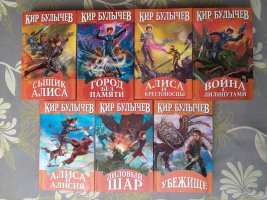
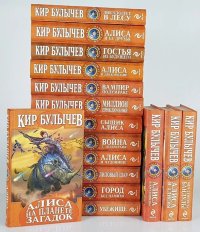
Полное собрание сочинений Кира Булычёва из серии «Алиса Селезнёва», выпущенное издательством «Эксмо» в 2009 году.
На фото обложки книг и некоторые иллюстрации.

The complete works of Kir Bulychev from the "Alisa Selezneva" series, published by Eksmo in 2009.
The photo shows the book covers and some illustrations.

Obras completas de Kir Bulychev de la serie «Alisa Selezneva», publicadas por Eksmo en 2009.
La foto muestra las portadas y algunas ilustraciones.

7a24179a6a70f6fz D94d652476caacfz
Clipboard 05 03 2026 05
0191783383eccf5z Ae535bf10947b46z E2fbcb3d1ec0390z
 
Frimen1917

Frimen1917

Mecca V.I.P.
VIP
Joined
Jan 9, 2026
Messages
3,154
Points
63
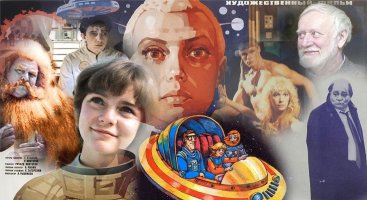
Коллаж "Фантастические миры Кира Булычева".
Collage "Fantasy worlds of Kir Bulychev".
Collage "Mundos fantásticos de Kir Bulychev".

Clipboard 05 03 2026 06
 
Frimen1917

Frimen1917

Mecca V.I.P.
VIP
Joined
Jan 9, 2026
Messages
3,154
Points
63
Коллаж "Экранизации книг Кира Булычева".
Collage "Film adaptations of Kir Bulychev's books".
Collage "Adaptaciones cinematográficas de los libros de Kir Bulychev".

98a0c610 b7e1 11eb b2a3 a99842433e6e
 
Frimen1917

Frimen1917

Mecca V.I.P.
VIP
Joined
Jan 9, 2026
Messages
3,154
Points
63
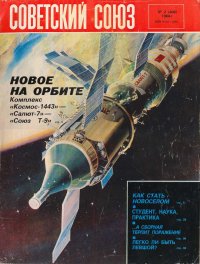
Обложка журнала "Советский союз". №2 (408). 1984 год.
На фото: Орбитальный комплекс "Космос - 1443" - "Салют - 7" - "Союз Т-9".

Cover of "Soviet Union" magazine, issue 2 (408), 1984.
Pictured: Orbital complex "Kosmos-1443" - "Salyut-7" - "Soyuz T-9."

Portada de la revista «Unión Soviética», número 2 (408), 1984.
En la imagen: Complejo orbital «Kosmos-1443» - «Salyut-7» - «Soyuz T-9».

Obl
 
Frimen1917

Frimen1917

Mecca V.I.P.
VIP
Joined
Jan 9, 2026
Messages
3,154
Points
63
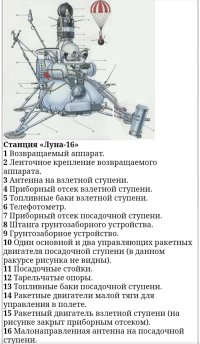
«Луна-16»советская автоматическая межпланетная станция для изучения Луны и космического пространства. Стала первым автоматическим аппаратом, доставившим внеземное вещество на Землю (перед этим его доставляли лишь пилотируемые экспедиции).
1.Возвращаемый аппарат.
2.Ленточное крепление возвращаемого аппарата.
3.Антенна на взлетной ступени.
4.Приборный отсек взлетной ступени.
5.Топливные баки взлетной ступени.
6.Телефотометр.
7.Приборный отсек посадочной ступени.
8.Штанга грунтозаборного устройства.
9.Грунтозаборное устройство.
10.Один основной и два управляющих ракетных двигателя посадочной ступени (в данном ракурсе рисунка не видны).
11.Посадочные стойки.
12.Тарельчатые опоры.
13.Топливные баки посадочной ступени.
14.Ракетные двигатели малой тяги для управления в полете.
15.Ракетный двигатель взлетной ступени(на рисунке закрыт приборным отсеком).
16.Малонаправленная антенна на посадочной ступени.

Luna-16 was a Soviet unmanned interplanetary probe designed to study the Moon and outer space. It was the first unmanned spacecraft to return extraterrestrial material to Earth (previously, only manned expeditions had done so).

1. Return module.
2. Return module attachment strap.
3. Antenna on the ascent stage.
4. Ascent stage instrument compartment.
5. Ascent stage fuel tanks.
6. Telephotometer.
7. Descent stage instrument compartment.
8. Soil sampling rod.
9. Soil sampling device.
10. One main and two control rocket engines of the descent stage (not visible in this view).
11. Landing legs.
12. Disk-shaped supports.
13. Descent stage fuel tanks.
14. Low-thrust rocket engines for in-flight control.
15. Ascent stage rocket engine (covered by the instrument compartment in the picture).

16. Low-directional antenna on the descent stage.
Luna-16 fue una sonda interplanetaria soviética no tripulada diseñada para estudiar la Luna y el espacio exterior. Fue la primera nave espacial no tripulada en traer material extraterrestre a la Tierra (anteriormente, solo las expediciones tripuladas lo habían hecho).

1. Módulo de retorno.
2. Correa de sujeción del módulo de retorno.
3. Antena en la etapa de ascenso.
4. Compartimento de instrumentos de la etapa de ascenso.
5. Tanques de combustible de la etapa de ascenso.
6. Telefotómetro.
7. Compartimento de instrumentos de la etapa de descenso.
8. Varilla de muestreo de suelo.
9. Dispositivo de muestreo de suelo.
10. Un motor cohete principal y dos de control de la etapa de descenso (no visibles en esta imagen).
11. Patas de aterrizaje.
12. Soportes en forma de disco.
13. Tanques de combustible de la etapa de descenso.
14. Motores cohete de bajo empuje para el control en vuelo.
15. Motor del cohete de la etapa de ascenso (cubierto por el compartimento de instrumentos en la imagen).

16. Antena direccional baja en la etapa de descenso.
MBpQCfuVoxfVZ372JLs9afn6xUjkkozbLHCyF2WQH Cy6ANn468gzU qCyUG3E1UM2Yto2wLHWTS2lPiBFlPlAJi
 
Frimen1917

Frimen1917

Mecca V.I.P.
VIP
Joined
Jan 9, 2026
Messages
3,154
Points
63
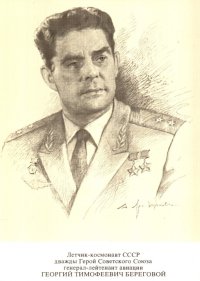
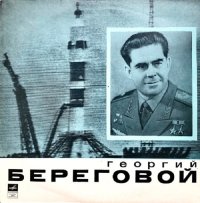
Гео́ргий Тимофе́евич Берегово́й (15 апреля 1921, село Фёдоровка, Полтавская губерния, Украинская ССР30 июня 1995, Москва, Россия) — лётчик-космонавт СССР № 12, заслуженный лётчик-испытатель СССР, генерал-лейтенант авиации, кандидат психологических наук. Дважды Герой Советского Союза (единственный, кто удостоен первой звезды Героя за Великую Отечественную войну, а второй — за полёт в космос). Лауреат Государственной премии СССР (1981).

Береговой родился раньше всех из побывавших на орбите людей (он родился на 3 месяца раньше Джона Гленна, но позже Джо Уокера, совершившего суборбитальные космические полёты на X-15 в 1963 году и погибшего в 1966 году, до полёта Берегового). Совершив космический полёт в 47-летнем возрасте, в течение нескольких лет являлся старейшим человеком, побывавшим на орбите (в 1974 году его превзошёл Лев Дёмин).

26—29 октября 1968 года, спустя полтора года после трагической гибели В. М. Комарова (24 апреля 1967 года на «Союзе-1»), совершил космический полёт на корабле «Союз-3».


Georgy Timofeyevich Beregovoy (April 15, 1921, village of Fyodorovka, Poltava Governorate, Ukrainian SSR — June 30, 1995, Moscow, Russia) was a Soviet cosmonaut (No. 12), Honored Test Pilot of the USSR, Aviation Lieutenant General, and Candidate of Psychological Sciences. He was twice awarded the title Hero of the Soviet Union (the only person to receive the first Gold Star for the Great Patriotic War and the second for a spaceflight). He was also a laureate of the USSR State Prize (1981).
Beregovoy was born earlier than any other person who later flew in orbit (he was born three months before John Glenn, but later than Joe Walker, who carried out suborbital spaceflights on the X-15 in 1963 and died in 1966, before Beregovoy’s flight). Having flown in space at the age of 47, he remained for several years the oldest person to have been in orbit (in 1974 he was surpassed by Lev Dyomin).
From October 26 to 29, 1968, a year and a half after the tragic death of Vladimir Komarov (April 24, 1967, on Soyuz-1), he carried out a spaceflight aboard the spacecraft Soyuz-3.
Georgui Timoféyevich Beregovói (15 de abril de 1921, aldea de Fiódorovka, gobernación de Poltava, RSS de Ucrania — 30 de junio de 1995, Moscú, Rusia) fue cosmonauta de la URSS (n.º 12), piloto de pruebas honorado de la URSS, teniente general de aviación y candidato en ciencias psicológicas. Fue dos veces Héroe de la Unión Soviética (el único que recibió la primera Estrella de Oro por la Gran Guerra Patria y la segunda por un vuelo espacial). También fue laureado del Premio Estatal de la URSS (1981).

Beregovói nació antes que cualquier otra persona que posteriormente volara en órbita (nació tres meses antes que John Glenn, pero después que Joe Walker, quien realizó vuelos suborbitales en el X-15 en 1963 y falleció en 1966, antes del vuelo de Beregovói). Al realizar su vuelo espacial a los 47 años, durante varios años fue la persona de mayor edad en haber estado en órbita (en 1974 fue superado por Lev Dyomin).
Del 26 al 29 de octubre de 1968, un año y medio después de la trágica muerte de Vladímir Komarov (24 de abril de 1967, en el Soyuz-1), llevó a cabo un vuelo espacial a bordo de la nave Soyuz-3.
ONBXdEMqr5qiQjiLumdG8D2xP0ufkY0Kc82Po5pyAkOovRlW0Zc1xveblYGmfl 4NwrmVn2kDf1qLe QIVj0LDTE
 
Frimen1917

Frimen1917

Mecca V.I.P.
VIP
Joined
Jan 9, 2026
Messages
3,154
Points
63
"Угол атаки... Он может меняться. Докритический, критический, закритический... Критический — это максимум подъемной силы, самый крутой набор высоты! Круче нельзя: если взять круче и выйти на закритический, тогда не миновать катастрофы: лишившаяся подъемной силы машина провалится и будет падать до самой земли...
Угол атаки... Жизнь — это тоже атака. Атака во имя поставленной перед собой цели — той единственной, самой важной, стержневой цели, которая определяет всю судьбу.
Цель тоже бывает разной. Низменной и высокой. Высота цели определяется тем, кому и для чего она нужна. Если цель избрана не тщеславием, не жаждой славы, не эгоизмом, если она продиктована не самовлюбленностью, а любовью к людям, такая цель благородна и высока. И чем нужнее, чем необходимее она не тебе одному, а всем вместе, тем она благородней и выше.
Достичь такой цели бывает трудно, подчас очень трудно, почти невозможно.,. И все же если это настоящая цель, сдаваться и отступать нельзя; ее нужно вновь и вновь штурмовать, штурмовать упорно и настойчиво, штурмовать изо дня в день — всей жизнью. Это только кажется, что невозможно; настоящую, подлинно высокую цель необходимо достичь.
Но чтобы ее достичь, надо правильно выбрать угол атаки... Надо суметь набрать максимум подъемной силы, не упустить ни одной, пусть даже самой малой, возможности, но и не зарваться, выйдя на запретную крутизну, которая ведет не к цели, а к катастрофе...
Значит, идти на цель нужно на наивыгоднейшем углу атаки; жизнь слишком коротка, чтобы выбирать отлогий подъем. Но если не щадить себя, если не разбазаривать по пустякам силы и время, она вместе с тем и достаточно продолжительна, чтобы добиться многого из того, что намечено.
Конечно, безошибочно определить свою главную цель очень трудно и не всегда удается. Но всегда можно выбрать правильный способ жизни. А это в конечном счете тот же ориентир. Не зря говорится: «Посеешь поступок, пожнешь привычку; посеешь привычку, пожнешь характер; посеешь характер, пожнешь судьбу». Разорвать эту взаимосвязь большинству из нас не под силу — она срабатывает автоматически, но тот, кто твердо, раз и навсегда, выбрал для себя способ жизни, овладевает вместе с тем и возможностью самому выковывать ее первые, самые важные звенья, которые в итоге определяют и всю цепь и ее подлинный — не по личным, а общественным меркам — вес".
(Георгий Береговой. "Небо начинается на земле").
..................................................................................
Цит.по : Георгий Тимофе́евич Берегово́й
НЕБО НАЧИНАЕТСЯ НА ЗЕМЛЕ

МОСКВА. Издательство "Молодая гвардия". 1976
“Angle of attack… It can change: subcritical, critical, supercritical… The critical angle is the maximum lift, the steepest climb! Steeper is impossible: if you go steeper and enter the supercritical range, disaster is inevitable—the aircraft, deprived of lift, will stall and fall all the way to the ground…

Angle of attack… Life is also an attack. An attack in the name of a goal you set for yourself—the one, the most important, central goal that determines your entire destiny.
Goals, too, are different: base or lofty. The height of a goal is determined by whom it serves and for what purpose. If a goal is chosen not out of vanity, not out of a thirst for fame, not out of selfishness, if it is inspired not by self-admiration but by love for people, then such a goal is noble and lofty. And the more necessary it is not only for you but for everyone, the nobler and higher it is.
To achieve such a goal can be difficult—at times very difficult, almost impossible… And yet, if it is a true goal, one must not give up or retreat; it must be stormed again and again, persistently and resolutely, day after day—through one’s entire life. It only seems impossible; a genuine, truly lofty goal must be achieved.
But to achieve it, one must choose the correct angle of attack… One must be able to gain maximum lift, not miss a single opportunity, even the smallest one, yet not overreach by entering a forbidden steepness that leads not to the goal but to disaster…
This means that one must move toward the goal at the most advantageous angle of attack; life is too short to choose a gentle slope. But if you do not spare yourself, if you do not waste your strength and time on trifles, it is also long enough to accomplish much of what is intended.
Of course, it is very difficult to determine your main goal without error, and it is not always possible. But it is always possible to choose the right way of life. And this, in the end, is the same kind of guide. It is not for nothing that it is said: “Sow an action, reap a habit; sow a habit, reap a character; sow a character, reap a destiny.” Most of us cannot break this chain—it works automatically—but the one who firmly, once and for all, chooses a way of life thereby gains the ability to forge its first and most important links, which ultimately determine the entire chain and its true weight—not by personal, but by social standards.”
(Georgy Beregovoy, “The Sky Begins on Earth”)

Source: Georgy Timofeyevich Beregovoy, The Sky Begins on Earth, Moscow, Molodaya Gvardiya Publishers, 1976.
«Ángulo de ataque… Puede variar: subcrítico, crítico, supercrítico… El ángulo crítico es el máximo de sustentación, ¡la ascensión más pronunciada! Más pronunciada no puede ser: si se aumenta y se entra en la zona supercrítica, la catástrofe es inevitable: la máquina, privada de sustentación, entrará en pérdida y caerá hasta el suelo…

Ángulo de ataque… La vida también es un ataque. Un ataque en nombre de una meta que uno se fija: la única, la más importante, la meta central que determina todo el destino.
Las metas también son distintas: bajas o elevadas. La altura de una meta la determina a quién sirve y para qué. Si la meta no se elige por vanidad, ni por sed de gloria, ni por egoísmo; si no está dictada por el amor propio, sino por el amor a las personas, entonces es noble y elevada. Y cuanto más necesaria sea no solo para uno mismo, sino para todos, tanto más noble y elevada será.
Alcanzar una meta así es difícil, a veces muy difícil, casi imposible… Y, sin embargo, si es una meta verdadera, no hay que rendirse ni retroceder; hay que asaltarla una y otra vez, con constancia y firmeza, día tras día, a lo largo de toda la vida. Solo parece imposible; una meta auténtica, verdaderamente elevada, debe alcanzarse.
Pero para lograrlo, hay que elegir correctamente el ángulo de ataque… Hay que saber obtener la máxima sustentación, no perder ni una sola oportunidad, ni siquiera la más pequeña, pero tampoco excederse entrando en una inclinación prohibida que conduce no a la meta, sino a la catástrofe…
Esto significa que hay que avanzar hacia la meta con el ángulo de ataque más ventajoso; la vida es demasiado corta para elegir una pendiente suave. Pero si uno no se escatima, si no malgasta sus fuerzas y su tiempo en cosas insignificantes, también es lo suficientemente larga como para lograr mucho de lo previsto.
Por supuesto, determinar sin error la meta principal es muy difícil y no siempre se consigue. Pero siempre es posible elegir el modo de vida correcto. Y eso, en última instancia, es el mismo punto de referencia. No en vano se dice: «Siembras un acto, recoges un hábito; siembras un hábito, recoges un carácter; siembras un carácter, recoges un destino». La mayoría de nosotros no puede romper esta cadena: funciona automáticamente; pero quien elige firmemente, de una vez para siempre, su modo de vida, adquiere al mismo tiempo la capacidad de forjar sus primeros y más importantes eslabones, que en definitiva determinan toda la cadena y su verdadero peso, no según criterios personales, sino sociales».
(Georgui Beregovói, «El cielo comienza en la Tierra»)

Fuente: Georgui Timoféyevich Beregovói, El cielo comienza en la Tierra, Moscú, Editorial Molodaya Gvardiya, 1976.
R 7619863 1751322519 6486
 
Frimen1917

Frimen1917

Mecca V.I.P.
VIP
Joined
Jan 9, 2026
Messages
3,154
Points
63
"В юности мне попалась на глаза книжка с удивительно романтичным названием "Грёзы о Земле и небе". Автором её был Константин Эдуардович Циолковский. Думалось ли тогда что я стану свидетельницей осуществления его мечты?
Наш, советский человек первым поднялся в космос. В третий раз мы услышали имя покорителя Вселенной. Сегодня это Николаев.
Действительность оказалась чудеснее самой смелой мечты. Мы живём в необычайное время, в дни свершения сказок. Через сотни, десятки сотен лет, потомки будут считать нас, современников первых подвигов в космосе, счастливейшими из людей. Люди всех профессий радуются сейчас, сознают себя участниками великих событий. Я счастлива и горжусь тем, что мне пришлось жить в такое замечательное время".(Галина Уланова. "Мы - счастливейшие").
.......................................................................
Примечание: Гали́на Серге́евна Ула́нова — советская балерина, педагог. Прима-балерина Ленинградского театра оперы и балета им. С. М. Кирова и Большого театра СССР. Дважды Герой Социалистического Труда, народная артистка СССР, лауреат Ленинской премии, четырёх Сталинских премий, премии президента РФ.
....................................................................
Цит.по: В КОСМОСЕ НИКОЛАЕВ И ПОПОВИЧ
Сборник документов и материалов, опубликованных в газете "Правда" и в других центральных газетах, о беспримерном групповом полёте вокруг Земли космических кораблей "Восток-3" и "Восток-4"
Редакторы-составители: М. Б. Черненко, А. К. Азизян, В. Ф. Реут, Б. А. Дубровин
Художники книги: С. Ю. Сахарова, Г. Г. Фёдоров, В. Л. Ильичёв
Технический редактор: В. В. Масленников.

Москва/ Издательство "Правда"/ 1963 год.
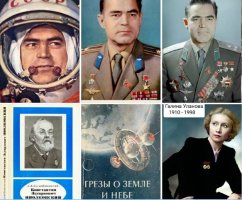
На фото: верхний ряд - фотографии космонавта А. Николаева;
нижний ряд: крайнее фото слева - обложка книги А.А. Космодемьянского "Константин Эдуардович Циолковский"; фото в центре - обложка книги К.Э.Циолковского "Грезы о Земле и небе"; крайнее фото справа - балерина Галина Уланова.

“In my youth, I came across a book with an extraordinarily romantic title, ‘Dreams of Earth and Sky.’ Its author was Konstantin Eduardovich Tsiolkovsky. Could I have imagined then that I would become a witness to the realization of his dream?

Our Soviet compatriot was the first to rise into space. For the third time, we heard the name of a conqueror of the Universe. Today, that name is Nikolaev.
Reality has proved more wonderful than the boldest dream. We live in an extraordinary time, in days when fairy tales come true. In hundreds, in many hundreds of years, our descendants will consider us—the contemporaries of the first feats in space—the happiest of people. People of all professions rejoice today, feeling themselves participants in great events. I am happy and proud that I have lived in such a remarkable time.”
(Galina Ulanova, “We Are the Happiest”)
Note:
Galina Sergeyevna Ulanova was a Soviet ballerina and teacher, prima ballerina of the Kirov Leningrad State Academic Theater of Opera and Ballet and the Bolshoi Theatre of the USSR. She was twice awarded the title Hero of Socialist Labor, was a People’s Artist of the USSR, and a laureate of the Lenin Prize, four Stalin Prizes, and the Prize of the President of the Russian Federation.
Source:
In Space: Nikolaev and Popovich.
A collection of documents and materials published in the newspaper Pravda and other central newspapers about the unprecedented group flight around the Earth of the spacecraft Vostok-3 and Vostok-4.
Editors-compilers: M. B. Chernenko, A. K. Azizyan, V. F. Reut, B. A. Dubrovin.
Book designers: S. Yu. Sakharova, G. G. Fyodorov, V. L. Ilyichev.
Technical editor: V. V. Maslennikov.
Moscow, Pravda Publishing House, 1963.
In the photo:
Top row — photographs of cosmonaut A. Nikolaev;

Bottom row — far left: the cover of A. A. Kosmodemyansky’s book “Konstantin Eduardovich Tsiolkovsky”; center: the cover of K. E. Tsiolkovsky’s book “Dreams of Earth and Sky”; far right: ballerina Galina Ulanova.
«En mi juventud cayó en mis manos un libro con un título extraordinariamente romántico, «Sueños de la Tierra y del cielo». Su autor era Konstantín Eduárdovich Tsiolkovski. ¿Podía imaginar entonces que sería testigo de la realización de su sueño?

Nuestro compatriota soviético fue el primero en elevarse al espacio. Por tercera vez escuchamos el nombre de un conquistador del Universo. Hoy ese nombre es Nikolaev.
La realidad resultó ser más maravillosa que el sueño más audaz. Vivimos en una época extraordinaria, en días en que los cuentos se hacen realidad. Dentro de cientos, de muchos cientos de años, nuestros descendientes nos considerarán a nosotros, los contemporáneos de las primeras hazañas en el espacio, las personas más felices. Personas de todas las profesiones se alegran hoy, sintiéndose partícipes de grandes acontecimientos. Soy feliz y me siento orgullosa de haber vivido en un tiempo tan maravilloso».
(Galina Ulánova, «Somos los más felices»)
Nota:
Galina Serguéievna Ulánova fue una bailarina y pedagoga soviética, prima ballerina del Teatro Académico Estatal de Ópera y Ballet Kírov de Leningrado y del Teatro Bolshói de la URSS. Fue dos veces Heroína del Trabajo Socialista, Artista del Pueblo de la URSS y laureada del Premio Lenin, de cuatro Premios Stalin y del Premio del Presidente de la Federación de Rusia.
Fuente:
En el espacio: Nikolaev y Popovich.
Recopilación de documentos y materiales publicados en el periódico Pravda y en otros periódicos centrales sobre el vuelo conjunto sin precedentes alrededor de la Tierra de las naves espaciales Vostok-3 y Vostok-4.
Editores-compiladores: M. B. Chernenko, A. K. Azizyan, V. F. Reut, B. A. Dubrovin.
Diseño del libro: S. Yu. Sájarova, G. G. Fiódorov, V. L. Illichov.
Editor técnico: V. V. Maslénnikov.
Moscú, Editorial Pravda, 1963.
En la foto:
Fila superior — fotografías del cosmonauta A. Nikolaev;

Fila inferior — izquierda: portada del libro de A. A. Kosmodemiánski «Konstantín Eduárdovich Tsiolkovski»; centro: portada del libro de K. E. Tsiolkovski «Sueños de la Tierra y del cielo»; derecha: la bailarina Galina Ulánova.

Clipboard 05 04 2026 02
 
Frimen1917

Frimen1917

Mecca V.I.P.
VIP
Joined
Jan 9, 2026
Messages
3,154
Points
63
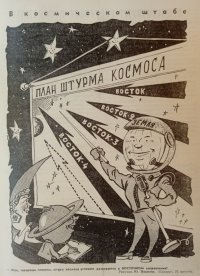
Космические рисунки в СССР.
Художник Ю. Иванов. Газета "Правда". 15 августа 1962 года.
Текст на рисунке: В КОСМИЧЕСКОМ ШТАБЕ.
ПЛАН ШТУРМА КОСМОСА.
- Итак, товарищи планеты, штурм космоса успешно развивается в ВОСТОЧНОМ направлении.

Space drawings in the USSR.

Artist Yu. Ivanov. Pravda newspaper. August 15, 1962.
Text on the drawing: AT SPACE HEADQUARTERS.
SPACE ASSAULT PLAN.

- So, comrades of the planet, the assault on space is progressing successfully in the EASTERN direction.
Dibujos espaciales en la URSS.

Artista Yu. Ivanov. Periódico Pravda. 15 de agosto de 1962.
Texto en el dibujo: EN EL CUARTEL GENERAL ESPACIAL.
PLAN DE ASALTO ESPACIAL.

—Así pues, camaradas del planeta, el asalto al espacio avanza con éxito en dirección ESTE.

HkCgnFsLnRK3VSkb8Kp MC0QQRHSq a0MBXdOEaKK hK9JRraQYIQZhNXoq2tcOFg4NwDzPM6TM7xS9OLkrwqZzG
 

MuscleMecca Crew

Mecca Staff
Frimen1917

Frimen1917

Mecca V.I.P.
VIP
Joined
Jan 9, 2026
Messages
3,154
Points
63
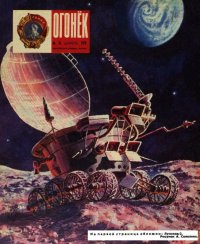
Космические обложки советских журналов.
...........................................................
Журнал "Огонёк" №16, 1973 год.
На первой странице обложки: Луноход - 2. Рисунок художника А.Соколова.

Space-themed covers of Soviet magazines.
.............................................................
Ogonyok magazine, issue #16, 1973.

Front cover: Lunokhod-2. Illustration by A. Sokolov.
Portadas de revistas soviéticas con temática espacial.
............................................................
Revista Ogonyok, número 16, 1973.

Portada: Lunokhod-2. Ilustración de A. Sokolov.
D KETUK7clcPyrdMJOL6kPNotBB0PGHKBIBvBdZ1iUIHtZ9nUhpbNKcRsP2 EIRiI6CmgLBIhVn7jDs6di KbFcF
 
Frimen1917

Frimen1917

Mecca V.I.P.
VIP
Joined
Jan 9, 2026
Messages
3,154
Points
63
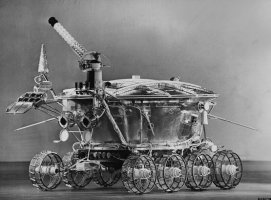
8 января в 9 час 55 мин состоялся запуск автоматической станции (АС) «Луна-21». На ее борту находился автоматический самоходный аппарат «Луноход- 2». Для обеспечения выхода станции в расчетную точку окололунного пространства 9 января была осуществлена коррекция траектории полета. При подлете к Луне 12 января была проведена операция торможения, и станция перешла на селеноцентрическую орбиту со следующими параметрами: минимальная высота над поверхностью Луны - 90 км, максимальная - 110 км; наклонение орбиты к плоскости лунного экватора - 60°; период обращения вокруг Луны 1 час 58 мин. Согласно программе полета, 13 и 14 января были проведены коррекции окололунной орбиты. АС «Луна-21» стала обращаться по эллиптической орбите с минимальным удалением от поверхности Луны 16 км. Сход с орбиты и посадка станции были выполнены с помощью унифицированной посадочной ступени. 16 января в 01 час 35 мин автоматическая станция «Луна-21» совершила мягкую посадку на поверхность Луны на восточной окраине Моря Ясности, внутри кратера Лемонье. Точка посадки имеет координаты 25°51' с. ш. и 30°27' в. д. В 04 час 14 мин «Луноход-2» по трапу сошел на поверхность Луны и приступил к выполнению программы научно-технических исследований и экспериментов. Масса «Лунохода-2» составляла 840 кг.

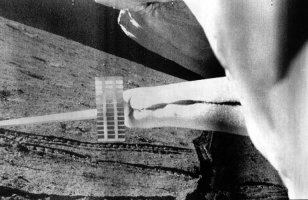
Программа работы лунохода была составлена в соответствии с главной комплексной научной задачей совместного изучения вариаций основных физико-химических свойств поверхности в зависимости от геолого-морфологической обстановки в зоне перехода морского района Луны в материковый. В эту задачу входило получение геолого-морфологических и топографических данных, изучение магнитного поля, химического состава поверхностного слоя и физико-механических свойств грунта, а также оптических' свойств поверхности. Для получения научной информации на луноходе были установлены магнитометр, рентгеноспектральный прибор для анализа химического состава лунного грунта, прибор для оценки физико-механических свойств грунта; в поле зрения панорамных камер были введены специальные фотометрические марки, представляющие собой пластинку с 39 полями, обладавшими различной отражательной способностью.

Проведение геолого-морфологических и топографических исследований местности выполнялось на основе съемки лунного ландшафта, в которую входило получение телевизионных панорам и снимков, а также данных о длине пройденного пути и положения аппарата на лунной поверхности. На борту лунохода были установлены также приборы, предназначенные для решения и других научных задач. Это астрофотометр, измеряющий светимость лунного неба, радиометр, измеряющий характеристики космического излучения, фотоприемник «Рубин-1», служащий для проведения экспериментов по лазерной пеленгации лунохода, а также французский уголковый отражатель лазерного излучения. На фото "Луноход-2".

On January 8 at 09:55, the automatic station Luna-21 was launched. On board it carried the automatic self-propelled vehicle Lunokhod-2. To ensure that the station reached the calculated point in the near-lunar space, a trajectory correction was carried out on January 9. During the approach to the Moon, on January 12, a braking maneuver was performed, and the station entered a selenocentric orbit with the following parameters: minimum altitude above the lunar surface — 90 km, maximum — 110 km; inclination of the orbit to the plane of the lunar equator — 60°; orbital period around the Moon — 1 hour 58 minutes. According to the flight program, orbital corrections were carried out on January 13 and 14. The Luna-21 station then moved in an elliptical orbit with a minimum altitude of 16 km above the lunar surface. Deorbiting and landing were carried out using a unified landing stage. On January 16 at 01:35, the automatic station Luna-21 performed a soft landing on the lunar surface at the eastern edge of the Sea of Serenity, inside the Le Monnier crater. The landing site has coordinates 25°51′ N latitude and 30°27′ E longitude. At 04:14, Lunokhod-2 descended from the ramp onto the lunar surface and began carrying out its program of scientific and technical investigations and experiments. The mass of Lunokhod-2 was 840 kg.

The program of the rover’s operation was designed in accordance with the main comprehensive scientific objective: the joint study of variations in the principal physicochemical properties of the surface depending on the geological and morphological conditions in the transition zone from the lunar mare region to the continental area. This task included obtaining geological, morphological, and topographic data, studying the magnetic field, the chemical composition of the surface layer, and the physical and mechanical properties of the soil, as well as the optical properties of the surface. To obtain scientific data, the rover was equipped with a magnetometer, an X-ray spectrometer for analyzing the chemical composition of the lunar soil, and an instrument for assessing the physical and mechanical properties of the soil. Special photometric calibration targets were included in the field of view of the panoramic cameras; these consisted of a plate with 39 sections having different reflectivity.
Geological, morphological, and topographic studies of the terrain were carried out based on imaging of the lunar landscape, which included obtaining television panoramas and photographs, as well as data on the distance traveled and the position of the vehicle on the lunar surface. The rover was also equipped with instruments for solving other scientific tasks: an astrophotometer measuring the brightness of the lunar sky, a radiometer measuring characteristics of cosmic radiation, a photodetector Rubin-1 used for laser ranging experiments with the rover, as well as a French corner reflector for laser radiation.

Photo: Lunokhod-2.

El 8 de enero a las 09:55 se realizó el lanzamiento de la estación automática Luna-21. A bordo se encontraba el vehículo automático autopropulsado Lunojod-2. Para garantizar la llegada de la estación al punto previsto en el espacio cercano a la Luna, el 9 de enero se efectuó una corrección de la trayectoria de vuelo. Durante la aproximación a la Luna, el 12 de enero se llevó a cabo una maniobra de frenado, tras la cual la estación pasó a una órbita selenocéntrica con los siguientes parámetros: altura mínima sobre la superficie lunar — 90 km, máxima — 110 km; inclinación de la órbita respecto al plano del ecuador lunar — 60°; período de revolución alrededor de la Luna — 1 hora 58 minutos. De acuerdo con el programa de vuelo, los días 13 y 14 de enero se realizaron correcciones de la órbita lunar. La estación Luna-21 pasó a desplazarse en una órbita elíptica con una altura mínima de 16 km sobre la superficie lunar. El descenso de la órbita y el aterrizaje se efectuaron mediante una etapa de aterrizaje unificada. El 16 de enero a las 01:35 la estación automática Luna-21 realizó un alunizaje suave en la superficie de la Luna, en el borde oriental del Mar de la Serenidad, dentro del cráter Le Monnier. El punto de aterrizaje tiene las coordenadas 25°51′ de latitud norte y 30°27′ de longitud este. A las 04:14, el Lunojod-2 descendió por la rampa a la superficie lunar y comenzó la ejecución de su programa de investigaciones y experimentos científicos y técnicos. La masa del Lunojod-2 era de 840 kg.

El programa de trabajo del vehículo fue elaborado de acuerdo con la principal tarea científica integral: el estudio conjunto de las variaciones de las propiedades fisicoquímicas fundamentales de la superficie en función de las condiciones geológicas y morfológicas en la zona de transición entre las regiones de mares lunares y las zonas continentales. Esta tarea incluía la obtención de datos geológicos, morfológicos y topográficos, el estudio del campo magnético, la composición química de la capa superficial y las propiedades físico-mecánicas del suelo, así como las propiedades ópticas de la superficie. Para obtener información científica, el vehículo estaba equipado con un magnetómetro, un espectrómetro de rayos X para analizar la composición química del suelo lunar y un instrumento para evaluar las propiedades físico-mecánicas del suelo. En el campo de visión de las cámaras panorámicas se introdujeron marcas fotométricas especiales, que consistían en una placa con 39 sectores con diferentes niveles de reflectividad.
Los estudios geológicos, morfológicos y topográficos del terreno se realizaron a partir de la obtención de imágenes del paisaje lunar, que incluían panoramas televisivos y fotografías, así como datos sobre la distancia recorrida y la posición del vehículo en la superficie lunar. A bordo también se instalaron instrumentos destinados a resolver otras tareas científicas: un astrofotómetro que medía la luminosidad del cielo lunar, un radiómetro que medía las características de la radiación cósmica, un fotodetector Rubin-1 utilizado para experimentos de localización láser del vehículo, así como un reflector angular francés para radiación láser.

Foto: Lunojod-2.

17 3
 
Frimen1917

Frimen1917

Mecca V.I.P.
VIP
Joined
Jan 9, 2026
Messages
3,154
Points
63
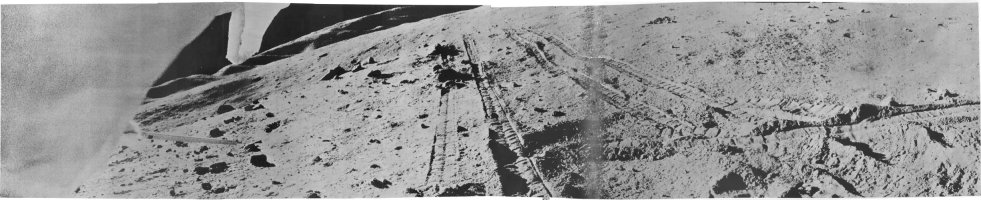
Одна из фотографий лунной поверхности с советского аппарата "Луноход-2"
One of the photographs of the lunar surface from the Soviet Lunokhod-2 spacecraft.
Una de las fotografías de la superficie lunar tomadas por la nave espacial soviética Lunokhod-2.


L 21b
 
Frimen1917

Frimen1917

Mecca V.I.P.
VIP
Joined
Jan 9, 2026
Messages
3,154
Points
63
Одна из фотографий лунной поверхности с советского аппарата "Луноход-2"
One of the photographs of the lunar surface from the Soviet Lunokhod-2 spacecraft.
Una de las fotografías de la superficie lunar tomadas por la nave espacial soviética Lunokhod-2.


L 21c
 
Frimen1917

Frimen1917

Mecca V.I.P.
VIP
Joined
Jan 9, 2026
Messages
3,154
Points
63
Одна из фотографий лунной поверхности с советского аппарата "Луноход-2"
One of the photographs of the lunar surface from the Soviet Lunokhod-2 spacecraft.
Una de las fotografías de la superficie lunar tomadas por la nave espacial soviética Lunokhod-2.

L 21d
 
Frimen1917

Frimen1917

Mecca V.I.P.
VIP
Joined
Jan 9, 2026
Messages
3,154
Points
63
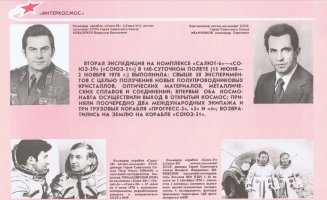
«Интеркосмос»

ВТОРАЯ ЭКСПЕДИЦИЯ НА КОМПЛЕКСЕ «САЛЮТ-6» — («СОЮЗ-29» / «СОЮЗ-31») В 140-СУТОЧНОМ ПОЛЕТЕ (15 ИЮНЯ — 2 НОЯБРЯ 1978 г.) ВЫПОЛНИЛА: СВЫШЕ 50 ЭКСПЕРИМЕНТОВ С ЦЕЛЬЮ ПОЛУЧЕНИЯ НОВЫХ ПОЛУПРОВОДНИКОВЫХ КРИСТАЛЛОВ, ОПТИЧЕСКИХ МАТЕРИАЛОВ, МЕТАЛЛИЧЕСКИХ СПЛАВОВ И СОЕДИНЕНИЙ; ВПЕРВЫЕ ОБА КОСМОНАВТА ОСУЩЕСТВИЛИ ВЫХОД В ОТКРЫТЫЙ КОСМОС; ПРИНЯЛИ ПООЧЕРЕДНО ДВА МЕЖДУНАРОДНЫХ ЭКИПАЖА И ТРИ ГРУЗОВЫХ КОРАБЛЯ «ПРОГРЕСС-2», «3» И «4»; ВОЗВРАТИЛИСЬ НА ЗЕМЛЮ НА КОРАБЛЕ «СОЮЗ-31».
На верхнем фото слева:
Командир корабля «Союз-29» («Союз-31») летчик-космонавт СССР, Герой Советского Союза КОВАЛЕНОК Владимир Васильевич.
На верхнем фото справа: Бортинженер летчик-космонавт СССР, Герой Советского Союза ИВАНЧЕНКОВ Александр Сергеевич.
На нижнем фото слева: Командир корабля «Союз-30» летчик-космонавт СССР, дважды Герой Советского Союза
Петр Ильич КЛИМУК и космонавт-исследователь Мирослав ГЕРМАШЕВСКИЙ (Польская Народная Республика) на комплексе «Союз-30» — «Салют-6» — «Союз-29» с 27 июня по 5 июля 1978 г. выполнили эксперименты, разработанные учеными и специалистами СССР и ПНР.
На нижнем фото справа: Командир корабля «Союз-31» («Союз-29») летчик-космонавт СССР, дважды Герой Советского Союза Валерий Федорович БЫКОВСКИЙ, космонавт-исследователь Зигмунд ЙЕН (Германская Демократическая Республика) с 26 августа по 3 сентября 1978 г. совместно с основным экипажем выполнили научно-технические эксперименты и исследования; фотографирование территории ГДР фотоаппаратом МКФ.

THE SECOND EXPEDITION ABOARD THE SALYUT-6 COMPLEX — (SOYUZ-29 / SOYUZ-31) DURING THE 140-DAY FLIGHT (JUNE 15 — NOVEMBER 2, 1978) CARRIED OUT: MORE THAN 50 EXPERIMENTS AIMED AT OBTAINING NEW SEMICONDUCTOR CRYSTALS, OPTICAL MATERIALS, METALLIC ALLOYS, AND COMPOUNDS; FOR THE FIRST TIME BOTH COSMONAUTS PERFORMED A SPACEWALK; THEY RECEIVED IN TURN TWO INTERNATIONAL CREWS AND THREE PROGRESS-2, PROGRESS-3, AND PROGRESS-4 CARGO SPACECRAFT; THEY RETURNED TO EARTH ABOARD THE SOYUZ-31 SPACECRAFT.
In the top photo on the left: Commander of the Soyuz-29 (Soyuz-31) spacecraft, USSR pilot-cosmonaut, Hero of the Soviet Union Vladimir Vasilyevich KOVALYONOK.
In the top photo on the right: Flight engineer, USSR pilot-cosmonaut, Hero of the Soviet Union Alexander Sergeyevich IVANCHENKOV.
In the bottom photo on the left: Commander of the Soyuz-30 spacecraft, USSR pilot-cosmonaut and twice Hero of the Soviet Union Pyotr Ilyich KLIMUK and research cosmonaut Mirosław HERMASZEWSKI (Poland) aboard the Soyuz-30 — Salyut-6 — Soyuz-29 complex from June 27 to July 5, 1978, carried out experiments developed by scientists and specialists of the USSR and Poland.
In the bottom photo on the right: Commander of the Soyuz-31 (Soyuz-29) spacecraft, USSR pilot-cosmonaut and twice Hero of the Soviet Union Valery Fyodorovich BYKOVSKY and research cosmonaut Sigmund JÄHN (GDR) from August 26 to September 3, 1978, together with the main crew carried out scientific and technical experiments and research, including photography of the territory of the GDR using the MKF camera.

Intercosmos
LA SEGUNDA EXPEDICIÓN EN EL COMPLEJO SALIUT-6 — (SOYUZ-29 / SOYUZ-31) DURANTE EL VUELO DE 140 DÍAS (15 DE JUNIO — 2 DE NOVIEMBRE DE 1978) REALIZÓ: MÁS DE 50 EXPERIMENTOS CON EL OBJETIVO DE OBTENER NUEVOS CRISTALES SEMICONDUCTORES, MATERIALES ÓPTICOS, ALEACIONES METÁLICAS Y COMPUESTOS; POR PRIMERA VEZ AMBOS COSMONAUTAS REALIZARON UNA CAMINATA ESPACIAL; RECIBIERON SUCESIVAMENTE DOS TRIPULACIONES INTERNACIONALES Y TRES NAVES DE CARGA PROGRESS-2, PROGRESS-3 Y PROGRESS-4; REGRESARON A LA TIERRA A BORDO DE LA NAVE SOYUZ-31.

En la foto superior de la izquierda: Comandante de la nave Soyuz-29 (Soyuz-31), piloto-cosmonauta de la URSS, Héroe de la Unión Soviética
Vladímir Vasílievich KOVALIONOK.
En la foto superior de la derecha: Ingeniero de vuelo, piloto-cosmonauta de la URSS, Héroe de la Unión Soviética Alexandr Serguéievich IVANCHENKOV.
En la foto de abajo a la izquierda:
El comandante de la nave Soyuz-30, piloto-cosmonauta de la URSS y dos veces Héroe de la Unión Soviética Piotr Ilich KLIMUK y el cosmonauta-investigador Mirosław HERMASZEWSKI (Polonia), en el complejo Soyuz-30 — Saliut-6 — Soyuz-29 del 27 de junio al 5 de julio de 1978, realizaron experimentos desarrollados por científicos y especialistas de la URSS y Polonia.
En la foto de abajo a la derecha: El comandante de la nave Soyuz-31 (Soyuz-29), piloto-cosmonauta de la URSS y dos veces Héroe de la Unión Soviética Valeri Fiódorovich BYKOVSKI y el cosmonauta-investigador Sigmund JÄHN (RDA), del 26 de agosto al 3 de septiembre de 1978, junto con la tripulación principal realizaron experimentos e investigaciones científico-técnicas, incluyendo la fotografía del territorio de la RDA con la cámara MKF.


Clipboard 05 23 2026 01
вт
 
Frimen1917

Frimen1917

Mecca V.I.P.
VIP
Joined
Jan 9, 2026
Messages
3,154
Points
63
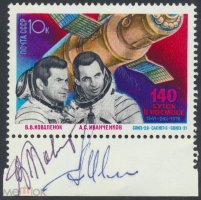
Марка. 1978. КОСМОС. СССР. Союз-29 - Салют-6 - Союз-31. 140 суток в космосе. Космонавты В.В. Коваленок и А.С. Иванченков. На марке автографы космонавтов.
Stamp. 1978. SPACE. USSR. Soyuz-29 - Salyut-6 - Soyuz-31. 140 days in space. Cosmonauts V.V. Kovalenok and A.S. Ivanchenkov. The stamp bears the cosmonauts' autographs.
Sello. 1978. ESPACIO. URSS. Soyuz-29 - Salyut-6 - Soyuz-31. 140 días en el espacio. Cosmonautas V.V. Kovalenok y A.S. Ivanchenkov. El sello lleva las firmas de los cosmonautas.

2864800500
 
Frimen1917

Frimen1917

Mecca V.I.P.
VIP
Joined
Jan 9, 2026
Messages
3,154
Points
63
ИСТОРИЯ СОВЕТСКОЙ КОСМОНАВТИКИ В ФОТОГРАФИЯХ
.....................................................................
29 июля 1978 г. В. В. Коваленок и А.С.Иванченков вышли в открытое
космическое пространство, чтобы демонтировать и частично заменить
научную аппаратуру, установленную на

внешней поверхности станции.
HISTORY OF SOVIET COSMONAUTICS IN PHOTOGRAPHS

.....................................................................
On July 29, 1978, V. V. Kovalyonok and A. S. Ivanchenkov performed a spacewalk in order to dismantle and partially replace scientific equipment installed on the outer surface of the station.
HISTORIA DE LA COSMONÁUTICA SOVIÉTICA EN FOTOGRAFÍAS

.....................................................................
El 29 de julio de 1978, V. V. Kovalyonok y A. S. Ivanchenkov realizaron una caminata espacial para desmontar y sustituir parcialmente el equipo científico instalado en la superficie exterior de la estación.
LFCVYhIcVOD3giw9KUdIhrH0zr5w1ppGmX2JxKNHBnp48CF 6 9mqiusirOcJOV9kyhWYyqMA BS9VYWAJOXxhWX
 
Frimen1917

Frimen1917

Mecca V.I.P.
VIP
Joined
Jan 9, 2026
Messages
3,154
Points
63
История советской космонавтики в фотографиях. Выход в открытый космос Александра Иванченкова - одно из центральных событий уникального по насыщенности экспериментами полёта В. Коваленка и А. Иванченкова.

History of Soviet Cosmonautics in Photographs.

Alexander Ivanchenkov’s spacewalk was one of the central events of the exceptionally experiment-rich mission of V. Kovalyonok and A. Ivanchenkov.

Historia de la cosmonáutica soviética en fotografías.
La caminata espacial de Aleksandr Ivanchenkov fue uno de los acontecimientos centrales de la misión excepcionalmente intensa en experimentos de V. Kovalyonok y A. Ivanchenkov.

VavCX7u24MwKPJ3hw WdFtVZg46tTvhnBvo9qIfnpNK35UOWGqghql43k3sS JZMzdiK5LrhYZENBvEY5 YYM95t
 
Frimen1917

Frimen1917

Mecca V.I.P.
VIP
Joined
Jan 9, 2026
Messages
3,154
Points
63
"Операция «Выход» готовилась тщательно несколько суток. Предварительно
были подогнаны скафандры. Сменные блоки системы жизнедеятельности были
заменены свежими, привезенными на «Прогрессе-2».
Вспоминая полет, всегда останавливаешься на самой красивой и яркой операции — выходе в открытый космос,— рассказывал после полета Иванченков.
Шли 45-е сутки полета. Много сил мы положили на подготовку к «Выходу». Еще на Земле готовились в гидроневесомости, изучали конструкцию уникального скафандра для выхода в открытый космос, работали на летающих лабораториях. Но настоящий выход требует очень большой собранности, внимательного отношения ко всем элементам этой уникальной операции. Все понимали — это далеко не прогулка. Поэтому подготовка к выходу началась у нас примерно за неделю. Нужно сказать, что все операции по подготовке скафандров мы выполняли с особой тщательностью: один делал, второй проверял.
Нужно было убедиться в полной работоспособности самого скафандра,
подготовить переходный отсек станции, чтобы он во всех мелочах отвечал предстоящей процедуре. Чтобы каждая вещь, каждый прибор,каждый инструмент, которые понадобятся, нашли свое место и были под рукой. Мы провели две бортовые тренировки совместно с Центром управления полетом.
Непосредственно перед выходом мысленно представили, как и что будем делать,— вспоминал Коваленок.— По каждой минуте, по каждой операции, по каждой детали — все проиграли, согласовали. Мысленно вышли в открытый космос.
И вот наступил этот момент, Земля дала нам «добро» на выход. Мы рано встали, часа в 2 ночи по московскому времени. Устроили лёгкий завтрак, если по ночному его можно так назвать, облачились в костюмы водяного охлаждения.
Станция была практически законсервирована и подготовлена к беспилотному полету, потому что выход в открытый космос — непрост. Все могло быть: или скафандр окажется негерметичным, или его пробьет. Это же вакуум. Мы понимали всю ответственность и опасность. На Земле были отработаны варианты возвращения не в станцию, а в корабль. Не хотелось думать, что может случиться аварийная ситуация, но нужно было быть готовыми ко всему. И вот мы в переходном отсеке,— продолжал Иванченков,— приступаем к работе.
Вместе с нами работает Земля. По трассе нашего полета — корабли, которые обеспечат нас в течение почти что полувитка (более
45 мин) связью с Землей. Земля нас контролирует. Все идет нормально.
Мы докладываем, Земля вместе с нами радуется, переживает, мы это чувствуем. И вот наступает момент сброса давления. Мы готовы открыть «дверь» в космическое пространство.
ФОТОН-1. Есть открытие. Мы в открытом космосе. ФОТОН-2. Яркий солнечный свет льется в станцию. Люк открыт полностью.
ФОТОН-1. А пыль вылетает в космос из станции. Видимо, остатки атмосферы отсека повлекли за собой пыль из станции.
Бесконечно космическое пространство. Разрежение в космосе выражается
цифрой с 16 нулями. Изнуряющ космический зной. Свыше тысячи килокалорий в
час на каждый квадратный метр поверхности излучает Солнце. И в этих условиях
приходится работать космонавтам".("Салют-6, "Союз", "Прогресс". "Работа на орбите").
.................................................................................
Цит.по: "Салют"- 6,"Союз", "Прогресс". "Работа на орбите". Москва. Издательство "Машиностроение". 1983.
.................................................................................

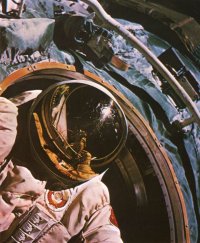
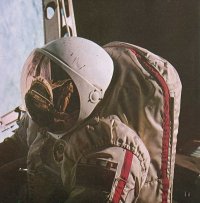
На фото: Выход в открытый космос. В гермошлеме скафандра В. Коваленка отражается А.Иванченков.
“Operation ‘Egress’ was prepared with great care over the course of several days. The spacesuits were adjusted in advance. The replaceable life-support system units were exchanged for fresh ones delivered aboard Progress-2.

‘When recalling the flight, one always pauses at the most beautiful and vivid operation — the spacewalk,’ Ivanchenkov said after the mission.
It was the 45th day of the flight. We devoted a great deal of effort to preparing for the “Egress.” Back on Earth we trained in simulated weightlessness, studied the design of the unique spacesuit for extravehicular activity, and worked aboard flying laboratories. But a real spacewalk demands enormous concentration and careful attention to every element of this unique operation. Everyone understood — this was far from a прогулка. Therefore, our preparation for the spacewalk began about a week in advance. It must be said that we carried out all procedures connected with preparing the spacesuits with exceptional thoroughness: one person performed the task, the other checked it.
It was necessary to ensure the complete operational readiness of the spacesuit itself and to prepare the station’s transfer compartment so that it met the upcoming procedure in every detail. Every object, every instrument, every tool that would be needed had to be in its proper place and readily accessible. Together with the Mission Control Center, we conducted two onboard training sessions.
‘Immediately before the exit, we mentally imagined exactly what and how we would do everything,’ Kovalyonok recalled. ‘Minute by minute, operation by operation, detail by detail — we rehearsed and coordinated everything. Mentally, we had already gone out into open space.’
And then the moment arrived. Earth gave us the go-ahead for the spacewalk. We got up early, around 2 a.m. Moscow time. We had a light breakfast — if it could even be called breakfast at that hour — and put on the water-cooling garments.
The station had practically been mothballed and prepared for unmanned flight, because a spacewalk is no simple matter. Anything could happen: a spacesuit might lose pressure or be punctured. It was a vacuum, after all. We understood the full responsibility and danger. On Earth, procedures had been worked out for returning not to the station, but directly to the spacecraft. We did not want to think that an emergency situation might occur, but we had to be prepared for anything. ‘And so we were in the transfer compartment,’ Ivanchenkov continued, ‘beginning our work.
Earth was working together with us. Along our flight path there were ships that would maintain communication with Earth for almost half an orbit — more than 45 minutes. Earth was monitoring us. Everything was proceeding normally.
We reported our status, and Earth rejoiced and worried together with us — we could feel it. Then came the moment of depressurization. We were ready to open the “door” into outer space.
PHOTON-1: The hatch is opening. We are in outer space.
PHOTON-2: Bright sunlight is flooding into the station. The hatch is fully open.
PHOTON-1: Dust is flying out of the station into space. Apparently, the remaining atmosphere in the compartment carried the dust out of the station.
Infinite is outer space. The vacuum of space is expressed by a number with 16 zeros. Cosmic heat is exhausting. The Sun radiates more than a thousand kilocalories per hour onto every square meter of surface. And under these conditions the cosmonauts had to work.”

(Salyut-6, Soyuz, Progress. Work in Orbit)
In the photo: A spacewalk. Reflected in the visor of V. Kovalyonok’s spacesuit helmet is A. Ivanchenkov.

«La operación “Salida” fue preparada cuidadosamente durante varios días. Los trajes espaciales fueron ajustados previamente. Los bloques reemplazables del sistema de soporte vital fueron sustituidos por otros nuevos traídos a bordo del Progress-2.

“Cuando uno recuerda el vuelo, siempre se detiene en la operación más hermosa y brillante: la caminata espacial”, relató Ivanchenkov después del vuelo.
Transcurría el día 45 de la misión. Dedicamos enormes esfuerzos a prepararnos para la “Salida”. Ya en la Tierra nos habíamos entrenado en hidroneutralidad, estudiamos el diseño del singular traje espacial para actividades extravehiculares y trabajamos en laboratorios voladores. Pero una verdadera salida al espacio exige una enorme concentración y una atención minuciosa a todos los elementos de esta operación única. Todos comprendían que esto estaba lejos de ser un paseo. Por eso comenzamos la preparación aproximadamente una semana antes. Hay que decir que realizamos todas las operaciones relacionadas con la preparación de los trajes espaciales con especial meticulosidad: uno realizaba la tarea y el otro la comprobaba.
Era necesario asegurarse de la completa operatividad del propio traje espacial y preparar el compartimento de transición de la estación para que respondiera en todos los detalles al procedimiento previsto. Cada objeto, cada instrumento y cada herramienta que pudiera ser necesaria debía ocupar su lugar y estar al alcance de la mano. Realizamos dos entrenamientos a bordo junto con el Centro de Control de Vuelo.
“Inmediatamente antes de la salida imaginamos mentalmente qué y cómo haríamos todo”, recordaba Kovalyonok. “Minuto a minuto, operación por operación, detalle por detalle: ensayamos y coordinamos todo. Mentalmente ya habíamos salido al espacio abierto.”
Y entonces llegó aquel momento. La Tierra nos dio autorización para la caminata espacial. Nos levantamos temprano, alrededor de las 2 de la madrugada, hora de Moscú. Tomamos un desayuno ligero —si es que podía llamarse desayuno a esa hora nocturna— y nos pusimos los trajes de refrigeración por agua.
La estación estaba prácticamente conservada y preparada para un vuelo no tripulado, porque una caminata espacial no es algo sencillo. Todo podía ocurrir: el traje espacial podía perder hermeticidad o perforarse. Después de todo, era el vacío. Comprendíamos toda la responsabilidad y el peligro. En la Tierra se habían elaborado variantes de regreso no a la estación, sino directamente a la nave. No queríamos pensar que pudiera producirse una situación de emergencia, pero debíamos estar preparados para todo. “Y así nos encontrábamos en el compartimento de transición”, continuó Ivanchenkov, “comenzando nuestro trabajo.
La Tierra trabajaba junto con nosotros. A lo largo de nuestra trayectoria había barcos que garantizarían la comunicación con la Tierra durante casi media órbita —más de 45 minutos—. La Tierra nos controlaba. Todo marchaba normalmente.
Informábamos de nuestra situación, y la Tierra se alegraba y se preocupaba junto con nosotros; lo sentíamos. Y entonces llegó el momento de la despresurización. Estábamos listos para abrir la ‘puerta’ hacia el espacio exterior.
FOTÓN-1: Apertura confirmada. Estamos en el espacio abierto.
FOTÓN-2: Una brillante luz solar inunda la estación. La escotilla está completamente abierta.
FOTÓN-1: El polvo sale de la estación hacia el espacio. Al parecer, los restos de atmósfera del compartimento arrastraron el polvo fuera de la estación.
El espacio cósmico es infinito. El vacío del cosmos se expresa mediante una cifra con 16 ceros. El calor cósmico es agotador. El Sol irradia más de mil kilocalorías por hora sobre cada metro cuadrado de superficie. Y en estas condiciones los cosmonautas debían trabajar.»

(Saliut-6, Soyuz, Progress. Trabajo en órbita)
En la foto: Una caminata espacial. En el visor del casco espacial de V. Kovalyonok se refleja A. Ivanchenkov.

No3aGnLS3XJfkD6gcX8Mxs0qvDjsqMUYPxWRyN43ciGnRlmmsXCuXAl5OYjXFmdQPAPDTOOcKoW26rtlVf4pZPZK
 
Top