• Legal Notice – MuscleMecca Forums

    MuscleMecca.com is an educational discussion platform. We do not sell, promote, or endorse any bodybuilding gear, supplements, research chemicals, or performance-enhancing substances.

    All discussions are for educational and informational purposes only. Nothing posted on this forum should be considered medical or legal advice.

    Do not attempt to sell, source, or promote illegal substances. Any such activity will result in an immediate and permanent ban and may be reported to the proper authorities.

    By using this site, you agree to comply with all forum rules, disclaimers, and applicable laws in your jurisdiction.

    Read Our Full Disclaimer and Forum Rules

  • Follow the 2026 Olympia on September 24 to 27, 2026!

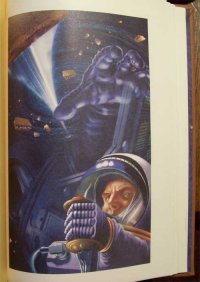
History of Soviet cosmonautics.

Frimen1917

Frimen1917

Mecca V.I.P.
VIP
Joined
Jan 9, 2026
Messages
3,161
Points
63
"Академик Василий ПАРИН. Работа шла во всем мире. Экспериментальные перегрузки росли: доктор Стапп в Нью-Мексико опробовал на себе сорокашестикратную перегрузку. Тележка с реактивным двигателем была разогнана по девятимильному прямому рельсовому пути. В момент торможения Стапп потерял сознание. Ремни, которыми он был пристегнут к креслу, оставили на теле кровоподтеки. В ту секунду тело Стаппа весило три с половиной тонны. Вернее, в те две десятых секунды…

Его соотечественники Вуд и Ламберт из знаменитой клиники Мейо, прежде чем сесть в кресла центрифуг, ввели себе по венам пластиковые катетеры в сердце, чтобы измерить давление крови в его полостях при перегрузке.

В Свердловске в 1935 году мы изучали рефлекторные изменения кровообращения. Тоже на себе. В статьях мы писали: «Наши опыты проведены пока на трех испытуемых: А. П. П. - тридцати двух лет, В. Н. Ч. - двадцати шести лет и В. В. П. - тридцати одного года. Все трое - лица нефизического труда (научные работники)».

Расшифруем закодированные имена: В. В. П. - это я. В. Н. Ч. - теперь широко известный своими трудами и научной школой академик Владимир Николаевич Черниговский. А. П. П. - вице-президент Академии наук Казахстана и директор республиканского Института физиологии Александр Порфирьевич Полосухин.

Однажды ведем опыт. Я сижу на стуле, дышу в мешок: мы тогда определяли минутный объем крови, выбрасываемой сердцем, по так называемому ацетиленовому способу Грольмана. Я дышу, а Полосухин старательно давит мне на сонные артерии. Больно, конечно, но ничего особенного я еще не успел почувствовать, как вдруг Черниговский, следивший за приборами, обернулся и что-то пытается показать А. П. П. глазами.

Тут у меня закружилась голова - слегка, потом сильнее, чем в прошлых опытах, но я продолжаю старательно дышать в мешок. А Черниговский двигает губами, но голос у него исчез. Наконец он рявкнул:

- Перестань давить!

Полосухин испуганно отнял руки. У меня все окончательно затуманилось, как ни странно, только после этого.

Черниговский подбежал, стал щупать пульс. Тут у меня головокружение прекратилось. Я спрашиваю:

- В чем дело?

- Синкопе! - сказал Черниговский. - Истинная синкопе!…

Синкопе - это остановка сердца.

Она и в самом деле была истинной: пульсовая кривая на закопченном барабане кимографа выпрямилась на 16 секунд, а затем снова стала обычной. Эту кимограмму мы, конечно, опубликовали в нашей совместной статье.

Да, освоение космоса начиналось на Земле. Тогда, в середине тридцатых, я не
мог предположить, что мне придется заниматься космической физиологией, что изменения кровообращения в «малом круге», которым я отдал многие годы работы, окажутся одной из актуальнейших проблем физиологии ускорения.

По существу, задолго до исторического утра 12 апреля 1961 года в результате проведенных ранее космо-биологических опытов были решены технические и основные медико-биологические вопросы, связанные с полетом космического корабля с человеком на борту. Основной вывод из этих опытов состоял в том, что созданные советскими учеными космические корабли и примененные на них тонкие и сложные, но безукоризненно работающие системы обеспечивают жизненные условия и полностью гарантируют безопасность и здоровье не только животных, но и человека.

Предстоял не менее важный этап - подготовка летчика-космонавта. Его нужно было подготовить и технически, и физически, и морально".(А. Дихтярь. "Прежде чем прозвучало "ПОЕХАЛИ!").
................................................................
Цит.по: АДОЛЬФ БОРИСОВИЧ ДИХТЯРЬ
ПРЕЖДЕ ЧЕМ ПРОЗВУЧАЛО:"ПОЕХАЛИ!"
Документальная композиция.
Москва/Издательство политической литературы/ 1987 год.
На фото: рисунок советского космонавта Владимира Джанибекова.

“Academician Vasily Parin.

Work was being carried out all over the world. Experimental overloads kept increasing: Dr. Stapp in New Mexico subjected himself to a 46-g acceleration. A rocket-powered sled was accelerated along a nine-mile straight rail track. At the moment of braking, Stapp lost consciousness. The straps securing him to the seat left bruises on his body. At that instant, his body effectively weighed three and a half tons — or rather, for those two-tenths of a second.

His compatriots Wood and Lambert of the famous Mayo Clinic inserted plastic catheters into their own hearts through their veins before sitting in centrifuges in order to measure blood pressure inside the heart chambers during acceleration.

Back in Sverdlovsk in 1935, we studied reflex changes in blood circulation — also on ourselves. In our papers we wrote:

‘Our experiments have so far been conducted on three subjects: A.P.P., aged 32; V.N.Ch., aged 26; and V.V.P., aged 31. All three are individuals engaged in non-manual work (research scientists).’

Let us decipher the coded names:

V.V.P. was myself. V.N.Ch. was the scientist who later became widely known through his work and scientific school, Academician Vladimir Nikolaevich Chernigovsky. A.P.P. was Alexander Porfiryevich Polosukhin, Vice-President of the Academy of Sciences of Kazakhstan and Director of the Republic Institute of Physiology.

One day we were conducting an experiment. I was sitting in a chair, breathing into a bag; at that time we were determining the minute volume of blood pumped by the heart using Grollman’s acetylene method. I was breathing while Polosukhin diligently pressed on my carotid arteries.

It hurt, of course, but I had not yet felt anything unusual when suddenly Chernigovsky, who was watching the instruments, turned around and tried to signal something to A.P.P. with his eyes.

Then I began to feel dizzy — slightly at first, then more strongly than in previous experiments, but I continued breathing into the bag. Meanwhile, Chernigovsky was moving his lips, but no sound came out. Finally he shouted:

‘Stop pressing!’

Polosukhin quickly removed his hands. Strangely enough, only then did everything become completely blurred.

Chernigovsky ran over and began checking my pulse. At that moment the dizziness stopped.

I asked:

‘What happened?’

‘Syncope!’ said Chernigovsky. ‘A true syncope!’

Syncope means cardiac arrest.

And it truly was one: the pulse trace on the soot-blackened drum of the kymograph became a straight line for 16 seconds, then returned to normal. Naturally, we published that kymograph in our joint paper.

Yes, the conquest of space began on Earth.

Back in the mid-1930s, I could not have imagined that I would later work in space physiology, or that the changes in circulation within the pulmonary system, to which I devoted many years of research, would become one of the most important problems in acceleration physiology.

In essence, long before the historic morning of April 12, 1961, the technical and principal biomedical issues associated with a human spaceflight had already been solved through earlier space-biological experiments.

The main conclusion from these experiments was that the spacecraft created by Soviet scientists, together with their sophisticated but flawlessly functioning systems, ensured living conditions and fully guaranteed the safety and health not only of animals but also of humans.

An equally important stage remained ahead: the preparation of the cosmonaut.

He had to be prepared technically, physically, and morally.”

(A. Dikhtyar, “Before the Words ‘Let’s Go!’ Were Heard”)

Source: Adolf Borisovich Dikhtyar, “BEFORE THE WORDS ‘LET’S GO!’ WERE HEARD” A documentary composition. Moscow, Politizdat, 1987.
Photo: painting of Soviet cosmonaut Vladimir Dzhanibekov.

“Académico Vasili Parin.

Se trabajaba en todo el mundo. Las sobrecargas experimentales aumentaban constantemente: el doctor Stapp, en Nuevo México, se sometió a una aceleración de 46 g. Un trineo impulsado por un motor de reacción fue acelerado a lo largo de una vía recta de nueve millas. En el momento de la frenada, Stapp perdió el conocimiento. Las correas que lo sujetaban al asiento dejaron hematomas en su cuerpo. En aquel instante su cuerpo llegó a pesar, en términos efectivos, tres toneladas y media; mejor dicho, durante esas dos décimas de segundo.

Sus compatriotas Wood y Lambert, de la famosa Clínica Mayo, se introdujeron catéteres de plástico en el corazón a través de las venas antes de sentarse en centrifugadoras, con el fin de medir la presión sanguínea en las cavidades cardíacas durante la aceleración.

En Sverdlovsk, en 1935, estudiábamos los cambios reflejos de la circulación sanguínea. También sobre nosotros mismos. En nuestros artículos escribíamos:

‘Nuestros experimentos se han realizado hasta ahora en tres sujetos: A.P.P., de 32 años; V.N.Ch., de 26 años; y V.V.P., de 31 años. Los tres son personas dedicadas al trabajo intelectual (investigadores científicos).’

Descifremos esos nombres:

V.V.P. era yo mismo. V.N.Ch. era el científico que más tarde sería ampliamente conocido por sus trabajos y su escuela científica, el académico Vladímir Nikoláievich Chernigovski. A.P.P. era Aleksandr Porfírievich Polosujin, vicepresidente de la Academia de Ciencias de Kazajistán y director del Instituto Republicano de Fisiología.

Un día realizábamos un experimento. Yo estaba sentado en una silla respirando dentro de una bolsa; en aquella época determinábamos el volumen minuto de sangre expulsado por el corazón mediante el método del acetileno de Grollman. Mientras yo respiraba, Polosujin presionaba cuidadosamente mis arterias carótidas.

Dolía, por supuesto, pero todavía no había sentido nada especial cuando, de repente, Chernigovski, que observaba los instrumentos, se volvió e intentó indicar algo a A.P.P. con la mirada.

Entonces comencé a sentir mareo: primero leve, luego más fuerte que en los experimentos anteriores, pero seguí respirando en la bolsa. Mientras tanto, Chernigovski movía los labios, pero no se oía su voz. Finalmente gritó:

‘¡Deja de presionar!’

Polosujin retiró las manos de inmediato. Curiosamente, solo entonces todo se volvió completamente borroso.

Chernigovski se acercó corriendo y empezó a tomarme el pulso. En ese momento el mareo desapareció.

Pregunté:

‘¿Qué ha pasado?’

‘¡Síncope!’, respondió Chernigovski. ‘¡Un síncope verdadero!’

El síncope significa parada cardíaca.

Y efectivamente lo fue: la curva del pulso registrada en el tambor ennegrecido del quimógrafo se convirtió en una línea recta durante 16 segundos y después volvió a la normalidad. Naturalmente, publicamos aquel registro en nuestro artículo conjunto.

Sí, la conquista del espacio comenzó en la Tierra.

En aquellos años, a mediados de la década de 1930, jamás habría imaginado que algún día trabajaría en fisiología espacial, ni que los cambios en la circulación pulmonar, a los que dediqué muchos años de investigación, se convertirían en uno de los problemas más importantes de la fisiología de las aceleraciones.

En esencia, mucho antes de la histórica mañana del 12 de abril de 1961, las cuestiones técnicas y biomédicas fundamentales relacionadas con un vuelo espacial tripulado ya habían sido resueltas gracias a los experimentos biológicos espaciales realizados anteriormente.

La principal conclusión de aquellos experimentos fue que las naves espaciales creadas por los científicos soviéticos, junto con sus sistemas complejos pero impecablemente fiables, garantizaban condiciones de vida y aseguraban plenamente la seguridad y la salud no solo de los animales, sino también de los seres humanos.

Quedaba por delante una etapa no menos importante: la preparación del cosmonauta.

Era necesario prepararlo técnica, física y moralmente.”

(A. Dikhtyar, “Antes de que se escuchara el ‘¡Vámonos!’”)

Fuente: Adolf Borísovich Dikhtyar, “ANTES DE QUE SE ESCUCHARA EL ‘¡VÁMONOS!’” Composición documental. Moscú, Editorial de Literatura Política, 1987.

Foto: pintura del cosmonauta soviético Vladímir Dzhanibekov.
 viber 2026 07 16 07 54 47 279
 
Frimen1917

Frimen1917

Mecca V.I.P.
VIP
Joined
Jan 9, 2026
Messages
3,161
Points
63
"Снегин посмотрел на часы и огляделся. Кафе клуба космонавтов, заполненное обычно по вечерам до отказа, сегодня было полупустым. Под негромкую музыку вокруг кипящего фонтана двигались в медленном танце несколько пар. В дальнем конце зала у самой стены веселилась компания лётчиков-гиперсветовиков и девушек из вновь прибывшей медицинской группы. Однако молодость брала своё, и время от времени сквозь эту нарочитую сдержанность прорывался шумный фейерверк непосредственного веселья. Судя по тостам, которые можно было расслышать, там праздновали чей-то день рождения.
Снегин отвёл взгляд от молодёжи и рассеянно посмотрел на сервированный стол, за которым сидел. Хрустальный, искрящийся затейливой резьбой кувшин с крюшоном, высокие бокалы, большая ваза с фруктами и блюдо с крохотными бутербродиками из самой разной снеди. Всеволод неторопливо наполнил бокал, нехотя отпил, а потом уже с удовольствием, смакуя каждый глоток, выпил до дна ледяной, острый, чуточку хмельной напиток. И в этот момент увидел командира «Торнадо» Ивана Лобова. Иван стоял у самого входа и шарил по залу глазами. Чтобы привлечь его внимание, Снегину пришлось подняться. Лобов заулыбался и напрямик, лавируя между столиками, направился к нему.
— Здравствуй, Всеволод!
— Здравствуй, сирота. — Снегин пожал руку товарища, усадил его за столик и пожурил; — Опаздываешь.
На патрульном жаргоне «сиротами» называли космонавтов, которые по тем или иным причинам потеряли товарищей по экипажу и остались в одиночестве. С Иваном случилась именно такая история. Произошло это внезапно: на старт-спутнике, входящем в состав крупнейшей филиал-базы галактических исследований, вспыхнула эпидемия лихорадки-тау.
База эта размещалась в космосе на группе орбитальных станций, в непосредственной близости к Стигме, земноподобной планете из системы оранжевого карлика-Тэр. «Торнадо» зашёл туда для профилактического осмотра и пополнения запасов. На Стигме находились космопорты, заводы и рудники далийцев, основные поселения которых располагались, по космическим понятиям, неподалёку — на соседней внутренней планете Далия с условиями, более комфортабельными для белковой жизни. Далийская цивилизация была открыта всего несколько лет назад. Бурное развитие контактов с ней объяснялось поразительным сходством землян и далийцев. Сначала это сходство вызвало массу гипотез об общности происхождения этих рас-близнецов, однако тщательные исследования ни одну из этих гипотез не подтвердили. Скрепя сердце пришлось признать, что природа гораздо более склонна к невероятным повторениям, чем это предполагалось до сих пор.
Для далийцев лихорадка-тау была довольно обычной болезнью, иногда ею болели и земляне на стигмийской базе, но она легко излечивалась самыми простыми средствами. На этот раз все обстояло иначе. Против нового штамма тау-риккетсии, вызвавшего эпидемию, оказались бессильными самые современные комплексы лечения. Быстро распространяясь, лихорадка охватила весь старт-спутник, и эпидемиологам пришлось прибегнуть к древнему, но достаточно эффективному средству — установить на базе жёсткий карантин.
Лобов оказался в числе немногих счастливчиков, обладавших природным тау-иммунитетом, и после скрупулёзной проверки ему разрешили наконец покинуть старт-спутник и перебраться в жилые районы базы. Он это и сделал, пожелав скорейшего выздоровления своим друзьям и товарищам по работе — Алексею Кронину и Климу Ждану, которых лихорадка-тау, увы, не пощадила. Опасности для жизни эта лихорадка не представляла, но через каждые 14–17 часов в соответствии с биологическим ритмом самой тау-риккетсии у человека подскакивала температура, возникало ощущение странной пухлости всего тела, исчезала чёткость восприятия мира и стройность суждений. Через час-полтора состояние больного само собой приходило в норму, и до следующего приступа он чувствовал себя совершенно здоровым человеком.
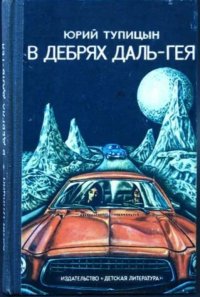
Пока сердитые медики — а они всегда бывают сердитыми в разгар эпидемий — мучили Ивана бесчисленными обследованиями, патрульный корабль «Вихрь» доставил на стигмийскую базу группу крупнейших эпидемиологов для детального изучения необычайной живучести лихорадки и разработки радикальных мер борьбы с нею. На «Вихре» прибыл старый друг Лобова начальник лётной службы галактических исследований Всеволод Снегин. И вместе с разрешением покинуть старт-спутник и перебраться на жилую станцию базы Лобов получил от Снегина дружескую записку с предложением встретиться вечером в кафе клуба космонавтов".(Юрий Тупицын. "В дебрях даль-гея ").
.......................................................................
Цит.по: ЮРИЙ ГАВРИЛОВИЧ ТУПИЦЫН
В ДЕБРЯХ ДАЛЬ-ГЕЯ
Научно-фантастический роман
Для среднего и старшего возраста

На фото обложка книги "В дебрях даль-гея ".
Snegin glanced at his watch and looked around. The café of the Cosmonauts' Club, usually packed to capacity in the evenings, was half-empty today. To the accompaniment of soft music, several couples moved in a slow dance around the bubbling fountain. At the far end of the hall, near the wall, a lively group of hyperspace pilots and girls from a newly arrived medical team were having fun. Yet youth asserted itself, and from time to time bursts of genuine laughter broke through their deliberately restrained manner. Judging by the toasts that could be heard, they were celebrating someone's birthday.


Snegin looked away from the young people and absent-mindedly glanced at the table at which he was sitting. A crystal punch bowl sparkling with intricate engravings, tall glasses, a large fruit vase, and a platter of tiny sandwiches made from a wide variety of delicacies stood before him. Vsevolod slowly filled a glass, took an indifferent sip, and then, savoring every mouthful, drained the icy, sharp, slightly intoxicating drink. At that moment he spotted Ivan Lobov, commander of the Tornado. Ivan stood near the entrance, scanning the hall with his eyes. To attract his attention, Snegin had to stand up. Lobov smiled and headed straight toward him, weaving between the tables.

“Hello, Vsevolod!”

“Hello, orphan,” Snegin replied, shaking his friend's hand, seating him at the table, and mildly reproaching him. “You're late.”

In patrol jargon, “orphans” were cosmonauts who, for one reason or another, had lost their crewmates and were left alone. That was exactly what had happened to Ivan. It occurred suddenly: an epidemic of Tau Fever broke out on the launch satellite that was part of the largest branch base of Galactic Research.

The base was located in space on a group of orbital stations near Stigma, an Earth-like planet orbiting the orange dwarf star Ter. The Tornado had stopped there for a routine inspection and replenishment of supplies. Stigma contained spaceports, factories, and mines belonging to the Dalians, whose main settlements were located, by cosmic standards, nearby — on the neighboring inner planet Dalia, whose conditions were more comfortable for carbon-based life. Dalian civilization had been discovered only a few years earlier. The rapid development of contact with them was explained by the astonishing resemblance between humans and Dalians. At first, this similarity gave rise to numerous hypotheses about the common origin of these twin races, but careful research failed to confirm any of them. Reluctantly, scientists had to admit that nature is far more inclined toward incredible repetitions than previously believed.

For the Dalians, Tau Fever was a common illness, and Earthlings at the Stigman base occasionally contracted it as well, but it was easily cured by the simplest means. This time, however, things were different. The most advanced medical treatments proved powerless against the new strain of Tau rickettsia that caused the epidemic. As the disease spread rapidly, epidemiologists had to resort to an ancient but effective measure: imposing a strict quarantine on the base.

Lobov was among the few fortunate individuals possessing a natural immunity to Tau Fever, and after meticulous testing he was finally permitted to leave the launch satellite and move to the residential section of the base. He did so, wishing a speedy recovery to his friends and fellow crew members Alexei Kronin and Klim Zhdan, whom Tau Fever had unfortunately not spared. The disease was not life-threatening, but every fourteen to seventeen hours, following the biological rhythm of the Tau rickettsia itself, a person's temperature would suddenly rise, a strange sensation of bodily swelling would appear, and clarity of perception and coherence of thought would disappear. After an hour or so, the condition would return to normal on its own, and until the next attack the patient would feel completely healthy.

While the irritated doctors — doctors are always irritated in the midst of epidemics — subjected Ivan to countless examinations, the patrol ship Whirlwind delivered a group of leading epidemiologists to the Stigman base to study the unusual persistence of the disease and develop effective countermeasures. Aboard the Whirlwind arrived Lobov's old friend, Vsevolod Snegin, head of flight operations for Galactic Research. Along with permission to leave the launch satellite and move to the residential station, Lobov received a friendly note from Snegin inviting him to meet that evening at the Cosmonauts' Club café.

(Yuri Tupitsyn, In the Wilds of Dal-Gei)

Source: Yuri Gavrilovich Tupitsyn
IN THE WILDS OF DAL-GEI
Science-fiction novel
For middle-school and older readers.

The photo shows the cover of the book "In the Wilds of Dal-Gay".
Snegin miró su reloj y observó a su alrededor. El café del Club de Cosmonautas, normalmente lleno hasta los topes por las noches, estaba hoy medio vacío. Al son de una música suave, varias parejas se movían lentamente alrededor de la fuente burbujeante. Al fondo de la sala, junto a la pared, se divertía un grupo de pilotos hiperlumínicos y jóvenes pertenecientes a un equipo médico recién llegado. Sin embargo, la juventud imponía sus propias reglas y, de vez en cuando, entre aquella contención deliberada estallaban ráfagas de alegría espontánea. Por los brindis que se alcanzaban a escuchar, parecía que celebraban el cumpleaños de alguien.


Snegin apartó la vista de los jóvenes y miró distraídamente la mesa ante la que estaba sentado. Un jarro de cristal con intrincados grabados, brillando bajo la luz, altas copas, un gran frutero y una bandeja con pequeños bocadillos de distintos manjares adornaban la mesa. Vsevolod llenó lentamente una copa, dio un sorbo sin entusiasmo y luego, saboreando cada trago, apuró la bebida helada, aromática y ligeramente embriagadora. En ese momento vio a Iván Lobov, comandante de la nave Tornado. Iván permanecía junto a la entrada, recorriendo la sala con la mirada. Para llamar su atención, Snegin tuvo que ponerse de pie. Lobov sonrió y se dirigió hacia él, esquivando las mesas.

—¡Hola, Vsevolod!

—Hola, huérfano —respondió Snegin, estrechándole la mano, invitándolo a sentarse y reprendiéndolo amistosamente—. Llegas tarde.

En la jerga de las patrullas espaciales, se llamaba “huérfanos” a los cosmonautas que, por una razón u otra, habían perdido a sus compañeros de tripulación y habían quedado solos. Precisamente eso le había sucedido a Iván. Ocurrió de forma repentina: en el satélite de lanzamiento que formaba parte de la mayor base filial de Investigaciones Galácticas estalló una epidemia de fiebre Tau.

La base estaba situada en el espacio, en un conjunto de estaciones orbitales cercanas a Stigma, un planeta semejante a la Tierra perteneciente al sistema de la enana naranja Ter. La nave Tornado había llegado allí para una inspección rutinaria y para reabastecerse. En Stigma se encontraban puertos espaciales, fábricas y minas de los dalianos, cuyos principales asentamientos se hallaban, según los estándares cósmicos, muy cerca: en el planeta interior vecino, Dalia, cuyas condiciones eran más cómodas para la vida basada en proteínas. La civilización daliana había sido descubierta apenas unos años antes. El rápido desarrollo de los contactos con ellos se debía al sorprendente parecido entre los humanos y los dalianos. Al principio, esta semejanza dio origen a numerosas hipótesis sobre un origen común de ambas razas gemelas, pero investigaciones exhaustivas no lograron confirmar ninguna de ellas. A regañadientes, los científicos tuvieron que admitir que la naturaleza es mucho más propensa a las repeticiones extraordinarias de lo que se había supuesto.

Para los dalianos, la fiebre Tau era una enfermedad bastante común; algunos terrícolas de la base de Stigma también la contraían de vez en cuando, pero se curaba fácilmente con medios sencillos. Esta vez, sin embargo, todo era diferente. Los tratamientos más avanzados resultaron impotentes frente a la nueva cepa de la rickettsia Tau que había provocado la epidemia. A medida que la enfermedad se propagaba rápidamente, los epidemiólogos tuvieron que recurrir a una medida antigua pero eficaz: imponer una estricta cuarentena en toda la base.

Lobov se encontraba entre los pocos afortunados que poseían una inmunidad natural contra la fiebre Tau y, tras una minuciosa revisión médica, finalmente recibió autorización para abandonar el satélite de lanzamiento y trasladarse a la zona residencial de la base. Lo hizo deseando una pronta recuperación a sus amigos y compañeros de trabajo, Alexéi Kronin y Klim Zhdan, a quienes la fiebre Tau no había perdonado. La enfermedad no representaba peligro mortal, pero cada catorce o diecisiete horas, siguiendo el ritmo biológico de la propia rickettsia Tau, la temperatura corporal aumentaba bruscamente, aparecía una extraña sensación de hinchazón en todo el cuerpo y desaparecían la claridad de percepción y la coherencia del pensamiento. Después de una hora aproximadamente, el estado volvía por sí solo a la normalidad, y hasta el siguiente ataque el enfermo se sentía completamente sano.

Mientras los médicos, siempre irritados en plena epidemia, sometían a Iván a innumerables exámenes, la nave patrulla Torbellino llevó a la base de Stigma a un grupo de destacados epidemiólogos para estudiar la extraordinaria resistencia de la enfermedad y desarrollar medidas eficaces contra ella. A bordo del Torbellino llegó el viejo amigo de Lobov, Vsevolod Snegin, jefe del servicio de vuelo de Investigaciones Galácticas. Junto con el permiso para abandonar el satélite de lanzamiento y trasladarse a la estación residencial, Lobov recibió una nota amistosa de Snegin invitándolo a encontrarse esa misma noche en el café del Club de Cosmonautas.

(Yuri Tupitsyn, En las profundidades de Dal-Gei)

Fuente: Yuri Gavrílovich Tupitsyn
EN LAS PROFUNDIDADES DE DAL-GEI
Novela de ciencia ficción
Para lectores de edad media y superior.

La foto muestra la portada del libro "En los parajes salvajes de Dal-Gay".
EhoIAgC02CitwKP AsGS6CSDdnbG2E0WhjMBYqZiuT q4HxYGT976yi Bar7X5vMgp8JKp6KPyChoEdqKRIHAjFl
 
Frimen1917

Frimen1917

Mecca V.I.P.
VIP
Joined
Jan 9, 2026
Messages
3,161
Points
63
"Говорят, настоящую красоту прежде всего ощущаешь спиной – пробегают, знаете ли, эдакие резонансные мурашки сопричастности и восторга. Что ж, правильно говорят, я это в полной мере прочувствовал… Мне вспомнилось старое изречение: «Нет ничего прекраснее танцующей женщины, скачущего коня и чайного клипера под всеми парусами». Теперь я мог бы добавить: нет ничего романтичнее женской земной красоты в океане холодного блеска Вселенной… Я оцепенело всматривался в это, без сомнения, знакомое мне лицо, узнавая его и в то же время не узнавая там, среди звезд, и, признаюсь, готов был к восторженным декламациям. «Руки, богиня иль смертная дева, к тебе простираю. Если одна из богинь ты, владычица пространного неба, то с Артемидою только, великою дочерью Зевса, можешь сходна быть лица красотою… Нет, ничего столь прекрасного между людей земнородных взоры мои не встречали доныне; смотрю с изумленьем…» О да, забыв обо всем, стоял я как столб и завороженно созерцал новоявленную нимфу Млечного Пути. Было в ней что-то очень земное и одновременно экзотически неземное, звездно-музыкальное, вселенское… Улыбчивые карие глаза, жемчужно-розовые губы, плавные контуры темных волос. В серповидную прядь на виске великолепно «вписалась» драгоценная капля лучистой Капеллы…

– Вахта административно-технического сектора на приеме! – бодро отрапортовали жемчужно-розовые губы. – Слушаю, капитан.

Я медленно возвращался с неба на грешную зем… в командную рубку.

– Таня, дайте, пожалуйста, на экран информатора полную схему дислокации, – распорядился Молчанов. – Шесть рядов с цифровым итогом.

– Минуточку, капитан, – ответила из созвездия Возничего Таня.

«На экран информатора, значит… – подумалось мне. – Схему, значит, туда, а красавицу Таню сюда, на звездный экран большого обзора. А ведь он романтик, наш капитан! Ай-ай-ай, какой утонченный эстет!.. Да, в этом рейсе открытия сыплются на меня одно за другим. Кто-то любит кататься на „бивнях“ слона-корабля, а кто-то не прочь украсить свою рабочую обстановку „звездными девушками“. И ведь как эффектно украсить! Даже лучистая капля Капеллы на месте – в центре красиво изогнутой пряди волос у виска. И Таня, конечно, не знает. Будет жаль, если узнает. Пропадет естественная непринужденность – прощай тогда чарующий эффект…»

– Готово, капитан! – доложила «звездная девушка». – Полная расшифровка по шести секциям.

– Вы свободны, Таня, спасибо. Конец связи.

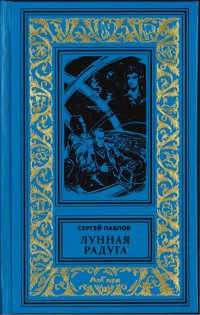
Владычица неба растаяла среди звезд". (С. Павлов. "Лунная радуга").
........................................................................
Примечание: этот фрагмент романа Сергея Ивановича Павлова мы посвящаем советским космическим женщинам Валентине Терешковой и Светлане Савицкой.
.....................................................................
Цит.по: СЕРГЕЙ ИВАНОВИЧ ПАВЛОВ
ЛУННАЯ РАДУГА
Фантастический роман
Серия: Библиотека советской фантастики
Москва/ Издательство "Молодая гвардия"/1978 год

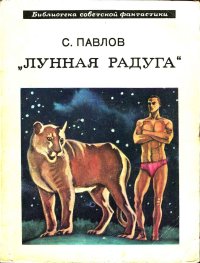
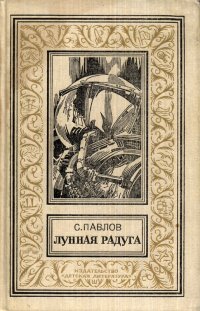
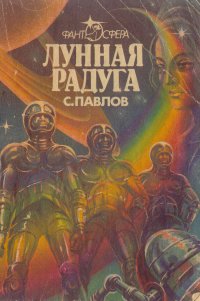
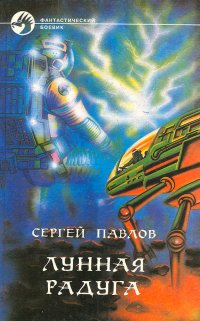
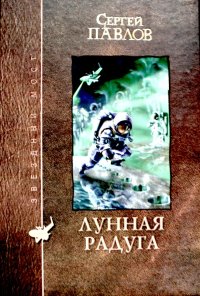
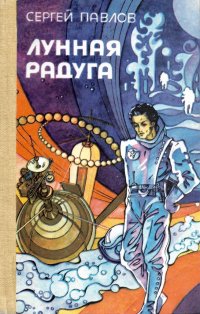
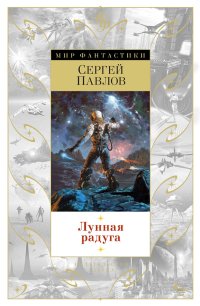
На фото обложка книги "Лунная радуга" издания 2020 года.
“They say that true beauty is first felt with your back — you know, when those resonant goosebumps of wonder and belonging run down your spine. Well, they are right; I experienced it to the fullest…


An old saying came to mind: ‘There is nothing more beautiful than a dancing woman, a galloping horse, and a tea clipper under full sail.’ Now I could add: there is nothing more romantic than feminine earthly beauty in the ocean of the cold radiance of the Universe…

I stared, frozen, at that face, undoubtedly familiar to me, recognizing it and at the same time not recognizing it there among the stars. I confess, I was ready to burst into ecstatic declamations.

‘To you I stretch out my hands, goddess or mortal maiden. If you are one of the goddesses who rule the vast heavens, then only Artemis, the great daughter of Zeus, could rival the beauty of your face… Never before among earthborn mortals have my eyes seen anything so beautiful; I look upon you with wonder…’

Yes, forgetting everything, I stood like a post and gazed spellbound at this newly appeared nymph of the Milky Way.

There was something profoundly earthly in her and at the same time something exotically unearthly, star-musical, universal…

Smiling brown eyes, pearl-pink lips, smooth waves of dark hair. A radiant drop of Capella fit perfectly into a crescent-shaped lock at her temple…

‘Administrative and Technical Sector watch on the line!’ the pearl-pink lips reported cheerfully. ‘Listening, Captain.’

Slowly I returned from heaven to the sinful Earth… or rather, to the command bridge.

‘Tanya, please display on the information screen the complete deployment scheme,’ Molchanov ordered. ‘Six rows with digital totals.’

‘One moment, Captain,’ Tanya replied from the constellation Auriga.

“So, onto the information screen… The scheme goes there, and the beautiful Tanya goes onto the great star-view display. Our captain is a romantic after all! Oh dear, what a refined aesthete! Yes, discoveries keep raining down on me during this voyage. Some enjoy riding on the “tusks” of the elephant-like ship, while others are not opposed to decorating their workplace with “star girls.” And what an impressive decoration! Even the radiant drop of Capella is exactly where it belongs — in the center of that beautifully curved lock of hair at her temple.

And Tanya, of course, has no idea. It would be a pity if she ever found out. The natural ease would disappear, and with it the enchanting effect…”

‘Ready, Captain!’ reported the “star girl.” ‘Complete breakdown for all six sections.’

‘You are dismissed, Tanya. Thank you. End of transmission.’

The mistress of the heavens dissolved among the stars.”

(S. Pavlov, Moon Rainbow)

Source:

SERGEY IVANOVICH PAVLOV

MOON RAINBOW

A science-fiction novel

Series: Library of Soviet Science Fiction

Moscow, Molodaya Gvardiya Publishing House, 1978

Photo: cover of the 2020 edition of Moon Rainbow.
“Dicen que la verdadera belleza se percibe primero con la espalda: ya saben, cuando por ella recorren esos escalofríos resonantes de admiración y pertenencia. Pues bien, tienen razón; yo lo sentí plenamente…


Recordé un viejo dicho: ‘No hay nada más hermoso que una mujer bailando, un caballo al galope y un clíper bajo todas sus velas.’ Ahora yo podría añadir: no hay nada más romántico que la belleza femenina terrenal en el océano del frío resplandor del Universo…

Contemplaba inmóvil aquel rostro, sin duda familiar para mí, reconociéndolo y al mismo tiempo sin reconocerlo allí, entre las estrellas. Lo confieso: estaba dispuesto a pronunciar las más exaltadas declamaciones.

‘A ti extiendo mis manos, diosa o doncella mortal. Si eres una de las diosas que gobiernan el vasto cielo, solo Artemisa, la gran hija de Zeus, podría igualar la hermosura de tu rostro… Jamás mis ojos habían visto entre los mortales nacidos en la Tierra algo tan hermoso; te miro con asombro…’

Sí, olvidándome de todo, permanecí inmóvil como una estatua, contemplando fascinado a aquella nueva ninfa de la Vía Láctea.

Había en ella algo profundamente terrenal y, al mismo tiempo, algo exóticamente extraterrestre, estelar, musical, universal…

Ojos marrones y sonrientes, labios rosados como perlas, suaves contornos de cabello oscuro. Una brillante gota de Capella encajaba perfectamente en un mechón en forma de media luna sobre su sien…

‘¡Guardia del Sector Administrativo y Técnico en línea!’ informaron alegremente aquellos labios rosados como perlas. ‘Le escucho, Capitán.’

Poco a poco regresé del cielo a la pecadora Tierra… o mejor dicho, al puente de mando.

‘Tania, por favor, muestre en la pantalla de información el esquema completo de distribución,’ ordenó Molchanov. ‘Seis filas con los totales numéricos.’

‘Un momento, Capitán,’ respondió Tania desde la constelación de Auriga.

“Así que el esquema va a la pantalla de información… y la bella Tania a la gran pantalla de observación estelar. ¡Vaya, nuestro capitán resulta ser un romántico! ¡Qué refinado esteta! Sí, en este viaje los descubrimientos se suceden uno tras otro. Algunos disfrutan montando sobre los “colmillos” de la nave-elefante, mientras que otros prefieren decorar su lugar de trabajo con ‘muchachas estelares’. ¡Y qué decoración tan impresionante! Incluso la brillante gota de Capella ocupa el lugar perfecto: en el centro de aquel hermoso mechón curvado junto a su sien.

Y, por supuesto, Tania no lo sabe. Sería una lástima que llegara a descubrirlo. Desaparecería la naturalidad espontánea… y con ella el encanto de todo el efecto.”

‘¡Listo, Capitán!’ informó la “muchacha estelar”. ‘Desglose completo de las seis secciones.’

‘Puede retirarse, Tania. Gracias. Fin de la comunicación.’

La dueña del cielo se desvaneció entre las estrellas.”

(S. Pavlov, Arco Iris Lunar)

Fuente:

SERGUÉI IVÁNOVICH PÁVLOV

ARCO IRIS LUNAR

Novela de ciencia ficción

Serie: Biblioteca de la Ciencia Ficción Soviética

Moscú, Editorial Molodaya Gvardiya, 1978

Foto: portada de la edición de 2020 de Arco Iris Lunar.
335005
 
Frimen1917

Frimen1917

Mecca V.I.P.
VIP
Joined
Jan 9, 2026
Messages
3,161
Points
63
Лунная радуга (в 2-х томах)
Серия: Библиотека советской фантастики
Автор: Сергей Павлов
Роман-дилогия Сергея Павлова "Лунная радуга"
Том 1. "Лунная радуга". Книга первая. "По черному следу" (мягкий переплет, 352 страницы, год выпуска 1978)
Художник Г. Метченко.
Том 2. "Лунная радуга". Книга вторая. "Мягкие зеркала" (твердый переплет, 383 страницы, год выпуска 1983)
Художник Ю. Макаров.

Роман "Лунная радуга" - визитная карточка советской фантастики и по праву занимает почетное место в ее золотом фонде вместе с лучшими книгами братьев Стругацких, Сергея Снегова и Кира Булычева.
В романе-дилогии повествуется о группе космодесантников, которые во время разведки спутниковой системы Урана неожиданно для себя приобрели необычные, экзотические свойства, во многом изменившие их человеческую сущность. По возвращении на Землю члены экспедиции попадают под наблюдение Международной службы космической безопасности. Ее сотрудникам предстоит распутать клубок загадочных противоречий. Однако не только сюжетная острота отличает роман "Лунная радуга", на страницах книги автор раскрывает увлекательные перспективы пилотируемой космонавтики и грандиозного будущего межгалактических полетов.

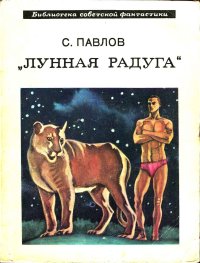
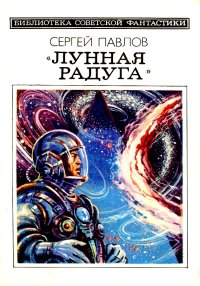
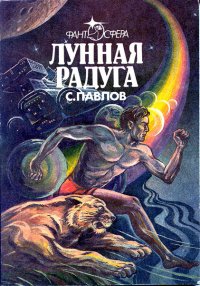
На фото: обложки первого и второго тома романа "Лунная радуга".
Moon Rainbow (in 2 Volumes)


Series: Library of Soviet Science Fiction
Author: Sergey Pavlov

A dilogy novel by Sergey Pavlov, Moon Rainbow.

Volume 1: Moon Rainbow. Book One: On the Black Trail
(Paperback, 352 pages, published in 1978)
Artist: G. Metchenko.

Volume 2: Moon Rainbow. Book Two: Soft Mirrors
(Hardcover, 383 pages, published in 1983)
Artist: Yu. Makarov.

The novel Moon Rainbow is one of the hallmark works of Soviet science fiction and rightfully occupies an honored place in its golden treasury alongside the finest books of the Strugatsky brothers, Sergey Snegov, and Kir Bulychev.

The dilogy tells the story of a group of space marines who, while exploring the satellite system of Uranus, unexpectedly acquire unusual and exotic abilities that profoundly alter their human nature. Upon returning to Earth, the members of the expedition come under the supervision of the International Space Security Service. Its officers must unravel a web of mysterious contradictions.
However, it is not only the gripping plot that distinguishes Moon Rainbow. Throughout the novel, the author reveals fascinating prospects for manned space exploration and the grand future of intergalactic travel.

Pictured: covers of the first and second volumes of the novel "Moon Rainbow".
Arco Iris Lunar (en 2 tomos)


Serie: Biblioteca de la Ciencia Ficción Soviética
Autor: Serguéi Pávlov

La novela-dilogía Arco Iris Lunar de Serguéi Pávlov.

Tomo 1: Arco Iris Lunar. Libro Primero: Tras la Huella Negra
(Tapa blanda, 352 páginas, publicado en 1978)
Ilustrador: G. Metchenko.

Tomo 2: Arco Iris Lunar. Libro Segundo: Espejos Suaves
(Tapa dura, 383 páginas, publicado en 1983)
Ilustrador: Yu. Makarov.

La novela Arco Iris Lunar es una de las obras emblemáticas de la ciencia ficción soviética y ocupa, con pleno derecho, un lugar de honor en su fondo de oro junto a los mejores libros de los hermanos Strugatski, Serguéi Snegov y Kir Bulýchev.

La dilogía narra la historia de un grupo de cosmonautas de desembarco que, durante la exploración del sistema de satélites de Urano, adquieren inesperadamente capacidades extraordinarias y exóticas que transforman profundamente su naturaleza humana. Tras regresar a la Tierra, los miembros de la expedición quedan bajo la vigilancia del Servicio Internacional de Seguridad Espacial. Sus agentes deberán desenredar una compleja red de misteriosas contradicciones.
Sin embargo, no es solo la intensidad de la trama lo que distingue a Arco Iris Lunar. A lo largo de sus páginas, el autor revela fascinantes perspectivas para la cosmonáutica tripulada y el grandioso futuro de los vuelos intergalácticos.

En la imagen: portadas del primer y segundo volumen de la novela "Arcoíris Lunar".
29410
29411 1
 
Frimen1917

Frimen1917

Mecca V.I.P.
VIP
Joined
Jan 9, 2026
Messages
3,161
Points
63
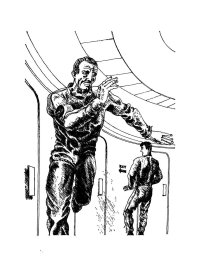
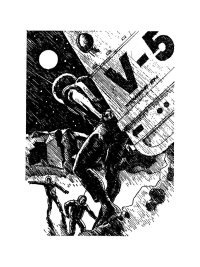
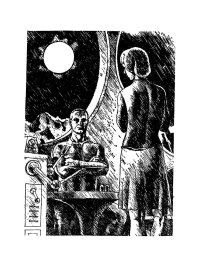
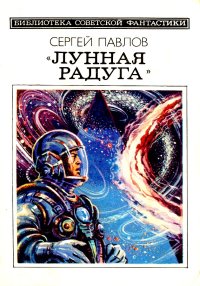
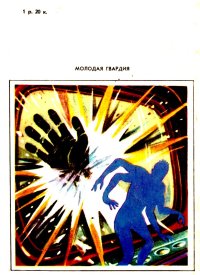
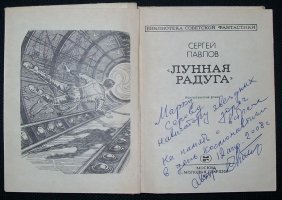
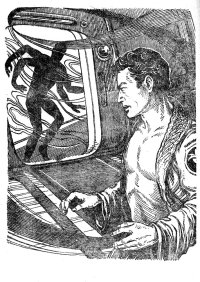
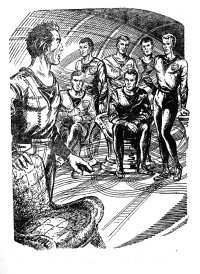
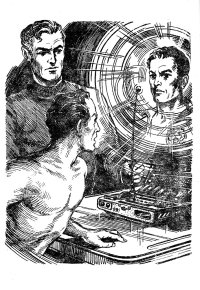
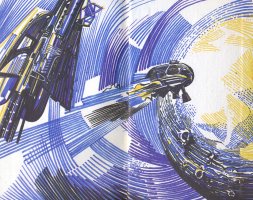
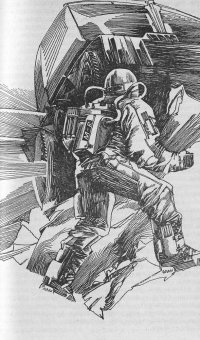
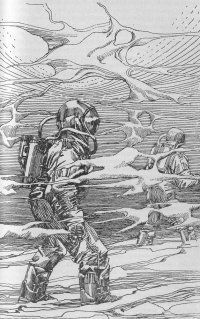
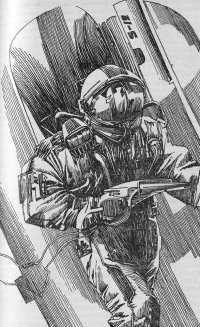
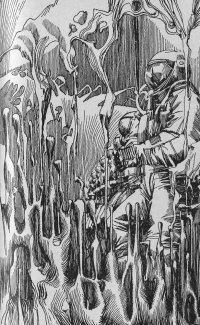
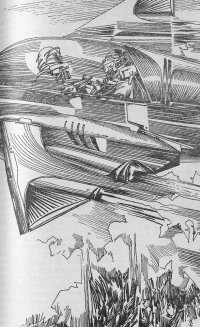
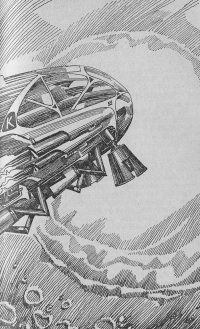
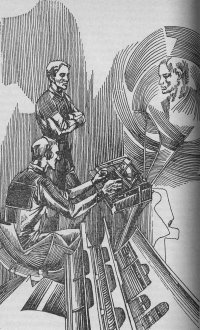
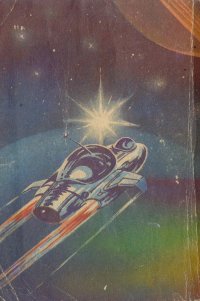
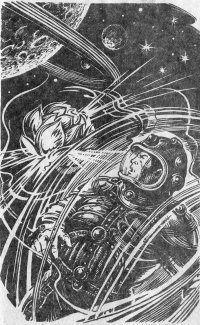
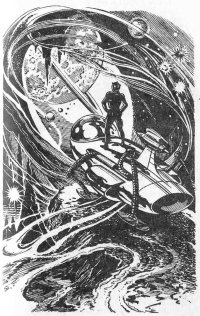
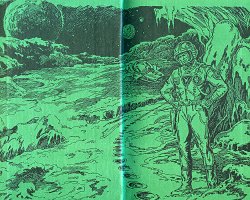
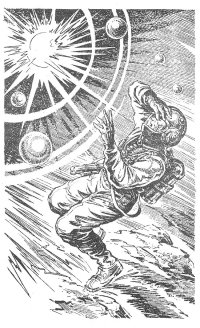
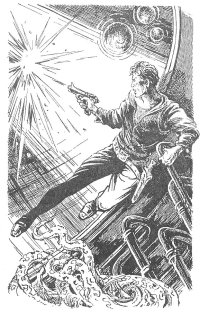
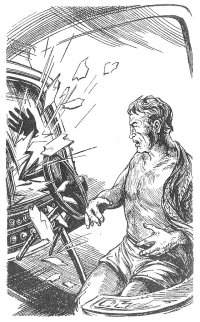
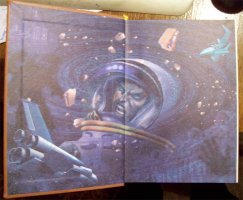
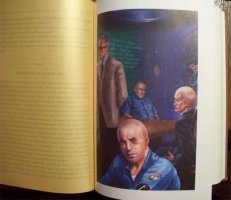
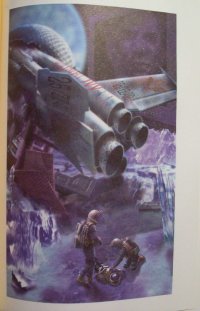
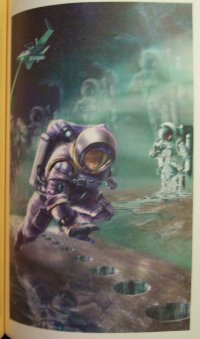
Обложка и некоторые иллюстрации первой книги романа "Лунная радуга". Издание 1978 года.
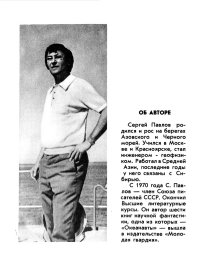
Художник Н. Метченко. Также в этом издании была опубликована фотография автора романа. На одной из страниц видна дарственная подпись автора.
Cover and some illustrations from the first book of the novel "Moon Rainbow." Published in 1978.
Artist: N. Metchenko. This edition also featured a photograph of the novel's author. A signature by the author is visible on one of the pages.

Portada y algunas ilustraciones del primer libro de la novela «Arcoíris Lunar». Publicado en 1978.

Artista: N. Metchenko. Esta edición también incluye una fotografía del autor. En una de las páginas se puede apreciar su firma.
29410

29410 1
29410 7
29410 8
29410 9
 
Frimen1917

Frimen1917

Mecca V.I.P.
VIP
Joined
Jan 9, 2026
Messages
3,161
Points
63
Обложка и некоторые иллюстрации второй книги романа "Лунная радуга". Издание 1983 года.
Художник Юрий Макаров. На одной из страниц видна дарственная подпись автора.
Cover and some illustrations for the second book of the novel "Moon Rainbow." Published in 1983.
Illustrated by Yuri Makarov. The author's signature is visible on one of the pages.

Portada y algunas ilustraciones del segundo tomo de la novela «Arcoíris Lunar». Publicado en 1983. Ilustrado por Yuri Makarov. La firma del autor es visible en una de las páginas.


29411 1
29411 2

29411 11
29411 4
29411 7
29411 9
29411 10
29411 6 29411 8
29411 5
 
Frimen1917

Frimen1917

Mecca V.I.P.
VIP
Joined
Jan 9, 2026
Messages
3,161
Points
63
Обложка и некоторые иллюстрации романа "Лунная радуга". Издание 1989 года.
Художник А.Вальдман.
Cover and some illustrations for the novel "Moon Rainbow." 1989 edition.
Artist: A. Valdman.

Portada e ilustraciones para la novela "Moon Rainbow". Edición de 1989.

Artista: A. Valdman.

3566 36
3566 1
3566 8
3566 32
3566 25
3566 33
3566 20


3566 28

3566 23
 
Frimen1917

Frimen1917

Mecca V.I.P.
VIP
Joined
Jan 9, 2026
Messages
3,161
Points
63
Обложка и некоторые иллюстрации романа "Лунная радуга". Издание 1991 года.
Художники В.Пронин и Ю. Макаров.
Cover and some illustrations for the novel "Moon Rainbow." 1991 edition.
Artists V. Pronin and Yu. Makarov.
Portada e ilustraciones para la novela "Arcoíris Lunar". Edición de 1991.

Artistas: V. Pronin y Yu. Makarov.
38432
38432 1


38432 2

38432 11
38432 4
 
Frimen1917

Frimen1917

Mecca V.I.P.
VIP
Joined
Jan 9, 2026
Messages
3,161
Points
63
Обложка и некоторые иллюстрации романа "Лунная радуга". Издание 1993 года.
Художники В.Пронин и Ю. Макаров.
Cover and some illustrations for the novel "Moon Rainbow." 1993 edition.
Artists V. Pronin and Yu. Makarov.

Portada e ilustraciones para la novela "Arcoíris Lunar". Edición de 1993.

Artistas: V. Pronin y Yu. Makarov.
11695
11695 1
11695 2
11695 3
11695 4
 
Frimen1917

Frimen1917

Mecca V.I.P.
VIP
Joined
Jan 9, 2026
Messages
3,161
Points
63
Обложка и некоторые иллюстрации романа "Лунная радуга". Издание 2008 года.
Художник Ю.Платов.
Cover and some illustrations for the novel "Moon Rainbow." 2008 edition.

Artist: Yu. Platov.
Portada e ilustraciones para la novela "Arcoíris Lunar". Edición de 2008.
Artista: Yu. Platov.

29015 2
29015 2 1
29015 1
29015 3
29015 4
29015 5 29015 6
 

MuscleMecca Crew

Mecca Staff
Frimen1917

Frimen1917

Mecca V.I.P.
VIP
Joined
Jan 9, 2026
Messages
3,161
Points
63
Некоторые обложки других изданий романа "Лунная радуга".
Some covers of other editions of the novel "Moon Rainbow".
Algunas portadas de otras ediciones de la novela "Arcoíris Lunar".

87371


38428
172979
 
Frimen1917

Frimen1917

Mecca V.I.P.
VIP
Joined
Jan 9, 2026
Messages
3,161
Points
63
Сергей Иванович Павлов — российский советский писатель-фантаст.
Родился в г. Бердянске (Запорожская обл., Украина). В 1953 году после окончания средней школы им. Н. Островского в г. Сочи (учился вместе с будущим летчиком-космонавтом СССР, дважды Героем Советского Союза Виталием Севастьяновым) поступает в Московский инженерно-строительный институт, который оканчивает в 1956-ом. Затем в 1962 году переезжает в Красноярск, где оканчивает Красноярский институт цветных металлов и овладевает специальностью инженера-геофизика. Долгое время жил и работал в Сибири. До 1972 года работал в различных экспедициях в Средней Азии, Арктике, Сибири, возглавлял геофизическую службу Красноярского спецуправления треста «Востокбурвод».

В 1975 году оканчивает Высшие литературные курсы при Литературном институте им М. Горького в Москве. Член Союза писателей СССР с 1970 года.

К фантастике обратился в начале 60-х годов после того, как, прочитав один слабенький фантастический рассказ, решил поспорить с автором. Первый написанный им фантастический рассказ «Банка фруктового сока» понравился товарищам по работе и Павлов отправил его в журнал «Техника – молодежи» на конкурс, надеясь получить квалифицированный отзыв. Но вскоре из Москвы пришел ответ, что рассказ отмечен премией на Международном конкурсе, организованном в 1962 году журналом «Техника – молодежи» и молодежными журналами социалистических стран, и автор награждается поощрительной премией – годовой подпиской на журнал.

В начале 1963 года состоялся литературный дебют Сергея Павлова – тот самый рассказ «Банка фруктового сока», опубликованный в томской газете «Молодой ленинец». В 1967 году выходит и первая книга писателя – сборник «Аргус против Марса», две повести в котором были написаны им в соавторстве с Николаем Шагуриным. Этот сибирский литератор оказал немалое содействие в становлении начинающего писателя, однако, после двух написанных в соавторстве повестей, их пути разошлись: Шагурин предпочитал приключенческую фантастику, а Павлов – психологическую.

Известность С. Павлову принесла повесть «Акванавты» (другое название «Океанавты» — 1968), в которой сюжет основан на освоении океана ближайшего будущего и случайной записи воспоминаний человека в мозг гигантского спрута. В 1979 году повесть была экранизирована и, несмотря на то, что спрут по техническим причинам превратился в манту, фильм получился удачным и занял почетное место в истории развития отечественной кинофантастики.

Несмотря на то, что в дальнейшем автор написал еще несколько интересных «космических» научно-фантастических повестей («Чердак вселенной» — 1971, «Неуловимый прайд» — 1974), главной книгой его жизни стал большой роман-дилогия «Лунная радуга» (1978-83 гг.). В этом эпическом произведении, как пишет сам автор: «нашли отражение альфа и омега моих писательских интересов – эволюция человека (как процесс) и появление в нашем мире нового человека (как результат)». В романе повествуется о четверке космодесантников, вернувшихся из трудной экспедиции в Дальнее Внеземелье, где чудом уцелели после катастрофы на спутнике Урана Обероне. Но спустя несколько лет они с удивлением узнают, что во время экспедиции неизвестным способом приобрели необычные для человеческого организма свойства, во многом изменившие их сущности. Различные экстрасенсорные способности делают их почти Сверхлюдьми, и функционеры космической программы, а также Международная служба космической безопасности, пытаются разгадать тайну четверки то ли людей, то ли не людей.

Этот роман стал очень популярным в среде любителей фантастики, а термин «внеземелье», авторство которого принадлежит С. Павлову настолько прижился, что ныне широко употребим и часто встречается не только на страницах произведений многих фантастов, но и стал именем нарицательным для обозначения миров за пределами Земли.

Дилогия была награждена престижной премией «Аэлита», а в 1991 году выходит ее своеобразное продолжение – роман «Волшебный локон Ампары», написанный Павловым в соавторстве со своей женой Надеждой Александровной Шаровой, которая и являлась инициатором идеи романа. В первых публикациях романа (1991, 1993) соавторство супругов указывалось, позже – нет. И хотя сам автор считает этот роман как совершенно самостоятельное произведение, никак не связанное с дилогией, читатели склонны думать по другому.

В 1997 году произошёл скандал вокруг романа «Волшебный локон Ампары». Издательство «Амфора» не выполнило своих финансовых обязательств перед автором. В ответ писатель пригрозил фантастикой больше не заниматься.

В 2005 году Павлов вновь всё же возвращается в фантастику и приступает к работе над произведением под рабочим названием «Белый всадник», место которому, по словам автора, между «Лунной радугой» и «Волшебным локоном Ампары». Произведение должно было описывать период освоения человечеством Марса, но роман так и не был написан. Тогда же писатель учредил (30 июня 2005 года) ежегодную литературную премию «Лунная радуга», которая присуждается за высокие достижения в жанре фантастики с 2005 по 2015 годы.

В последние годы Сергей Иванович проживал в Москве, скончался 18 апреля 2019 года на 84-ом году жизни.
Sergey Ivanovich Pavlov was a Soviet and Russian science fiction writer.


He was born in the city of Berdyansk (Zaporizhzhia Region, Ukraine). In 1953, after graduating from N. Ostrovsky Secondary School in Sochi (where he studied alongside the future Soviet cosmonaut and twice Hero of the Soviet Union, Vitaly Sevastyanov), he entered the Moscow Civil Engineering Institute, graduating in 1956. In 1962 he moved to Krasnoyarsk, where he graduated from the Krasnoyarsk Institute of Non-Ferrous Metals and qualified as a geophysical engineer. For many years he lived and worked in Siberia. Until 1972 he participated in numerous expeditions across Central Asia, the Arctic, and Siberia, and headed the geophysical service of the Krasnoyarsk Special Administration of the Vostokburvod Trust.

In 1975 he graduated from the Higher Literary Courses at the Maxim Gorky Literary Institute in Moscow. He became a member of the Union of Soviet Writers in 1970.

Pavlov turned to science fiction in the early 1960s after reading a rather weak science fiction story and deciding to challenge its author. The first science fiction story he wrote, “A Can of Fruit Juice,” impressed his colleagues, and he submitted it to the magazine Tekhnika Molodezhi for a contest, hoping to receive professional feedback. Soon, however, a letter arrived from Moscow informing him that the story had won a prize in the International Competition organized in 1962 by Tekhnika Molodezhi and youth magazines of socialist countries. The author was awarded an honorary prize—a one-year subscription to the magazine.

In early 1963, Sergey Pavlov made his literary debut when “A Can of Fruit Juice” was published in the Tomsk newspaper Molodoy Leninets. In 1967, his first book, “Argus Against Mars,” was published. Two novellas in the collection were co-written with Nikolai Shagurin. This Siberian writer played an important role in helping Pavlov develop as an author. However, after their two collaborative works, their creative paths diverged: Shagurin preferred adventure science fiction, while Pavlov was more interested in psychological science fiction.

Pavlov gained recognition with the novella “Aquanauts” (also known as “Oceanauts,” 1968), whose plot centers on the exploration of the ocean in the near future and the accidental recording of a human being’s memories into the brain of a giant squid. In 1979 the novella was adapted into a film. Although the squid had to be replaced by a manta ray for technical reasons, the film was successful and earned an honorable place in the history of Soviet science fiction cinema.

Although Pavlov later wrote several notable space-themed science fiction novellas, including “The Attic of the Universe” (1971) and “The Elusive Pride” (1974), the main work of his life became the large-scale dilogy novel “Moon Rainbow” (1978–1983). As the author himself wrote, the work reflected “the alpha and omega of my literary interests—the evolution of humanity as a process and the emergence of a new human being as a result.”

The novel tells the story of four space marines who return from a dangerous expedition into Deep Outer Space, where they miraculously survived a catastrophe on Oberon, a moon of Uranus. Several years later they discover that, during the expedition, they somehow acquired unusual biological traits that profoundly altered their nature. Their extraordinary extrasensory abilities make them almost superhuman, and officials of the space program, together with the International Space Security Service, attempt to unravel the mystery of these four beings who are perhaps no longer entirely human.

The novel became extremely popular among science fiction enthusiasts. The term “outerspace beyond Earth” (vnezemelye), coined by Pavlov, became so widely accepted that it is now frequently used not only in the works of many science fiction writers but also as a common term for worlds beyond Earth.

The dilogy received the prestigious Aelita Prize, and in 1991 a kind of continuation appeared: the novel “The Magic Curl of Ampara,” co-written with Pavlov’s wife, Nadezhda Alexandrovna Sharova, who originated the idea for the book. In its first editions (1991 and 1993), both authors were credited; later editions omitted the co-authorship. Although Pavlov himself considered the novel a completely independent work unrelated to the dilogy, many readers disagreed.

In 1997, a scandal arose around “The Magic Curl of Ampara.” The publishing house Amphora failed to fulfill its financial obligations to the author. In response, Pavlov threatened to abandon science fiction writing altogether.

In 2005, however, he returned to science fiction and began work on a novel tentatively titled “The White Rider.” According to the author, it was intended to fit chronologically between Moon Rainbow and The Magic Curl of Ampara. The novel was to depict humanity’s colonization of Mars, but it was never completed.

That same year, on June 30, 2005, Pavlov established the annual literary Moon Rainbow Prize, awarded for outstanding achievements in science fiction from 2005 to 2015.

In his final years, Sergey Ivanovich lived in Moscow. He passed away on April 18, 2019, at the age of 83.
Serguéi Ivánovich Pávlov fue un escritor soviético y ruso de ciencia ficción.


Nació en la ciudad de Berdiansk (región de Zaporiyia, Ucrania). En 1953, tras graduarse en la Escuela Secundaria N. Ostrovski de Sochi (donde estudió junto al futuro cosmonauta soviético y dos veces Héroe de la Unión Soviética, Vitali Sevastiánov), ingresó en el Instituto de Ingeniería Civil de Moscú, del que se graduó en 1956. En 1962 se trasladó a Krasnoyarsk, donde se graduó en el Instituto de Metales No Ferrosos de Krasnoyarsk y obtuvo la especialidad de ingeniero geofísico. Durante muchos años vivió y trabajó en Siberia. Hasta 1972 participó en diversas expediciones por Asia Central, el Ártico y Siberia, y dirigió el servicio geofísico de la Administración Especial de Krasnoyarsk del consorcio Vostokburvod.

En 1975 se graduó en los Cursos Literarios Superiores del Instituto Literario Máximo Gorki de Moscú. Fue miembro de la Unión de Escritores de la URSS desde 1970.

Pávlov se interesó por la ciencia ficción a comienzos de los años sesenta después de leer un relato de ciencia ficción bastante débil y decidir polemizar con su autor. El primer relato de ciencia ficción que escribió, «Una lata de zumo de frutas», gustó a sus compañeros de trabajo, y lo envió a la revista Técnica para la Juventud (Tekhnika Molodezhi) para un concurso, esperando recibir una valoración profesional. Poco después llegó una carta desde Moscú informándole de que el relato había sido premiado en el Concurso Internacional organizado en 1962 por Tekhnika Molodezhi y revistas juveniles de países socialistas. Como premio recibió una suscripción anual a la revista.

A principios de 1963 tuvo lugar el debut literario de Serguéi Pávlov cuando «Una lata de zumo de frutas» fue publicado en el periódico de Tomsk Molodói Leninets. En 1967 apareció su primer libro, «Argus contra Marte», dos de cuyas novelas cortas fueron escritas en colaboración con Nikolái Shagurin. Este escritor siberiano desempeñó un papel importante en la formación de Pávlov como autor. Sin embargo, tras aquellas dos obras conjuntas, sus caminos creativos se separaron: Shagurin prefería la ciencia ficción de aventuras, mientras que Pávlov se inclinaba por la ciencia ficción psicológica.

La fama llegó a Pávlov con la novela corta «Los acuanautas» (también conocida como «Los oceanautas», 1968), cuya trama gira en torno a la exploración del océano en un futuro cercano y al registro accidental de los recuerdos de un ser humano en el cerebro de un calamar gigante. En 1979 la obra fue adaptada al cine. Aunque por razones técnicas el calamar fue sustituido por una mantarraya, la película tuvo éxito y ocupa un lugar destacado en la historia del cine soviético de ciencia ficción.

Aunque posteriormente escribió varias novelas cortas de temática espacial, como «El ático del universo» (1971) y «El orgullo esquivo» (1974), la obra principal de su vida fue la gran novela-dilogía «Arco Iris Lunar» (1978–1983). Según palabras del propio autor, en ella se reflejan «el alfa y el omega de mis intereses literarios: la evolución del ser humano como proceso y la aparición de un nuevo ser humano como resultado».

La novela relata la historia de cuatro cosmonautas de desembarco que regresan de una peligrosa expedición al Espacio Profundo, donde sobrevivieron milagrosamente a una catástrofe ocurrida en Oberón, una luna de Urano. Años después descubren que, durante aquella expedición, adquirieron de forma desconocida ciertas características biológicas extraordinarias que transformaron profundamente su naturaleza. Sus capacidades extrasensoriales los convierten casi en superhombres, y los responsables del programa espacial, junto con el Servicio Internacional de Seguridad Espacial, intentan resolver el misterio de estos cuatro seres que quizá ya no son completamente humanos.

La novela se convirtió en una obra muy popular entre los aficionados a la ciencia ficción. El término «vnezemelie» («más allá de la Tierra»), acuñado por Pávlov, llegó a ser tan utilizado que hoy aparece con frecuencia no solo en obras de numerosos escritores de ciencia ficción, sino también como una denominación común para los mundos situados más allá de la Tierra.

La dilogía recibió el prestigioso Premio Aelita, y en 1991 apareció una especie de continuación: la novela «El rizo mágico de Ampara», escrita junto a su esposa Nadezhda Aleksándrovna Sharova, quien fue la impulsora de la idea. En las primeras ediciones (1991 y 1993) figuraba la coautoría de ambos; en las posteriores ya no. Aunque el propio Pávlov consideraba la novela una obra completamente independiente de la dilogía, muchos lectores opinaban lo contrario.

En 1997 surgió un escándalo en torno a «El rizo mágico de Ampara». La editorial Amphora incumplió sus obligaciones económicas con el autor. Como respuesta, Pávlov amenazó con abandonar definitivamente la ciencia ficción.

Sin embargo, en 2005 regresó al género y comenzó a trabajar en una novela con el título provisional de «El Jinete Blanco». Según el autor, debía situarse cronológicamente entre Arco Iris Lunar y El rizo mágico de Ampara. La obra debía describir el período de colonización humana de Marte, pero nunca llegó a completarse.

Ese mismo año, el 30 de junio de 2005, instituyó el premio literario anual Arco Iris Lunar, destinado a reconocer destacados logros en el género de la ciencia ficción entre 2005 y 2015.

En sus últimos años vivió en Moscú. Falleció el 18 de abril de 2019, a los 83 años de edad.


Pavlov1
 
Frimen1917

Frimen1917

Mecca V.I.P.
VIP
Joined
Jan 9, 2026
Messages
3,161
Points
63
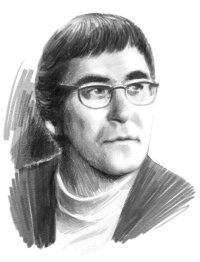
Сергей Иванович Павлов — российский советский писатель-фантаст. Рисунок неизвестного художника.
Sergei Ivanovich Pavlov was a Russian Soviet science fiction writer. Drawing by an unknown artist.
Sergei Ivanovich Pavlov fue un escritor ruso soviético de ciencia ficción. Dibujo de un artista desconocido.

Image 30 06 20 10 07 1
 
Frimen1917

Frimen1917

Mecca V.I.P.
VIP
Joined
Jan 9, 2026
Messages
3,161
Points
63
17 июня 1975 г.
Суббота, 15 - е сутки полёта.
"...Земля нам сегодня сказала, что мы пролетели что - то около 9 миллионов километров. Много! Но это очень мало, если, например, летишь на Марс.
Пройдёт время, и кто - нибудь вот так же, как мы, пойдёт на космическом корабле к Марсу. Земля также с напряжением будет следить за полётом, помогать, управлять.
Но в полёте они будут одни, будут оторваны от Земли и медленно - медленно (сутки за сутками) с громадной по земным понятиям скорости будут лететь к Марсу.
Мне, вероятно, уже не придётся участвовать в этом полёте. Состарюсь...Но...Вот бы потопать по Марсу!".(Виталий Севастьянов. "Дневник над облаками ").
..............................................................
Цит.по: СЕВАСТЬЯНОВ ВИТАЛИЙ ИВАНОВИЧ
Дневник над облаками Библиотека "Огонек" № 37/1977 год

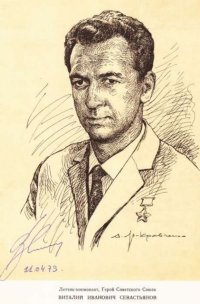
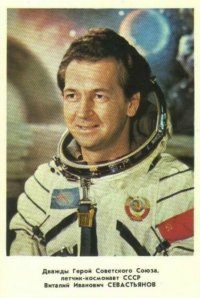
На фото: портрет космонавта Виталия Севастьянова с его автографом.

June 17, 1975


Saturday, the 15th day of the flight

"...Today, Earth informed us that we have traveled about 9 million kilometers. A lot! But it is very little if, for example, you are flying to Mars.

Time will pass, and someone, just like us, will set out on a spacecraft bound for Mars. Earth will follow the flight with the same tension and excitement, helping, guiding, and controlling it.

But during the journey they will be alone, separated from Earth, and day after day, moving at a tremendous speed by earthly standards, they will slowly make their way toward Mars.

I will probably never take part in such a flight. I will grow old...

But...

How wonderful it would be to walk on Mars!"

(Vitaly Sevastyanov, "Diary Above the Clouds")

Quoted from:

VITALY IVANOVICH SEVASTYANOV

Diary Above the Clouds
Series: Library of the Magazine "Ogonyok", No. 37, 1977.

In the photo: a portrait of cosmonaut Vitaly Sevastyanov with his autograph.
17 de junio de 1975


Sábado, 15.º día de vuelo

"...Hoy la Tierra nos comunicó que hemos recorrido unos 9 millones de kilómetros. ¡Mucho! Pero es muy poco si, por ejemplo, se vuela hacia Marte.

Pasará el tiempo, y alguien, igual que nosotros, partirá en una nave espacial rumbo a Marte. La Tierra seguirá ese vuelo con la misma tensión y emoción, ayudando, guiando y controlando la misión.

Pero durante el viaje estarán solos, separados de la Tierra, y día tras día, avanzando a una velocidad enorme según los criterios terrestres, se dirigirán lentamente hacia Marte.

Probablemente yo ya no podré participar en un vuelo así. Envejeceré...

Pero...

¡Qué maravilloso sería caminar sobre Marte!"

(Vitali Sevastiánov, "Diario sobre las nubes")

Citado de:

VITALI IVÁNOVICH SEVASTIÁNOV

Diario sobre las nubes
Serie: Biblioteca de la revista «Ogonyok», n.º 37, año 1977.

En la foto: un retrato del cosmonauta Vitaly Sevastyanov con su autógrafo.
GXMk97XF41j3JpE9RypND50elGZkOO0XqyfSy53MLOeHFMYc4oOo5Mg9iFHs28vhmgcOhkaMLZvj2NLEbhQGVk5o
 
Frimen1917

Frimen1917

Mecca V.I.P.
VIP
Joined
Jan 9, 2026
Messages
3,161
Points
63

ПО СТРАНИЦАМ СОВЕТСКОГО ЖУРНАЛА "ЗЕМЛЯ И ВСЕЛЕННАЯ".

"Торжественно отмечается в пионерском лагере "Орлёнок" День космонавтики. В программе праздника "Мы рождены, чтоб сказку сделать былью", посвященного дню космонавтики, - беседы по астрономии и "прогулки по звёздному небу", встречи с учёными и космонавтами - гостями лагеря, диспуты, викторины, олимпиады, выставки картин художников-фантастов.
У обсерватории пионерского лагеря "Орлёнок" много друзей. Доктор технических наук И. В. Стражева поделилась с ребятами впечатлениями от личных встреч с космонавтами и конструкторами космических кораблей. С кандидатом физико-математических наук Л. М. Гиндилисом ребята обсуждали проблему существования внеземных цивилизаций и пути их поиска. О достижениях радиоастрономии рассказывал ребятам кандидат физико-математических наук А. М. Финкельштейн, об исследовании Солнца - кандидат физико-математических наук Э. В. Кононович. Гостями пионерского лагеря "Орлёнок" были доктор физико-математических наук Л. М. Мухин, доктор физико-математических наук А. М. Черепащук.
Много сил и энергии отдают пионерам сотрудники обсерватории пионерского лагеря "Орлёнок" - В. А. Костицын, Л. Н. Филиппова, Г. В. Орлова. Их знания, любовь к детям обеспечивают успешную деятельность обсерватории по пропаганде достижений астрономии, космонавтики и вовлечению школьников в любительскую астрономию". (Заведующий астрономической обсерваторией пионерского лагеря "Орлёнок" С. С. Войнов. "У самого Черного моря").
....................................................................
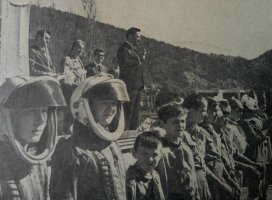
Примечание: на фотографии празднование Дня космонавтики в пионерском лагере "Орлёнок" в 1977 году. Выступает дважды Герой Советского Союза лётчик-космонавт СССР Г. М. Гречко. Фото В. Грязева.
.....................................................................
Цит.по: журнал "Земля и Вселенная"
Март, апрель 1982 год
Художественный редактор: Шимкина Л. Я.
Корректоры:Ермолаева В. А.,
Морозова Т. Н.

Москва/ Издательство "Наука"/1982 год
THROUGH THE PAGES OF THE SOVIET MAGAZINE "EARTH AND THE UNIVERSE"


"The Day of Cosmonautics is celebrated with great solemnity at the Orlyonok Pioneer Camp. The program of the celebration, entitled 'We Were Born to Make Fairy Tales Come True', dedicated to Cosmonautics Day, includes astronomy talks and 'journeys through the starry sky,' meetings with scientists and cosmonauts visiting the camp, debates, quizzes, competitions, and exhibitions of paintings by science-fiction artists.

The observatory of the Orlyonok Pioneer Camp has many friends. Doctor of Technical Sciences I. V. Strazheva shared with the children her impressions from personal meetings with cosmonauts and spacecraft designers. Together with Candidate of Physical and Mathematical Sciences L. M. Gindilis, the children discussed the problem of the existence of extraterrestrial civilizations and methods of searching for them. Candidate of Physical and Mathematical Sciences A. M. Finkelstein spoke to the children about the achievements of radio astronomy, while Candidate of Physical and Mathematical Sciences E. V. Kononovich talked about solar research. Guests of the Orlyonok Pioneer Camp also included Doctor of Physical and Mathematical Sciences L. M. Mukhin and Doctor of Physical and Mathematical Sciences A. M. Cherepashchuk.

The staff members of the Orlyonok Pioneer Camp Observatory — V. A. Kostitsyn, L. N. Filippova, and G. V. Orlova — devote much effort and energy to working with the young pioneers. Their knowledge and love for children ensure the successful work of the observatory in promoting the achievements of astronomy and cosmonautics and in involving schoolchildren in amateur astronomy."

(S. S. Voynov, Head of the Astronomical Observatory of the Orlyonok Pioneer Camp, "By the Black Sea")

Note: In the photograph, Cosmonautics Day is being celebrated at the Orlyonok Pioneer Camp in 1977. Speaking is twice Hero of the Soviet Union, pilot-cosmonaut of the USSR, G. M. Grechko. Photograph by V. Gryazev.

Quoted from the magazine "Earth and the Universe"

March–April 1982

Art Editor: L. Ya. Shimkina

Proofreaders: V. A. Yermolaeva, T. N. Morozova

Moscow, Publishing House "Nauka", 1982.
A TRAVÉS DE LAS PÁGINAS DE LA REVISTA SOVIÉTICA "LA TIERRA Y EL UNIVERSO"


"El Día de la Cosmonáutica se celebra solemnemente en el campamento pionero Orlyonok. El programa de la festividad, titulado «Nacimos para hacer realidad los cuentos», dedicado al Día de la Cosmonáutica, incluye charlas de astronomía y «paseos por el cielo estrellado», encuentros con científicos y cosmonautas invitados al campamento, debates, concursos, olimpíadas y exposiciones de pinturas de artistas de ciencia ficción.

El observatorio del campamento pionero Orlyonok tiene muchos amigos. La doctora en ciencias técnicas I. V. Strazheva compartió con los niños sus impresiones de encuentros personales con cosmonautas y diseñadores de naves espaciales. Junto con el candidato en ciencias físico-matemáticas L. M. Gindilis, los niños debatieron el problema de la existencia de civilizaciones extraterrestres y los métodos para buscarlas. El candidato en ciencias físico-matemáticas A. M. Finkelstein habló a los niños sobre los logros de la radioastronomía, mientras que el candidato en ciencias físico-matemáticas E. V. Kononovich les explicó las investigaciones sobre el Sol. Entre los invitados del campamento pionero Orlyonok se encontraban también el doctor en ciencias físico-matemáticas L. M. Mujin y el doctor en ciencias físico-matemáticas A. M. Cherepashchuk.

Los empleados del observatorio del campamento pionero Orlyonok — V. A. Kostitsyn, L. N. Filíppova y G. V. Orlova — dedican gran parte de su esfuerzo y energía a trabajar con los pioneros. Sus conocimientos y su amor por los niños garantizan el éxito de las actividades del observatorio en la divulgación de los logros de la astronomía y la cosmonáutica, así como en la incorporación de los escolares a la astronomía amateur."

(S. S. Voinov, director del Observatorio Astronómico del campamento pionero Orlyonok, «Junto al mar Negro»)

Nota: En la fotografía se muestra la celebración del Día de la Cosmonáutica en el campamento pionero Orlyonok en 1977. Está interviniendo el dos veces Héroe de la Unión Soviética y cosmonauta soviético G. M. Grechko. Fotografía de V. Gryazev.

Citado de la revista «La Tierra y el Universo»

Marzo–abril de 1982

Editora artística: L. Ya. Shimkina

Correctoras: V. A. Yermoláeva, T. N. Morózova

Moscú, Editorial «Nauka», 1982.

ZOJoeu56jED3o3qxDs7ZFDq D 5rlxbnLY82Yu04 Ake S9F hRekc6crAvvvv9urlGNM2VE0TDfOTOcKaUaZ6iN
 
Frimen1917

Frimen1917

Mecca V.I.P.
VIP
Joined
Jan 9, 2026
Messages
3,161
Points
63
"Мне хочется поделиться мыслями своими со всеми, кто спрашивал о космонавтике, о том, как стать космонавтом.

«...Уже много лет я упорно стремлюсь к своей цели, настойчиво ищу пути к ней. Мне приходится трудно, но я все равно не отступлюсь. Мечта о полете в космос еще в детские годы завладела мной. Она с каждым годом все прочнее овладевает моим сердцем. Теперь я абсолютно уверен - это мое призвание».

Это слова из письма инженера Бойцова. Он подробно рассказывает, как готовится к полету в космос. Бойцов - моряк, работает на судах дальнего плавания, все свободное время посвящает тренировкам.

«Я знаю, - пишет он, - что в космосе нужны физически крепкие, выносливые люди. Поэтому я большое внимание уделяю физической подготовке и спорту. С детства стал закаляться, обливаюсь по утрам холодной водой или обтираюсь снегом. Сейчас я купаюсь в проруби в любые морозы, постоянно бегаю на десять, двадцать, а иногда и более километров».

Бойцов разработал программу своей подготовки. Она включает тренировку вестибулярного аппарата, тренировку на невесомость, перегрузку, управление своим телом, испытание в барокамере, на одиночество.

«Уже четыре года я плаваю на судах дальнего плавания, - сообщает он. - Ежегодно я беру летом отпуск, к которому прибавляются еще выходные и праздничные дни, проведенные в море, и приезжаю в Краснодар, в аэроклуб, где летаю и прыгаю с парашютом. Два года назад в соревнованиях по высшему пилотажу я выполнил норматив мастера спорта. В парашютном спорте выступаю по программе кандидатов в мастера».

«Хочу стать космонавтом», «Моя мечта - побывать в космосе» - эти слова встречаются во многих письмах, адресованных в Звездный городок, на почту летчиков-космонавтов СССР. Их пишут люди разных возрастов и разных профессий. В один день я получил письма от десятиклассника, студента медицинского института и инженера. Все они содержат один вопрос: «Как стать космонавтом?»

На первый взгляд, кажется, что нет ничего сложного ответить: одинаковый вопрос - одинаковый ответ. Но вопрос одинаковый, а люди-то разные.

Помню, несколько лет назад произошел такой случай. Ученик десятого класса из города Николаева прислал мне письмо с просьбой принять его в отряд космонавтов. Он писал, что учится отлично, что здоровье у него отменное и что имеет он около десятка разрядов по различным видам спорта.

Я ответил тогда, что ему надо сначала закончить среднюю школу, а после можно будет поговорить и о дальнейшей судьбе. Написал ему и, откровенно говоря, забыл о нем, так как почта велика, а просьб, подобных этой, тоже немало!

Прошло время. Сижу я однажды вечером дома, готовлюсь к занятиям. Заходит ко мне молодой человек и говорит: «Здравствуйте, я приехал!» - и показывает мое письмо ему. Сели мы, поговорили. Он рассказал, что успешно закончил школу и вот теперь может целиком посвятить себя космонавтике. Юноша произвел на меня хорошее впечатление своей увлеченностью, убежденностью.

Но когда я спросил его, как он представляет себе работу космонавта в полете, что он думает делать, находясь на борту космического корабля, то вразумительного ответа я не услышал. Оказывается, он еще не успел подумать об этом.

Эту историю я привожу для того, чтобы показать, что кроме крепкого здоровья человек, решивший стать космонавтом, должен обладать знаниями, быть специалистом в той или иной области и четко представлять себе космический полет, характер и объем работы. Без этого мечты о полете так и останутся мечтами".
(Герман Титов. "Голубая моя планета").
....................................................................
Цит.по: ГЕРМАН СТЕПАНОВИЧ ТИТОВ
ГОЛУБАЯ МОЯ ПЛАНЕТА
Редактор М. И. Ильин
Художник В. А. Шорц
Художественный редактор Т. А. Тихомирова
Технический редактор Л. С. Афанасьева
Корректор Н. М. Опрышко

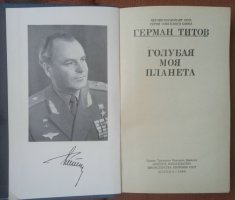
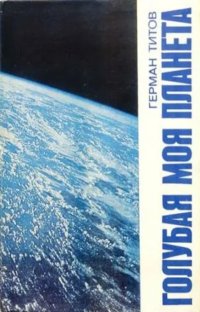
Москва/ Ордена Трудового Красного Знамени Военное издательство Министерства обороны СССР/ 1982 год. На фото титульный лист книги космонавта Германа Титова с его фотографией.
"I would like to share my thoughts with everyone who has asked about cosmonautics and about how to become a cosmonaut.


'...For many years I have persistently pursued my goal, tirelessly searching for ways to achieve it. It is difficult for me, but I will not give up. The dream of flying into space captured me in childhood. With every passing year it has taken an even firmer hold on my heart. Now I am absolutely certain—it is my calling.'

These are the words from a letter written by engineer Boytsov. He describes in detail how he is preparing for a flight into space. Boytsov is a sailor, working on long-distance ships, and devotes all of his free time to training.

'I know,' he writes, 'that physically strong and resilient people are needed in space. Therefore, I pay great attention to physical training and sports. Since childhood I have hardened myself, pouring cold water over myself in the mornings or rubbing myself with snow. Now I swim in ice holes even during severe frosts and regularly run ten, twenty, or sometimes even more kilometers.'

Boytsov developed his own training program. It includes training of the vestibular system, adaptation to weightlessness, resistance to overloads, control of his body, tests in a pressure chamber, and training for isolation.

'For four years now I have been sailing on long-distance ships,' he reports. 'Every summer I take my vacation, adding to it weekends and holidays spent at sea, and travel to Krasnodar, to the flying club, where I fly aircraft and parachute. Two years ago, in an aerobatics competition, I fulfilled the requirements for the title of Master of Sport. In parachuting, I compete at the Candidate Master of Sport level.'

'I want to become a cosmonaut,' 'My dream is to travel into space'—these words appear in many letters addressed to Star City and to the mail of the cosmonauts of the USSR. They are written by people of different ages and professions. One day I received letters from a tenth-grade student, a medical institute student, and an engineer. All of them contained the same question: 'How can I become a cosmonaut?'

At first glance, it seems simple to answer: the same question should receive the same answer. But while the question is the same, the people asking it are different.

I remember an incident that occurred several years ago. A tenth-grade student from the city of Nikolaev sent me a letter asking to be accepted into the cosmonaut corps. He wrote that he was an excellent student, enjoyed excellent health, and had around ten sports classifications in various disciplines.

At that time, I replied that he should first finish secondary school, and only afterward could we discuss his future. I wrote back and, frankly speaking, forgot about him, because the mail was plentiful and there were many similar requests.

Time passed. One evening I was sitting at home preparing for classes. A young man entered and said, 'Hello, I've arrived!' Then he showed me the letter I had sent him. We sat down and talked. He told me that he had successfully finished school and could now devote himself entirely to cosmonautics. The young man made a good impression on me with his enthusiasm and determination.

But when I asked him how he imagined the work of a cosmonaut during a mission, what he thought he would actually do aboard a spacecraft, I received no clear answer. It turned out that he had not yet thought about it.

I tell this story to demonstrate that, in addition to good health, a person who decides to become a cosmonaut must possess knowledge, be a specialist in one field or another, and have a clear understanding of spaceflight, its nature, and the scope of the work involved. Without this, dreams of flying into space will remain only dreams."

(Herman Titov, My Blue Planet)

Quoted from:

HERMAN STEPANOVICH TITOV

My Blue Planet

Editor: M. I. Ilyin
Artist: V. A. Shorts
Art Editor: T. A. Tikhomirova
Technical Editor: L. S. Afanasyeva
Proofreader: N. M. Opryshko
Moscow, Military Publishing House of the Ministry of Defense of the USSR, 1982.

The photo shows the title page of the book by cosmonaut German Titov with his photograph.
"Quisiera compartir mis pensamientos con todos aquellos que me han preguntado sobre la cosmonáutica y sobre cómo convertirse en cosmonauta.


'...Desde hace muchos años persigo obstinadamente mi objetivo y busco con perseverancia el camino hacia él. Me resulta difícil, pero no renunciaré. El sueño de volar al espacio se apoderó de mí cuando era niño. Con cada año que pasa domina aún más profundamente mi corazón. Ahora estoy absolutamente seguro: es mi vocación.'

Estas son las palabras de una carta escrita por el ingeniero Boytsov. En ella relata detalladamente cómo se prepara para un vuelo espacial. Boytsov es marino, trabaja en barcos de larga navegación y dedica todo su tiempo libre al entrenamiento.

'Sé', escribe, 'que en el espacio se necesitan personas físicamente fuertes y resistentes. Por eso presto mucha atención a la preparación física y al deporte. Desde niño me he endurecido físicamente, vertiéndome agua fría por las mañanas o frotándome con nieve. Ahora me baño en agujeros abiertos en el hielo incluso durante las heladas más intensas y corro regularmente diez, veinte y a veces más kilómetros.'

Boytsov elaboró su propio programa de preparación. Incluye el entrenamiento del aparato vestibular, la adaptación a la ingravidez, la resistencia a las sobrecargas, el control del propio cuerpo, pruebas en una cámara de presión y entrenamiento para la soledad.

'Hace ya cuatro años que navego en barcos de larga travesía', informa. 'Cada verano tomo mis vacaciones, a las que añado los fines de semana y festivos pasados en el mar, y viajo a Krasnodar, al aeroclub, donde vuelo aviones y salto en paracaídas. Hace dos años cumplí la norma para obtener el título de Maestro del Deporte en una competición de acrobacia aérea. En paracaidismo compito en la categoría de Candidato a Maestro del Deporte.'

'Quiero ser cosmonauta', 'Mi sueño es viajar al espacio'... Estas palabras aparecen en muchas cartas dirigidas a la Ciudad de las Estrellas y al correo de los cosmonautas de la URSS. Las escriben personas de diferentes edades y profesiones. Un día recibí cartas de un estudiante de décimo grado, de un estudiante de medicina y de un ingeniero. Todas contenían la misma pregunta: '¿Cómo puedo convertirme en cosmonauta?'

A primera vista parece sencillo responder: la misma pregunta merece la misma respuesta. Pero aunque la pregunta sea la misma, las personas son diferentes.

Recuerdo un caso ocurrido hace varios años. Un estudiante de décimo grado de la ciudad de Nikolaev me envió una carta pidiéndome que lo aceptara en el cuerpo de cosmonautas. Escribía que estudiaba excelentemente, que gozaba de una salud magnífica y que poseía alrededor de diez categorías deportivas en diferentes disciplinas.

Entonces le respondí que primero debía terminar la escuela secundaria y que después podríamos hablar de su futuro. Le escribí y, francamente, me olvidé de él, porque recibía mucho correo y había muchas solicitudes parecidas.

Pasó el tiempo. Una noche estaba sentado en casa preparándome para unas clases cuando entró un joven y me dijo: '¡Hola, he llegado!' Luego me mostró la carta que yo le había enviado. Nos sentamos a conversar. Me contó que había terminado con éxito la escuela y que ahora podía dedicarse por completo a la cosmonáutica. Me causó una muy buena impresión por su entusiasmo y convicción.

Pero cuando le pregunté cómo imaginaba el trabajo de un cosmonauta durante un vuelo espacial, qué creía que haría a bordo de una nave espacial, no obtuve una respuesta clara. Resultó que ni siquiera lo había pensado.

Cuento esta historia para demostrar que, además de gozar de buena salud, una persona que decide convertirse en cosmonauta debe poseer conocimientos, ser especialista en algún campo y comprender claramente el vuelo espacial, su naturaleza y el volumen de trabajo que implica. Sin ello, los sueños de volar al espacio seguirán siendo solo sueños."

(Herman Titov, Mi planeta azul)

Citado de:

HERMAN STEPÁNOVICH TITOV

Mi planeta azul

Editor: M. I. Ilyin
Ilustrador: V. A. Shorts
Editora artística: T. A. Tijomírova
Editor técnico: L. S. Afanásieva
Correctora: N. M. Opryshko
Moscú, Editorial Militar del Ministerio de Defensa de la URSS, 1982.

La foto muestra la portada del libro del cosmonauta German Titov con su fotografía.
Bku5w46Qw24 wwmom3EhRkgqp6oj0s5dV7sNs3Cli72usKUBrBiQbL67H2nX4b4rIygqJIA1BDo1IvZA slXJw01
 
Frimen1917

Frimen1917

Mecca V.I.P.
VIP
Joined
Jan 9, 2026
Messages
3,161
Points
63
"Наша планета мала, она песчинка по сравнению со звёздами, галактиками. Но человек, который живёт на этой песчинке, способен мыслить, и его мысль шагнула далеко за пределы Земли, перешла невидимые барьеры своей Галактики, проникла в другие галактики, нашла их, дала им названия. Пройдут годы, и люди, несомненно, достигнут других планет и, возможно, других миров. И ответ на важнейшие вопросы развития мироздания - есть ли жизнь где-либо, кроме нашей планеты, не занимает ли человек Земли в этом смысле исключительного положения, происходят ли во Вселенной неизвестные нам процессы превращения энергии и массы - лежит на путях освоения космического пространства". (Павел Попович. "Бесконечные дороги Вселенной").
.................................................................
Цит.по: НА ДОРОГАХ ВСЕЛЕННОЙ
СБОРНИК
Составитель: Архангельская Наталия Владимировна
Редактор: О. В. Крекотень
Художественное оформление:
Кононова А. В.
Художественный редактор: С. П. Савицкий
Технический редактор: Л. И. Ильченко
Корректоры: В. П. Иванченко,
О. С. Зинченко.

На фото космонавт Павел Попович.
"Our planet is small; it is but a grain of sand compared with the stars and galaxies. Yet the human being who lives on this grain of sand is capable of thought, and human thought has already stepped far beyond the limits of Earth. It has crossed the invisible boundaries of our Galaxy, penetrated into other galaxies, discovered them, and given them names.


Years will pass, and people will undoubtedly reach other planets and perhaps other worlds. The answers to the most important questions about the development of the Universe — whether life exists anywhere beyond our planet, whether humanity occupies a unique position in this respect, and whether there are processes of transformation of energy and matter in the Universe that are still unknown to us — lie along the path of space exploration."

(Pavel Popovich, "The Endless Roads of the Universe")

Quoted from:

ON THE ROADS OF THE UNIVERSE

Collected Volume

Compiler: Natalia Vladimirovna Arkhangelskaya

Editor: O. V. Krekoten

Design: A. V. Kononova

Art Editor: S. P. Savitsky

Technical Editor: L. I. Ilchenko

Proofreaders: V. P. Ivanchenko, O. S. Zinchenko

Photo: Cosmonaut Pavel Popovich.
"Nuestro planeta es pequeño; es un grano de arena en comparación con las estrellas y las galaxias. Pero el ser humano que vive en ese grano de arena es capaz de pensar, y su pensamiento ha ido mucho más allá de los límites de la Tierra. Ha cruzado las barreras invisibles de nuestra Galaxia, ha penetrado en otras galaxias, las ha descubierto y les ha dado nombres.


Pasarán los años y, sin duda, los seres humanos llegarán a otros planetas y quizá a otros mundos. Las respuestas a las cuestiones más importantes sobre la evolución del Universo —si existe vida en algún lugar aparte de nuestro planeta, si el ser humano ocupa en este sentido una posición excepcional y si en el Universo tienen lugar procesos de transformación de energía y materia que todavía desconocemos— se encuentran en el camino de la exploración del espacio cósmico."

(Pável Popóvich, "Los caminos infinitos del Universo")

Citado de:

EN LOS CAMINOS DEL UNIVERSO

Recopilación

Compiladora: Natalia Vladímirovna Arjánguelskaya

Editora: O. V. Krekoten

Diseño artístico: A. V. Konónova

Editor artístico: S. P. Savitski

Editor técnico: L. I. Ilchenko

Correctores: V. P. Ivanchenko, O. S. Zinchenko

En la fotografía: el cosmonauta Pável Popóvich.

Popovych
 
Frimen1917

Frimen1917

Mecca V.I.P.
VIP
Joined
Jan 9, 2026
Messages
3,161
Points
63
"...А может, космос и есть тот самый смертельно опасный порог, переступив который не останется ничего другого, как только... стать оптимистами?! Вооружиться главной и в итоге единственной человеческой силой - силой духа?

Оптимизм рождается вначале от незнания опасностей, подстерегающих впереди. А о чем же мы так мало знаем еще, как не о космосе? И что более дерзновенно, чем наше вступление в него?

Когда Земля подбросила своей большой ладонью горошину ракеты, а та вдруг не вернулась тотчас, сраженная тяготением, но сама по себе описала круг, - в этом наряду с напряжением, наукой, работой был и элемент дерзости древних мореходов. Всего того, чем красна жизнь. Что вносит в наше существование радостный дух исканий. Ведь человек с одинаковой одержимостью стремится и к вершинам, и к безднам - ко всему, что кажется недостижимым.

Не надо забывать, что, когда произошел первый прорыв человека за пределы земного тяготения, мир был моложе на десять лет, и на многие вещи мы смотрели по-иному. Через полвека людям будет еще труднее вообразить поступок Гагарина во всей его психологической сложности.

Ведь те из нас, что проживут это грядущее пятидесятилетие, будут уже отличаться сами от себя, сегодняшних, настолько же, как и мы, родившиеся до телевидения, непохожи на тех, кем стали нынче, когда смотрим на дому футбольный матч из другого полушария. И вообще узнаем о великом событии не после его совершения, а в ту самую минуту, становясь участниками и сопереживателями.

В убыстрившемся мире каждый день происходят перевороты, технические и научные, хотя случается это неосязаемо и невидимо.

Но космос, даже самый ближний, наша орбитальная околица, еще очень долго не будет обжит! Он по-прежнему станет притягивать мечты не одного поколения землян и останется заманчивой целью, а не просто службой и профессией".(Лидия Обухова. "Любимец века (Гагарин)"; глава "Зарубка на истории человечества").
..................................................................
Цит.по: ОБУХОВА ЛИДИЯ АЛЕКСЕЕВНА
ЛЮБИМЕЦ ВЕКА (ГАГАРИН)
Для детей среднего и старшего школьного возраста
Редактор: Людмила Лузянина
Художественный редактор: Виктор Плешко
Технический редактор: Галина Каплан
Корректоры: Галина Василева, Карина Пипикова
Москва/ Издательство "Молодая гвардия"/
1972 год

На фото обложка книги "Любимец века".
"...And perhaps space is that very deadly threshold which, once crossed, leaves us with no other choice than to become... optimists? To arm ourselves with the principal and, in the end, the only truly human strength — the strength of spirit?


Optimism is born first from ignorance of the dangers that lie ahead. And what do we know so little about, if not space? And what could be more daring than our entry into it?

When Earth tossed a tiny pea-like rocket from the palm of her great hand, and it did not immediately fall back, struck down by gravity, but instead traced a circle on its own — there was, along with tension, science, and hard work, an element of the boldness of the ancient seafarers. All those things that make life beautiful. All that brings into our existence the joyful spirit of exploration. For mankind pursues heights and abysses with equal passion — everything that seems unattainable.

We must not forget that when humanity first broke beyond the limits of Earth's gravity, the world was ten years younger, and we looked at many things differently. Fifty years from now, it will be even harder for people to imagine Yuri Gagarin's act in all its psychological complexity.

Those of us who live through that coming half-century will differ from our present selves just as much as we, born before television, differ from who we have become today, when we can watch a football match from the other side of the globe without leaving home. We no longer learn about great events after they have happened, but at the very moment they unfold, becoming participants and witnesses ourselves.

In this accelerating world, revolutions — technical and scientific — occur every day, though often imperceptibly and invisibly.

But space, even the nearest space, our orbital neighborhood, will remain unexplored for a very long time. It will continue to attract the dreams of more than one generation of Earth’s inhabitants and will remain a fascinating goal, not merely a job or a profession."

(Lidiya Obukhova, "The Favorite of the Century (Gagarin)"; chapter "A Mark on the History of Humanity")

Quoted from:

LIDIYA ALEKSEEVNA OBUKHOVA

The Favorite of the Century (Gagarin)

For middle and senior school-age readers

Editor: Lyudmila Luzyanina
Art Editor: Viktor Pleshko
Technical Editor: Galina Kaplan
Proofreaders: Galina Vasileva, Karina Pipikova

Moscow, Molodaya Gvardiya Publishing House, 1972.

Photo: Cover of the book The Favorite of the Century.
"...¿Y si el espacio es precisamente ese umbral mortal que, una vez cruzado, no nos deja otra opción que convertirnos en... optimistas? ¿Armarse con la principal y, al final, la única fuerza verdaderamente humana: la fuerza del espíritu?


El optimismo nace primero de la ignorancia de los peligros que nos esperan por delante. ¿Y de qué sabemos tan poco todavía como del espacio? ¿Y qué hay más audaz que nuestra entrada en él?

Cuando la Tierra lanzó desde la palma de su gran mano el pequeño guisante de un cohete, y este no regresó de inmediato, abatido por la gravedad, sino que trazó un círculo por sí mismo, en ello había, junto con la tensión, la ciencia y el trabajo, un elemento de la audacia de los antiguos navegantes. Todo aquello que da belleza a la vida. Todo aquello que aporta a nuestra existencia el alegre espíritu de la búsqueda. Porque el ser humano persigue con la misma pasión las alturas y los abismos, todo aquello que parece inalcanzable.

No debemos olvidar que cuando se produjo la primera incursión del ser humano más allá de los límites de la gravedad terrestre, el mundo era diez años más joven y contemplábamos muchas cosas de otra manera. Dentro de cincuenta años, a las personas les resultará aún más difícil imaginar la hazaña de Yuri Gagarin en toda su complejidad psicológica.

Quienes de nosotros vivan ese próximo medio siglo serán tan distintos de nosotros mismos como nosotros, nacidos antes de la televisión, somos distintos de quienes somos hoy, cuando vemos desde casa un partido de fútbol que se juega en el otro hemisferio del planeta. Y, en general, ya no nos enteramos de los grandes acontecimientos después de que ocurren, sino en el mismo instante en que suceden, convirtiéndonos en participantes y testigos.

En este mundo acelerado, cada día tienen lugar revoluciones técnicas y científicas, aunque a menudo ocurran de forma imperceptible e invisible.

Pero el espacio, incluso el más cercano, nuestro vecindario orbital, seguirá siendo durante mucho tiempo un territorio sin conquistar. Continuará atrayendo los sueños de más de una generación de habitantes de la Tierra y seguirá siendo una meta fascinante, no simplemente un trabajo o una profesión."

(Lidia Obújova, "El favorito del siglo (Gagarin)"; capítulo "Una marca en la historia de la humanidad")

Citado de:

LIDIA ALEKSÉIEVNA OBUJOVA

El favorito del siglo (Gagarin)

Para niños de edad escolar media y superior

Editora: Liudmila Luzyánina
Editor artístico: Víktor Pleshko
Editora técnica: Galina Kaplán
Correctoras: Galina Vasíleva, Karina Pipíkova

Moscú, Editorial Molodaya Gvardiya, 1972.

En la fotografía: portada del libro El favorito del siglo.
GwiikW0l1j BxoQSoX9OLL53Rx2 DTmT4d5V QEgKgCkKix6I4 IZ6dgFDRQRFi1oO9yE7VuE k3g6UJAWH4yio
 
Frimen1917

Frimen1917

Mecca V.I.P.
VIP
Joined
Jan 9, 2026
Messages
3,161
Points
63
"Человек не будет следовать формальной логике «машинного мозга», если она противоречит здравому смыслу. А с машиной такое случается довольно часто. Но самое важное, что отличает человека от машины, - это его способность разумно и творчески действовать в непредвиденных, незапрограммированных ситуациях; способность, отчасти основанная на работе никем еще не смоделированного подсознания, на интуиции.

Академик А. Н. Колмогоров сказал об этом так: в сознании человека «аппарат формального мышления не занимает центрального положения». Между простейшими рефлексами и формальной логикой человека (а машина может функционировать только на основе формальной логики) простирается огромная, еще не исследованная область подсознания.

Взвесив все «за» и «против» и убедившись, что человека невозможно исключить из системы управления, пришли к выводу, что проблему «человек или машина?» лучше всего сформулировать так: «человек и машина». Бывшие противники объединились и занялись поиском способов повышения действенности человеческого звена в системе «человек - машина», направив свое внимание на разумное распределение функций между ними, стараясь наиболее рационально распределить обязанности между автоматами и человеком, найти оптимальный вариант их сочетания.

Возможности автоматических устройств в исследовании космического пространства огромны. Это ярко продемонстрировали советские межпланетные автоматические станции «Венера», осуществившие плавный спуск в атмосфере далекой планеты и выполнившие большой комплекс уникальных научных исследований. Эти эксперименты еще раз подтвердили, что для исследования малоизученных условий автоматические аппараты необходимы. Недаром на один полет человека приходятся десятки полетов автоматических аппаратов.

Однако какими бы огромными ни были возможности спутников и автоматических станций, они не могут заменить творческих возможностей человека. Автомат не в состоянии исследовать то, что принципиально неизвестно. Лишь человек в процессе исследований может анализировать полученные результаты, принимать правильные решения в непредвиденных обстоятельствах, в полной мере использовать открывающиеся возможности изучения окружающего нас мира. Вместе с тем совершенно очевидно, что до тех пор, пока не будет обеспечена полная гарантия безопасности полета человека в космос, автоматы останутся основным средством космических исследований". (Герман Титов. "Голубая моя планета"; глава "Мечты сбываются").
...................................................................
Цит.по: ГЕРМАН СТЕПАНОВИЧ ТИТОВ
ГОЛУБАЯ МОЯ ПЛАНЕТА
Редактор М. И. Ильин
Художник В. А. Шорц
Художественный редактор Т. А. Тихомирова
Технический редактор Л. С. Афанасьева

Корректор Н. М. Опрышко
На фото: Обложка книги "Голубая моя планета; космонавт Герман Титов в скафандре.

A human being will not follow the formal logic of a “machine brain” if it contradicts common sense. And such contradictions occur with machines quite often. But the most important thing that distinguishes a human from a machine is the ability to act intelligently and creatively in unforeseen, unprogrammed situations — an ability based in part on the workings of the subconscious, which has not yet been modeled by anyone, and on intuition.


Academician expressed this idea as follows: in human consciousness, “the apparatus of formal thinking does not occupy a central position.” Between the simplest reflexes and human formal logic (while a machine can function only on the basis of formal logic) lies a vast, still unexplored realm of the subconscious.

After weighing all the arguments for and against and becoming convinced that a human being cannot be excluded from the control system, researchers came to the conclusion that the problem “human or machine?” is best formulated as “human and machine.” Former opponents joined forces and began searching for ways to increase the effectiveness of the human element within the “human–machine” system. Their attention turned toward the reasonable distribution of functions between them, striving to assign responsibilities as rationally as possible between automated systems and humans and to find the optimal combination of both.

The capabilities of automated devices in the exploration of outer space are enormous. This was vividly demonstrated by the Soviet interplanetary automatic stations , which successfully descended through the atmosphere of a distant planet and carried out a large number of unique scientific investigations. These experiments once again confirmed that automatic spacecraft are indispensable for exploring poorly understood environments. It is no coincidence that dozens of automated missions are launched for every human spaceflight.

However, no matter how great the capabilities of satellites and automatic probes may be, they cannot replace the creative abilities of human beings. An automatic device is incapable of investigating what is fundamentally unknown. Only a human, in the course of research, can analyze the results obtained, make correct decisions under unforeseen circumstances, and fully exploit the opportunities for studying the world around us. At the same time, it is perfectly clear that until complete safety of human spaceflight is guaranteed, automated systems will remain the primary means of space exploration.

(German Titov, “My Blue Planet”; chapter “Dreams Come True”)

Quoted from:

GERMAN STEPANOVICH TITOV

My Blue Planet

Editor: M. I. Ilyin
Artist: V. A. Shorts
Art Editor: T. A. Tikhomirova
Technical Editor: L. S. Afanasyeva
Proofreader: N. M. Opryshko

Photo: Cover of the book My Blue Planet; cosmonaut German Titov in a spacesuit.
"El ser humano no seguirá la lógica formal del «cerebro electrónico» si esta contradice el sentido común. Y eso le ocurre a una máquina con bastante frecuencia. Pero lo más importante que distingue al ser humano de la máquina es su capacidad de actuar de manera razonable y creativa en situaciones imprevistas, no programadas; una capacidad basada, en parte, en el funcionamiento de ese subconsciente que nadie ha conseguido modelar todavía y en la intuición.


El académico A. N. Kolmogórov lo expresó de esta manera: en la conciencia humana, «el aparato del pensamiento formal no ocupa una posición central». Entre los reflejos más simples y la lógica formal del ser humano (mientras que una máquina solo puede funcionar sobre la base de la lógica formal) se extiende una inmensa región aún inexplorada: el subconsciente.

Después de sopesar todos los argumentos a favor y en contra y convencerse de que el ser humano no podía ser excluido del sistema de control, se llegó a la conclusión de que el problema «¿hombre o máquina?» debía formularse mejor como «hombre y máquina». Los antiguos adversarios unieron sus esfuerzos y comenzaron a buscar métodos para aumentar la eficacia del elemento humano dentro del sistema «hombre-máquina», centrando su atención en una distribución racional de las funciones entre ambos. Procuraron repartir de la manera más adecuada las tareas entre los dispositivos automáticos y la persona, buscando la combinación óptima de ambos.

Las posibilidades de los dispositivos automáticos para la exploración del espacio cósmico son enormes. Esto quedó brillantemente demostrado por las estaciones automáticas interplanetarias soviéticas «Venera», que realizaron un descenso suave en la atmósfera de un planeta lejano y llevaron a cabo un amplio conjunto de investigaciones científicas únicas. Estos experimentos confirmaron una vez más que, para estudiar condiciones poco conocidas, los aparatos automáticos son indispensables. No es casualidad que por cada vuelo tripulado se realicen decenas de vuelos de sondas automáticas.

Sin embargo, por enormes que sean las capacidades de los satélites y de las estaciones automáticas, no pueden sustituir las capacidades creativas del ser humano. Un autómata no es capaz de investigar aquello que es fundamentalmente desconocido. Solo una persona, en el proceso de investigación, puede analizar los resultados obtenidos, tomar decisiones correctas en circunstancias imprevistas y aprovechar plenamente las oportunidades que se abren para el estudio del mundo que nos rodea. Al mismo tiempo, es absolutamente evidente que, mientras no se garantice por completo la seguridad de los vuelos tripulados al espacio, los dispositivos automáticos seguirán siendo el principal medio de exploración espacial."
(Herman Titov, "Mi planeta azul"; capítulo "Los sueños se hacen realidad").

..................................................................

Citado de:

HERMAN STEPÁNOVICH TITOV

MI PLANETA AZUL

Editor: M. I. Ilyin

Ilustrador: V. A. Shorts

Directora artística: T. A. Tijomírova

Editora técnica: L. S. Afanásieva

Correctora: N. M. Opryshko

En la fotografía: portada del libro "Mi planeta azul"; el cosmonauta Herman Titov con traje espacial.
VVWX2B5wFfbE1TvYwxIlYilayqWjsBD0fp8 nluKaASDzSRIYpASFLR XOJcPykKp0lBMTZIAxiiEjVWsUncDQjz W5i G0QeuE WHICVVe2LZafJvaQYGUA35mt0tdVnkXIgD4ImjIH6sEupkOn24FXTgstp7I0NaTGLpT6w4uvrjHEO
 
Frimen1917

Frimen1917

Mecca V.I.P.
VIP
Joined
Jan 9, 2026
Messages
3,161
Points
63
"Сделаем наудачу несколько "моментальных" портретов космонавтов, знакомых нам. Общительный человек, умный собеседник, Виталий Севастьянов известен каждому телезрителю как ведущий передачи "Человек, Земля, Вселенная". Севастьянов относится к космосу очень серьезно, "мировоззренчески", его увлекают истоки космических идей и долговременные космические прогнозы.
Константин Феоктистов - талантливый учёный, инженер, зримо видящий в своём воображении, да и в своих расчетах, большие города на орбитах и манипуляции сложных роботов на поверхности далёких планет.
Георгий Гречко - тот самый, который фотографировал в иллюминатор частицы от внешней оболочки станции, а потом показывал друзьям как "летающие тарелки". Его общительность и улыбчивость - казалось бы, самые обычные свойства - настолько безбрежны, что кажутся недосягаемыми.
Нейл Армстронг - хладнокровный и точный в любой трудной ситуации. Это он посадил лунный модуль на поверхность нашего естественного спутника, в доли секунды проскочив неожиданно возникший маленький кратер с крутыми склонами. Армстронга в шутку называют "человеком - компьютером". Поразительно его внешнее сходство с Гагариным. Армстронг прост и скромен.
Рассел Швейкарт - американский астронавт, летал в "Аполлоне - 9", выходил в открытый космос, а затем участвовал в полёте одного из "Шаттлов". Он и Алексей Леонов встречались в Москве с детьми, которые "назначили" их членами международной экспедиции на Марс. Разуверять детей, что оба они уже "отлетали свое", как не раз признавались они в кругу взрослых,космонавты не стали.
Этот перечень портретов можно было бы продолжить, и они составили бы прекрасную галерею, в которой каждый почти нашёл бы и себя самого - в каких-то чертах характера, настроениях, мыслях".(Ю. Школенко. "Космический век"; глава 9. "Высокая граница личности").
..................................................................
Цит.по:


Школенко Юрий Андреевич
Космический век

Москва. Издательство «Молодая гвардия» 1986 г. Тираж 100 000
На фотографиях: Сверху вниз: Обложка книги "Космический век" с рисунком художника В.Неволина; Фото космонавта Виталия Севастьянова. Фото космонавта Константина Феоктистова; Фото космонавта Георгия Гречко. Фото астронавта Нейла Армстронга;Фото астронавта Рассела Швейкарта.
"Let us, for the sake of illustration, create several brief 'instant portraits' of cosmonauts familiar to us.

An outgoing person and an intelligent conversationalist, Vitaly Sevastyanov is known to every television viewer as the host of the program 'Man, Earth, Universe'. Sevastyanov approaches space with great seriousness, from a broad philosophical perspective. He is fascinated by the origins of space-related ideas and by long-term forecasts about humanity's future in space.

Konstantin Feoktistov is a gifted scientist and engineer, capable of vividly envisioning in his imagination—and in his calculations as well—vast cities in orbit and the operations of complex robots on the surfaces of distant planets.

Georgy Grechko is the very cosmonaut who once photographed particles peeling off the outer shell of a space station through a porthole and later jokingly showed the pictures to friends as 'flying saucers'. His sociability and cheerful smile—seemingly ordinary qualities—are so boundless that they appear unattainable.

Neil Armstrong is calm and precise in any difficult situation. It was he who landed the lunar module on the surface of our natural satellite, skimming past an unexpectedly appearing small crater with steep slopes in a fraction of a second. Armstrong is jokingly called 'the human computer'. His physical resemblance to Yuri Gagarin is astonishing. Armstrong is simple and modest.

Russell Schweickart, the American astronaut who flew aboard Apollo 9, performed a spacewalk, and later participated in one of the Space Shuttle missions. Together with Alexei Leonov, he met with children in Moscow who had 'appointed' them members of an international expedition to Mars. The cosmonauts did not try to convince the children that both of them had already completed their flying careers, as they themselves often admitted among adults.

This gallery of portraits could easily be continued, and together they would form a remarkable collection in which almost everyone might recognize something of themselves—in certain character traits, moods, or thoughts."

(Yu. Shkolenko, The Space Age, Chapter 9: "The High Frontier of Personality")

..................................................................

Source:

Yuri Andreyevich Shkolenko
The Space Age

Moscow, Molodaya Gvardiya Publishing House, 1986
Print run: 100,000 copies
In the photographs: Top to bottom: Cover of the book "Space Age" with an illustration by artist V. Nevolin; Photo of cosmonaut Vitaly Sevastyanov. Photo of cosmonaut Konstantin Feoktistov; Photo of cosmonaut Georgy Grechko. Photo of astronaut Neil Armstrong; Photo of astronaut Russell Schweickart.

"Hagamos, por así decirlo, varios 'retratos instantáneos' de cosmonautas que conocemos.

Vitali Sevastiánov, una persona sociable y un interlocutor brillante, es conocido por todos los televidentes como presentador del programa 'El Hombre, la Tierra y el Universo'. Sevastiánov se relaciona con el cosmos de una manera muy seria, desde una perspectiva filosófica y de visión del mundo. Le apasionan los orígenes de las ideas espaciales y las previsiones a largo plazo sobre el futuro de la exploración cósmica.

Konstantín Feoktístov es un científico e ingeniero talentoso que puede visualizar claramente, tanto en su imaginación como en sus cálculos, enormes ciudades en órbita y las operaciones de complejos robots sobre la superficie de planetas lejanos.

Guéorgui Grechko es el mismo cosmonauta que fotografió por la ventanilla partículas desprendidas del revestimiento exterior de una estación espacial y luego mostró las imágenes a sus amigos como si fueran 'platillos voladores'. Su sociabilidad y su sonrisa permanente, cualidades aparentemente comunes, son tan inmensas que parecen inalcanzables.

Neil Armstrong es sereno y preciso en cualquier situación difícil. Fue él quien aterrizó el módulo lunar sobre la superficie de nuestro satélite natural, esquivando en una fracción de segundo un pequeño cráter de pronunciadas pendientes que apareció inesperadamente en su trayectoria. En broma, a Armstrong lo llaman 'el hombre-computadora'. Resulta sorprendente su parecido físico con Yuri Gagarin. Armstrong es sencillo y modesto.

Russell Schweickart, astronauta estadounidense, voló en el Apollo 9, realizó una caminata espacial y posteriormente participó en una misión del transbordador espacial. Junto con Alexéi Leónov se reunió en Moscú con unos niños que los habían 'nombrado' miembros de una expedición internacional a Marte. Los cosmonautas no quisieron desilusionar a los pequeños explicándoles que ambos ya habían completado su carrera espacial, como ellos mismos reconocían con frecuencia en conversaciones entre adultos.

Esta serie de retratos podría continuar, formando una magnífica galería en la que casi cualquier persona encontraría algo de sí misma: ciertos rasgos de carácter, estados de ánimo o pensamientos."

(Yu. Shkolenko, La Era Espacial, Capítulo 9: "La Alta Frontera de la Personalidad")

..................................................................

Fuente:

Yuri Andréievich Shkolenko
La Era Espacial

Moscú, Editorial Molodaya Gvardiya, 1986
Tirada: 100.000 ejemplares
En las fotografías: De arriba abajo: Portada del libro "La era espacial" con una ilustración del artista V. Nevolin; Foto del cosmonauta Vitaly Sevastyanov; Foto del cosmonauta Konstantin Feoktistov; Foto del cosmonauta Georgy Grechko; Foto del astronauta Neil Armstrong; Foto del astronauta Russell Schweickart.

9f 60LUIk12nFvV7M4RyIPmQuXXqDpUV cOqJX6jPsqiEbKfSgwdAPf0hOUaZjGpKLVS FuslAxqZpYI0Ug1 1vo

EmsxqNdyenB5n4mPJUmedT IbHEeddeJahNEWPiKvhcHdXvPnsJkwhmH4VEZm5fmuQ5pMx1WJdKrz6P7sAUOf2v0
 mJ6v7t2if1jZBGmRbZ3a9fGW4gtfO7F3ZwIGEDgJnKn7RstCbxXpFT91w Nlh6g 7uF3qslF NiUEqaij7orzJ

5tCKLkDoxCu SBlXlZj rgtXst9JZX rbKqXCmfjlij4TEyh9ovbuPtJa NP2ldlLTgFJ9ErZD6cxGJpiAdObEFM
Q9mx3g04 i8Fmev0uvPu0GG0yrj9UBgdhY6Pclm4Zrrkus00uH64kNkTj5a894 0R h7YM40jMwCa5MDe3GaaeDO
H7sXmDmNAl6ZHDYSZcP7XRPv7OFZU37 jYXYloqPTkX7vmkZDdKh57naMYjfapStICZT3F672danf04vhjshtARY
 
Top