• Legal Notice – MuscleMecca Forums

    MuscleMecca.com is an educational discussion platform. We do not sell, promote, or endorse any bodybuilding gear, supplements, research chemicals, or performance-enhancing substances.

    All discussions are for educational and informational purposes only. Nothing posted on this forum should be considered medical or legal advice.

    Do not attempt to sell, source, or promote illegal substances. Any such activity will result in an immediate and permanent ban and may be reported to the proper authorities.

    By using this site, you agree to comply with all forum rules, disclaimers, and applicable laws in your jurisdiction.

    Read Our Full Disclaimer and Forum Rules

  • Follow the 2026 Olympia on September 24 to 27, 2026!

History of Soviet cosmonautics.

Frimen1917

Frimen1917

Mecca V.I.P.
VIP
Joined
Jan 9, 2026
Messages
3,161
Points
63
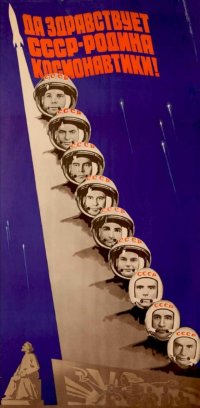
Плакат "Да здравствует СССР – родина космонавтики!" Москва, 1964 г. Авторы: Ю. Кершин, В. Трухачев.
Poster "Long live the USSR – the birthplace of cosmonautics!" Moscow, 1964. Authors: Yu. Kershin, V. Trukhachev.
Cartel "¡Viva la URSS, cuna de la cosmonáutica!" Moscú, 1964. Autores: Yu. Kershin, V. Trukhachev.

G4cddYQrw6Q lcgJe0IwJSDC 5yvnjchRzNDCyExv96U655ZYwXSwZfz bbbWZWZqPEQOQOpXUHF Cfnr0zJ LQv
 
Frimen1917

Frimen1917

Mecca V.I.P.
VIP
Joined
Jan 9, 2026
Messages
3,161
Points
63
"Прыжок в космические просторы с каждым годом все более и более облекался в ощутимые очертания, и освоение космоса казалось близким. "Одни изобретают и вычисляют, другие более доступно излагают эти труды, а третьи посвящают им роман", - писал К. Э. Циолковский 5 января 1935 года Александру Романовичу Беляеву относительно его романа "Прыжок в ничто". В этом романе ученый увидел счастливое сближение с его научным исследованием по освоению космоса, прекрасное средство популяризации его идей. Вот почему он с таким большим удовлетворением писал Беляеву: Он( т.е роман "Прыжок в ничто") более будет распространять значение и интерес к великой задаче 20 века чем другие популярные рассказы, не исключая даже иностранных...Что же касается до посвящения его мне, то я считаю это Вашей любезностью и честью для себя".
А затем уже в марте 1935 года написал предисловие ко второму изданию собрания сочинений А. Р. Беляева : "Из всех известных мне рассказов, оригинальных и переводных, на тему о межпланетных сообщениях роман А. Р. Беляева мне кажется наиболее содержательным и научным...
Поэтому я сердечно и искренне приветствую появление второго издания, которое, несомненно, будет способствовать распространению в массах интереса к заатмосферным полетам.
Вероятно, их ожидает великое будущее".
К. Э. Циолковский значение научной фантастики никогда не снижал и с поля боя за научную фантастику не уходил. "Фантастические рассказы на темы межпланетных рейсов несут новую мысль в массы. Кто этим занимается, тот делает полезное дело: вызывает интерес, побуждает к деятельности мозг, рождает сочувствующих и будущих работников великих намерений,- развивал ученый свою мысль о значении научной фантастики в письме В. Н. Журавлеву 24 января 1935 го. - До последнего времени я предполагал, что нужны сотни лет для осуществления полетов с астрономической скоростью( 8 -17 км в секунду)..Но непрерывная работа в последнее время поколебала эти мои пессимистические взгляды: найдены приемы, которые дадут изумительные результаты уже через десятки лет".(С.И. Самойлович. "Гражданин вселенной").
.....................................................................................................................
Цит. по: СЕРГЕЙ ИВАНОВИЧ САМОЙЛОВИЧ
ГРАЖДАНИН ВСЕЛЕННОЙ
Калуга/ Государственный музей истории космонавтики им. К.Э. Циолковского/ 1969 год

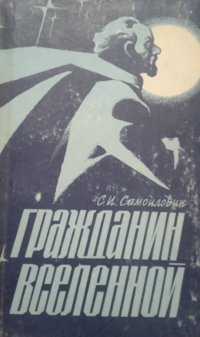
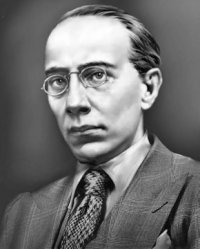
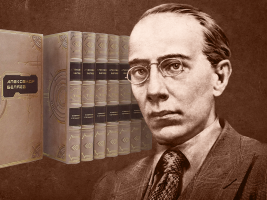
На верхнем фото обложка книги "Гражданин Вселенной". На нижнем фото советский фантаст Александр Беляев.
"The leap into the vastness of space was acquiring more and more tangible outlines with each passing year, and the conquest of space seemed near.


'Some invent and calculate, others present these works in a more accessible form, and still others dedicate a novel to them,' wrote K. E. Tsiolkovsky to Alexander Romanovich Belyaev on January 5, 1935, regarding his novel Leap into Nothingness. In this novel, the scientist saw a fortunate convergence with his own scientific research on space exploration, a splendid means of popularizing his ideas. That is why he wrote to Belyaev with such satisfaction:

'It (that is, the novel Leap into Nothingness) will do more to spread the significance of and interest in the great task of the twentieth century than other popular stories, including foreign ones... As for its dedication to me, I regard it as your kindness and an honor for myself.'

Then, in March 1935, he wrote the preface to the second edition of A. R. Belyaev’s collected works:

'Of all the stories known to me, both original and translated, on the subject of interplanetary travel, A. R. Belyaev’s novel seems to me the most substantial and scientifically grounded...

Therefore, I warmly and sincerely welcome the appearance of this second edition, which will undoubtedly contribute to spreading among the masses an interest in journeys beyond the atmosphere.

Most likely, a great future awaits them.'

K. E. Tsiolkovsky never diminished the importance of science fiction and never withdrew from the struggle for it.

'Fantastic stories on the subject of interplanetary voyages carry new ideas to the masses. Whoever engages in this performs a useful service: they awaken interest, stimulate the mind to activity, create sympathizers and future workers for great endeavors,' the scientist developed his thoughts on the significance of science fiction in a letter to V. N. Zhuravlev on January 24, 1935.

'Until recently, I assumed that hundreds of years would be required to achieve flights at astronomical velocities (8–17 km per second)... But continuous work in recent times has shaken these pessimistic views of mine: methods have been found that will produce astonishing results within mere decades.'

(S. I. Samoylovich, Citizen of the Universe)

..............................................................

Source: SERGEI IVANOVICH SAMOYLOVICH

CITIZEN OF THE UNIVERSE

Kaluga / K. E. Tsiolkovsky State Museum of the History of Cosmonautics / 1969

In the upper photograph: the cover of the book Citizen of the Universe.
In the lower photograph: Soviet science-fiction writer Alexander Belyaev.

"El salto hacia las inmensidades del espacio adquiría cada año contornos cada vez más concretos, y la conquista del cosmos parecía cercana.

'Unos inventan y calculan, otros exponen estos trabajos de manera más accesible, y otros les dedican una novela', escribió K. E. Tsiolkovski a Aleksandr Románovich Beliáyev el 5 de enero de 1935 acerca de su novela Salto hacia la nada. En esta obra, el científico vio una feliz coincidencia con sus propias investigaciones sobre la exploración espacial, así como un magnífico medio para popularizar sus ideas. Por eso escribió a Beliáyev con tanta satisfacción:

'Ella (es decir, la novela Salto hacia la nada) difundirá más la importancia y el interés por la gran tarea del siglo XX que otros relatos populares, sin excluir siquiera los extranjeros... En cuanto a que me la haya dedicado, lo considero una muestra de su amabilidad y un honor para mí.'

Posteriormente, en marzo de 1935, escribió el prólogo para la segunda edición de las obras completas de A. R. Beliáyev:

'De todos los relatos que conozco, originales o traducidos, sobre el tema de los viajes interplanetarios, la novela de A. R. Beliáyev me parece la más rica en contenido y la más científica...

Por ello saludo cordial y sinceramente la aparición de esta segunda edición, que sin duda contribuirá a difundir entre las masas el interés por los vuelos más allá de la atmósfera.

Probablemente les espera un gran futuro.'

K. E. Tsiolkovski nunca restó importancia a la ciencia ficción y jamás abandonó la defensa de su valor.

'Los relatos fantásticos sobre viajes interplanetarios llevan nuevas ideas a las masas. Quien se dedica a ello realiza una labor útil: despierta el interés, estimula la actividad del pensamiento, crea simpatizantes y futuros trabajadores de grandes empresas', desarrolló el científico sus ideas sobre la importancia de la ciencia ficción en una carta a V. N. Zhuravliov el 24 de enero de 1935.

'Hasta hace poco suponía que serían necesarios cientos de años para realizar vuelos a velocidades astronómicas (8–17 km por segundo)... Pero el trabajo continuo de los últimos tiempos ha sacudido estas opiniones pesimistas mías: se han encontrado métodos que producirán resultados asombrosos en apenas unas décadas.'

(S. I. Samóilovich, Ciudadano del Universo)

..............................................................

Fuente: SERGUÉI IVÁNOVICH SAMÓILOVICH

CIUDADANO DEL UNIVERSO

Kaluga / Museo Estatal de Historia de la Cosmonáutica K. E. Tsiolkovski / 1969

En la fotografía superior: la portada del libro Ciudadano del Universo.

En la fotografía inferior: el escritor soviético de ciencia ficción Aleksandr Beliáyev.
ZtR8BU8TZ4pdAecbx1YGHW adGv17 fNQip1WcJc bpfsn5XKLVRKp 9AQpyRtQDGCz3XRFs9u0ct5TP9enDJccc 1

Hcxl6bgwvpty aleksandr beliaev
 
Frimen1917

Frimen1917

Mecca V.I.P.

VIP
Joined
Jan 9, 2026
Messages
3,161
Points
63
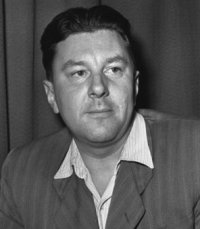
Алекса́ндр Рома́нович Беля́ев (1884 — 1942) — русский писатель-фантаст, репортёр и адвокат, журналист. Один из основоположников советской научно-фантастической литературы, первый из советских писателей, целиком посвятивший себя этому жанру.
Среди наиболее известных его романов — «Голова профессора Доуэля», «Человек-амфибия», «Ариэль», «Звезда КЭЦ» и многие другие (всего более 70 научно-фантастических произведений, в том числе 17 романов). За значительный вклад в русскую фантастику и провидческие идеи Беляева называют «русским Жюлем Верном»

В своих научно-фантастических романах Александр Беляев предвосхитил появление огромного количества изобретений, хотя при жизни писателя его идеи часто расценивали как «научно несостоятельные» и «лишённые познавательного значения». Часть из них связана с освоением моря: подводные поселения и фермы, подводная съёмка и телевидение, ранцы-буксировщики для пловцов («Подводные земледельцы», «Чудесное око»). Другая — с освоением космоса: пилотируемые космические полёты, выход в открытый космос, полёт на Луну и орбитальные станции («Звезда КЭЦ», «Прыжок в ничто»). Также предсказаны достижения в биологии и медицине: создание новых органов человека, сохранение жизнедеятельности изолированных органов, трансплантология, операции на хрусталике, пластическая хирургия, управление настроениями и действиями живого организма, регулирование роста через воздействие на эндокринную систему, препараты, снимающие утомление и стимулирующие умственную деятельность, замораживание как способ временно приостановить биологическое функционирование («Человек-амфибия», «Голова профессора Доуэля», «Человек, потерявший лицо» и другие). Кроме того, мобильный телефон, радиолокатор, интроскоп/интравизор («Борьба в эфире»), беспилотные летательные аппараты(«Властелин мира»); микробиологическое производство («Вечный хлеб»), искусственная шаровая молнияи другие.
Alexander Romanovich Belyaev (1884–1942) was a Russian science fiction writer, reporter, lawyer, and journalist. He is considered one of the founders of Soviet science fiction literature and the first Soviet writer to devote himself entirely to this genre.


Among his most famous novels are Professor Dowell’s Head, Amphibian Man, Ariel, KETS Star, and many others (more than 70 science fiction works in total, including 17 novels). For his significant contribution to Russian science fiction and his visionary ideas, Belyaev is often called the “Russian Jules Verne.”

In his science fiction novels, Alexander Belyaev anticipated the appearance of a vast number of inventions, although during his lifetime his ideas were often regarded as “scientifically unsound” and “devoid of educational value.” Some of these predictions were related to the exploration of the seas: underwater settlements and farms, underwater photography and television, and diver propulsion devices (“Underwater Farmers,” “The Wonderful Eye”). Others were connected with space exploration: manned space flights, spacewalks, lunar missions, and orbital stations (KETS Star, Leap into Nothing).

He also foresaw achievements in biology and medicine: the creation of new human organs, preservation of the vital functions of isolated organs, transplantation, lens surgery, plastic surgery, control of moods and actions in living organisms, regulation of growth through influence on the endocrine system, drugs that relieve fatigue and stimulate mental activity, and cryogenic preservation as a means of temporarily suspending biological functions (Amphibian Man, Professor Dowell’s Head, The Man Who Lost His Face, and others).
In addition, he predicted the mobile phone, radar, introscope/intravisor (Struggle in the Ether), unmanned aerial vehicles (The Ruler of the World), microbiological production (Eternal Bread), artificial ball lightning, and many other technological developments.


Aleksandr Románovich Beliáyev (1884–1942) fue un escritor ruso de ciencia ficción, reportero, abogado y periodista. Es considerado uno de los fundadores de la literatura soviética de ciencia ficción y el primer escritor soviético que se dedicó por completo a este género.


Entre sus novelas más conocidas se encuentran La cabeza del profesor Dowell, El hombre anfibio, Ariel, La estrella KETS y muchas otras (más de 70 obras de ciencia ficción en total, incluidas 17 novelas). Por su importante contribución a la ciencia ficción rusa y por sus ideas visionarias, Beliáyev suele ser llamado el “Julio Verne ruso”.

En sus novelas de ciencia ficción, Aleksandr Beliáyev anticipó la aparición de una enorme cantidad de inventos, aunque durante su vida sus ideas fueron consideradas con frecuencia “científicamente inconsistentes” y “carentes de valor cognitivo”. Algunas de estas predicciones estaban relacionadas con la exploración de los mares: asentamientos y granjas submarinas, fotografía y televisión submarinas, y dispositivos de propulsión para buceadores (“Los agricultores submarinos”, “El ojo maravilloso”). Otras estaban vinculadas con la exploración espacial: vuelos espaciales tripulados, caminatas espaciales, viajes a la Luna y estaciones orbitales (La estrella KETS, Salto a la nada).

También predijo avances en biología y medicina: la creación de nuevos órganos humanos, la conservación de la actividad vital de órganos aislados, los trasplantes, la cirugía del cristalino, la cirugía plástica, el control de los estados de ánimo y las acciones de los organismos vivos, la regulación del crecimiento mediante la influencia sobre el sistema endocrino, medicamentos para eliminar la fatiga y estimular la actividad mental, y la criopreservación como método para suspender temporalmente las funciones biológicas (El hombre anfibio, La cabeza del profesor Dowell, El hombre que perdió el rostro y otras obras).

Además, anticipó la aparición del teléfono móvil, el radar, el introscopio/intravisor (La lucha en el éter), los vehículos aéreos no tripulados (El amo del mundo), la producción microbiológica (El pan eterno), el rayo en bola artificial y muchos otros avances tecnológicos.


139439
 
Frimen1917

Frimen1917

Mecca V.I.P.
VIP
Joined
Jan 9, 2026
Messages
3,161
Points
63
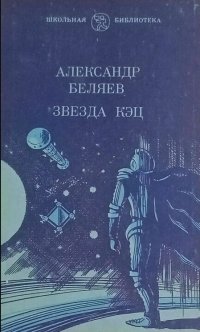
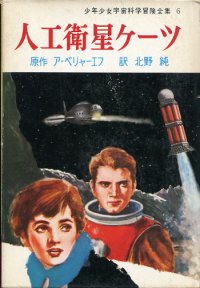
Обложка и иллюстрации к книге Александра Беляева "Звезда КЭЦ" 1988 г. Город Барнаул. Алтайское книжное издательство. Художник А.Курдюмов.
Cover and illustrations for Alexander Belyaev's book "Star of the KEC," 1988. City of Barnaul. Altai Book Publishing House. Artist A. Kurdyumov.
Portada e ilustraciones del libro de Alexander Belyaev, "Estrella del KEC", 1988. Ciudad de Barnaul. Editorial Altai Book. Artista: A. Kurdyumov.
Clipboard 07 19 2026 04 55155 1
55155 2
55155 3
55155 4
55155 5
 
Frimen1917

Frimen1917

Mecca V.I.P.
VIP
Joined
Jan 9, 2026
Messages
3,161
Points
63
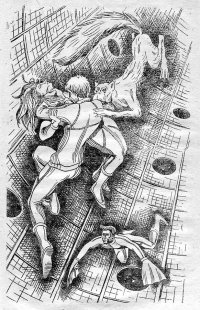
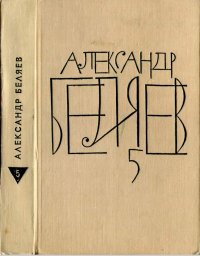
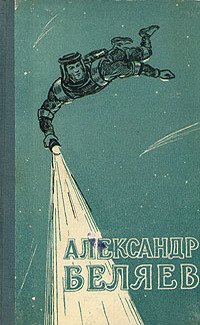
Обложка (художник В.Маркевич) 5 тома сочинений Александра Беляева издания 1964 года. Иллюстрации к книге "Прыжок в ничто"(художник П.Луганский).
Cover (artist V. Markevich) of the 5th volume of the works of Alexander Belyaev, published in 1964. Illustrations for the book "Leap into Nothing" (artist P. Lugansky).
Portada (artista V. Markevich) del quinto volumen de las obras de Alexander Belyaev, publicado en 1964. Ilustraciones para el libro "Salto a la nada" (artista P. Lugansky).

 viber 2026 07 19 22 46 51 964

 viber 2026 07 19 23 40 50 964
 viber 2026 07 19 23 40 40 447
 viber 2026 07 19 23 40 50 845
 viber 2026 07 19 23 40 51 017
 viber 2026 07 19 23 40 51 072
 viber 2026 07 19 23 40 51 184
 viber 2026 07 19 23 40 51 126
 
Frimen1917

Frimen1917

Mecca V.I.P.
VIP
Joined
Jan 9, 2026
Messages
3,161
Points
63
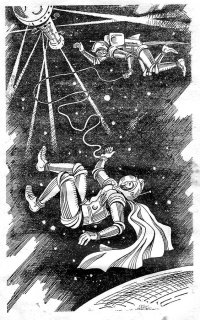
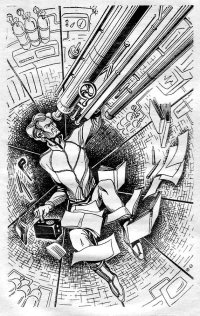
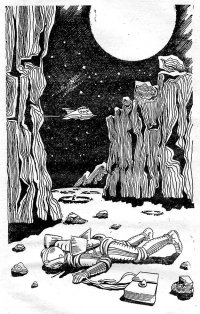
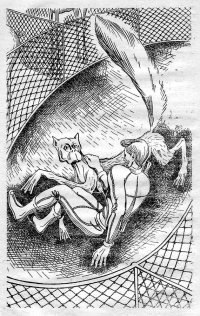
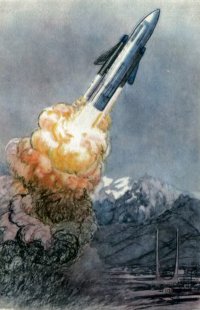
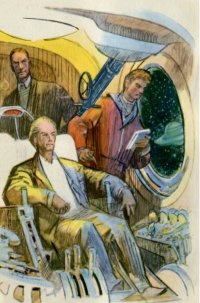
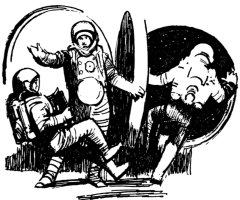
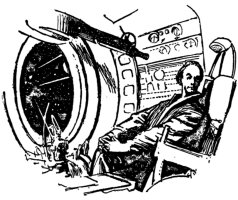
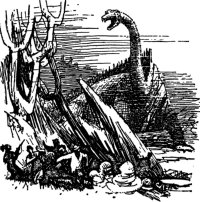
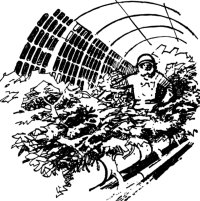
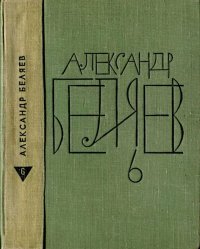
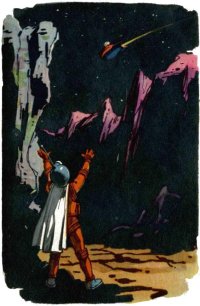
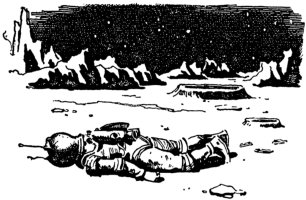
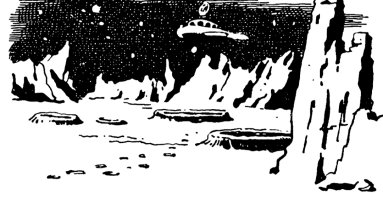
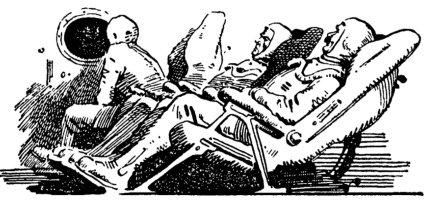
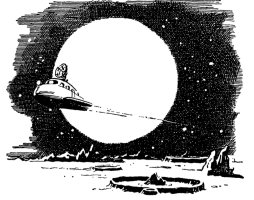
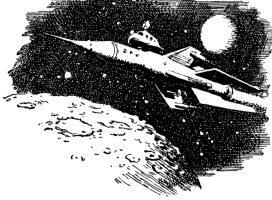
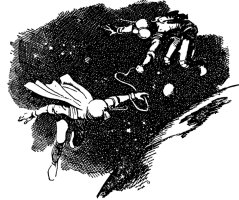
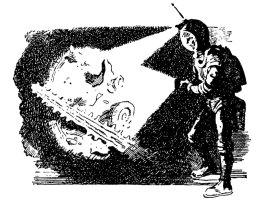
Обложка (художник В.Маркевич) 6 тома сочинений Александра Беляева издания 1964 года. Иллюстрации к книге "Звезда КЭЦ"(художник Ст.Забалуев.).
Cover (artist V. Markevich) of the 6th volume of the works of Alexander Belyaev, published in 1964. Illustrations for the book "Star of the KEC" (artist St. Zabaluev).
Portada (artista V. Markevich) del sexto volumen de las obras de Alexander Belyaev, publicado en 1964. Ilustraciones para el libro "Estrella del KEC" (artista St. Zabaluev).

 viber 2026 07 19 22 46 51 964
Beljaew a r text 1936 zvezda ketz text 1936 zvezda ketz 12
Text 1936 zvezda ketz 8
 viber 2026 07 20 00 55 12 644
 viber 2026 07 20 00 55 12 838


 viber 2026 07 20 00 55 12 915


 viber 2026 07 20 00 55 13 446
 viber 2026 07 20 00 55 13 012

 viber 2026 07 20 00 55 14 234
 viber 2026 07 20 00 55 14 803
 
Frimen1917

Frimen1917

Mecca V.I.P.
VIP
Joined
Jan 9, 2026
Messages
3,161
Points
63
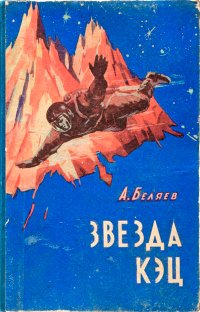
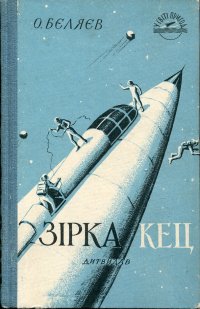
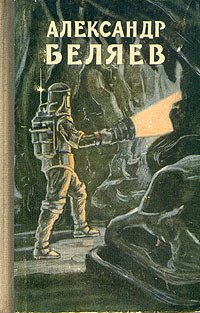
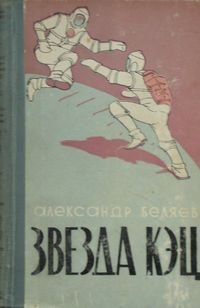
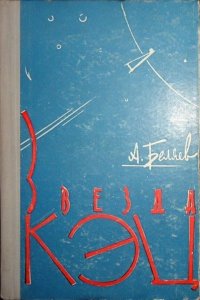
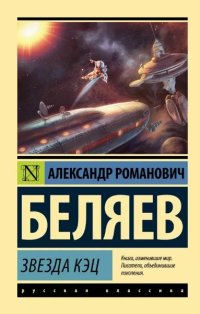
Обложки разных изданий книги "Звезда КЭЦ".
Covers of various editions of the book "Star of KEC".
Portadas de varias ediciones del libro "Estrella de KEC".

56777


76793

5220 45170 45513 198815
126794 1 198593
66671 77779 1
 
Frimen1917

Frimen1917

Mecca V.I.P.
VIP
Joined
Jan 9, 2026
Messages
3,161
Points
63
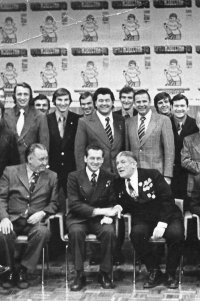
Уникальное фото. Хоккейный турнир Приз "Известий". 1975 год.
Нижний ряд(сидят на стульях), слева направо: Борис Павлович Кулагин — советский хоккеист, тренер; Вита́лий Ива́нович Севастья́нов — лётчик-космонавт СССР, кандидат технических наук, дважды Герой Советского Союза; Николай Афанасьевич Крючко́в — советский и российский актёр театра и кино, герой Социалистического Труда, народный артист СССР.
В верхнем ряду советские хоккеисты : Александр Якушев, Владислав Третьяк, Виктор Жлуктов; легендарный футбольный вратарь Лев Яшин; тренер сборной СССР по хоккею Владимир Владимирович Юрзинов.
.......................................................................

Примечание: МЕЖДУНАРО́ДНЫЙ ТУРНИ́Р НА ПРИЗ ГАЗЕ́ТЫ «ИЗВЕ́СТИЯ» (Приз «Известий»), международный турнир по хоккею (Москва), проводился до 1996 года. Первый турнир состоялся в 1967 году в СССР и носил название "Московский международный турнир на приз Федерации хоккея СССР". С 1969 года по предложению спортивного комментатора Бориса Федосова турнир взяла под патронаж редакция газеты «Известия», и он получил постоянную эмблему (идея которой также принадлежит Федосову) — снеговика с клюшкой. В состязаниях участвовали национальные сборные ведущих хоккейных держав.
A unique photo. Izvestia Prize. 1975.

Bottom row (seated on chairs), left to right: Boris Pavlovich Kulagin, Soviet hockey player and coach; Vitaly Ivanovich Sevastyanov, USSR pilot-cosmonaut, PhD in engineering, twice Hero of the Soviet Union; Nikolai Afanasyevich Kryuchkov, Soviet and Russian theater and film actor, Hero of Socialist Labor, People's Artist of the USSR.
Top row: Soviet hockey players: Alexander Yakushev, Vladislav Tretiak, Viktor Zhluktov; legendary soccer goalkeeper Lev Yashin; USSR national hockey team coach Vladimir Vladimirovich Yurzinov. ......................................................................

Note: The International Ice Hockey Tournament for the Prize of the Newspaper "IZVESTIA" (Izvestia Prize), an international hockey tournament (Moscow), was held until 1996. The first tournament was held in 1967 in the USSR and was called the "Moscow International Tournament for the Prize of the USSR Ice Hockey Federation." Since 1969, at the suggestion of sports commentator Boris Fedosov, the Izvestia newspaper took over the tournament's patronage, and it received a permanent emblem (also conceived by Fedosov)—a snowman with a hockey stick. The national teams of the leading hockey nations participated in the competition.
Una fotografía única. Premio Izvestia. 1975.

Fila inferior (sentados en sillas), de izquierda a derecha: Boris Pavlovich Kulagin, jugador y entrenador de hockey soviético; Vitaly Ivanovich Sevastyanov, piloto-cosmonauta de la URSS, doctor en ingeniería, dos veces Héroe de la Unión Soviética; Nikolai Afanasyevich Kryuchkov, actor de teatro y cine soviético y ruso, Héroe del Trabajo Socialista, Artista del Pueblo de la URSS.

Fila superior: Jugadores de hockey soviéticos: Alexander Yakushev, Vladislav Tretiak, Viktor Zhluktov; el legendario portero de fútbol Lev Yashin; el entrenador de la selección nacional de hockey de la URSS, Vladimir Vladimirovich Yurzinov. ......................................................................

Nota: El Torneo Internacional de Hockey sobre Hielo por el Premio del Periódico "IZVESTIA" (Premio Izvestia), un torneo internacional de hockey (Moscú), se celebró hasta 1996. El primer torneo tuvo lugar en 1967 en la URSS y se denominó "Torneo Internacional de Moscú por el Premio de la Federación de Hockey sobre Hielo de la URSS". Desde 1969, a sugerencia del comentarista deportivo Boris Fedosov, el periódico Izvestia asumió el patrocinio del torneo, que recibió un emblema permanente (también ideado por Fedosov): un muñeco de nieve con un palo de hockey. Las selecciones nacionales de los principales países de hockey participaron en la competición.
QSxkhr9J1f5q5ewqXsjkSK0c7gDZthBkqn33q0a7MgM53qB0dj EBFC bGsKkFAB 7OkgI4D3OmJMyPpWdRggXr
 
Frimen1917

Frimen1917

Mecca V.I.P.
VIP
Joined
Jan 9, 2026
Messages
3,161
Points
63
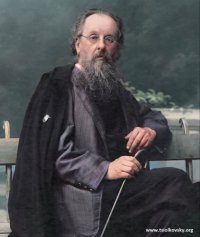
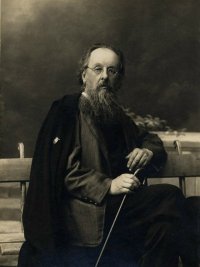
Константин Эдуардович Циолковский(1857 - 1935).Колоризация фотографии. Оригинальное чёрно - белое фото 1924 года.
Konstantin Eduardovich Tsiolkovsky (1857 - 1935). Photograph colorization. Original black-and-white photo from 1924.
Konstantin Eduardovich Tsiolkovsky (1857 - 1935). Fotografía coloreada. Fotografía original en blanco y negro de 1924.

Fpklr6VBFfQicdGx8psQVZ3Vwuh h6W wJVTG8GZXef5iWALhSDU511B1rMxNkRFT P7FNPwSBM9jQhgS89HOWB
AscXww4TGfNLvNu xLrIIss7sdM3TyIZ1lQYzHP myewE9yAqCfNu1LblnHi32iovIg4SwwjZXwasPDTTFhbr5w8
 
Frimen1917

Frimen1917

Mecca V.I.P.
VIP
Joined
Jan 9, 2026
Messages
3,161
Points
63
"А как же с продолжительностью полета? Всякий ли выход в космос есть полет? "Если летательный аппарат, - отвечает Сергей Павлович, - совершает полет вокруг Земли хотя бы в течение не менее одного оборота, не падая на Землю, то такой полет является космическим. Здесь надо отметить, что в общем случае космический полет может происходить и не обязательно вокруг Земли, но тогда протяженность полета либо его длительность должны быть соизмеримы с одним оборотом спутника. Например, теоретически возможен вертикальный космический полет".
И как вывод из всего сказанного - формулировка: "Космическим полетом называется полет летательного аппарата со скоростью движения, равной или большей первой космической, выше плотных слоев атмосферы в течение достаточно длительного времени. При этом происходит потеря состояния естественной земной весомости".
Определения вроде бы завершены, но размышления продолжаются. Уже незадолго до старта Ю. Гагарина, 19 марта 1961 года, он снова возвращается к мысли о посадке. Сергей Павлович записывает: "Космический полет предусматривает посадку на Землю. Иначе это падение, выстрел и т. д.". Ниже делает уточнение: "Не всегда на Землю!".
Так тщательно отрабатывалась терминология. И, разумеется, во сто крат тщательнее готовились сами полеты.
В ходе подготовки к полету человека в космос Сергей Павлович особое внимание уделял надежности всех систем и безопасности космонавта. Надо было обеспечить практически безотказное действие систем, агрегатов, установок, узлов в условиях космического полета. Требование надежности легко понять, если вспомнить, что каждый корабль-спутник состоит из сотен сложнейших систем, тысяч и десятков тысяч узлов и деталей. И достаточно выйти из строя незначительному элементу, как полет может оказаться неудачным.
Чтобы добиться высокой надежности, говорил Сергей Павлович, о ней надо думать, начиная с момента проектирования. Поэтому заранее предусматривалась возможность проверки работы любой конструкции на земле и в полете.
А в ходе производства он строжайше следил за соблюдением технологии, за "самочувствием" всех систем, каждую из которых прежде чем установить на корабль многократно и в самых разнообразных условиях испытывали. А потом уже корабль и его системы испытывались на земле. И только после этого начинались запуски и полеты по орбите". (П.Т. Асташенков. "Академик С. П. Королев" ).
..................................................................................
Цит.по : П. Т. АСТАШЕНКОВ
АКАДЕМИК С. П. КОРОЛЕВ
Под редакцией К. И. Трунова
ИЗДАТЕЛЬСТВО "МАШИНОСТРОЕНИЕ" Москва 1969
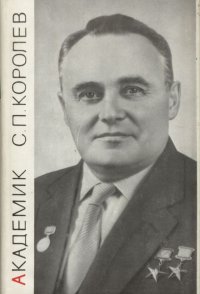
На фото обложка книги "Академик С.П.Королев".

“And what about the duration of a flight? Can every venture into space be called a flight?


‘If a flying vehicle,’ Sergey Pavlovich answered, ‘makes at least one complete orbit around the Earth without falling back to it, then such a journey is a spaceflight. It should be noted that, in the general case, a spaceflight does not necessarily have to occur around the Earth; however, the distance covered or the duration of the flight must be comparable to that of one satellite revolution. For example, a vertical spaceflight is theoretically possible.’

And as a conclusion from all that has been said, he formulated the following definition:

‘A spaceflight is a flight of a vehicle moving at a velocity equal to or greater than the first cosmic velocity, above the dense layers of the atmosphere, for a sufficiently long period of time. In this case, the natural condition of terrestrial weight is lost.’

The definitions seemed complete, but the reflections continued. Shortly before Yuri Gagarin’s launch, on March 19, 1961, he once again returned to the idea of landing. Sergey Pavlovich wrote:

‘A spaceflight implies a landing on Earth. Otherwise, it is a fall, a shot, and so on.’

Below, he added a clarification:

‘Not always on Earth!’

This is how carefully the terminology was developed. And, of course, the flights themselves were prepared a hundred times more carefully.

During the preparation for sending a human into space, Sergey Pavlovich paid special attention to the reliability of all systems and to the safety of the cosmonaut. It was necessary to ensure virtually failure-free operation of systems, assemblies, units, and mechanisms under the conditions of spaceflight. The requirement for reliability is easy to understand if one remembers that each spacecraft consists of hundreds of highly complex systems and thousands, even tens of thousands, of components and parts. It was enough for a minor element to fail for the entire mission to become unsuccessful.

To achieve a high degree of reliability, Sergey Pavlovich said, one must think about reliability from the very moment of design. Therefore, the possibility of testing the operation of any structure both on Earth and in flight was provided in advance.

During production, he strictly monitored compliance with technological procedures and the “well-being” of all systems. Before being installed on the spacecraft, each system underwent repeated testing under a wide variety of conditions. After that, the spacecraft and its systems were tested on the ground. Only then did launches and orbital flights begin.”
(P. T. Astashenkov, “Academician S. P. Korolev”)

..................................................................................

Quoted from:

P. T. Astashenkov

ACADEMICIAN S. P. KOROLEV

Edited by K. I. Trunov

MASHINOSTROYENIE PUBLISHING HOUSE
Moscow, 1969

The photo shows the cover of the book "Academician S.P. Korolev".
«¿Y qué ocurre con la duración del vuelo? ¿Puede considerarse vuelo cualquier salida al espacio?


—Si un vehículo volador —respondía Serguéi Pávlovich— realiza al menos una órbita completa alrededor de la Tierra sin caer sobre ella, entonces dicho viaje constituye un vuelo espacial. Cabe señalar que, en el caso general, un vuelo espacial no tiene por qué realizarse necesariamente alrededor de la Tierra; sin embargo, la distancia recorrida o la duración del vuelo deben ser comparables a una revolución orbital de un satélite. Por ejemplo, teóricamente es posible un vuelo espacial vertical.

Y como conclusión de todo lo dicho, formuló la siguiente definición:

«Se denomina vuelo espacial al vuelo de un aparato que se desplaza a una velocidad igual o superior a la primera velocidad cósmica, por encima de las capas densas de la atmósfera y durante un tiempo suficientemente prolongado. En este caso, se pierde el estado natural de peso terrestre.»

Las definiciones parecían completas, pero las reflexiones continuaban. Poco antes del lanzamiento de Yuri Gagarin, el 19 de marzo de 1961, volvió una vez más a la idea del aterrizaje. Serguéi Pávlovich escribió:

«Un vuelo espacial implica el aterrizaje en la Tierra. De lo contrario, es una caída, un disparo, etcétera.»

Debajo añadió una aclaración:

«¡No siempre en la Tierra!»

Así de cuidadosamente se elaboraba la terminología. Y, por supuesto, los propios vuelos se preparaban con un rigor cien veces mayor.

Durante la preparación del primer vuelo humano al espacio, Serguéi Pávlovich prestó una atención especial a la fiabilidad de todos los sistemas y a la seguridad del cosmonauta. Era necesario garantizar un funcionamiento prácticamente libre de fallos de los sistemas, mecanismos, unidades y conjuntos en las condiciones del vuelo espacial. La exigencia de fiabilidad es fácil de comprender si recordamos que cada nave espacial consta de cientos de sistemas extremadamente complejos y de miles, incluso decenas de miles, de componentes y piezas. Bastaba con que fallara un elemento aparentemente insignificante para que toda la misión pudiera fracasar.

Para lograr un alto nivel de fiabilidad, decía Serguéi Pávlovich, hay que pensar en ella desde el mismo momento del diseño. Por ello, se preveía de antemano la posibilidad de comprobar el funcionamiento de cualquier estructura tanto en la Tierra como durante el vuelo.

Durante la producción, vigilaba rigurosamente el cumplimiento de los procesos tecnológicos y el «estado de salud» de todos los sistemas. Antes de ser instalados en la nave espacial, cada uno de ellos era sometido a múltiples pruebas en las condiciones más diversas. Después, la nave y todos sus sistemas eran probados en tierra. Solo entonces comenzaban los lanzamientos y los vuelos orbitales.»
(P. T. Astashenkov, «Académico S. P. Koroliov»)

..................................................................................

Citado de:

P. T. Astashenkov

ACADÉMICO S. P. KOROLIOV

Bajo la dirección editorial de K. I. Trunov

EDITORIAL MASHINOSTROYENIE
Moscú, 1969

La foto muestra la portada del libro "El académico S.P. Korolev".
0OiMBlewUoq34EcIBhRofQLUQX5BmAI9EtqyjNdESITuEIdPDa4vOOJwtEXVIztMHVrg4SFqCKEFxh4RK75E4xxP
 

MuscleMecca Crew

Mecca Staff
Frimen1917

Frimen1917

Mecca V.I.P.
VIP
Joined
Jan 9, 2026
Messages
3,161
Points
63

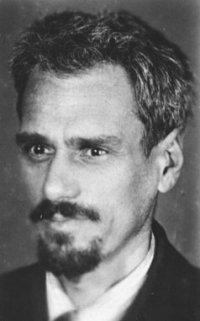
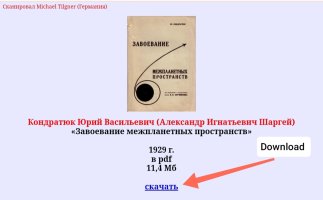
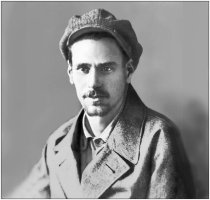
Кондратюк Юрий Васильевич.

"Завоевание межпланетных пространств"

Книгу на русском языке можно скачать по ссылке ниже

Yuri Vasilyevich Kondratyuk.
"The Conquest of Interplanetary Space"
The book in Russian can be downloaded from the link below.

Yuri Vasilievich Kondratyuk.

«La conquista del espacio interplanetario»
El libro en ruso se puede descargar desde el siguiente enlace.


Þðèé Âàñèëüåâè÷ Êîíäðàòþê (Àëåêñàíäð Èãíàòüåâè÷ Øàðãåé). «Çàâîåâàíèå ìåæïëàíåòíûõ ïðîñòðàíñòâ» 1929 ã


  viber 2026 07 20 13 26 14 458
 
Frimen1917

Frimen1917

Mecca V.I.P.
VIP
Joined
Jan 9, 2026
Messages
3,161
Points
63

Кондратюк Юрий Васильевич.

"Завоевание межпланетных пространств"

По ссылке ниже сайт с текстом книги на русском языке.
Yuri Vasilyevich Kondratyuk.
"The Conquest of Interplanetary Space"
The link below contains the text of the book in Russian.


Yuri Vasilievich Kondratyuk.

«La conquista del espacio interplanetario»
El siguiente enlace contiene el texto del libro en ruso.


http://az.lib.ru/k/kondratjuk_j_w/text_1929_zavoevanie.shtml

YUV Kondratyuk
 
Frimen1917

Frimen1917

Mecca V.I.P.
VIP
Joined
Jan 9, 2026
Messages
3,161
Points
63
Космическая живопись СССР.
Юрий Кондратюк. Полотно, масло. 173 × 84. 1977 год.
Художник: Задорожный Иван-Валентин Феодосиевич.
.....................................................................
Примечание: Иван-Валентин Феодосиевич Задоро́жный (1921—1988) — советский художник-монументалист, живописец, график.
Родился 7 июля 1921 года в Ржищеве (ныне Киевская область, Украина). Учился в Киевском Государственном художественном институте (1945—1951). Преподаватели К. Елева, А. Петрицкий, С. Григорьев.
Умер в 1988 году в Киеве. Похоронен в Ржищеве. Премии и награды :
Премия Совета Министров СССР — за монументально-декоративное оформление поселка Калита Киевской области.
Государственная премия Украины имени Т. Г. Шевченко (1995; — посмертно) — за серию работ (1964—1988).
Заслуженный деятель искусств Украинской Советской Социалистической Республики (1960).

Орден Отечественной войны II степени (6.4.1985).
Space Painting of the USSR.

Yuri Kondratyuk. Oil on canvas. 173 x 84 cm. 1977.
Artist: Ivan-Valentin Feodosievich Zadorozhny.
.....................................................................

Note: Ivan-Valentin Feodosievich Zadorozhny (1921–1988) was a Soviet muralist, painter, and graphic artist.
Born July 7, 1921, in Rzhyshchiv (now Kyiv Oblast, Ukraine). Studied at the Kyiv State Art Institute (1945–1951). Teachers: K. Eleva, A. Petritsky, and S. Grigoriev.
He died in 1988 in Kyiv. Buried in Rzhyshchiv. Prizes and awards:
Prize of the Council of Ministers of the USSR for the monumental and decorative design of the village of Kalita, Kyiv Oblast.
T. G. Shevchenko State Prize of Ukraine (1995; posthumously) for a series of works (1964-1988).
Honored Artist of the Ukrainian Soviet Socialist Republic (1960).

Order of the Patriotic War, 2nd class (April 6, 1985).
Pintura espacial de la URSS.

Yuri Kondratyuk. Óleo sobre lienzo. 173 x 84 cm. 1977.
Artista: Ivan-Valentin Feodosievich Zadorozhny.
...................................................................
Nota: Ivan-Valentin Feodosievich Zadorozhny (1921-1988) fue un muralista, pintor y artista gráfico soviético.
Nació el 7 de julio de 1921 en Rzhyshchiv (actualmente Óblast de Kiev, Ucrania). Estudió en el Instituto Estatal de Arte de Kiev (1945-1951). Sus profesores fueron K. Eleva, A. Petritsky y S. Grigoriev.
Falleció en 1988 en Kiev. Está enterrado en Rzhyshchiv. Premios y reconocimientos:
Premio del Consejo de Ministros de la URSS por el diseño monumental y decorativo del pueblo de Kalita, Óblast de Kiev.
Premio Estatal T. G. Shevchenko de Ucrania (1995; a título póstumo) por una serie de obras (1964-1988).
Artista de Honor de la República Socialista Soviética de Ucrania (1960).

Orden de la Guerra Patriótica, 2.ª clase (6 de abril de 1985).
Fw QS5tEfUyAOXWGe VEOw iSz3dQeJYgSGFsPzWT8bQCDXtvG1aFM8PXbrKMxO5yo671gJQzAq13pnkUGAat1Qu
 
Frimen1917

Frimen1917

Mecca V.I.P.
VIP
Joined
Jan 9, 2026
Messages
3,161
Points
63
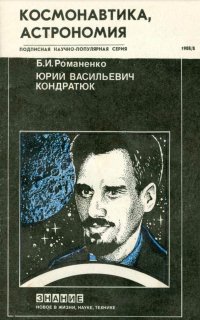
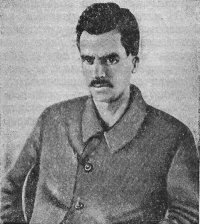
"В 1980 г. Свердловская киностудия создала по сценарию А. Г. Раппопорта документальный кинофильм «Хлеб и Луна» о Ю. В. Кондратюке. Где в интервью академик В. П. Глушко, в частности, сказал: «Если поставить перед собой задачу найти место, которое занимает Ю. В. Кондратюк в ряду первых исследователей космонавтики, то в моем представлении он бесспорно занимает следующее место после К. Э. Циолковского. Его труды (т. е. Ю. В. Кондратюка. – Б. Р.) изобилуют интереснейшими полезными идеями и предложениями, которые используются ныне и будут еще долгое время использоваться в будущем... он в то же время заключил, что, выйдя в космос, человек станет, как он выразился, подлинным хозяином Земли».(Б. И. Романенко. "Юрий Васильевич Кондратюк").
................................................................
Цит. по: Романенко Борис Иванович
ЮРИЙ ВАСИЛЬЕВИЧ КОНДРАТЮК
Обложка художника А. А. Астрецова. Худож. редактор Т. С. Егорова.
НОВОЕ В ЖИЗНИ, НАУКЕ, ТЕХНИКЕ
ПОДПИСНАЯ НАУЧНО-ПОПУЛЯРНАЯ СЕРИЯ
КОСМОНАВТИКА, АСТРОНОМИЯ
8/1988
Москва /Издательство «Знание»/ 1988

На фото обложка журнала с портретом Юрия Кондратюка.
"In 1980, the Sverdlovsk Film Studio produced the documentary film Bread and the Moon based on a script by A. G. Rappoport, dedicated to Yuri V. Kondratyuk. In the film, Academician V. P. Glushko stated, among other things:


“If one sets out to determine the place occupied by Yuri V. Kondratyuk among the early pioneers of astronautics, then, in my view, he unquestionably ranks immediately after K. E. Tsiolkovsky. His works (that is, the works of Yuri V. Kondratyuk — B. R.) are filled with extremely interesting and valuable ideas and proposals that are being used today and will continue to be used for a long time in the future... At the same time, he concluded that once humanity enters outer space, man will become, as he put it, the true master of the Earth.”
(B. I. Romanenko, Yuri Vasilyevich Kondratyuk).
...............................................................
Quoted from:
Romanenko, Boris Ivanovich
YURI VASILYEVICH KONDRATYUK
Cover designed by artist A. A. Astretsov. Art editor: T. S. Egorova.
NEW IN LIFE, SCIENCE, AND TECHNOLOGY
Subscription Popular Science Series
COSMONAUTICS, ASTRONOMY
No. 8 / 1988
Moscow / Knowledge Publishing House / 1988

The photograph shows the cover of the magazine featuring a portrait of Yuri Kondratyuk.
"En 1980, el Estudio Cinematográfico de Sverdlovsk produjo el documental Pan y la Luna, basado en un guion de A. G. Rappoport y dedicado a Yuri V. Kondratiuk. En la película, el académico V. P. Glushkó declaró, entre otras cosas:


“Si nos proponemos determinar el lugar que ocupa Yuri V. Kondratiuk entre los primeros investigadores de la cosmonáutica, en mi opinión ocupa indiscutiblemente el puesto inmediatamente posterior al de K. E. Tsiolkovski. Sus trabajos (es decir, los trabajos de Yuri V. Kondratiuk — B. R.) están llenos de ideas y propuestas extraordinariamente interesantes y útiles, que se utilizan hoy en día y seguirán utilizándose durante mucho tiempo en el futuro... Al mismo tiempo, llegó a la conclusión de que, al salir al espacio, el ser humano se convertirá, como él mismo expresó, en el verdadero dueño de la Tierra.”
(B. I. Romanenko, Yuri Vasílievich Kondratiuk).
................................................................
Citado de:
Romanenko, Borís Ivánovich
YURI VASÍLIEVICH KONDRATIUK
Portada realizada por el artista A. A. Astretsov. Editor artístico: T. S. Egórova.
NOVEDADES EN LA VIDA, LA CIENCIA Y LA TECNOLOGÍA
Serie de divulgación científica por suscripción
COSMONÁUTICA, ASTRONOMÍA
N.º 8 / 1988
Moscú / Editorial Znanie (Conocimiento) / 1988

En la fotografía aparece la portada de la revista con el retrato de Yuri Kondratiuk.
WGzDYSCqdHRE 8JJK5jxw5RRD0ijNpWh4sM6tsaZ82RiOFq8vNj3UAFRyvgqlDT3QCjnIAhAyIQl XSSIA8f0NJh
 
Frimen1917

Frimen1917

Mecca V.I.P.
VIP
Joined
Jan 9, 2026
Messages
3,161
Points
63
"Никто из классиков, советских и зарубежных, того времени не представлял себе так четко, как он, начало космической эры. В чем отличие Кондратюка от других? Он первым связал воедино два вопроса: торможение в атмосфере и тепловую защиту экипажа. У других этого нет. Он показал, что надо иметь не весь закрытый аппарат, а некий щит впередистоящий, мощный в тепловом отношении... Он первый сообразил, что в этих условиях нельзя управлять так, как всеми самолетами, — не рулями высоты, а по крену, поворачивая аппарат то "вверх ногами", то "лбом"... Как он до этого дошел, додумался, меня поражает до сих пор: и до него, и после все думали по-другому. Он объяснил процесс: условия теплозащиты требуют, чтобы угол атаки не менялся... Что поражает: именно так сделан "Союз" и другие — американские и советские — космические аппараты.".(Борис Раушенбах).
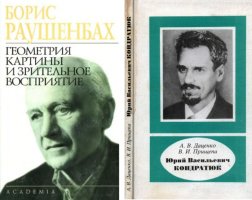
На фото слева - обложка книги Бориса Раушенбаха "Геометрия картины и зрительное восприятие" с протретом Раушенбаха. На фото справа - обложка книги "Юрий Васильевич Кондратюк" (авторы А.В.Даценко; В.И. Прищепа) с фотографией Кондратюка.
"None of the classic pioneers, Soviet or foreign, of that era envisioned the beginning of the Space Age as clearly as he did. What distinguished Kondratyuk from the others? He was the first to unite two issues into a single concept: atmospheric braking and thermal protection of the crew. The others did not have this. He demonstrated that one should not rely on the entire enclosed vehicle, but instead use a kind of forward heat shield with great thermal resistance.


He was also the first to realize that under such conditions a spacecraft could not be controlled in the same way as airplanes — not by elevator control surfaces, but by roll, turning the vehicle alternately "upside down" and then "face forward." How he arrived at this idea, how he reasoned it out, still amazes me today: before him and after him, everyone thought differently. He explained the process: thermal protection requirements demand that the angle of attack remain constant.

What is truly astonishing is that this is exactly how the Soyuz spacecraft and other American and Soviet spacecraft were designed."

(Boris Rauschenbach)

In the photograph on the left is the cover of Boris Rauschenbach's book Geometry of the Picture and Visual Perception, featuring a portrait of Rauschenbach. In the photograph on the right is the cover of the book Yuri Vasilyevich Kondratyuk (authors A. V. Datsenko and V. I. Prishchepa), featuring a photograph of Kondratyuk.
"Ninguno de los pioneros clásicos, soviéticos o extranjeros, de aquella época imaginó el comienzo de la Era Espacial con tanta claridad como él. ¿En qué se diferenciaba Kondratiuk de los demás? Fue el primero en vincular dos cuestiones en un solo concepto: el frenado en la atmósfera y la protección térmica de la tripulación. Los demás no lo tenían. Demostró que no era necesario confiar en todo el aparato cerrado, sino utilizar una especie de escudo térmico situado delante, con gran resistencia al calor.


También fue el primero en comprender que, en tales condiciones, una nave espacial no podía controlarse como un avión, es decir, mediante timones de profundidad, sino mediante el alabeo, girando la nave alternativamente "boca abajo" y luego "de frente". Cómo llegó a esta idea, cómo logró razonarla, sigue asombrándome hasta hoy: antes de él y después de él, todos pensaban de otra manera. Explicó el proceso: las exigencias de la protección térmica requieren que el ángulo de ataque permanezca constante.

Lo más sorprendente es que precisamente así están construidas la nave Soyuz y otras naves espaciales estadounidenses y soviéticas."

(Borís Raushenbaj)

En la fotografía de la izquierda aparece la portada del libro de Borís Raushenbaj Geometría de la imagen y percepción visual, con un retrato del autor. En la fotografía de la derecha aparece la portada del libro Yuri Vasílievich Kondratiuk (autores A. V. Datsenko y V. I. Prishchepa), con una fotografía de Kondratiuk.
 QSjAWwQpH2uXpRdB4ptJC0vgK3UQVf0bJJyhesootgWTDPVdch2KhH 7 Eu2YGApVdtXSv
 
Frimen1917

Frimen1917

Mecca V.I.P.
VIP
Joined
Jan 9, 2026
Messages
3,161
Points
63
"Хлеб и Луна"
Год выпуска: 1980
Страна: СССР
Жанр: Документальный
Продолжительность: 00:48
Язык : русский. (можно в настройках перевести субтитры).
Режиссер: Л.Ефимов
Описание: Фильм рассказывает о жизни и творчестве одного из выдающихся советских основоположников космонавтики - Юрии Васильевиче Кондратюке, реально разработавшем во всех деталях проект полёта людей на Луну ещё в 20-е годы.


"Bread and the Moon"
Year of release: 1980
Country: USSR
Genre: Documentary
Duration: 00:48
Language: Russian. (You can translate subtitles in the settings).
Director: L. Efimov
Description: The film tells the story of the life and work of one of the outstanding Soviet cosmonauts, Yuri Vasilyevich Kondratyuk, who actually developed the detailed plan for a manned mission to the Moon back in the 1920s.


"El pan y la Luna"
Año de estreno: 1980
País: URSS
Género: Documental
Duración: 00:48
Idioma: Ruso. (Puedes traducir los subtítulos en la configuración).
Director: L. Efimov
Sinopsis: La película narra la vida y obra de Yuri Vasilievich Kondratyuk, uno de los cosmonautas soviéticos más destacados, quien desarrolló el plan detallado para una misión tripulada a la Luna en la década de 1920.
 
Frimen1917

Frimen1917

Mecca V.I.P.
VIP
Joined
Jan 9, 2026
Messages
3,161
Points
63
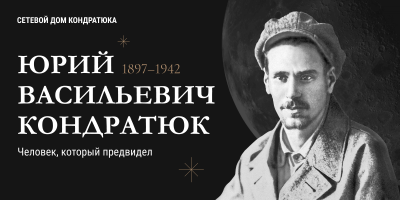
Сайт посвященный Юрию Кондратюку.
A website dedicated to Yuri Kondratyuk.
Un sitio web dedicado a Yuri Kondratyuk.

Юрий Васильевич Кондратюк

Сайт посвящён Юрию Васильевичу Кондратюку - пионеру космонавтики
kondratjuk.m-nsk.ru kondratjuk.m-nsk.ru
Kondratjuk j w text 1929 zavoevanie image003
 
Frimen1917

Frimen1917

Mecca V.I.P.
VIP
Joined
Jan 9, 2026
Messages
3,161
Points
63
"Идет время, и мы становимся свидетелями все более грандиозных успехов той новой области техники, без которой теперь уже немыслимо представить себе нашу жизнь. Эта область — космонавтика. С нею связаны такие достижения в изучении и покорении мира вне Земли, о каких еще недавно нельзя было и мечтать.

Родилась космонавтика задолго до того, как взлетел в небо первый, советский искусственный спутник, она родилась почти одновременно с авиацией, на рубеже двух веков — прошлого и нынешнего. Ее историю, ее первые шаги можно проследить, перелистав страницы многих книг, сохранивших для нас память о тех днях, когда закладывался теоретический фундамент ракетно-космической техники и начиналась работа по претворению на практике идей пионеров космонавтики — Циолковского, Цандера, Кондратюка и других. Книги рассказывают нам о мечтах и чаяниях этих энтузиастов, которые сумели, говоря словами Циолковского, зажечь неугасимый огонь, предугадали будущее, наметили путь освоения человеком космоса.

У них были предшественники. Н. И. Кибальчич разработал еще в 1881 г. проект первого в мире ракетного летательного аппарата. К сожалению, люди узнали об этом проекте лишь спустя 37 лет... А. П. Федоров выпустил в 1896 г. небольшую книжечку — «Новый способ воздухоплавания, исключающий атмосферу как опорную среду».

Циолковский выписал книгу Федорова и, поскольку расчетов в ней никаких не было дано, принялся за вычисления самостоятельно. «Вот начало моих теоретических изысканий о возможности применения реактивных приборов к космическим путешествиям», — вспоминал он. Эта книжка «толкнула меня к серьезным работам, как упавшее яблоко к открытию Ньютоном тяготения...»

В 1897 г. И. В. Мещерский выпустил труд «Динамика точки переменной массы».

В 1903 г. Константин Эдуардович опубликовал классическое «Исследование мировых пространств реактивными приборами», ставшее краеугольным камнем космонавтики.

Впоследствии появилась ракетодинамика, теория реактивного движения, огромный вклад в развитие которой продолжал и далее вносить Циолковский.

Трудно переоценить роль целой плеяды русских и иностранных ученых и инженеров, взявшихся еще в 20-е и 30-е гг. за реализацию едва ли не самой смелой программы, которая когда-либо выдвигалась человеком, — программы изучения и освоения космического пространства и соседних небесных тел.

Вспоминая сейчас о книгах и статьях, принадлежащих перу основоположников космонавтики и ставших уже библиографической редкостью, мы тем самым отдаем должное уму, энергии и страстному увлечению тех, кто готовил удивительные победы человеческого разума над силами природы". (Б. Ляпунов. "Люди, ракеты, книги").
............................................................................
Цит.по:Ляпунов Борис Валерьянович
ЛЮДИ, РАКЕТЫ, КНИГИ
Редактор И. В. Кириенко
Художественный редактор В. В. Рождественский
Технический редактор А. М. Панченко
Корректор Н. И. Балакирева
Издательство «Книга»/Москва /1972 год

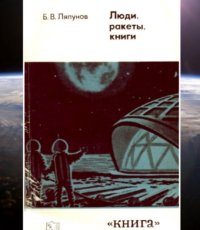
На фотографии обложка книги "Люди, ракеты, книги".
Time passes, and we are witnessing ever more magnificent achievements in that new field of technology without which it is now impossible to imagine our lives. That field is astronautics. It is connected with such accomplishments in the exploration and conquest of the world beyond Earth that until recently one could hardly even dream of them.


Astronautics was born long before the first Soviet artificial satellite rose into the sky. It was born almost simultaneously with aviation, at the turn of the nineteenth and twentieth centuries. Its history, its first steps, can be traced by turning the pages of many books that have preserved for us the memory of those days when the theoretical foundations of rocket and space technology were being laid and when work began on putting into practice the ideas of the pioneers of astronautics—Tsiolkovsky, Zander, Kondratyuk, and others. These books tell us about the dreams and aspirations of those enthusiasts who, in Tsiolkovsky’s words, managed to kindle an inextinguishable flame, foresaw the future, and charted humanity’s path into space.

They had predecessors. Nikolai I. Kibalchich developed the world’s first design for a rocket-powered flying vehicle as early as 1881. Unfortunately, people learned about this project only 37 years later. A. P. Fyodorov published a small booklet in 1896 entitled A New Method of Aeronautics Independent of the Atmosphere as a Supporting Medium.

Tsiolkovsky obtained Fyodorov’s book and, finding that it contained no calculations, began working them out himself.

“This was the beginning of my theoretical investigations into the possibility of using reactive devices for space travel,” he later recalled. That booklet “pushed me toward serious work just as the falling apple led Newton to discover gravity.”

In 1897, I. V. Meshchersky published his work Dynamics of a Point of Variable Mass.

In 1903, Konstantin Eduardovich published the classic Exploration of Outer Space by Means of Reactive Devices, which became one of the cornerstones of astronautics.

Later came rocket dynamics—the theory of reactive motion—to whose development Tsiolkovsky continued to make an enormous contribution.

It is difficult to overestimate the role of the whole constellation of Russian and foreign scientists and engineers who, already in the 1920s and 1930s, undertook the realization of perhaps the boldest program ever proposed by humankind: the program of exploring and mastering outer space and neighboring celestial bodies.

By recalling today the books and articles written by the founders of astronautics—works that have now become bibliographic rarities—we pay tribute to the intellect, energy, and passionate dedication of those who prepared the astonishing victories of the human mind over the forces of nature.

(B. Lyapunov, People, Rockets, Books).
............................................................................
Source:
Boris Valeryanovich Lyapunov
PEOPLE, ROCKETS, BOOKS
Editor: I. V. Kiriyenko
Art Editor: V. V. Rozhdestvensky
Technical Editor: A. M. Panchenko
Proofreader: N. I. Balakireva
Book Publishing House
Moscow, 1972

The photograph shows the cover of the book People, Rockets, Books.
Pasa el tiempo y somos testigos de logros cada vez más grandiosos en ese nuevo campo de la tecnología sin el cual ya resulta imposible imaginar nuestra vida. Ese campo es la cosmonáutica. Está relacionado con avances en la exploración y conquista del mundo más allá de la Tierra que hasta hace poco parecían imposibles incluso de imaginar.


La cosmonáutica nació mucho antes de que el primer satélite artificial soviético se elevara al cielo. Nació casi al mismo tiempo que la aviación, en la transición entre los siglos XIX y XX. Su historia y sus primeros pasos pueden seguirse al pasar las páginas de numerosos libros que han conservado para nosotros el recuerdo de aquellos días en que se sentaban las bases teóricas de la tecnología espacial y de cohetes, y comenzaba el trabajo para llevar a la práctica las ideas de los pioneros de la cosmonáutica: Tsiolkovski, Zander, Kondratiuk y otros. Estos libros nos hablan de los sueños y aspiraciones de aquellos entusiastas que, utilizando las palabras de Tsiolkovski, lograron encender una llama inextinguible, prever el futuro y señalar el camino de la humanidad hacia el espacio.

Ellos tuvieron precursores. Nikolái I. Kibalchich elaboró en 1881 el primer proyecto del mundo de un vehículo volador impulsado por cohetes. Lamentablemente, la humanidad conoció este proyecto solamente 37 años después. En 1896, A. P. Fiódorov publicó un pequeño folleto titulado Un nuevo método de aeronavegación que no utiliza la atmósfera como medio de sustentación.

Tsiolkovski consiguió el libro de Fiódorov y, al comprobar que no contenía cálculos, comenzó a realizarlos por su cuenta.

“Aquí comenzó mi investigación teórica sobre la posibilidad de utilizar dispositivos reactivos para los viajes espaciales”, recordaría más tarde. Ese folleto “me impulsó hacia trabajos serios de la misma manera que la manzana que cayó impulsó a Newton al descubrimiento de la gravedad”.

En 1897, I. V. Meshcherski publicó su obra Dinámica de un punto de masa variable.

En 1903, Konstantín Eduardovich publicó su clásico La exploración de los espacios cósmicos mediante aparatos reactivos, que se convirtió en una de las piedras angulares de la cosmonáutica.

Posteriormente surgió la dinámica de cohetes, la teoría del movimiento reactivo, a cuyo desarrollo Tsiolkovski siguió aportando una contribución enorme.

Es difícil sobreestimar el papel de toda una generación de científicos e ingenieros rusos y extranjeros que ya en las décadas de 1920 y 1930 emprendieron la realización de quizás el programa más audaz jamás propuesto por la humanidad: el programa de exploración y conquista del espacio cósmico y de los cuerpos celestes vecinos.

Al recordar hoy los libros y artículos escritos por los fundadores de la cosmonáutica, que se han convertido ya en rarezas bibliográficas, rendimos homenaje a la inteligencia, la energía y la apasionada dedicación de quienes prepararon las asombrosas victorias de la mente humana sobre las fuerzas de la naturaleza.

(B. Liapunov, Personas, cohetes y libros).
............................................................................
Fuente:
Borís Valerianovich Liapunov
PERSONAS, COHETES Y LIBROS
Editor: I. V. Kiriyenko
Editor artístico: V. V. Rozhdéstvenski
Editor técnico: A. M. Panchenko
Correctora: N. I. Balakireva
Editorial Kniga
Moscú, 1972

La fotografía muestra la portada del libro Personas, cohetes y libros.

Rrrrrrrr
 
Frimen1917

Frimen1917

Mecca V.I.P.
VIP
Joined
Jan 9, 2026
Messages
3,161
Points
63
Бори́с Валериа́нович Ляпуно́в (1921 — 1972) — советский писатель-фантаст, публицист, сценарист, библиограф, журналист. Популяризатор ракетной техники, космонавтики, океанологии, химии и других наук. Неоднократно обращался к жанру научно-фантастического очерка. Один из первых советских историков и исследователей научной фантастики. Сценарист фильма «Дорога к звёздам» (1957, совместно с Василием Соловьёвым) и др.
Окончил Московский авиационный институт, работал в научной журналистике.
Автор научно-художественных книг о науке и технике, Ляпунов одним из первых в нашей стране обратил серьёзное внимание на научную фантастику, в которой выделял, в основном, популяризаторский момент. Ещё в 1946 г. он составил капитальный аннотированный библиографический указатель «Научная фантастика», охватывающий русскую и мировую литературу с конца XIX века по 1945 г. (расширенный и переработанный вариант датирован 1958 годом), однако эта уникальная работа так и не была издана. Ляпунову принадлежат и первые в СССР библиографические и критические исследования русской дореволюционной и советской довоенной фантастики. Главным итогом библиографической деятельности Ляпунова стал историко-критический обзор «В мире мечты» (1970; испр. и доп. 1975 — «В мире фантастики»), в компактном виде знакомящий с историей развития фантастики в русской и советской литературе с дореволюционных лет до начала 1970-х гг., дана характеристика нескольких сотен произведений; составной частью книги является обстоятельная библиография изданий фантастики 1950-1970-х гг. Благодаря активной деятельности Ляпунова, в послевоенные годы было фактически возвращено из небытия имя Александря Беляева, которому посвящён критико-биографический очерк «Александр Беляев» (1967), а также многочисленные статьи в антологиях и периодике. При деятельном участии Ляпунова были подготовлены и выпущены первые собрания сочинений писателя.В 1955—1957 годах работал над сценарием научно-фантастического фильма «Дорога к звёздам» (1957, режиссёр Павел Клушанцев), названного по заключительной части его книги «Открытие мира» (1954). Позднее были написаны сценарии и для ряда научно-популярных фильмов.

Boris Valerianovich Lyapunov (1921–1972) was a Soviet science-fiction writer, publicist, screenwriter, bibliographer, and journalist. He was a popularizer of rocket technology, cosmonautics, oceanography, chemistry, and other sciences. He frequently turned to the genre of the scientific-fantastic essay and became one of the first Soviet historians and researchers of science fiction. He was a co-author of the screenplay for the film Road to the Stars (1957), together with Vasily Solovyov, among other works.


He graduated from the Moscow Aviation Institute and worked in science journalism.

As the author of science-oriented literary works about science and technology, Lyapunov was among the first in the Soviet Union to pay serious attention to science fiction, in which he primarily valued its educational and popularizing role. As early as 1946, he compiled the major annotated bibliographic index Science Fiction, covering Russian and world literature from the late nineteenth century through 1945. A revised and expanded version was completed in 1958, but this unique work was never published. Lyapunov also produced some of the first Soviet bibliographical and critical studies devoted to pre-revolutionary Russian and Soviet pre-war science fiction.

The principal result of his bibliographical work was the historical and critical survey In the World of Dreams (1970), revised and expanded in 1975 as In the World of Science Fiction. In a compact form, it introduced readers to the development of science fiction in Russian and Soviet literature from pre-revolutionary times through the early 1970s and provided descriptions of several hundred works. An important part of the book was an extensive bibliography of science-fiction publications from the 1950s through the 1970s.

Thanks to Lyapunov’s active efforts, the name of Alexander Belyaev was effectively restored to public memory in the post-war years. Lyapunov devoted to him the critical-biographical essay Alexander Belyaev (1967), as well as numerous articles in anthologies and periodicals. With Lyapunov’s direct participation, the first collected editions of Belyaev’s works were prepared and published.

Between 1955 and 1957, Lyapunov worked on the screenplay of the science-fiction film Road to the Stars (1957), directed by Pavel Klushantsev. The film was named after the final section of Lyapunov’s book The Discovery of the World (1954). Later, he wrote screenplays for a number of popular-science films as well.
Borís Valeriánovich Liapunov (1921–1972) fue un escritor soviético de ciencia ficción, publicista, guionista, bibliógrafo y periodista. Fue un destacado divulgador de la tecnología de cohetes, la cosmonáutica, la oceanografía, la química y otras ciencias. Recurrió con frecuencia al género del ensayo científico-fantástico y fue uno de los primeros historiadores e investigadores soviéticos de la ciencia ficción. Fue coautor del guion de la película Camino a las estrellas (1957), junto con Vasili Soloviov, entre otras obras.


Se graduó en el Instituto de Aviación de Moscú y trabajó en el periodismo científico.

Como autor de libros científico-literarios sobre ciencia y tecnología, Liapunov fue uno de los primeros en la Unión Soviética en prestar una atención seria a la ciencia ficción, valorando principalmente su función divulgativa y educativa. Ya en 1946 compiló el importante índice bibliográfico anotado Ciencia ficción, que abarcaba la literatura rusa y mundial desde finales del siglo XIX hasta 1945. Una versión ampliada y revisada fue completada en 1958, pero esta obra única nunca llegó a publicarse. Liapunov también realizó algunos de los primeros estudios bibliográficos y críticos soviéticos sobre la ciencia ficción rusa prerrevolucionaria y la ciencia ficción soviética de antes de la guerra.

El resultado principal de su labor bibliográfica fue el estudio histórico-crítico En el mundo de los sueños (1970), revisado y ampliado en 1975 bajo el título En el mundo de la ciencia ficción. De forma concisa, esta obra presentaba la evolución de la ciencia ficción en la literatura rusa y soviética desde los tiempos prerrevolucionarios hasta comienzos de la década de 1970, e incluía comentarios sobre varios cientos de obras. Una parte importante del libro era una amplia bibliografía de publicaciones de ciencia ficción de las décadas de 1950 a 1970.

Gracias a la activa labor de Liapunov, el nombre de Aleksandr Beliáev fue prácticamente rescatado del olvido en los años de posguerra. Liapunov le dedicó el ensayo crítico-biográfico Aleksandr Beliáev (1967), así como numerosos artículos en antologías y publicaciones periódicas. Con su participación directa se prepararon y publicaron las primeras ediciones completas de las obras de Beliáev.

Entre 1955 y 1957 trabajó en el guion de la película de ciencia ficción Camino a las estrellas (1957), dirigida por Pavel Klushántsev. La película tomó su nombre de la parte final del libro de Liapunov El descubrimiento del mundo (1954). Más tarde escribió guiones para varias películas de divulgación científica.
Lyapunov Boris
 
Top