• Legal Notice – MuscleMecca Forums

    MuscleMecca.com is an educational discussion platform. We do not sell, promote, or endorse any bodybuilding gear, supplements, research chemicals, or performance-enhancing substances.

    All discussions are for educational and informational purposes only. Nothing posted on this forum should be considered medical or legal advice.

    Do not attempt to sell, source, or promote illegal substances. Any such activity will result in an immediate and permanent ban and may be reported to the proper authorities.

    By using this site, you agree to comply with all forum rules, disclaimers, and applicable laws in your jurisdiction.

    Read Our Full Disclaimer and Forum Rules

History of Soviet cosmonautics.

Frimen1917

Frimen1917

Mecca V.I.P.
VIP
Joined
Jan 9, 2026
Messages
3,326
Points
63
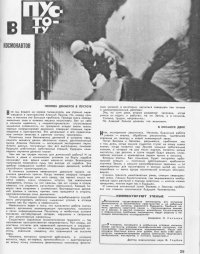
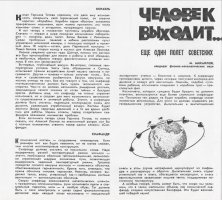
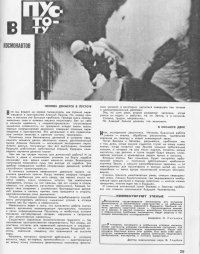
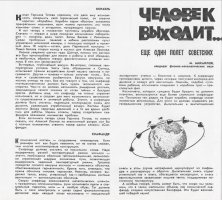
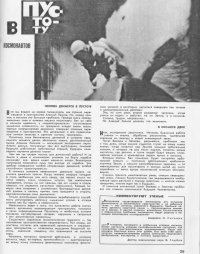
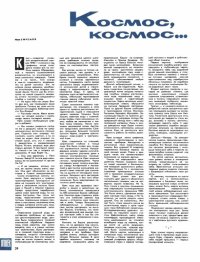
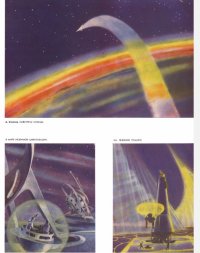
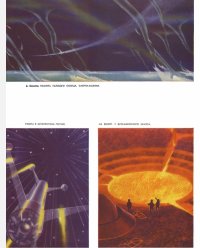
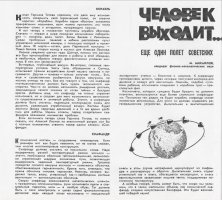
Советский журнал "Техника-молодежи".№4; 1965; cтраницы 28-29;
Текст страницы журнала:

ЧЕЛОВЕК ВЫХОДИТ В ПУСТОТУ

ЕЩЁ ОДИН ПОЛЁТ СОВЕТСКИХ КОСМОНАВТОВ
Автор: М. МИХАЙЛОВ (кандидат физико-математических наук)
КОРАБЛЬ
Когда Германа Титова спросили, что дало ему возможность совершить свой героический полёт, он ответил коротко: «Корабль». Корабли серии «Восток» оказались прекрасными машинами, если можно применять это чисто «земное» слово к аппаратам, покоряющим космос.

И вот теперь в «плавание» пустились корабли «Восход». Сначала — первая в мире походная космическая лаборатория — инженер, врач, пилот. Затем Беляев с Леоновым. Среди приборных панелей в кабине расположен пульт управления шлюзовой камеры, с помощью которой в памятный день 18 марта — кстати, день Парижской коммуны — Павел Беляев открыл выход в космос для Алексея Леонова.
Леонов уверенно шагнул туда. Шагнул, потому что костюм его был приспособлен для жизни и работы в этой «бездне», в необычных, образно говоря, фантастических условиях космоса. В чём они заключаются?
Во-первых, глубочайший вакуум. Во-вторых, сложные температурные условия. Часть тела, обращенная к Солнцу, испытывает прямое воздействие лучей нашего светила и нагревается. Другая — теневая — только излучает тепло… Есть ещё и существенные особенности. Вакуум вакуумом, но космос отнюдь не пуст. Все это говорит о том, что скафандр «путешественников» должен быть чудом технического мастерства. Чем-то он должен напоминать рыцарские доспехи, защищающие своего хозяина от сотен тайных и быстрых врагов. Добавим ещё, что скафандр не только охраняет космонавта, но и создаёт для него возможность автономного существования и активной работы. Значит, в скафандре должны быть системы, подающие кислородную смесь для дыхания, удаляющие отработанный воздух. Костюм будет жёстким (ввиду перепада давлений) и в то же время удобным для работы. Одним словом, перед создателями скафандров возникало множество проблем.
Если вспомнить теперь слова Германа Титова, то можно сказать, что Алексей Леонов на аналогичный вопрос мог бы с полным основанием ответить также одним словом: «Скафандр».
СКАФАНДР
Космический костюм — сооружение инженерное. Хотя размеры его как будто невелики, он не менее сложен, чем многие многометровые конструкции.
Скафандр должен состоять из нескольких слоёв. Надо выдерживать резкий температурный режим космоса — значит, необходима оболочка теплоизоляционная, великолепно отражающая щедрые солнечные лучи, позволяющая выдерживать заданный температурный режим. Грозное соседство полного вакуума космоса — появляется оболочка, обеспечивающая герметичность. Кроме того, очевидно, что нужна оболочка силовая, каркасная. Наконец человек выделяет тепло, влагу, углекислый газ — необходима система вентиляции — вентиляционная оболочка.
Сверху скафандр заканчивается металлическим шлемом с прозрачным иллюминатором, руки космонавта одеты в специальные перчатки, ноги — в особую обувь. Тут должна быть и своя электросеть и целая серия физиологических датчиков: ведь каждый полёт космонавта — неоценимый эксперимент учёных — биологов и медиков. К скафандру присоединены шланги, через которые поступают кислород для дыхания и воздух для вентиляции. Наконец, подобно пуповине ребёнка, космонавта соединяет с кораблём трос — пресловутый фал.
Космонавты, которым суждено будет бродить по далёким планетам, воспользуются ещё более сложными скафандрами. Поскольку там рядом не будет корабля, скафандр станет полностью автономным. Для этого он должен содержать регенерационное устройство. Дыхательная и вентиляционная смеси в этом случае непрерывно циркулируют из скафандра к регенератору и обратно. Дыхательная смесь отдаёт углекислый газ и влагу, обогащается кислородом, а смесь вентиляционная захватывает лишнее тепло, поддерживая постоянную температуру.

А вообще говоря, очень может быть, что скоро мы услышим, что в таком маленьком объёме, как космический скафандр, создана искусственная биосфера. Это будет величайшей победой науки!
ЧЕЛОВЕК ДВИЖЕТСЯ В ПУСТОТЕ


Все мы видели на экране телевизоров, как странно перемещался в пространстве Алексей Леонов. Но, между прочим, в космосе это большая проблема. Прежде всего скажем несколько слов в похвалу нашему космонавту. Вёл он себя в космосе идеально, у «первооткрывателя» отсутствовала мышечная скованность, он прекрасно владел своим телом, хорошо координировал движения, совершал сложные перемещения в пространстве. Это доказывает и его превосходные личные качества и удачную систему тренировки.

Поскольку сама биомеханика движений в условиях невесомости является делом абсолютно новым, десятиминутный выход Алексея Леонова — волнующий эксперимент науки. Анализ данных, полученных при его выполнении, поможет будущим работникам орбитальных станций, будущим «пионерам» изучения далёких планет.

Чем же так труден космос для длительной работы? И на Земле и даже в космических условиях на борту корабля космонавт всё время имеет какую-то опору. Безопорное положение появляется лишь при выходе из корабля. Это требует совершенно особой координации движений, особой способности ориентироваться.

В сложных условиях невесомости довольно трудно научиться двигаться просто. Когда человек впервые попадает в столь необычную для него среду, где теряют смысл понятия «верх», «низ», «подъём», «спуск», где невозможно определить, стоишь ты или лежишь, где нет нужды в опоре, кажется, что управлять мускулами невозможно. Каждый поворот тела сопряжён с множеством беспорядочных движений руками и ногами, причём тело вращается в сторону, противоположную этим движениям.

Только длительными тренировками вырабатывается способность регулировать величину мышечных усилий, а отсюда умение как бы парить в невесомости.

Невесомость ведёт к тому, что изменяется работа систем живого организма, анализирующих пространство, меняются и связи информационные. Поскольку в необычных условиях поставлен вестибулярный аппарат, нарушены и связанные с ним регуляторные механизмы.

Существуют серьёзные психологические трудности — так называемая пространственная напряжённость. Нет опоры, нет «системы отсчёта» для правильной ориентации в окружающем пространстве — появляется ощущение бездонной пустоты, знакомое каждому, кто поднимался на высокие горы.

Человеку, которому предстоит действовать в условиях космоса, надо, во-первых, приспособиться — адаптироваться ко всему этому сложному физическому комплексу физических условий, а во-вторых, научиться совершать там точные и целеустремлённые действия.

Это, по сути дела, второе рождение человека, когда учится он ходить и работать не на Земле, а в космосе. Сложно, трудно, непривычно...

Но Алексей Леонов доказал, что возможно.

В КОСМОСЕ ДВОЕ

Итак, эксперимент закончился. Началась будничная работа учёных — анализ, обработка результатов, тщательное освоение их, выводы и новый инженерный заказ.

Полёт Беляева и Леонова, разумеется, приблизил нас к тем дням, когда земное существо ступит на почву чужих планет, когда появятся над Землёй мощные орбитальные станции, о которых не раз писал журнал, появятся целые институты, где десятки и сотни людей будут решать сложнейшие научные и инженерные задачи прямо в космосе.

Ближайшим этапом, без сомнения, будет постройка орбитальной станции — постоянно действующего «рабочего» спутника Земли, с самыми разнообразными задачами — от навигационных для космических и земных целей до чисто подсобных — нечто вроде космической «станции обслуживания».

Станции транзита межпланетных ракет, станции сверхдальней связи, станции биологические, где выращиваются необычайные сорта растений и породы животных, — многое можно придумать, многое ждёт нас в будущем.

И поистине эпохальный полёт Беляева и Леонова приблизил это славное космическое будущее Человечества.

КОММЕНТИРУЮТ УЧЁНЫЕ

«Автономное существование космонавта, его активная деятельность в космическом пространстве и на небесных телах — вот аспекты недалёкого будущего. Пробный камень зрелости советской науки — проникновение человека в космос. С другой стороны, важнейшие биологические и медицинские проблемы, несомненно, будут решены с помощью космических исследований».

Академик Н. Сисакян

«...У человека, попавшего в необычные условия космоса, может наступить сложное психофизическое состояние, так называемая пространственная напряжённость. Наши космонавты блестяще взяли этот рубеж. Они вели себя великолепно, продемонстрировав редкое сочетание творческого воображения, мастерства и личного мужества!..»

Доктор медицинских наук Ф. Горбов
 viber 2026 11 04 20 02 08 313  viber 2026 11 04 20 02 17 143
 
Frimen1917

Frimen1917

Mecca V.I.P.
VIP
Joined
Jan 9, 2026
Messages
3,326
Points
63
Soviet magazine "Tekhnika-Molodezhi" ("Technology for Youth"), No. 4, 1965, pages 28–29;
Text from the magazine page:

MAN STEPS INTO THE VOID
ANOTHER FLIGHT OF SOVIET COSMONAUTS
M. MIKHAILOV
Candidate of Physical and Mathematical Sciences
THE SHIP
When German Titov was asked what had enabled him to accomplish his heroic flight, he answered briefly: “The ship.” The spacecraft of the Vostok series proved to be excellent machines, if one may apply this purely “earthly” word to vehicles that conquer space.
And now the Voskhod ships have set out on their “voyage.” First came the world’s first mobile space laboratory — an engineer, a physician, and a pilot. Then Belyayev with Leonov. Among the instrument panels in the cabin is the control console of the airlock chamber, with the help of which, on the memorable day of 18 March — coincidentally the day of the Paris Commune — Pavel Belyayev opened the way into space for Alexei Leonov.
Leonov stepped out confidently. He stepped out because his suit was designed for life and work in this “bottomless,” in unusual, figuratively speaking, fantastic conditions of space. What are these conditions?
First, the deepest vacuum. Second, complex temperature conditions. The part of the body facing the Sun experiences the direct action of the rays of our star and heats up. The other — the shadowed side — only radiates heat… There are also other essential peculiarities. Vacuum is vacuum, yet space is by no means empty. All this means that the spacesuit of the “travellers” must be a marvel of engineering skill. In some way it must resemble knightly armour, protecting its wearer from hundreds of hidden and swift enemies. Let us add that the spacesuit not only protects the cosmonaut but also creates for him the possibility of autonomous existence and active work. This means that the suit must contain systems that supply an oxygen mixture for breathing and remove the exhaled air. The suit will be rigid (because of the pressure differential) and at the same time convenient for work. In a word, the creators of spacesuits faced a great many problems.
If we now recall the words of German Titov, we may say that Alexei Leonov could, with full justification, answer a similar question with a single word as well: “The spacesuit.”
THE SPACESUIT
A space suit is an engineering structure. Although its dimensions appear small, it is no less complex than many multi-metre constructions.
The spacesuit must consist of several layers. It has to withstand the sharp temperature regime of space — therefore a heat-insulating shell is needed, one that superbly reflects the generous rays of the Sun and makes it possible to maintain the required temperature regime. The formidable proximity of the complete vacuum of space calls for a shell that ensures airtightness. In addition, it is obvious that a load-bearing, structural shell is required. Finally, a human being gives off heat, moisture and carbon dioxide — a ventilation system is needed, a ventilating shell.
At the top the spacesuit ends in a metal helmet with a transparent visor; the cosmonaut’s hands are covered by special gloves, the feet by special footwear. There must also be its own electrical network and a whole series of physiological sensors: every flight of a cosmonaut is an invaluable experiment for scientists — biologists and physicians. Hoses are attached to the spacesuit through which oxygen for breathing and air for ventilation are supplied. Finally, like the umbilical cord of a child, a tether — the notorious “umbilical” — connects the cosmonaut to the spacecraft.
Cosmonauts who are destined to walk on distant planets will use still more complex spacesuits. Since there will be no ship nearby, the suit will become fully autonomous. For this it must contain a regenerative device. In this case the breathing and ventilating mixtures circulate continuously from the suit to the regenerator and back. The breathing mixture gives up carbon dioxide and moisture and is enriched with oxygen, while the ventilating mixture removes excess heat, maintaining a constant temperature.
And, generally speaking, it is quite possible that before long we shall hear that in such a small volume as a space suit an artificial biosphere has been created. That will be a supreme victory of science!
MAN MOVES IN THE VOID

We have all seen on television screens how strangely Alexei Leonov moved in space. But, by the way, in space this is a major problem. First of all, let us say a few words in praise of our cosmonaut. He conducted himself in space ideally; the “pioneer” showed no muscular stiffness, he controlled his body perfectly, coordinated his movements well, and performed complex displacements in space. This proves both his outstanding personal qualities and the successful system of training.

Since the biomechanics of movement under conditions of weightlessness is an entirely new matter, Alexei Leonov’s ten-minute spacewalk is an exciting scientific experiment. Analysis of the data obtained during its performance will help future workers on orbital stations and future “pioneers” in the study of distant planets.

Why is space so difficult for prolonged work? Both on Earth and even under space conditions on board a spacecraft the cosmonaut always has some kind of support. The unsupported position appears only when he leaves the ship. This requires a completely special coordination of movements and a special ability to orient oneself.

Under the complex conditions of weightlessness it is rather difficult to learn to move simply. When a person first finds himself in an environment so unusual for him, where the concepts of “up,” “down,” “ascent,” and “descent” lose their meaning, where it is impossible to determine whether one is standing or lying, where there is no need for support, it seems that it is impossible to control the muscles. Every turn of the body is accompanied by a multitude of disorderly movements of the arms and legs, and the body rotates in the direction opposite to these movements.

Only through prolonged training is the ability developed to regulate the magnitude of muscular efforts, and from this comes the skill of, as it were, floating in weightlessness.

Weightlessness leads to changes in the work of the systems of the living organism that analyse space; informational connections also change. Since the vestibular apparatus is placed under unusual conditions, the regulatory mechanisms connected with it are also disrupted.

There are serious psychological difficulties — the so-called spatial tension. There is no support, no “frame of reference” for correct orientation in the surrounding space — a sensation of bottomless emptiness appears, familiar to everyone who has climbed high mountains.

A person who is to act under space conditions must, first, adapt — adjust himself to this entire complex physical set of physical conditions, and, second, learn to perform precise and purposeful actions there.

This is, in essence, a second birth of man, when he learns to walk and work not on Earth but in space. It is complicated, difficult, unaccustomed…

But Alexei Leonov proved that it is possible.

TWO IN SPACE

So the experiment is over. The everyday work of the scientists has begun — analysis, processing of the results, careful assimilation of them, conclusions, and a new engineering assignment.

The flight of Belyayev and Leonov has, of course, brought us closer to those days when an earthly being will step onto the soil of alien planets, when powerful orbital stations will appear above the Earth, about which the magazine has written more than once, when entire institutes will appear where dozens and hundreds of people will solve the most complex scientific and engineering problems right in space.

The nearest stage, without doubt, will be the construction of an orbital station — a permanently operating “working” satellite of the Earth, with the most varied tasks — from navigational ones for space and terrestrial purposes to purely auxiliary ones — something in the nature of a space “service station.”

Stations for the transit of interplanetary rockets, stations of ultra-long-range communications, biological stations where extraordinary varieties of plants and breeds of animals are grown — much can be imagined, much awaits us in the future.

And truly the epoch-making flight of Belyayev and Leonov has brought closer this glorious cosmic future of Mankind.

SCIENTISTS COMMENT

“The autonomous existence of a cosmonaut, his active activity in outer space and on celestial bodies — these are aspects of the not-too-distant future. The touchstone of the maturity of Soviet science is the penetration of man into space. On the other hand, the most important biological and medical problems will undoubtedly be solved with the help of space research.”

Academician N. Sisakyan

“…When a person finds himself in the unusual conditions of space, a complex psychophysical state may set in, the so-called spatial tension. Our cosmonauts brilliantly took this barrier. They conducted themselves magnificently, demonstrating a rare combination of creative imagination, skill, and personal courage!..”


Doctor of Medical Sciences F. Gorbov
 viber 2026 11 04 20 02 08 313  viber 2026 11 04 20 02 17 143
 
Frimen1917

Frimen1917

Mecca V.I.P.
VIP
Joined
Jan 9, 2026
Messages
3,326
Points
63
Revista soviética «Tecnología para la Juventud». N.° 4; 1965; páginas 28-29;
Texto de la página de la revista:
EL HOMBRE SALE AL VACÍO

OTRO VUELO DE LOS COSMONAUTAS SOVIÉTICOS
M. MIJÁILOV
Candidato a las ciencias físico-matemáticas
LA NAVE
Cuando le preguntaron a Guermán Títov qué le había permitido realizar su heroico vuelo, respondió brevemente: «La nave». Las naves de la serie Vostok resultaron ser excelentes máquinas, si es que se puede aplicar esta palabra puramente «terrestre» a los aparatos que conquistan el cosmos.
Y ahora las naves Voskhod se han lanzado a su «navegación». Primero fue el primer laboratorio espacial móvil del mundo: un ingeniero, un médico y un piloto. Después, Beliáyev con Leónov. Entre los paneles de instrumentos de la cabina se encuentra la consola de control de la cámara de esclusa, con cuya ayuda, en el memorable día 18 de marzo —casualmente el día de la Comuna de París—, Pável Beliáyev abrió la salida al espacio para Alekséi Leónov.
Leónov dio el paso con seguridad. Dio el paso porque su traje estaba adaptado para la vida y el trabajo en estas condiciones «sin fondo», en las inusuales, por decirlo de forma figurada, fantásticas condiciones del cosmos. ¿En qué consisten estas?
En primer lugar, el vacío más profundo. En segundo lugar, las complejas condiciones de temperatura. La parte del cuerpo orientada hacia el Sol experimenta la acción directa de los rayos de nuestra estrella y se calienta. La otra —la que está en sombra— solo irradia calor… Hay también otras particularidades esenciales. El vacío es el vacío, pero el cosmos no está en absoluto vacío. Todo esto indica que el traje espacial de los «viajeros» debe ser una maravilla de la ingeniería. En cierto modo debe recordar a la armadura de un caballero, que protege a su dueño de cientos de enemigos ocultos y rápidos. Añadamos además que el traje espacial no solo protege al cosmonauta, sino que también le crea la posibilidad de una existencia autónoma y de un trabajo activo. Esto significa que el traje debe contener sistemas que suministren la mezcla de oxígeno para respirar y eliminen el aire exhalado. El traje será rígido (debido a la diferencia de presiones) y al mismo tiempo cómodo para trabajar. En una palabra, los creadores de los trajes espaciales se enfrentaron a multitud de problemas.
Si recordamos ahora las palabras de Guermán Títov, podemos decir que Alekséi Leónov podría, con pleno fundamento, responder a una pregunta similar también con una sola palabra: «El traje espacial».
EL TRAJE ESPACIAL
El traje espacial es una construcción de ingeniería. Aunque sus dimensiones parezcan pequeñas, no es menos complejo que muchas construcciones de varios metros.
El traje espacial debe constar de varias capas. Hay que soportar el régimen térmico extremo del cosmos; por tanto, se necesita una envoltura de aislamiento térmico que refleje magníficamente los generosos rayos del Sol y permita mantener el régimen de temperatura establecido. La formidable proximidad del vacío total del cosmos exige una envoltura que garantice la hermeticidad. Además, es evidente que se necesita una envoltura estructural, de armazón. Por último, el ser humano desprende calor, humedad y dióxido de carbono: se necesita un sistema de ventilación, una envoltura de ventilación.
Por arriba el traje espacial termina en un casco metálico con una visera transparente; las manos del cosmonauta van cubiertas con guantes especiales y los pies con calzado especial. También debe haber su propia red eléctrica y toda una serie de sensores fisiológicos: cada vuelo de un cosmonauta es un experimento invaluable para los científicos —biólogos y médicos—. Al traje van unidos unos tubos a través de los cuales llegan el oxígeno para respirar y el aire para la ventilación. Por último, como el cordón umbilical de un niño, un cable —el famoso «cordón»— une al cosmonauta con la nave.
Los cosmonautas a quienes les esté destinado caminar por planetas lejanos utilizarán trajes espaciales aún más complejos. Como allí no habrá una nave cerca, el traje se convertirá en completamente autónomo. Para ello debe contener un dispositivo de regeneración. En este caso las mezclas respiratoria y de ventilación circulan continuamente del traje al regenerador y viceversa. La mezcla respiratoria cede el dióxido de carbono y la humedad y se enriquece con oxígeno, mientras que la mezcla de ventilación captura el calor sobrante, manteniendo una temperatura constante.

Y, en general, es muy posible que pronto oigamos que en un volumen tan pequeño como un traje espacial se ha creado una biosfera artificial. ¡Eso será una grandísima victoria de la ciencia!
EL HOMBRE SE MUEVE EN EL VACÍO


Todos hemos visto en las pantallas de televisión cómo se desplazaba de forma extraña en el espacio Alekséi Leónov. Pero, entre otras cosas, en el cosmos esto es un gran problema. En primer lugar, digamos unas palabras de elogio a nuestro cosmonauta. Se comportó en el espacio de manera ideal; el «pionero» no mostró ninguna rigidez muscular, controlaba perfectamente su cuerpo, coordinaba bien los movimientos y realizaba desplazamientos complejos en el espacio. Esto demuestra tanto sus excelentes cualidades personales como el acertado sistema de entrenamiento.

Dado que la biomecánica de los movimientos en condiciones de ingravidez es un asunto completamente nuevo, la salida de diez minutos de Alekséi Leónov es un emocionante experimento de la ciencia. El análisis de los datos obtenidos durante su realización ayudará a los futuros trabajadores de las estaciones orbitales y a los futuros «pioneros» del estudio de planetas lejanos.

¿Por qué es tan difícil el cosmos para el trabajo prolongado? Tanto en la Tierra como incluso en condiciones espaciales a bordo de la nave, el cosmonauta tiene siempre algún tipo de apoyo. La posición sin apoyo aparece solo al salir de la nave. Esto exige una coordinación de movimientos completamente especial y una especial capacidad de orientarse.

En las complejas condiciones de la ingravidez es bastante difícil aprender a moverse simplemente. Cuando una persona se encuentra por primera vez en un medio tan inusual para ella, donde pierden sentido los conceptos de «arriba», «abajo», «ascenso» y «descenso», donde es imposible determinar si se está de pie o tumbado, donde no hay necesidad de apoyo, parece que es imposible controlar los músculos. Cada giro del cuerpo va acompañado de multitud de movimientos desordenados de brazos y piernas, y el cuerpo gira en dirección contraria a estos movimientos.

Solo con largos entrenamientos se desarrolla la capacidad de regular la magnitud de los esfuerzos musculares, y de ahí la habilidad de, por así decirlo, flotar en la ingravidez.

La ingravidez lleva a que cambie el funcionamiento de los sistemas del organismo vivo que analizan el espacio; también cambian las conexiones informativas. Como el aparato vestibular se encuentra en condiciones inusuales, también se alteran los mecanismos reguladores relacionados con él.

Existen serias dificultades psicológicas: la llamada tensión espacial. No hay apoyo, no hay un «sistema de referencia» para la correcta orientación en el espacio circundante: aparece la sensación de un vacío sin fondo, familiar a todo el que ha subido a altas montañas.

La persona que ha de actuar en condiciones del cosmos debe, en primer lugar, adaptarse a todo este complejo físico de condiciones físicas y, en segundo lugar, aprender a realizar allí acciones precisas y con un propósito.

Esto es, en esencia, un segundo nacimiento del hombre, cuando aprende a caminar y a trabajar no en la Tierra, sino en el cosmos. Es complicado, difícil, desacostumbrado...

Pero Alekséi Leónov demostró que es posible.

DOS EN EL COSMOS

Así pues, el experimento ha terminado. Ha comenzado el trabajo cotidiano de los científicos: el análisis, el procesamiento de los resultados, su cuidadosa asimilación, las conclusiones y un nuevo encargo de ingeniería.

El vuelo de Beliáyev y Leónov, por supuesto, nos ha acercado a aquellos días en que un ser terrestre pisará el suelo de planetas ajenos, cuando sobre la Tierra aparecerán potentes estaciones orbitales, de las que la revista ha escrito más de una vez, cuando aparecerán institutos enteros donde decenas y cientos de personas resolverán los problemas científicos e ingenieriles más complejos directamente en el cosmos.

La etapa más próxima, sin duda, será la construcción de una estación orbital: un satélite «de trabajo» de la Tierra de funcionamiento permanente, con las más diversas tareas: desde las de navegación para fines espaciales y terrestres hasta las puramente auxiliares, algo así como una «estación de servicio» cósmica.

Estaciones de tránsito de cohetes interplanetarios, estaciones de comunicaciones de ultralarga distancia, estaciones biológicas donde se cultiven variedades extraordinarias de plantas y razas de animales: se puede imaginar mucho, mucho nos espera en el futuro.

Y verdaderamente el vuelo epocal de Beliáyev y Leónov ha acercado este glorioso futuro cósmico de la Humanidad.

COMENTAN LOS CIENTÍFICOS

«La existencia autónoma del cosmonauta, su actividad activa en el espacio cósmico y en los cuerpos celestes: he aquí los aspectos de un futuro no lejano. La piedra de toque de la madurez de la ciencia soviética es la penetración del hombre en el cosmos. Por otra parte, los problemas biológicos y médicos más importantes serán resueltos, sin duda, con ayuda de las investigaciones espaciales».

Académico N. Sisakián

«...En una persona que se encuentra en las condiciones inusuales del cosmos puede sobrevenir un complejo estado psicofísico, la llamada tensión espacial. Nuestros cosmonautas superaron brillantemente esta barrera. Se comportaron de manera magnífica, demostrando una rara combinación de imaginación creativa, maestría y valor personal!..»

Doctor en Ciencias Médicas F. Górbov
 viber 2026 11 04 20 02 08 313  viber 2026 11 04 20 02 17 143
 
Frimen1917

Frimen1917

Mecca V.I.P.
VIP
Joined
Jan 9, 2026
Messages
3,326
Points
63
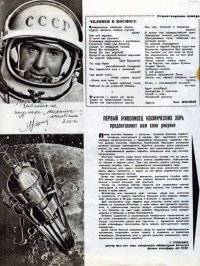
Журнал "Техника-молодежи" №10; 1965. На странице слева фото космонавта Алексея Леонова с автографом (Читателям журнала "Техника - молодежи" - Алексей Леонов) и одна из картин Алексея Леонова изображающая посадку советской ракеты на Луне. На странице справа рисунок космонавта Алексея Леонова который он нарисовал во время космического полета.
Текст на странице: Стихотворение номера:
ЧЕЛОВЕК В КОСМОСЕ (первая часть стихотворения посвящена К.Э.Циолковскому, вторая часть - космонавтам П.Беляеву и А.Леонову)

Бессменья казённая печать.
Сургуч запёкся, словно сгусток крови.
Нет сил терпеть.
И мочи нет молчать!
Созвездья подплывают к изголовью.
Галактика сияет над Калугой,
Седеет от раздумий голова.
Когда бы молодость,
Когда бы шаг упругий!
Когда б не царской власти жернова!
Он кашлял задыхаясь.
Тряс бородкой.
По саду брёл
расслабленной походкой.
Как справиться ему с чиновной кликой?
Где денег взять,
чтобы издать труды?
…Опять всю ночь
в своей светелке тихой
Работал он до утренней звезды…
***
Вселенная у наших ног легла,
Следя за траекторией полёта.
Земля так изумительно кругла,
Как мяч, летящий в звёздные ворота!
И выпал нам прекраснейший удел:
Преодолев земные расстоянья,
Прощупываем пульс небесных тел,
Скользя лучом
По кромке мирозданья!
Пылают в чёрной бездне струи газа.
Вселенная прекрасна без прикрас.
Так высоко мы всё ещё ни разу
Не поднимались, как на этот раз!
Летим сквозь тьму,
Летим сквозь ливень света.
А за бортом, как шарик бузины,
Плывёт Земля,
Любимая планета.
С ней рядом
Льдинка крошечной Луны.
Земля, мы, первых звёздных трасс
пилоты,
Опять с межзвёздной высотой
на «ты».
Бери мольберт!
Запечатлей в полотнах
Озноб и жар
Нетленной красоты.

Автор стихотворения: Олег ЗЕРНОВОЙ (город Одесса).
***
ПЕРВЫЙ ЖИВОПИСЕЦ КОСМИЧЕСКИХ ЗОРЬ

представляет нам свои рисунки
Перед вашими глазами — рисунки Алексея Леонова, первого человека, шагнувшего в космос. Вот зарисовка учёного, впервые встретившегося с неведомым, зарисовка, подобная тем, что делали Галилей, Левенгук, Ломоносов! Обращает внимание острота взгляда наблюдателя. Картина длилась всего несколько минут, но глаз космонавта заметил все характерные детали.
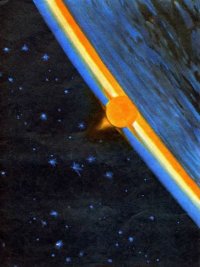
В изображаемый момент корабль находился ещё над ночным полушарием. Контуры земного шара были различимы, потому что он заслонял звёзды, а его поверхность слегка серебрилась, освещённая их светом и светом луны. Там, где должно взойти солнце, переливалось голубое небо — предвестник занимающейся зари.
Постепенно этот ореол становился всё ярче, красочнее, разливался вдоль горизонта, и вдруг на его фоне стремительно разгоралось пурпурное солнце.
Днём над вашей головой, землянин, раскинуто голубое небо. Это воздух отражает или, как говорят физики, рассеивает свет солнца — синий сильнее, чем красный.
Таким же голубым светом покрыто для космонавта земное полушарие. А свет зари меняет свою окраску тем сильнее, чем ближе к краю земли.
Вспомним, как меняется цвет солнца, когда оно клонится к горизонту. У самого горизонта толщина слоя воздуха возрастает примерно в 40 раз, солнце и бледнеет и краснеет.
Для космонавта этот эффект ещё сильнее, иные лучи почти совсем не проходят. Поэтому у края земли всё делается пурпуровым. С увеличением высоты воздух становится разреженным, и его влияние на свет зари слабеет. Пурпурные тона превращаются в белесые, а затем голубоватые.
Отметил художник и характерную полосатость космической зари (тени невидимых с земли высотных облаков) и световой ореол вокруг солнечного диска (его причины — засорение высотных слоёв атмосферы пылинками, быть может, метеоритного происхождения).
Даже такой беглый набросок, когда он сделан наблюдательным человеком, открывает много нового в строении и свойствах атмосферы. Понравился мне и другой рисунок космонавта, показывающий прилунение корабля.
Г. РОЗЕНБЕРГ,
доктор физ.-мат. наук, заведующий лабораторией Института физики атмосферы АН СССР
Magazine “Tekhnika — Molodyozhi” No. 10, 1965.

On the left-hand page: a photograph of cosmonaut Alexei Leonov with his autograph (“To the readers of the magazine Tekhnika — Molodyozhi — Alexei Leonov”) and one of Alexei Leonov’s paintings depicting the landing of a Soviet rocket on the Moon.
On the right-hand page: a drawing by cosmonaut Alexei Leonov that he made during the space flight.
Text on the page:
Poem of the issue:
MAN IN SPACE
(the first part of the poem is dedicated to K. E. Tsiolkovsky, the second part — to cosmonauts P. Belyayev and A. Leonov)
The official seal of timelessness.
The sealing wax has hardened like a clot of blood.
No strength left to endure.
And no strength left to keep silent!
Constellations float up to the head of the bed.
The galaxy shines over Kaluga,
The head turns grey from thinking.
If only there were youth,
If only there were a springy step!
If only it were not the millstones of tsarist power!
He coughed, choking.
He shook his little beard.
He wandered through the garden
with a relaxed gait.
How was he to cope with the clique of officials?
Where to get money
to publish his works?
…Again all night
in his quiet little room
He worked until the morning star…

The Universe has lain down at our feet,
Watching the trajectory of the flight.
The Earth is so amazingly round,
Like a ball flying into the stellar gates!
And the most beautiful lot has fallen to us:
Having overcome earthly distances,
We probe the pulse of the celestial bodies,
Sliding with a ray
Along the edge of the universe!
Jets of gas blaze in the black abyss.
The Universe is beautiful without embellishment.
Never before have we risen
So high as this time!
We fly through the darkness,
We fly through a downpour of light.
And overboard, like a little elderberry ball,
Floats the Earth,
The beloved planet.
Beside it
A tiny ice-floe of the Moon.
Earth, we, the pilots of the first stellar routes,
Are once again on first-name terms
with interstellar height.
Take the easel!
Capture in canvases
The chill and the heat
Of imperishable beauty.
Author of the poem: Oleg ZERNOVOY (city of Odessa).
THE FIRST PAINTER OF COSMIC DAWNS
presents his drawings to us
Before your eyes are the drawings of Alexei Leonov, the first man to step into space. Here is a sketch by a scientist who has encountered the unknown for the first time — a sketch similar to those made by Galileo, Leeuwenhoek and Lomonosov! One is struck by the keenness of the observer’s eye. The scene lasted only a few minutes, yet the cosmonaut’s eye noticed every characteristic detail.
At the moment depicted the spacecraft was still over the night hemisphere. The contours of the Earth’s globe were distinguishable because it obscured the stars, while its surface shimmered slightly, illuminated by their light and by the light of the Moon. Where the Sun was about to rise, a blue sky shimmered — the herald of the approaching dawn.
Gradually this halo grew brighter and more colourful, spreading along the horizon, and suddenly against its background a purple Sun flared up rapidly.
In the daytime, above your head, earthling, stretches a blue sky. This is the air reflecting or, as physicists say, scattering the light of the Sun — blue more strongly than red.
The same blue light covers the Earth’s hemisphere for the cosmonaut. And the light of the dawn changes its colouration the more strongly the closer one is to the edge of the Earth.
Let us recall how the colour of the Sun changes as it approaches the horizon. At the very horizon the thickness of the air layer increases roughly fortyfold; the Sun both pales and reddens.
For the cosmonaut this effect is even stronger; certain rays hardly pass at all. Therefore near the edge of the Earth everything turns purple. With increasing altitude the air becomes rarefied and its influence on the light of the dawn weakens. The purple tones turn whitish and then bluish.
The artist also noted the characteristic banding of the cosmic dawn (the shadows of high-altitude clouds invisible from Earth) and the luminous halo around the solar disc (its causes being the contamination of the upper layers of the atmosphere by dust particles, possibly of meteoritic origin).
Even such a hasty sketch, when made by an observant person, reveals much that is new about the structure and properties of the atmosphere. I also liked another of the cosmonaut’s drawings, showing the spacecraft approaching the Moon.
G. ROSENBERG,
Doctor of Physical and Mathematical Sciences,

Head of Laboratory, Institute of Atmospheric Physics of the USSR Academy of Sciences
Revista “Tekhnika — Molodyozhi” nº 10, 1965.

En la página izquierda: una fotografía del cosmonauta Alekséi Leónov con su autógrafo (“A los lectores de la revista Tekhnika — Molodyozhi — Alekséi Leónov”) y uno de los cuadros de Alekséi Leónov que representa el aterrizaje de un cohete soviético en la Luna.
En la página derecha: un dibujo del cosmonauta Alekséi Leónov que realizó durante el vuelo espacial.
Texto de la página:
Poema del número:
EL HOMBRE EN EL COSMOS
(la primera parte del poema está dedicada a K. E. Tsiolkovski, la segunda — a los cosmonautas P. Beliáyev y A. Leónov)
El sello oficial de la intemporalidad.
La cera lacrada se ha endurecido como un coágulo de sangre.
No quedan fuerzas para soportar.
¡Y no quedan fuerzas para callar!
Las constelaciones se acercan a la cabecera de la cama.
La galaxia brilla sobre Kaluga,
La cabeza se vuelve gris de tanto pensar.
¡Si hubiera juventud,
Si hubiera un paso elástico!
¡Si no fueran las muelas del poder zarista!
Tosía ahogándose.
Sacudía la barbilla.
Andaba por el jardín
con paso relajado.
¿Cómo enfrentarse a la camarilla de funcionarios?
¿Dónde conseguir dinero
para publicar sus obras?
…Otra vez toda la noche
en su silenciosa habitación
Trabajó hasta la estrella de la mañana…

El Universo se ha tendido a nuestros pies,
Siguiendo la trayectoria del vuelo.
La Tierra es tan asombrosamente redonda,
¡Como una pelota que vuela hacia las puertas estelares!
Y nos ha tocado el más hermoso destino:
Habiendo superado las distancias terrestres,
Palpamos el pulso de los cuerpos celestes,
Deslizándonos con un rayo
¡Por el borde del universo!
En el abismo negro arden chorros de gas.
El Universo es hermoso sin adornos.
Jamás nos habíamos elevado
¡Tan alto como esta vez!
Volamos a través de la oscuridad,
Volamos a través de un diluvio de luz.
Y fuera de bordo, como una bolita de saúco,
Flota la Tierra,
El planeta amado.
Junto a ella
Un pequeño témpano de la Luna.
Tierra, nosotros, los pilotos de las primeras rutas estelares,
Otra vez tutear
con la altura interestelar.
¡Toma el caballete!
Captura en los lienzos
El escalofrío y el calor
De la belleza imperecedera.
Autor del poema: Oleg ZERNOVOY (ciudad de Odesa).
EL PRIMER PINTOR DE LAS AURORAS CÓSMICAS
nos presenta sus dibujos
Ante sus ojos están los dibujos de Alekséi Leónov, el primer hombre que dio un paso en el cosmos. He aquí el boceto de un científico que se ha encontrado por primera vez con lo desconocido, un boceto similar a los que hicieron Galileo, Leeuwenhoek y Lomonósov. Llama la atención la agudeza de la mirada del observador. La escena duró solo unos minutos, pero el ojo del cosmonauta captó todos los detalles característicos.
En el momento representado la nave se encontraba aún sobre el hemisferio nocturno. Los contornos del globo terrestre eran distinguibles porque ocultaba las estrellas, mientras que su superficie brillaba ligeramente, iluminada por su luz y por la de la Luna. Allí donde debía salir el Sol, relucía un cielo azul: el precursor de la aurora que se avecinaba.
Poco a poco este halo se hacía cada vez más brillante y colorido, se extendía a lo largo del horizonte, y de repente, sobre su fondo, se encendía con rapidez un Sol púrpura.
De día, sobre su cabeza, terrícola, se extiende un cielo azul. Es el aire que refleja o, como dicen los físicos, dispersa la luz del Sol: el azul con más fuerza que el rojo.
Con esa misma luz azul queda cubierto para el cosmonauta el hemisferio terrestre. Y la luz de la aurora cambia su coloración tanto más cuanto más cerca se está del borde de la Tierra.
Recordemos cómo cambia el color del Sol cuando se inclina hacia el horizonte. En el propio horizonte el espesor de la capa de aire aumenta aproximadamente cuarenta veces; el Sol empalidece y se enrojece.
Para el cosmonauta este efecto es aún más fuerte; ciertos rayos casi no pasan. Por eso cerca del borde de la Tierra todo se vuelve púrpura. Con el aumento de la altura el aire se rarefaze y su influencia sobre la luz de la aurora se debilita. Los tonos púrpuras se vuelven blanquecinos y luego azulados.
El artista señaló también el característico bandeado de la aurora cósmica (las sombras de nubes de gran altura invisibles desde la Tierra) y el halo luminoso alrededor del disco solar (sus causas son la contaminación de las capas altas de la atmósfera por partículas de polvo, quizá de origen meteorítico).
Incluso un boceto tan apresurado, cuando lo realiza una persona observadora, revela mucho de nuevo sobre la estructura y las propiedades de la atmósfera. También me gustó otro dibujo del cosmonauta que muestra el acercamiento de la nave a la Luna.
G. ROSENBERG,
Doctor en Ciencias Físico-Matemáticas,

Jefe de laboratorio del Instituto de Física de la Atmósfera de la Academia de Ciencias de la URSS
Clipboard 11 05 2026 14 Clipboard 11 05 2026 15
 
Frimen1917

Frimen1917

Mecca V.I.P.
VIP
Joined
Jan 9, 2026
Messages
3,326
Points
63
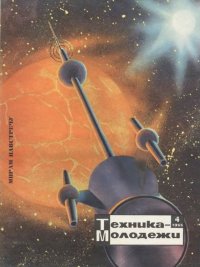
Обложка журнала "Техника-молодежи" №4: 1965 с картиной художника А.Соколова "Мирам навстречу".
Cover of the magazine "Tekhnika-Molodezhi" (Technology for Youth), No. 4, 1965, featuring the painting "Towards Other Worlds" by artist A. Sokolov.
Portada de la revista "Tecnología para la Juventud" n.º 4: 1965 con la pintura del artista A. Sokolov "Hacia los mundos".

Clipboard 11 06 2026 18
 
Frimen1917

Frimen1917

Mecca V.I.P.
VIP
Joined
Jan 9, 2026
Messages
3,326
Points
63
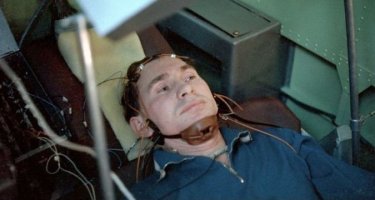
Советский журнал "Техника-молодежи" (номер 6; 1965).
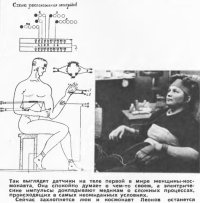
1. Так выглядят датчики на теле первой в мире женщины-космонавта. Она спокойно думает о чём-то своём, а электрические импульсы докладывают медикам о сложных процессах, происходящих в самых неожиданных условиях.
2.
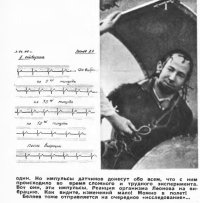
Сейчас захлопнется люк и космонавт Леонов останется один. Но импульсы датчиков донесут обо всём, что с ним происходило во время сложного и трудного эксперимента. Вот они, эти импульсы. Реакция организма Леонова на вибрацию. Как видите, изменений мало! Можно в полёт!
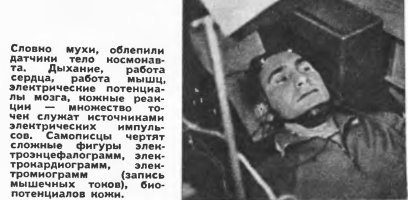
3. Космонавт Беляев тоже отправляется на очередное «исследование».Словно мухи, облепили датчики тело космонавта. Дыхание, работа сердца, работа мышц, электрические потенциалы мозга, кожные реакции — множество точек служат источниками электрических импульсов. Самописцы чертят сложные фигуры электроэнцефалограмм, электрокардиограмм, электромиограмм (запись мышечных токов), биопотенциалов кожи.

Soviet magazine “Tekhnika — Molodyozhi” (No. 6, 1965).

1. This is what the sensors look like on the body of the world’s first woman cosmonaut. She is calmly thinking about something of her own, while the electrical impulses report to the doctors about the complex processes taking place under the most unexpected conditions.

2. In a moment the hatch will slam shut and cosmonaut Leonov will be left alone. But the impulses from the sensors will report everything that happened to him during the complex and difficult experiment. Here they are, these impulses. The reaction of Leonov’s organism to vibration. As you can see, the changes are slight! Ready for flight!

3. Cosmonaut Belyayev is also going for the next “examination”.

Like flies, the sensors have covered the cosmonaut’s body. Breathing, the work of the heart, the work of the muscles, the electrical potentials of the brain, skin reactions — a multitude of points serve as sources of electrical impulses. The recorders draw complex figures of electroencephalograms, electrocardiograms, electromyograms (recording of muscle currents), and skin biopotentials.
Revista soviética “Tekhnika — Molodyozhi” (nº 6, 1965).


1. Así se ven los sensores en el cuerpo de la primera mujer cosmonauta del mundo. Ella piensa tranquilamente en algo suyo, mientras los impulsos eléctricos informan a los médicos sobre los complejos procesos que ocurren en las condiciones más inesperadas.

2. Ahora se cerrará la escotilla y el cosmonauta Leónov se quedará solo. Pero los impulsos de los sensores informarán de todo lo que le ocurrió durante el complejo y difícil experimento. Aquí están, estos impulsos. La reacción del organismo de Leónov a la vibración. ¡Como pueden ver, los cambios son pocos! ¡Se puede volar!

3. El cosmonauta Beliáyev también se dirige a la siguiente «investigación».

Como moscas, los sensores han cubierto el cuerpo del cosmonauta. La respiración, el trabajo del corazón, el trabajo de los músculos, los potenciales eléctricos del cerebro, las reacciones cutáneas: una multitud de puntos sirven como fuentes de impulsos eléctricos. Los registradores trazan complejas figuras de electroencefalogramas, electrocardiogramas, electromiogramas (registro de las corrientes musculares) y biopotenciales de la piel.
Clipboard 11 06 2026 24 Clipboard 11 06 2026 25 Clipboard 11 06 2026 28
 
Frimen1917

Frimen1917

Mecca V.I.P.
VIP
Joined
Jan 9, 2026
Messages
3,326
Points
63
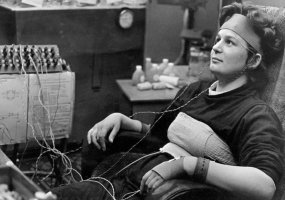
Космонавт Валентина Терешкова во время тренировки. Июнь 1963 года.
Фото корреспондента ТАСС - Веры Жихаренко.

Cosmonaut Valentina Tereshkova during training. June 1963.
Photo by TASS correspondent Vera Zhikharenko.

La cosmonauta Valentina Tereshkova durante el entrenamiento. Junio de 1963.
Foto de la corresponsal de TASS Vera Zhikharenko.

Ter2 700
 
Frimen1917

Frimen1917

Mecca V.I.P.
VIP
Joined
Jan 9, 2026
Messages
3,326
Points
63
Космонавт Алексей Леонов садится в кабину центрифуги во время тренировок в Центре подготовки космонавтов.
Cosmonaut Alexei Leonov climbs into the cockpit of a centrifuge during training at the Cosmonaut Training Center.
El cosmonauta Alexei Leonov entra en la cabina de la centrífuga durante un entrenamiento en el Centro de Entrenamiento de Cosmonautas.

Eeb3b2e64c7e01fa7e2f550fac98df48
 
Frimen1917

Frimen1917

Mecca V.I.P.
VIP
Joined
Jan 9, 2026
Messages
3,326
Points
63
Космонавт П.И. Беляев во время тренировки на центрифуге в Центре Подготовки Космонавтов. Звездный городок, 1964-1965 гг. Российский Государственный Архив Научно-Технической Документации. Архив. № 0-1530.
Cosmonaut P. I. Belyayev during centrifuge training at the Cosmonaut Training Center. Star City, 1964–1965. Russian State Archive of Scientific and Technical Documentation. Archive No. 0-1530.
El cosmonauta P.I. Belyaev durante un entrenamiento en centrifugadora en el Centro de Entrenamiento de Cosmonautas. Ciudad de las Estrellas, 1964-1965. Archivo Estatal Ruso de Documentación Científica y Técnica. Archivo n.° 0-1530.
Clipboard 11 06 2026 27
 
Frimen1917

Frimen1917

Mecca V.I.P.
VIP
Joined
Jan 9, 2026
Messages
3,326
Points
63
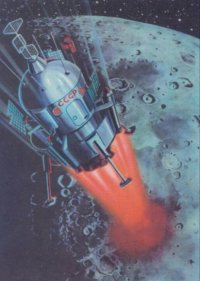
"И вот, наконец, Луна! Для мягкой посадки надо снизить скорость до нулевой. Это может быть достигнуто только путём включения тормозных ракетных двигателей: ведь на Луне нет атмосферы, которую можно было бы использовать с этой целью.
Всё медленнее, плавно покачиваясь, движется космический корабль, приближаясь к поверхности нашего естественного спутника. Ослепительное солнце освещает корабль и Луну. Резкие чёрные тени от лунных кратеров и сами кольцевые горы видны всё лучше и лучше...
Но вот огненная струя газов ударилась, наконец, о поверхность Луны, подняв вихрь пыли. Мелкие раскалённые осколки рассыпаются в стороны. Корабль вздрагивает и мягко прилуняется...

Ещё совсем недавно это было только фантазией художника. И вот 3 февраля 1966 года советская автоматическая станция "Луна-9" впервые осуществила мягкую посадку на Луну. С помощью телевизионной системы, установленной на станции,на Земле были приняты изображения лунной поверхности" (Валерий Луцкий."Впереди Луна"). На фото картина Художника-космонавта А. Леонов.
And here, at last, is the Moon! To make a soft landing, the spacecraft's speed must be reduced to zero. This can only be achieved by firing retro-rockets, since the Moon has no atmosphere that could be used for this purpose.


Moving ever more slowly and swaying gently, the spacecraft approaches the surface of our natural satellite. The dazzling Sun illuminates both the spacecraft and the Moon. The sharp black shadows cast by lunar craters and the ring-shaped mountains themselves become clearer and clearer...

At last, however, the fiery jet of exhaust gases strikes the lunar surface, raising a whirlwind of dust. Small, glowing fragments scatter in all directions. The spacecraft shudders and gently touches down on the Moon...

Until quite recently, this was merely an artist's fantasy. But on February 3, 1966, the Soviet automatic space station Luna 9 made the first-ever soft landing on the Moon. Using the television system installed aboard the station, images of the lunar surface were received on Earth.

(Valery Lutsky, The Moon Lies Ahead)

Painting: A. Leonov, cosmonaut and artist.
¡Y aquí está, por fin, la Luna! Para realizar un aterrizaje suave, es necesario reducir la velocidad hasta cero. Esto solo puede lograrse mediante el encendido de los motores cohete de frenado, ya que la Luna no tiene atmósfera que pueda utilizarse con ese fin.


La nave espacial se desplaza cada vez más lentamente, balanceándose suavemente mientras se aproxima a la superficie de nuestro satélite natural. El Sol deslumbrante ilumina la nave y la Luna. Las marcadas sombras negras de los cráteres lunares y las propias montañas circulares se distinguen cada vez mejor...

Pero, finalmente, el chorro ardiente de gases de escape golpea la superficie lunar y levanta un torbellino de polvo. Pequeños fragmentos incandescentes salen despedidos en todas direcciones. La nave se estremece y aterriza suavemente en la Luna...

Hasta hace muy poco, todo esto no era más que una fantasía de artista. Sin embargo, el 3 de febrero de 1966, la estación espacial automática soviética Luna 9 realizó por primera vez un aterrizaje suave en la Luna. Gracias al sistema de televisión instalado a bordo de la estación, se recibieron en la Tierra imágenes de la superficie lunar.

(Valeri Lutski, La Luna nos espera)

Pintura: A. Leonov, cosmonauta y artista.
1IWs bDGm7XNIW qfTCsYiyW8SznfUDj0mu2WE4qRHhQeS9VP20g5o4Gkv7uylSyIZFCVXxaK1B0BPpl4FTi3pUC
 

MuscleMecca Crew

Mecca Staff
Frimen1917

Frimen1917

Mecca V.I.P.
VIP
Joined
Jan 9, 2026
Messages
3,326
Points
63
"Картина космической бездны так меня очаровала, захватила, что не осталось в душе места для каких-то других ощущений. Только успевай смотреть, поражаться да выполнять программу. Самое большое чувство, которое я испытал в космосе, – ошеломляющая необычность. Виды из космоса я представлял по рассказам товарищей. Но недаром говорят: лучше один раз увидеть, чем сто раз услышать. Увидел я бесконечный простор Земли, половину земного шара, а нашу страну – от Черного моря до Сахалина. И не из узкого иллюминатора, а из открытого космоса, широко, объемно. Я уже говорил: над Черным морем вышел из корабля. Вгляделся: какая красота! Я люблю Черное море. Оно приятно мне в любую погоду. Когда-то часами сидел на берегу, смотрел на переливы красок. С высоты вода выглядит не такой, как с берега, – она однотонная, темно-синяя, с переходом в цвет вороного крыла. Видно, «виновато» солнце – обесцвечивало воду. Заметил в открытом море корабль. В какой-то фантастической книге, помню, герой разглядел из космоса флотилию кораблей. Все они отбрасывали на воду густые тени. Я не увидел теней – со всех сторон корабль равномерно освещался Солнцем. Будто он купался в потоке света.

В космосе намного больше видишь красок, чем на Земле. И на Земле, конечно, эти краски тоже встречаются, но они не так ярки. Я залюбовался закатом солнца. Направо, налево, вверх повернул голову – чернота. А между землей и небом будто сияние – красная, палевая, желтоватая полосы. Тревожное зрелище. Чем-то сходно с картинами художника Куинджи. Только отчетливее, контрастнее и, пожалуй, мощнее краски. «Космическая природа» – особый мир".( А. Леонов. "Десять минут в космической бездне". - Газета "Красная звезда", 1965 год, 10 апреля).
....................................................................
Цит.по: Иван Григорьевич Борисенко
В ОТКРЫТОМ КОСМОСЕ
Редактор Ф. Г. Тубянская
Художественный редактор В. В. Лебедев;
Технический редактор В. И. Орешкина; Корректор Л. Я. Шабашова;
3-е ИЗДАНИЕ, ПЕРЕРАБОТАННОЕ И ДОПОЛНЕННОЕ
Москва/ Издательство «Машиностроение»/

1984 год
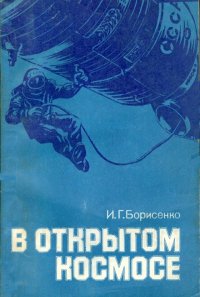
На фото: Рисунок художника С. Н. Орлова на обложке книги
И.Г. Борисенко"В ОТКРЫТОМ КОСМОСЕ".

“The picture of the cosmic abyss so enchanted and captivated me that there was no room left in my soul for any other sensations. All I could do was keep looking, marvelling and carrying out the programme. The greatest feeling I experienced in space was the overwhelming sense of the unusual. I had imagined the views from space from the stories of my comrades. But it is not for nothing that they say: better to see once than hear a hundred times. I saw the endless expanse of the Earth, half the globe, and our country — from the Black Sea to Sakhalin. And not through a narrow porthole, but from open space, broadly, in three dimensions. I have already said: I left the ship above the Black Sea. I peered out: what beauty! I love the Black Sea. It is pleasant to me in any weather. Once I used to sit for hours on the shore, watching the play of colours. From a height the water does not look the same as from the shore — it is uniform, dark blue, with a transition to the colour of a raven’s wing. The sun, it seems, was ‘to blame’ — it had bleached the water. I noticed a ship in the open sea. In some fantastic book, I remember, the hero discerned a flotilla of ships from space. All of them cast dense shadows on the water. I saw no shadows — the ship was evenly illuminated by the Sun from all sides. It was as if it were bathing in a stream of light.

In space you see far more colours than on Earth. And on Earth, of course, these colours are also found, but they are not so vivid. I was captivated by the sunset. I turned my head to the right, to the left, upward — blackness. And between the Earth and the sky there seemed to be a radiance — red, pale-yellow, yellowish bands. An alarming sight. In some way similar to the paintings of the artist Kuindzhi. Only clearer, more contrasting and, perhaps, more powerful in colour. ‘Cosmic nature’ is a special world.”

(A. Leonov. “Ten Minutes in the Cosmic Abyss”. — Newspaper “Krasnaya Zvezda”, 10 April 1965).

....................................................................

Quoted from: Ivan Grigoryevich Borisenko
IN OPEN SPACE
Editor F. G. Tubyanskaya
Art editor V. V. Lebedev;
Technical editor V. I. Oreshkina; Proofreader L. Ya. Shabashova;
3rd EDITION, REVISED AND ENLARGED
Moscow / Publishing House “Mashinostroenie” /
1984

On the photo: Drawing by the artist S. N. Orlov on the cover of the book by I. G. Borisenko “In Open Space”.

“La imagen del abismo cósmico me cautivó y me hechizó de tal modo que en el alma no quedó lugar para ninguna otra sensación. Solo alcanzaba a mirar, a maravillarme y a cumplir el programa. El sentimiento más grande que experimenté en el cosmos fue la asombrosa rareza. Me imaginaba las vistas desde el cosmos por los relatos de mis compañeros. Pero no en vano se dice: más vale ver una vez que oír cien veces. Vi la inmensidad infinita de la Tierra, la mitad del globo terrestre, y nuestro país — desde el mar Negro hasta Sajalín. Y no a través de un estrecho ojo de buey, sino desde el espacio abierto, de forma amplia y volumétrica. Ya lo dije: salí de la nave sobre el mar Negro. Miré con atención: ¡qué belleza! Amo el mar Negro. Me resulta agradable con cualquier tiempo. En otro tiempo me sentaba durante horas en la orilla, contemplando el juego de colores. Desde la altura el agua no se ve igual que desde la orilla: es uniforme, de un azul oscuro, con una transición al color del ala de un cuervo. Se ve que el sol era el ‘culpable’: había desteñido el agua. Distinguí un barco en alta mar. En algún libro fantástico, recuerdo, el héroe divisó desde el cosmos una flotilla de barcos. Todos proyectaban densas sombras sobre el agua. Yo no vi sombras: el barco estaba iluminado uniformemente por el Sol desde todos los lados. Parecía que se bañaba en un chorro de luz.


En el cosmos se ven muchos más colores que en la Tierra. Y en la Tierra, por supuesto, también se encuentran esos colores, pero no son tan vivos. Me embelesé con la puesta de sol. Volví la cabeza a la derecha, a la izquierda, hacia arriba: negrura. Y entre la Tierra y el cielo parecía haber un resplandor: franjas rojas, de un amarillo pálido, amarillentas. Un espectáculo inquietante. En algo se asemeja a los cuadros del pintor Kuindzhi. Solo que más nítidos, más contrastados y, quizás, con colores más potentes. La ‘naturaleza cósmica’ es un mundo especial.”

(A. Leónov. “Diez minutos en el abismo cósmico”. — Periódico “Krasnaya Zvezda”, 10 de abril de 1965).

....................................................................

Citado según: Iván Grigórievich Borisenko
EN EL ESPACIO ABIERTO
Redactora F. G. Tubyánskaya
Redactor artístico V. V. Lébedev;
Redactor técnico V. I. Oréshkina; Correctora L. Ya. Shabáshova;
3.ª EDICIÓN, REVISADA Y AMPLIADA
Moscú / Editorial “Mashinostroenie” /
1984

En la foto: Dibujo del artista S. N. Orlov en la cubierta del libro de I. G. Borisenko “En el espacio abierto”.
I40LDDgI4Mz4qjxI8V7OsDTTGTQz4akOPKgtKW2drxIVBy0HeHwRn8rRoGmrzhnIS8OTGkaZGaYCSJb46L3 vkSI
 
Frimen1917

Frimen1917

Mecca V.I.P.
VIP
Joined
Jan 9, 2026
Messages
3,326
Points
63
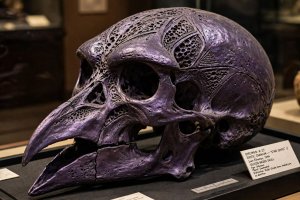
"Давыдов извлек из шкафа широкий лоток.

Перед Шатровым оказался странный темно-фиолетовый череп, покрытый орнаментом из ямок и бороздок, углубленных в кость. Мощный костяной купол – вместилище мозга – был совершенно подобен человеческому, так же как и огромные глазные впадины, направленные прямо вперед и разделенные узким костным мостиком переносицы. Вполне человеческими были и круглый, крутой затылок, и короткая, почти отвесная лицевая часть, ушедшая под огромный, надвинутый на нее лоб. Но вместо выступающих носовых костей была треугольная ямка. От основания ямки верхняя челюсть, клювообразная, слегка загнутая вниз на конце, резко выдвигалась вперед. Нижняя челюсть соответствовала верхней и также не имела ни малейшего следа зубов. Ее суставные концы упирались почти горизонтально в ямки на концах широких отростков, спускавшихся вниз впереди круглых больших отверстий по бокам черепа, под висками.
– Он прочен? – тихо спросил Шатров и после утвердительного кивка Давыдова взял череп в руки. – Вместо зубов, видимо, режущий роговой край челюсти, как у черепахи? – спросил Шатров и, не дожидаясь ответа, продолжал: – Строение челюстей, носа, слухового аппарата довольно примитивно… Эти ямки на костях, вся скульптура показывают, что кожа очень плотно прилегала к кости, без подкожного мышечного слоя. Такая кожа вряд ли могла иметь волосы. А отдельные кости… в них, конечно, нужно поразобраться, но смотрите: челюсть из двух костей; это тоже более примитивно, чем у человека…

– Значит, их эволюционный путь до мыслящего существа был короче, – вставил Давыдов.

– Именно так. Там, на их планете, могла быть несколько иная природная обстановка, другой ход геологических процессов, другие условия естественного отбора… Интересно, вы исследовали состав этой кости?

– Точно – нет. Но все же знаю, что она в основном не из фосфорнокислого кальция, как у нас, а…

– Из кремния? – быстро перебил Шатров.


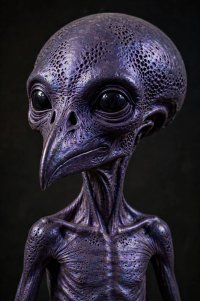
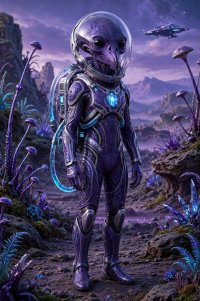
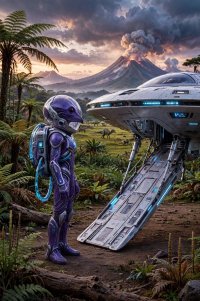
– Вы правы. И это понятно: кремний по химическим свойствам во многом аналогичен углероду и вполне может быть использован в биологических процессах".(Иван Ефремов."Звездные корабли"). На фото: Изображение черепа жителя внеземной цивилизации сгенерированное искусственным интеллектом по тексту из книги Ивана Ефремова "Звездные корабли". Также искусственный интеллект сгенерировал несколько изображений инопланетяина по описанию черепа из книги.
"Davydov took a wide tray out of the cabinet.


Before Shatrov lay a strange, dark-violet skull, covered with a pattern of pits and grooves recessed into the bone. The massive bony dome, which housed the brain, was exactly like that of a human, as were the enormous eye sockets, facing directly forward and separated by a narrow bony bridge at the root of the nose. The rounded, high back of the skull and the short, almost vertical facial section, tucked beneath an enormous overhanging forehead, were also entirely human in appearance. But instead of projecting nasal bones, there was a triangular depression. From the base of this depression, the upper jaw, beak-shaped and slightly curved downward at the tip, jutted sharply forward. The lower jaw matched the upper one and likewise showed not the slightest trace of teeth. Its joint ends fitted almost horizontally into depressions at the ends of broad projections descending in front of the large, round openings on either side of the skull, beneath the temples.

“Is it strong?” Shatrov asked quietly. After Davydov nodded affirmatively, he picked up the skull. “Apparently, instead of teeth, the jaws had a cutting horny edge, like a turtle's?” Shatrov asked, and, without waiting for an answer, continued: “The structure of the jaws, nose and auditory apparatus is rather primitive... These pits in the bones, this entire sculptured surface, indicate that the skin was very tightly attached to the bone, without a layer of subcutaneous muscle. Such skin could hardly have had hair. And the individual bones... Of course, we need to examine them more closely, but look: the jaw consists of two bones. That, too, is more primitive than in humans...”

“So their evolutionary path to becoming intelligent beings was shorter,” Davydov interjected.

“Exactly. Conditions on their planet may have been somewhat different: a different course of geological processes, different conditions of natural selection... I wonder, have you examined the composition of this bone?”

“Not precisely. But I do know that it consists mainly not of calcium phosphate, as ours does, but...”

“Silicon?” Shatrov interrupted quickly.

“That's right. And it makes sense: silicon is chemically similar to carbon in many respects and can certainly be used in biological processes.”

(Ivan Yefremov, Star Ships)

Image: A depiction of the skull of an extraterrestrial being, generated by artificial intelligence based on the description in Ivan Yefremov's book Star Ships. Artificial intelligence also generated several images of the alien itself, based on the description of its skull in the book.
"Davýdov sacó del armario una amplia bandeja.


Ante Shátrov apareció un extraño cráneo de color violeta oscuro, cubierto por un dibujo de hoyuelos y surcos hundidos en el hueso. La poderosa bóveda ósea, que albergaba el cerebro, era exactamente igual a la humana, al igual que las enormes cavidades oculares, orientadas directamente hacia delante y separadas por un estrecho puente óseo en la raíz de la nariz. También eran completamente humanos la parte posterior redondeada y elevada del cráneo y la corta región facial, casi vertical, que quedaba bajo una enorme frente prominente. Pero, en lugar de los huesos nasales sobresalientes, había una depresión triangular. Desde la base de esta depresión, la mandíbula superior, con forma de pico y ligeramente curvada hacia abajo en el extremo, sobresalía bruscamente hacia delante. La mandíbula inferior correspondía a la superior y tampoco presentaba el menor rastro de dientes. Sus extremos articulares encajaban casi horizontalmente en unas cavidades situadas en los extremos de unas amplias prolongaciones óseas que descendían por delante de los grandes orificios redondos a ambos lados del cráneo, debajo de las sienes.

—¿Es resistente? —preguntó Shátrov en voz baja y, tras el asentimiento afirmativo de Davýdov, tomó el cráneo entre las manos—. ¿En lugar de dientes, probablemente tenían un borde córneo cortante en las mandíbulas, como las tortugas? —preguntó Shátrov y, sin esperar respuesta, continuó—: La estructura de las mandíbulas, la nariz y el aparato auditivo es bastante primitiva... Estos hoyuelos en los huesos, toda esta ornamentación de la superficie, indican que la piel estaba muy adherida al hueso, sin una capa de músculos subcutáneos. Es poco probable que una piel así pudiera tener pelo. Y los huesos individuales... Por supuesto, habrá que examinarlos con más detenimiento, pero fíjese: la mandíbula está formada por dos huesos; eso también es más primitivo que en el ser humano...

—Entonces, su camino evolutivo hasta convertirse en seres inteligentes fue más corto —intervino Davýdov.

—Exactamente. En su planeta, las condiciones naturales podrían haber sido algo diferentes: otro desarrollo de los procesos geológicos, otras condiciones de selección natural... Me pregunto si han investigado la composición de este hueso.

—No con exactitud. Pero sí sé que no está compuesto principalmente de fosfato cálcico, como el nuestro, sino de...

—¿De silicio? —interrumpió rápidamente Shátrov.

—Así es. Y resulta comprensible: el silicio es químicamente análogo al carbono en muchos aspectos y puede utilizarse perfectamente en los procesos biológicos".

(Iván Yefrémov, Naves estelares)

Imagen: Representación del cráneo de un ser perteneciente a una civilización extraterrestre, generada mediante inteligencia artificial a partir de la descripción de la novela Naves estelares, de Iván Yefrémov. La inteligencia artificial también generó varias imágenes del propio extraterrestre basándose en la descripción de su cráneo en el libro.
 viber 2026 11 07 21 27 52 884
 viber 2026 11 07 21 28 20 721
 viber 2026 11 07 21 28 02 289  viber 2026 11 07 21 28 08 799  viber 2026 11 07 21 28 12 880  viber 2026 11 07 21 28 15 993
 
Frimen1917

Frimen1917

Mecca V.I.P.
VIP
Joined
Jan 9, 2026
Messages
3,326
Points
63
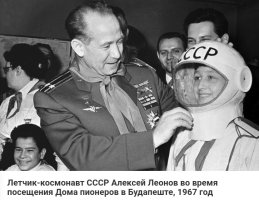
Летчик-космонавт СССР Алексей Леонов во время посещения Дома пионеров в Будапеште (Венгрия). 1967 год.
Soviet cosmonaut Alexei Leonov during a visit to the House of Pioneers in Budapest (Hungary). 1967.
El cosmonauta soviético Alexei Leonov visitando la Casa de los Pioneros en Budapest, Hungría, 1967.

4zsSsHfK59Awlml36CjMkgE63SWcbFhHBDtz1Zn2AYD1xnbHMlHhYfer5zjFaM fwV0xgQDbF7Btp1DJ6cVJZExg
 
Frimen1917

Frimen1917

Mecca V.I.P.
VIP
Joined
Jan 9, 2026
Messages
3,326
Points
63
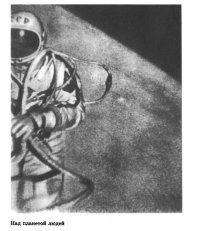
"И снова — странички из заветной коричневой тетради. Пусть о главном Алексей Леонов расскажет сам.
"Выплывая из люка в бесконечный простор Вселенной, я увидел индиговую синеву Черного моря, заснеженные вершины Кавказского хребта, подернутую дымкой чашу Цемесской бухты, а правее — россыпь белых кристаллов сочинских санаториев. Не спеша оторвал от опоры сначала одну руку, потом вторую, отошел сантиметров на двадцать от корабля, вернулся к люку, а затем плавно оттолкнулся от «Восхода-2» и поплыл на всю длину фала, связывавшего меня с кораблем и прикрепленного в трех точках к моему телу.
Возникло необъяснимое чувство абсолютной свободы, Ничто не связывало передвижения в бездонном космическом океане. Находясь на сотни километров над Землей, я не падал вниз, а парил рядом с кораблем, летящим со скоростью около 30 000 километров в час :, и сам мчался с такой же скоростью, не ощущая ни сопротивления, ни движения. И только по тому, как быстро менялся земной пейзаж, как скованную льдом Волгу сменили хребты Урала, а затем возникли заснеженные сибирские леса, рассекаемые Обью и Енисеем, можно было судить о скорости, с какой я «шел» по космической тропе. Сделав лёгкое
движение рукой или ногой, можно было завертеться, подобно волчку, или несколько раз перекувыркнуться через голову, не ощущая, где верх, а где низ". (М. Ребров. "Над планетой людей").
And once again, pages from the treasured brown notebook. Let Alexei Leonov himself tell us about the most important moment.


“As I emerged from the hatch into the boundless expanse of the Universe, I saw the indigo blue of the Black Sea, the snow-covered peaks of the Caucasus Range, the haze-veiled basin of Tsemess Bay, and, farther to the right, a scattering of white crystals — the sanatoriums of Sochi. Without haste, I first released one hand from the support, then the other. I moved about twenty centimetres away from the spacecraft, returned to the hatch, and then gently pushed myself away from Voskhod 2, floating out to the full length of the tether that connected me to the spacecraft and was attached to my body at three points.

An inexplicable feeling of absolute freedom came over me. Nothing restricted my movements in the bottomless ocean of space. Hundreds of kilometres above the Earth, I was not falling but floating alongside the spacecraft, which was travelling at a speed of about 30,000 kilometres per hour. I, too, was racing at the same speed, feeling neither resistance nor motion. Only the rapidly changing landscape of the Earth revealed the speed at which I was travelling along the cosmic pathway: the Volga, bound in ice, gave way to the ridges of the Urals, and then the snow-covered forests of Siberia appeared, cut through by the Ob and Yenisei rivers. With a slight movement of an arm or a leg, I could set myself spinning like a top or perform several somersaults, without feeling where up or down was.”

(M. Rebrov, Above the Planet of People.)
Y una vez más, unas páginas del preciado cuaderno marrón. Dejemos que el propio Alekséi Leónov nos cuente aquel momento tan importante.


«Al salir flotando por la escotilla hacia la inmensidad infinita del Universo, vi el azul índigo del mar Negro, las cumbres nevadas de la cordillera del Cáucaso, la cuenca de la bahía de Tsemés, cubierta por una ligera bruma, y, más a la derecha, un conjunto de cristales blancos: los sanatorios de Sochi. Sin apresurarme, solté primero una mano del soporte y luego la otra. Me alejé unos veinte centímetros de la nave, regresé a la escotilla y después me impulsé suavemente desde la Vosjod-2, alejándome hasta alcanzar toda la longitud del cable de seguridad que me unía a la nave y que estaba sujeto a mi cuerpo en tres puntos.

Me invadió una inexplicable sensación de libertad absoluta. Nada limitaba mis movimientos en aquel océano cósmico sin fondo. A cientos de kilómetros sobre la Tierra, no caía hacia abajo, sino que flotaba junto a la nave, que viajaba a una velocidad de unos 30.000 kilómetros por hora. Yo también avanzaba a esa misma velocidad, sin sentir resistencia ni movimiento alguno. Solo el rápido cambio del paisaje terrestre permitía hacerse una idea de la velocidad con la que recorría el sendero cósmico: el Volga, cubierto de hielo, dio paso a las cordilleras de los Urales y, después, aparecieron los bosques nevados de Siberia, surcados por los ríos Obi y Yeniséi. Con un ligero movimiento de un brazo o de una pierna, podía empezar a girar como una peonza o dar varias volteretas, sin sentir dónde estaba arriba y dónde abajo».

(M. Rebrov, Sobre el planeta de los hombres.)
EUW3v0JW7Ui tXzDnv5KxUoRLk4 sOT9T2JIf9IdTeQiwZFsxdQFi pooX9wclaPaaib0g8ALxtkgauicYNQYv 3
 
Frimen1917

Frimen1917

Mecca V.I.P.
VIP
Joined
Jan 9, 2026
Messages
3,326
Points
63
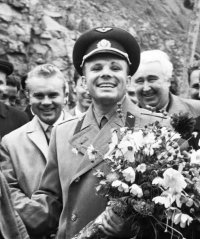
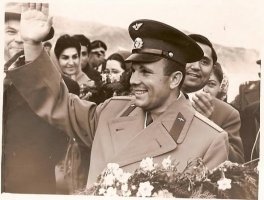
О визите Ю.А.Гагарина в Афганистан
В декабре 1961 г., спустя несколько месяцев после первого полёта человека в космос, Юрий Алексеевич Гагарин посетил Афганистан по приглашению афганского правительства.
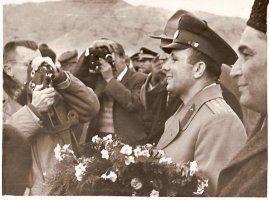
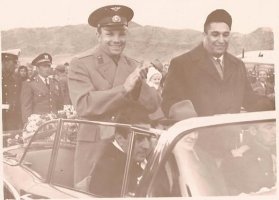
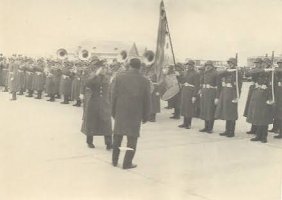
12 декабря советская делегация прибыла в Кабул, где первого космонавта встречали министр просвещения Афганистана Али Ахмед Пополь, председатель Общества афгано-советской дружбы Ульфат, командующий ВВС генерал-лейтенант Резак Хан, представители общественности и почётный караул. Архивные фотографии сохранили яркие эпизоды этого визита: Ю.А.Гагарин приветствует собравшихся, стоя в открытой машине, и участвует в церемонии возложения венка к подножию обелиска Независимости.
Программа пребывания была насыщенной. Ю.А.Гагарин встретился с премьер-министром Мухаммедом Даудом и королём Мухаммедом Захир Шахом, возложил венок к гробнице Надир Шаха, принял участие в мероприятиях Общества афгано-советской дружбы, посетил Кабульский университет и военную академию, где рассказал афганским слушателям о полётах в космос.
Визит первого космонавта стал заметным эпизодом советско-афганских контактов начала 1960-х гг. и был встречен в Афганистане с большим вниманием и теплотой.

В публикации использованы фотографии из фондов Музея-заповедника Ю.А.Гагарина и личного архива Т.Ю.Циркиной.
On the Visit of Yuri Gagarin to Afghanistan

In December 1961, just months after the first human spaceflight, Yuri Alekseyevich Gagarin visited Afghanistan at the invitation of the Afghan government.
On December 12, the Soviet delegation arrived in Kabul, where the first cosmonaut was welcomed by Afghanistan’s Minister of Education, Ali Ahmad Popal; the Chairman of the Afghan-Soviet Friendship Society, Ulfat; the Commander of the Air Force, Lieutenant General Rezak Khan; as well as members of the public and an honor guard. Archival photographs capture vivid moments from this visit: Yuri Gagarin greeting the crowd while standing in an open-top vehicle, and participating in a wreath-laying ceremony at the foot of the Independence Obelisk.
The itinerary was packed. Yuri Gagarin met with Prime Minister Mohammed Daoud and King Mohammed Zahir Shah, laid a wreath at the tomb of Nadir Shah, took part in events hosted by the Afghan-Soviet Friendship Society, and visited Kabul University and a military academy, where he spoke to Afghan students and cadets about space exploration.
The visit of the first cosmonaut served as a notable episode in Soviet-Afghan relations during the early 1960s and was received in Afghanistan with great interest and warmth.

This publication features photographs from the collections of the Yuri Gagarin Museum-Reserve and the personal archive of T. Y. Tsirkina.
Visita de Yuri A. Gagarin a Afganistán

En diciembre de 1961, varios meses después del primer vuelo espacial tripulado, Yuri Alekseyevich Gagarin visitó Afganistán por invitación del gobierno afgano.
El 12 de diciembre, la delegación soviética llegó a Kabul, donde el primer cosmonauta fue recibido por el Ministro de Educación afgano, Ali Ahmed Popol; el Presidente de la Sociedad de Amistad Afgano-Soviética, Ulfat; el Comandante de la Fuerza Aérea, Teniente General Rezak Khan; miembros del público y una guardia de honor. Fotografías de archivo capturan momentos vívidos de esta visita: Yuri A. Gagarin saludando a los presentes desde un coche descapotable y participando en una ceremonia de colocación de ofrendas florales al pie del Obelisco de la Independencia.

La visita tuvo una agenda muy apretada. Yuri Gagarin se reunió con el Primer Ministro Mohammed Daoud y el Rey Mohammed Zahir Shah, depositó una ofrenda floral en la tumba de Nadir Shah, participó en eventos de la Sociedad de Amistad Afgano-Soviética y visitó la Universidad de Kabul y la academia militar, donde habló con el público afgano sobre los vuelos espaciales.
La visita del primer cosmonauta se convirtió en un episodio destacado de los contactos soviético-afganos a principios de la década de 1960 y fue recibida con gran interés y calidez en Afganistán.

Esta publicación utiliza fotografías de las colecciones del Museo-Reserva Yuri Gagarin y del archivo personal de T. Yu. Tsirkina.
667772878 1262338222694062 4833047102878268393 n 666027218 1262338062694078 9078919056320568107 n 666173384 1262350002692884 1183280068637449327 n 667397212 1262338009360750 5277205914496916613 n Images
 
Frimen1917

Frimen1917

Mecca V.I.P.
VIP
Joined
Jan 9, 2026
Messages
3,326
Points
63
Одна из страниц книги А.Романова "Космодром космонавты космос".
На фото слева афиша выставки. Текст афиши: С 12 ноября по 11 декабря открыта выставка "КОСМОС глазами ученого, художника, космонавта". На выставке представлены работы Покровского Г. И.; Соколова А. К.; летчика-космонавта Леонова А. А.
Текст на странице справа: "Это была интересная выставка. Журналисты назвали ее "Встреча с космосом".
На фото: Афиша выставки; одна из картин космонавта А.Леонова; одна из посетительниц выставки на фоне картин.

A page from the book *Cosmodrome, Cosmonauts, Space* by A. Romanov.


On the left, there is a poster for an exhibition. The text on the poster reads: "From November 12 to December 11, the exhibition 'SPACE Through the Eyes of a Scientist, an Artist, and a Cosmonaut' is open." The exhibition features works by G. I. Pokrovsky, A. K. Sokolov, and cosmonaut A. A. Leonov.

The text on the right-hand page reads: "It was an interesting exhibition. Journalists dubbed it 'An Encounter with Space'."

Pictured: The exhibition poster; one of the paintings by cosmonaut A. Leonov; and a visitor at the exhibition, standing in front of the paintings.
Una página del libro de A. Romanov, «Cosmodrome, Cosmonautas, Espacio».


A la izquierda se muestra el cartel de la exposición. Texto del cartel: La exposición «El espacio a través de los ojos de un científico, artista y cosmonauta» estará abierta del 12 de noviembre al 11 de diciembre. La exposición presenta obras de G. I. Pokrovsky, A. K. Sokolov y el piloto y cosmonauta A. A. Leonov.

Texto de la página derecha: «Fue una exposición interesante. Los periodistas la llamaron "Encuentro con el espacio"».

En la imagen: Cartel de la exposición; una de las pinturas del cosmonauta A. Leonov; un visitante de la exposición frente a las pinturas.

Clipboard 11 08 2026 01
 
Frimen1917

Frimen1917

Mecca V.I.P.
VIP
Joined
Jan 9, 2026
Messages
3,326
Points
63
Картина художника А.Соколова «Искусственный спутник иной цивилизации». 1963.
A painting by the artist A. Sokolov, "Artificial Satellite of an Alien Civilization." 1963.
Cuadro del artista A. Sokolov titulado "Satélite artificial de otra civilización". 1963.

2ebae5b17224d9162a876e9cb5a568ec
 
Frimen1917

Frimen1917

Mecca V.I.P.
VIP
Joined
Jan 9, 2026
Messages
3,326
Points
63
"В мире внеземной цивилизации". Художник А.Соколов.
"In the World of an Extraterrestrial Civilization." Artist A. Sokolov.
"En el mundo de la civilización extraterrestre." Artista A. Sokolov.
64da4d81af64db3a492812e7
 
Frimen1917

Frimen1917

Mecca V.I.P.
VIP
Joined
Jan 9, 2026
Messages
3,326
Points
63
В начале рассказа «Пять картин» (1965-1970) советский писатель-фантаст Иван Ефремов описывает масштабный проект по переброске целого моря пресной воды из Антарктиды на материк Австралии, где сотни лет назад нерасчетливое орошение пустынь подземными водами привело к массовому засолению почв. Была определена полоса на высоте теплой зоны стратосферы между двумя материками в две тысячи километров шириной, эвакуированы немногочисленные жители западной части Австралийского материка, и построены несколько огромных высоких башен от Антарктиды до Австралии (Макуори, Тасмания, Балларат, Мосгрейв и т.д.) для переноса водяных молекул в потоках заряженных частиц. Т.е. генерировался направленный ураганный ветер, который поднимался исполинской дугой в стратосферу и переносил собой любое количество подхваченной им пресной воды, которая в свою очередь образовывалась на ледяном щите Антарктического материка с помощью небольшой термоядерной станции.

Крес, оператор головной антарктической станции ППВ, руководил этой сложной операцией и после ее начала спустя несколько минут колоссальный ливень обрушился на пустыни Западной Австралии. Половина материка в течение нескольких суток превратилась в колоссальный водопад. Во время дежурства по гостевому каналу Крес встретился со своими школьными товарищами – только что вернувшимся из экспедиции звездолетчиком Ниоканом, симпатичной Та (так прозвали ее друзья), прибывшей с Пяти Темных Звезд и художником Альком «со своей ласковой и беспомощной повадкой удивленного ребенка». И встреча эта не была случайной.

В их настоящем (в рассказе не обозначено столетие, но на планете уже имеется развитое общество) не осталось ни одной космической картины, написанной по канонам того времени – на холсте, прочными минеральными красками на масляной основе.

«Было известно множество черно-белых графических изображений, служивших иллюстрациями древних книг о будущем, которые считались второсортной беллетристикой и печатались на самой скверной бумаге, не позволявшей давать хорошие репродукции и рассыпавшейся в прах через тридцать лет. Только обложки этих дешевых книг печатались в красках, и для них создавались цветные иллюстрации - видимо, единственный вид спроса на фантазии о далеких мирах.

Это было тем более поразительно, что как раз в этот период истории художники создали колоссальное количество нелепых произведений. Орнаментальное искусство соответственно распространившимся психосдвигам вдруг стало расцениваться как выражение глубочайших идей, под названием абстрактной живописи или скульптуры. В подобную же форму облекалось множество подделок под искусство, ибо в те времена жило множество людей с плохо развитым вкусом, но гнавшихся за так называемой модой, то есть массовыми увлечениями в музыке, одежде, искусстве и даже облике человека».

И вот недавно перебирая микрофильмы старых альбомов, искусствоведы нашли художника ХХ века, посвятившего свое творчество исключительно космосу (тут Ефремов дает недвусмысленный намек на то, кого он имеет в виду). Поисками оригиналов картин этого художника как раз и занималась еще одна школьная подруга, которую друзья называли Не Та (в противовес той, которую звали Та). И вот два месяца назад исследовательская группа достигла своей цели – были найдены пять картин, которые после возвращения из экспедиции как величайшие сокровища будут выставлены в Совете звездоплавания.

Но перед этим Не Та передала своим товарищам по многоканальному приемнику ТВФ запись, на которой изображались эти драгоценные полотна. Просмотрев творения древнего художника, группа горячо обговаривала увиденные ими изображения, но Кресу пришлось срочно прервать с ними связь. Возникла проблема, на высоте пяти километров над Тасманией возник ураган, который мог изменить ход потока воды. Нужно было принимать меры…

* * *
Первоначальный вариант этого рассказа был напечатан в журнале «Огонек» в начале 1965 года под названием «Космос, космос…» и в нем фигурировало шесть картин и все они были помещены на цветной вкладке журнала. Этот вариант рассказа был короче. Автор переработал его и был включен в его сборник «Сердце змеи» (1970) уже под привычным названием «Пять картин». С тех пор он переиздается только в этом, полном, варианте. Изменилось и описание найденных в будущем картин (для сравнения они приведены ниже). Также в книжном варианте не были приведены сами репродукции, которые автор описал в «Пяти картинах», но можно с большой долей вероятности найти их изображения в живописном альбоме «Ждите нас, звезды» (1967).

Как явствует из текста, свой рассказ Ефремов посвятил творчеству художника Андрея Константиновича Соколова (1931 – 2007). И охарактеризовал его как «научно-фантастический этюд в поддержку творчества художника А. К. Соколова». Автор в рассказе представил «неизвестного» художника следующим образом:

«Эксперты разошлись во мнениях относительно его имени. Некоторые думали, что это был «сокол» – русское название хищной птицы. Другие основывали имя на другом русском слове – «сок, означавшем жидкость из растений или плодов. Находка вызвала живейший интерес – был найден единственный русский художник космоса, творивший в самом начале космической эры. Ему дали нежное прозвище «Сокол Русский», и планета смотрела теперь на цветные электронные репродукции пяти картин». (автор статьи Виталий Карацупа.2022)
На фото страницы с рассказом Ивана Ефремова "Космос, космос" и с картинами художника А.Соколова. Журнал «Огонёк», № 7, 1965, стр. 24

At the beginning of the story “Five Paintings” (1965–1970), the Soviet science-fiction writer Ivan Yefremov describes a large-scale project to transfer an entire sea of fresh water from Antarctica to the Australian continent, where centuries earlier the careless irrigation of deserts with groundwater had led to massive soil salinization. A strip two thousand kilometres wide was designated in the warm zone of the stratosphere between the two continents; the few inhabitants of the western part of the Australian mainland were evacuated, and several enormous high towers were built from Antarctica to Australia (Macquarie, Tasmania, Ballarat, Musgrave, etc.) to transfer water molecules in streams of charged particles. In other words, a directed hurricane-force wind was generated that rose in a gigantic arc into the stratosphere and carried with it any quantity of the fresh water it had picked up — water that in turn was produced on the Antarctic ice sheet with the help of a small thermonuclear station.

Kres, the operator of the main Antarctic PPV station, was in charge of this complex operation, and a few minutes after it began a colossal downpour fell upon the deserts of Western Australia. Half the continent turned into a gigantic waterfall within a few days. While on duty on the guest channel, Kres met his school friends — the starship pilot Niokan, who had just returned from an expedition; the attractive Ta (as her friends called her), who had arrived from the Five Dark Stars; and the artist Alk “with his gentle and helpless manner of a surprised child.” And this meeting was not accidental.
In their present (the century is not indicated in the story, but the planet already has a developed society) not a single space painting created according to the canons of that time — on canvas, with durable mineral oil paints — had survived.
“A great many black-and-white graphic images were known, serving as illustrations for ancient books about the future, which were regarded as second-rate fiction and printed on the worst paper that did not allow good reproductions and crumbled to dust after thirty years. Only the covers of these cheap books were printed in colour, and colour illustrations were created for them — apparently the only form of demand for fantasies about distant worlds.
This was all the more astonishing because precisely in that period of history artists had produced a colossal quantity of absurd works. Ornamental art, in accordance with the psychoshifts that had spread, suddenly began to be regarded as the expression of the deepest ideas under the name of abstract painting or sculpture. A multitude of counterfeits of art were clothed in the same form, for in those times there lived a great many people with poorly developed taste who chased after so-called fashion, that is, mass enthusiasms in music, clothing, art and even the appearance of the human being.”
And recently, while going through microfilms of old albums, art historians had found a twentieth-century artist who had devoted his work exclusively to space (here Yefremov gives an unambiguous hint as to whom he has in mind). Another school friend, whom the others called Ne Ta (in contrast to the one called Ta), was engaged in searching for the originals of this artist’s paintings. And two months earlier the research group had achieved its goal — five paintings had been found which, after the return from the expedition, would be exhibited as the greatest treasures in the Council of Star Navigation.
But before that Ne Ta had transmitted to her comrades via the multi-channel TVF receiver a recording that showed these precious canvases. After viewing the works of the ancient artist, the group heatedly discussed the images they had seen, but Kres had to break off communication with them urgently. A problem had arisen: at an altitude of five kilometres above Tasmania a hurricane had formed that could change the course of the water stream. Measures had to be taken…
The original version of this story was published in the magazine “Ogonyok” at the beginning of 1965 under the title “Cosmos, Cosmos…” and in it six paintings appeared; all of them were placed on a colour insert of the magazine. That version of the story was shorter. The author revised it and it was included in his collection “The Heart of the Serpent” (1970) already under the familiar title “Five Paintings.” Since then it has been reprinted only in this complete version. The description of the paintings found in the future also changed (for comparison they are given below). In the book version the reproductions themselves that the author described in “Five Paintings” were not included, but with a high degree of probability their images can be found in the painting album “Wait for Us, Stars” (1967).
As is clear from the text, Yefremov dedicated his story to the work of the artist Andrey Konstantinovich Sokolov (1931–2007). And he characterised it as “a science-fiction étude in support of the work of the artist A. K. Sokolov.” In the story the author presented the “unknown” artist in the following way:
“The experts disagreed about his name. Some thought it was ‘sokol’ — the Russian name for a bird of prey. Others based the name on another Russian word — ‘sok,’ meaning the juice of plants or fruits. The find aroused the keenest interest — the only Russian space artist who had worked at the very beginning of the space age had been discovered. He was given the affectionate nickname ‘Russian Falcon,’ and the planet now looked at the colour electronic reproductions of the five paintings.” (author of the article Vitaly Karatsuba, 2022)

On the photo: pages with Ivan Yefremov’s story “Cosmos, Cosmos…” and with paintings by the artist A. Sokolov. Magazine “Ogonyok,” No. 7, 1965, p. 24.
Al comienzo del relato «Cinco cuadros» (1965-1970), el escritor soviético de ciencia ficción Iván Yefrémov describe un proyecto de gran envergadura para transferir un mar entero de agua dulce desde la Antártida al continente australiano, donde siglos atrás el riego imprudente de los desiertos con aguas subterráneas había provocado una salinización masiva de los suelos. Se determinó una franja de dos mil kilómetros de ancho en la zona cálida de la estratosfera entre los dos continentes; se evacuó a los escasos habitantes de la parte occidental del continente australiano y se construyeron varias torres enormes y altas desde la Antártida hasta Australia (Macquarie, Tasmania, Ballarat, Musgrave, etc.) para transportar moléculas de agua en flujos de partículas cargadas. Es decir, se generaba un viento huracanado dirigido que se elevaba en un arco gigantesco hacia la estratosfera y transportaba consigo cualquier cantidad de agua dulce que hubiera recogido, agua que a su vez se producía en el casquete de hielo del continente antártico con la ayuda de una pequeña estación termonuclear.

Kres, el operador de la estación antártica principal PPV, dirigía esta compleja operación y, pocos minutos después de su inicio, un diluvio colosal se abatió sobre los desiertos de Australia Occidental. La mitad del continente se convirtió en una cascada gigantesca en el transcurso de varios días. Durante su turno en el canal de invitados, Kres se encontró con sus compañeros de escuela: el piloto de astronave Niokan, que acababa de regresar de una expedición; la simpática Ta (como la llamaban sus amigos), llegada de las Cinco Estrellas Oscuras; y el artista Alk «con su manera cariñosa e indefensa de niño sorprendido». Y este encuentro no fue casual.
En su presente (en el relato no se indica el siglo, pero el planeta ya tiene una sociedad desarrollada) no quedaba ni un solo cuadro cósmico pintado según los cánones de aquella época: sobre lienzo, con pinturas minerales duraderas al óleo.
«Se conocían gran cantidad de imágenes gráficas en blanco y negro que servían de ilustraciones para antiguos libros sobre el futuro, los cuales se consideraban literatura de segunda categoría y se imprimían en el peor papel, que no permitía buenas reproducciones y se deshacía en polvo a los treinta años. Solo las cubiertas de estos libros baratos se imprimían a color, y para ellas se creaban ilustraciones en color: al parecer, la única forma de demanda de fantasías sobre mundos lejanos.
Esto resultaba tanto más asombroso cuanto que precisamente en aquel período de la historia los artistas habían creado una cantidad colosal de obras absurdas. El arte ornamental, de acuerdo con los psico-desplazamientos que se habían extendido, de repente empezó a valorarse como expresión de las ideas más profundas bajo el nombre de pintura o escultura abstracta. En esa misma forma se revestían multitud de falsificaciones del arte, pues en aquellos tiempos vivían muchas personas de gusto poco desarrollado que perseguían la llamada moda, es decir, las aficiones masivas en la música, la ropa, el arte e incluso en el aspecto de la persona».
Y recientemente, al revisar microfilmes de antiguos álbumes, los historiadores del arte habían encontrado a un artista del siglo XX que había dedicado su obra exclusivamente al cosmos (aquí Yefrémov da una insinuación inequívoca de a quién se refiere). Otra compañera de escuela, a la que los amigos llamaban Ne Ta (en contraposición a la que llamaban Ta), se ocupaba precisamente de buscar los originales de los cuadros de este artista. Y dos meses antes el grupo de investigación había alcanzado su objetivo: se habían encontrado cinco cuadros que, tras el regreso de la expedición, se expondrían como los mayores tesoros en el Consejo de Navegación Estelar.
Pero antes de eso Ne Ta había transmitido a sus compañeros a través del receptor multicanal TVF una grabación en la que se mostraban estos preciosos lienzos. Tras contemplar las obras del antiguo artista, el grupo discutía animadamente las imágenes que habían visto, pero Kres tuvo que interrumpir urgentemente la comunicación con ellos. Había surgido un problema: a cinco kilómetros de altura sobre Tasmania se había formado un huracán que podía cambiar el curso del flujo de agua. Había que tomar medidas…
La versión original de este relato se publicó en la revista «Ogoniók» a principios de 1965 bajo el título «Cosmos, cosmos…» y en ella figuraban seis cuadros; todos ellos se colocaron en una inserción en color de la revista. Aquella versión del relato era más corta. El autor la reelaboró y se incluyó en su colección «El corazón de la serpiente» (1970) ya con el título habitual «Cinco cuadros». Desde entonces se reimprime solo en esta versión completa. También cambió la descripción de los cuadros encontrados en el futuro (para comparación se dan más abajo). En la versión del libro no se incluyeron las propias reproducciones que el autor describió en «Cinco cuadros», pero con gran probabilidad se pueden encontrar sus imágenes en el álbum pictórico «Esperadnos, estrellas» (1967).
Como se desprende del texto, Yefrémov dedicó su relato a la obra del artista Andréi Konstantínovich Sokolov (1931-2007). Y lo caracterizó como «un estudio de ciencia ficción en apoyo de la obra del artista A. K. Sokolov». En el relato el autor presentó al artista «desconocido» de la siguiente manera:
«Los expertos discreparon sobre su nombre. Algunos pensaban que era “sokol”, el nombre ruso de un ave de presa. Otros basaban el nombre en otra palabra rusa: “sok”, que significa el jugo de las plantas o de los frutos. El hallazgo despertó el más vivo interés: se había encontrado al único artista ruso del cosmos que había trabajado en los mismos inicios de la era espacial. Se le dio el tierno apodo de “Halcón Ruso”, y el planeta contemplaba ahora las reproducciones electrónicas en color de los cinco cuadros». (autor del artículo Vitali Karatsuba, 2022)

En la foto: páginas con el relato de Iván Yefrémov «Cosmos, cosmos…» y con cuadros del artista A. Sokolov. Revista «Ogoniók», nº 7, 1965, pág. 24.
Clipboard 11 08 2026 05 Clipboard 11 08 2026 06 Clipboard 11 08 2026 09
 
Top