• Legal Notice – MuscleMecca Forums

    MuscleMecca.com is an educational discussion platform. We do not sell, promote, or endorse any bodybuilding gear, supplements, research chemicals, or performance-enhancing substances.

    All discussions are for educational and informational purposes only. Nothing posted on this forum should be considered medical or legal advice.

    Do not attempt to sell, source, or promote illegal substances. Any such activity will result in an immediate and permanent ban and may be reported to the proper authorities.

    By using this site, you agree to comply with all forum rules, disclaimers, and applicable laws in your jurisdiction.

    Read Our Full Disclaimer and Forum Rules

History of Soviet cosmonautics.

Frimen1917

Frimen1917

Mecca V.I.P.
VIP
Joined
Jan 9, 2026
Messages
3,361
Points
63
Журнал "Земля и Вселенная"; №3; 1966.
ПЕРВЫЙ В МИРЕ ИСКУССТВЕННЫЙ СПУТНИК ЛУНЫ
3 апреля 1966 года в 21 час 44 минуты по московскому времени автоматическая станция «Луна-10» была выведена на селеноцентрическую (окололунную) орбиту с параметрами: в периселении удаление спутника от поверхности Луны — 350 км, в апоселении — 1017 км; период обращения вокруг Луны 2 часа 58 мин. 15 сек.; угол наклонения орбиты спутника к плоскости лунного экватора 71°54′.
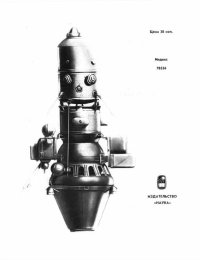
Автоматическая станция «Луна-10» (см. рисунок на четвертой странице обложки) состоит из двух основных частей: искусственного спутника Луны и двигательной установки с приборными отсеками. Искусственный спутник Луны — герметичный контейнер весом 245 кг, в котором установлена следующая научная аппаратура:
трехкомпонентный магнитометр для уточнения нижнего предела возможного магнитного поля Луны;
гамма-спектрометр для исследования интенсивности и спектрального состава гамма-излучения поверхности Луны;
счетчики для регистрации солнечного корпускулярного и космического излучения, а также для исследования мягких электронов с целью обнаружения ионосферы Луны и изучения заряженных частиц «хвоста» магнитосферы Земли у орбиты Луны;
ионные ловушки для регистрации полного потока ионов и электронов солнечного ветра и поиска ионосферы Луны;
пьезоэлектрические датчики для регистрации в межпланетном и окололунном пространстве метеорных частиц с массой, превышающей одну стомиллионную грамма; инфракрасный датчик для определения интегрального теплового излучения Луны; счетчики мягких рентгеновских фотонов для измерения рентгеновского флюоресцентного излучения пород лунной поверхности.
После выхода автоматической станции на окололунную орбиту искусственный спутник Луны был отделен от двигательной установки и начал проводить научные исследования.
По данным телеметрии, бортовая аппаратура спутника работает нормально. Получены и обрабатываются ценные данные, представляющие важный вклад в исследования физических свойств Луны и окололунного пространства.
Полупроводниковый электронный генератор, излучающий в определенной последовательности электрические колебания семи частот (1666,7; 1785,7; 2000; 2173,9; 2500; 2631,6 и 2941,2 герц), неоднократно передавал с борта спутника часть мелодии «Интернационала».
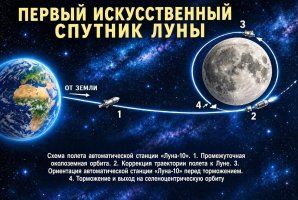
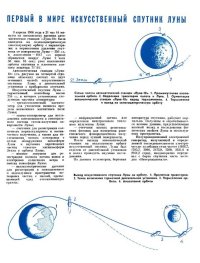
На фото страница журнала "Земля и Вселенная" со схемами полета автоматической станции "Луна-10".

Magazine “The Earth and the Universe”; No. 3; 1966.

THE WORLD’S FIRST ARTIFICIAL SATELLITE OF THE MOON

On April 3, 1966, at 21:44 Moscow time, the automatic station Luna 10 was placed into a selenocentric (lunar) orbit with the following parameters: at perilune, the satellite was 350 km above the lunar surface; at apolune, 1,017 km; the orbital period around the Moon was 2 hours, 58 minutes and 15 seconds; the inclination of the satellite’s orbit to the plane of the lunar equator was 71°54′.

The automatic station Luna 10 (see the illustration on the fourth page of the cover) consists of two main parts: the artificial satellite of the Moon and a propulsion unit with instrument compartments. The artificial satellite of the Moon is a sealed container weighing 245 kg, equipped with the following scientific instruments:

- A three-component magnetometer to determine more precisely the lower limit of the possible magnetic field of the Moon;
- A gamma-ray spectrometer to study the intensity and spectral composition of gamma radiation from the lunar surface;
- Particle counters to detect solar corpuscular and cosmic radiation, as well as to study low-energy electrons in order to detect a lunar ionosphere and investigate charged particles in the “tail” of Earth’s magnetosphere near the Moon’s orbit;
- Ion traps to record the total flux of solar-wind ions and electrons and to search for a lunar ionosphere;
- Piezoelectric sensors to detect, in interplanetary and circumlunar space, meteoroid particles with masses exceeding one hundred-millionth of a gram;
- An infrared sensor to determine the total thermal radiation of the Moon;
- Soft X-ray photon counters to measure the X-ray fluorescence emitted by rocks on the lunar surface.

After the automatic station entered lunar orbit, the artificial satellite of the Moon separated from the propulsion unit and began conducting scientific research.

According to telemetry data, the satellite’s onboard equipment is functioning normally. Valuable data have been received and are being processed, representing an important contribution to the study of the physical properties of the Moon and the space around it.

A semiconductor electronic generator, which emits electrical oscillations at seven frequencies in a specific sequence (1666.7; 1785.7; 2000; 2173.9; 2500; 2631.6 and 2941.2 hertz), repeatedly transmitted part of the melody of “The Internationale” from the satellite.

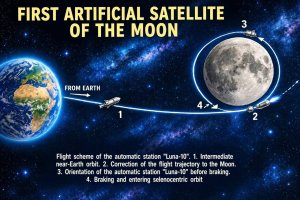
The photograph shows a page from the magazine “The Earth and the Universe” featuring diagrams of the flight of the automatic station Luna 10.

Revista «La Tierra y el Universo»; n.º 3; 1966.


# EL PRIMER SATÉLITE ARTIFICIAL DE LA LUNA DEL MUNDO

El 3 de abril de 1966, a las 21:44, hora de Moscú, la estación automática Luna 10 fue situada en una órbita selenocéntrica (alrededor de la Luna) con los siguientes parámetros: en el perilunio, la distancia del satélite a la superficie lunar era de 350 km; en el apolunio, de 1.017 km; el período de revolución alrededor de la Luna era de 2 horas, 58 minutos y 15 segundos; la inclinación de la órbita del satélite respecto al plano del ecuador lunar era de 71°54′.

La estación automática Luna 10 (véase la ilustración en la cuarta página de la cubierta) consta de dos partes principales: el satélite artificial de la Luna y una unidad propulsora con compartimentos para los instrumentos. El satélite artificial de la Luna es un contenedor hermético de 245 kg de peso, equipado con los siguientes instrumentos científicos:

- Un magnetómetro de tres componentes para precisar el límite inferior del posible campo magnético de la Luna;
- Un espectrómetro de rayos gamma para estudiar la intensidad y la composición espectral de la radiación gamma procedente de la superficie lunar;
- Contadores para registrar la radiación corpuscular solar y la radiación cósmica, así como para estudiar los electrones de baja energía con el fin de detectar la ionosfera lunar e investigar las partículas cargadas de la «cola» de la magnetosfera terrestre en las proximidades de la órbita lunar;
- Trampas de iones para registrar el flujo total de iones y electrones del viento solar y buscar la ionosfera lunar;
- Sensores piezoeléctricos para registrar, en el espacio interplanetario y en las proximidades de la Luna, partículas meteóricas con una masa superior a una cienmillonésima de gramo;
- Un sensor infrarrojo para determinar la radiación térmica total de la Luna;
- Contadores de fotones de rayos X blandos para medir la radiación fluorescente de rayos X emitida por las rocas de la superficie lunar.

Después de que la estación automática alcanzara la órbita lunar, el satélite artificial de la Luna se separó de la unidad propulsora y comenzó a realizar investigaciones científicas.

Según los datos de telemetría, los equipos de a bordo del satélite funcionan con normalidad. Se han recibido y se están procesando valiosos datos que constituyen una importante contribución al estudio de las propiedades físicas de la Luna y del espacio que la rodea.

Un generador electrónico semiconductor, que emite oscilaciones eléctricas en una secuencia determinada de siete frecuencias (1666,7; 1785,7; 2000; 2173,9; 2500; 2631,6 y 2941,2 hercios), transmitió repetidamente desde el satélite una parte de la melodía de «La Internacional».

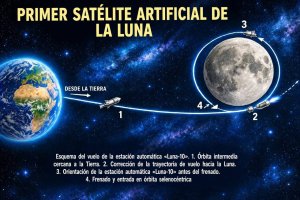
En la fotografía aparece una página de la revista «La Tierra y el Universo» con esquemas del vuelo de la estación automática Luna 10.

Clipboard 11 11 2026 23
 
Frimen1917

Frimen1917

Mecca V.I.P.
VIP
Joined
Jan 9, 2026
Messages
3,361
Points
63
ПЕРВЫЙ В МИРЕ ИСКУССТВЕННЫЙ СПУТНИК ЛУНЫ
Автоматическая станция «Луна-10» - рисунок на четвертой странице обложки журнала "Земля и Вселенная"; №3; 1966.

THE WORLD’S FIRST ARTIFICIAL LUNAR SATELLITE
The *Luna-10* automatic probe — an illustration on the back cover of the magazine *Earth and the Universe* (*Zemlya i Vselennaya*), No. 3, 1966.

EL PRIMER SATÉLITE LUNAR ARTIFICIAL DEL MUNDO
La sonda espacial Luna-10 apareció en la portada de la revista "La Tierra y el Universo" (n.º 3, 1966).

Clipboard 11 12 2026 24
 
Frimen1917

Frimen1917

Mecca V.I.P.
VIP
Joined
Jan 9, 2026
Messages
3,361
Points
63
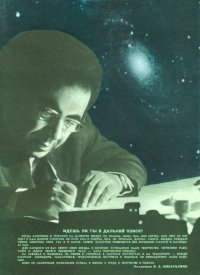
ИДЁШЬ ЛИ ТЫ В ДАЛЬНИЙ ПОИСК?

Когда смотришь в телескоп на далекую звезду, не знаешь, жива она или мертва, ибо свет от нее идет к нам долгие столетия. Но если она и умерла, она не пропала даром: смерть звезды рождает новое небесное тело. Так и в науке: новое зачастую появляется при крушении старого и наследует ему.

Для каждого из вас светит своя звезда, к которой устремлено ваше творчество, терпеливо работайте и ждите своего звездного часа — часа творческой победы!

На заводах и фабриках, на полях и стройках, в научных институтах и на транспорте — всюду работает молодежь, талантливая, трудолюбивая, пытливая и ищущая. Ей принадлежит наше будущее.

Шлю ей наилучшие пожелания успеха в жизни и труде, в творчестве и поиске.
Академик В. А. Амбарцумян

На фото страница журнала "Земля и Вселенная".№3; 1965, с фотографией великого астрофизика советской Армении Виктора Амбарцумяна.
ARE YOU SETTING OUT ON A DISTANT QUEST?


When you look through a telescope at a distant star, you do not know whether it is alive or dead, for its light takes centuries to reach us. But even if the star has died, it has not perished in vain: the death of a star gives birth to a new celestial body. The same is true in science: the new often emerges from the collapse of the old and inherits what came before.

Each of you has your own star shining above you, the star towards which your creative efforts are directed. Work patiently and await your own moment among the stars — the moment of creative triumph!

In factories and plants, in fields and on construction sites, in research institutes and in transport — everywhere, young people are at work: talented, industrious, inquisitive and eager to discover. The future belongs to them.

I send them my very best wishes for success in life and work, in creativity and in the pursuit of knowledge.

Academician V. A. Ambartsumian

The photo shows a page from the magazine "Earth and the Universe" (No. 3, 1965), featuring a photograph of the great astrophysicist from Soviet Armenia, Viktor Ambartsumian.

¿TE ADENTRAS EN UNA BÚSQUEDA LEJANA?


Cuando miras a través de un telescopio una estrella lejana, no sabes si está viva o muerta, porque su luz tarda siglos en llegar hasta nosotros. Pero, aunque la estrella haya muerto, no habrá desaparecido en vano: la muerte de una estrella da nacimiento a un nuevo cuerpo celeste. Lo mismo ocurre en la ciencia: lo nuevo surge a menudo de la destrucción de lo antiguo y hereda su legado.

Cada uno de vosotros tiene su propia estrella que brilla, hacia la cual se dirige vuestra creatividad. Trabajad con paciencia y esperad vuestra propia hora estelar: ¡la hora del triunfo creativo!

En las fábricas y plantas industriales, en los campos y en las obras de construcción, en los institutos científicos y en el transporte, en todas partes trabaja la juventud: talentosa, laboriosa, curiosa y ávida de conocimiento. A ella le pertenece nuestro futuro.

Le envío mis mejores deseos de éxito en la vida y en el trabajo, en la creatividad y en la búsqueda del conocimiento.
Académico V. A. Ambartsumian

La foto muestra una página de la revista "La Tierra y el Universo", número 3, de 1965, con una fotografía del gran astrofísico de la Armenia soviética, Viktor Ambartsumyan.
Clipboard 11 12 2026 01
 
Frimen1917

Frimen1917

Mecca V.I.P.
VIP
Joined
Jan 9, 2026
Messages
3,361
Points
63
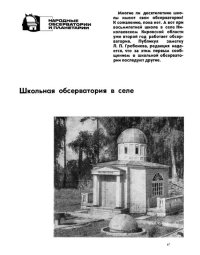
Журнал "Земля и Вселенная" №5; 1969; страницы 83 - 85; раздел: Народные обсерватории и планетарии.
Школьная обсерватория в селе.

Многие ли десятилетние школы имеют свои обсерватории? К сожалению, пока нет. А вот при восьмилетней школе в селе Николаевском Кировской области уже второй год работает обсерватория. Публикуя заметку Л. П. Гребенева, редакция надеется, что за этим первым сообщением о школьной обсерватории последуют другие.
"Разве не интересно самим «поближе» рассмотреть Луну, заглянуть в глубины Вселенной? Но ведь не везде можно построить большую и хорошо оборудованную обсерваторию. А вот строительство маленькой школьной обсерватории оказалось под силу учителям и учащимся села Николаевского. Учителя сами разработали проект здания. Место для будущей обсерватории выбрали на школьной географической площадке. Сельский Совет выделил необходимые средства и материалы, а Кировский облоно (областной отдел народного образования) помог приобрести хороший школьный рефрактор.
Вскоре закипела работа. Вязжали пилы в школьной мастерской, стучали молотки. Учащиеся 5–8 классов, у многих из которых на уме ещё были рогатки и воробьи, начали строить обсерваторию!
Строили в своеобразном порядке: сначала купол, как наиболее сложную часть здания, потом башню и уж в последнюю очередь — само здание. С увлечением, с энтузиазмом работали ребята. Взрослые помогли им покрыть крышу жестью, выточить массивный маятник Фуко, поставить перед входом цементные полушария Земли, застеклить окна.
Строили три года. И вот в начале лета 1968 г. обсерватория была готова. Каждому приятно войти в этот небольшой, но настоящий «храм науки». В звёздном зале свободно размещается класс в 25–30 человек. На стендах — карта Луны, подвижная карта звёздного неба, портреты астрономов, фотографии галактик, звёзд, Солнца и различных небесных явлений. В застеклённых нишах — макеты, представляющие Пулковскую обсерваторию, спуск автоматической межпланетной станции «Венера-4» в атмосфере Венеры, космический корабль на Луне. В центре выставки — стенд, посвящённый М. В. Ломоносову. На потолке — макет планетной системы, посредине зала — маятник Фуко.
Но всех ребят притягивает телескоп, установленный наверху, в башне, откуда в ясные ночи ведутся наблюдения. Пытливый взгляд юных астрономов устремляется далеко — к планетам и звёздам. С восхищением они рассматривают лунные горы, кратеры; обсуждают, в каком море лучше всего «прилуниться»… Ну, а если погода не радует, занятия проводятся в классе. Ребята изучают основы сферической астрономии, выступают с докладами на различные астрономические темы. Всё это помогает учёбе. Астрономический кружок при Николаевской восьмилетней школе всё шире развёртывает свою работу".
Автор статьи - Л. П. Гребенев
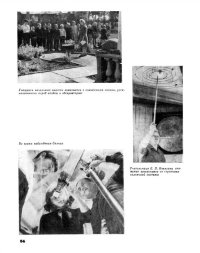
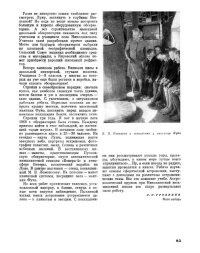
На фото страницы 83 - 85 журнала "Земля и Вселенная" №5; 1969 с фотографиями которые сделал автор статьи.


Journal “Zemlya i Vselennaya” No. 5, 1969; pages 83–85; section: People’s Observatories and Planetariums.

School Observatory in the Village

How many ten-year schools have their own observatories? Unfortunately, very few so far. But at the eight-year school in the village of Nikolayevskoye in the Kirov Region, an observatory has already been operating for the second year. By publishing L. P. Grebenev’s note, the editors hope that this first report about a school observatory will be followed by others.

“Isn’t it interesting to take a closer look at the Moon yourself and peer into the depths of the Universe? Of course, it is not possible everywhere to build a large, well-equipped observatory. But the construction of a small school observatory proved to be within the power of the teachers and students of the village of Nikolayevskoye. The teachers themselves designed the building. The site for the future observatory was chosen on the school’s geographical ground. The Village Soviet allocated the necessary funds and materials, and the Kirov Regional Department of Public Education helped acquire a good school refractor.

Soon work began in earnest. Saws were singing in the school workshop, hammers were knocking. Pupils of grades 5–8, many of whom still had slingshots and sparrows on their minds, began building the observatory!

They built in a peculiar order: first the dome, as the most complicated part of the building, then the tower, and only last the building itself. The children worked with enthusiasm. Adults helped them cover the roof with sheet metal, turn a massive Foucault pendulum, place concrete hemispheres of the Earth in front of the entrance, and glaze the windows.

Construction took three years. And in early summer 1968 the observatory was ready. It is a pleasure for everyone to enter this small but real ‘temple of science.’ The star hall can easily accommodate a class of 25–30 pupils. On the stands there are a map of the Moon, a movable star chart, portraits of astronomers, photographs of galaxies, stars, the Sun and various celestial phenomena. In glass niches there are models representing the Pulkovo Observatory, the descent of the automatic interplanetary station Venera-4 into the atmosphere of Venus, and a spaceship on the Moon. In the centre of the exhibition is a stand dedicated to M. V. Lomonosov. On the ceiling there is a model of the planetary system, and in the middle of the hall stands a Foucault pendulum.

But what attracts all the children most is the telescope installed upstairs in the tower, from where observations are carried out on clear nights. The inquisitive eyes of the young astronomers are directed far away — toward the planets and stars. With admiration they examine the lunar mountains and craters and discuss in which sea it would be best to ‘land on the Moon’… And if the weather is unfavourable, classes are held indoors. The pupils study the fundamentals of spherical astronomy and give reports on various astronomical topics. All this helps their studies. The astronomy club at the Nikolayevskoye eight-year school is expanding its work more and more widely.”

Author of the article — L. P. Grebenev
The photographs on pages 83–85 of the journal “Zemlya i Vselennaya” No. 5, 1969 were taken by the author of the article.


Revista “Zemlya i Vselennaya” Nº 5, 1969; páginas 83–85; sección: Observatorios populares y planetarios.

Observatorio escolar en el pueblo

¿Cuántas escuelas de diez años tienen sus propios observatorios? Por desgracia, todavía muy pocas. Pero en la escuela de ocho años del pueblo de Nikoláyevskoye, en la región de Kírov, ya funciona un observatorio por segundo año. Al publicar la nota de L. P. Grebenev, la redacción espera que este primer informe sobre un observatorio escolar sea seguido por otros.

«¿No es interesante observar de cerca la Luna uno mismo y asomarse a las profundidades del Universo? Por supuesto, no en todas partes se puede construir un gran observatorio bien equipado. Sin embargo, la construcción de un pequeño observatorio escolar resultó estar al alcance de los maestros y alumnos del pueblo de Nikoláyevskoye. Los propios maestros elaboraron el proyecto del edificio. El lugar para el futuro observatorio se eligió en el terreno geográfico de la escuela. El Soviet del pueblo destinó los fondos y materiales necesarios, y el Departamento Regional de Educación Pública de Kírov ayudó a adquirir un buen refractor escolar.

Pronto comenzó el trabajo con entusiasmo. En el taller escolar sonaban las sierras y golpeaban los martillos. Los alumnos de 5.º a 8.º grado, muchos de los cuales todavía pensaban en tirachinas y gorriones, ¡empezaron a construir el observatorio!

Construyeron en un orden peculiar: primero la cúpula, como la parte más complicada del edificio, luego la torre y solo al final el edificio propiamente dicho. Los niños trabajaron con entusiasmo. Los adultos les ayudaron a cubrir el tejado con chapa, a tornear un masivo péndulo de Foucault, a colocar hemisferios de cemento de la Tierra delante de la entrada y a acristalar las ventanas.

La construcción duró tres años. Y a principios del verano de 1968 el observatorio estaba listo. Es un placer para todos entrar en este pequeño pero auténtico “templo de la ciencia”. En la sala de las estrellas cabe cómodamente una clase de 25-30 alumnos. En los paneles hay un mapa de la Luna, un mapa móvil del cielo estrellado, retratos de astrónomos, fotografías de galaxias, estrellas, el Sol y diversos fenómenos celestes. En las vitrinas hay maquetas que representan el Observatorio de Púlkovo, el descenso de la estación interplanetaria automática Venera-4 en la atmósfera de Venus y una nave espacial en la Luna. En el centro de la exposición hay un stand dedicado a M. V. Lomonósov. En el techo hay una maqueta del sistema planetario y en medio de la sala se alza un péndulo de Foucault.

Pero lo que más atrae a todos los chicos es el telescopio instalado arriba, en la torre, desde donde se realizan las observaciones en las noches despejadas. La mirada inquisitiva de los jóvenes astrónomos se dirige lejos, hacia los planetas y las estrellas. Con admiración observan las montañas y los cráteres lunares y discuten en qué mar sería mejor “alunizar”… Y si el tiempo no acompaña, las clases se celebran en el aula. Los alumnos estudian los fundamentos de la astronomía esférica y presentan informes sobre diversos temas astronómicos. Todo esto ayuda en los estudios. El círculo de astronomía de la escuela de ocho años de Nikoláyevskoye amplía cada vez más su trabajo».

Autor del artículo — L. P. Grebenev

Las fotografías de las páginas 83–85 de la revista “Zemlya i Vselennaya” Nº 5, 1969 fueron hechas por el autor del artículo.
Clipboard 11 14 2026 03 Clipboard 11 14 2026 04 Clipboard 11 14 2026 05
 
Frimen1917

Frimen1917

Mecca V.I.P.
VIP
Joined
Jan 9, 2026
Messages
3,361
Points
63
Журнал "Земля и Вселенная" №5; 1969; страницы 83 - 85; раздел: Народные обсерватории и планетарии.
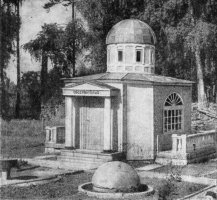
Фотографии к статье "Школьная обсерватория в селе". Автор фотографий - Л. П. Гребенев. На фото - обсерватория в селе Николаевском Кировской области.

*Earth and the Universe* magazine, No. 5, 1969, pp. 83–85; section: Public Observatories and Planetariums.
Photographs for the article "A School Observatory in a Village." Photographer: L. P. Grebenev. The photos show an observatory in the village of Nikolayevskoye, Kirov Oblast.

Revista Tierra y Universo, n.º 5, 1969, páginas 83-85; sección: Observatorios y Planetarios Públicos.
Fotografías para el artículo «Observatorio Escolar en el Pueblo». Fotografías de L. P. Grebenev. Se muestra el observatorio en el pueblo de Nikolaevskoye, óblast de Kirov.

Clipboard 11 14 2026 06
 
Frimen1917

Frimen1917

Mecca V.I.P.
VIP
Joined
Jan 9, 2026
Messages
3,361
Points
63
Журнал "Земля и Вселенная" №5; 1969; страницы 83 - 85; раздел: Народные обсерватории и планетарии.
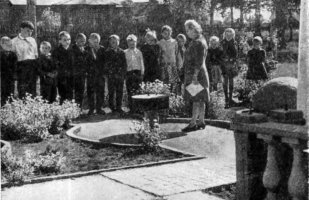
Фотографии к статье "Школьная обсерватория в селе". Автор фотографий - Л. П. Гребенев. На фото - учащиеся начальных классов знакомятся с солнечными часами, установленными перед входом в обсерваторию.
*Earth and the Universe* magazine, No. 5, 1969, pp. 83–85; section: Public Observatories and Planetariums.
Photographs for the article "A School Observatory in a Village." Photos by L. P. Grebenev. The images show primary school students examining a sundial installed in front of the observatory entrance.
Revista Tierra y Universo, n.º 5, 1969, páginas 83-85; sección: Observatorios y Planetarios Públicos.

Fotografías para el artículo «Observatorio Escolar en el Pueblo». Fotografías de L. P. Grebenev. La foto muestra a alumnos de primaria explorando el reloj de sol instalado frente a la entrada del observatorio.
Clipboard 11 14 2026 07
 
Frimen1917

Frimen1917

Mecca V.I.P.
VIP
Joined
Jan 9, 2026
Messages
3,361
Points
63
Журнал "Земля и Вселенная" №5; 1969; страницы 83 - 85; раздел: Народные обсерватории и планетарии.
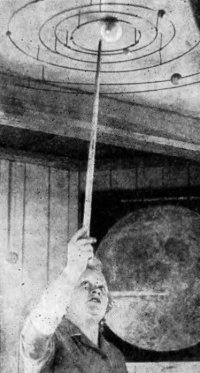
Фотографии к статье "Школьная обсерватория в селе". Автор фотографий - Л. П. Гребенев. На фото - учительница Е.П.Ковязина знакомит школьников со строением Солнечной системы.

*Earth and the Universe* magazine, No. 5, 1969, pp. 83–85; section: Public Observatories and Planetariums.
Photographs for the article "A School Observatory in a Village." Photos by L. P. Grebenev. The images show a teacher, E. P. Kovyazina, introducing schoolchildren to the structure of the solar system.

Revista Tierra y Universo, n.º 5, 1969, páginas 83-85; sección: Observatorios y Planetarios Públicos.
Fotografías para el artículo «Observatorio Escolar en el Pueblo». Fotografías de L. P. Grebenev. En la foto, la maestra E. P. Kovyazina presenta a los escolares la estructura del sistema solar.

Clipboard 11 14 2026 08
 

MuscleMecca Crew

Mecca Staff
Frimen1917

Frimen1917

Mecca V.I.P.
VIP
Joined
Jan 9, 2026
Messages
3,361
Points
63
Журнал "Земля и Вселенная" №5; 1969; страницы 83 - 85; раздел: Народные обсерватории и планетарии.
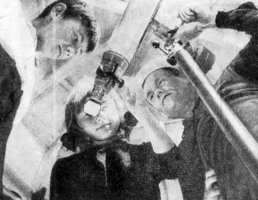
Фотографии к статье "Школьная обсерватория в селе". Автор фотографий - Л. П. Гребенев. На фото - во время наблюдения Солнца.
Earth and the Universe magazine, No. 5, 1969, pp. 83–85; section: Public Observatories and Planetariums.
Photographs for the article "A School Observatory in a Village." Photos by L. P. Grebenev. The images show observations of the Sun in progress.

Revista «La Tierra y el Universo», n.º 5, 1969, páginas 83-85; sección: Observatorios y Planetarios Públicos.

Fotografías para el artículo «Observatorio Escolar en el Pueblo». Fotografías de L. P. Grebenev. Capturadas durante una observación solar.


Clipboard 11 14 2026 09
 
Frimen1917

Frimen1917

Mecca V.I.P.
VIP
Joined
Jan 9, 2026
Messages
3,361
Points
63
Журнал "Земля и Вселенная" №5; 1969; страницы 83 - 85; раздел: Народные обсерватории и планетарии.
Фотографии к статье "Школьная обсерватория в селе". Автор фотографий - Л. П. Гребенев. На фото
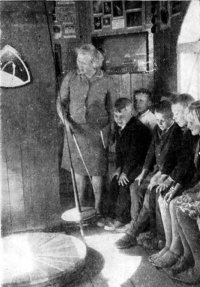
Е.П.Ковязина и школьники у маятника Фуко.

*Earth and the Universe* magazine, No. 5, 1969; pages 83–85; section: Public Observatories and Planetariums.

Photographs for the article "A School Observatory in a Village." Photographs by L. P. Grebenev. Pictured:
E. P. Kovyazina and schoolchildren by a Foucault pendulum.
Revista Tierra y Universo, n.º 5, 1969, páginas 83-85; sección: Observatorios y Planetarios Públicos.

Fotografías para el artículo «Observatorio Escolar en el Pueblo». Fotografías de L. P. Grebenev. En la foto:
E. P. Kovyazina y escolares junto a un péndulo de Foucault.
Clipboard 11 14 2026 10
 
Frimen1917

Frimen1917

Mecca V.I.P.
VIP
Joined
Jan 9, 2026
Messages
3,361
Points
63
Школьная обсерватория в селе Николаевском Кировской области до наших дней не сохранилась. Вместе с ней прекратила существование и сама школа.
Что известно о судьбе школы и села:
Закрытие школы. Единственное село с названием Николаевское в Кировской области находится в Шабалинском районе (ранее — Николаевский сельсовет). Из-за оттока населения и сокращения числа учеников образовательное учреждение в селе было закрыто. На сегодняшний день в перечне образовательных учреждений Шабалинского района школы в селе Николаевском нет.
Судьба постройки. Школьная обсерватория конца 1960-х годов представляла собой деревянную или лёгкую каркасную пристройку (павильон с раздвижной крышей или куполом), возведённую силами учителей и учеников. После закрытия школы и прекращения кружковой работы подобные самодельные конструкции без регулярного ухода быстро ветшали и разбирались.
Современное состояние села. Население села Николаевского за постсоветские десятилетия сократилось до нескольких человек (по переписи 2010 года там числилось всего 3 постоянных жителя).
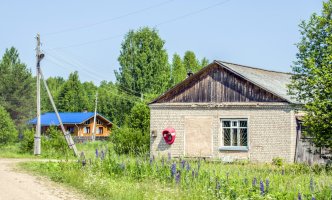
На фото - дома в селе Николаевское.
Июнь 2021 г. Фото Е. Чудиновских
The school observatory in the village of Nikolayevskoye, Kirov Oblast, has not survived to the present day. The school itself has also ceased to exist.

What is known about the fate of the school and the village:

Closure of the school. The only village named Nikolayevskoye in Kirov Oblast is located in the Shabalinsky District (formerly the Nikolayevsky Village Council). Due to population outflow and a decline in the number of students, the educational institution in the village was closed. Today, there is no school in the village of Nikolayevskoye listed among the educational institutions of the Shabalinsky District.

Fate of the structure. The school observatory, dating back to the late 1960s, consisted of a wooden or lightweight frame extension—a pavilion featuring a sliding roof or a dome—built by the teachers and students themselves. Following the closure of the school and the end of extracurricular activities, such makeshift structures—lacking regular maintenance—quickly fell into disrepair and were eventually dismantled.

Current state of the village.
Over the decades since the collapse of the Soviet Union, the population of the village of Nikolayevskoye has dwindled to just a few individuals (the 2010 census recorded only 3 permanent residents).

Pictured: houses in the village of Nikolayevskoye, June 2021. Photo by E. Chudinovskikh.
El observatorio escolar de la aldea de Nikolaevskoye, en la región de Kirov, no ha sobrevivido hasta nuestros días. La escuela misma dejó de existir junto con él.


Lo que se sabe sobre el destino de la escuela y la aldea:


Cierre de la escuela.
La única aldea llamada Nikolaevskoye en la región de Kirov se encuentra en el distrito de Shabalinsky (anteriormente Consejo de la Aldea de Nikolaevskoye). Debido a la emigración de la población y la disminución del número de estudiantes, la institución educativa de la aldea cerró. Actualmente, no hay ninguna escuela en Nikolaevskoye registrada entre las instituciones educativas del distrito de Shabalinsky.

Destino del edificio. El observatorio escolar de finales de la década de 1960 era una extensión de madera o estructura ligera (un pabellón con techo o cúpula retráctil), erigida por profesores y alumnos. Tras el cierre de la escuela y el cese de las actividades extracurriculares, estas estructuras improvisadas se deterioraron rápidamente y fueron desmanteladas sin un mantenimiento regular.

Estado actual de la aldea. La población del pueblo de Nikolaevskoye se ha reducido drásticamente en las décadas posteriores a la disolución de la Unión Soviética (según el censo de 2010, solo había tres residentes permanentes).

Foto: Casas en el pueblo de Nikolaevskoye. Junio de 2021. Fotografía de E. Chudinovskikh.
Nikolaevskoe
 
Frimen1917

Frimen1917

Mecca V.I.P.
VIP
Joined
Jan 9, 2026
Messages
3,361
Points
63
В Советском Союзе сложилась стройная система работы с юными астрономами и космонавтами в рамках Юношеской секции ВАГО (ВАГО СССР - Всесоюзное астрономо-геодезическое общество - крупнейшая добровольная научно-общественная организация Советского Союза, объединявшая специалистов и любителей астрономии, космонавтики, геодезии и картографии. Общество действовало с 1932 по 1991 год и находилось в ведении Академии наук СССР). Их деятельностью руководил Центральный совет Всесоюзного астрономо-геодезического общества и Бюро юношеской секции ВАГО. В составе бюро были представлены наиболее опытные руководители юношеских астрономических коллективов страны. Все общесоюзные мероприятия юных астрономов планировались, готовились и осуществлялись юношеской секцией ВАГО совместно с Центральным Комитетом Всесоюзного Ленинского Коммунистического Союза Молодежи, правлением Всесоюзного общества «Знание» и Министерством просвещения СССР. В сотрудничестве с этими организациями ВАГО проводило Всесоюзные слеты и конференции юных астрономов и космонавтов, смотры творческих работ, семинары руководителей детских и юношеских астрономических коллективов.
По инициативе Бюро юношеской секции ВАГО активисты астрономических кружков Советского Союза получали возможность ежегодно встречаться и обмениваться опытом во время Всесоюзной недели науки, техники и производства. Такие слеты школьников Центральный Комитет Всесоюзного Ленинского Коммунистического Союза Молодежи и другие центральные организации проводили в дни зимних каникул поочередно в столицах союзных республик и других крупных городах страны. Секции юных астрономов и космонавтов под руководством ВАГО работали также во время Всероссийских слетов актива научных обществ учащихся.
В дни слетов юные любители науки встречались с крупнейшими учеными страны, посещали научно-исследовательские и учебные институты, промышленные предприятия. На секциях проходило конкурсное прослушивание докладов исследовательского и реферативного характера. Последняя Всесоюзная тематическая конференция юных астрономов и космонавтов , посвященная обсуждению программы научно-любительских наблюдений кометы Галлея и связанных с ней метеорных потоков, состоялась летом 1984 г. Участники конференции прослушали интересные доклады, для них были организованы встречи с учеными в Институте космических исследований и Государственном астрономическом институте им. П.К. Штернберга в Москве.
Первый Всесоюзный слёт юных астрономов и космонавтов был проведен в июле 1969 г. в Баку и на Шемахинской астрофизической обсерватории Академии Наук Азербайджанской Советской Социалистической Республики . Место проведения большого сбора юных астрономов и космонавтов выбиралось обычно таким образом, чтобы его базой могли стать и профессиональная обсерватория, и сильный коллектив любителей астрономии. Именно такой коллектив сложился в Бакинском Дворце пионеров.
Базой второго слета, который состоялся в Москве в 1972 г., стали Астрономический институт им. П.К. Штернберга, отдел астрономии и космонавтики Московского городского Дворца пионеров и школьников. Несколько дней участники слета работали в павильоне «Юные натуралисты и техники» на ВДНХ СССР. Дело в том, что начиная с 1971 г. одновременно со слетом проводился смотр творческих работ юных астрономов. В павильоне в дни слета был широко развернут показ работ любителей астрономии: самодельных телескопов и приспособлений к ним, астрографов, лабораторных приборов, наглядных пособий, журналов наблюдений, снимков астрономических объектов, опубликованных статей, докладов и т.п. Лауреаты смотров (вне зависимости от места проведения слета) награждались медалями ВДНХ.
Участники второго слета побывали в гостях у советских космонавтов в Звёздном городке.
А через несколько лет на третий слет юные астрономы и космонавты страны собрались в своем «Звёздном городке». Так назвали палаточный городок в Шемахинской обсерватории, сотрудники которой вновь радушно принимали своих юных коллег из всех союзных республик. И вновь на 10 дней удивительно молодым стал преобладающий состав наблюдателей Шемахинской обсерватории. Ведь население «Звёздного» составляло более 200 мальчишек и девчонок. В гости к ребятам приехали летчик-космонавт СССР дважды Герой Советского Союза Н.Н. Рукавишников, астрономы из Москвы, Ленинграда и Горького.
Программа слёта была обширна и разнообразна: смотр творческих работ и научно-теоретическая конференция, лекции крупнейших ученых и диспут о внеземных цивилизациях, астрономическая олимпиада и вечера вопросов и ответов, вечер дружбы.
И все-таки самым интересным для ребят оставались ночные астрономические наблюдения. На слете работали секции наблюдателей Солнца, Луны и планет, метеоров, комет и переменных звезд. Наиболее результативно прошли метеорные наблюдения. А Казимиру Чернису из Вильнюса и Дмитрию Фомину из Москвы в одну из ночей посчастливилось переоткрыть новую комету.
Четвертый слет юных астрономов и космонавтов прошел осенью 1979 г. В этот раз на целый месяц собрались на берегу Чёрного моря 540 юных астрономов и космонавтов. Они разместились в дружине «Звездная» Всероссийского пионерского лагеря «Орлёнок». Для проведения слета в «Орлёнке» были все условия. Здесь функционировали Дом авиации и космонавтики с действующей парашютной вышкой и тренажерами, астрономическая обсерватория с оптическим телескопом в башне и радиотелескопом, с лабораториями и площадкой для наблюдений.
Все делегаты слёта стали участниками игры «Звёздный десант». Каждый «космический экипаж» выбирал цель полета, составлял программу, разрабатывал проект необходимых космических комплексов и изготовлял их макеты. Руководил «Звёздным десантом» летчик-космонавт Н.Н. Рукавишников. Результаты «Звёздного десанта» ребята использовали в своих научно-фантастических проектах, которые они успешно защитили перед учеными, гостями слета.
На этом слёте состоялись конкурсы астрономов-наблюдателей, юных лекторов, космический карнавал, «межпланетные» олимпийские игры, театрализованное представление «У моря Мечты».
Хозяином пятого слёта (лето 1982 г.) стал коллектив Симферопольского общества юных любителей астрономии (СОЛА), о котором мы рассказывали выше. Во время работы слёта была развернута выставка творческих работ учащихся, прошли заседания секций, состоялись встречи с учеными, летчиком-космонавтом СССР дважды Героем Советского Союза Г.М. Гречко. Каждый вечер ребята могли вести наблюдения на инструментах юношеской обсерватории СОЛА. Участники слёта посетили Крымскую астрофизическую обсерваторию, Центр дальней космической связи, побывали в Артеке, в городе-герое Севастополе.
Всесоюзные слёты являлись не только школой юных астрономов, но и незабываемым праздником дружбы и товарищества.
Бюро юношеской секции ВАГО определило несколько основных центров для оказания практической помощи юным любителям астрономии. Эти центры поддерживали переписку с коллективами юных астрономов, высылали им инструктивно-методические материалы, проводили очные и заочные консультации. Бюро юношеской секции и его центры организовывали патрульную службу неба юных астрономов. Цель службы - обнаружение новых звезд и комет, наблюдения болидов и метеорных потоков.
Юношеская секция ВАГО поддерживала связи с любителями астрономии социалистических стран, которые накопили значительный опыт научно-любительской и массовой работы. В особенности эффективна и разветвлена была сеть детских и юношеских астрономических коллективов в Чехословацкой Социалистической Республике и Венгерской Народной Республике. Происходил обмен делегациями юных астрономов социалистических стран.
Юношеские секции работали практически во всех местных отделениях ВАГО. Работой секции руководило её бюро.
Зачастую ядром юношеских секций становились астрономические кружки. Наиболее серьёзные старшие кружковцы, проявившие устойчивый интерес к занятиям астрономией, получали рекомендации для вступления в члены юношеской секции ВАГО. В юношеской секции получали возможность работать и отдельные любители астрономии, по тем или иным причинам не занимающиеся в кружках.

Юношеские секции отделений ВАГО проводили свои собрания, на которых принимался план работы, обсуждались итоги сделанного, заслушивались научные доклады. Члены юношеской секции дежурили у телескопов во время массовых демонстрационных наблюдений, становились помощниками руководителей астрономических кружков, руководили кружками в школах, во дворах, пионерских лагерях.
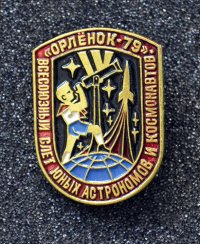
На фото: Значок посвященный всесоюзному слету юных астрономов и космонавтов в пионерском лагере "Орленок" (1979).


A well-organized system for working with young astronomers and cosmonauts developed in the Soviet Union within the Youth Section of the All-Union Astronomical and Geodetic Society (VAGO).

The All-Union Astronomical and Geodetic Society of the USSR (VAGO) was the largest voluntary scientific and public organization in the Soviet Union, bringing together professionals and enthusiasts of astronomy, space exploration, geodesy and cartography. The Society operated from 1932 to 1991 and was under the authority of the USSR Academy of Sciences.

The activities of young astronomers and cosmonauts were directed by the Central Council of the All-Union Astronomical and Geodetic Society and the Bureau of its Youth Section. The Bureau included the most experienced leaders of youth astronomy groups from across the country.

All Union-wide events for young astronomers were planned, prepared and organized by the VAGO Youth Section in cooperation with the Central Committee of the All-Union Leninist Young Communist League (Komsomol), the Board of the All-Union Society "Znanie" (Knowledge), and the USSR Ministry of Education.

In cooperation with these organizations, VAGO held All-Union gatherings and conferences for young astronomers and cosmonauts, exhibitions and competitions of creative work, and seminars for leaders of children's and youth astronomy groups.

On the initiative of the Bureau of the VAGO Youth Section, active members of astronomy clubs throughout the Soviet Union had the opportunity to meet annually and exchange experience during the All-Union Week of Science, Technology and Production.

Such gatherings for schoolchildren were organized by the Central Committee of the All-Union Leninist Young Communist League and other central organizations during the winter holidays, taking place in turn in the capitals of the Union republics and other major cities of the country. Sections for young astronomers and cosmonauts, under the guidance of VAGO, also operated during the All-Russian gatherings of active members of scientific societies of school students.

During these gatherings, young science enthusiasts met leading scientists of the country and visited research and educational institutes and industrial enterprises. The sections held competitive presentations of research papers and review papers.

The last All-Union thematic conference of young astronomers and cosmonauts, devoted to discussing a programme of amateur scientific observations of Halley's Comet and the meteor showers associated with it, took place in the summer of 1984. Conference participants listened to interesting presentations and attended meetings with scientists at the Space Research Institute and the P.K. Sternberg State Astronomical Institute in Moscow.

The First All-Union Gathering of Young Astronomers and Cosmonauts was held in July 1969 in Baku and at the Shamakhi Astrophysical Observatory of the Academy of Sciences of the Azerbaijan Soviet Socialist Republic.

The location for such a major gathering of young astronomers and cosmonauts was usually selected so that it could be based both at a professional observatory and at a well-established community of amateur astronomers. Such a community had developed at the Baku Palace of Pioneers.

The base for the second gathering, held in Moscow in 1972, was the P.K. Sternberg Astronomical Institute and the Department of Astronomy and Cosmonautics at the Moscow City Palace of Pioneers and Schoolchildren.

For several days, participants worked in the "Young Naturalists and Technicians" pavilion at the USSR Exhibition of Achievements of the National Economy (VDNKh). This was because, beginning in 1971, an exhibition and competition of creative works by young astronomers was held alongside the gathering.

During the gathering, the pavilion hosted an extensive exhibition of work by amateur astronomers: homemade telescopes and accessories for them, astrographs, laboratory instruments, teaching aids, observation logs, photographs of astronomical objects, published articles, reports and other materials. Winners of the exhibitions, regardless of where the gathering was held, received VDNKh medals.

Participants in the second gathering visited Soviet cosmonauts in Star City.

A few years later, young astronomers and cosmonauts from across the country assembled for the third gathering in their own "Star City". This was the name given to the tent camp at the Shamakhi Observatory, whose staff once again warmly welcomed their young colleagues from all the Union republics.

Once again, for ten days, the observatory's predominantly professional team of observers became remarkably young. The population of this "Star City" exceeded 200 boys and girls.

The young participants were visited by USSR pilot-cosmonaut and twice Hero of the Soviet Union N.N. Rukavishnikov, as well as astronomers from Moscow, Leningrad and Gorky.

The programme of the gathering was extensive and varied: an exhibition of creative works, a scientific and theoretical conference, lectures by leading scientists, a debate on extraterrestrial civilizations, an astronomy olympiad, question-and-answer evenings, and an evening of friendship.

Nevertheless, the most exciting activity for the young participants remained nighttime astronomical observations.

The gathering included observing sections devoted to the Sun, the Moon and planets, meteors, comets and variable stars. The meteor observations were particularly successful. And one night, Kazimierz Černis from Vilnius and Dmitry Fomin from Moscow were fortunate enough to rediscover a new comet.

The Fourth Gathering of Young Astronomers and Cosmonauts took place in the autumn of 1979.

This time, 540 young astronomers and cosmonauts gathered for an entire month on the shores of the Black Sea. They were accommodated in the "Zvezdnaya" (Star) unit of the "Orlyonok" All-Russian Pioneer Camp.

Orlyonok had all the facilities necessary for holding the gathering. It had an Aviation and Cosmonautics House with an operational parachute tower and simulators, an astronomical observatory with an optical telescope in its tower and a radio telescope, as well as laboratories and an observation site.

All delegates took part in the "Star Landing" game. Each "space crew" chose a flight destination, prepared a programme, developed a project for the necessary space systems and built their models.

The "Star Landing" game was supervised by pilot-cosmonaut N.N. Rukavishnikov.

The participants used the results of the "Star Landing" game in their science-fiction projects, which they successfully defended before scientists and guests of the gathering.

The gathering also featured competitions for observing astronomers and young lecturers, a space carnival, "interplanetary" Olympic Games, and a theatrical performance entitled "By the Sea of Dreams".

The Fifth Gathering (summer 1982) was hosted by the Simferopol Society of Young Astronomy Enthusiasts (SOLA), whose activities we have described above.

During the gathering, an exhibition of students' creative works was organized, section meetings were held, and participants met scientists and USSR pilot-cosmonaut, twice Hero of the Soviet Union, G.M. Grechko.

Every evening, the young participants could conduct observations using the instruments of the SOLA Youth Observatory.

The gathering participants visited the Crimean Astrophysical Observatory and the Deep Space Communications Centre. They also visited Artek and the Hero City of Sevastopol.

The All-Union gatherings were not only a school for young astronomers but also an unforgettable celebration of friendship and fellowship.

The Bureau of the VAGO Youth Section designated several major centres to provide practical assistance to young astronomy enthusiasts.

These centres maintained correspondence with groups of young astronomers, sent them instructional and methodological materials, and provided consultations both in person and by correspondence.

The Bureau of the Youth Section and its centres organized a sky patrol service for young astronomers. Its purpose was to discover new stars and comets and to observe fireballs and meteor showers.

The VAGO Youth Section maintained contacts with astronomy enthusiasts in socialist countries, which had accumulated considerable experience in amateur scientific activities and large-scale public outreach.

The network of children's and youth astronomy groups was particularly effective and extensive in the Czechoslovak Socialist Republic and the Hungarian People's Republic. Delegations of young astronomers from socialist countries exchanged visits.

Youth sections operated in practically all local branches of VAGO. The work of each section was directed by its Bureau.

Astronomy clubs often formed the core of the youth sections. The most serious senior club members, who had demonstrated a sustained interest in studying astronomy, received recommendations to join the VAGO Youth Section.

The Youth Section also provided opportunities for individual astronomy enthusiasts to participate, even if, for one reason or another, they did not attend an astronomy club.

The youth sections of VAGO's local branches held their own meetings, at which work plans were adopted, completed activities were reviewed, and scientific presentations were heard.

Members of the Youth Section took turns staffing telescopes during public observing events, assisted astronomy club leaders, and ran astronomy clubs in schools, courtyards and Pioneer camps.

Photo caption: Badge commemorating the All-Union Gathering of Young Astronomers and Cosmonauts at the Orlyonok Pioneer Camp (1979).
En la Unión Soviética se desarrolló un sistema bien estructurado de trabajo con jóvenes astrónomos y cosmonautas en el marco de la Sección Juvenil de la Sociedad Astronómica y Geodésica de Toda la Unión (VAGO).


La Sociedad Astronómica y Geodésica de Toda la Unión de la URSS (VAGO) fue la mayor organización científica y social voluntaria de la Unión Soviética, que agrupaba a especialistas y aficionados a la astronomía, la exploración espacial, la geodesia y la cartografía. La Sociedad funcionó desde 1932 hasta 1991 y dependía de la Academia de Ciencias de la URSS.

Las actividades de los jóvenes astrónomos y cosmonautas estaban dirigidas por el Consejo Central de la Sociedad Astronómica y Geodésica de Toda la Unión y por el Buró de su Sección Juvenil. En el Buró estaban representados los responsables más experimentados de los colectivos astronómicos juveniles de todo el país.

Todos los acontecimientos de ámbito nacional destinados a los jóvenes astrónomos eran planificados, preparados y organizados por la Sección Juvenil de VAGO en colaboración con el Comité Central de la Unión Leninista de la Juventud Comunista de Toda la Unión (Komsomol), la dirección de la Sociedad de Toda la Unión «Znanie» (Conocimiento) y el Ministerio de Educación de la URSS.

En colaboración con estas organizaciones, VAGO celebraba encuentros y conferencias de ámbito nacional para jóvenes astrónomos y cosmonautas, exposiciones y concursos de trabajos creativos, así como seminarios para responsables de colectivos astronómicos infantiles y juveniles.

Por iniciativa del Buró de la Sección Juvenil de VAGO, los miembros activos de los clubes astronómicos de toda la Unión Soviética tenían la oportunidad de reunirse cada año e intercambiar experiencias durante la Semana de Toda la Unión de la Ciencia, la Tecnología y la Producción.

Estos encuentros escolares eran organizados por el Comité Central de la Unión Leninista de la Juventud Comunista de Toda la Unión y otras organizaciones centrales durante las vacaciones de invierno. Se celebraban alternativamente en las capitales de las repúblicas de la Unión y en otras grandes ciudades del país.

Las secciones de jóvenes astrónomos y cosmonautas, bajo la dirección de VAGO, también desarrollaban sus actividades durante los encuentros de ámbito ruso de los miembros activos de las sociedades científicas de estudiantes.

Durante los encuentros, los jóvenes aficionados a la ciencia se reunían con los científicos más destacados del país y visitaban institutos de investigación y centros educativos, así como empresas industriales. En las secciones se realizaban presentaciones competitivas de trabajos de investigación y de carácter bibliográfico y divulgativo.

La última conferencia temática de ámbito nacional de jóvenes astrónomos y cosmonautas, dedicada al debate sobre un programa de observaciones científicas realizadas por aficionados del cometa Halley y de las lluvias de meteoros relacionados con él, tuvo lugar en el verano de 1984.

Los participantes en la conferencia escucharon interesantes ponencias y pudieron reunirse con científicos en el Instituto de Investigaciones Espaciales y en el Instituto Astronómico Estatal P. K. Sternberg de Moscú.

El Primer Encuentro de Toda la Unión de Jóvenes Astrónomos y Cosmonautas se celebró en julio de 1969 en Bakú y en el Observatorio Astrofísico de Shamakhi, perteneciente a la Academia de Ciencias de la República Socialista Soviética de Azerbaiyán.

El lugar de celebración de estos grandes encuentros de jóvenes astrónomos y cosmonautas solía elegirse de manera que pudiera contar tanto con un observatorio profesional como con un colectivo consolidado de aficionados a la astronomía. Precisamente ese colectivo se había formado en el Palacio de Pioneros de Bakú.

La sede del segundo encuentro, celebrado en Moscú en 1972, fue el Instituto Astronómico P. K. Sternberg y el Departamento de Astronomía y Cosmonáutica del Palacio Municipal de Pioneros y Escolares de Moscú.

Durante varios días, los participantes trabajaron en el pabellón «Jóvenes naturalistas y técnicos» de la Exposición de los Logros de la Economía Nacional de la URSS (VDNKh).

Esto se debía a que, desde 1971, paralelamente al encuentro se celebraba una exposición-concurso de trabajos creativos de jóvenes astrónomos.

Durante los días del encuentro, el pabellón acogió una amplia muestra de los trabajos de los aficionados a la astronomía: telescopios construidos artesanalmente y accesorios para ellos, astrógrafos, instrumentos de laboratorio, materiales didácticos, diarios de observación, fotografías de objetos astronómicos, artículos publicados, ponencias y otros materiales.

Los galardonados en las exposiciones, independientemente del lugar donde se celebrara el encuentro, recibían medallas de la VDNKh.

Los participantes en el segundo encuentro visitaron a los cosmonautas soviéticos en la Ciudad de las Estrellas.

Unos años más tarde, los jóvenes astrónomos y cosmonautas de todo el país se reunieron para el tercer encuentro en su propia «Ciudad de las Estrellas».

Así se denominó al campamento de tiendas de campaña instalado en el Observatorio de Shamakhi, cuyo personal volvió a recibir cordialmente a sus jóvenes colegas de todas las repúblicas de la Unión.

Una vez más, durante diez días, el equipo de observadores del observatorio, formado habitualmente por profesionales, rejuveneció de manera extraordinaria. La población de aquella «Ciudad de las Estrellas» superaba los 200 chicos y chicas.

Los jóvenes recibieron la visita del piloto-cosmonauta de la URSS y dos veces Héroe de la Unión Soviética N. N. Rukavishnikov, así como de astrónomos procedentes de Moscú, Leningrado y Gorki.

El programa del encuentro era amplio y variado: una exposición de trabajos creativos, una conferencia científico-teórica, conferencias de científicos destacados, un debate sobre las civilizaciones extraterrestres, una olimpiada de astronomía, veladas de preguntas y respuestas y una velada de amistad.

Sin embargo, lo que más interesaba a los jóvenes seguían siendo las observaciones astronómicas nocturnas.

En el encuentro funcionaron secciones de observación del Sol, la Luna y los planetas, de meteoros, cometas y estrellas variables.

Las observaciones de meteoros fueron especialmente fructíferas. Y una noche, Kazimieras Černis, de Vilna, y Dmitri Fomin, de Moscú, tuvieron la suerte de redescubrir un nuevo cometa.

El Cuarto Encuentro de Jóvenes Astrónomos y Cosmonautas se celebró en otoño de 1979.

En esta ocasión, 540 jóvenes astrónomos y cosmonautas se reunieron durante un mes entero en la costa del mar Negro. Se alojaron en la unidad «Zvezdnaya» (Estrella) del campamento de pioneros de ámbito nacional «Orlyonok».

«Orlyonok» disponía de todas las instalaciones necesarias para celebrar el encuentro. Allí funcionaban la Casa de la Aviación y la Cosmonáutica, equipada con una torre de paracaidismo en funcionamiento y simuladores; un observatorio astronómico con un telescopio óptico instalado en su torre y un radiotelescopio, además de laboratorios y una plataforma de observación.

Todos los delegados participaron en el juego «Desembarco Estelar». Cada «tripulación espacial» elegía un objetivo de vuelo, elaboraba un programa, desarrollaba un proyecto de los complejos espaciales necesarios y construía sus maquetas.

El responsable del «Desembarco Estelar» era el piloto-cosmonauta N. N. Rukavishnikov.

Los jóvenes utilizaron los resultados del «Desembarco Estelar» en sus proyectos de ciencia ficción, que defendieron con éxito ante los científicos y los invitados del encuentro.

Durante este encuentro también se celebraron concursos de astrónomos observadores y jóvenes conferenciantes, un carnaval espacial, unos Juegos Olímpicos «interplanetarios» y una representación teatral titulada «Junto al mar de los sueños».

El anfitrión del Quinto Encuentro (verano de 1982) fue el colectivo de la Sociedad de Simferópol de Jóvenes Aficionados a la Astronomía (SOLA), de la que ya hemos hablado anteriormente.

Durante el encuentro se organizó una exposición de trabajos creativos de los estudiantes, se celebraron reuniones de las distintas secciones y tuvieron lugar encuentros con científicos y con el piloto-cosmonauta de la URSS, dos veces Héroe de la Unión Soviética, G. M. Grechko.

Cada noche, los jóvenes podían realizar observaciones con los instrumentos del Observatorio Juvenil de SOLA.

Los participantes visitaron el Observatorio Astrofísico de Crimea y el Centro de Comunicaciones Espaciales de Largo Alcance. También estuvieron en Artek y en la ciudad heroica de Sebastopol.

Los encuentros de ámbito nacional no eran solamente una escuela para jóvenes astrónomos, sino también una celebración inolvidable de amistad y compañerismo.

El Buró de la Sección Juvenil de VAGO determinó varios centros principales destinados a prestar ayuda práctica a los jóvenes aficionados a la astronomía.

Estos centros mantenían correspondencia con los colectivos de jóvenes astrónomos, les enviaban materiales instructivos y metodológicos y ofrecían consultas presenciales y a distancia.

El Buró de la Sección Juvenil y sus centros organizaban un servicio de patrullaje del cielo a cargo de jóvenes astrónomos. Su objetivo era descubrir nuevas estrellas y cometas, así como observar bólidos y lluvias de meteoros.

La Sección Juvenil de VAGO mantenía relaciones con los aficionados a la astronomía de los países socialistas, que habían acumulado una considerable experiencia en actividades científicas de aficionados y en la divulgación científica a gran escala.

La red de colectivos astronómicos infantiles y juveniles era especialmente eficaz y extensa en la República Socialista Checoslovaca y en la República Popular Húngara. Se realizaban intercambios de delegaciones de jóvenes astrónomos de los países socialistas.

Las secciones juveniles funcionaban prácticamente en todas las delegaciones locales de VAGO. El trabajo de cada sección estaba dirigido por su propio Buró.

Con frecuencia, el núcleo de las secciones juveniles estaba formado por clubes astronómicos.

Los miembros más destacados de mayor edad de estos clubes, que habían demostrado un interés constante por el estudio de la astronomía, recibían recomendaciones para incorporarse a la Sección Juvenil de VAGO.

La Sección Juvenil también ofrecía la posibilidad de participar a aficionados individuales a la astronomía que, por una u otra razón, no asistían a los clubes.

Las secciones juveniles de las delegaciones de VAGO celebraban sus propias reuniones, en las que se aprobaba el plan de trabajo, se examinaban los resultados de las actividades realizadas y se escuchaban ponencias científicas.

Los miembros de la Sección Juvenil realizaban turnos de vigilancia junto a los telescopios durante las observaciones públicas, se convertían en ayudantes de los responsables de los clubes astronómicos y dirigían clubes en escuelas, patios y campamentos de pioneros.

Pie de foto: Insignia conmemorativa del Encuentro de Toda la Unión de Jóvenes Astrónomos y Cosmonautas celebrado en el campamento de pioneros «Orlyonok» (1979).
Tuapse iv vsesoyuznyiy slet yunykh astronomov i kosmonavtov orlenok 79 1
 
Top