• Legal Notice – MuscleMecca Forums

    MuscleMecca.com is an educational discussion platform. We do not sell, promote, or endorse any bodybuilding gear, supplements, research chemicals, or performance-enhancing substances.

    All discussions are for educational and informational purposes only. Nothing posted on this forum should be considered medical or legal advice.

    Do not attempt to sell, source, or promote illegal substances. Any such activity will result in an immediate and permanent ban and may be reported to the proper authorities.

    By using this site, you agree to comply with all forum rules, disclaimers, and applicable laws in your jurisdiction.

    Read Our Full Disclaimer and Forum Rules

History of Soviet cosmonautics.

Frimen1917

Frimen1917

Mecca V.I.P.
VIP
Joined
Jan 9, 2026
Messages
3,150
Points
63
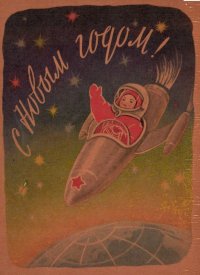
Космические открытки в СССР.
........................................................
Открытка "С Новым годом".1961 год.
Художник Т. Гиршберт.

Полиграфкомбинат г. Калинин.
Space-themed postcards in the USSR.
........................................................


"Happy New Year" postcard. 1961.
Artist: T. Girshbert.

Kalinin Printing Combine.


Postales espaciales en la URSS.

........................................................
Postal "Feliz Año Nuevo". 1961.
Artista: T. Girshbert.

Imprenta de Kalinin.
HTYq95ENSq2mVoXcWHeeKysOwR6Sr7iwfoZvEFUqCNqroelI534nTPo3ZVZpFe3j4Me7 iZmt28Jebbd8jumQ0s7
 
Frimen1917

Frimen1917

Mecca V.I.P.
VIP
Joined
Jan 9, 2026
Messages
3,150
Points
63
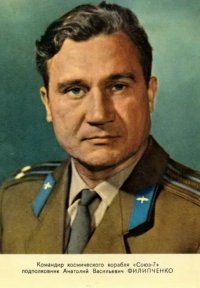
"Каждый старт в космос — это праздник», — сказал Анатолий Филипченко. И это так. Наше время стало эпохой торжества научной мысли. С высот абстрактных построений космонавтика спустилась в возделываемые человеком долины, становясь практически нужной людям. Исследования космоса уже сейчас приносят свои реальные плоды. Наблюдения с орбиты стали эффективным средством в предсказаниях погоды. Спутники позволили создать устойчивую систему связи и телевидения между самыми отдаленными точками не только нашей страны, но и планеты в целом, стали инструментом познания в арсенале самых различных научных областей. Геодезические спутники уточняют карты, геофизические — позволяют изучать недра и облегчают прогнозы землетрясений... Орбитальные станции и спутники способны решать проблемы навигации и океанологии, помогают наблюдать за состоянием посевов в глобальном масштабе, своевременно обнаруживать лесные пожары, предупреждать о паводках и наводнениях... Космическая среда создает идеальные условия для целого ряда технологических процессов...
Мы не говорим уже о том поистине революционном толчке, который дают космические исследования нашей земной науке и технике.

Устремленность в будущее живет в каждом из тех, кто принадлежит к племени Гагарина. И в этой устремленности — секрет человеческого счастья.

"Возможно, наша работа более опасна, более трудна и ответственна, чем какая-нибудь другая, — сказал как-то Петр Климук, — но это работа. Она начинается на Земле и продолжается в космосе — в холодной и черной бездне, в плену невесомости, там, где человек будто разрывает привычные связи со своей извечной колыбелью — Землей, становящейся одновременно и близкой, и далекой. Однако и там наша работа направлена на пользу родной матери — Земле, ради того, чтобы на ней — солнечной и зеленой, безгранично дорогой и сказочно красивой — вечно торжествовали мир, счастье и прогресс".(М. Ф. Ребров. "Советские космонавты"; глава "Секрет человеческого счастья").
.........................................................................
Цит.по: Михаил Федорович Ребров
СОВЕТСКИЕ КОСМОНАВТЫ
2-е изд., доп. — Москва.: Воениздат, 1983.

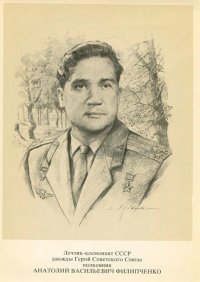
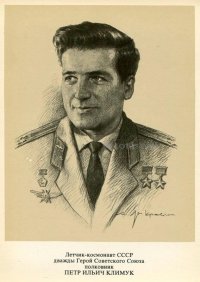
На фото слева портрет космонавта А. Филипченко, справа портрет космонавта П. Климука.
“Every launch into space is a celebration,” said Anatoly Filipchenko. And so it is. Our time has become an era of triumph for scientific thought. From the heights of abstract theories, astronautics has descended into the valleys cultivated by human hands, becoming practically useful to people. Space research is already bearing tangible fruit. Observations from orbit have become an effective means of weather forecasting. Satellites have made it possible to establish a reliable system of communications and television between the most remote points not only of our country, but of the planet as a whole, and have become instruments of knowledge in the arsenal of a wide variety of scientific fields. Geodetic satellites refine maps; geophysical satellites make it possible to study the Earth's interior and facilitate earthquake forecasting... Orbital stations and satellites can solve problems of navigation and oceanology, help monitor the condition of crops on a global scale, detect forest fires in a timely manner, and warn of floods and inundations... The space environment creates ideal conditions for a whole range of technological processes...


We will not even speak of the truly revolutionary impetus that space research gives to science and technology on Earth.

The drive toward the future lives in everyone who belongs to the tribe of Gagarin. And in this aspiration lies the secret of human happiness.

“Perhaps our work is more dangerous, more difficult and more responsible than any other,” Pyotr Klimuk once said, “but it is work. It begins on Earth and continues in space — in the cold and black abyss, in the grip of weightlessness, where a human being seems to break the familiar bonds with their eternal cradle — Earth, which at the same time becomes both near and far. Yet even there, our work is directed toward the benefit of our native mother — Earth, so that upon it — sunny and green, infinitely dear and fabulously beautiful — peace, happiness and progress may triumph forever.” (M. F. Rebrov. “Soviet Cosmonauts”; chapter “The Secret of Human Happiness”).

.........................................................................

Quoted from: Mikhail Fedorovich Rebrov
SOVIET COSMONAUTS
2nd edition, expanded. — Moscow: Voenizdat, 1983.

In the photograph, on the left is a portrait of cosmonaut A. Filipchenko; on the right, a portrait of cosmonaut P. Klimuk.
«Cada lanzamiento al espacio es una fiesta», dijo Anatoli Filipchenko. Y así es. Nuestro tiempo se ha convertido en una época de triunfo del pensamiento científico. Desde las alturas de las construcciones abstractas, la cosmonáutica ha descendido a los valles cultivados por el ser humano, convirtiéndose en algo prácticamente útil para las personas. La investigación del espacio ya está dando frutos reales. Las observaciones desde la órbita se han convertido en un medio eficaz para la predicción meteorológica. Los satélites han permitido crear un sistema estable de comunicaciones y televisión entre los puntos más alejados no solo de nuestro país, sino también del planeta en su conjunto, y se han convertido en instrumentos de conocimiento dentro del arsenal de las más diversas disciplinas científicas. Los satélites geodésicos precisan los mapas; los geofísicos permiten estudiar el interior de la Tierra y facilitan la predicción de terremotos... Las estaciones orbitales y los satélites son capaces de resolver problemas de navegación y oceanología, ayudan a observar el estado de los cultivos a escala mundial, detectar a tiempo los incendios forestales y advertir sobre crecidas e inundaciones... El entorno espacial crea condiciones ideales para toda una serie de procesos tecnológicos...


No hablamos ya del impulso verdaderamente revolucionario que la investigación espacial proporciona a la ciencia y la tecnología terrestres.

La aspiración hacia el futuro vive en cada uno de aquellos que pertenecen a la tribu de Gagarin. Y en esa aspiración reside el secreto de la felicidad humana.

«Es posible que nuestro trabajo sea más peligroso, más difícil y más responsable que cualquier otro —dijo en cierta ocasión Piotr Klimuk—, pero es un trabajo. Comienza en la Tierra y continúa en el espacio: en el abismo frío y negro, en las condiciones de ingravidez, allí donde el ser humano parece romper sus vínculos habituales con su eterna cuna —la Tierra—, que al mismo tiempo se vuelve cercana y lejana. Sin embargo, incluso allí, nuestro trabajo está dirigido al beneficio de nuestra madre, la Tierra, para que en ella —soleada y verde, infinitamente querida y fabulosamente hermosa— reinen para siempre la paz, la felicidad y el progreso». (M. F. Rebrov. «Cosmonautas soviéticos»; capítulo «El secreto de la felicidad humana»).

.........................................................................

Citado de: Mijaíl Fiódorovich Rebrov
COSMONAUTAS SOVIÉTICOS
2.ª edición, ampliada. — Moscú: Voenizdat, 1983.

En la fotografía, a la izquierda aparece el retrato del cosmonauta A. Filipchenko y, a la derecha, el retrato del cosmonauta P. Klimuk.
2884 2867
 
Frimen1917

Frimen1917

Mecca V.I.P.
VIP
Joined
Jan 9, 2026
Messages
3,150
Points
63
"Историки космонавтики все чаще и чаще будут возвращаться к 14 октября 1969 года. В этот день был запущен спутник «Интеркосмос-1». Он открыл широкую программу исследования космического пространства учеными социалистических стран. В течение года было произведено четыре запуска «Интеркосмосов».

И сами спутники, и ракеты, что вывели их на околоземные орбиты, создавались в конструкторском бюро, которым руководил Михаил Кузьмич Янгель.

* * *

Диалог с Янгелем
— «Интеркосмос» стал для вашего конструкторского бюро продолжением работ по так называемым малым спутникам Земли?

— В общем, да. Еще в начале шестидесятых годов, когда мы задумались над тем, как шире использовать наши ракетно-космические системы для нужд народного хозяйства. В содружестве ряда предприятий и были созданы различные виды таких спутников. У них была типовая конструкция, менялась лишь научная аппаратура — в зависимости от тех задач, которые спутник должен выполнять на орбите. Так родилась серия спутников «Космос».

* * *

Космодром, 14 октября 1969 года. Сегодня — четвертый старт. Трижды на Байконуре ревели ракетные двигатели, унося в небо «Союзы». Мы следили за их взлетом, видели на экранах лица космонавтов, вслушивались в их слова. Три дня пункт связи нашего космодрома «работал на соседей». Как только корабли появлялись в зоне радиовидимости, приемные антенны ловили уже столь знакомые голоса: «Все нормально. Работаем по программе», — кажется это голос Георгия Шонина, «У них отличное настроение...» — сообщает Анатолий Филипченко. «Тесновато в космосе стало...» — шутит Владимир Шаталов.

Корабли проносились над космодромом. Мы выбегали на улицу и, запрокинув головы, вглядывались в небо.

Антенна, словно привязанная невидимой нитью, поворачивалась вслед за крохотной звездочкой.

Наша ракета уже готова к старту. «Интеркосмос» спрятан за металлическим обтекателем. Он нужен на те недолгие минуты, когда ракета будет проходить атмосферу. Там, за пределами плотных слоев атмосферы, обтекатель по команде «электронного мозга» ракеты разлетится на две части. На стартовой площадке — семь государственных флагов: Болгарии, Венгрии, ГДР, Польши, Румынии, Чехословакии и Советского Союза. В тесном сотрудничестве страны социалистического содружества планировали совместный космический эксперимент. И хотя на «Интеркосмосе» уходят в небо приборы, разработанные лишь в трех государствах — ГДР, ЧССР и СССР, синхронные наземные наблюдения будут вестись в семи странах.

Зачем отправляется в далекий путь космическая «ромашка»?

«Интеркосмос-1» — это спутник, который должен наблюдать за Солнцем.

Выдающийся советский ученый академик В. И. Вернадский, человек, создавший учение о биосфере Земли, писал; «Биосфера, по существу, может быть рассматриваема как область земной коры, занятая трансформаторами, переводящими космические излучения в действенную земную энергию — электрическую, химическую, механическую, тепловую и т. д. Космические излучения, идущие от всех небесных тел, проникают ее всю и все в ней. Мы улавливаем и сознаем только ничтожную часть этих излучений...»

Однажды я разговаривал с профессором Б. В. Кукаркиным о роли космонавтики, о ее влиянии на развитие науки.

— Космос нужно осваивать хотя бы ради одного,— сказал профессор,— чтобы создать постоянную космическую службу Солнца. Она имеет огромное значение для жизни человечества, которое уже не может, да и не имеет права жить в неведении. К сожалению, наука, прикованная к Земле, не способна узнать о Солнце многого".
(В.Губарев. "Конструктор").
.......................................................................
Цит. по: ВЛАДИМИР СТЕПАНОВИЧ ГУБАРЕВ
КОНСТРУКТОР
Несколько страниц из жизни Михаила Кузьмича Янгеля
Москва/ Издательство политической литературы/ 1977 год.

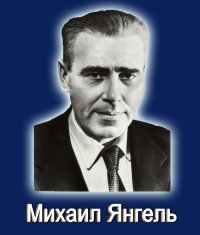
На фото: Михаил Янгель.
“Historians of space exploration will return more and more often to October 14, 1969. On this day, the Interkosmos-1 satellite was launched. It opened up a broad program of space research by scientists from the socialist countries. Over the course of a year, four Interkosmos satellites were launched.


Both the satellites themselves and the rockets that placed them into near-Earth orbits were developed at the design bureau headed by Mikhail Kuzmich Yangel.

Dialogue with Yangel

— Did Interkosmos become a continuation for your design bureau of the work on the so-called small Earth satellites?

— Generally speaking, yes. It goes back to the beginning of the 1960s, when we began thinking about how to make wider use of our rocket and space systems for the needs of the national economy. In cooperation with a number of enterprises, various types of such satellites were created. They had a standard design; only the scientific equipment was changed, depending on the tasks the satellite had to perform in orbit. This is how the Kosmos series of satellites came into being.

Cosmodrome, October 14, 1969. Today is the fourth launch. Three times at Baikonur, rocket engines roared, carrying Soyuz spacecraft into the sky. We watched their launches, saw the cosmonauts’ faces on the screens, and listened closely to their words. For three days, the communications center at our cosmodrome “worked for our neighbors.” As soon as the spacecraft entered the radio-visibility zone, the receiving antennas picked up voices that had already become so familiar: “Everything is normal. We are working according to the program,” — it seems to be Georgy Shonin’s voice; “They are in excellent spirits...” — reports Anatoly Filipchenko. “It’s getting a little cramped in space...” — jokes Vladimir Shatalov.

The spacecraft flew over the cosmodrome. We ran outside and, tilting our heads back, gazed intently into the sky.

The antenna, as if tied by an invisible thread, turned after the tiny star.

Our rocket is already ready for launch. Interkosmos is hidden beneath a metal fairing. It is needed for those few minutes when the rocket passes through the atmosphere. There, beyond the dense layers of the atmosphere, the fairing will split into two parts at the command of the rocket’s “electronic brain.” At the launch pad stand seven national flags: Bulgaria, Hungary, the GDR, Poland, Romania, Czechoslovakia, and the Soviet Union. In close cooperation, the countries of the socialist community were planning a joint space experiment. And although the instruments carried aboard Interkosmos had been developed in only three countries — the GDR, Czechoslovakia, and the USSR — synchronized ground-based observations would be carried out in seven countries.

Why is this space “daisy” setting off on its distant journey?

“Interkosmos-1” is a satellite designed to observe the Sun.

The outstanding Soviet scientist, Academician V. I. Vernadsky, the man who developed the doctrine of the Earth’s biosphere, wrote: “The biosphere, in essence, may be regarded as a region of the Earth’s crust occupied by transformers that convert cosmic radiation into active terrestrial energy — electrical, chemical, mechanical, thermal, and so on. Cosmic radiation coming from all celestial bodies penetrates all of it and everything within it. We detect and perceive only an insignificant part of this radiation...”

Once I spoke with Professor B. V. Kukarkin about the role of astronautics and its influence on the development of science.

“Space must be explored if only for one reason,” the professor said, “to create a permanent space service for observing the Sun. It is of enormous importance for the life of humanity, which can no longer, and has no right to, live in ignorance. Unfortunately, science, bound to the Earth, is unable to learn very much about the Sun.”

(V. Gubarev. “The Designer”).

.......................................................................

Quoted from: VLADIMIR STEPANOVICH GUBAREV

THE DESIGNER

Several Pages from the Life of Mikhail Kuzmich Yangel

Moscow / Political Literature Publishing House / 1977.

Photo: Mikhail Yangel.
«Los historiadores de la exploración espacial volverán cada vez más a menudo al 14 de octubre de 1969. Ese día fue lanzado el satélite “Interkosmos-1”. Con él se inició un amplio programa de investigación del espacio por científicos de los países socialistas. A lo largo de un año se realizaron cuatro lanzamientos de satélites “Interkosmos”.


Tanto los propios satélites como los cohetes que los situaron en órbitas cercanas a la Tierra fueron desarrollados en la oficina de diseño dirigida por Mijaíl Kuzmich Yangel.

Diálogo con Yangel

— ¿“Interkosmos” fue para su oficina de diseño una continuación de los trabajos sobre los llamados pequeños satélites de la Tierra?

— En general, sí. Todo comenzó a principios de los años sesenta, cuando nos planteamos cómo utilizar más ampliamente nuestros sistemas de cohetes y espaciales para las necesidades de la economía nacional. En colaboración con varias empresas se crearon distintos tipos de estos satélites. Tenían un diseño estándar; solo cambiaba el equipamiento científico, dependiendo de las tareas que el satélite debía realizar en órbita. Así nació la serie de satélites “Kosmos”.

Cosmódromo, 14 de octubre de 1969. Hoy es el cuarto lanzamiento. Tres veces en Baikonur rugieron los motores de los cohetes, llevando al cielo las naves “Soyuz”. Seguíamos sus despegues, veíamos en las pantallas los rostros de los cosmonautas y escuchábamos atentamente sus palabras. Durante tres días, el centro de comunicaciones de nuestro cosmódromo «trabajó para los vecinos». En cuanto las naves aparecían en la zona de visibilidad radioeléctrica, las antenas receptoras captaban unas voces que ya se habían vuelto tan familiares: «Todo está normal. Trabajamos según el programa», parece ser la voz de Georgui Shonin; «Están de excelente humor...» — informa Anatoli Filipchenko. «Ya empieza a estar un poco estrecho en el espacio...» — bromea Vladímir Shatálov.

Las naves pasaban sobre el cosmódromo. Salíamos corriendo a la calle y, echando la cabeza hacia atrás, mirábamos atentamente el cielo.

La antena, como si estuviera atada por un hilo invisible, giraba siguiendo a la diminuta estrella.

Nuestro cohete ya está preparado para el lanzamiento. “Interkosmos” está oculto bajo una cubierta metálica. Es necesaria durante esos pocos minutos en los que el cohete atraviesa la atmósfera. Allí, más allá de las densas capas atmosféricas, la cubierta se dividirá en dos partes por orden del «cerebro electrónico» del cohete. En la plataforma de lanzamiento ondean siete banderas nacionales: Bulgaria, Hungría, la RDA, Polonia, Rumanía, Checoslovaquia y la Unión Soviética. Los países de la comunidad socialista, en estrecha cooperación, preparaban un experimento espacial conjunto. Y aunque los instrumentos que llevaba a bordo “Interkosmos” habían sido desarrollados solamente en tres países —la RDA, Checoslovaquia y la URSS—, se realizarían observaciones terrestres sincronizadas en siete países.

¿Para qué emprende su lejano viaje esta “margarita” espacial?

“Interkosmos-1” es un satélite destinado a observar el Sol.

El destacado científico soviético, académico V. I. Vernadski, creador de la doctrina de la biosfera de la Tierra, escribió: «La biosfera, en esencia, puede considerarse como una región de la corteza terrestre ocupada por transformadores que convierten las radiaciones cósmicas en energía terrestre activa —eléctrica, química, mecánica, térmica, etc. Las radiaciones cósmicas procedentes de todos los cuerpos celestes penetran en toda ella y en todo lo que contiene. Nosotros captamos y percibimos solamente una parte insignificante de estas radiaciones...»

En una ocasión conversé con el profesor B. V. Kukarkin sobre el papel de la cosmonáutica y su influencia en el desarrollo de la ciencia.

«Hay que explorar el espacio aunque solo sea por una razón —dijo el profesor—: para crear un servicio espacial permanente de observación del Sol. Tiene una enorme importancia para la vida de la humanidad, que ya no puede, y tampoco tiene derecho a, vivir en la ignorancia. Por desgracia, la ciencia, atada a la Tierra, no es capaz de averiguar muchas cosas sobre el Sol».

(V. Gubarev. «El diseñador»).

.......................................................................

Citado de: VLADÍMIR STEPÁNOVICH GUBAREV

EL DISEÑADOR

Varias páginas de la vida de Mijaíl Kuzmich Yangel

Moscú / Editorial de Literatura Política / 1977.

En la foto: Mijaíl Yangel.
JFUlJwvAmkMmwGRo0Xt swRdo Bf1546UWtyutU6uZvm cEi7YlcXyvSIxk2fv82MQolWRFyLreeQmzan1cMUfhA
 
Frimen1917

Frimen1917

Mecca V.I.P.
VIP
Joined
Jan 9, 2026
Messages
3,150
Points
63
"Двигатель первой ступени, сообщив кораблю первую космическую скорость(она равна около восьми километров в секунду), выключился, произошло отделение корабля от носителя. При отделении мы почувствовали толчок, и сразу наступила тишина.
Анатолий Филипченко после совершения полёта на корабле "Союз-7" рассказывал нам о своих ощущениях в момент,когда корабль отделяется от последней ступени ракеты - носителя.Я вспомнил его слова в этот момент:
"Взрыв, и ты как будто вываливаешься из кресла и переворачиваешься вниз, лицом к Земле, и висишь на ремнях. Это ощущение появляется из-за исчезновения давления на спину. Наступает полная тишина. Только неожиданно громко начинают тикать бортовые часы. А в иллюминаторах возникает фейерверк из светящихся частиц". Примерно такое же ощущение теперь испытывал и я.
Наш корабль "Союз-9" вышел на рассчитанную околоземную орбиту искусственного спутника Земли. И мы, не скрывая радости, поздравили друг друга".(Андриян Николаев. "Космос - дорога без конца").
.....................................................................
Цит. по: Николаев Андриян Григорьевич
КОСМОС - ДОРОГА БЕЗ КОНЦА
Художник М. Бородин.
Москва. Издательство" Молодая гвардия". 1974 год.

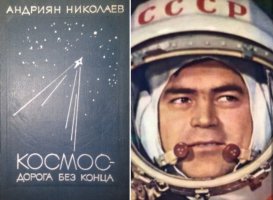
На фото слева - обложка книги космонавта Андрияна Николаева "Космос - дорога без конца", справа - космонавт Андриян Николаев в скафандре.
“The first-stage engine, having given the spacecraft the first cosmic velocity (approximately eight kilometers per second), shut down, and the spacecraft separated from the launch vehicle. At the moment of separation, we felt a jolt, and immediately there was silence.


After his flight aboard Soyuz-7, Anatoly Filipchenko told us about his sensations at the moment when the spacecraft separates from the final stage of the launch vehicle. I remembered his words at that moment:

‘An explosion, and it is as if you fall out of your seat and turn over downward, face toward the Earth, hanging from the straps. This sensation occurs because the pressure against your back disappears. Complete silence sets in. Only the onboard clock suddenly begins ticking surprisingly loudly. And in the portholes, a firework of luminous particles appears.’ I experienced approximately the same sensation now.

Our Soyuz-9 spacecraft entered the calculated near-Earth orbit of an artificial satellite of the Earth. And, unable to hide our joy, we congratulated each other.” (Andriyan Nikolaev. “Space — A Road Without End”).

.....................................................................

Quoted from: Nikolaev Andriyan Grigoryevich

SPACE — A ROAD WITHOUT END

Artist: M. Borodin.

Moscow. Molodaya Gvardiya Publishing House. 1974.

In the photo, on the left is the cover of cosmonaut Andriyan Nikolaev’s book “Space — A Road Without End”; on the right is cosmonaut Andriyan Nikolaev wearing a spacesuit.
«El motor de la primera etapa, después de comunicar a la nave la primera velocidad cósmica (aproximadamente ocho kilómetros por segundo), se apagó y se produjo la separación de la nave del vehículo lanzador. En el momento de la separación sentimos un impulso y, de inmediato, se hizo el silencio.


Después de realizar su vuelo a bordo de la nave “Soyuz-7”, Anatoli Filipchenko nos contó sus sensaciones en el momento en que la nave se separa de la última etapa del cohete lanzador. En aquel momento recordé sus palabras:

“Una explosión, y es como si salieras despedido del asiento y dieras una vuelta hacia abajo, con el rostro dirigido hacia la Tierra, quedando suspendido por los cinturones. Esta sensación aparece debido a la desaparición de la presión contra la espalda. Se hace un silencio absoluto. Solo el reloj de a bordo comienza a hacer tic-tac de repente y con una intensidad sorprendente. Y en las ventanillas aparece un espectáculo de partículas luminosas, como fuegos artificiales”. Aproximadamente esa misma sensación experimentaba yo ahora.

Nuestra nave “Soyuz-9” entró en la órbita calculada alrededor de la Tierra, como satélite artificial de la Tierra. Y, sin ocultar nuestra alegría, nos felicitamos mutuamente». (Andrián Nikoláyev. «El espacio: un camino sin fin»).

.....................................................................

Citado de: Nikoláyev Andrián Grigórievich

EL ESPACIO: UN CAMINO SIN FIN

Ilustraciones de M. Borodin.

Moscú. Editorial “Molodaya Gvardiya”. 1974.

En la foto, a la izquierda, la portada del libro del cosmonauta Andrián Nikoláyev «El espacio: un camino sin fin»; a la derecha, el cosmonauta Andrián Nikoláyev con un traje espacial.
S8CL NWDvgOL4OhKkHNWpXOwcnrR5rkWNAVIDPG7Y6cvN8qDzBW8eL70Ju64ILOCGSPSSkWUY5k7ZTP6or62JsUJ
 
Frimen1917

Frimen1917

Mecca V.I.P.
VIP
Joined
Jan 9, 2026
Messages
3,150
Points
63
"Дважды побывав в космосе, я имел возможность неоднократно обозревать с высоты все континенты, расположенные на земном шаре. Зрелище – неповторимое и единственное в своем роде. Прекрасен вид материков, океанов, морей, рек. Дух захватывает. Но часто тревожат далеко не радужные мысли, мысли о судьбах людей, живущих на Земле, о трехмиллиардном человечестве, большая половина которого уже прочно ступила на прогрессивный путь развития. Мысли о том, что мощь человеческого разума достигла небывалых возможностей – творить прекрасное и производить колоссальные разрушения. Сумеют ли люди найти в себе силы для того, чтобы не пойти по варварскому, негуманному пути?".(Анатолий Филипченко. "Надёжная орбита").
На фото слева - обложка книги космонавта Анатолия Филипченко "Надежная орбита", справа - фото командира космического корабля "Союз - 7" космонавта А.Филипченко.
.............................................................................................................................................................................................................................................

Цит. по: Филипченко Анатолий Васильевич. "Надежная орбита". Москва. Издательство ДОСААФ (Добровольное Общество Содействия Армии, Авиации и Флоту) СССР . 1978 год.
“Having been into space twice, I had the opportunity to observe from above, on numerous occasions, all the continents located on our planet. The sight is unique and unparalleled. The view of the continents, oceans, seas, and rivers is magnificent. It takes your breath away. But often I am troubled by far from optimistic thoughts — thoughts about the fate of the people living on Earth, about the three-billion-strong human race, more than half of which had already firmly embarked on the progressive path of development. Thoughts about the fact that the power of the human mind has reached unprecedented capabilities — to create beauty and to inflict colossal destruction. Will people be able to find within themselves the strength not to take the barbaric, inhumane path?” (Anatoly Filipchenko. “A Reliable Orbit”).


In the photograph on the left is the cover of cosmonaut Anatoly Filipchenko’s book “A Reliable Orbit”; on the right is a photograph of cosmonaut A. Filipchenko, commander of the Soyuz-7 spacecraft.

.............................................................................................................................................................................................................................................

Quoted from: Filipchenko Anatoly Vasilyevich. “A Reliable Orbit”. Moscow. DOSAAF Publishing House (Voluntary Society for Assistance to the Army, Air Force and Navy) of the USSR. 1978.
«Después de haber estado dos veces en el espacio, tuve la oportunidad de observar repetidamente desde las alturas todos los continentes de nuestro planeta. Es un espectáculo irrepetible y único. Es magnífica la vista de los continentes, los océanos, los mares y los ríos. Te deja sin aliento. Pero a menudo me inquietan pensamientos que están muy lejos de ser optimistas: pensamientos sobre el destino de las personas que viven en la Tierra, sobre la humanidad de tres mil millones de personas, más de la mitad de la cual ya había emprendido firmemente el camino del desarrollo progresista. Pensamientos sobre el hecho de que el poder de la mente humana ha alcanzado posibilidades sin precedentes: crear cosas hermosas y producir una destrucción colosal. ¿Serán capaces las personas de encontrar en sí mismas la fuerza necesaria para no seguir el camino bárbaro e inhumano?» (Anatoli Filipchenko. «Una órbita segura»).


En la fotografía de la izquierda aparece la portada del libro del cosmonauta Anatoli Filipchenko «Una órbita segura»; a la derecha, una fotografía del cosmonauta A. Filipchenko, comandante de la nave espacial «Soyuz-7».

.............................................................................................................................................................................................................................................

Citado de: Filipchenko Anatoli Vasílievich. «Una órbita segura». Moscú. Editorial DOSAAF (Sociedad Voluntaria de Ayuda al Ejército, la Aviación y la Armada) de la URSS. 1978.
HyCVsBNehKQ hzpNIWOk71xCpTdYwZl2RXZXFKuJ5FYTbYtSs4dtg3CYeXi4OXCn6xTXCFXZ GeNbVvcCyjXGW0HdKRPQD7jy4dcHGiAhRHPWF nlynb4WwflFL13MNrBJwZkSGBeo5arsGO36asBIXKAOnuu8gCL
 
Frimen1917

Frimen1917

Mecca V.I.P.
VIP
Joined
Jan 9, 2026
Messages
3,150
Points
63
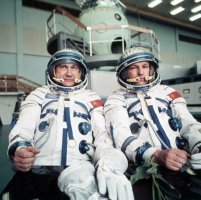
История советской космонавтики в фотографиях. На фото слева направо: космонавты СССР Филипченко Анатолий Васильевич и Рукавишников Николай Николаевич.
The history of Soviet cosmonautics in photographs. Pictured from left to right: Soviet cosmonauts Anatoly Vasilyevich Filipchenko and Nikolai Nikolayevich Rukavishnikov.
La historia de la cosmonáutica soviética en fotografías. En la imagen, de izquierda a derecha: los cosmonautas soviéticos Anatoly Vasilyevich Filipchenko y Nikolai Nikolayevich Rukavishnikov

FWliebmCoIooQ2Ww7L2PfRbbJiAyDJDrUIh6kBLOpR0egVy 6uJLRpw0wxmJBG4BPHM8Z YcdVBQLtQqF8k3NRpK
 
Top