• Legal Notice – MuscleMecca Forums

    MuscleMecca.com is an educational discussion platform. We do not sell, promote, or endorse any bodybuilding gear, supplements, research chemicals, or performance-enhancing substances.

    All discussions are for educational and informational purposes only. Nothing posted on this forum should be considered medical or legal advice.

    Do not attempt to sell, source, or promote illegal substances. Any such activity will result in an immediate and permanent ban and may be reported to the proper authorities.

    By using this site, you agree to comply with all forum rules, disclaimers, and applicable laws in your jurisdiction.

    Read Our Full Disclaimer and Forum Rules

History of Soviet cosmonautics.

Frimen1917

Frimen1917

Mecca V.I.P.
VIP
Joined
Jan 9, 2026
Messages
3,156
Points
63
Космические открытки в СССР.
........................................................
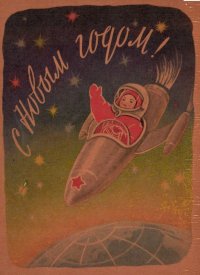
Открытка "С Новым годом".1961 год.
Художник Т. Гиршберт.

Полиграфкомбинат г. Калинин.
Space-themed postcards in the USSR.
........................................................


"Happy New Year" postcard. 1961.
Artist: T. Girshbert.

Kalinin Printing Combine.


Postales espaciales en la URSS.

........................................................
Postal "Feliz Año Nuevo". 1961.
Artista: T. Girshbert.

Imprenta de Kalinin.
HTYq95ENSq2mVoXcWHeeKysOwR6Sr7iwfoZvEFUqCNqroelI534nTPo3ZVZpFe3j4Me7 iZmt28Jebbd8jumQ0s7
 
Frimen1917

Frimen1917

Mecca V.I.P.
VIP
Joined
Jan 9, 2026
Messages
3,156
Points
63
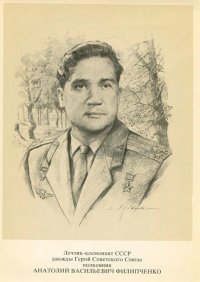
"Каждый старт в космос — это праздник», — сказал Анатолий Филипченко. И это так. Наше время стало эпохой торжества научной мысли. С высот абстрактных построений космонавтика спустилась в возделываемые человеком долины, становясь практически нужной людям. Исследования космоса уже сейчас приносят свои реальные плоды. Наблюдения с орбиты стали эффективным средством в предсказаниях погоды. Спутники позволили создать устойчивую систему связи и телевидения между самыми отдаленными точками не только нашей страны, но и планеты в целом, стали инструментом познания в арсенале самых различных научных областей. Геодезические спутники уточняют карты, геофизические — позволяют изучать недра и облегчают прогнозы землетрясений... Орбитальные станции и спутники способны решать проблемы навигации и океанологии, помогают наблюдать за состоянием посевов в глобальном масштабе, своевременно обнаруживать лесные пожары, предупреждать о паводках и наводнениях... Космическая среда создает идеальные условия для целого ряда технологических процессов...
Мы не говорим уже о том поистине революционном толчке, который дают космические исследования нашей земной науке и технике.

Устремленность в будущее живет в каждом из тех, кто принадлежит к племени Гагарина. И в этой устремленности — секрет человеческого счастья.

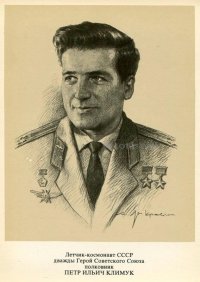
"Возможно, наша работа более опасна, более трудна и ответственна, чем какая-нибудь другая, — сказал как-то Петр Климук, — но это работа. Она начинается на Земле и продолжается в космосе — в холодной и черной бездне, в плену невесомости, там, где человек будто разрывает привычные связи со своей извечной колыбелью — Землей, становящейся одновременно и близкой, и далекой. Однако и там наша работа направлена на пользу родной матери — Земле, ради того, чтобы на ней — солнечной и зеленой, безгранично дорогой и сказочно красивой — вечно торжествовали мир, счастье и прогресс".(М. Ф. Ребров. "Советские космонавты"; глава "Секрет человеческого счастья").
.........................................................................
Цит.по: Михаил Федорович Ребров
СОВЕТСКИЕ КОСМОНАВТЫ
2-е изд., доп. — Москва.: Воениздат, 1983.

На фото слева портрет космонавта А. Филипченко, справа портрет космонавта П. Климука.
“Every launch into space is a celebration,” said Anatoly Filipchenko. And so it is. Our time has become an era of triumph for scientific thought. From the heights of abstract theories, astronautics has descended into the valleys cultivated by human hands, becoming practically useful to people. Space research is already bearing tangible fruit. Observations from orbit have become an effective means of weather forecasting. Satellites have made it possible to establish a reliable system of communications and television between the most remote points not only of our country, but of the planet as a whole, and have become instruments of knowledge in the arsenal of a wide variety of scientific fields. Geodetic satellites refine maps; geophysical satellites make it possible to study the Earth's interior and facilitate earthquake forecasting... Orbital stations and satellites can solve problems of navigation and oceanology, help monitor the condition of crops on a global scale, detect forest fires in a timely manner, and warn of floods and inundations... The space environment creates ideal conditions for a whole range of technological processes...


We will not even speak of the truly revolutionary impetus that space research gives to science and technology on Earth.

The drive toward the future lives in everyone who belongs to the tribe of Gagarin. And in this aspiration lies the secret of human happiness.

“Perhaps our work is more dangerous, more difficult and more responsible than any other,” Pyotr Klimuk once said, “but it is work. It begins on Earth and continues in space — in the cold and black abyss, in the grip of weightlessness, where a human being seems to break the familiar bonds with their eternal cradle — Earth, which at the same time becomes both near and far. Yet even there, our work is directed toward the benefit of our native mother — Earth, so that upon it — sunny and green, infinitely dear and fabulously beautiful — peace, happiness and progress may triumph forever.” (M. F. Rebrov. “Soviet Cosmonauts”; chapter “The Secret of Human Happiness”).

.........................................................................

Quoted from: Mikhail Fedorovich Rebrov
SOVIET COSMONAUTS
2nd edition, expanded. — Moscow: Voenizdat, 1983.

In the photograph, on the left is a portrait of cosmonaut A. Filipchenko; on the right, a portrait of cosmonaut P. Klimuk.
«Cada lanzamiento al espacio es una fiesta», dijo Anatoli Filipchenko. Y así es. Nuestro tiempo se ha convertido en una época de triunfo del pensamiento científico. Desde las alturas de las construcciones abstractas, la cosmonáutica ha descendido a los valles cultivados por el ser humano, convirtiéndose en algo prácticamente útil para las personas. La investigación del espacio ya está dando frutos reales. Las observaciones desde la órbita se han convertido en un medio eficaz para la predicción meteorológica. Los satélites han permitido crear un sistema estable de comunicaciones y televisión entre los puntos más alejados no solo de nuestro país, sino también del planeta en su conjunto, y se han convertido en instrumentos de conocimiento dentro del arsenal de las más diversas disciplinas científicas. Los satélites geodésicos precisan los mapas; los geofísicos permiten estudiar el interior de la Tierra y facilitan la predicción de terremotos... Las estaciones orbitales y los satélites son capaces de resolver problemas de navegación y oceanología, ayudan a observar el estado de los cultivos a escala mundial, detectar a tiempo los incendios forestales y advertir sobre crecidas e inundaciones... El entorno espacial crea condiciones ideales para toda una serie de procesos tecnológicos...


No hablamos ya del impulso verdaderamente revolucionario que la investigación espacial proporciona a la ciencia y la tecnología terrestres.

La aspiración hacia el futuro vive en cada uno de aquellos que pertenecen a la tribu de Gagarin. Y en esa aspiración reside el secreto de la felicidad humana.

«Es posible que nuestro trabajo sea más peligroso, más difícil y más responsable que cualquier otro —dijo en cierta ocasión Piotr Klimuk—, pero es un trabajo. Comienza en la Tierra y continúa en el espacio: en el abismo frío y negro, en las condiciones de ingravidez, allí donde el ser humano parece romper sus vínculos habituales con su eterna cuna —la Tierra—, que al mismo tiempo se vuelve cercana y lejana. Sin embargo, incluso allí, nuestro trabajo está dirigido al beneficio de nuestra madre, la Tierra, para que en ella —soleada y verde, infinitamente querida y fabulosamente hermosa— reinen para siempre la paz, la felicidad y el progreso». (M. F. Rebrov. «Cosmonautas soviéticos»; capítulo «El secreto de la felicidad humana»).

.........................................................................

Citado de: Mijaíl Fiódorovich Rebrov
COSMONAUTAS SOVIÉTICOS
2.ª edición, ampliada. — Moscú: Voenizdat, 1983.

En la fotografía, a la izquierda aparece el retrato del cosmonauta A. Filipchenko y, a la derecha, el retrato del cosmonauta P. Klimuk.
2884 2867
 
Frimen1917

Frimen1917

Mecca V.I.P.
VIP
Joined
Jan 9, 2026
Messages
3,156
Points
63
"Историки космонавтики все чаще и чаще будут возвращаться к 14 октября 1969 года. В этот день был запущен спутник «Интеркосмос-1». Он открыл широкую программу исследования космического пространства учеными социалистических стран. В течение года было произведено четыре запуска «Интеркосмосов».

И сами спутники, и ракеты, что вывели их на околоземные орбиты, создавались в конструкторском бюро, которым руководил Михаил Кузьмич Янгель.

* * *

Диалог с Янгелем
— «Интеркосмос» стал для вашего конструкторского бюро продолжением работ по так называемым малым спутникам Земли?

— В общем, да. Еще в начале шестидесятых годов, когда мы задумались над тем, как шире использовать наши ракетно-космические системы для нужд народного хозяйства. В содружестве ряда предприятий и были созданы различные виды таких спутников. У них была типовая конструкция, менялась лишь научная аппаратура — в зависимости от тех задач, которые спутник должен выполнять на орбите. Так родилась серия спутников «Космос».

* * *

Космодром, 14 октября 1969 года. Сегодня — четвертый старт. Трижды на Байконуре ревели ракетные двигатели, унося в небо «Союзы». Мы следили за их взлетом, видели на экранах лица космонавтов, вслушивались в их слова. Три дня пункт связи нашего космодрома «работал на соседей». Как только корабли появлялись в зоне радиовидимости, приемные антенны ловили уже столь знакомые голоса: «Все нормально. Работаем по программе», — кажется это голос Георгия Шонина, «У них отличное настроение...» — сообщает Анатолий Филипченко. «Тесновато в космосе стало...» — шутит Владимир Шаталов.

Корабли проносились над космодромом. Мы выбегали на улицу и, запрокинув головы, вглядывались в небо.

Антенна, словно привязанная невидимой нитью, поворачивалась вслед за крохотной звездочкой.

Наша ракета уже готова к старту. «Интеркосмос» спрятан за металлическим обтекателем. Он нужен на те недолгие минуты, когда ракета будет проходить атмосферу. Там, за пределами плотных слоев атмосферы, обтекатель по команде «электронного мозга» ракеты разлетится на две части. На стартовой площадке — семь государственных флагов: Болгарии, Венгрии, ГДР, Польши, Румынии, Чехословакии и Советского Союза. В тесном сотрудничестве страны социалистического содружества планировали совместный космический эксперимент. И хотя на «Интеркосмосе» уходят в небо приборы, разработанные лишь в трех государствах — ГДР, ЧССР и СССР, синхронные наземные наблюдения будут вестись в семи странах.

Зачем отправляется в далекий путь космическая «ромашка»?

«Интеркосмос-1» — это спутник, который должен наблюдать за Солнцем.

Выдающийся советский ученый академик В. И. Вернадский, человек, создавший учение о биосфере Земли, писал; «Биосфера, по существу, может быть рассматриваема как область земной коры, занятая трансформаторами, переводящими космические излучения в действенную земную энергию — электрическую, химическую, механическую, тепловую и т. д. Космические излучения, идущие от всех небесных тел, проникают ее всю и все в ней. Мы улавливаем и сознаем только ничтожную часть этих излучений...»

Однажды я разговаривал с профессором Б. В. Кукаркиным о роли космонавтики, о ее влиянии на развитие науки.

— Космос нужно осваивать хотя бы ради одного,— сказал профессор,— чтобы создать постоянную космическую службу Солнца. Она имеет огромное значение для жизни человечества, которое уже не может, да и не имеет права жить в неведении. К сожалению, наука, прикованная к Земле, не способна узнать о Солнце многого".
(В.Губарев. "Конструктор").
.......................................................................
Цит. по: ВЛАДИМИР СТЕПАНОВИЧ ГУБАРЕВ
КОНСТРУКТОР
Несколько страниц из жизни Михаила Кузьмича Янгеля
Москва/ Издательство политической литературы/ 1977 год.

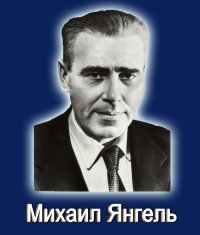
На фото: Михаил Янгель.
“Historians of space exploration will return more and more often to October 14, 1969. On this day, the Interkosmos-1 satellite was launched. It opened up a broad program of space research by scientists from the socialist countries. Over the course of a year, four Interkosmos satellites were launched.


Both the satellites themselves and the rockets that placed them into near-Earth orbits were developed at the design bureau headed by Mikhail Kuzmich Yangel.

Dialogue with Yangel

— Did Interkosmos become a continuation for your design bureau of the work on the so-called small Earth satellites?

— Generally speaking, yes. It goes back to the beginning of the 1960s, when we began thinking about how to make wider use of our rocket and space systems for the needs of the national economy. In cooperation with a number of enterprises, various types of such satellites were created. They had a standard design; only the scientific equipment was changed, depending on the tasks the satellite had to perform in orbit. This is how the Kosmos series of satellites came into being.

Cosmodrome, October 14, 1969. Today is the fourth launch. Three times at Baikonur, rocket engines roared, carrying Soyuz spacecraft into the sky. We watched their launches, saw the cosmonauts’ faces on the screens, and listened closely to their words. For three days, the communications center at our cosmodrome “worked for our neighbors.” As soon as the spacecraft entered the radio-visibility zone, the receiving antennas picked up voices that had already become so familiar: “Everything is normal. We are working according to the program,” — it seems to be Georgy Shonin’s voice; “They are in excellent spirits...” — reports Anatoly Filipchenko. “It’s getting a little cramped in space...” — jokes Vladimir Shatalov.

The spacecraft flew over the cosmodrome. We ran outside and, tilting our heads back, gazed intently into the sky.

The antenna, as if tied by an invisible thread, turned after the tiny star.

Our rocket is already ready for launch. Interkosmos is hidden beneath a metal fairing. It is needed for those few minutes when the rocket passes through the atmosphere. There, beyond the dense layers of the atmosphere, the fairing will split into two parts at the command of the rocket’s “electronic brain.” At the launch pad stand seven national flags: Bulgaria, Hungary, the GDR, Poland, Romania, Czechoslovakia, and the Soviet Union. In close cooperation, the countries of the socialist community were planning a joint space experiment. And although the instruments carried aboard Interkosmos had been developed in only three countries — the GDR, Czechoslovakia, and the USSR — synchronized ground-based observations would be carried out in seven countries.

Why is this space “daisy” setting off on its distant journey?

“Interkosmos-1” is a satellite designed to observe the Sun.

The outstanding Soviet scientist, Academician V. I. Vernadsky, the man who developed the doctrine of the Earth’s biosphere, wrote: “The biosphere, in essence, may be regarded as a region of the Earth’s crust occupied by transformers that convert cosmic radiation into active terrestrial energy — electrical, chemical, mechanical, thermal, and so on. Cosmic radiation coming from all celestial bodies penetrates all of it and everything within it. We detect and perceive only an insignificant part of this radiation...”

Once I spoke with Professor B. V. Kukarkin about the role of astronautics and its influence on the development of science.

“Space must be explored if only for one reason,” the professor said, “to create a permanent space service for observing the Sun. It is of enormous importance for the life of humanity, which can no longer, and has no right to, live in ignorance. Unfortunately, science, bound to the Earth, is unable to learn very much about the Sun.”

(V. Gubarev. “The Designer”).

.......................................................................

Quoted from: VLADIMIR STEPANOVICH GUBAREV

THE DESIGNER

Several Pages from the Life of Mikhail Kuzmich Yangel

Moscow / Political Literature Publishing House / 1977.

Photo: Mikhail Yangel.
«Los historiadores de la exploración espacial volverán cada vez más a menudo al 14 de octubre de 1969. Ese día fue lanzado el satélite “Interkosmos-1”. Con él se inició un amplio programa de investigación del espacio por científicos de los países socialistas. A lo largo de un año se realizaron cuatro lanzamientos de satélites “Interkosmos”.


Tanto los propios satélites como los cohetes que los situaron en órbitas cercanas a la Tierra fueron desarrollados en la oficina de diseño dirigida por Mijaíl Kuzmich Yangel.

Diálogo con Yangel

— ¿“Interkosmos” fue para su oficina de diseño una continuación de los trabajos sobre los llamados pequeños satélites de la Tierra?

— En general, sí. Todo comenzó a principios de los años sesenta, cuando nos planteamos cómo utilizar más ampliamente nuestros sistemas de cohetes y espaciales para las necesidades de la economía nacional. En colaboración con varias empresas se crearon distintos tipos de estos satélites. Tenían un diseño estándar; solo cambiaba el equipamiento científico, dependiendo de las tareas que el satélite debía realizar en órbita. Así nació la serie de satélites “Kosmos”.

Cosmódromo, 14 de octubre de 1969. Hoy es el cuarto lanzamiento. Tres veces en Baikonur rugieron los motores de los cohetes, llevando al cielo las naves “Soyuz”. Seguíamos sus despegues, veíamos en las pantallas los rostros de los cosmonautas y escuchábamos atentamente sus palabras. Durante tres días, el centro de comunicaciones de nuestro cosmódromo «trabajó para los vecinos». En cuanto las naves aparecían en la zona de visibilidad radioeléctrica, las antenas receptoras captaban unas voces que ya se habían vuelto tan familiares: «Todo está normal. Trabajamos según el programa», parece ser la voz de Georgui Shonin; «Están de excelente humor...» — informa Anatoli Filipchenko. «Ya empieza a estar un poco estrecho en el espacio...» — bromea Vladímir Shatálov.

Las naves pasaban sobre el cosmódromo. Salíamos corriendo a la calle y, echando la cabeza hacia atrás, mirábamos atentamente el cielo.

La antena, como si estuviera atada por un hilo invisible, giraba siguiendo a la diminuta estrella.

Nuestro cohete ya está preparado para el lanzamiento. “Interkosmos” está oculto bajo una cubierta metálica. Es necesaria durante esos pocos minutos en los que el cohete atraviesa la atmósfera. Allí, más allá de las densas capas atmosféricas, la cubierta se dividirá en dos partes por orden del «cerebro electrónico» del cohete. En la plataforma de lanzamiento ondean siete banderas nacionales: Bulgaria, Hungría, la RDA, Polonia, Rumanía, Checoslovaquia y la Unión Soviética. Los países de la comunidad socialista, en estrecha cooperación, preparaban un experimento espacial conjunto. Y aunque los instrumentos que llevaba a bordo “Interkosmos” habían sido desarrollados solamente en tres países —la RDA, Checoslovaquia y la URSS—, se realizarían observaciones terrestres sincronizadas en siete países.

¿Para qué emprende su lejano viaje esta “margarita” espacial?

“Interkosmos-1” es un satélite destinado a observar el Sol.

El destacado científico soviético, académico V. I. Vernadski, creador de la doctrina de la biosfera de la Tierra, escribió: «La biosfera, en esencia, puede considerarse como una región de la corteza terrestre ocupada por transformadores que convierten las radiaciones cósmicas en energía terrestre activa —eléctrica, química, mecánica, térmica, etc. Las radiaciones cósmicas procedentes de todos los cuerpos celestes penetran en toda ella y en todo lo que contiene. Nosotros captamos y percibimos solamente una parte insignificante de estas radiaciones...»

En una ocasión conversé con el profesor B. V. Kukarkin sobre el papel de la cosmonáutica y su influencia en el desarrollo de la ciencia.

«Hay que explorar el espacio aunque solo sea por una razón —dijo el profesor—: para crear un servicio espacial permanente de observación del Sol. Tiene una enorme importancia para la vida de la humanidad, que ya no puede, y tampoco tiene derecho a, vivir en la ignorancia. Por desgracia, la ciencia, atada a la Tierra, no es capaz de averiguar muchas cosas sobre el Sol».

(V. Gubarev. «El diseñador»).

.......................................................................

Citado de: VLADÍMIR STEPÁNOVICH GUBAREV

EL DISEÑADOR

Varias páginas de la vida de Mijaíl Kuzmich Yangel

Moscú / Editorial de Literatura Política / 1977.

En la foto: Mijaíl Yangel.
JFUlJwvAmkMmwGRo0Xt swRdo Bf1546UWtyutU6uZvm cEi7YlcXyvSIxk2fv82MQolWRFyLreeQmzan1cMUfhA
 
Frimen1917

Frimen1917

Mecca V.I.P.
VIP
Joined
Jan 9, 2026
Messages
3,156
Points
63
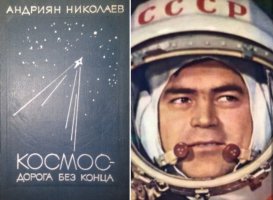
"Двигатель первой ступени, сообщив кораблю первую космическую скорость(она равна около восьми километров в секунду), выключился, произошло отделение корабля от носителя. При отделении мы почувствовали толчок, и сразу наступила тишина.
Анатолий Филипченко после совершения полёта на корабле "Союз-7" рассказывал нам о своих ощущениях в момент,когда корабль отделяется от последней ступени ракеты - носителя.Я вспомнил его слова в этот момент:
"Взрыв, и ты как будто вываливаешься из кресла и переворачиваешься вниз, лицом к Земле, и висишь на ремнях. Это ощущение появляется из-за исчезновения давления на спину. Наступает полная тишина. Только неожиданно громко начинают тикать бортовые часы. А в иллюминаторах возникает фейерверк из светящихся частиц". Примерно такое же ощущение теперь испытывал и я.
Наш корабль "Союз-9" вышел на рассчитанную околоземную орбиту искусственного спутника Земли. И мы, не скрывая радости, поздравили друг друга".(Андриян Николаев. "Космос - дорога без конца").
.....................................................................
Цит. по: Николаев Андриян Григорьевич
КОСМОС - ДОРОГА БЕЗ КОНЦА
Художник М. Бородин.
Москва. Издательство" Молодая гвардия". 1974 год.

На фото слева - обложка книги космонавта Андрияна Николаева "Космос - дорога без конца", справа - космонавт Андриян Николаев в скафандре.
“The first-stage engine, having given the spacecraft the first cosmic velocity (approximately eight kilometers per second), shut down, and the spacecraft separated from the launch vehicle. At the moment of separation, we felt a jolt, and immediately there was silence.


After his flight aboard Soyuz-7, Anatoly Filipchenko told us about his sensations at the moment when the spacecraft separates from the final stage of the launch vehicle. I remembered his words at that moment:

‘An explosion, and it is as if you fall out of your seat and turn over downward, face toward the Earth, hanging from the straps. This sensation occurs because the pressure against your back disappears. Complete silence sets in. Only the onboard clock suddenly begins ticking surprisingly loudly. And in the portholes, a firework of luminous particles appears.’ I experienced approximately the same sensation now.

Our Soyuz-9 spacecraft entered the calculated near-Earth orbit of an artificial satellite of the Earth. And, unable to hide our joy, we congratulated each other.” (Andriyan Nikolaev. “Space — A Road Without End”).

.....................................................................

Quoted from: Nikolaev Andriyan Grigoryevich

SPACE — A ROAD WITHOUT END

Artist: M. Borodin.

Moscow. Molodaya Gvardiya Publishing House. 1974.

In the photo, on the left is the cover of cosmonaut Andriyan Nikolaev’s book “Space — A Road Without End”; on the right is cosmonaut Andriyan Nikolaev wearing a spacesuit.
«El motor de la primera etapa, después de comunicar a la nave la primera velocidad cósmica (aproximadamente ocho kilómetros por segundo), se apagó y se produjo la separación de la nave del vehículo lanzador. En el momento de la separación sentimos un impulso y, de inmediato, se hizo el silencio.


Después de realizar su vuelo a bordo de la nave “Soyuz-7”, Anatoli Filipchenko nos contó sus sensaciones en el momento en que la nave se separa de la última etapa del cohete lanzador. En aquel momento recordé sus palabras:

“Una explosión, y es como si salieras despedido del asiento y dieras una vuelta hacia abajo, con el rostro dirigido hacia la Tierra, quedando suspendido por los cinturones. Esta sensación aparece debido a la desaparición de la presión contra la espalda. Se hace un silencio absoluto. Solo el reloj de a bordo comienza a hacer tic-tac de repente y con una intensidad sorprendente. Y en las ventanillas aparece un espectáculo de partículas luminosas, como fuegos artificiales”. Aproximadamente esa misma sensación experimentaba yo ahora.

Nuestra nave “Soyuz-9” entró en la órbita calculada alrededor de la Tierra, como satélite artificial de la Tierra. Y, sin ocultar nuestra alegría, nos felicitamos mutuamente». (Andrián Nikoláyev. «El espacio: un camino sin fin»).

.....................................................................

Citado de: Nikoláyev Andrián Grigórievich

EL ESPACIO: UN CAMINO SIN FIN

Ilustraciones de M. Borodin.

Moscú. Editorial “Molodaya Gvardiya”. 1974.

En la foto, a la izquierda, la portada del libro del cosmonauta Andrián Nikoláyev «El espacio: un camino sin fin»; a la derecha, el cosmonauta Andrián Nikoláyev con un traje espacial.
S8CL NWDvgOL4OhKkHNWpXOwcnrR5rkWNAVIDPG7Y6cvN8qDzBW8eL70Ju64ILOCGSPSSkWUY5k7ZTP6or62JsUJ
 
Frimen1917

Frimen1917

Mecca V.I.P.
VIP
Joined
Jan 9, 2026
Messages
3,156
Points
63
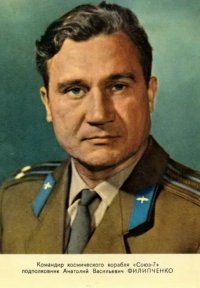
"Дважды побывав в космосе, я имел возможность неоднократно обозревать с высоты все континенты, расположенные на земном шаре. Зрелище – неповторимое и единственное в своем роде. Прекрасен вид материков, океанов, морей, рек. Дух захватывает. Но часто тревожат далеко не радужные мысли, мысли о судьбах людей, живущих на Земле, о трехмиллиардном человечестве, большая половина которого уже прочно ступила на прогрессивный путь развития. Мысли о том, что мощь человеческого разума достигла небывалых возможностей – творить прекрасное и производить колоссальные разрушения. Сумеют ли люди найти в себе силы для того, чтобы не пойти по варварскому, негуманному пути?".(Анатолий Филипченко. "Надёжная орбита").
На фото слева - обложка книги космонавта Анатолия Филипченко "Надежная орбита", справа - фото командира космического корабля "Союз - 7" космонавта А.Филипченко.
.............................................................................................................................................................................................................................................

Цит. по: Филипченко Анатолий Васильевич. "Надежная орбита". Москва. Издательство ДОСААФ (Добровольное Общество Содействия Армии, Авиации и Флоту) СССР . 1978 год.
“Having been into space twice, I had the opportunity to observe from above, on numerous occasions, all the continents located on our planet. The sight is unique and unparalleled. The view of the continents, oceans, seas, and rivers is magnificent. It takes your breath away. But often I am troubled by far from optimistic thoughts — thoughts about the fate of the people living on Earth, about the three-billion-strong human race, more than half of which had already firmly embarked on the progressive path of development. Thoughts about the fact that the power of the human mind has reached unprecedented capabilities — to create beauty and to inflict colossal destruction. Will people be able to find within themselves the strength not to take the barbaric, inhumane path?” (Anatoly Filipchenko. “A Reliable Orbit”).


In the photograph on the left is the cover of cosmonaut Anatoly Filipchenko’s book “A Reliable Orbit”; on the right is a photograph of cosmonaut A. Filipchenko, commander of the Soyuz-7 spacecraft.

.............................................................................................................................................................................................................................................

Quoted from: Filipchenko Anatoly Vasilyevich. “A Reliable Orbit”. Moscow. DOSAAF Publishing House (Voluntary Society for Assistance to the Army, Air Force and Navy) of the USSR. 1978.
«Después de haber estado dos veces en el espacio, tuve la oportunidad de observar repetidamente desde las alturas todos los continentes de nuestro planeta. Es un espectáculo irrepetible y único. Es magnífica la vista de los continentes, los océanos, los mares y los ríos. Te deja sin aliento. Pero a menudo me inquietan pensamientos que están muy lejos de ser optimistas: pensamientos sobre el destino de las personas que viven en la Tierra, sobre la humanidad de tres mil millones de personas, más de la mitad de la cual ya había emprendido firmemente el camino del desarrollo progresista. Pensamientos sobre el hecho de que el poder de la mente humana ha alcanzado posibilidades sin precedentes: crear cosas hermosas y producir una destrucción colosal. ¿Serán capaces las personas de encontrar en sí mismas la fuerza necesaria para no seguir el camino bárbaro e inhumano?» (Anatoli Filipchenko. «Una órbita segura»).


En la fotografía de la izquierda aparece la portada del libro del cosmonauta Anatoli Filipchenko «Una órbita segura»; a la derecha, una fotografía del cosmonauta A. Filipchenko, comandante de la nave espacial «Soyuz-7».

.............................................................................................................................................................................................................................................

Citado de: Filipchenko Anatoli Vasílievich. «Una órbita segura». Moscú. Editorial DOSAAF (Sociedad Voluntaria de Ayuda al Ejército, la Aviación y la Armada) de la URSS. 1978.
HyCVsBNehKQ hzpNIWOk71xCpTdYwZl2RXZXFKuJ5FYTbYtSs4dtg3CYeXi4OXCn6xTXCFXZ GeNbVvcCyjXGW0HdKRPQD7jy4dcHGiAhRHPWF nlynb4WwflFL13MNrBJwZkSGBeo5arsGO36asBIXKAOnuu8gCL
 
Frimen1917

Frimen1917

Mecca V.I.P.
VIP
Joined
Jan 9, 2026
Messages
3,156
Points
63
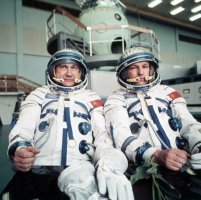
История советской космонавтики в фотографиях. На фото слева направо: космонавты СССР Филипченко Анатолий Васильевич и Рукавишников Николай Николаевич.
The history of Soviet cosmonautics in photographs. Pictured from left to right: Soviet cosmonauts Anatoly Vasilyevich Filipchenko and Nikolai Nikolayevich Rukavishnikov.
La historia de la cosmonáutica soviética en fotografías. En la imagen, de izquierda a derecha: los cosmonautas soviéticos Anatoly Vasilyevich Filipchenko y Nikolai Nikolayevich Rukavishnikov

FWliebmCoIooQ2Ww7L2PfRbbJiAyDJDrUIh6kBLOpR0egVy 6uJLRpw0wxmJBG4BPHM8Z YcdVBQLtQqF8k3NRpK
 
Frimen1917

Frimen1917

Mecca V.I.P.
VIP
Joined
Jan 9, 2026
Messages
3,156
Points
63
"С.П. Королев был руководителем проектов многих сложных ракетно-космических систем, в осуществлении которых принимали участие десятки научных институтов, конструкторских бюро и заводов. Поэтому для оценки его личного творческого вклада в эти работы требуется специфический подход.

Прежде всего необходимо принять во внимание особенности коллективного творчества. Сложность и разнообразие задач, решаемых при создании ракетно-космических систем, затрудняют понимание каждым участником работ логики принимаемых технических решений, что необходимо для успеха общего дела. Каждый исполнитель должен быть уверен в правильности пути, избранного для осуществления всего проекта, и выполнять свою часть работы качественно и в срок. Роль руководителя при этом состоит в том, чтобы в многотысячных коллективах создать деловую и в то же время творческую обстановку для решения всех частных задач с позиций общего замысла. Поэтому основная часть творческого наследия С.П. Королева — это тактика и стратегия создания ракетно-космических систем.
В связи с этим полезно вспомнить выступление академика П.Л. Капицы на Международном симпозиуме в Праге в 1959 г. по планированию науки. Именно особенности творческой деятельности С.П. Королева дали основание П.Л. Капице высказать тезис об ученых нового типа:

"Теперь мы часто обсуждаем, как должна быть организована научная работа, которая по своим масштабам требует участия большого, слаженного творческого коллектива. Кто должен руководить работой такого коллектива — ученый или администратор?

(...) Поскольку для организации решения всякой новой научной проблемы надо находить свои организационные формы, руководитель крупной научной проблемы, даже если он сам лично и не работает в науке, должен быть человеком с большим творческим талантом. Не знаю, почему руководитель такого великолепного достижения в науке, как пуск первого спутника, недостоин Нобелевской премии, хотя, может быть, он лично и не выполнял научной работы, связанной с подготовкой этого уникального опыта?

(...) мы должны начинать специально воспитывать и готовить людей — организаторов больших проблем (...) Они встречаются очень редко, и, по-видимому, это один из уникальных видов человеческого таланта.

(...) одна из задач будущего — это воспитание и развитие нового типа ученого-организатора (...) Этот тип ученых-руководителей в настоящее время находится в начальной стадии своего развития, но в будущей науке больших масштабов будет играть решающую роль".

Есть глубокий смысл в том, что именно особенности творчества С.П. Королева послужили П.Л. Капице основанием для обобщающих выводов о роли ученых будущего — ученых нового типа. Ибо космонавтика является той областью, где в наибольшей степени проявились тенденции современной науки: комплексный подход к решению проблем, необходимость привлечения многотысячных коллективов, использование последних научных достижений". (Доктор технических наук Г. С. Ветров."С. П. Королев и его дело. Свет и тени в истории космонавтики").
...................................................................
Цит. по: Российская Академия Наук
Отделения проблем машиностроения,
МЕХАНИКИ И ПРОЦЕССОВ УПРАВЛЕНИЯ
КОМИССИЯ ПО РАЗРАБОТКЕ НАУЧНОГО НАСЛЕДИЯ
ПИОНЕРОВ ОСВОЕНИЯ КОСМИЧЕСКОГО ПРОСТРАНСТВА
С.П.КОРОЛЕВ
И ЕГО ДЕЛО
СВЕТ И ТЕНИ
В ИСТОРИИ
КОСМОНАВТИКИ
ИЗБРАННЫЕ ТРУДЫ И ДОКУМЕНТЫ

Под общей редакцией
академика Б. В. РАУШЕНБАХА

Составитель
доктор технических наук Г. С. ВЕТРОВ

Редакционная коллегия:
академик Б.В. Раушенбах (председатель),
доктор технических наук Ю.А. Мозжорин (заместитель председателя),
академик К.С. Колесников, академик В.П. Мишин,
член-корреспондент РАН Ю.П. Семенов, член-корреспондент РАН Б.Е. Черток,
доктор технических наук Г. Н. Дегтяренко, кандидат технических наук А.Л. Еременко,
кандидат технических наук В.Н. Сокольский

Рецензент:
академик Т.М. Энеев

МОСКВА
«НАУКА»
1998

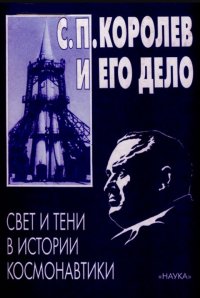
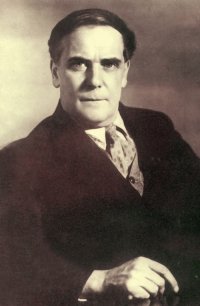
На фото слева - обложка книги "С.П.Королев и его дело"(свет и тени в истории космонавтики), справа - Петр Капица.
S. P. Korolev was the head of the projects of many complex rocket and space systems, whose implementation involved dozens of research institutes, design bureaus, and factories. Therefore, assessing his personal creative contribution to this work requires a specific approach.


First of all, it is necessary to take into account the particular characteristics of collective creative work. The complexity and diversity of the tasks involved in creating rocket and space systems make it difficult for each participant to understand the logic behind the technical decisions being made, which is essential for the success of the overall undertaking. Every person involved must be confident in the correctness of the path chosen for the implementation of the entire project and must carry out their part of the work efficiently and on time. The role of the leader in this process is to create, within teams numbering in the thousands, a professional and at the same time creative environment for solving all individual tasks from the standpoint of the overall concept. Therefore, the greater part of S. P. Korolev’s creative legacy consists of the tactics and strategy of creating rocket and space systems.

In this connection, it is useful to recall the speech given by Academician P. L. Kapitsa at the International Symposium in Prague in 1959 on the planning of science. It was precisely the particular characteristics of S. P. Korolev’s creative work that gave P. L. Kapitsa grounds for putting forward the thesis about a new type of scientist:

“Now we often discuss how scientific work should be organized when, by its scale, it requires the participation of a large, well-coordinated creative team. Who should lead the work of such a team — a scientist or an administrator?

(...) Since organizing the solution of every new scientific problem requires finding its own organizational forms, the person leading a major scientific problem, even if he himself does not personally work in science, must be a person of great creative talent. I do not know why the leader of such a magnificent achievement in science as the launch of the first satellite is unworthy of the Nobel Prize, even though perhaps he personally did not carry out the scientific work associated with preparing this unique experiment?

(...) we must begin to specifically educate and train people — organizers of major problems (...) They are encountered very rarely and, apparently, this is one of the unique forms of human talent.

(...) one of the tasks of the future is the education and development of a new type of scientist-organizer (...) This type of scientist-leader is currently at the initial stage of its development, but in the future science of large scale it will play a decisive role.”

There is profound meaning in the fact that it was precisely the particular characteristics of S. P. Korolev’s creative work that served as the basis for P. L. Kapitsa’s general conclusions about the role of the scientists of the future — scientists of a new type. For astronautics is the field in which the tendencies of modern science have manifested themselves to the greatest extent: a comprehensive approach to solving problems, the necessity of involving teams numbering in the thousands, and the use of the latest scientific achievements.” (Doctor of Technical Sciences G. S. Vetrov. “S. P. Korolev and His Work. Light and Shadows in the History of Cosmonautics”).

...................................................................

Quoted from: Russian Academy of Sciences
Department of Problems of Mechanical Engineering,
MECHANICS AND CONTROL PROCESSES
COMMISSION FOR THE DEVELOPMENT OF THE SCIENTIFIC LEGACY
OF THE PIONEERS OF OUTER SPACE EXPLORATION
S. P. KOROLEV
AND HIS WORK
LIGHT AND SHADOWS
IN THE HISTORY
OF COSMONAUTICS
SELECTED WORKS AND DOCUMENTS
Under the general editorship of
Academician B. V. Rauschenbach
Compiled by
Doctor of Technical Sciences G. S. Vetrov
Editorial Board:
Academician B. V. Rauschenbach (Chairman),
Doctor of Technical Sciences Yu. A. Mozzhorin (Deputy Chairman),
Academician K. S. Kolesnikov, Academician V. P. Mishin,
Corresponding Member of the Russian Academy of Sciences Yu. P. Semenov, Corresponding Member of the Russian Academy of Sciences B. E. Chertok,
Doctor of Technical Sciences G. N. Degtyarenko, Candidate of Technical Sciences A. L. Eremenko,
Candidate of Technical Sciences V. N. Sokolsky
Reviewer:
Academician T. M. Eneev
MOSCOW
“NAUKA”
1998

In the photograph, on the left is the cover of the book “S. P. Korolev and His Work” (Light and Shadows in the History of Cosmonautics); on the right is Pyotr Kapitsa.
S. P. Koroliov fue el responsable de los proyectos de numerosos y complejos sistemas de cohetes y espaciales, en cuya realización participaron decenas de institutos científicos, oficinas de diseño y fábricas. Por ello, para valorar su aportación creativa personal a estos trabajos se requiere un enfoque específico.


Ante todo, es necesario tener en cuenta las particularidades de la creación colectiva. La complejidad y diversidad de las tareas que se resuelven durante la creación de sistemas de cohetes y espaciales dificultan que cada participante comprenda la lógica de las decisiones técnicas adoptadas, algo indispensable para el éxito de la empresa común. Cada persona que participa en el proyecto debe estar convencida de la corrección del camino elegido para llevarlo a cabo y realizar su parte del trabajo con calidad y dentro del plazo previsto. El papel del responsable consiste, en este contexto, en crear, dentro de equipos de miles de personas, un ambiente profesional y, al mismo tiempo, creativo para resolver todas las tareas particulares desde la perspectiva del objetivo general. Por ello, la mayor parte del legado creativo de S. P. Koroliov consiste en la táctica y la estrategia de creación de sistemas de cohetes y espaciales.

En este sentido, resulta útil recordar la intervención del académico P. L. Kapitsa en el Simposio Internacional celebrado en Praga en 1959 sobre la planificación de la ciencia. Precisamente las particularidades de la actividad creativa de S. P. Koroliov llevaron a P. L. Kapitsa a formular la tesis sobre un nuevo tipo de científico:

«Ahora hablamos con frecuencia de cómo debe organizarse el trabajo científico cuando, por su magnitud, requiere la participación de un gran colectivo creativo y bien coordinado. ¿Quién debe dirigir el trabajo de un colectivo semejante: un científico o un administrador?

(...) Puesto que para organizar la resolución de cada nuevo problema científico es necesario encontrar sus propias formas organizativas, la persona que dirige un gran problema científico, aunque personalmente no trabaje en la ciencia, debe ser alguien dotado de un gran talento creativo. No sé por qué el responsable de un logro científico tan magnífico como el lanzamiento del primer satélite no merece el Premio Nobel, aunque quizá personalmente no realizara el trabajo científico relacionado con la preparación de este experimento único.

(...) debemos comenzar a educar y preparar específicamente a personas —organizadores de grandes problemas— (...). Se encuentran muy raramente y, al parecer, este es uno de los tipos únicos de talento humano.

(...) una de las tareas del futuro consiste en la educación y el desarrollo de un nuevo tipo de científico-organizador (...). Este tipo de científico-dirigente se encuentra actualmente en la etapa inicial de su desarrollo, pero en la ciencia del futuro, de gran escala, desempeñará un papel decisivo».

Hay un profundo sentido en el hecho de que precisamente las particularidades de la actividad creativa de S. P. Koroliov sirvieran a P. L. Kapitsa de fundamento para sus conclusiones generales sobre el papel de los científicos del futuro —los científicos de un nuevo tipo—. Porque la cosmonáutica es el ámbito en el que se han manifestado en mayor medida las tendencias de la ciencia moderna: un enfoque integral para la resolución de los problemas, la necesidad de involucrar a colectivos de miles de personas y la utilización de los últimos logros científicos». (Doctor en Ciencias Técnicas G. S. Vetrov. «S. P. Koroliov y su obra. Luces y sombras en la historia de la cosmonáutica»).

...................................................................

Citado de: Academia de Ciencias de Rusia
DEPARTAMENTO DE PROBLEMAS DE INGENIERÍA MECÁNICA,
MECÁNICA Y PROCESOS DE CONTROL
COMISIÓN PARA EL DESARROLLO DEL LEGADO CIENTÍFICO
DE LOS PIONEROS DE LA EXPLORACIÓN DEL ESPACIO
S. P. KOROLIOV
Y SU OBRA
LUCES Y SOMBRAS
EN LA HISTORIA
DE LA COSMONÁUTICA
OBRAS Y DOCUMENTOS SELECCIONADOS
Bajo la dirección general del
académico B. V. Rauschenbach
Compilador:
doctor en Ciencias Técnicas G. S. Vetrov
Consejo editorial:
académico B. V. Rauschenbach (presidente),
doctor en Ciencias Técnicas Yu. A. Mozzhorin (vicepresidente),
académico K. S. Kolesnikov, académico V. P. Mishin,
miembro correspondiente de la Academia de Ciencias de Rusia Yu. P. Semenov, miembro correspondiente de la Academia de Ciencias de Rusia B. E. Chertok,
doctor en Ciencias Técnicas G. N. Degtyarenko, candidato en Ciencias Técnicas A. L. Eremenko,
candidato en Ciencias Técnicas V. N. Sokolsky
Revisor:
académico T. M. Eneev
MOSCÚ
«NAUKA»
1998

En la fotografía, a la izquierda aparece la portada del libro «S. P. Koroliov y su obra» (Luces y sombras en la historia de la cosmonáutica); a la derecha, Piotr Kapitsa.
RvMzVUFklqBP9cJM5GsHW33PcMu7D9G m75Aej21Vy3xwymRcq6 j6fX2 KEfwZ9FdVCDwNKTK3kdmzdXCev 2iT
Kapiza PL
 
Frimen1917

Frimen1917

Mecca V.I.P.
VIP
Joined
Jan 9, 2026
Messages
3,156
Points
63
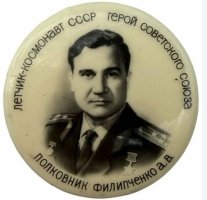
Значок "Анатолий Васильевич Филипченко. Летчик-космонавт, герой Советского Союза" СССР 1970-1980 гг.
Badge "Anatoly Vasilyevich Filipchenko. Cosmonaut-Pilot, Hero of the Soviet Union," USSR, 1970s–1980s.
Insignia "Anatoly Vasilyevich Filipchenko. Piloto-cosmonauta, Héroe de la Unión Soviética" URSS 1970-1980.

Clipboard 09 16 2026 01
 
Frimen1917

Frimen1917

Mecca V.I.P.
VIP
Joined
Jan 9, 2026
Messages
3,156
Points
63
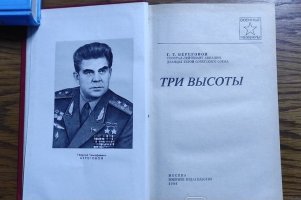
"Впечатления от всего пережитого за первый день моей космической одиссеи оказались настолько ярки и богаты, что первую ночь в космосе я практически не спал. Изрядно мешала на первых порах и невесомость. Свободное парение в воздухе, как выяснилось, не самая удобная кровать, хотя довольно мягкая. Только проку от этой "мягкости" ни на грош. Шевельнул, скажем, во сне ногой и сразу, по принципу реактивной отдачи, поплыл в сторону. Поплыл - значит проснулся. Поэтому, в конце концов, ловишь себя на странном по первой видимости желании - спеленать себя! Пеленок в инвентаре космического корабля не числится. Вместо пеленок - ремни. Вот и стараешься как-то зафиксировать себя в пространстве: засунешь в какую-нибудь щель между аппаратурой ноги, закрепишься ремнями и, глядишь, при определенной сноровке, уснешь. Зато уж заснув, спишь меньше, а высыпаешься лучше: сказывается отсутствие нагрузки на суставы, на мышцы и на все остальное...".(Георгий Береговой. "Три высоты").
....................................................................
Цит. по: Береговой Георгий Тимофеевич
ТРИ ВЫСОТЫ
Литературная запись Сомова Г. А.

Москва. Военное издательство. 1986 год.
На фото: титульный лист книги космонавта Г. Т. Берегового "Три высоты".
“The impressions of everything I had experienced during the first day of my space odyssey were so vivid and profound that I practically did not sleep during my first night in space. At first, weightlessness was also a considerable hindrance. Free-floating in the air, as it turned out, is not the most convenient bed, although it is quite soft. Yet there is not a bit of use in this ‘softness.’ If, for example, you move your leg in your sleep, you immediately drift sideways, following the principle of jet recoil. And if you drift, you wake up. So, in the end, you catch yourself having what at first seems like a strange desire — to wrap yourself up tightly! There are no swaddling cloths listed among the spacecraft’s equipment. Instead of swaddling cloths, there are straps. So you try somehow to fix yourself in space: you put your legs into some gap between the equipment, secure yourself with straps, and, with a certain amount of skill, you may eventually fall asleep. Once you do fall asleep, however, you sleep less but feel more rested: the absence of strain on the joints, muscles, and everything else makes a difference...”


(Georgy Beregovoy. Three Heights).

....................................................................

Quoted from: Georgy Timofeyevich Beregovoy

THREE HEIGHTS

Literary adaptation by G. A. Somov

Moscow. Military Publishing House. 1986.

Photo: Title page of cosmonaut G. T. Beregovoy’s book Three Heights.
«Las impresiones de todo lo vivido durante el primer día de mi odisea espacial fueron tan intensas y ricas que durante mi primera noche en el espacio prácticamente no dormí. Al principio, la ingravidez también me dificultó bastante las cosas. Flotar libremente en el aire, como pude comprobar, no es precisamente la cama más cómoda, aunque es bastante blanda. Sin embargo, esa “blandura” no sirve absolutamente de nada. Si, por ejemplo, mueves una pierna mientras duermes, inmediatamente empiezas a desplazarte hacia un lado, siguiendo el principio del retroceso de un motor a reacción. Y si te desplazas, te despiertas. Por eso, al final, uno se sorprende a sí mismo con un deseo que, a primera vista, parece extraño: ¡envolverse a sí mismo! En el inventario de la nave espacial no figuran pañales ni telas para envolver. En lugar de ellas, hay correas. Así que intentas fijarte de alguna manera en el espacio: metes las piernas en algún hueco entre los equipos, te sujetas con las correas y, con cierta habilidad, finalmente consigues dormirte. Pero una vez que te duermes, duermes menos y descansas mejor: se nota la ausencia de carga sobre las articulaciones, los músculos y todo lo demás...».


(Georgy Beregovoy. Tres alturas).

....................................................................

Citado de: Georgy Timoféievich Beregovoy

TRES ALTURAS

Adaptación literaria de G. A. Somov

Moscú. Editorial Militar. 1986.

En la foto: portada de la edición del libro del cosmonauta G. T. Beregovoy Tres alturas.
Clipboard 09 16 2026 02
 
Frimen1917

Frimen1917

Mecca V.I.P.
VIP
Joined
Jan 9, 2026
Messages
3,156
Points
63
"Овладение космическим пространством связано с наличием новых, необычных для земных условий особенностей. При работе в космосе должна быть обеспечена совершенная система автоматизации всех операций и процессов с необычайно высокой степенью надежности действия на протяжении, быть может, ряда лет при непрерывной эксплуатации. Решение этой задачи представляет большие трудности и потребует качественно нового подхода при создании радиоэлектронной аппаратуры, систем регулирования, источников питания, систем связи и т. д. Было бы невыгодным для решения той или иной практической задачи во всех случаях выводить на орбиту с помощью ракет каждый раз свой спутник, как это делается сейчас. Видимо, в космосе должна быть осуществлена хорошо продуманная система космических орбитальных сооружений в виде спутников, станций, других аппаратов, вечно существующих на своих орбитах около Земли и выполняющих свои функции с надежностью и неизменной точностью, подобно движению небесных тел. При этом, учитывая условия невесомости, разработка и сборка таких конструкций должна производиться в космосе, что открывает новые необычайные возможности в области конструирования, использования новых материалов, энергии Солнца, создания сперва частичного, а впоследствии и более полного биологического круговорота веществ для длительного обеспечения жизни космонавтов. Освоение прилегающих к Земле областей космического пространства послужит надежной базой для дальнейшего развития дальних космических полетов. Сперва это будут полеты автоматических научных станций к Луне со спуском на ее поверхность. Затем облет человеком Луны и высадка на ее поверхности. Организация на Луне постоянной научной станции, а впоследствии и промышленного объекта позволит использовать те нетронутые и еще неизвестные ресурсы этого наиболее близкого к нам небесного тела для науки и народного хозяйства.

Расстояние от Земли до Луны (около 385 тыс. км) не представляет непреодолимого препятствия для современной ракетной и космической техники.

Большой интерес представляет изучение ближних планет Солнечной системы - Марса и Венеры. Посылка к этим планетам автоматических межпланетных научных станций - дело вполне реальное и осуществимое в ближайшие годы. Сперва облет планет и проведение исследований и фотографирования, а затем и высадка научных станций на поверхность Марса, а также попытка проникновения в облачный покров Венеры для исследования непосредственными методами.

Создание огромных, весом в десятки тонн, межпланетных кораблей с экипажем, состоящим из нескольких человек, позволит впервые осуществить длительные, порядка двух-трех лет, космические полеты к ближним мирам нашей Солнечной системы. А далее, в перспективе,- возможность проникновения в глубины Вселенной, что позволит получить новые научные данные и сведения о планетах, Солнце, звездах и туманностях безбрежного космического пространства...". (С. П. Королев. "Проблема овладения космическим пространством"
.......................................................................
Примечание: Статья С. П. Королева, опубликована в газете «Правда» от 14 октября 1961 г. под псевдонимом «Профессор К. Сергеев».
..........................................................................
Цит.по: Творческое наследие академика Сергея Павловича Королёва. / Избранные труды и документы /Под общей редакцией М.В Келдыша/РЕДАКЦИОННАЯ КОЛЛЕГИЯ:

академик М. В. КЕЛДЫШ (председатель)

член-корреспондент АН СССР Б. В. РАУШЕНБАХ (заместитель председателя)

доктор технических наук Г. А. ТЮЛИН (заместитель председателя)

академик В. П. БАРМИН

академик В. П. ГЛУШКО

академик В. П. МИШИН

академик Н. А. ПИЛЮГИН

член-корреспондент АН СССР К. Д. БУШУЕВ

доктор технических наук К. С. КОЛЕСНИКОВ

доктор технических наук Ю. А. МОЗЖОРИН

доктор технических наук С. О. ОХАПКИН

доктор технических наук К. П. ФЕОКТИСТОВ

кандидат технических наук А. А. ЕРЕМЕНКО

кандидат технических наук В. Н. СОКОЛЬСКИЙ

Ответственный редактор-составитель доктор технических наук Г. С. ВЕТРОВ
Издательство "Наука"/Москва. 1980.

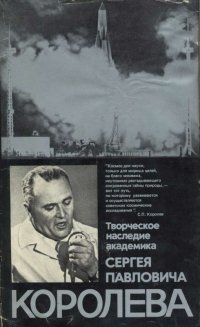
На фото обложка книги "Творческое наследие академика Сергея Павловича Королёва".
“Mastering outer space is associated with the presence of new conditions and features that are unusual for terrestrial environments. When working in space, a sophisticated system for the automation of all operations and processes must be provided, with an exceptionally high degree of operational reliability, perhaps for a number of years of continuous operation. Solving this problem presents great difficulties and will require a qualitatively new approach to the creation of radio-electronic equipment, control systems, power sources, communication systems, and so on. It would be impractical, in order to solve one practical problem or another, to launch a separate satellite into orbit by rocket every time, as is done today. Apparently, space should have a well-designed system of orbital structures in the form of satellites, stations, and other spacecraft, permanently existing in their orbits around the Earth and performing their functions with reliability and unchanging precision, similar to the motion of celestial bodies. At the same time, taking into account the conditions of weightlessness, the design and assembly of such structures should be carried out in space. This opens up extraordinary new possibilities in the fields of construction, the use of new materials, the utilization of solar energy, and the creation first of a partial and subsequently of a more complete biological cycle of substances to provide for the long-term survival of cosmonauts. The exploration of the regions of outer space adjacent to the Earth will serve as a reliable foundation for the further development of long-distance space flights. First, there will be flights of automatic scientific stations to the Moon with landings on its surface. Then, a human flight around the Moon and a landing on its surface. The establishment of a permanent scientific station on the Moon, and subsequently an industrial facility, will make it possible to utilize for science and the national economy the untouched and still unknown resources of this celestial body, the closest one to us.


The distance from the Earth to the Moon (about 385,000 km) does not constitute an insurmountable obstacle for modern rocket and space technology.

The study of the nearest planets of the Solar System — Mars and Venus — is of great interest. Sending automatic interplanetary scientific stations to these planets is an entirely realistic and feasible task for the coming years. First, there will be flights around the planets, together with research and photography, followed by the landing of scientific stations on the surface of Mars, as well as attempts to penetrate the cloud cover of Venus in order to conduct research by direct methods.

The creation of enormous interplanetary spacecraft weighing tens of tons, with crews consisting of several people, will make it possible for the first time to carry out long-duration space flights, lasting approximately two to three years, to the nearby worlds of our Solar System. And beyond that, in the future, lies the possibility of penetrating into the depths of the Universe, which will make it possible to obtain new scientific data and information about planets, the Sun, stars, and nebulae in the boundless expanse of outer space...”

(S. P. Korolev. “The Problem of Mastering Outer Space”)

.......................................................................

Note: S. P. Korolev’s article was published in the newspaper Pravda on October 14, 1961, under the pseudonym “Professor K. Sergeev.”

..........................................................................

Quoted from: The Creative Legacy of Academician Sergei Pavlovich Korolev / Selected Works and Documents / Under the General Editorship of M. V. Keldysh / EDITORIAL BOARD:

Academician M. V. KELDYSH (Chairman)

Corresponding Member of the Academy of Sciences of the USSR B. V. RAUSHENBAKH (Deputy Chairman)

Doctor of Technical Sciences G. A. TYULIN (Deputy Chairman)

Academician V. P. BARMIN

Academician V. P. GLUSHKO

Academician V. P. MISHIN

Academician N. A. PILYUGIN

Corresponding Member of the Academy of Sciences of the USSR K. D. BUSHUYEV

Doctor of Technical Sciences K. S. KOLESNIKOV

Doctor of Technical Sciences Yu. A. MOZZHORIN

Doctor of Technical Sciences S. O. OKHAPKIN

Doctor of Technical Sciences K. P. FEOKTISTOV

Candidate of Technical Sciences A. A. YEREMENKO

Candidate of Technical Sciences V. N. SOKOLSKY

Responsible Editor and Compiler, Doctor of Technical Sciences G. S. VETROV

Nauka Publishing House / Moscow. 1980.

Photo: Cover of the book The Creative Legacy of Academician Sergei Pavlovich Korolev
«La conquista del espacio exterior está relacionada con la existencia de nuevas condiciones y características, desconocidas para las condiciones terrestres. Al trabajar en el espacio debe garantizarse un sistema perfeccionado de automatización de todas las operaciones y procesos, con un grado extraordinariamente elevado de fiabilidad de funcionamiento durante, posiblemente, varios años de explotación continua. La resolución de este problema presenta grandes dificultades y exigirá un enfoque cualitativamente nuevo en la creación de equipos radioelectrónicos, sistemas de regulación, fuentes de alimentación, sistemas de comunicación, etc. No sería conveniente que, para resolver cada tarea práctica, se tuviera que poner en órbita mediante cohetes un satélite diferente cada vez, como se hace actualmente. Al parecer, en el espacio deberá establecerse un sistema bien concebido de instalaciones orbitales en forma de satélites, estaciones y otros aparatos, que permanezcan indefinidamente en sus órbitas alrededor de la Tierra y cumplan sus funciones con fiabilidad y una precisión invariable, de manera semejante al movimiento de los cuerpos celestes. Al mismo tiempo, teniendo en cuenta las condiciones de ingravidez, el diseño y el montaje de estas estructuras deberán realizarse en el espacio, lo que abre nuevas y extraordinarias posibilidades en el ámbito de la construcción, del empleo de nuevos materiales, del aprovechamiento de la energía del Sol y de la creación, primero, de un ciclo biológico parcial y, posteriormente, de uno más completo de circulación de sustancias para garantizar durante largos períodos la vida de los cosmonautas. La exploración de las regiones del espacio exterior próximas a la Tierra servirá como una base sólida para el posterior desarrollo de los vuelos espaciales de larga distancia. Primero serán vuelos de estaciones científicas automáticas a la Luna, con descenso sobre su superficie. Después, el vuelo de seres humanos alrededor de la Luna y el aterrizaje en su superficie. La creación en la Luna de una estación científica permanente y, posteriormente, de una instalación industrial permitirá utilizar para la ciencia y la economía nacional los recursos intactos y todavía desconocidos de este cuerpo celeste, el más próximo a nosotros.


La distancia entre la Tierra y la Luna (unos 385.000 km) no constituye un obstáculo insuperable para la moderna tecnología de cohetes y espacial.

Resulta de gran interés el estudio de los planetas más próximos del Sistema Solar: Marte y Venus. El envío de estaciones científicas interplanetarias automáticas a estos planetas es una tarea perfectamente realista y realizable en los próximos años. Primero se realizarán vuelos alrededor de los planetas, junto con investigaciones y fotografías, y después el descenso de estaciones científicas sobre la superficie de Marte, así como intentos de penetrar en la cubierta nubosa de Venus para realizar investigaciones mediante métodos directos.

La creación de enormes naves interplanetarias, con un peso de decenas de toneladas y tripulaciones formadas por varias personas, permitirá realizar por primera vez vuelos espaciales de larga duración, de unos dos o tres años, hacia los mundos cercanos de nuestro Sistema Solar. Y más adelante, en perspectiva, estará la posibilidad de penetrar en las profundidades del Universo, lo que permitirá obtener nuevos datos científicos e información sobre los planetas, el Sol, las estrellas y las nebulosas del espacio exterior sin límites...».

(S. P. Koroliov. «El problema de la conquista del espacio exterior»)

.......................................................................

Nota: El artículo de S. P. Koroliov fue publicado en el periódico Pravda el 14 de octubre de 1961 bajo el seudónimo «Profesor K. Serguéiev».

..........................................................................

Citado de: El legado creativo del académico Serguéi Pávlovich Koroliov / Obras y documentos seleccionados / Bajo la dirección general de M. V. Keldysh / CONSEJO EDITORIAL:

Académico M. V. KELDYSH (presidente)

Miembro correspondiente de la Academia de Ciencias de la URSS B. V. RAUSHENBAKH (vicepresidente)

Doctor en Ciencias Técnicas G. A. TYULIN (vicepresidente)

Académico V. P. BARMIN

Académico V. P. GLUSHKO

Académico V. P. MISHIN

Académico N. A. PILYUGIN

Miembro correspondiente de la Academia de Ciencias de la URSS K. D. BUSHUYEV

Doctor en Ciencias Técnicas K. S. KOLESNIKOV

Doctor en Ciencias Técnicas Yu. A. MOZZHORIN

Doctor en Ciencias Técnicas S. O. OKHAPKIN

Doctor en Ciencias Técnicas K. P. FEOKTISTOV

Candidato en Ciencias Técnicas A. A. YEREMENKO

Candidato en Ciencias Técnicas V. N. SOKOLSKY

Redactor responsable y compilador, Doctor en Ciencias Técnicas G. S. VETROV

Editorial Nauka / Moscú. 1980.

En la foto: portada del libro El legado creativo del académico Serguéi Pávlovich Koroliov.

H Vrge WRs7x6l JQqb OUI A21X W4d NISTVfh AZI5d Tlu
 

MuscleMecca Crew

Mecca Staff
Frimen1917

Frimen1917

Mecca V.I.P.
VIP
Joined
Jan 9, 2026
Messages
3,156
Points
63
"О Сергее Павловиче Королеве, Михаиле Кузьмиче Янгеле, Мстиславе Всеволодовиче Келдыше написаны десятки статей, книг. Но некоторые имена выдающихся конструкторов долгое время были известны только узкому кругу людей.

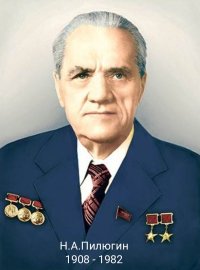
К плеяде создателей ракетно-космической техники относится и Николай Алексеевич Пилюгин, главный конструктор систем управления, академик, дважды Герой Социалистического Труда, лауреат Ленинской и Государственной премий.

Его судьба была обычной для своего времени. Родился в бедной крестьянской семье в Красном Селе Ленинградской области. Земля тянула к себе, но пересилило другое - любовь к механизмам, машинам, радио. Подался в город и устроился подручным слесаря.

Познание мира началось для него, как он позже признается, в стенах Московского высшего технического училища имени Н. Э. Баумана. Потом - "школа" Центрального аэрогидродинамического института имени Н. Е. Жуковского, знаменитый ЦАГИ. Он был на переднем крае борьбы за новые самолеты и конструкции, штурмующие пятый океан. Работал одновременно слесарем, инженером, конструктором.

Война внесла в жизнь свои коррективы. Новая техника, которую он разрабатывал, испытывалась уже во фронтовом небе. Когда обстоятельства потребовали, чтобы конструктор превратился в организатора, он им стал.

Исполнилась его мечта - быть причастным к штурму Вселенной. Отныне жизнь Николая Алексеевича Пилюгина протекала по замкнутому кругу - лаборатория, цех, полигон. В короткий срок предстояло создать невиданную технику и приборы. Он явился основоположником создания систем управления советских ракет-носителей, космических станций.

Даты истории - как вехи его биографии. Первый искусственный спутник Земли, фотография обратной стороны Луны, полет Юрия Гагарина, первая стыковка в космосе, полет орбитальных станций, старты к Венере и Марсу...". (Павел Попович. "Бесконечные дороги Вселенной"/ Часть третья/Сильней земного притяжения /Глава первая /Первый отряд).
..................................................................
Цит. по: НА ДОРОГАХ ВСЕЛЕННОЙ /Сборник /
ГЕОРГИЙ БЕРЕГОВОЙ. "Три высоты"(отрывки из повести), литературная запись Георгия Сомова, /ПАВЕЛ ПОПОВИЧ. "Бесконечные дороги Вселенной"(книга написана совместно с Александром Немовым), /ГЕОРГИЙ ШОНИН. "Самые первые", /ВИТАЛИЙ СЕВАСТЬЯНОВ. "Дневник над облаками", "Юрий Гагарин". /Составитель Архангельская Наталия Владимировна /Киев. Издательство художественной литературы "Дніпро". 1988 год.

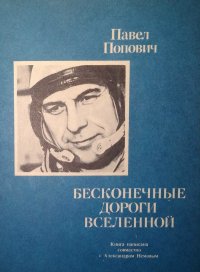
На верхнем фото - первая страница книги космонавта Павла Поповича "Бесконечные дороги вселенной" из сборника "На дорогах Вселенной", внизу - фото Н.А.Пилюгина.
“Dozens of articles and books have been written about Sergei Pavlovich Korolev, Mikhail Kuzmich Yangel, and Mstislav Vsevolodovich Keldysh. But the names of some outstanding designers remained known for a long time only to a narrow circle of people.


Nikolai Alekseevich Pilyugin, Chief Designer of guidance and control systems, Academician, twice Hero of Socialist Labor, and laureate of the Lenin Prize and the State Prize, also belonged to the distinguished group of creators of rocket and space technology.

His fate was typical of his time. He was born into a poor peasant family in Krasnoye Selo, Leningrad Region. The land attracted him, but something else proved stronger — his love of mechanisms, machines, and radio. He went to the city and found work as an assistant to a locksmith.

His understanding of the world began, as he would later admit, within the walls of the N. E. Bauman Moscow Higher Technical School. Then came the “school” of the Central Aerohydrodynamic Institute named after N. E. Zhukovsky, the famous TsAGI. He was on the front line of the struggle for new aircraft and structures challenging the “fifth ocean.” He worked simultaneously as a locksmith, an engineer, and a designer.

The war brought its own changes to his life. The new technology he was developing was already being tested in the skies over the front. When circumstances required the designer to become an organizer, he did so.

His dream came true — to be involved in the exploration of the Universe. From then on, the life of Nikolai Alekseevich Pilyugin followed a closed circuit — laboratory, workshop, testing ground. In a short period of time, unprecedented technology and instruments had to be created. He became a pioneer in the development of guidance and control systems for Soviet launch vehicles and space stations.

The dates of history were like milestones in his biography. The first artificial Earth satellite, the photograph of the far side of the Moon, Yuri Gagarin’s flight, the first docking in space, the flights of orbital stations, launches to Venus and Mars...”

(Pavel Popovich. “The Endless Roads of the Universe” / Part Three / Stronger Than Earth’s Gravity / Chapter One / The First Detachment).

..................................................................

Quoted from: ON THE ROADS OF THE UNIVERSE / Collection /

GEORGY BEREGOVOY. Three Heights (excerpts from the novella), literary adaptation by Georgy Somov, / PAVEL POPOVICH. The Endless Roads of the Universe (the book was written jointly with Alexander Nemov), / GEORGY SHONIN. The Very First, / VITALY SEVASTYANOV. Diary Above the Clouds, Yuri Gagarin. / Compiled by Natalia Vladimirovna Arkhangelskaya / Kyiv. “Dnipro” Publishing House for Fiction. 1988.

The top photo shows the first page of cosmonaut Pavel Popovich's book Endless Roads of the Universe (from the collection On the Roads of the Universe); the bottom photo shows N.A. Pilyugin.
«Sobre Serguéi Pávlovich Koroliov, Mijaíl Kuzmich Yánguel y Mstislav Vsévolodovich Keldysh se han escrito decenas de artículos y libros. Sin embargo, los nombres de algunos destacados diseñadores y constructores fueron durante mucho tiempo conocidos únicamente por un reducido círculo de personas.

Nikolái Alekséievich Piliuguin, diseñador jefe de sistemas de control, académico, dos veces Héroe del Trabajo Socialista y galardonado con el Premio Lenin y el Premio Estatal, perteneció también a la ilustre generación de creadores de la tecnología de cohetes y espacial.

Su destino fue típico de su época. Nació en una familia campesina pobre en Krasnoye Selo, en la región de Leningrado. La tierra le atraía, pero pudo más otra cosa: su amor por los mecanismos, las máquinas y la radio. Se marchó a la ciudad y consiguió trabajo como ayudante de cerrajero.

El conocimiento del mundo comenzó para él, como reconocería más tarde, entre las paredes de la Escuela Técnica Superior de Moscú N. E. Bauman. Después vino la “escuela” del Instituto Central de Aerohidrodinámica N. E. Zhukovski, el famoso TsAGI. Estuvo en la primera línea de la lucha por nuevos aviones y estructuras que desafiaban el “quinto océano”. Trabajó simultáneamente como cerrajero, ingeniero y diseñador.

La guerra introdujo sus propios cambios en su vida. La nueva tecnología que desarrollaba ya era sometida a pruebas en los cielos del frente. Cuando las circunstancias exigieron que el diseñador se convirtiera en organizador, así lo hizo.

Su sueño se hizo realidad: participar en la conquista del Universo. A partir de entonces, la vida de Nikolái Alekséievich Piliuguin transcurrió en un circuito cerrado: laboratorio, taller, polígono de pruebas. En un breve período de tiempo había que crear una tecnología y unos instrumentos sin precedentes. Se convirtió en uno de los pioneros de la creación de sistemas de control para los vehículos lanzadores soviéticos y las estaciones espaciales.

Las fechas de la historia eran como hitos de su biografía. El primer satélite artificial de la Tierra, la fotografía de la cara oculta de la Luna, el vuelo de Yuri Gagarin, el primer acoplamiento en el espacio, los vuelos de las estaciones orbitales, los lanzamientos hacia Venus y Marte...».

(Pável Popóvich. «Los caminos infinitos del Universo» / Tercera parte / Más fuerte que la gravedad terrestre / Capítulo primero / El primer destacamento).

..................................................................

Citado de: POR LOS CAMINOS DEL UNIVERSO / Colección /

GEORGI BEREGOVOY. Tres alturas (fragmentos de la novela), adaptación literaria de Georgy Somov, / PAVEL POPOVICH. Los caminos infinitos del Universo (libro escrito conjuntamente con Aleksandr Nemov), / GEORGY SHONIN. Los primeros, / VITALY SEVASTYANOV. Diario sobre las nubes, Yuri Gagarin. / Compiladora: Natalia Vladímirovna Arkhangelskaya / Kiev. Editorial de literatura artística «Dnipro». 1988.

La foto superior es la primera página del libro del cosmonauta Pavel Popovich, «Caminos infinitos del universo», perteneciente a la colección «En los caminos del universo». Debajo se muestra una fotografía de N.A. Pilyugin.
SSVD4rv2QZohe9hNDURd0qOt1LYZPt61tYGK8YzgWiydm7M2OP2sUSx3JC6MFTKddsvIbwUqir6B1P5zkt QYEJ0
KHg1PP V Y2tEayh581ovGBb0EfMdn6Xw4OzbpmTr9wQAgwsn8eMXNKz IXRMRKtkZfHDhybHmcazOitVOleDh0k
 
Frimen1917

Frimen1917

Mecca V.I.P.
VIP
Joined
Jan 9, 2026
Messages
3,156
Points
63
"Королев, не желая осложнять личные отношения с Рязанским, Пилюгиным, Коноплевым и Богуславским, в случае, если было необходимо решить технический вопрос не в пользу кого-либо из них, прибегал к очень мудрой тактике. Поручал ввязываться в
конфликт мне или кому-либо из своих заместителей, заранее обдумав и подготовив предложения по решению проблемы.

Если конфликт с нашим участием не мог быть разрешен, мы все вместе обращались к Королеву с жалобами друг на друга.

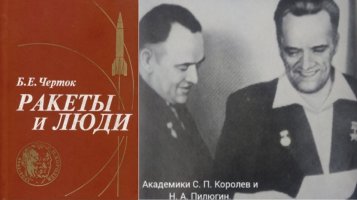
Он брал на себя роль арбитра. При этом, к вящему удовольствию смежников, обрушивался на своих, которые якобы необъективно ему доложили или не разобрались. Обычно все кончалось выпуском решений, которые всех примиряли, а Королев, хитро улыбаясь, с явным удовольствием их подписывал".(Борис Черток. "Ракеты и люди")
............................................................................

Цит.по : Черток Борис Евсеевич. Ракеты и люди. 2-е изд. — Москва .: Машиностроение, 1999.
На фото слева обложка книги "Ракеты и люди"(автор - Б.Е.Черток), справа - академики С.П.Королев и Н.А.Пилюгин.
“Korolev, not wishing to complicate his personal relationships with Ryazansky, Pilyugin, Konoplev, and Boguslavsky, resorted to a very wise tactic whenever it was necessary to resolve a technical issue in a way that was unfavorable to one of them. He would assign me or one of his deputies to get involved in the conflict, having thought through and prepared proposals for solving the problem in advance.


If the conflict with our participation could not be resolved, we would all together turn to Korolev with complaints against one another.

He would take on the role of arbiter. At the same time, much to the delight of the people from the related organizations, he would lash out at his own people, supposedly because they had reported the matter to him in a biased manner or had failed to understand it. Usually, everything ended with the issuing of decisions that reconciled everyone, and Korolev, smiling slyly, would sign them with obvious pleasure.”

(Boris Chertok. Rockets and People)

............................................................................

Quoted from: Chertok, Boris Yevseyevich. Rockets and People. 2nd edition. — Moscow: Mashinostroyeniye, 1999.

Photo: on the left, the cover of the book Rockets and People (author — B. E. Chertok); on the right — Academicians S. P. Korolev and N. A. Pilyugin.
«Koroliov, que no quería complicar sus relaciones personales con Riazanski, Piliuguin, Konopliov y Boguslavski, recurría a una táctica muy sabia cuando era necesario resolver una cuestión técnica de una manera desfavorable para alguno de ellos. Encargaba que yo o alguno de sus adjuntos nos involucráramos en el conflicto, después de haber pensado y preparado de antemano las propuestas para resolver el problema.


Si el conflicto con nuestra participación no podía resolverse, todos juntos acudíamos a Koroliov para quejarnos unos de otros.

Él asumía el papel de árbitro. Al mismo tiempo, para gran satisfacción de los representantes de las organizaciones relacionadas, arremetía contra los suyos, supuestamente porque le habían informado del asunto de manera poco objetiva o porque no lo habían comprendido. Por lo general, todo terminaba con la adopción de decisiones que reconciliaban a todos, y Koroliov, sonriendo astutamente, las firmaba con evidente satisfacción».

(Boris Chertok. Cohetes y personas)

............................................................................

Citado de: Chertok, Boris Yevséievich. Cohetes y personas. 2.ª edición. — Moscú: Mashinostroyenie, 1999.

En la foto: a la izquierda, la portada del libro Cohetes y personas (autor: B. E. Chertok); a la derecha, los académicos S. P. Koroliov y N. A. Piliuguin.
ZNCIgsGEPNr6DxqQ2k4P2L50DhFEiIsnVx24Fff6KoYPTe8fgkyXcuhNIUmNwzPQb2KIS4s5tHN8yfofC1hLQZVs
 
Top