• Legal Notice – MuscleMecca Forums

    MuscleMecca.com is an educational discussion platform. We do not sell, promote, or endorse any bodybuilding gear, supplements, research chemicals, or performance-enhancing substances.

    All discussions are for educational and informational purposes only. Nothing posted on this forum should be considered medical or legal advice.

    Do not attempt to sell, source, or promote illegal substances. Any such activity will result in an immediate and permanent ban and may be reported to the proper authorities.

    By using this site, you agree to comply with all forum rules, disclaimers, and applicable laws in your jurisdiction.

    Read Our Full Disclaimer and Forum Rules

History of Soviet cosmonautics.

Frimen1917

Frimen1917

Mecca V.I.P.
VIP
Joined
Jan 9, 2026
Messages
3,209
Points
63
А. Соколов
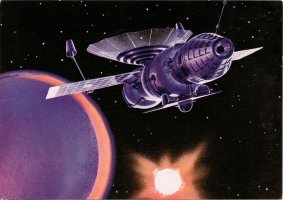
„Венера-4“ в полете
Заканчивается многодневный перелет. Автоматическая станция „Венера-4“ уже захвачена полем тяготения Венеры. Еще недолго — и отделится спускаемый отсек, начнется посадка на поверхность планеты.
A. Sokolov

“Venus-4” in flight
Many days of flight are coming to an end. Automatic station “Venus-4” is within the gravitation field of the Venus. Another moment and the separated section will begin landing to the surface of the planet.
A. Sokolov

«Venera-4» en vuelo
Está terminando el vuelo de muchos días. La estación automática «Venera-4» ya ha sido capturada por el campo gravitatorio de Venus. Dentro de poco se separará el módulo de descenso y comenzará el aterrizaje en la superficie del planeta.
318509 13
 
Frimen1917

Frimen1917

Mecca V.I.P.
VIP
Joined
Jan 9, 2026
Messages
3,209
Points
63
А. Леонов, А. Соколов
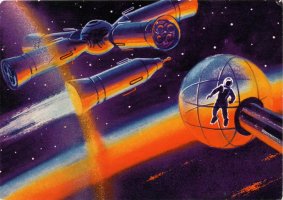
Сборка орбитальной станции
Одной из ближайших задач в освоении космоса, является строительство крупных орбитальных станций — космических лабораторий. Может быть это строительство будет осуществляться автоматически, человек будет только наблюдать за ним?
A. Leonov, A. Sokolov

Assembling of an orbital station
One of the nearest tasks in space exploration is the construction of large orbital stations — space laboratories. Can it be so that such construction will be automatic and man will be just a supervisor?
A. Leonov, A. Sokolov

Montaje de una estación orbital
Una de las tareas más próximas en la exploración del espacio es la construcción de grandes estaciones orbitales — laboratorios espaciales. ¿Puede ser que esta construcción se realice de forma automática y el hombre sea solo un supervisor?
318509 15
 
Frimen1917

Frimen1917

Mecca V.I.P.
VIP
Joined
Jan 9, 2026
Messages
3,209
Points
63
А. Леонов, А. Соколов
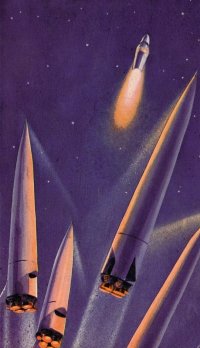
Старт космического корабля „Восток“
Один из этапов старта: сброшены отработавшие двигатели первой ступени ракеты-носителя.
A. Leonov, A. Sokolov

Launching of space ship “Vostok”
One of the stages of launching: used boosters of the first stage are dropped down.
A. Leonov, A. Sokolov

Lanzamiento de la nave espacial «Vostok»
Una de las etapas del lanzamiento: se desprenden los motores ya usados de la primera etapa del cohete portador.
318509 17
 
Frimen1917

Frimen1917

Mecca V.I.P.
VIP
Joined
Jan 9, 2026
Messages
3,209
Points
63
А. Соколов
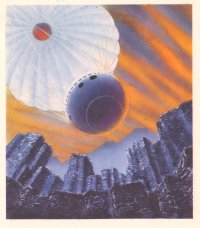
Под куполом парашюта
Погасив космическую скорость, открылся парашют. Плавно опускаясь, автоматическая станция непрерывно ведёт радиопередачу, сообщая на Землю результаты измерений температуры, плотности, состава атмосферы Венеры.
A. Sokolov

Under the parachute
The landing station while smoothly landing is continuously broadcasting to the Earth results of measuring temperature, density and composition of the Venus atmosphere.
A. Sokolov

Bajo el dosel del paracaídas
Tras frenar la velocidad cósmica, se abrió el paracaídas. Descendiendo suavemente, la estación automática transmite continuamente por radio a la Tierra los resultados de las mediciones de temperatura, densidad y composición de la atmósfera de Venus.
 
Frimen1917

Frimen1917

Mecca V.I.P.
VIP
Joined
Jan 9, 2026
Messages
3,209
Points
63
А. Леонов, А. Соколов
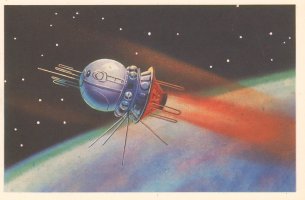
„Восток“ идёт домой
Заканчивается полёт по орбите. Включены тормозные установки, гасится космическая скорость. Скоро корабль войдёт в плотные слои атмосферы.
A. Leonov, A. Sokolov

“Vostok” is returning home
The flight on the orbit is coming to an end, the brakes are turned on, cosmic speed is reduced, very soon the ship will enter thick layers of the atmosphere.
A. Leonov, A. Sokolov

«Vostok» regresa a casa
El vuelo en órbita está terminando. Se han activado los motores de frenado, se reduce la velocidad cósmica. Pronto la nave entrará en las capas densas de la atmósfera.
 
Frimen1917

Frimen1917

Mecca V.I.P.
VIP
Joined
Jan 9, 2026
Messages
3,209
Points
63
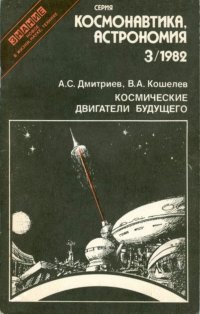
"Многочисленные полеты автоматических станций к Венере, Марсу и дальним планетам Солнечной системы создали впечатление, что это задача скорее сегодняшнего, чем завтрашнего дня. Во всяком случае, пилотируемые полеты к Марсу и Венере давно перестали быть объектом научно-фантастической литературы. Вместе с тем возможное решение этих задач в рамках современной технологии, т. е. с использованием только ЖРД, представляется крайне громоздким и чрезвычайна дорогим. Один из самых «скромных» вариантов экспедиции на Марс предусматривает при полезной нагрузке межпланетного корабля 50 т выведение на низкую орбиту элементов конструкции корабля и топлива общей массой 500 – 700 т пятью – семью пусками ракет типа «Сатурн-5».

Но пугает не сама начальная масса, а необходимость проведения большого объема сложных монтажных работ в космосе. Выведение же совокупного полезного груза массой 500 – 1000 т, как уже отмечалось, будет ординарной задачей для ведущих космических держав уже к концу 80-х годов. Следует отметить, что для решения задачи полета к Марсу с помощью электрореактивных двигателей малой тяги и ЯЭУ или при использовании твердофазного ядерного реактора со скоростью истечения около 9 км/с общая выводимая на опорную орбиту масса составит 150 – 200 т. Продолжительность марсианской экспедиции во всех случаях примерно одинакова – 2 года 8 месяцев.

Уменьшение продолжительности экспедиции в 2 раза потребует увеличения энергетических затрат на порядок. В то же время уменьшение срока экспедиций к планетам весьма желательно. Здесь открываются широкие перспективы перед двигателями с высокими энергетическими показателями, в частности, газофазными ядерными двигателями, термоядерными и импульсными термоядерными двигателями. Нетрудно видеть, что речь здесь идет о двигателях, проблема создания которых на грани современных технологических возможностей. В связи с этим, во всяком случае на первых этапах пилотируемых межпланетных полетов, значительный выигрыш может быть достигнут за счет применения двигателей с использованием внешних источников электромагнитного излучения в качестве двигателей большой тяги при старте с орбиты ИСЗ".(А.С.Дмитриев, В.А.Кошелев.
"Космические двигатели будущего").
...................................................................
Цит.по: Александр Сергеевич Дмитриев,
Владимир Алексеевич Кошелев
КОСМИЧЕСКИЕ ДВИГАТЕЛИ БУДУЩЕГО
Серия «Космонавтика, астрономия»
НОВОЕ В ЖИЗНИ, НАУКЕ, ТЕХНИКЕ
№ 3, 1982 г.
На фото обложка художника В. Н. Конюхова.
ИЗДАТЕЛЬСТВО «ЗНАНИЕ»

Москва 1982 год

Numerous flights of automatic stations to Venus, Mars and the distant planets of the Solar System have created the impression that this is a task of today rather than of tomorrow. In any case, manned flights to Mars and Venus have long ceased to be the object of science-fiction literature. At the same time, a possible solution of these tasks within the framework of modern technology, i.e. with the use of chemical rocket engines only, appears extremely cumbersome and extraordinarily expensive. One of the most “modest” variants of an expedition to Mars provides, with a useful load of the interplanetary ship of 50 t, for the launching into low orbit of structural elements of the ship and propellant with a total mass of 500–700 t by five to seven launches of rockets of the “Saturn-5” type.


What is alarming is not the initial mass itself, but the necessity of carrying out a large volume of complex assembly work in space. The launching of a total useful load of 500–1000 t, as already noted, will be an ordinary task for the leading space powers already by the end of the 1980s. It should be noted that for the solution of the task of a flight to Mars with the help of electric rocket engines of low thrust and a nuclear power plant, or with the use of a solid-phase nuclear reactor with an exhaust velocity of about 9 km/s, the total mass to be launched into the reference orbit will amount to 150–200 t. The duration of a Martian expedition is in all cases approximately the same — 2 years 8 months.

A reduction of the duration of the expedition by a factor of two will require an increase of the energy expenditure by an order of magnitude. At the same time a reduction of the duration of expeditions to the planets is highly desirable. Here wide prospects open up before engines with high energy characteristics, in particular gas-phase nuclear engines, thermonuclear and pulsed thermonuclear engines. It is not difficult to see that here we are speaking of engines the problem of whose creation is on the verge of modern technological possibilities. In this connection, at least at the first stages of manned interplanetary flights, a considerable gain can be achieved by the application of engines using external sources of electromagnetic radiation as engines of high thrust for the start from the orbit of an artificial Earth satellite.

(A. S. Dmitriev, V. A. Koshelev. “Space Engines of the Future”).

...................................................................

Quoted from: Aleksandr Sergeyevich Dmitriev,
Vladimir Alekseyevich Koshelev
SPACE ENGINES OF THE FUTURE
Series “Cosmonautics, Astronomy”
NEW IN LIFE, SCIENCE, TECHNOLOGY
No. 3, 1982
On the photo — cover by the artist V. N. Konyukhov.
PUBLISHING HOUSE “ZNANIYE”

Moscow 1982
Numerosos vuelos de estaciones automáticas a Venus, Marte y los planetas lejanos del Sistema Solar han creado la impresión de que esta es una tarea de hoy más que de mañana. En cualquier caso, los vuelos tripulados a Marte y Venus hace tiempo que dejaron de ser objeto de la literatura de ciencia ficción. Al mismo tiempo, una posible solución de estas tareas en el marco de la tecnología moderna, es decir, con el uso únicamente de motores cohete químicos, parece extremadamente engorrosa y extraordinariamente costosa. Una de las variantes más «modestas» de una expedición a Marte prevé, con una carga útil de la nave interplanetaria de 50 t, la puesta en órbita baja de los elementos estructurales de la nave y del propelente con una masa total de 500–700 t mediante cinco a siete lanzamientos de cohetes del tipo «Saturno-5».


Lo que asusta no es la masa inicial en sí, sino la necesidad de realizar un gran volumen de complejos trabajos de montaje en el espacio. La puesta en órbita de una carga útil total de 500–1000 t, como ya se ha señalado, será una tarea ordinaria para las principales potencias espaciales ya hacia finales de los años 80. Cabe señalar que para la solución de la tarea del vuelo a Marte con ayuda de motores cohete eléctricos de baja empuje y una planta de energía nuclear, o con el uso de un reactor nuclear de fase sólida con una velocidad de escape de unos 9 km/s, la masa total que debe ponerse en la órbita de referencia será de 150–200 t. La duración de una expedición marciana es en todos los casos aproximadamente la misma: 2 años y 8 meses.

La reducción de la duración de la expedición a la mitad exigirá un aumento del gasto energético en un orden de magnitud. Al mismo tiempo, la reducción de la duración de las expediciones a los planetas es muy deseable. Aquí se abren amplias perspectivas ante los motores con altos indicadores energéticos, en particular los motores nucleares de fase gaseosa, los termonucleares y los termonucleares de impulsos. No es difícil ver que aquí se trata de motores cuya creación está en el límite de las posibilidades tecnológicas modernas. En este sentido, al menos en las primeras etapas de los vuelos interplanetarios tripulados, se puede lograr una ganancia considerable mediante la aplicación de motores que utilizan fuentes externas de radiación electromagnética como motores de gran empuje para el despegue desde la órbita de un satélite artificial de la Tierra.

(A. S. Dmitriev, V. A. Koshelev. “Motores espaciales del futuro”).

...................................................................

Citado de: Aleksandr Serguéyevich Dmitriev,
Vladímir Alekséyevich Koshelev
MOTORES ESPACIALES DEL FUTURO
Serie «Cosmonáutica, Astronomía»
NUEVO EN LA VIDA, LA CIENCIA, LA TÉCNICA
N.º 3, 1982
En la foto — portada del artista V. N. Konyujov.
EDITORIAL «ZNÁNIYE»

Moscú 1982
GBm6hcIJgh24yG36MhT3XvkLuac76DfARHbHev3wu5oOZDJPbq bkcWtgx 0cH5tWLlwweWDpTEl23iSt7bEy5RK
 
Frimen1917

Frimen1917

Mecca V.I.P.
VIP
Joined
Jan 9, 2026
Messages
3,209
Points
63
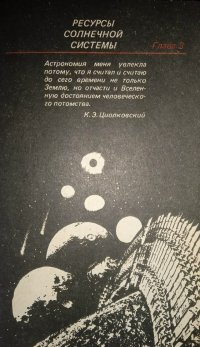
"Обширное околосолнечное пространство дает возможность выбора различных рациональных путей и форм использования сырьевых и энергетических ресурсов Солнечной системы, а следовательно, и успешного перспективного развития человечетства. В связи с этим полезно вспомнить высказывание академика Е.К.Федорова, показывающее, в частности, высокую эффективность освоения внеземных природных богатств: "По мере дальнейшего научно-технического прогресса ...человечество сумеет производить все из всего. То есть можно полагать, что общее количество вещества и энергии, доступных для использования, станет в перспективе единой и универсальной мерой природных ресурсов". К аналогичному выводу приходит и английский ученый Артур Кларк, который, однако, подчеркивает важность разумных взаимноотношений в человеческом обществе: " Из сделанного обзора вполне явствует, что прогрессирующее истощение сырьевых ресурсов нам не угрожает. В этой невообразимо огромной Вселенной мы никогда не будем страдать от нехватки энергии или материи. Надо только не забывать о другой опасности, что нам может не хватить ума".
(А.Т. Улубеков. "Богатство внеземных ресурсов"; глава 3. "Ресурсы Солнечной системы").
........................................................................................................................
Цит.по: Аркадий Тигранович Улубеков
БОГАТСТВА ВНЕЗЕМНЫХ РЕСУРСОВ
Москва/ Издательство "Знание"/ 1984 год

На фото рисунок художника Н.В. Пьяных к третьей главе книги "Ресурсы солнечной системы". На рисунке цитата К.Э.Циолковского: "Астрономия меня увлекла потому, что я считал и считаю до сего времени не только Землю, но отчасти и Вселенную достоянием человеческого потомства".
The vast circumsolar space provides the opportunity to choose various rational ways and forms of utilizing the raw-material and energy resources of the Solar System and, consequently, of the successful long-term development of mankind. In this connection it is useful to recall the statement of Academician E. K. Fyodorov, which demonstrates, in particular, the high efficiency of mastering extraterrestrial natural riches: “As scientific and technical progress continues … mankind will be able to produce everything from everything. That is, one may assume that the total quantity of matter and energy available for use will in the long run become a single and universal measure of natural resources.” A similar conclusion is reached by the English scientist Arthur Clarke, who, however, emphasizes the importance of reasonable mutual relations in human society: “From the survey that has been made it is quite clear that progressive exhaustion of raw-material resources does not threaten us. In this unimaginably vast Universe we shall never suffer from a shortage of energy or matter. We must only not forget the other danger — that we may not have enough intelligence.”


(A. T. Ulubekov. “The Wealth of Extraterrestrial Resources”; Chapter 3. “Resources of the Solar System”).

........................................................................................................................

Quoted from: Arkady Tigranovich Ulubekov
THE WEALTH OF EXTRATERRESTRIAL RESOURCES
Moscow / Publishing House “Znaniye” / 1984

On the photo — a drawing by the artist N. V. Pyanykh for the third chapter of the book “Resources of the Solar System”. On the drawing is a quotation of K. E. Tsiolkovsky: “Astronomy captivated me because I considered and still consider not only the Earth, but partly also the Universe to be the heritage of human posterity.”

El vasto espacio circumsolar ofrece la posibilidad de elegir diversas vías y formas racionales de utilización de los recursos de materias primas y energéticos del Sistema Solar y, por consiguiente, del exitoso desarrollo a largo plazo de la humanidad. En este sentido es útil recordar la afirmación del académico E. K. Fiódorov, que muestra, en particular, la alta eficacia de la explotación de las riquezas naturales extraterrestres: «A medida que progrese el avance científico-técnico … la humanidad sabrá producir todo a partir de todo. Es decir, puede considerarse que la cantidad total de materia y energía disponibles para su uso se convertirá en el futuro en una medida única y universal de los recursos naturales». A una conclusión análoga llega también el científico inglés Arthur Clarke, quien, sin embargo, subraya la importancia de las relaciones mutuas razonables en la sociedad humana: «Del examen realizado se desprende con toda claridad que el agotamiento progresivo de los recursos de materias primas no nos amenaza. En este universo inimaginablemente vasto nunca padeceremos escasez de energía ni de materia. Solo hay que no olvidar el otro peligro: que podamos no tener suficiente inteligencia».


(A. T. Ulubekov. “La riqueza de los recursos extraterrestres”; Capítulo 3. “Recursos del Sistema Solar”).

........................................................................................................................

Citado de: Arkadí Tigránovich Ulubekov
LAS RIQUEZAS DE LOS RECURSOS EXTRATERRESTRES
Moscú / Editorial “Znaniye” / 1984

En la foto — un dibujo del artista N. V. Pianyj para el tercer capítulo del libro “Recursos del Sistema Solar”. En el dibujo aparece una cita de K. E. Tsiolkovski: «La astronomía me cautivó porque consideraba y sigo considerando hasta el día de hoy no solo la Tierra, sino en parte también el Universo, patrimonio de la posteridad humana».
JCDH XJDd A x6UAfpy8Uu9 yRI4vYdv4wXGQGY9lopi990D434YkkPpXssR6nuS4fOIKRNvErZDa5CF0qoemDmSjUWLig
 
Frimen1917

Frimen1917

Mecca V.I.P.
VIP
Joined
Jan 9, 2026
Messages
3,209
Points
63
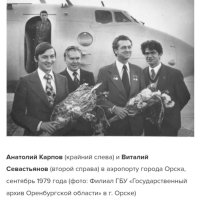
"Лётчик-космонавт СССР, дважды Герой Советского Союза Виталий Иванович Севастьянов со временем стал очень заметной фигурой в шахматном мире. В 1977 году он был избран председателем Шахматной федерации СССР и занимал этот пост до 1986 года, а потом, после небольшого перерыва, в 1988-1989 годах.

Виталий Севастьянов пользовался большим влиянием в шахматном мире — прославленный космонавт был членом ЦК ФИДЕ, почётным членом ФИДЕ, международным арбитром и даже сыграл заметную роль во время драматического матча 1978 года в Багио (Филиппины) между Анатолием Карповым и Виктором Корчным. В тот момент, когда Карпов проиграл на финише три партии из четырёх и счёт сравнялся, атмосфера в советской делегации была весьма тревожной. Срочно приехавший Севастьянов сумел поднять настроение: человек, профессия которого была связана с экстремальными ситуациями, умел это делать. Чтобы помочь Карпову преодолеть кризис, Севастьянов уговорил его совершить поездку на автомашине в Манилу, на финальный матч чемпионата мира по баскетболу между командами СССР и Югославии. И хотя советские баскетболисты проиграли, поездка полностью себя оправдала — в решающей партии Карпову удалось победить".(По материалам газеты «Советский спорт»).

На фото: крайний слева легендарный чемпион мира по шахматам Анатолий Карпов, второй справа летчик-космонавт Виталий Севастьянов в аэропорту города Орска. Сентябрь 1979 года. Фото взято из филиала ГБУ "Государственный архив Оренбургской области в городе Орске.
Pilot-Cosmonaut of the USSR, twice Hero of the Soviet Union Vitaly Ivanovich Sevastyanov in time became a very prominent figure in the chess world. In 1977 he was elected Chairman of the Chess Federation of the USSR and held this post until 1986, and then, after a short break, in 1988–1989.


Vitaly Sevastyanov enjoyed great influence in the chess world — the celebrated cosmonaut was a member of the FIDE Central Committee, an Honorary Member of FIDE, an International Arbiter, and even played a notable role during the dramatic 1978 match in Baguio (Philippines) between Anatoly Karpov and Viktor Korchnoi. At the moment when Karpov lost three games out of four at the finish and the score became equal, the atmosphere in the Soviet delegation was rather anxious. Sevastyanov, who had urgently arrived, managed to raise spirits: a man whose profession was connected with extreme situations knew how to do this. In order to help Karpov overcome the crisis, Sevastyanov persuaded him to make a car trip to Manila, to the final match of the World Basketball Championship between the teams of the USSR and Yugoslavia. And although the Soviet basketball players lost, the trip fully justified itself — in the decisive game Karpov managed to win.

(Based on materials from the newspaper “Soviet Sport”).

On the photo: far left — the legendary World Chess Champion Anatoly Karpov, second from the right — Pilot-Cosmonaut Vitaly Sevastyanov at the airport of the city of Orsk. September 1979. Photo taken from the branch of the State Budgetary Institution “State Archive of the Orenburg Region in the city of Orsk”.

El piloto-cosmonauta de la URSS, dos veces Héroe de la Unión Soviética Vitali Ivánovich Sevastianov con el tiempo se convirtió en una figura muy destacada en el mundo del ajedrez. En 1977 fue elegido presidente de la Federación de Ajedrez de la URSS y ocupó este cargo hasta 1986, y después, tras un breve intervalo, en 1988–1989.


Vitali Sevastianov gozaba de gran influencia en el mundo del ajedrez: el célebre cosmonauta fue miembro del Comité Central de la FIDE, miembro de honor de la FIDE, árbitro internacional e incluso desempeñó un papel notable durante el dramático match de 1978 en Baguio (Filipinas) entre Anatoli Kárpov y Viktor Korchnói. En el momento en que Kárpov perdió tres partidas de cuatro en el final y el marcador se igualó, la atmósfera en la delegación soviética era bastante inquieta. Sevastianov, que había llegado urgentemente, logró levantar el ánimo: un hombre cuya profesión estaba relacionada con situaciones extremas sabía cómo hacerlo. Para ayudar a Kárpov a superar la crisis, Sevastianov le convenció de realizar un viaje en automóvil a Manila, al partido final del Campeonato Mundial de Baloncesto entre los equipos de la URSS y Yugoslavia. Y aunque los baloncestistas soviéticos perdieron, el viaje se justificó plenamente: en la partida decisiva Kárpov logró vencer.

(Según materiales del periódico «Deporte Soviético»).

En la foto: extremo izquierdo — el legendario campeón mundial de ajedrez Anatoli Kárpov, segundo por la derecha — el piloto-cosmonauta Vitali Sevastianov en el aeropuerto de la ciudad de Orsk. Septiembre de 1979. Foto tomada de la filial de la Institución Presupuestaria Estatal «Archivo Estatal de la Región de Orenburgo en la ciudad de Orsk».
VKLKFXODCaq2wKBKDncnJ75WMbMqQVeQIFh46aI3ZF3LeQGQmX0urwzYm6zf0cANOUj3h70nj2uK6457u6wTZwl59ZoqKA
 
Frimen1917

Frimen1917

Mecca V.I.P.
VIP
Joined
Jan 9, 2026
Messages
3,209
Points
63
"...На востоке заря уже обретает свое первое слабое проявление. Андриян остановился. Остановились и другие ребята. Он внимательно смотрит на горизонт, изредка поворачиваясь к гаснущим звездам. Слабых звезд уже не видно. Остались самые яркие. Но и они слабеют. И вдруг Андриян, всматриваясь в звезды, поспешно, как бы боясь, что они вот-вот погаснут совсем, спрашивает меня:

— Так зачем или за чем человек летит в космос? К звездам!

Я хорошо помню, что все восемнадцать суток, что мы с ним летали в космосе, он задавал мне этот вопрос и каждый раз получал разный ответ.

— За волшебным золотым руном! — улыбаюсь я, вспоминая, что этот же вопрос несколько месяцев назад задал мне Фредерик Пол — известный писатель-фантаст, президент Ассоциации американских писателей-фантастов.

— За волшебным золотым руном плавал Одиссей, — задумавшись, говорит Олег Макаров. — И плавал он за тридевять земель!

— За счастьем! — отвечает за меня Петр Климук и смеется.

— За каким счастьем? — уточняет обстоятельный Василий Лазарев. — За своим счастьем! За своим будущим!

— А что такое «будущее человека»? — не сдается Василий.

Пауза. Все молчат. Андриян, улыбаясь одними глазами и думая о чем-то своем, посматривает на нас.

Я вспоминаю, что основатель кибернетики Норберт Винер как-то сказал: «Человек — это стрела, устремленная в будущее». «Да, это, несомненно, так! — думаю я. — Вот и мы все устремлены в будущее».

— А кто скажет, как понимать «тридевять земель»: три девятых Земли? Три девятки после нуля с запятой Земли. Или... или три девятки земель? — неожиданно задумчиво говорит Олег Макаров. — Кто ответит на этот вопрос, тот будет близок к ответу на вопрос Андрияна!

— Если принять три девятых Земли, то Одиссей уплыл от родной Итаки за тринадцать тысяч километров, — принялся рассуждать Олег.

— Это по нашему времени недалеко, но в то же время вполне приличное расстояние.

— Если принять три девятки после нуля с запятой, то он должен был совершить кругосветное путешествие, — с удивлением сделал вывод Петр, — задолго до Магеллана?!
— Если принять три девятки, то есть почти тысяча земель, то это либо 12 с лишним миллионов километров, если мера — диаметр Земли, либо в «пи» раз больше, если мера — длина окружности Земли по экватору, то есть около 40 миллионов километров, — принимая игру, провел обстоятельный расчет Василий. — В любом случае это дальше Луны. Значит, Гомер отправил Одиссея в космос на одну из планет солнечной системы! Я бы предпочел, чтобы на Марс!

— Почему на Марс? — с еще большим удивлением спросил Петр Климук.

— Представляешь, на сколько тысяч лет раньше человек посетил бы Марс! Может быть, он успел бы еще застать там существовавшую цивилизацию или по крайней мере представителей «ариа сапиенс», — продолжал шутить Василий.

— Стоп! — сказал я. — Человек идет в космос за пространством и временем! — Я вспомнил, что именно так я ответил Фредерику Полу. А сейчас ребята, рассуждая, сами пришли к этому выводу.

— Почему за пространством и временем? — спросил Петр Климук.

— Потому что вы в своих рассуждениях во всех случаях использовали именно эти две категории: пространство и время, — ответил я.

— За пространством — понятно. Ну, а что значит «за временем»? — спросил, улыбаясь, Олег Макаров. Он-то все уже понял и давно для себя сделал вывод.

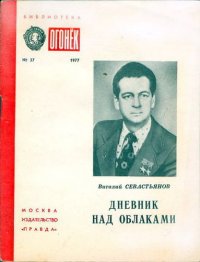
— Помнишь, Петя, Вася тебя спросил: «А что такое будущее человека?» Так вот, Вася, — повернулся я к Василию Лазареву, — будущее человека — это власть над временем! Это те самые «тридевять земель», которые были известны Гомеру, которые пришли к нам в детстве из сказки, которые всегда, с нами, которые зовут нас всегда, которые будут вечно звать других! Это будущее в прошлом! Это прошлое в будущем! Это настоящее, оно включает в себя прошедшее и грядущее! Андриян и Олег, довольно улыбаясь, переглянулись".(Виталий Севастьянов. "Дневник над облаками").
...................................................................................
Библиотека "ОГОНЕК". Москва. Издательство "Правда" 1977.

На фото обложка книги В. Севастьянова «Дневник над облаками» .
“…In the east the dawn is already acquiring its first faint manifestation. Andriyan stopped. The other fellows stopped too. He is carefully looking at the horizon, occasionally turning to the fading stars. The faint stars are no longer visible. Only the brightest ones remain. But they too are growing weaker. And suddenly Andriyan, peering at the stars, hurriedly, as if afraid that they are about to go out completely, asks me:


— So why or what for does man fly into space? To the stars!

I well remember that all eighteen days that we flew with him in space he asked me this question and each time received a different answer.

— For the magic golden fleece! — I smile, recalling that several months ago the same question was put to me by Frederik Pohl — the well-known science-fiction writer, president of the Association of American Science-Fiction Writers.

— For the magic golden fleece Odysseus sailed, — Oleg Makarov says thoughtfully. — And he sailed beyond thrice-nine lands!

— For happiness! — Pyotr Klimuk answers for me and laughs.

— For what kind of happiness? — the thorough Vasily Lazarev clarifies. — For his own happiness! For his own future!

— And what is ‘the future of man’? — Vasily does not give up.

A pause. Everyone is silent. Andriyan, smiling only with his eyes and thinking about something of his own, looks at us.

I recall that the founder of cybernetics Norbert Wiener once said: ‘Man is an arrow directed into the future.’ ‘Yes, that is undoubtedly so!’ I think. ‘And here we are all directed into the future.’

— And who will say how to understand ‘thrice-nine lands’: three ninths of the Earth? Three nines after the zero with a comma of the Earth. Or… or three nines of lands? — Oleg Makarov says unexpectedly thoughtfully. — Whoever answers this question will be close to the answer to Andriyan’s question!

— If one takes three ninths of the Earth, then Odysseus sailed from his native Ithaca thirteen thousand kilometres, — Oleg began to reason.

— That is not far by our time, but at the same time a quite decent distance.

— If one takes three nines after the zero with a comma, then he must have made a round-the-world voyage, — Pyotr concluded with surprise, — long before Magellan?!

— If one takes three nines, that is almost a thousand lands, then that is either a little over 12 million kilometres if the measure is the diameter of the Earth, or π times more if the measure is the circumference of the Earth along the equator, that is about 40 million kilometres, — accepting the game, Vasily made a thorough calculation. — In any case that is farther than the Moon. So Homer sent Odysseus into space to one of the planets of the solar system! I would prefer that it was to Mars!

— Why to Mars? — Pyotr Klimuk asked with even greater surprise.

— Imagine how many thousands of years earlier man would have visited Mars! Perhaps he would still have managed to find an existing civilisation there or at least representatives of ‘aria sapiens’, — Vasily continued to joke.

— Stop! — I said. — Man goes into space for space and time! — I recalled that that was exactly how I answered Frederik Pohl. And now the fellows, reasoning, themselves came to this conclusion.

— Why for space and time? — asked Pyotr Klimuk.

— Because in your reasoning in all cases you used precisely these two categories: space and time, — I answered.

— For space — that is clear. Well, and what does ‘for time’ mean? — asked Oleg Makarov, smiling. He had already understood everything and had long ago drawn a conclusion for himself.

— Do you remember, Petya, Vasya asked you: ‘And what is the future of man?’ So, Vasya, — I turned to Vasily Lazarev, — the future of man is power over time! It is those very ‘thrice-nine lands’ that were known to Homer, that came to us in childhood from the fairy tale, that are always with us, that always call us, that will eternally call others! It is the future in the past! It is the past in the future! It is the present, it includes the past and the forthcoming! Andriyan and Oleg, smiling contentedly, exchanged glances.”

(Vitaly Sevastyanov. “Diary Above the Clouds”).

...................................................................................

Library “OGONYOK”. Moscow. Publishing House “Pravda” 1977.

On the photo — the cover of V. Sevastyanov’s book “Diary Above the Clouds”.

“…En el este el alba ya adquiere su primera débil manifestación. Andrián se detuvo. Se detuvieron también los demás muchachos. Él mira atentamente el horizonte, girándose de vez en cuando hacia las estrellas que se apagan. Las estrellas débiles ya no se ven. Quedan solo las más brillantes. Pero también ellas se debilitan. Y de pronto Andrián, escrutando las estrellas, apresuradamente, como temiendo que estén a punto de apagarse del todo, me pregunta:

— ¿Así que para qué o por qué el hombre vuela al cosmos? ¡A las estrellas!
Recuerdo bien que durante todos los dieciocho días que volamos juntos en el cosmos me hacía esta pregunta y cada vez recibía una respuesta diferente.
— ¡Por el mágico vellocino de oro! — sonrío, recordando que varios meses atrás la misma pregunta me la formuló Frederik Pohl — el conocido escritor de ciencia ficción, presidente de la Asociación de Escritores de Ciencia Ficción Americanos.
— Por el mágico vellocino de oro navegó Odiseo — dice pensativo Oleg Makárov. — ¡Y navegó más allá de las tres veces nueve tierras!
— ¡Por la felicidad! — responde por mí Piotr Klimuk y se ríe.
— ¿Por qué clase de felicidad? — precisa el minucioso Vasili Lázarev. — ¡Por su propia felicidad! ¡Por su propio futuro!
— ¿Y qué es el «futuro del hombre»? — no se rinde Vasili.
Pausa. Todos callan. Andrián, sonriendo solo con los ojos y pensando en algo suyo, nos mira.
Recuerdo que el fundador de la cibernética Norbert Wiener dijo una vez: «El hombre es una flecha dirigida hacia el futuro». «Sí, eso es indudablemente así — pienso yo. — Y aquí estamos todos dirigidos hacia el futuro».
— ¿Y quién dirá cómo entender «tres veces nueve tierras»: tres novenos de la Tierra? Tres nueves después del cero con coma de la Tierra. ¿O… o tres nueves de tierras? — dice inesperadamente pensativo Oleg Makárov. — ¡Quien responda a esta pregunta estará cerca de la respuesta a la pregunta de Andrián!
— Si se toman tres novenos de la Tierra, entonces Odiseo navegó desde su Ítaca natal trece mil kilómetros — empezó a razonar Oleg.
— Eso por nuestro tiempo no es lejos, pero al mismo tiempo una distancia bastante decente.
— Si se toman tres nueves después del cero con coma, entonces debió realizar un viaje alrededor del mundo — concluyó con sorpresa Piotr —, ¡mucho antes que Magallanes?!
— Si se toman tres nueves, es decir casi mil tierras, entonces eso es o bien algo más de 12 millones de kilómetros si la medida es el diámetro de la Tierra, o π veces más si la medida es la circunferencia de la Tierra por el ecuador, es decir unos 40 millones de kilómetros — aceptando el juego, Vasili realizó un cálculo minucioso. — En cualquier caso eso es más lejos que la Luna. ¡Así que Homero envió a Odiseo al cosmos a uno de los planetas del sistema solar! ¡Yo preferiría que fuera a Marte!
— ¿Por qué a Marte? — preguntó con aún mayor sorpresa Piotr Klimuk.
— ¡Imagínate cuántos miles de años antes habría visitado el hombre Marte! Tal vez habría llegado a tiempo a encontrar allí una civilización existente o al menos representantes de «aria sapiens» — continuó bromeando Vasili.
— ¡Alto! — dije yo. — ¡El hombre va al cosmos por el espacio y el tiempo! — Recordé que exactamente así le respondí a Frederik Pohl. Y ahora los muchachos, razonando, llegaron ellos mismos a esta conclusión.
— ¿Por qué por el espacio y el tiempo? — preguntó Piotr Klimuk.
— Porque en vuestros razonamientos en todos los casos utilizasteis precisamente estas dos categorías: el espacio y el tiempo — respondí yo.
— Por el espacio — se entiende. Bueno, ¿y qué significa «por el tiempo»? — preguntó sonriendo Oleg Makárov. Él ya lo había comprendido todo y hacía tiempo que había sacado su conclusión.
— ¿Recuerdas, Petia, que Vasya te preguntó: «¿Y qué es el futuro del hombre?» Pues bien, Vasya — me volví hacia Vasili Lázarev —, ¡el futuro del hombre es el poder sobre el tiempo! ¡Son esas mismas «tres veces nueve tierras» que conocía Homero, que nos llegaron en la infancia del cuento, que siempre están con nosotros, que siempre nos llaman, que llamarán eternamente a otros! ¡Es el futuro en el pasado! ¡Es el pasado en el futuro! ¡Es el presente, que incluye lo pasado y lo venidero! Andrián y Oleg, sonriendo satisfechos, se miraron.”
(Vitali Sevastianov. “Diario sobre las nubes”).
...................................................................................
Biblioteca “OGONIÓK”. Moscú. Editorial “Pravda” 1977.

En la foto — la cubierta del libro de V. Sevastianov «Diario sobre las nubes».

Sevastyanov dnevnik 77
 
Frimen1917

Frimen1917

Mecca V.I.P.
VIP
Joined
Jan 9, 2026
Messages
3,209
Points
63
СССР в 2084 году в представлении советских писателей-фантастов Ивана Ефремова Александра Казанцева Кира Булычева и Братьев Стругацких.
The USSR in 2084 as envisioned by Soviet science fiction writers Ivan Yefremov, Alexander Kazantsev, Kir Bulychev, and the Strugatsky brothers.
La URSS en 2084, tal como la imaginaron los escritores soviéticos de ciencia ficción Ivan Efremov, Alexander Kazantsev, Kir Bulychev y los hermanos Strugatsky.


MuscleMecca Crew

Mecca Staff
Frimen1917

Frimen1917

Mecca V.I.P.
VIP
Joined
Jan 9, 2026
Messages
3,209
Points
63
Добро пожаловать на Марс: «Красная столица» — мир развитой цивилизации в далеком альтернативном будущем.

На поверхности Красной планеты возвышаются колоссальные мегаполисы, грандиозные системы метро, военные цитадели, промышленные комплексы, дворцы науки, орбитальные верфи и гигантские космические станции. В небе над Марсом курсируют огромные межпланетные корабли, а внизу кипит жизнь: семьи, инженеры, ученые, рабочие, солдаты и путешественники — все они живут в рамках единой, масштабной футуристической цивилизации.

Этот мир вдохновлен советским ретрофутуризмом, монументальной архитектурой брутализма и кинематографической научной фантастикой. Это не реконструкция исторического СССР, а самобытная межзвездная цивилизация далекого будущего, выработавшая за столетия собственную архитектуру, технологии и культуру.

Насладитесь двумя часами атмосферного научно-фантастического видеоряда и музыки, которые подойдут для отдыха, учебы, работы, чтения, сна или просто для погружения в этот удивительный мир.

Визуальный стиль: советский ретрофутуризм, монументальная научная фантастика, футуристический брутализм, марсианские мегаполисы, орбитальные станции, гигантские космические корабли, футуристические системы метро и цивилизация, освоившая глубокий космос.


Никакого закадрового голоса — только атмосфера, музыка и мир Марса.
Welcome to Mars: Red Capital — a fully developed civilization on Mars in a distant alternative future.


Across the red planet rise colossal megacities, monumental metro systems, military citadels, industrial complexes, scientific palaces, orbital shipyards and enormous space stations. Above Mars, giant interplanetary ships move between orbital cities while everyday life continues below — families, engineers, scientists, workers, soldiers and travelers living inside one vast futuristic civilization.

This world is inspired by Soviet Retrofuturism, monumental brutalist architecture and cinematic science fiction — not a recreation of the historical USSR, but an original far-future interstellar civilization that evolved its own architecture, technology and culture over centuries.

Enjoy 2 hours of atmospheric cinematic sci-fi ambience for relaxation, studying, working, reading, sleeping or simply exploring another world.

Visual style: Soviet Retrofuturism, monumental sci-fi, brutalist future architecture, Martian megacities, orbital stations, giant spacecraft, futuristic metro systems and deep-space civilization.


No narration — only atmosphere, music and the world of Mars.
Bienvenidos a Marte: Capital Roja, una civilización plenamente desarrollada en Marte situada en un futuro alternativo lejano.


Sobre el planeta rojo se alzan megaciudades colosales, sistemas de metro monumentales, ciudadelas militares, complejos industriales, palacios científicos, astilleros orbitales y enormes estaciones espaciales. En el espacio que rodea Marte, gigantescas naves interplanetarias se desplazan entre ciudades orbitales mientras la vida cotidiana sigue su curso en la superficie: familias, ingenieros, científicos, trabajadores, soldados y viajeros conviven en el seno de una vasta civilización futurista.

Este mundo se inspira en el retrofuturismo soviético, la arquitectura brutalista monumental y la ciencia ficción cinematográfica; no se trata de una recreación de la URSS histórica, sino de una civilización interestelar original de un futuro lejano que ha desarrollado su propia arquitectura, tecnología y cultura a lo largo de los siglos.

Disfruta de dos horas de atmósfera cinematográfica de ciencia ficción, ideal para relajarse, estudiar, trabajar, leer, dormir o simplemente explorar otro mundo.

Estilo visual: retrofuturismo soviético, ciencia ficción monumental, arquitectura futurista brutalista, megaciudades marcianas, estaciones orbitales, naves espaciales gigantes, sistemas de metro futuristas y una civilización del espacio profundo.

Sin narración: solo atmósfera, música y el mundo de Marte.

 
Frimen1917

Frimen1917

Mecca V.I.P.
VIP
Joined
Jan 9, 2026
Messages
3,209
Points
63
Погрузитесь в тайны забытой инопланетной цивилизации в этом двухчасовом научно-фантастическом эмбиент-путешествии, выполненном в эстетике советского ретрофутуризма.

В далеком будущем человечество покорило Солнечную систему и распространилось по бесчисленным звездным мирам.

Трое военных ученых на борту исследовательского звездолета «Горизонт-12» отправляются к Весперан-Тау — таинственной мертвой планете, застывшей на границе вечного дня и вечной тьмы.

Под багровым небом они обнаруживают колоссальные пирамиды, древние храмы рептилоидов, забытые астрономические механизмы и загадочные иероглифы, оставленные цивилизацией, погибшей миллионы лет назад.

Какие тайны все еще скрываются под этими руинами?

🌌 Погрузитесь в двухчасовую атмосферную научно-фантастическую музыку, сочетающую звучание винтажных аналоговых синтезаторов, эстетику советского космического ретрофутуризма, космическую таинственность и дух научных открытий.

Кинематографический видеоряд зациклен, создавая непрерывную атмосферу межзвездных исследований.

Идеально подходит для:
Отдыха и расслабления
Чтения научной фантастики
Учебы и творческой работы
Исследования вымышленных далеких миров
Фоновой атмосферной музыки
Поклонников советского ретрофутуризма и кинематографической фантастики

Путешествие за пределы известного космоса. Древняя тайна. Бескрайняя вселенная, ждущая своих исследователей.

🎧 Для полного погружения в атмосферу рекомендуется использовать наушники.
Explore the mysteries of a forgotten alien civilization in this 2-hour Soviet Retrofuturism Sci-Fi Ambient experience.


In a distant future, humanity has conquered the Solar System and expanded across countless star systems.

Three military scientists aboard the exploration starship Gorizont-12 travel to Vesperan-Tau — a mysterious dead planet trapped between eternal daylight and darkness.

Beneath a crimson sky, they discover colossal pyramids, ancient reptilian temples, forgotten astronomical machines and mysterious hieroglyphs left behind by a civilization destroyed millions of years ago.

What secrets are still hidden beneath the ruins?

🌌 Immerse yourself in two hours of atmospheric science-fiction music, combining vintage analog synthesizers, Soviet space-age retrofuturism, cosmic mystery and the excitement of scientific discovery.

The cinematic visual story loops throughout the video, creating a continuous atmosphere of interstellar exploration.

Perfect for:
Relaxing and unwinding
Reading science fiction
Studying and creative work
Exploring imaginary distant worlds
Background atmospheric music
Fans of Soviet Retrofuturism and cinematic sci-fi

A journey beyond known space. An ancient mystery. An endless universe to discover.

🎧 Headphones recommended for the best atmospheric experience.
Explora los misterios de una civilización alienígena olvidada en esta experiencia de ciencia ficción ambiental de retrofuturismo soviético de 2 horas.


En un futuro lejano, la humanidad ha conquistado el Sistema Solar y se ha expandido por innumerables sistemas estelares.

Tres científicos militares a bordo de la nave espacial de exploración Gorizont-12 viajan a Vesperan-Tau, un misterioso planeta muerto atrapado entre la luz y la oscuridad eternas.

Bajo un cielo carmesí, descubren pirámides colosales, antiguos templos reptilianos, máquinas astronómicas olvidadas y misteriosos jeroglíficos dejados por una civilización destruida hace millones de años.

¿Qué secretos aún se ocultan bajo las ruinas?

🌌 Sumérgete en dos horas de música atmosférica de ciencia ficción, que combina sintetizadores analógicos clásicos, retrofuturismo de la era espacial soviética, misterio cósmico y la emoción del descubrimiento científico.

La historia visual cinematográfica se repite a lo largo del vídeo, creando una atmósfera continua de exploración interestelar.

Ideal para:
Relajarse y desconectar
Leer ciencia ficción
Estudiar y trabajar creativamente
Explorar mundos imaginarios lejanos
Música ambiental de fondo
Aficionados al retrofuturismo soviético y al cine de ciencia ficción

Un viaje más allá del espacio conocido. Un misterio ancestral. Un universo infinito por descubrir.
🎧 Se recomienda usar auriculares para una mejor experiencia.

 
Frimen1917

Frimen1917

Mecca V.I.P.
VIP
Joined
Jan 9, 2026
Messages
3,209
Points
63
Добро пожаловать на лунную горнодобывающую колонию далекого будущего.
Глубоко под безмолвным лунным небом человечество возвело обширную индустриальную цивилизацию, занятую добычей ценных руд и минералов.
Колоссальные гусеничные комплексы, гигантские экскаваторы, автоматизированные заводы по переработке руды, длинные грузовые составы и огромные промышленные объекты доминируют в сером лунном пейзаже.
Но за этими монументальными машинами скрывается повседневная жизнь обычных людей — инженеров, шахтеров, техников и рабочих, чьими усилиями поддерживается существование этой удивительной цивилизации.
Ощутите величественное спокойствие футуристических технологий, атмосферу далеких промышленных рубежей и размеренный ритм жизни на Луне.
Проект вдохновлен советским ретрофутуризмом, монументальной индустриальной архитектурой и классической научной фантастикой.
Сопровождается атмосферным научно-фантастическим эмбиентом, идеально подходящим для отдыха, учебы, работы, чтения или погружения в вымышленные миры.
🌕 Луна больше не далекая мечта. Это новый промышленный рубеж человечества.
Welcome to a lunar mining colony in the distant future.Deep beneath the silent skies of the Moon, humanity has built a vast industrial civilization dedicated to extracting valuable lunar ores and minerals.Colossal mining crawlers, gigantic excavators, automated ore-processing facilities, massive cargo trains, and enormous industrial complexes dominate the gray lunar landscape.But behind these monumental machines lies the everyday life of ordinary people — engineers, miners, technicians, and workers who keep this extraordinary civilization alive.Experience the quiet majesty of futuristic technology, the atmosphere of distant industrial frontiers, and the peaceful rhythm of life on the Moon.Inspired by Soviet Retrofuturism, monumental industrial architecture, and classic science fiction.Accompanied by atmospheric sci-fi ambient music, perfect for relaxation, studying, working, reading, or exploring imaginary worlds.🌕 The Moon is no longer a distant dream. It is humanity's new industrial frontier.
Bienvenido a una colonia minera lunar en un futuro lejano.

En las profundidades, bajo los cielos silenciosos de la Luna, la humanidad ha construido una vasta civilización industrial dedicada a la extracción de valiosos minerales y menas lunares.
Colosales vehículos mineros de orugas, excavadoras gigantescas, instalaciones automatizadas de procesamiento de minerales, enormes trenes de carga y enormes complejos industriales dominan el paisaje lunar gris.
Pero tras estas máquinas monumentales se encuentra la vida cotidiana de gente común: ingenieros, mineros, técnicos y trabajadores que mantienen viva esta extraordinaria civilización.
Experimenta la majestuosidad serena de la tecnología futurista, la atmósfera de lejanas fronteras industriales y el ritmo tranquilo de la vida en la Luna.
Inspirado en el retrofuturismo soviético, la arquitectura industrial monumental y la ciencia ficción clásica.
Acompañado de música ambiental de ciencia ficción, perfecta para relajarse, estudiar, trabajar, leer o explorar mundos imaginarios.

🌕 La Luna ya no es un sueño lejano. Es la nueva frontera industrial de la humanidad.
 
Frimen1917

Frimen1917

Mecca V.I.P.
VIP
Joined
Jan 9, 2026
Messages
3,209
Points
63
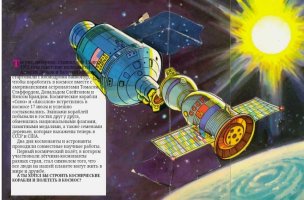
"Ты уже, наверное, слышал, что 15 июля 1975 года советские космонавты Алексей Леонов и Валерий Кубасов стартовали с космодрома Байконур, чтобы поработать в космосе вместе с американскими астронавтами Томасом Стаффордом, Дональдом Слейтоном и Вэнсом Брандом. Космические корабли «Союз» и «Аполлон» встретились в космосе 17 июля и успешно состыковались. Экипажи кораблей побывали в гостях друг у друга, обменялись национальными флагами, памятными медалями, а также семенами деревьев, которые высажены теперь в СССР и США.
Два дня космонавты и астронавты проводили совместные научные работы.

Первый космический полёт, в котором участвовали лётчики-космонавты разных стран, стал символом того, что все люди на нашей планете могут жить в мире и дружбе.

А ТЫ ХОТЕЛ БЫ СТРОИТЬ КОСМИЧЕСКИЕ КОРАБЛИ И ПОЛЕТЕТЬ В КОСМОС?".(В. Севастьянов. "В космос").
...................................................................................

Издательство "Малыш". 1978 г. Для младшего школьного возраста. Книжка - игрушка. Автор - конструктор и художник А. Беслик. На фото страница книги Виталия Севастьянова.
"You have likely heard that on July 15, 1975, Soviet cosmonauts Alexei Leonov and Valery Kubasov launched from the Baikonur Cosmodrome to work in space alongside American astronauts Thomas Stafford, Donald Slayton, and Vance Brand. The Soyuz and Apollo spacecraft met in space on July 17 and successfully docked. The crews visited one another and exchanged national flags, commemorative medals, and tree seeds—seeds that have since been planted in both the USSR and the USA.

For two days, the cosmonauts and astronauts conducted joint scientific experiments.

This first spaceflight involving cosmonauts and astronauts from different nations became a symbol of the fact that all people on our planet can live in peace and friendship.
And would you like to build spacecraft and fly into space?" (V. Sevastyanov, Into Space).
...................................................................................
Malysh Publishing House, 1978. For early school-age children. A novelty book (book-toy). Author, designer, and illustrator: A. Beslik.

The photo shows a page from the book by Vitaly Sevastyanov.
Seguramente ya sabrás que el 15 de julio de 1975, los cosmonautas soviéticos Alexei Leonov y Valeri Kubasov despegaron del Cosmódromo de Baikonur para trabajar en el espacio junto a los astronautas estadounidenses Thomas Stafford, Donald Slayton y Vance Brand. Las naves Soyuz y Apolo se encontraron en el espacio el 17 de julio y se acoplaron con éxito. Las tripulaciones se visitaron, intercambiaron banderas nacionales, medallas conmemorativas y semillas de árboles, que posteriormente se plantaron en la URSS y Estados Unidos.

Durante dos días, los cosmonautas y astronautas realizaron trabajo científico conjunto.
El primer vuelo espacial en el que participaron cosmonautas pilotos de diferentes países se convirtió en un símbolo de que todos los habitantes de nuestro planeta pueden vivir en paz y amistad.
¿Te gustaría "Construir naves espaciales y volar al espacio"? (V. Sevastyanov. "Hacia el espacio").
...................................................................................

Publicado por "Malysh". 1978. Para niños de primaria. Un libro de juguetes. Autor: el diseñador y artista A. Beslik. En la imagen se muestra una página del libro de Vitaly Sevastyanov.


6ppkxZ5ClJpf1zSncSEHaW5fHlgpwrYiES02vTVSHK698 GPegBiYrFxBvww6cu8WDVz1N0esAw9N Hrr 5fcpQrrUPOnQ
 
Frimen1917

Frimen1917

Mecca V.I.P.
VIP
Joined
Jan 9, 2026
Messages
3,209
Points
63
"К. Э. Циолковский был первым, кто предложил создать в космической ракете замкнутую систему кругооборота всех необходимых для жизни экипажа веществ, т. е. замкнутую экосистему. Он считал, что в космическом корабле в миниатюре должны быть воспроизведены все основные процессы превращения веществ, которые осуществляются в биосфере Земли. Однако почти полстолетия это предложение существовало как научно-фантастическая гипотеза.

Практические работы по созданию искусственных космических экосистем на основе процессов биологического круговорота веществ бурно развернулись в США, СССР и некоторых других странах в конце 50-х – начале 60-х годов. Несомненно, что этому способствовали успехи космонавтики, открывшей запуском первого искусственного спутника Земли в 1957 г. эру освоения космического пространства.
В последующие годы по мере расширения и углубления этих работ большинство исследователей могли убедиться в том, что поставленная проблема оказалась гораздо более сложной, чем предполагалось первоначально. Она требовала проведения не только наземных, но и космических исследований, что, в свою очередь, вызывало необходимость в значительных материальных и финансовых затратах и сдерживалось отсутствием крупных космических кораблей или станций исследовательского назначения. Тем не менее в СССР в этот период были созданы отдельные наземные экспериментальные образцы экосистем с включением в действующий цикл круговорота веществ этих систем некоторых биологических звеньев и человека. Выполнен также комплекс научных исследований по отработке технологий культивирования биообъектов в невесомости на борту космических спутников, кораблей и станций: «Космос-92», «Космос-605», «Космос-782», «Космос-936», «Салют-6» и др. Результаты исследований позволяют сегодня сформулировать некоторые положения, принимаемые за основу при построении будущих замкнутых космических экосистем и биологических систем жизнеобеспечения космонавтов. Итак, что является общим для крупных искусственных космических экосистем и естественной биосферной. экосистемы? Прежде всего это их относительная замкнутость, их главные действующие лица – человек и другие живые биозвенья, биологический круговорот веществ и потребность в источнике энергии.

Замкнутые экологические системы – это системы с организованным круговоротом элементов, в котором вещества, используемые с определенной скоростью для биологического обмена одними звеньями, с такой же средней скоростью регенерируются из конечных продуктов их обмена до исходного состояния другими звеньями и вновь используются в тех же циклах биологического обмена (Гительзон и др., 1975).

Вместе с тем экосистема может оставаться замкнутой и без достижения полного круговорота веществ, необратимо расходуя часть веществ из предварительно созданных запасов". ( Ю. И. Гришин. "Искусственные космические экосистемы").
...........................................................................
Цит.по: Гришин Юрий Иванович
ИСКУССТВЕННЫЕ КОСМИЧЕСКИЕ ЭКОСИСТЕМЫ
НОВОЕ В ЖИЗНИ, НАУКЕ, ТЕХНИКЕ
ПОДПИСНАЯ НАУЧНО-ПОПУЛЯРНАЯ СЕРИЯ
КОСМОНАВТИКА, АСТРОНОМИЯ
Обложка художника В. И. Конюхова
Издательство «Знание» Москва 1989 год

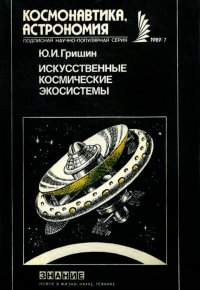
На фото: обложка журнала работы художника В. И. Конюхова
“K. E. Tsiolkovsky was the first to propose creating in a space rocket a closed system of circulation of all substances necessary for the life of the crew, i.e. a closed ecosystem. He believed that in a spaceship all the basic processes of transformation of substances that take place in the Earth’s biosphere should be reproduced in miniature. However, for almost half a century this proposal existed as a science-fiction hypothesis.
Practical work on the creation of artificial space ecosystems based on the processes of the biological cycle of substances developed vigorously in the USA, the USSR and some other countries at the end of the 1950s – beginning of the 1960s. Undoubtedly, this was promoted by the successes of cosmonautics, which with the launch of the first artificial Earth satellite in 1957 opened the era of the exploration of outer space.
In subsequent years, as these works expanded and deepened, most researchers could become convinced that the problem posed turned out to be far more complex than had been originally assumed. It required the conduct of not only ground-based but also space research, which in turn called for considerable material and financial expenditure and was held back by the absence of large spaceships or stations of research purpose. Nevertheless, in the USSR in this period individual ground experimental samples of ecosystems were created with the inclusion in the operating cycle of the circulation of substances of these systems of certain biological links and man. A complex of scientific research was also carried out on the development of technologies for the cultivation of biological objects in weightlessness on board space satellites, ships and stations: ‘Cosmos-92’, ‘Cosmos-605’, ‘Cosmos-782’, ‘Cosmos-936’, ‘Salyut-6’ and others. The results of the research make it possible today to formulate certain propositions that are taken as a basis in the construction of future closed space ecosystems and biological life-support systems for cosmonauts. So, what is common to large artificial space ecosystems and the natural biospheric ecosystem? First of all this is their relative closedness, their main acting persons – man and other living bio-links, the biological cycle of substances and the need for a source of energy.
Closed ecological systems are systems with an organised cycle of elements in which substances used at a certain rate for biological exchange by some links are regenerated at the same average rate from the end products of their exchange to the initial state by other links and are again used in the same cycles of biological exchange (Gitelzon et al., 1975).
At the same time an ecosystem can remain closed even without achieving a complete cycle of substances, irreversibly consuming part of the substances from previously created stocks.”
(Yu. I. Grishin. “Artificial Space Ecosystems”).
...........................................................................
Quoted from: Grishin Yuri Ivanovich
ARTIFICIAL SPACE ECOSYSTEMS
NEW IN LIFE, SCIENCE, TECHNOLOGY
SUBSCRIPTION POPULAR-SCIENCE SERIES
COSMONAUTICS, ASTRONOMY
Cover by the artist V. I. Konyukhov
Publishing House “Znaniye” Moscow 1989

On the photo: the cover of the journal by the artist V. I. Konyukhov
“K. E. Tsiolkovski fue el primero en proponer la creación en un cohete espacial de un sistema cerrado de circulación de todas las sustancias necesarias para la vida de la tripulación, es decir, un ecosistema cerrado. Consideraba que en la nave espacial debían reproducirse en miniatura todos los procesos básicos de transformación de sustancias que se llevan a cabo en la biosfera de la Tierra. Sin embargo, durante casi medio siglo esta propuesta existió como una hipótesis de ciencia ficción.
Los trabajos prácticos sobre la creación de ecosistemas espaciales artificiales basados en los procesos del ciclo biológico de sustancias se desarrollaron intensamente en EE.UU., la URSS y algunos otros países a finales de los años 50 y principios de los 60. Indudablemente, a ello contribuyeron los éxitos de la cosmonáutica, que con el lanzamiento del primer satélite artificial de la Tierra en 1957 abrió la era de la exploración del espacio cósmico.
En los años siguientes, a medida que estos trabajos se ampliaban y profundizaban, la mayoría de los investigadores pudieron convencerse de que el problema planteado resultó ser mucho más complejo de lo que se había supuesto inicialmente. Exigía la realización no solo de investigaciones terrestres, sino también espaciales, lo que a su vez requería considerables gastos materiales y financieros y se veía frenado por la ausencia de grandes naves espaciales o estaciones de propósito investigador. No obstante, en la URSS en este período se crearon muestras experimentales terrestres individuales de ecosistemas con la inclusión en el ciclo operativo de circulación de sustancias de estos sistemas de ciertos eslabones biológicos y del hombre. También se llevó a cabo un complejo de investigaciones científicas sobre el desarrollo de tecnologías de cultivo de objetos biológicos en ingravidez a bordo de satélites, naves y estaciones espaciales: «Cosmos-92», «Cosmos-605», «Cosmos-782», «Cosmos-936», «Salyut-6» y otras. Los resultados de las investigaciones permiten hoy formular algunas disposiciones que se toman como base en la construcción de futuros ecosistemas espaciales cerrados y sistemas biológicos de soporte vital de los cosmonautas. Así pues, ¿qué es común a los grandes ecosistemas espaciales artificiales y al ecosistema biosférico natural? Ante todo es su relativa clausura, sus principales protagonistas – el hombre y otros eslabones biológicos vivos, el ciclo biológico de sustancias y la necesidad de una fuente de energía.
Los sistemas ecológicos cerrados son sistemas con un ciclo organizado de elementos en el que las sustancias utilizadas a una cierta velocidad para el intercambio biológico por unos eslabones se regeneran a la misma velocidad media a partir de los productos finales de su intercambio hasta el estado inicial por otros eslabones y se utilizan de nuevo en los mismos ciclos de intercambio biológico (Gitelzon et al., 1975).
Al mismo tiempo, un ecosistema puede permanecer cerrado incluso sin alcanzar un ciclo completo de sustancias, consumiendo de forma irreversible parte de las sustancias de reservas creadas previamente.”
(Yu. I. Grishin. “Ecosistemas espaciales artificiales”).
...........................................................................
Citado de: Grishin Yuri Ivanovich
ECOSISTEMAS ESPACIALES ARTIFICIALES
NUEVO EN LA VIDA, LA CIENCIA, LA TÉCNICA
SERIE CIENTÍFICO-POPULAR DE SUSCRIPCIÓN
COSMONÁUTICA, ASTRONOMÍA
Cubierta del artista V. I. Konyujov
Editorial «Znaniye» Moscú 1989

En la foto: la cubierta de la revista obra del artista V. I. Konyujov
ABD9rCBwR BScjr7RE0hZjk P5UgCmDfoIFID0stpJH00bOuo9GjQKghRdM N4iAmIp5RrVnnROtTZL7wMrMXNasoKxHRQ
 
Top